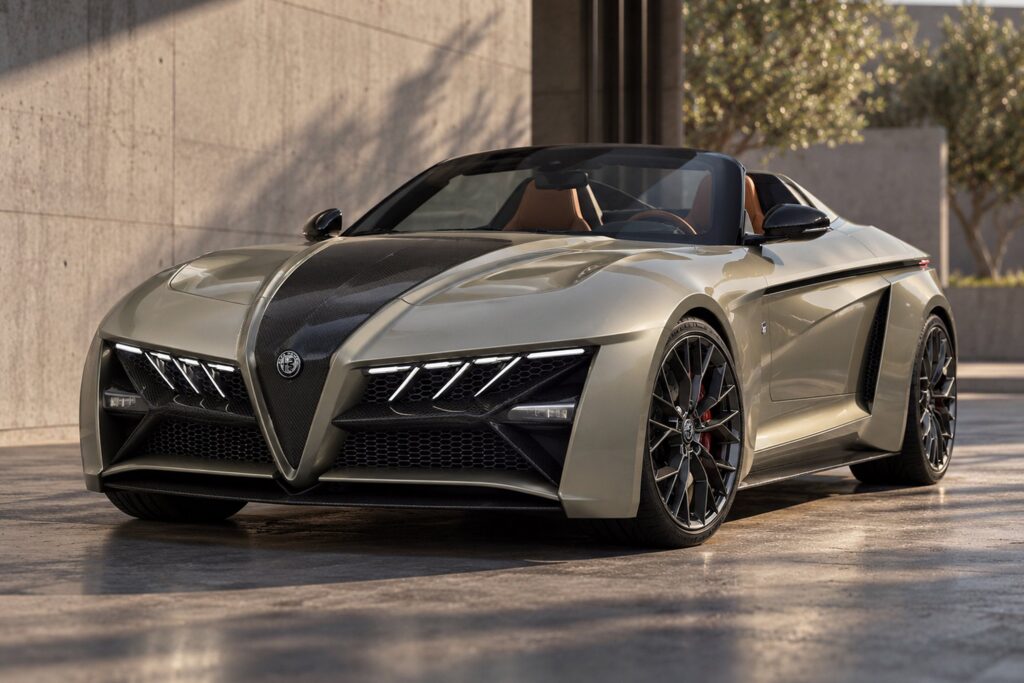
The Alfa Romeo Giulia Quadrifoglio has always had the right ingredients for a more emotional body style.
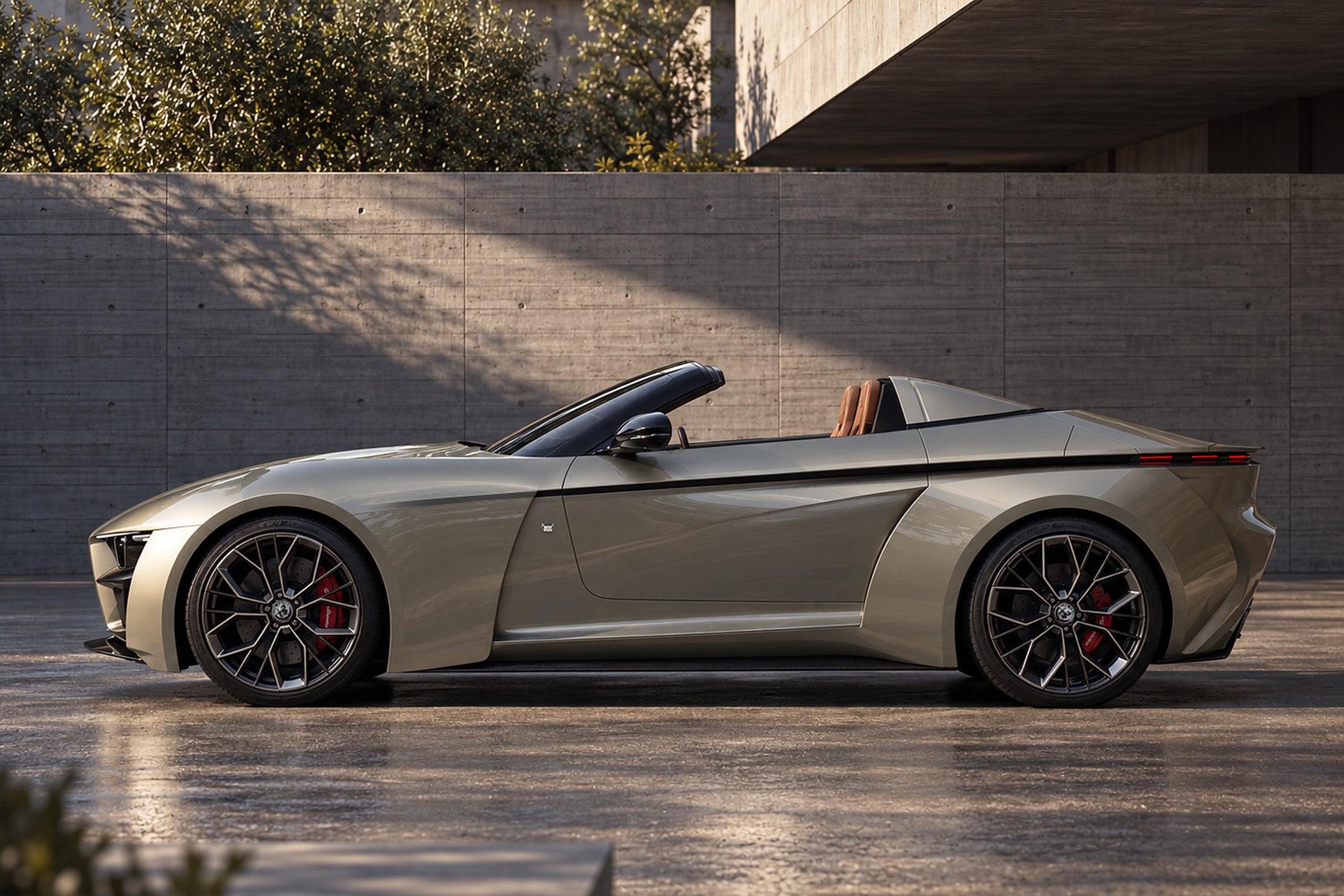
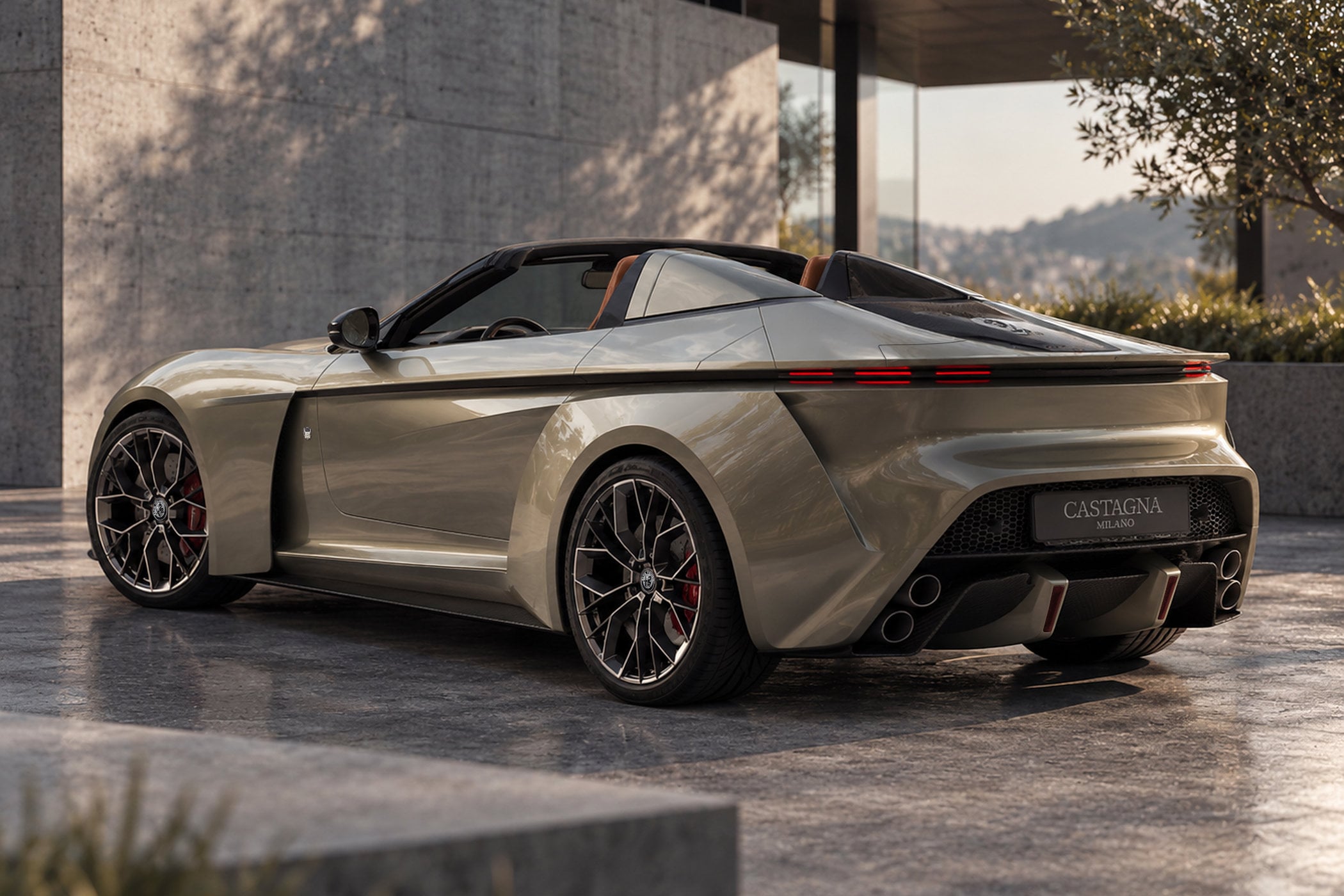
Carrozzeria Castagna Milano has taken that idea well beyond a sketch, turning the four-door performance saloon into the Giulia Q, a two-seat roadster with coachbuilt proportions and a substantially reworked structure.
It’s the sort of project that makes a strong case for modern coachbuilding, not as nostalgia, but as a way of building the car a major manufacturer doesn’t currently offer.
At a glance
- Carrozzeria Castagna Milano has reworked the Alfa Romeo Giulia Quadrifoglio Verde into the Giulia Q, a two-door open-top roadster.
- The conversion moves the cockpit 330mm rearward, adds a folding soft-top and radically changes the bodywork while retaining the 2.9-litre twin-turbo V6.
- Castagna cites 520hp, 600Nm, more than 300kph and 623 litres of luggage space with the roof down.
A Quadrifoglio with classic coachbuilt proportions
The Giulia Q starts from the Alfa Romeo Giulia Quadrifoglio Verde, the performance saloon introduced in 2015, but very little about the finished shape reads as a mild conversion.
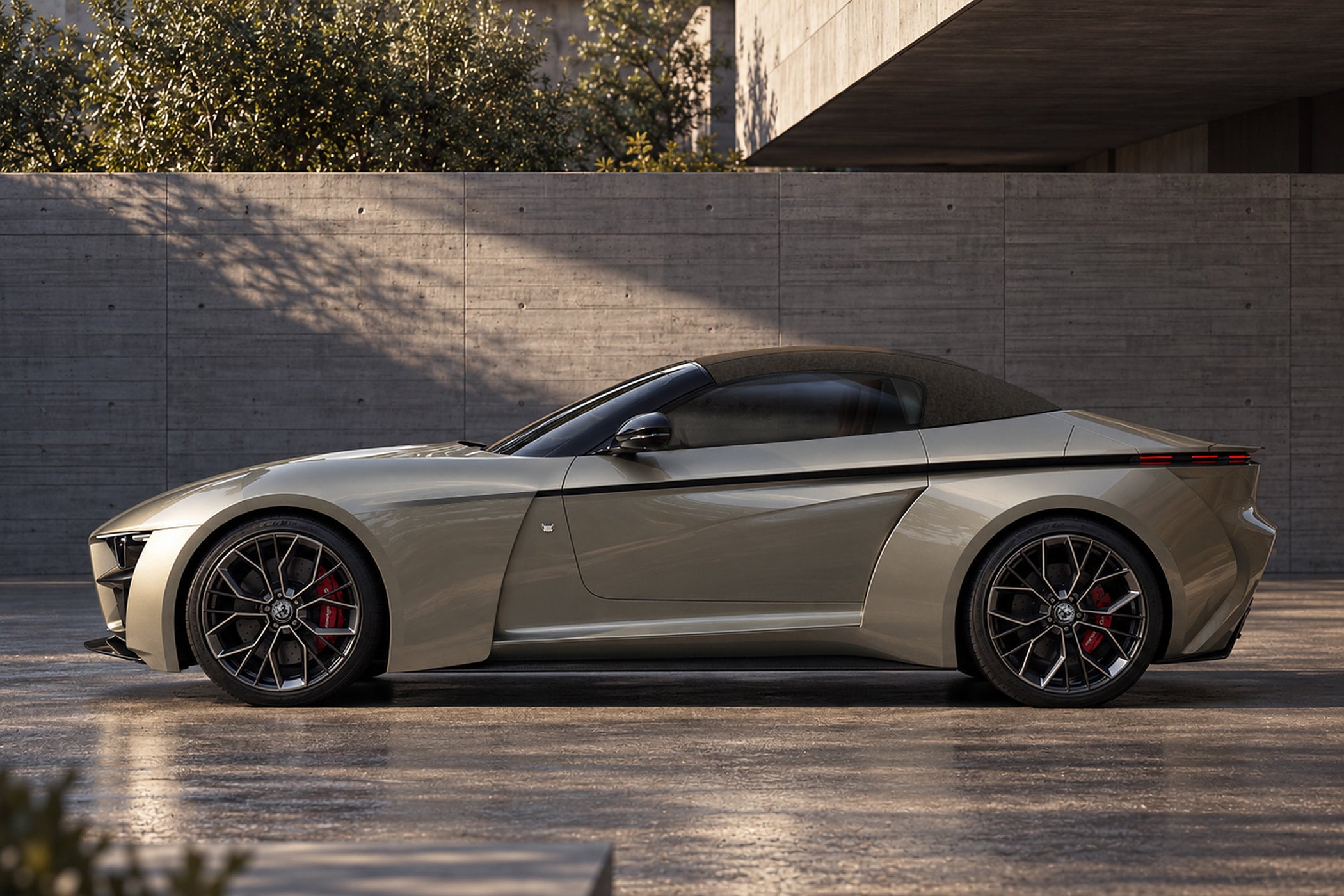
Castagna has moved the dashboard, steering wheel and front seats back by 330mm, giving the car the long-bonnet, rear-set-cabin stance associated with traditional grand touring roadsters.
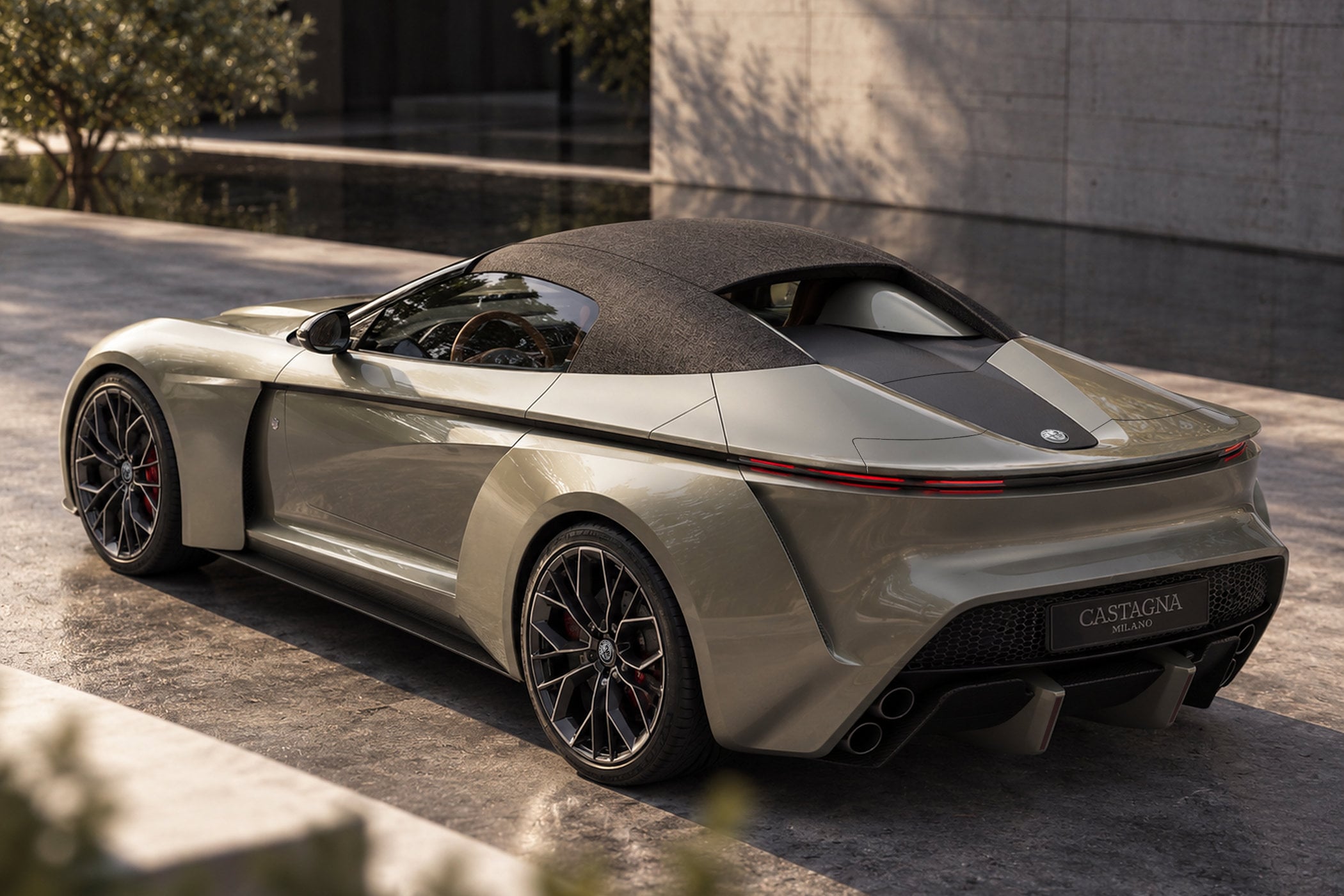
The roof is replaced by a folding soft-top that stows completely beneath the rear deck.
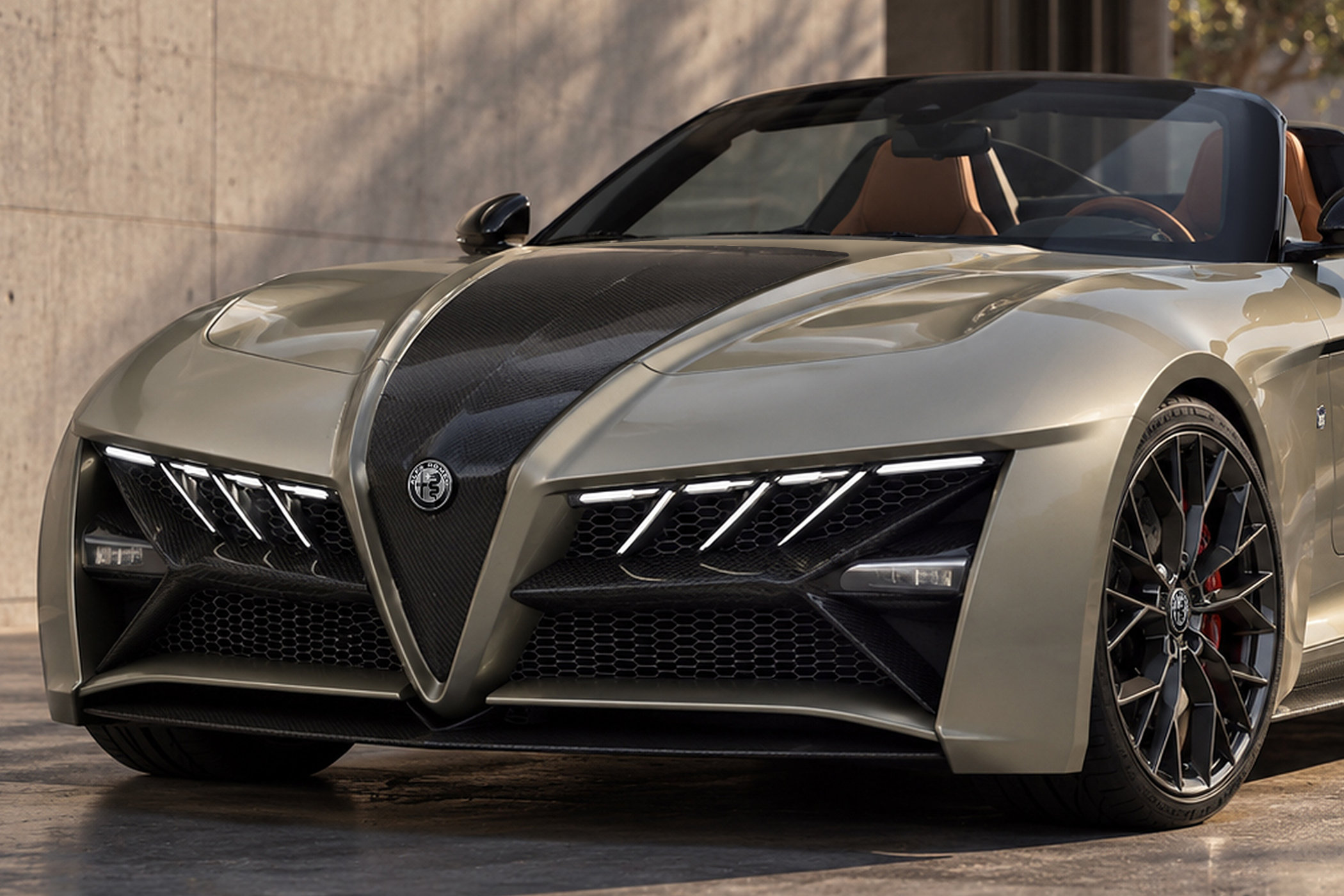
The bonnet has been extended and given a more assertive form, with an exposed carbon-fibre centre panel sitting between newly shaped front surfaces.
At the nose, the headlights and Alfa Romeo shield grille are sharpened, while an integrated lower splitter adds a more purposeful edge.
The details that separate it from a simple conversion
One of the most distinctive touches is the line that begins above the headlights and runs along the car’s length, broken by the front wheel arches before continuing toward the rear.
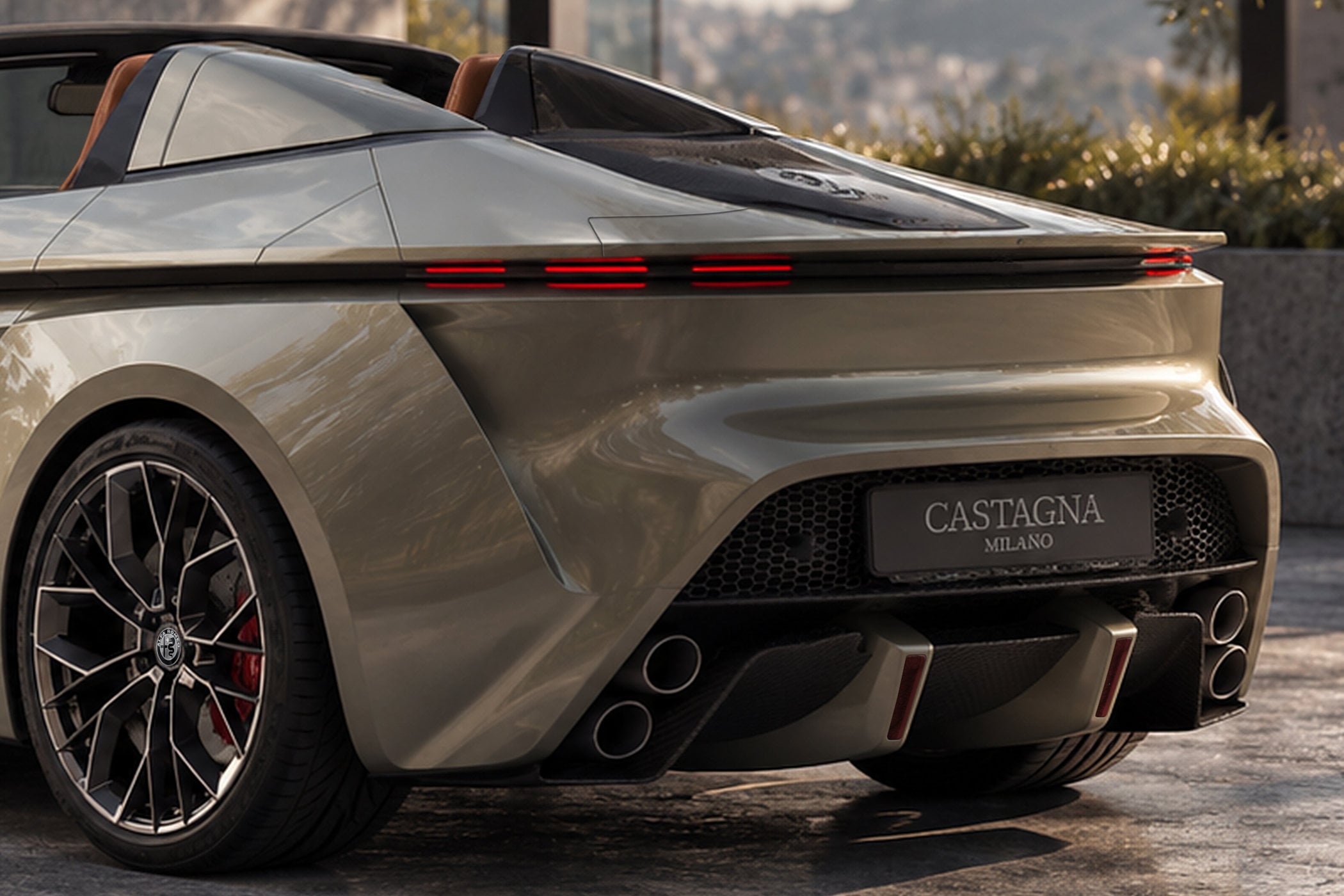
That crease defines the car’s shoulders, frames the tail-light treatment and helps form the integrated rear spoiler.
The side surfaces include sharp cut-outs intended to manage airflow around the wheel wells, while the rear deck carries a double fairing behind the two seats.
Castagna has also reworked the exhaust layout, stacking the outlets vertically to clear space for the rear diffuser.
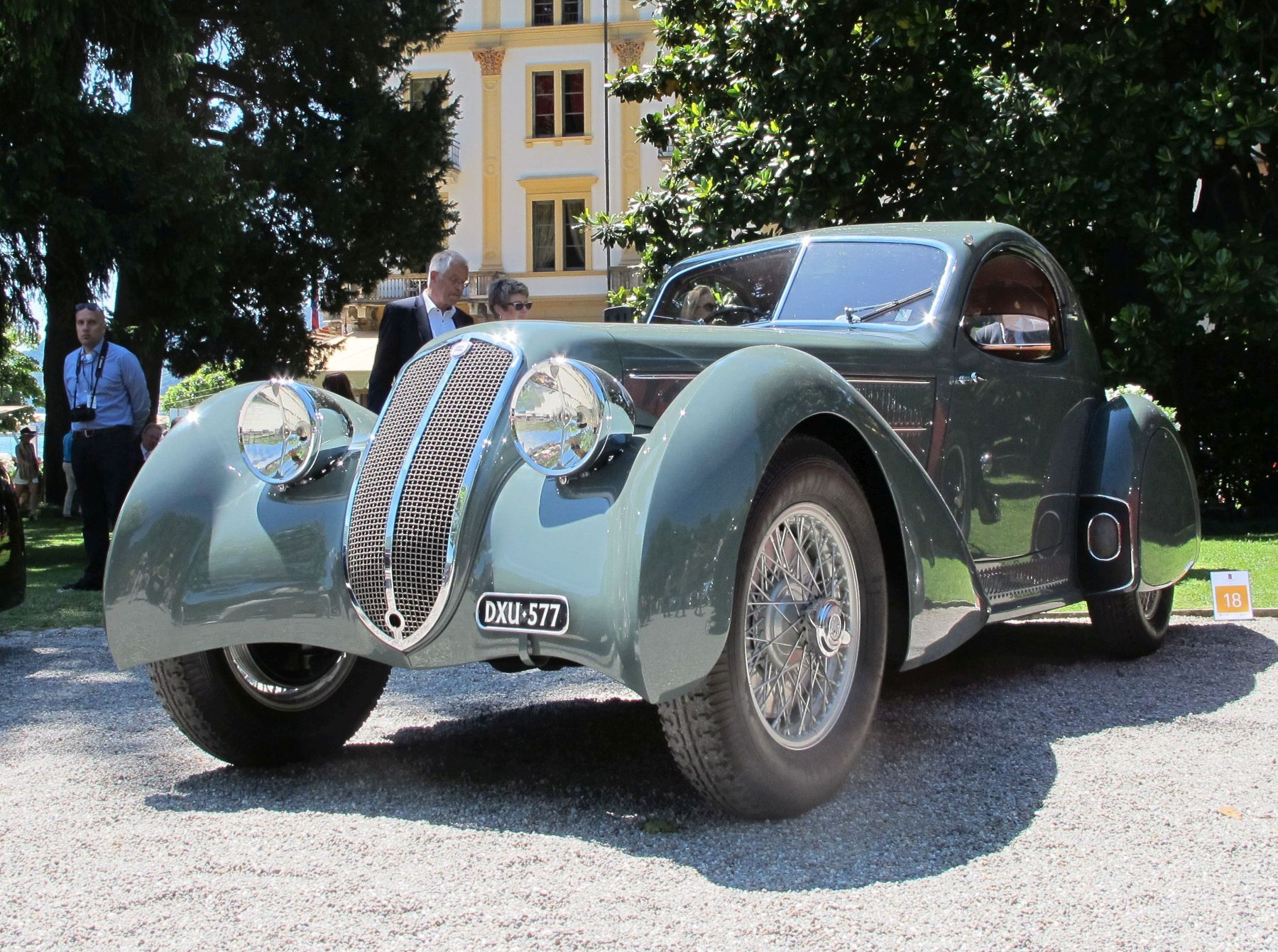
The windscreen uses Castagna’s patented Vistotal system, which reduces the visual mass of the A-pillars in the interest of both visibility and appearance.
No interior imagery has been shown, so the cabin treatment remains one of the unanswered parts of the project.
Castagna’s long road back into the conversation
Carrozzeria Castagna Milano’s name reaches back to the late 19th century, when Carlo Castagna took control of a carriage-making business that would later become one of Italy’s significant coachbuilders.
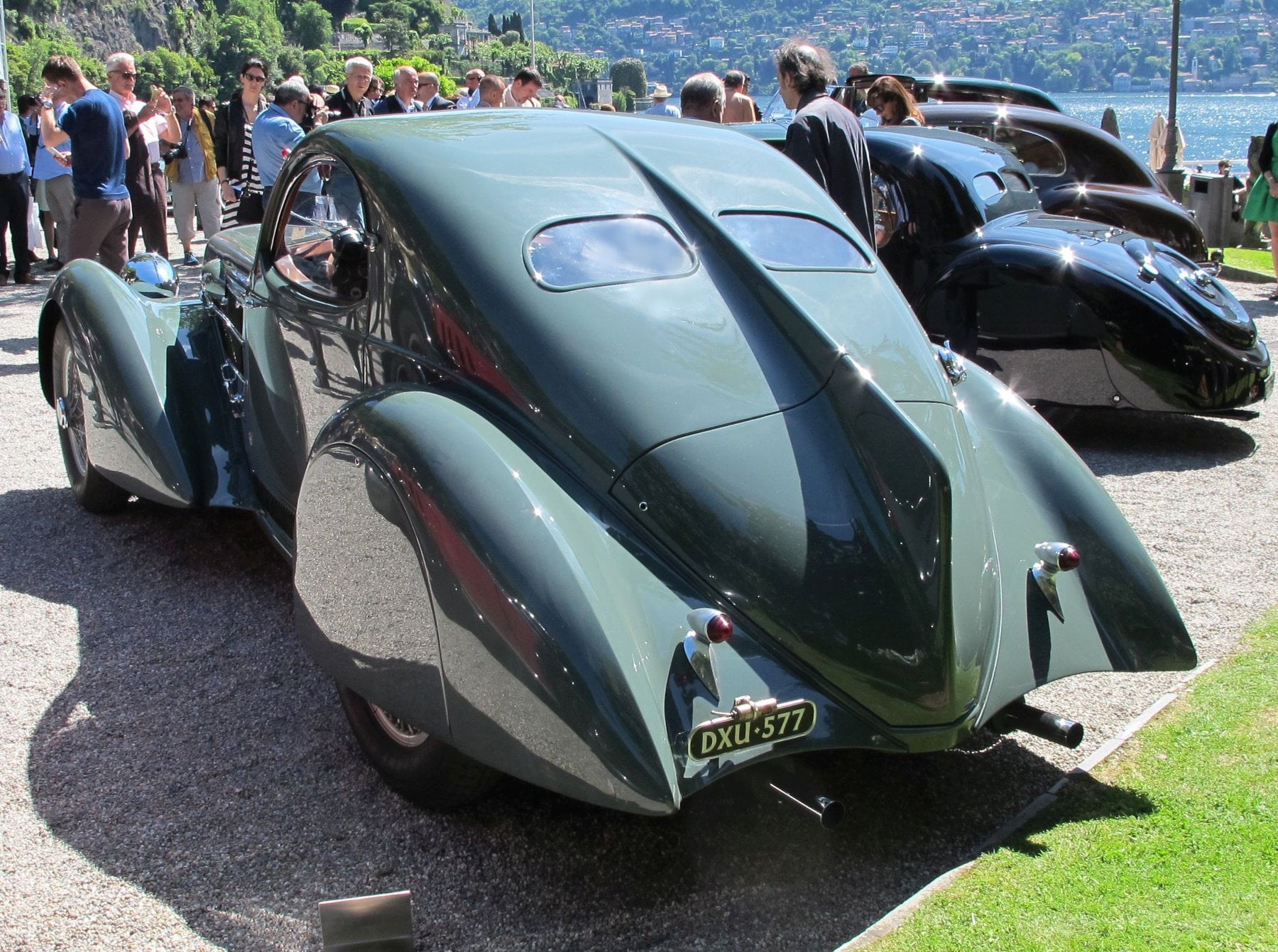
By the early 20th century, the company had moved into car bodies and would go on to work with marques including Alfa Romeo, Lancia, Maserati, Duesenberg and Mercedes-Benz.
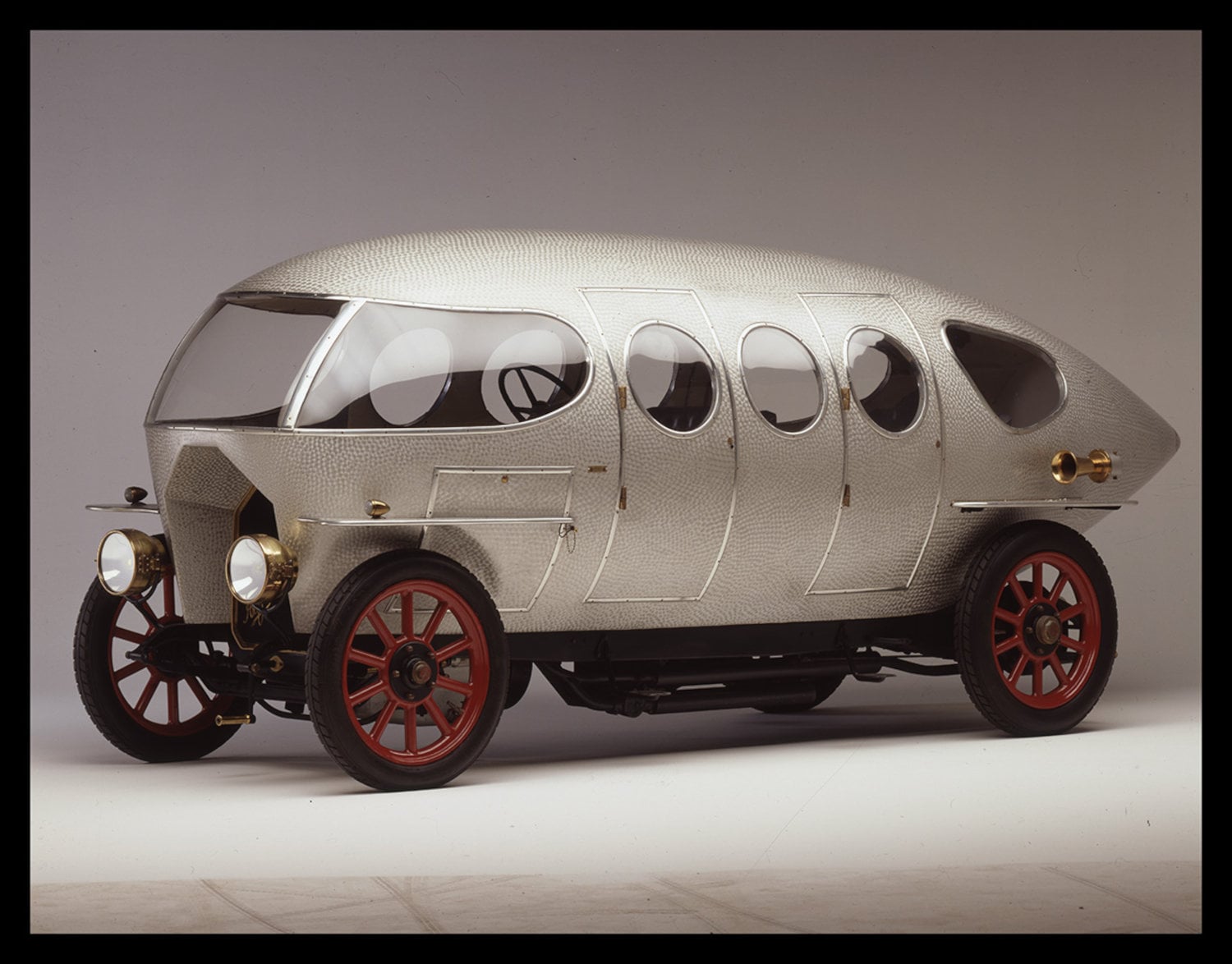
Its pre-war history includes bold pieces of Italian design such as the 1913 Alfa Romeo 40/60 HP Aerodinamica and the 1933 Lancia Astura Series II.
Like many coachbuilders, Castagna’s business was disrupted by war, post-war economics and the rise of mass production.
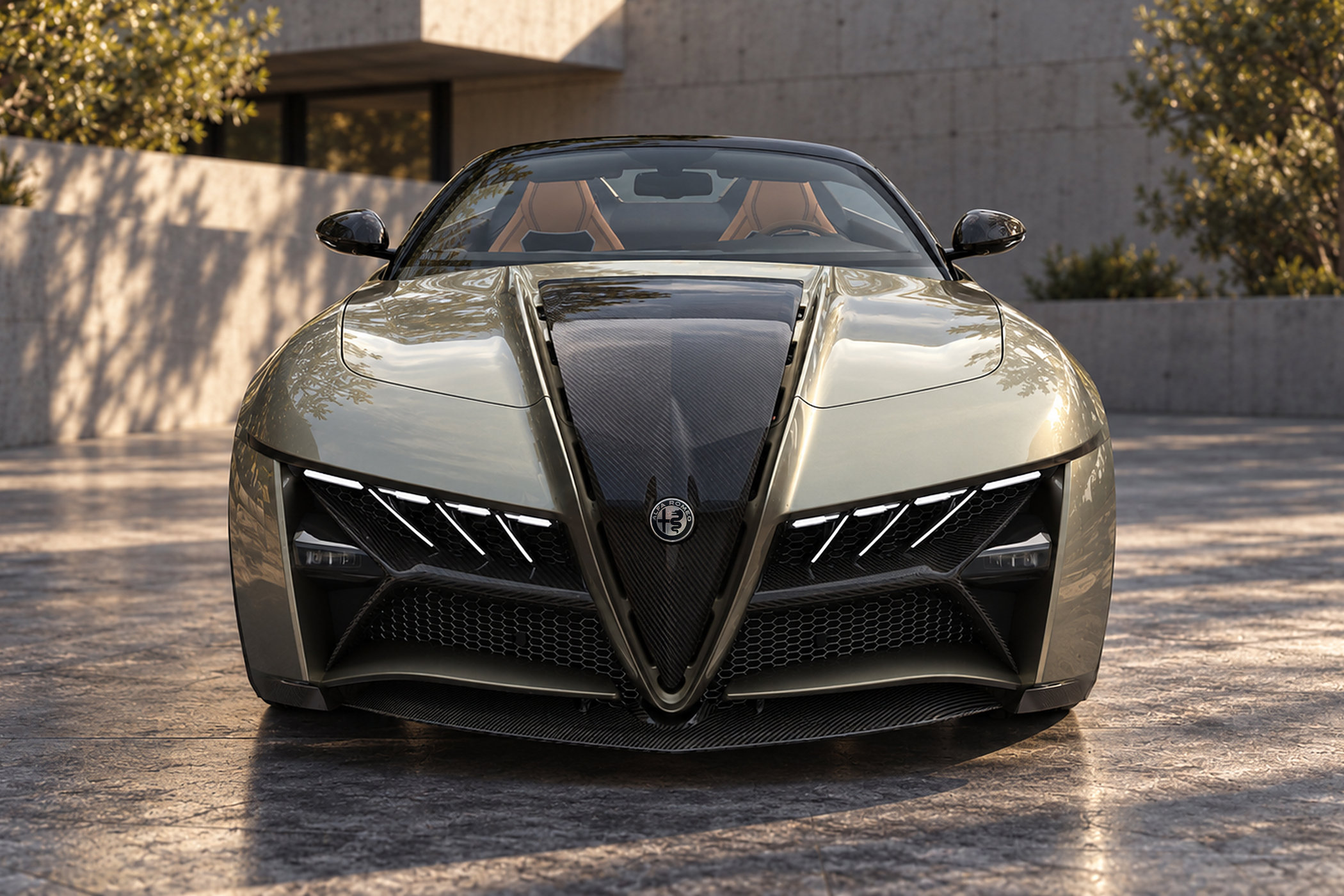
Operations ceased in 1954, before the name was revived in the 1990s, with the modern company continuing through concept cars and bespoke projects.
Power, weight and usable space
Mechanically, the Giulia Q keeps the Quadrifoglio Verde’s 2.9-litre twin-turbo V6.
Castagna lists output at 520hp and 600Nm of torque, with the company also citing a top speed of more than 300kph.
The coachbuilder says the Giulia Q weighs about 200kg less than the donor saloon, though it has not released a specific acceleration figure.
More unexpected is the practicality claim, with Castagna citing 623 litres of luggage capacity even with the roof down.
That detail matters, because it positions the Giulia Q as more than a static design exercise.
Details & Specifications
| Brand | Carrozzeria Castagna Milano |
|---|---|
| Model | Giulia Q |
| Base car | Alfa Romeo Giulia Quadrifoglio Verde |
| Body style | Two-door roadster |
| Seats | Two |
| Engine | 2.9-litre twin-turbo V6 |
| Power | 520hp |
| Torque | 600Nm |
| Top speed | Over 300kph, according to Castagna |
| Weight change | About 200kg less than the Giulia Quadrifoglio Verde |
| Roof | Folding soft-top stowed beneath the rear deck |
| Luggage capacity | 623 litres with the roof down |
| Notable feature | Vistotal windscreen system with reduced A-pillar mass |
Castagna has not presented the Giulia Q as a conventional production model, and it has indicated that the car is intended to be completed with a true enthusiast of the Alfa Romeo brand.
For the right collector, that ambiguity may be part of the appeal, because this is not simply a faster Giulia or a styling package, but a reminder that coachbuilding still has room for romance, risk and highly personal taste.