Casio’s latest G-Shock move is less about adding a screen and more about taking one away.
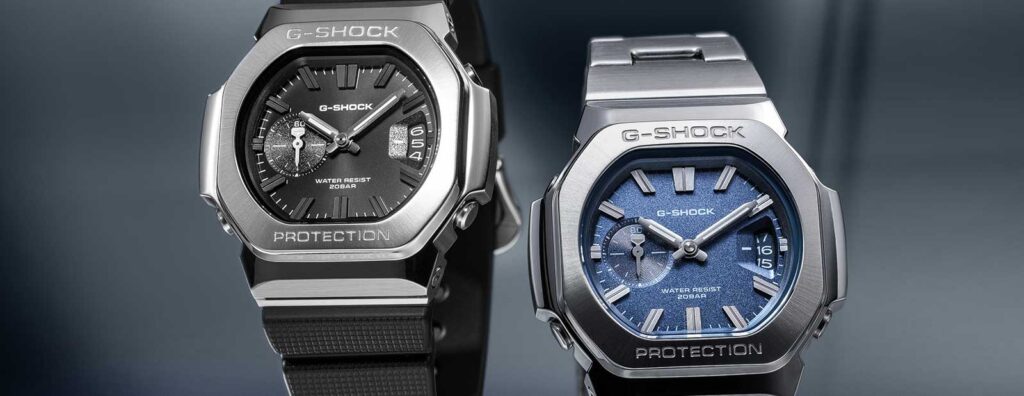
The 2500 Series introduces purely analog models to the current G-Shock Basic lineup for the first time, with hands, a date display and no digital window.
It’s a sharp shift for a brand built on utility, because it keeps the toughness while changing the way the watch asks you to read time.
At a glance
- Casio’s 2500 Series brings full analog timekeeping to the current G-Shock Basic lineup with no digital display.
- The new analog module includes a small seconds display, full-auto calendar and magnetic hand-holding structure.
- The collection spans resin, metal-bezel and full-bracelet models, with listed prices from USD 145 to USD 350.
A tougher G-Shock with a calmer dial
G-Shock has lived comfortably in the world of buttons, digital readouts and multifunction displays since 1983.
The 2500 Series changes the mood without abandoning the brief.
Casio frames the design around “Quiet Refinement” and “Understated Utility,” and the watches follow that thinking with a cleaner face, restrained typography and functions that don’t crowd the dial.
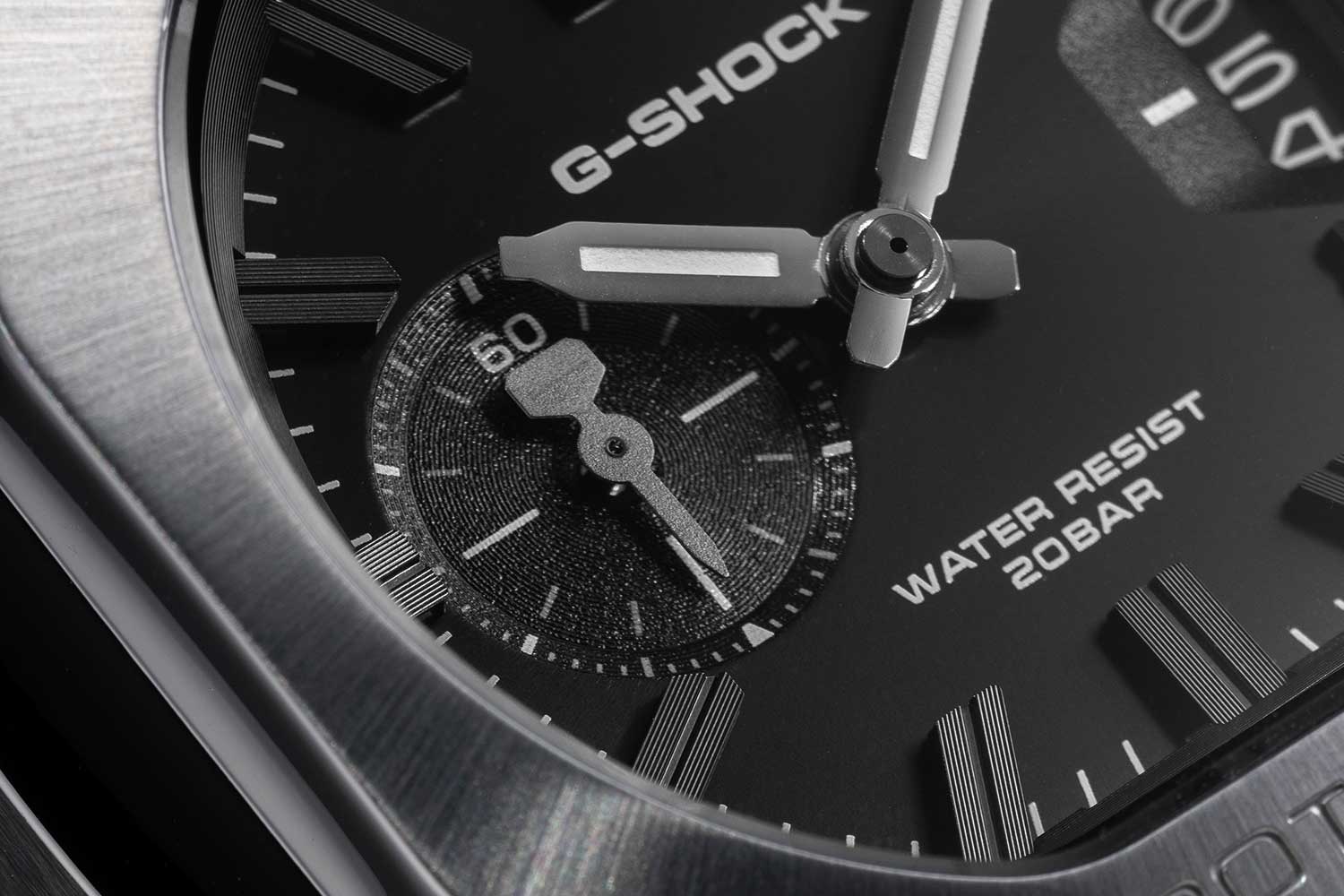
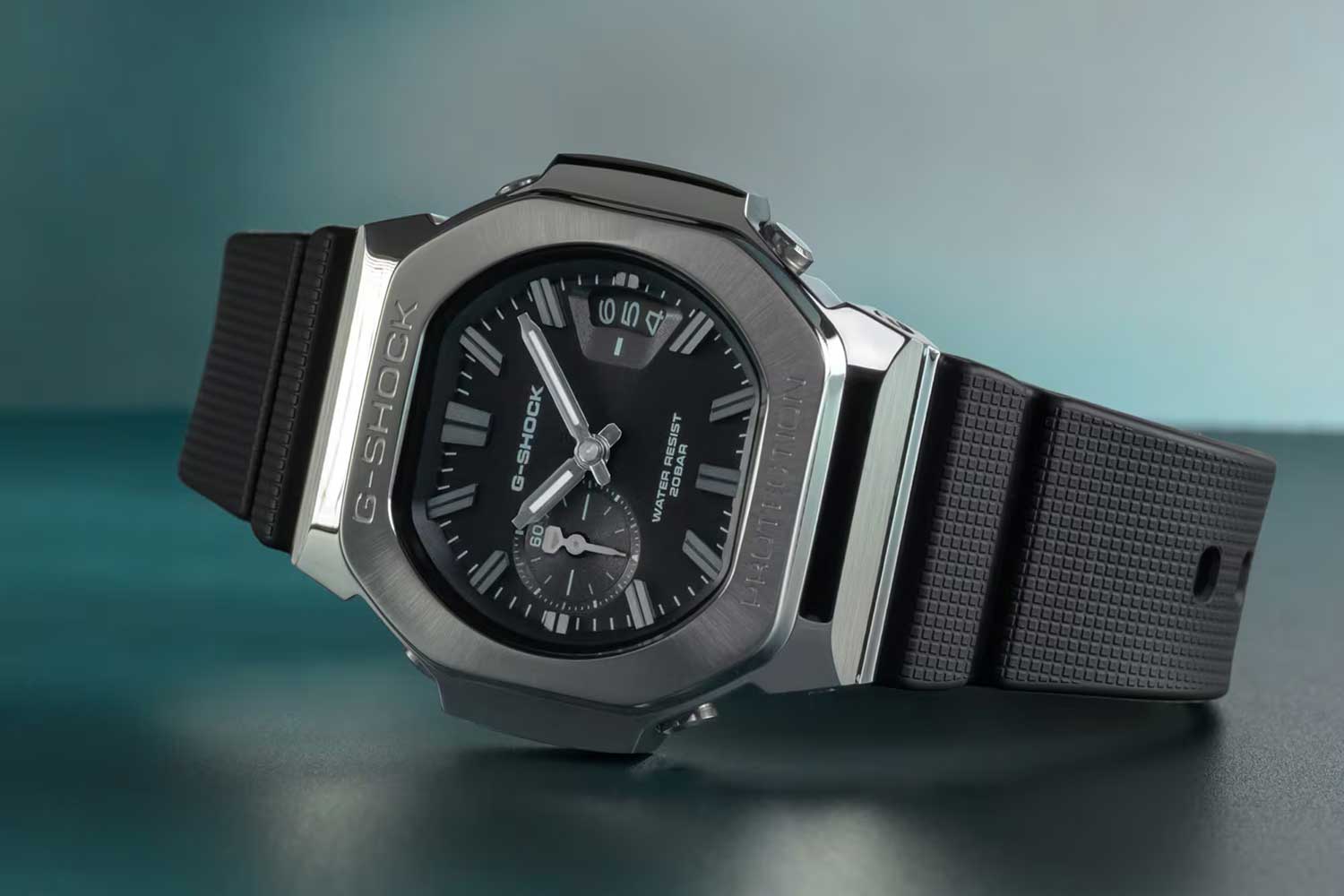
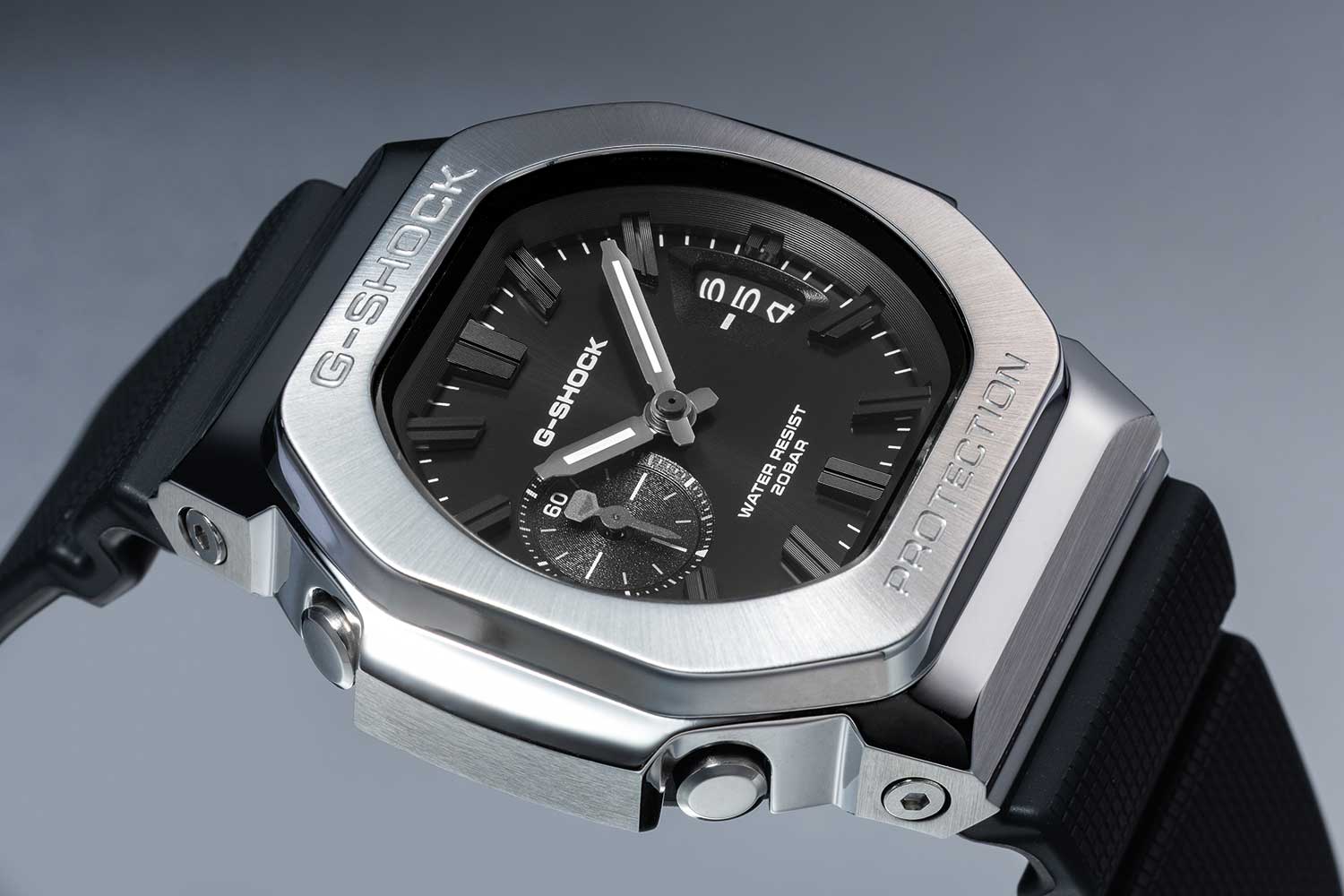
The case combines a classic round form with G-Shock’s familiar octagonal bezel language, while the brand’s signature guards continue to protect the crown and pushers.
Minute markers are printed directly onto the dial surface rather than placed on a separate ring, which gives the face a wider, more open look.
The hands are thicker and use shorter tails, a small adjustment that improves legibility and helps the dial feel better balanced.
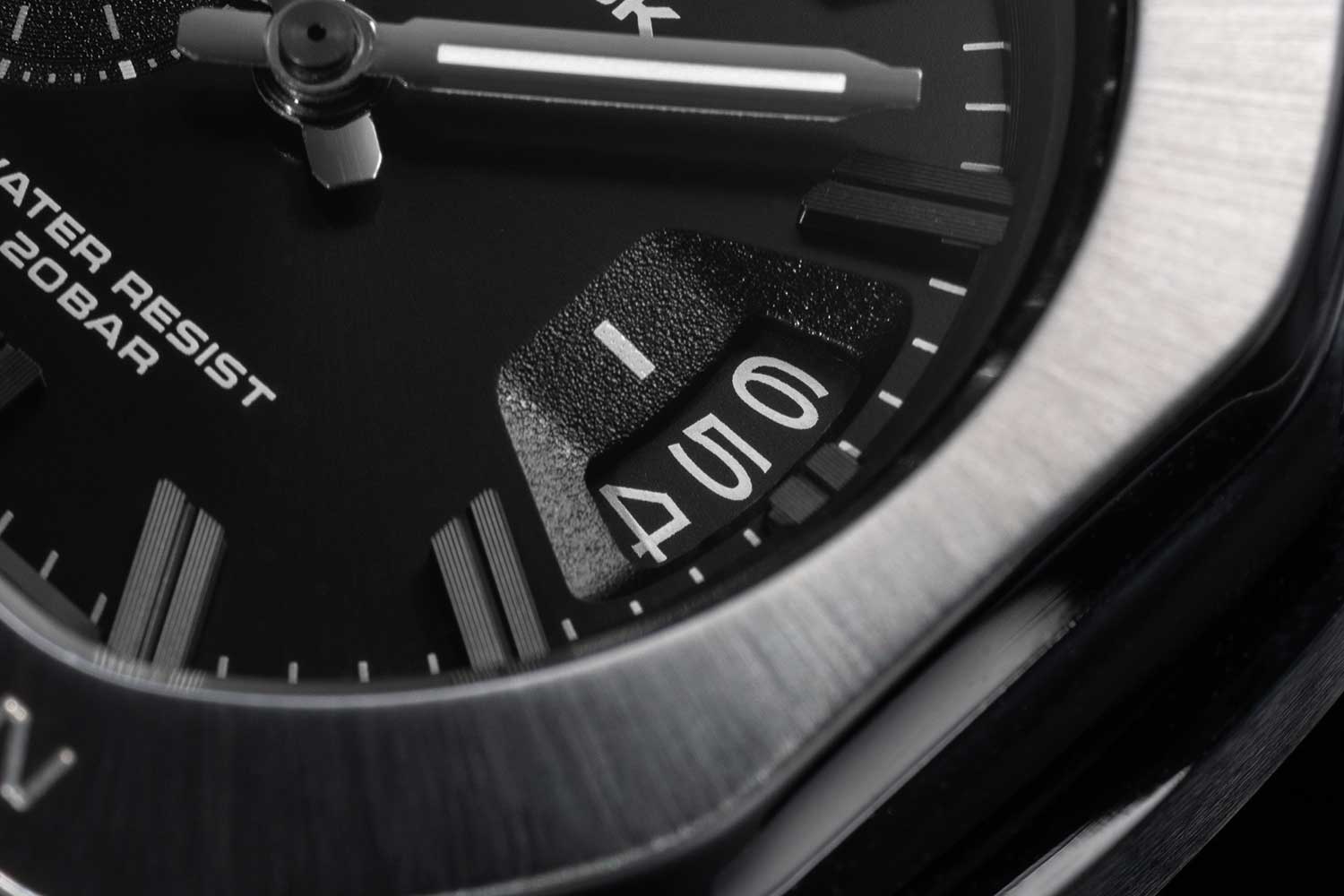
Casio’s new full-analog module
The technical point of interest is Casio’s new analog movement, described as the first full-analog module developed specifically for the G-Shock Basic collection.
Casio’s R&D team in Hamura had to fit a pure analog display into the brand’s shock-resistant architecture, which meant reconsidering the layout and protection of the movement.
The module uses a small seconds display at 9 o’clock and still makes room for a date disk.
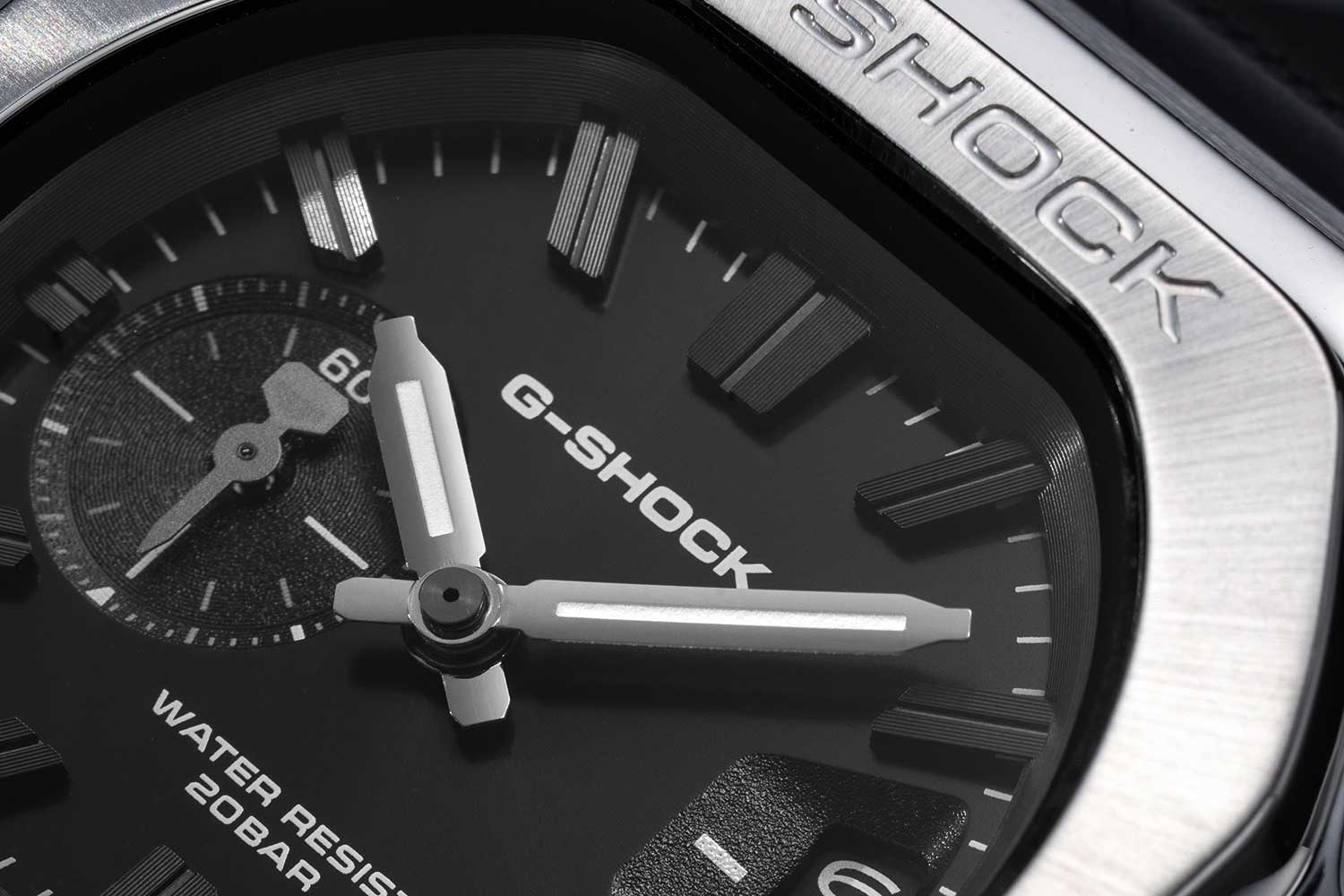
Across the collection, case thickness runs from 12.7mm to 12.9mm, which is relatively restrained for a watch carrying G-Shock’s shock-resistant construction.
The full-auto calendar is one of the more practical features, with a disk system that adjusts for year, month and day so the date doesn’t need correcting at the end of shorter months.
The same disk also takes on other duties, showing numbers during time setting and acting as a minute indicator when the chronograph is in use.
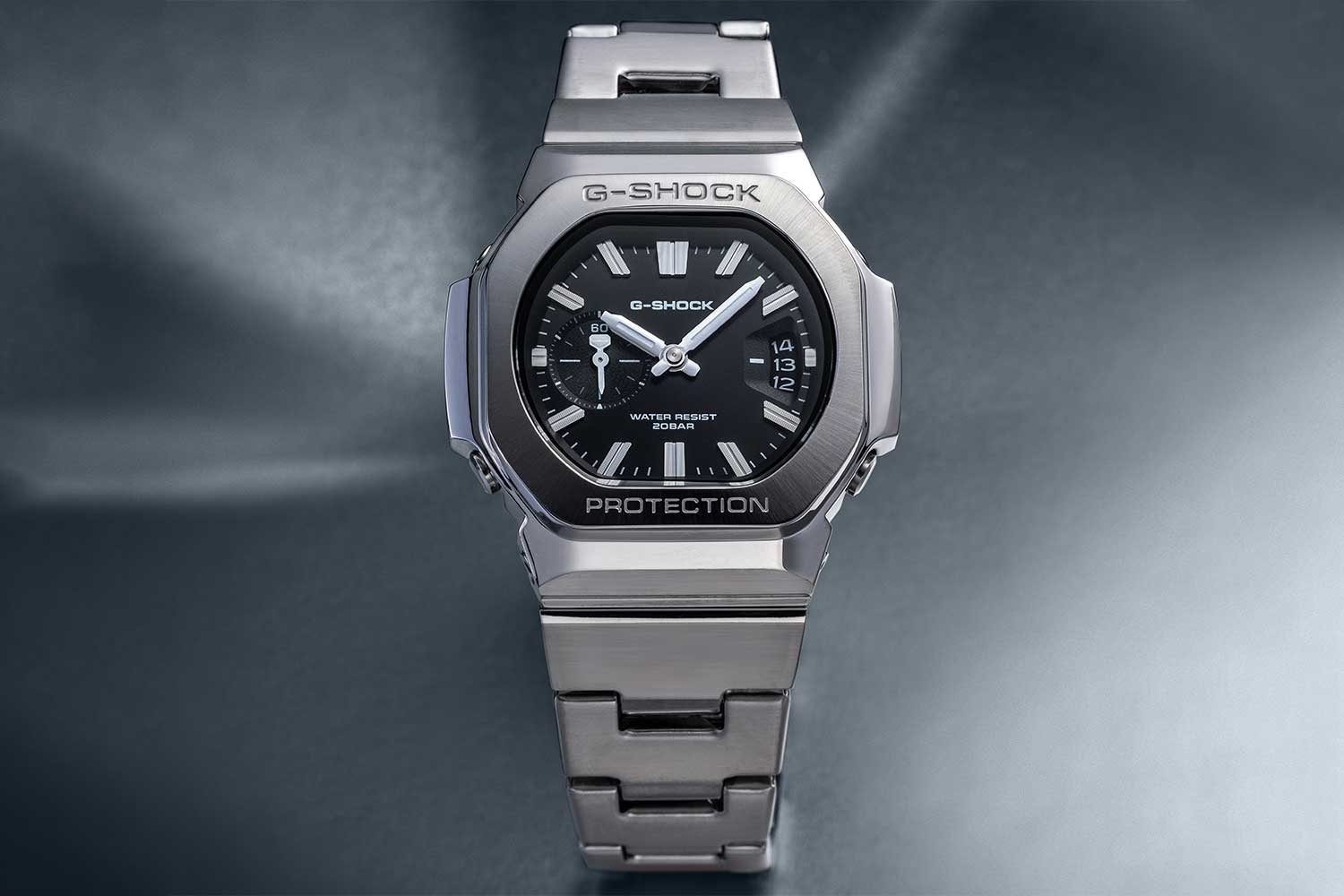
Casio also uses a magnetic holding structure to keep the hands in position.
The brand says this helps with shock resistance and reduces mechanical wear compared with relying only on a conventional friction-fit arrangement.
Another efficiency-minded detail is the second-hand stop function, which can halt the small seconds hand when it isn’t needed for active time viewing.
Casio rates battery life at up to five years, a useful gain for daily wearers who don’t want frequent battery changes.
The absence of an alarm feels intentional rather than like a missing feature.
This isn’t a model trying to win by carrying every possible function, but by making the analog experience feel direct and durable.
Three expressions of the 2500 idea
The 2500 Series is split across resin, metal-bezel and full-bracelet versions, giving the same analog concept three distinct personalities.
The GAC2500 is the most direct G-Shock expression, built from bio-based resin and priced at USD 145.
It launches in four versions, with the GAC-2500-9A in yellow, GAC-2500-1A in black, GAC-2500-3A in green and GAC-2500-7A in white.
Those resin cases let Casio use stronger color, while the layered dial keeps the watch readable rather than playful at the expense of function.
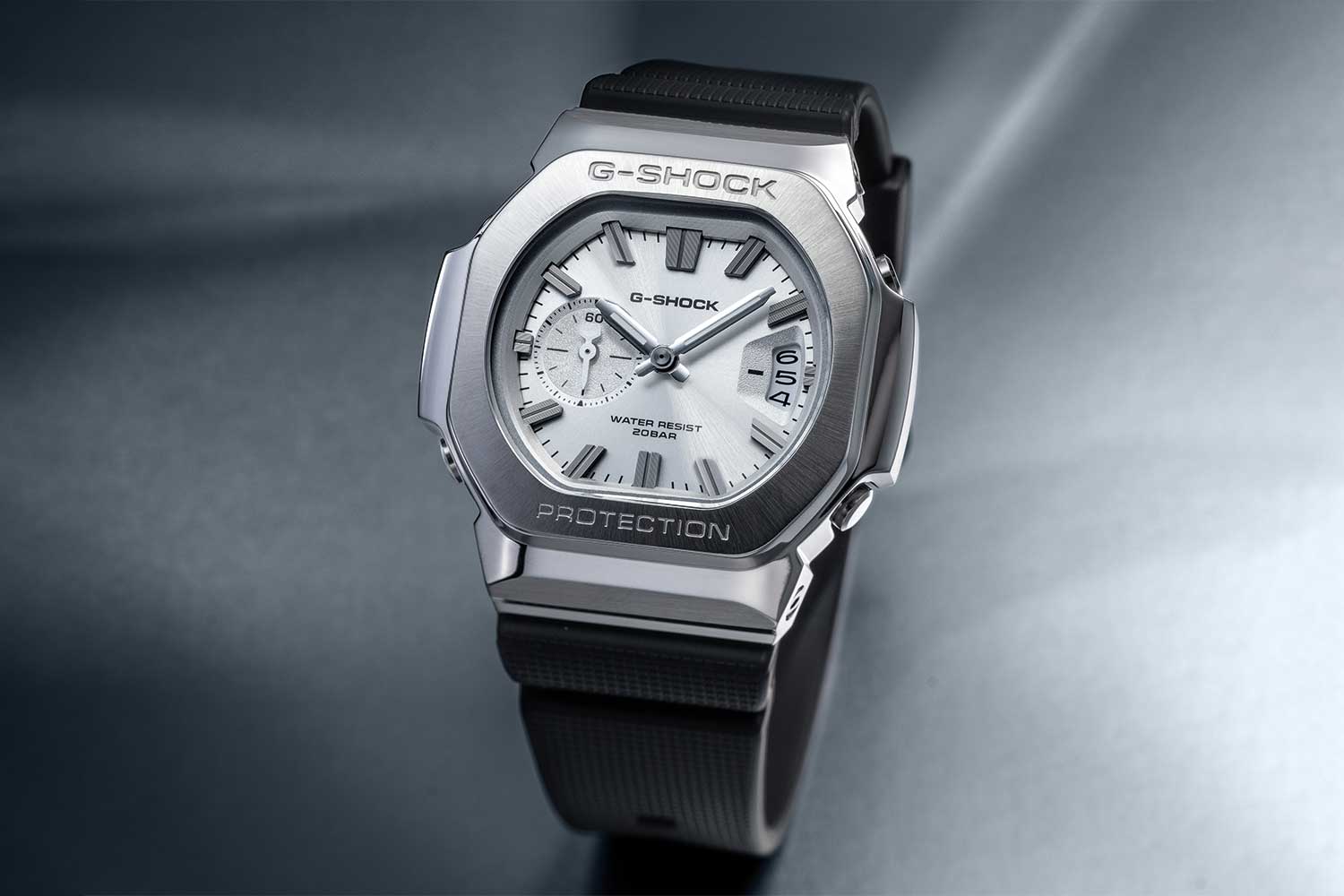
The GMC2500 moves the format into a more polished space with stainless steel bezels and bio-based resin straps.
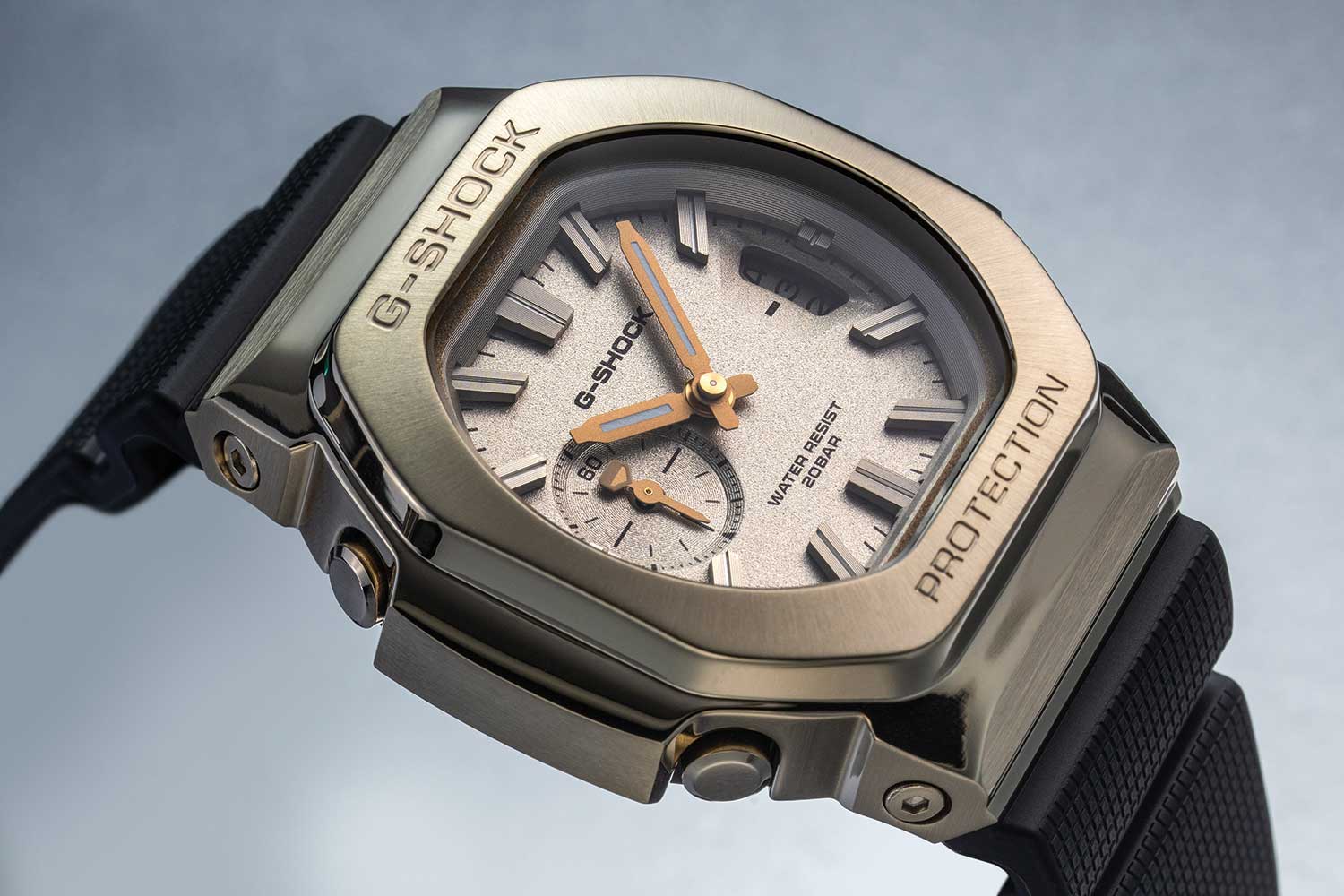
The lineup includes the GMC-2500-1A with a black dial, the GMC-2500-1A8 with a silver dial and the GMC-2500G-9A with a gold-tone bezel and dial.
Casio keeps the bezel relatively clean, leaving room for brushed surfaces, polished accents and dial finishes rather than filling it with functional engraving.
Pricing for the metal-bezel models ranges from USD 280 to USD 300.
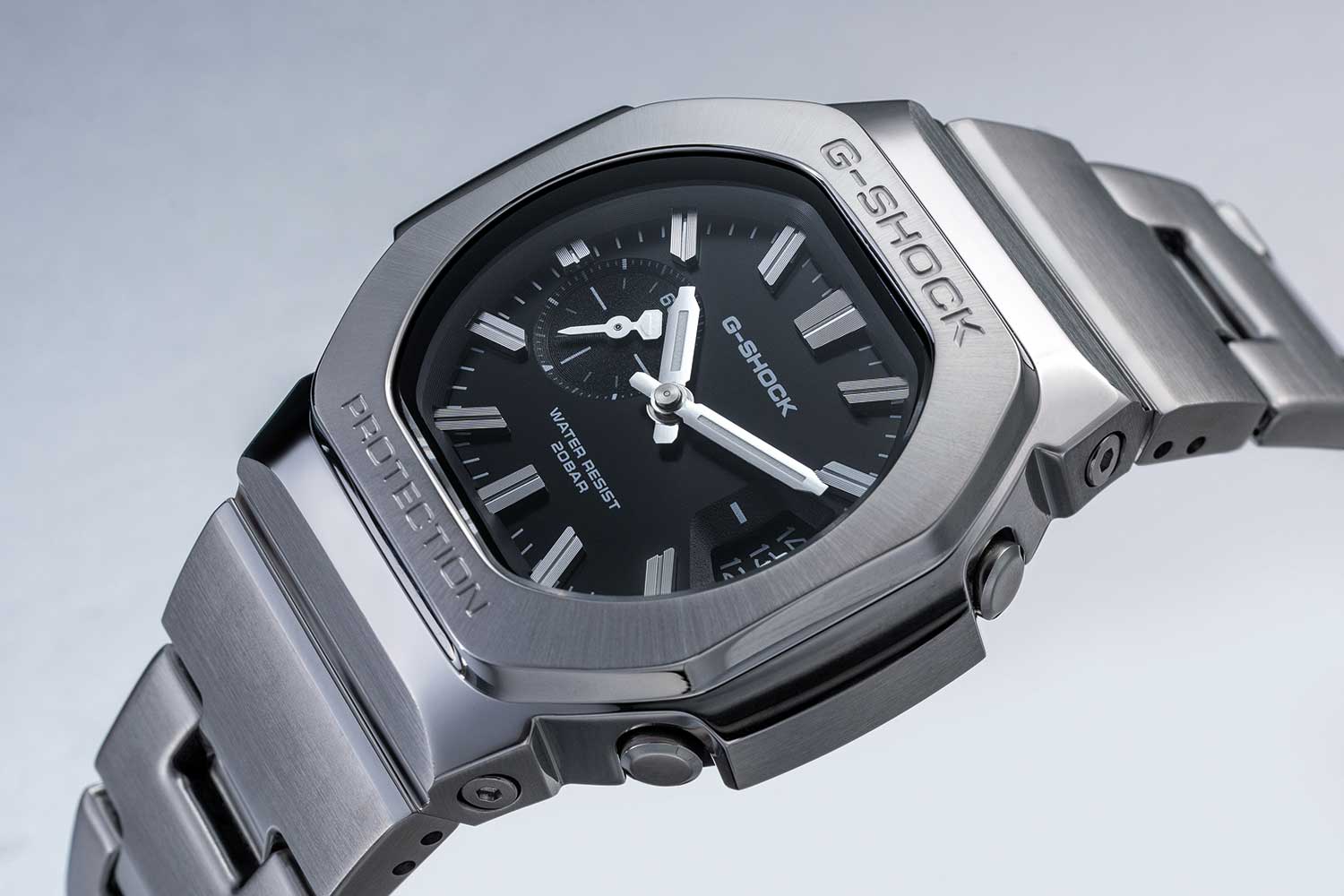
At the top of the collection sits the GMC2500D, which pairs the analog G-Shock format with a stainless steel bracelet.
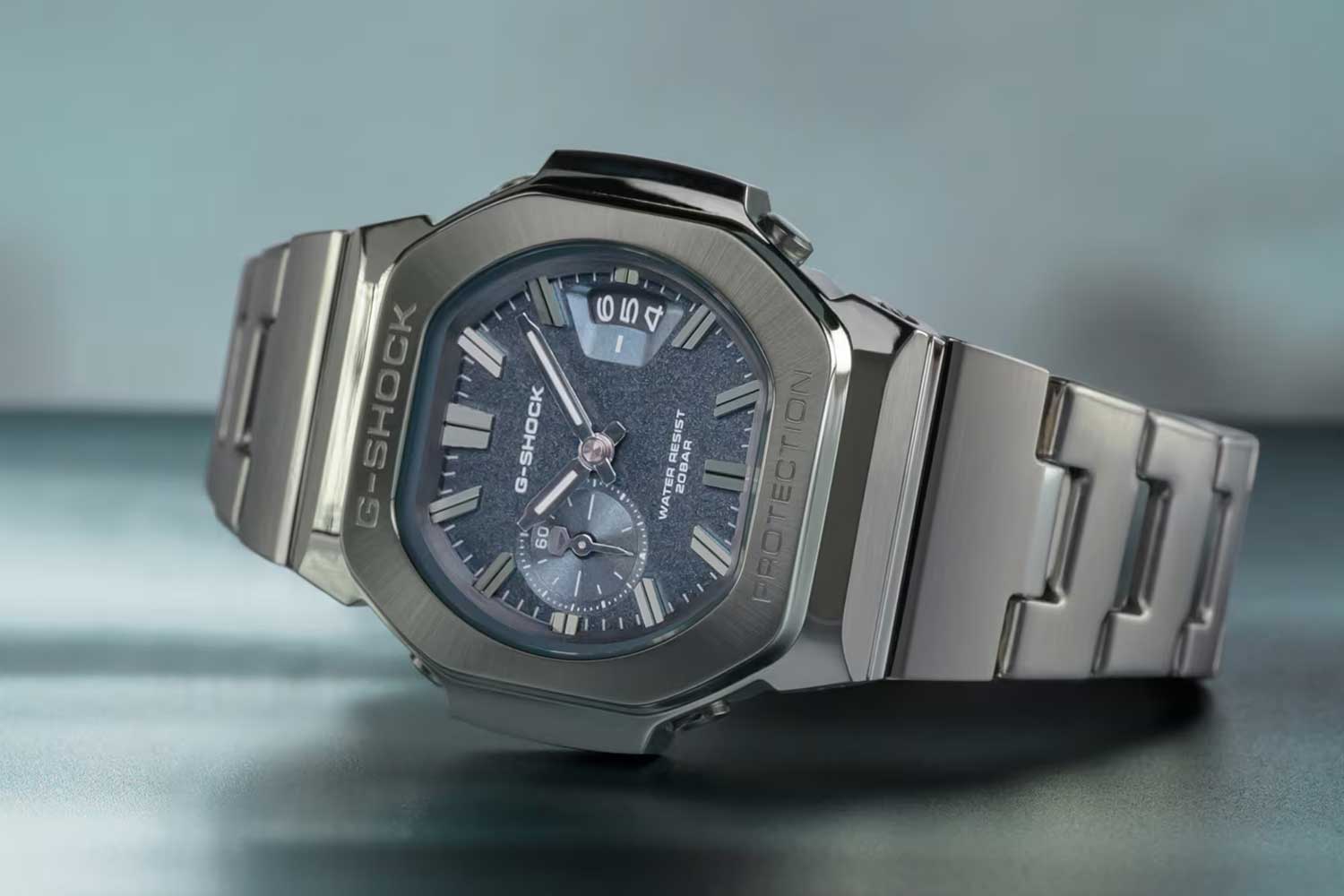
The two bracelet references are the GMC-2500D-1A with a black dial and the GMC-2500D-1A2 with a blue dial, each priced at USD 350.
The bracelet’s horizontal hairline finish gives these models a more substantial metallic character while keeping the watch within the accessible G-Shock universe.
Details & Specifications
| Brand | Casio G-Shock |
|---|---|
| Series | 2500 Series |
| Display | Full analog, no digital display |
| Movement | New analog quartz module developed for the G-Shock Basic collection |
| Complications and functions | Small seconds, date disk, full-auto calendar, chronograph minute indication, second-hand stop function |
| Case dimensions | 46.7mm height, 43.8mm to 44.5mm width, 12.7mm to 12.9mm thickness |
| Construction | Shock-resistant G-Shock architecture with crown and pusher guards |
| Materials | Bio-based resin versions, stainless steel bezel versions and stainless steel bracelet versions |
| Battery life | Up to five years |
| Resin models | GAC-2500-9A, GAC-2500-1A, GAC-2500-3A, GAC-2500-7A |
| Metal-bezel models | GMC-2500-1A, GMC-2500-1A8, GMC-2500G-9A |
| Bracelet models | GMC-2500D-1A, GMC-2500D-1A2 |
| Price | USD 145 for GAC2500, USD 280 to USD 300 for GMC2500, USD 350 for GMC2500D |
The 2500 Series works because it doesn’t treat analog as a nostalgic gesture.
It treats it as a practical interface, then surrounds it with the engineering language that made G-Shock useful in the first place.
For anyone who likes the resilience of a G-Shock but wants a quieter, hand-driven way to read time, this is one of Casio’s more considered moves in the Basic line.