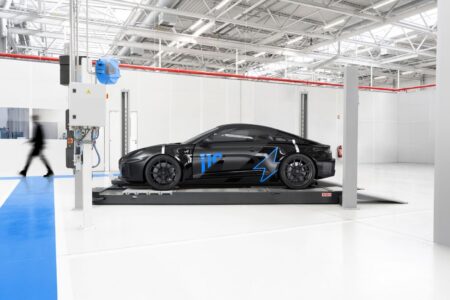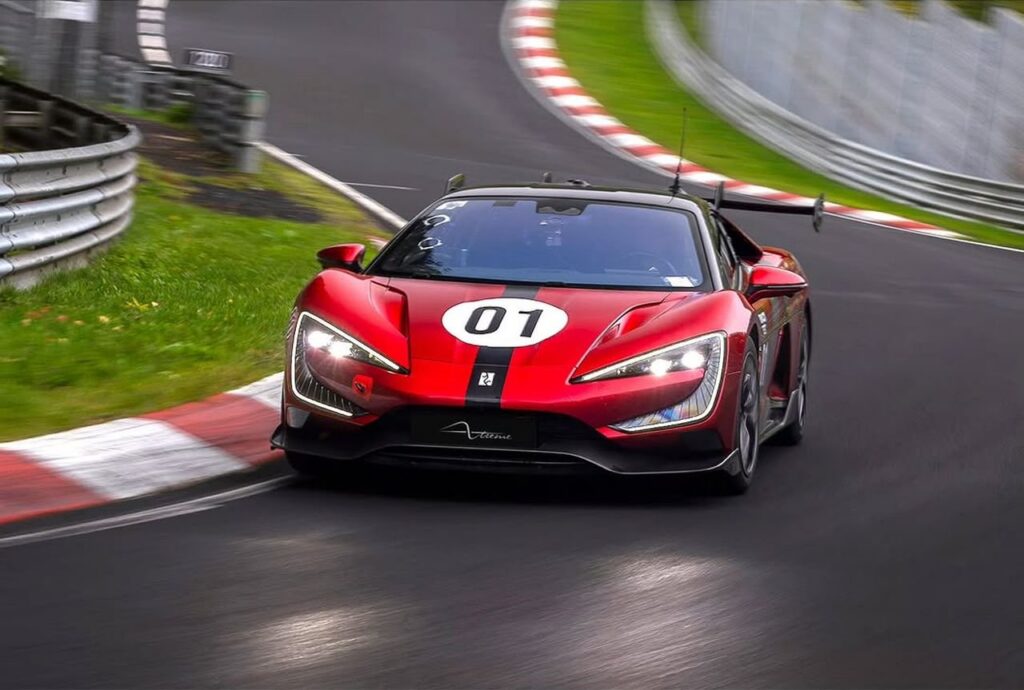
BYD’s Yangwang U9 Xtreme is closing in on one of the most demanding numbers in road-car performance, the 500 km/h mark.
After a 496.22 km/h run in Germany, the electric hypercar is now being prepared for a fresh attempt in Dubai this November, with executive vice president Stella Li indicating that the company wants to push beyond the barrier.
What makes this more than a headline chase is the margin involved, because the U9 Xtreme needs just 3.78 km/h more to pass 500 km/h.

At a glance
- BYD is preparing a November Dubai speed attempt for the Yangwang U9 Xtreme.
- The electric hypercar uses four motors producing a combined 2,220 kW, or approximately 2,977 hp.
- It has already reached 496.22 km/h, though the Dubai venue, permissions and exact date are not yet confirmed.
A tiny gap to 500 km/h
The Yangwang U9 Xtreme reached 496.22 km/h, or 308.33 mph, at Germany’s ATP test track on September 14, 2025.
Racing driver Marc Basseng was behind the wheel for that run, putting the car within touching distance of 500 km/h.
That target matters because 500 km/h has become a symbolic line in the modern hypercar world, especially as manufacturers move from combustion records into electric performance claims.
For context, the Bugatti Chiron Super Sport 300+ reached 490.48 km/h, or 304.77 mph, in a single-direction run in 2019.
The Koenigsegg Agera RS recorded a two-way average of 447.19 km/h, or 277.87 mph, in 2017.
Why Dubai is in the frame
Stella Li said the team needs a straight stretch of road around 15 km, or 9.32 miles, long for the next attempt.
She also said BYD will approach Dubai police to find a suitable location.
That makes the plan ambitious but not yet locked in, as the exact venue, official permissions and final attempt date haven’t been confirmed.
The setting is important because runs at this speed depend as much on location and logistics as they do on output.
A clean, controlled, sufficiently long straight is essential when a car is travelling at more than 300 mph and still needs space to accelerate, stabilise and slow down safely.
Electric power at hypercar scale
The U9 Xtreme’s power figure is the central technical detail here.
Its four electric motors produce a combined 2,220 kW, equivalent to approximately 2,977 hp.
That places the Yangwang not just in the electric hypercar conversation, but among the most extreme high-speed machines currently being discussed in public.
The performance brief is unusually focused, too.
This isn’t about a theoretical claim or a distant concept, because BYD already has a recorded 496.22 km/h run behind it and a clearly defined gap to the next milestone.
Details & Specifications
| Brand | BYD |
|---|---|
| Model | Yangwang U9 Xtreme |
| Powertrain | Four electric motors |
| Power | 2,220 kW, approximately 2,977 hp |
| Recorded speed | 496.22 km/h, or 308.33 mph, at Germany’s ATP test track on September 14, 2025 |
| Driver for recorded run | Marc Basseng |
| Target | Beyond 500 km/h, or about 310 mph |
| Planned attempt location | Dubai, exact venue not yet confirmed |
| Planned timing | November, exact date not yet confirmed |
If BYD secures the right road and approvals, the Yangwang U9 Xtreme’s next run could become a defining moment for electric hypercars.
The car has already done the difficult part by reaching 308.33 mph; now the question is whether Dubai can provide the final stretch needed to cross 500 km/h.