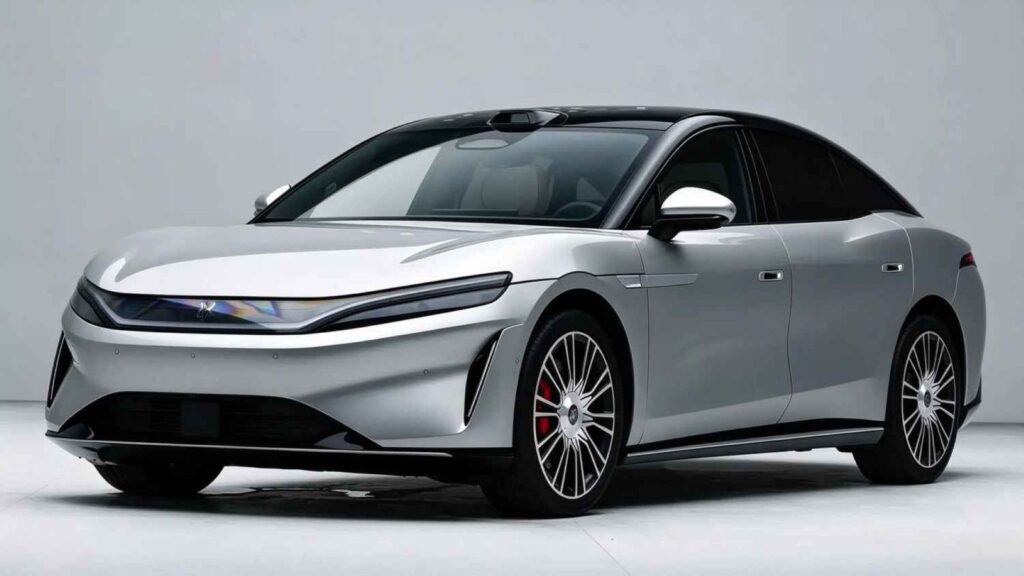
BYD’s next electric flagship is arriving with the kind of numbers that make the luxury EV field pay attention.
The Da Han is scheduled to launch in China on October 13, bringing a claimed drag coefficient of just 0.197 Cd, long-range battery hardware and a cabin pitched firmly at the premium end of the market.
At a glance
- BYD will launch the Da Han EV in China on October 13, with deliveries expected to begin within two weeks.
- The electric flagship claims a 0.197 Cd drag coefficient and will be offered with single-motor and dual-motor powertrains.
- Pre-sales opened in August, while final pricing and delivery details are due at launch.
Aero-first flagship ambitions
The headline figure is the Da Han’s claimed 0.197 Cd drag coefficient, a number that places aerodynamics at the centre of its identity.
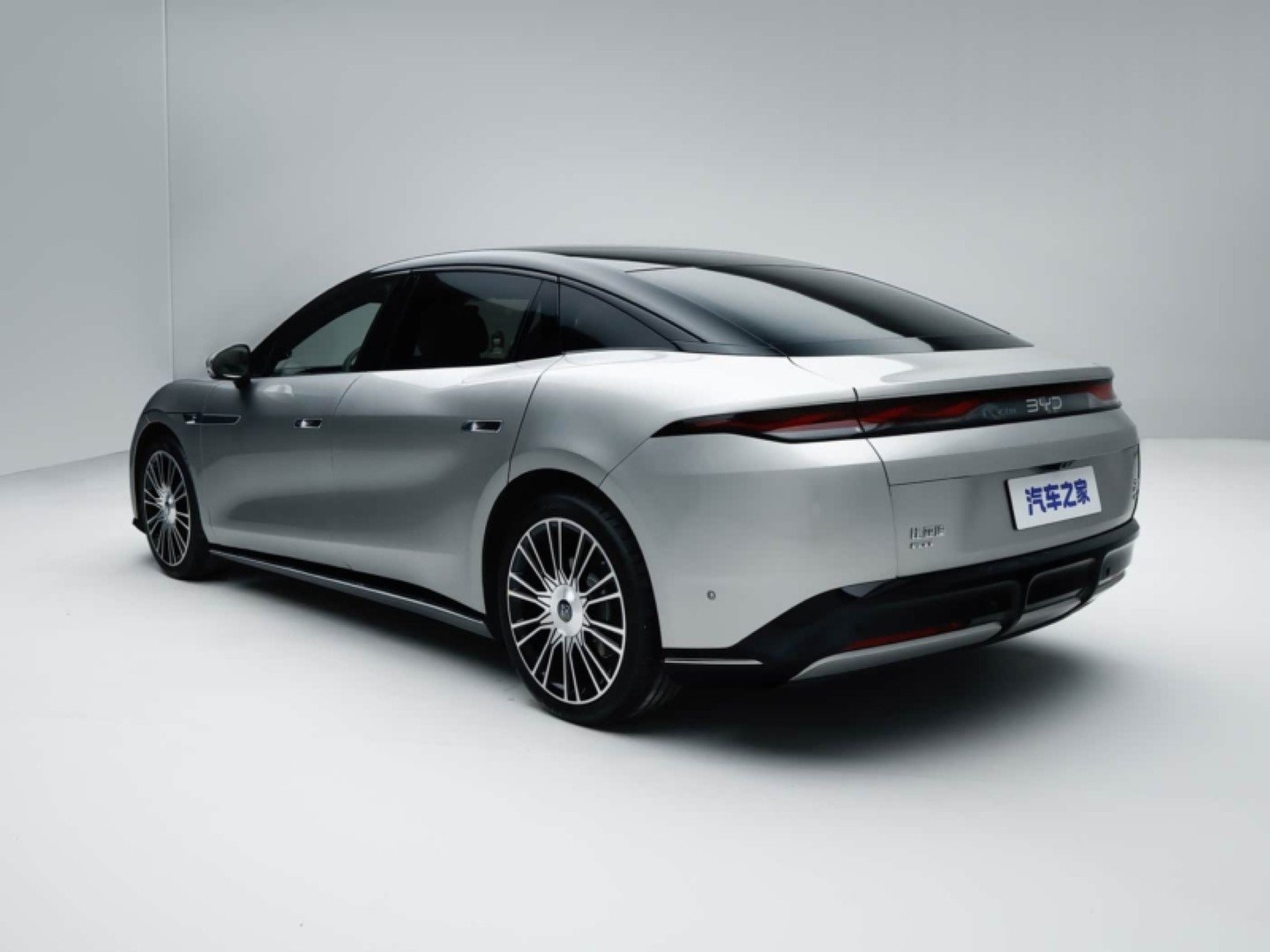
For context, Jaguar’s recently shown Type 01 luxury electric grand tourer is claimed at 0.23 Cd, giving BYD a useful talking point as it pushes the Da Han into a more premium space.
Low drag matters in an EV because it can directly influence high-speed efficiency, cabin refinement and real-world range, especially in a large flagship model where weight and frontal area can work against efficiency.
BYD hasn’t framed the Da Han as a sports car, but the combination of a low-slung aero brief and serious output gives it a more technically assertive character than a conventional executive sedan.
Two powertrains with long-range intent
The entry point for the Da Han range is a single-motor version producing 496 hp.
It uses a 102 kWh battery and carries a claimed CLTC range of up to 1,008 km, which converts to about 626 miles.
Above it sits a dual-motor all-wheel-drive variant developing 764 hp, giving the car the kind of output more commonly associated with high-performance luxury EVs.

Even in this more powerful configuration, BYD claims the Da Han can cover up to 880 km, or around 546 miles, on the CLTC cycle.
As ever with CLTC figures, real-world range will depend heavily on conditions, speed and driving style, but the published numbers suggest BYD is prioritising both efficiency and performance rather than treating them as separate goals.
A cabin pitched beyond the mainstream
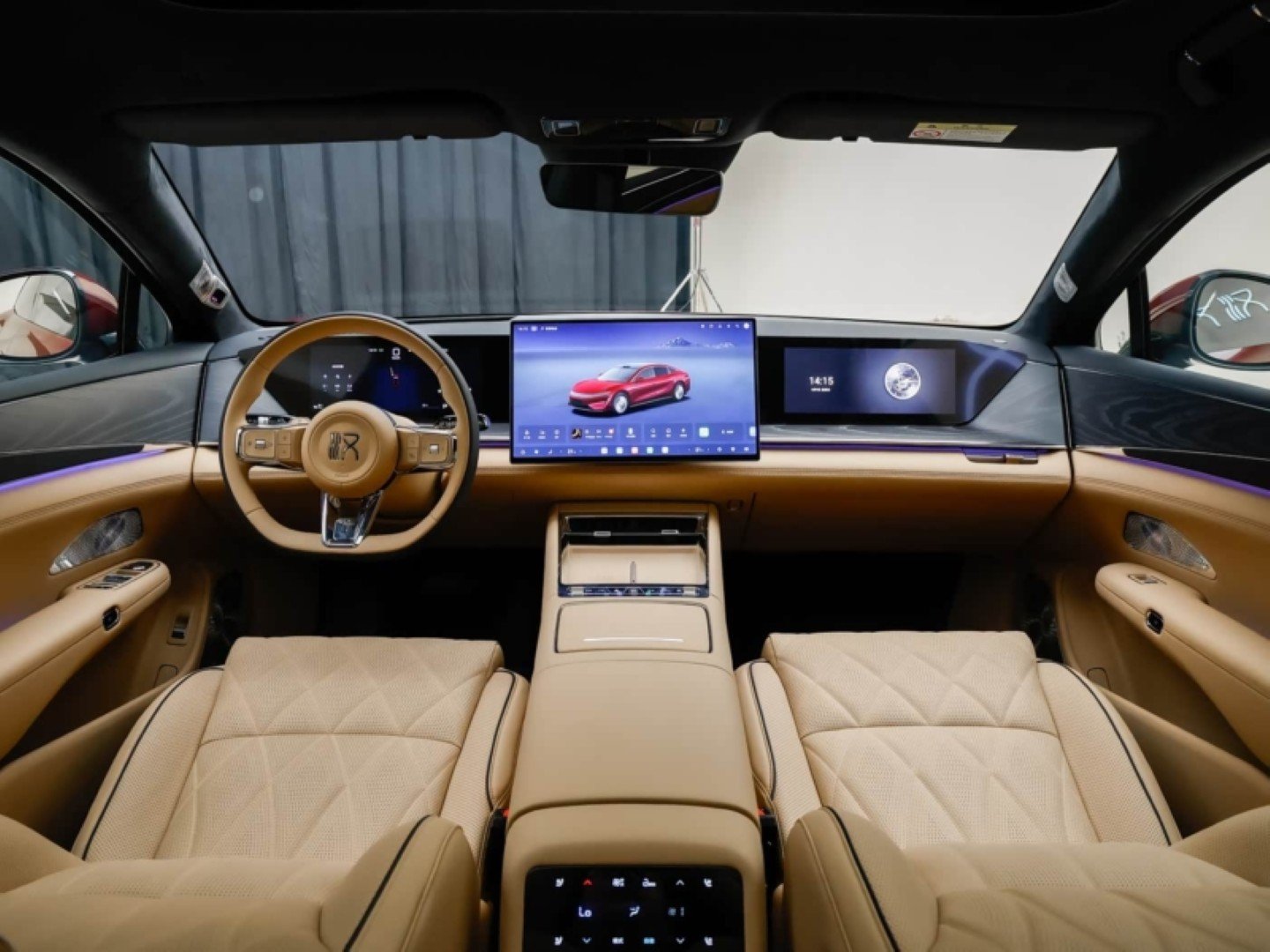
Inside, the Da Han appears to be leaning into a more formal luxury brief.

Buyers will be able to specify a 31-speaker audio system, a feature set that signals BYD’s intent to compete on ambience as much as acceleration or range.
Electrochromic rear windows can change transparency at the push of a button, adding a limousine-like privacy function without relying only on conventional blinds or heavy tinting.
Real-wood trim and a three-screen dashboard complete the premium treatment, combining familiar luxury cues with the screen-heavy layout now expected in upper-tier Chinese EVs.

Details & Specifications
| Brand | BYD |
|---|---|
| Model | Da Han EV |
| Launch market | China |
| Launch date | October 13 |
| Drag coefficient | 0.197 Cd claimed |
| Single-motor output | 496 hp |
| Dual-motor output | 764 hp |
| Battery | 102 kWh |
| Maximum claimed range | Up to 1,008 km / 626 miles CLTC |
| Dual-motor claimed range | Up to 880 km / 546 miles CLTC |
| Drivetrain | Single-motor or dual-motor all-wheel drive |
| Interior features | Available 31-speaker audio system, electrochromic rear windows, real-wood trim, three-screen dashboard |
| Pre-sales | Opened in August |
| Deliveries | Expected within two weeks of launch |
Final pricing remains the missing piece, and it will determine how aggressively the Da Han can challenge established luxury EVs as well as domestic rivals.
If BYD can match its claimed aerodynamic and range figures with a polished ownership experience, the Da Han could become one of the more closely watched Chinese electric flagships of the year.