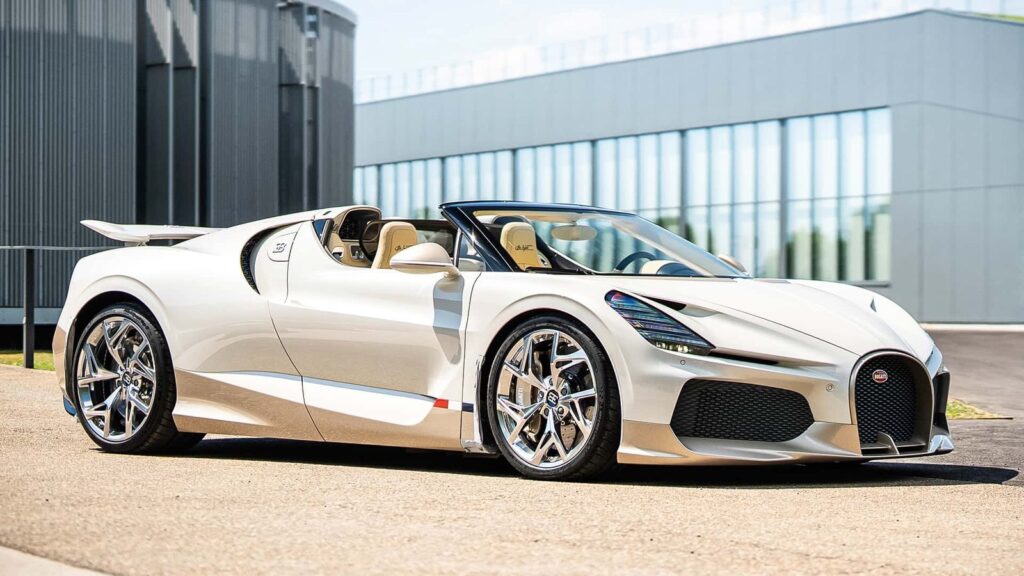
Bugatti has completed the 99th Mistral, and with it, one of modern performance motoring’s defining engines has reached its final act.
Named The Last of Its Kind, the car is a bespoke roadster built as a farewell to the 8.0-litre quad-turbocharged W16, an engine that reshaped expectations when it arrived in the Veyron in 2005.
It’s a quiet ending for a very loud piece of engineering history.
At a glance
- Bugatti has completed the 99th Mistral, closing production of the W16-powered roadster.
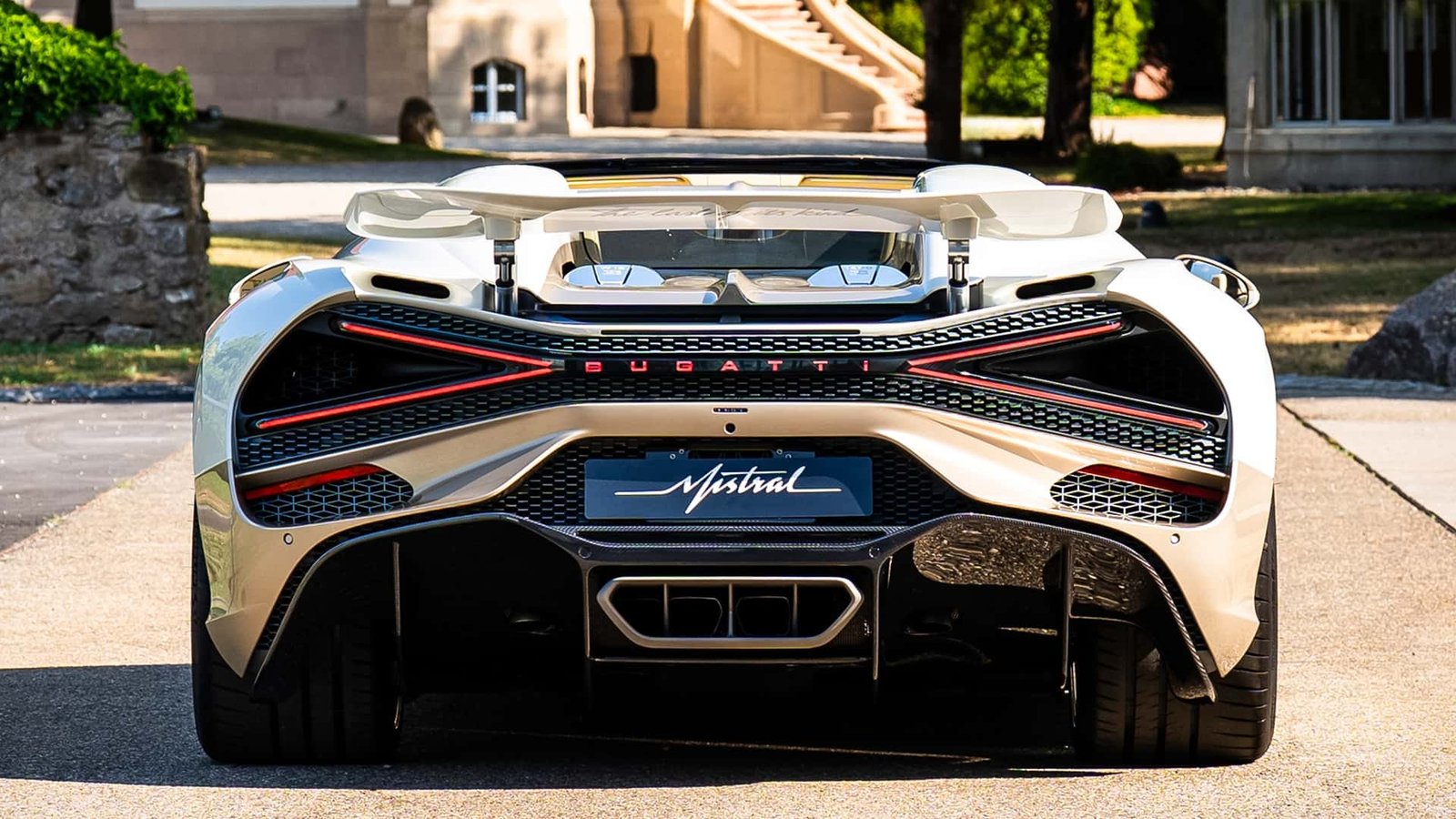
- The final car is named The Last of Its Kind and wears a Pearl and Sparkle two-tone finish with a bespoke Magnolia leather interior.
- The Mistral’s completion marks the end of Bugatti’s quad-turbocharged W16 era, which began with the Veyron in 2005.
The final Mistral gets a ceremonial finish
The last Mistral is finished in a Pearl and Sparkle two-tone scheme, giving the car a more ceremonial presence than a standard production finale.
That matters because the Mistral was never really a conventional series-production car in the first place.
Each example has been treated as a highly personalised commission, shaped by its owner’s preferences down to small trim and material choices.
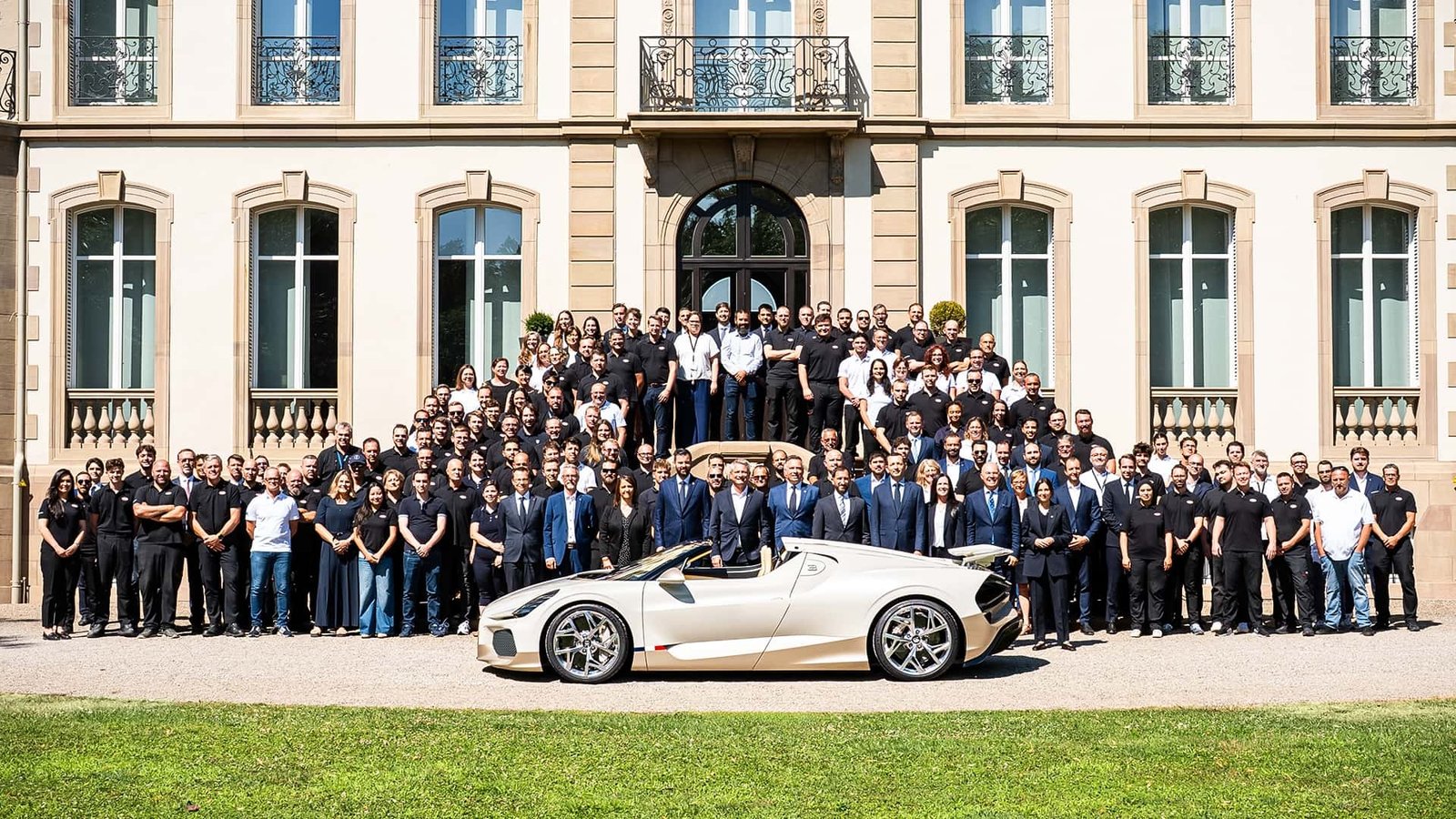
For the 99th car, Bugatti has leaned into the moment without turning it into theatre.
Inside the W16 farewell car
The cabin pairs Magnolia leather with Grey Carbon Matt accents, a restrained combination that keeps the attention on material contrast rather than visual excess.
Ettore Bugatti’s signature appears throughout the interior and is also worked into the engine cover trim, underlining the car’s role as a closing marker in the marque’s modern history.
It’s a detail aimed squarely at the collector who wants the final chapter to be legible, not just implied.
The engine that defined modern Bugatti
The W16 first appeared in the Veyron in 2005, when Bugatti returned to the top of the performance conversation with a level of speed and complexity few production cars had attempted.
Its layout was as memorable as its output, an 8.0-litre quad-turbocharged configuration that became inseparable from Bugatti’s 21st-century identity.

The same engine family also powered the track-only Bolide, where it was paired with a 7-speed dual-clutch transmission and produced 1,825 hp and 1,475 lb-ft of torque.
With a dry weight of 1,450 kg, the Bolide delivered a power-to-weight ratio of more than 1,100 hp per tonne, showing just how far Bugatti could push the W16 when road-car compromises were removed.
That breadth is part of the engine’s legacy.

It could be the heart of a luxury hypercar, a high-speed roadster, or a track weapon, yet it always remained unmistakably Bugatti.
Details & Specifications
| Brand | Bugatti |
|---|---|
| Model | Mistral |
| Final example name | The Last of Its Kind |
| Production milestone | 99th Mistral completed |
| Engine | 8.0-litre quad-turbocharged W16 |
| Exterior finish | Pearl and Sparkle two-tone |
| Interior | Magnolia leather with Grey Carbon Matt accents |
| Notable detailing | Ettore Bugatti signature in the cabin and engine cover trim |
The completion of the final Mistral doesn’t just close a model run.
It ends the W16 period that made modern Bugatti feel almost untouchable, and it leaves The Last of Its Kind as a fittingly literal name for one of the brand’s most significant farewells.