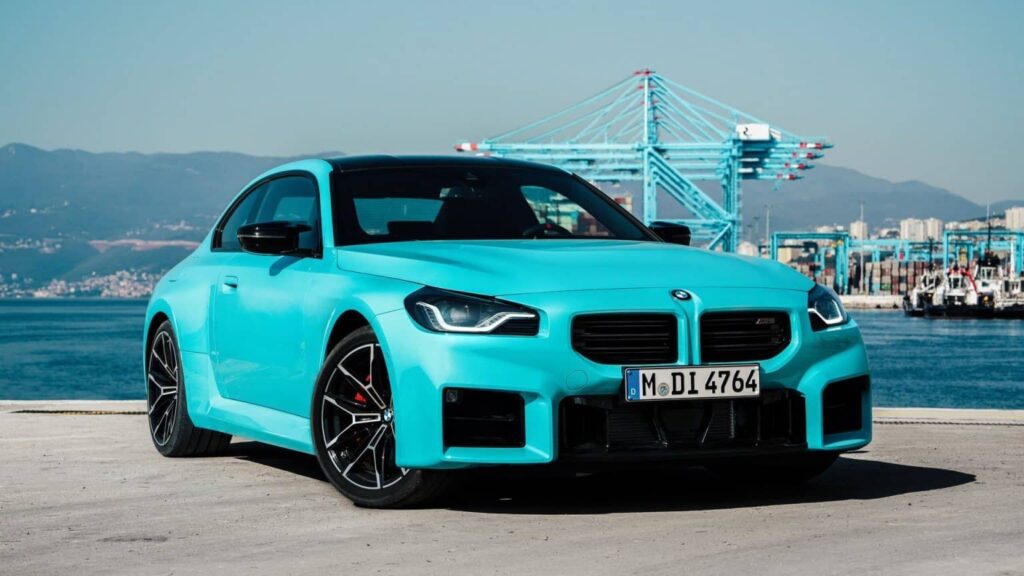
The BMW M2 has long carried a simple appeal. It’s compact, rear-driven and slightly unruly in the way a small M car should be.
BMW’s decision to add xDrive all-wheel drive doesn’t erase that character, but it does show how the market around performance cars has shifted. For buyers in snowy regions, the fastest car on paper isn’t always the one they can use with confidence all year.
At a glance
- BMW has added xDrive all-wheel drive to the M2 to improve traction and everyday usability.
- The M2 xDrive keeps the 3.0-litre twin-turbo S58 straight-six with 473 hp and 443 lb-ft of torque.
- BMW says demand from snow-prone regions helped drive the move, while the rear-wheel-drive manual M2 remains part of the range.
Snowbelt demand shaped the M2 xDrive
The reasoning behind the M2 xDrive is practical rather than philosophical.
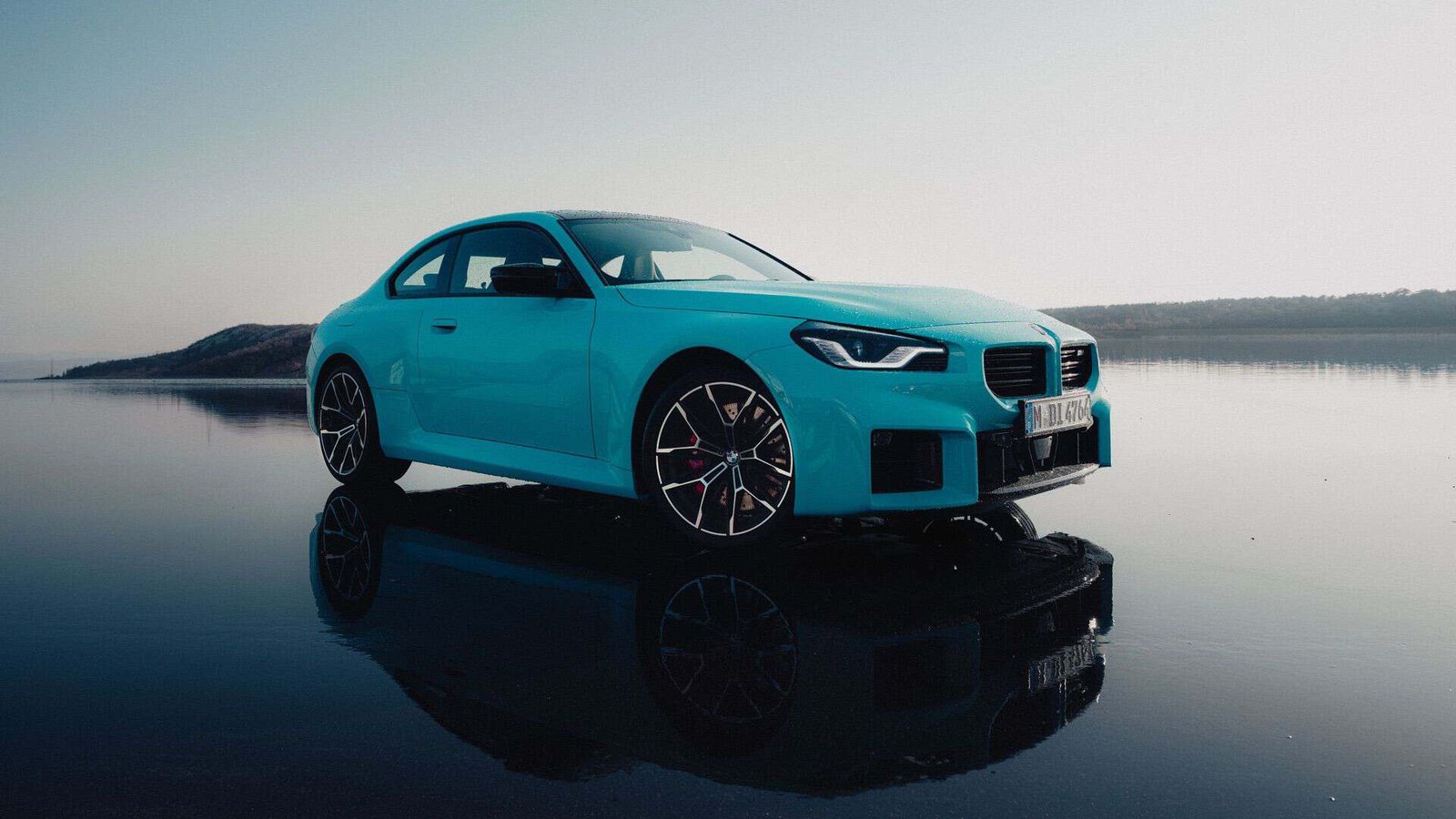
BMW M chief Frank van Meel has pointed to customers in places such as the northeastern United States and the Midwest, where winter weather makes traction a daily concern rather than an occasional inconvenience.
A high-powered rear-wheel-drive coupe on all-season tyres can be entertaining, but it isn’t always reassuring when roads are cold, wet or covered in snow.
The same thinking applies in markets such as Switzerland, where changing weather and mountain roads can make all-wheel drive feel less like a performance option and more like common sense.
For BMW, adding xDrive to the M2 broadens the car’s appeal without asking every buyer to embrace the same level of compromise.
The straight-six stays at the centre
The important mechanical headline is that the engine hasn’t changed.
The M2 xDrive uses BMW’s familiar 3.0-litre twin-turbocharged S58 straight-six, producing 473 hp and 443 lb-ft of torque.

That engine already gives the M2 serious performance credentials, but all-wheel drive helps the car deploy its output more effectively from a standing start.
BMW quotes 0–60 mph in 3.6 seconds, dropping to 3.3 seconds with rollout.
That makes the all-wheel-drive car meaningfully quicker off the line than the rear-wheel-drive version, even if the personality shift will matter more to purists than the stopwatch does.
Rear-wheel drive still has a place
The arrival of the M2 xDrive doesn’t mean BMW has abandoned the traditional M2 formula.
Rear-wheel drive remains available, and so does the manual gearbox, which will matter to the buyers who see the M2 as one of the last compact performance coupes built around old-school involvement.
That split is useful because it lets the M2 serve two slightly different audiences.
One buyer wants the most playful version, with the familiar rear-driven balance and the extra layer of engagement that comes from shifting for yourself.
Another wants the same engine and compact M-car footprint, but with traction that makes the car easier to live with in difficult weather.
The xDrive version is less about replacing the enthusiast’s car and more about making the M2 usable for people who might otherwise have looked elsewhere.
Details & Specifications
| Brand | BMW |
|---|---|
| Model | M2 xDrive |
| Engine | 3.0-litre twin-turbo S58 straight-six |
| Power | 473 hp |
| Torque | 443 lb-ft |
| Drivetrain | xDrive all-wheel drive |
| 0–60 mph | 3.6 seconds |
| 0–60 mph with rollout | 3.3 seconds |
The M2 xDrive is a reminder that modern performance buyers don’t all define purity in the same way.
For some, the rear-wheel-drive manual remains the one to have, but for others, the quicker and more weather-ready M2 may be the version that finally makes the smallest M coupe fit real life.