Some supercars attract attention because they’re loud, low and expensive.
The McLaren Elva does it differently, mostly because it looks like it escaped from a 1960s sports car grid and somehow kept its number plates.
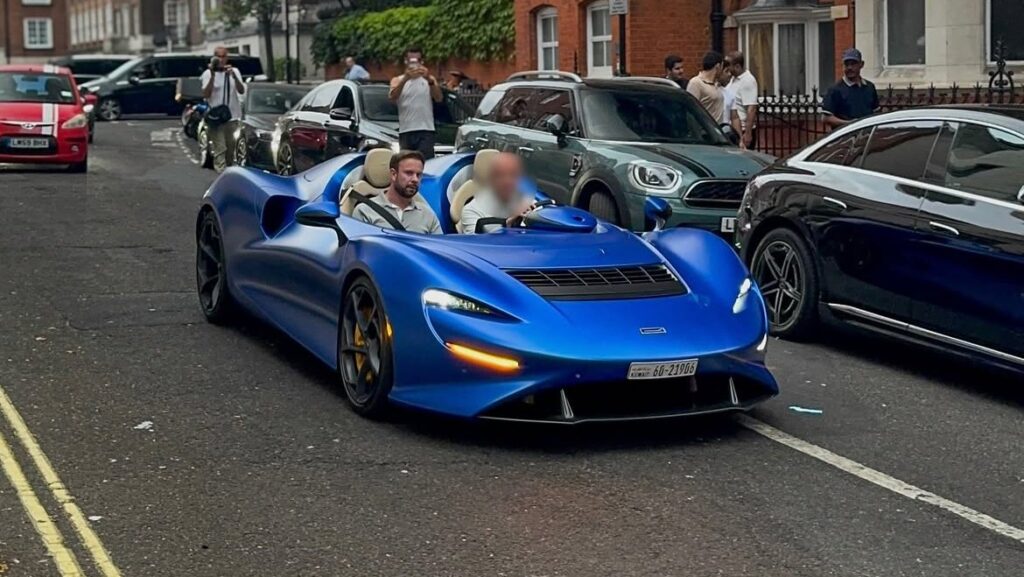
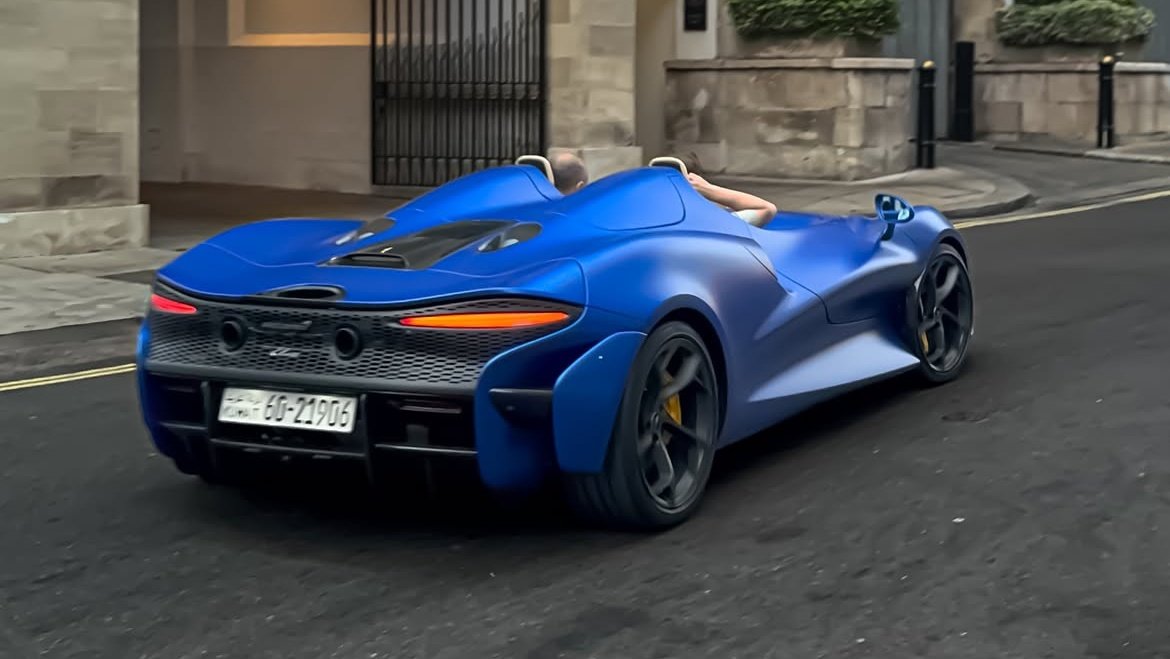
A striking blue example has been seen out on UK streets, giving onlookers a rare view of one of McLaren’s most uncompromising modern road cars.
At a glance
- A rare McLaren Elva has been spotted in the UK wearing a vivid blue finish.
- The Elva is an open-cockpit Ultimate Series roadster with no windscreen and a 4.0-litre twin-turbocharged V8.
- Production was reduced over time from a planned 399 cars to just 149 examples globally.
Open-cockpit McLaren theatre
The Elva is not simply a convertible version of an existing McLaren.
It was conceived as an open-cockpit roadster, and the absence of a windscreen gives it a very different character from the usual supercar formula.
That makes every public appearance feel more dramatic, particularly in a country where weather and road conditions don’t always flatter roofless machinery.
In blue, the car’s long, low surfaces look especially clean, with the bodywork doing most of the talking rather than relying on wings and visual clutter.
A modern link to Bruce McLaren’s racing past
The Elva takes its inspiration from the open-top racing cars associated with Bruce McLaren in the 1960s.
That historical reference matters because it places the car outside the familiar world of track-focused coupes and into something more elemental.
It’s also the fifth member of McLaren’s Ultimate Series, following the F1, P1, Senna and Speedtail.
That lineage gives the Elva a particular kind of weight within the brand, even before its rarity is considered.
The V8 behind the drama
Power comes from a 4.0-litre twin-turbocharged V8, producing 804 hp and 590 lb ft of torque.
It’s the kind of output that would be serious in any supercar, but in a machine with such an exposed driving position, the sensation is likely to be far more physical than the numbers alone suggest.
The engine is related to the unit used in McLaren’s other high-end models, including the Senna and Speedtail.
For collectors, that connection reinforces the Elva’s place among the company’s most extreme contemporary creations.
Rarity and production
The Elva was initially planned for a run of 399 cars.
That number was later reduced to 249, before final production was cut again to 149 examples.
Those changes make real-world sightings uncommon, especially away from concours lawns, private collections or specialist supercar gatherings.
Seeing one moving through ordinary streets is a reminder that some of the most interesting cars are best understood in motion rather than under museum lighting.
Details & Specifications
| Brand | McLaren |
|---|---|
| Model | Elva |
| Series | McLaren Ultimate Series |
| Body style | Open-cockpit roadster |
| Windscreen | None |
| Engine | 4.0-litre twin-turbocharged V8 |
| Power | 804 hp |
| Torque | 590 lb ft |
| Inspiration | Bruce McLaren’s 1960s open-top race cars |
| Production | 149 examples globally |
The Elva isn’t the most practical McLaren, and it was never meant to be.
Its appeal lies in how directly it connects speed, history and exposure, which is exactly why a blue example on UK roads feels like more than just another supercar sighting.