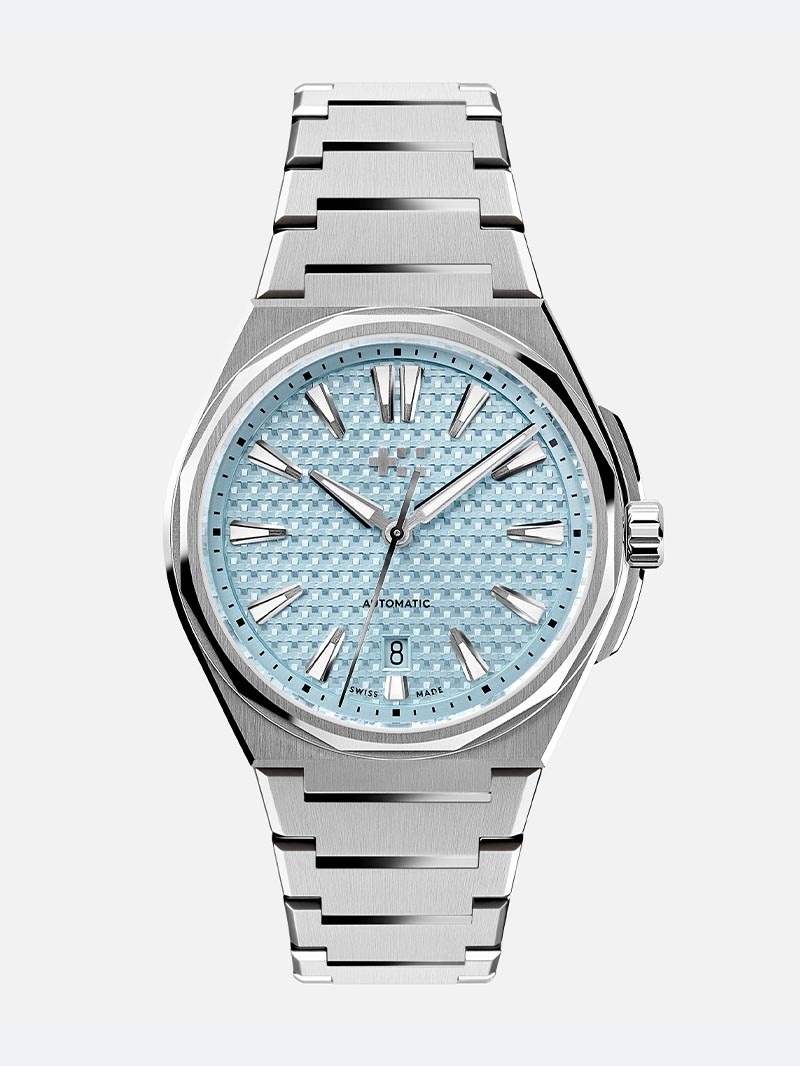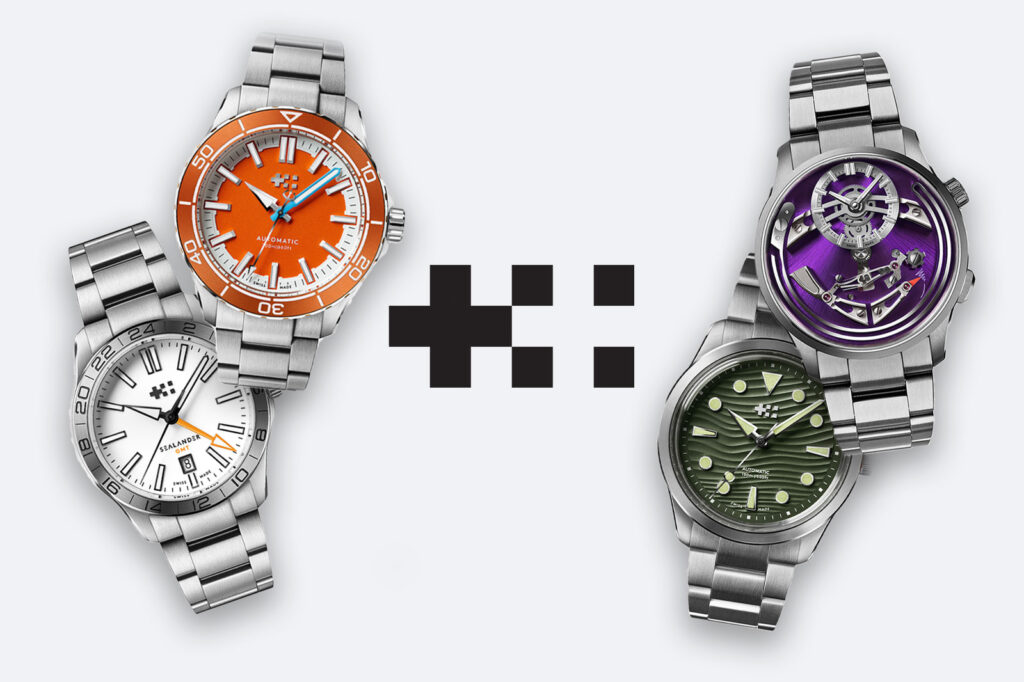
Christopher Ward has built its reputation by making Swiss-made mechanical watches feel less distant and more understandable.
The British-founded brand, launched in 2004, still leans on a direct-to-consumer model and a clear value proposition, but its catalogue is now broad enough to need a little navigation.
For many newcomers, the C60 Trident is the natural entry point, because it shows the brand at its most practical, technical and recognisable.
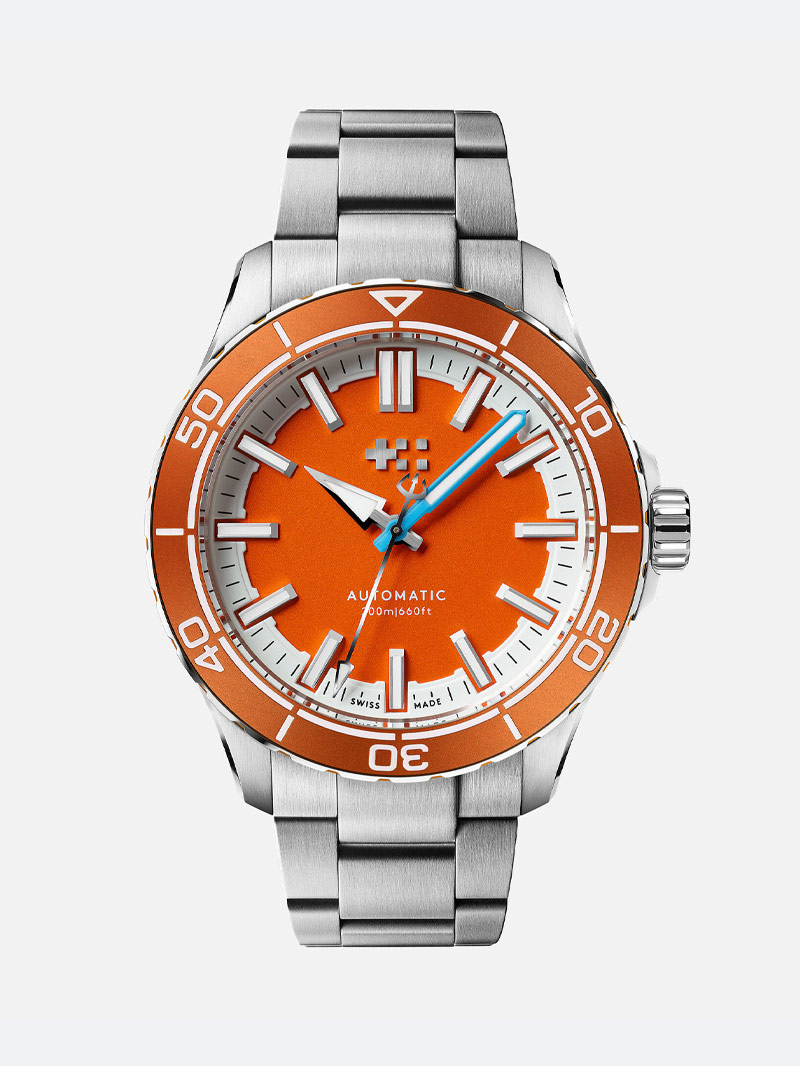
At a glance
- The C60 Trident is Christopher Ward’s core dive-watch family and one of its longest-running collections.
- The range includes 300m automatic divers, a GMT, bronze and sapphire variants, a titanium Lumière and the more colourful Reef.
- Prices in the confirmed C60 Trident line start from £725 and rise to £1,725 depending on model and specification.
The Christopher Ward idea in brief
Christopher Ward began with a simple provocation, that serious watchmaking didn’t need to be priced like an inaccessible luxury object.
The watches are designed in England, made in Switzerland and sold directly, with the brand built around a pricing approach that has long separated it from more traditional Swiss maisons.
The important turning point came in 2014 with Calibre SH21, now known as CW-001, a commercially viable mechanical movement from a British brand at a time when that claim carried real weight.

That shift helped move Christopher Ward from value-led disruptor into a more rounded watchmaker with its own technical credibility.
Today the wider line includes names such as Twelve, Sealander and Bel Canto, but the C60 Trident remains the brand’s most straightforward expression of everyday capability.
How the C60 Trident became the anchor collection
The C60 Trident arrived in 2009 and has become Christopher Ward’s professional dive-watch backbone.

In its current form, the range is no longer just one model but a family of related watches built around a shared dive brief.
The common ingredients are familiar and useful, including Swiss automatic movements, strong water resistance, a rotating timing bezel on the core dive models and the distinctive trident-tipped seconds hand.
Most sit at 300m of water resistance, which is more than enough for real-world diving and reassuringly robust for daily wear.

The appeal is that Christopher Ward doesn’t treat the Trident as a single aesthetic exercise, but as a platform that can become slimmer, more travel-ready, more colourful or more technically expressive.
Choosing the right C60 Trident
The C60 Trident Pro 300 is the cleanest place to start.
It uses the slimmer Light-catcher case, keeps 300m water resistance and comes in several case sizes, which makes it the most flexible option for different wrists.

The date at 6 o’clock helps keep the dial balanced, while the Sellita SW200-1 remains visible through a sapphire caseback.
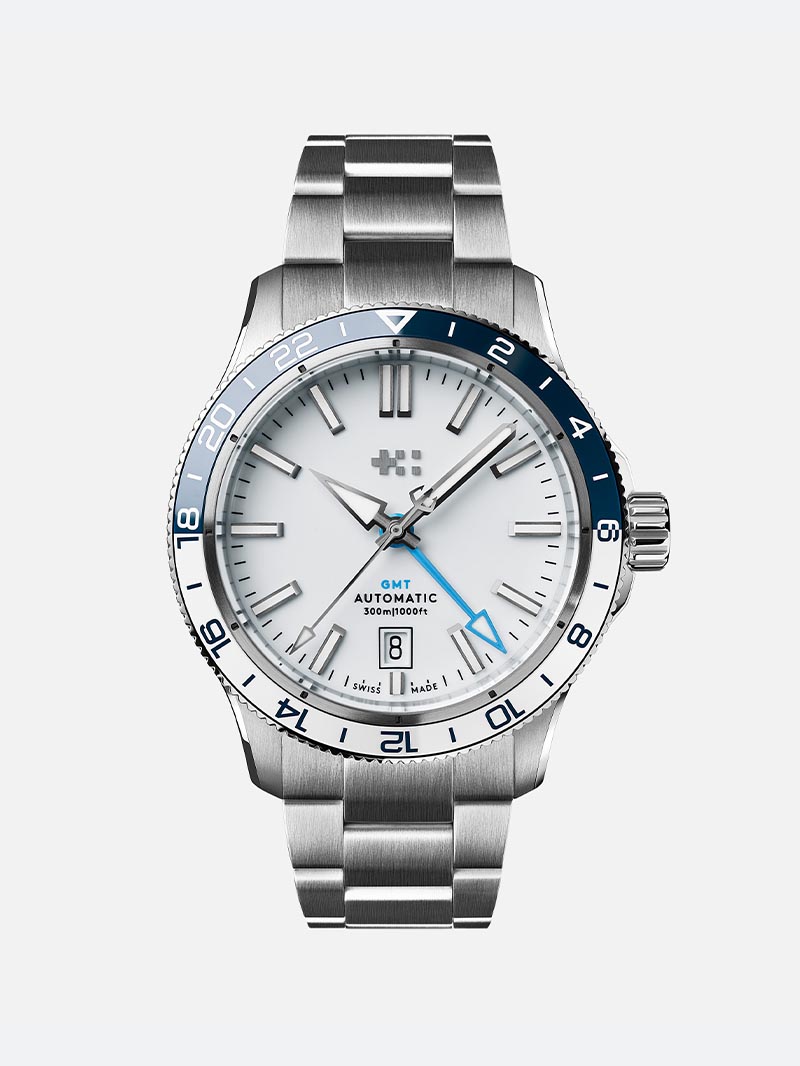
For travellers, the C60 Trident GMT 300 adds a central GMT hand and a bi-directional 24-hour bezel.
That gives it the ability to track three time zones while retaining the same 300m dive-watch rating, making it the most practical Trident for frequent movement across borders.
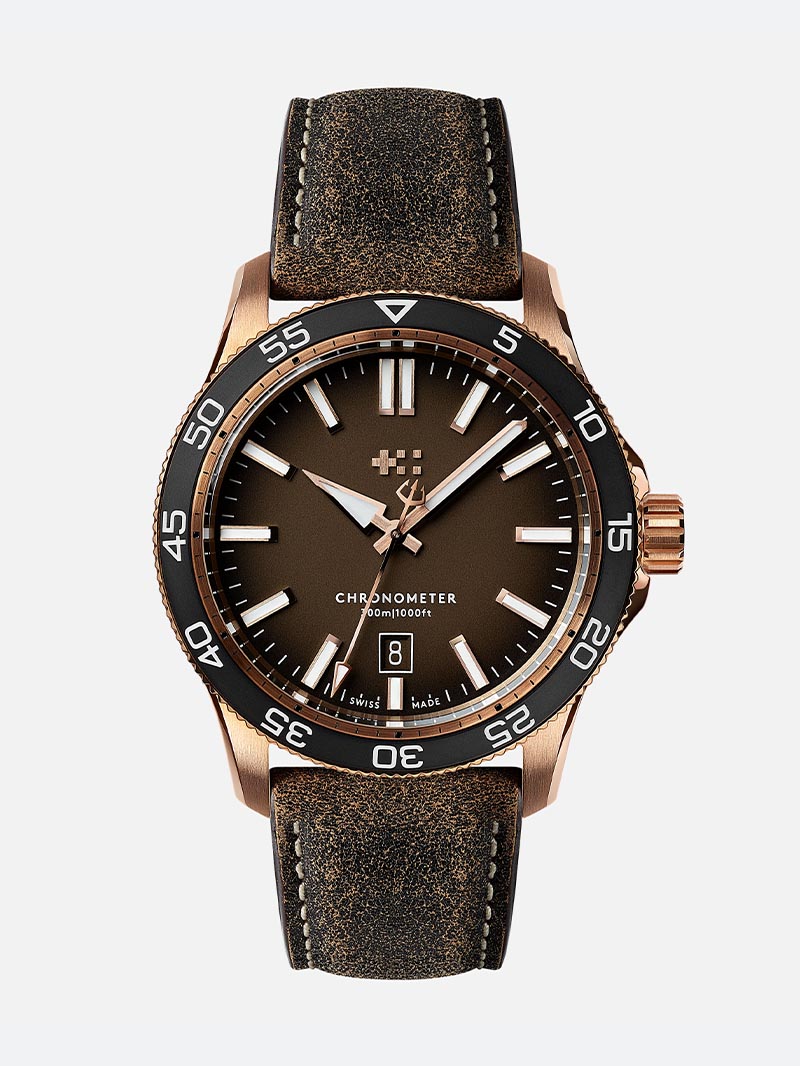
The C60 Trident Pro 300 Bronze is the more characterful choice.
Its CuSn6 bronze case will develop patina with wear, and the brown ombré dial gives it a warmer, more personal feel than the stainless steel models.
It also adds COSC chronometer certification via a Sellita SW200-1 COSC movement, which gives it a stronger technical argument within the family.
The C60 Sapphire Edge is the showpiece for those who like visible mechanics.
Its dial is machined from lab-grown sapphire crystal to 0.6mm thick, allowing a view into the movement beneath, with more visibility through the sapphire caseback.
The sapphire bezel with luminous markers and the option of a luminous Aquaflex rubber strap make it the most material-led expression of the Trident idea.
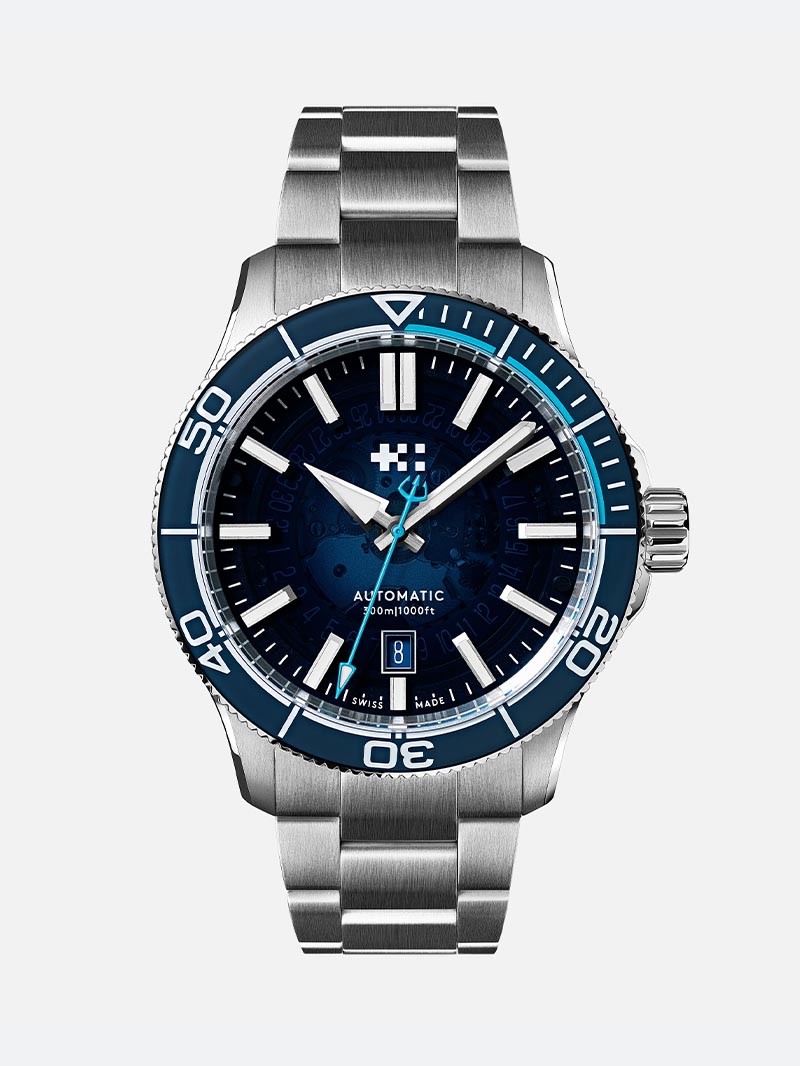
The C60 Trident Lumière pushes the line in a more instrument-like direction.
It is made from Grade 2 titanium, including the bracelet when fitted, and uses solid Globolight XP lume for the indexes and logo, with a lumed ceramic bezel as well.
It is also notable as a recent Trident with a helium escape valve, giving it a more overtly technical profile.
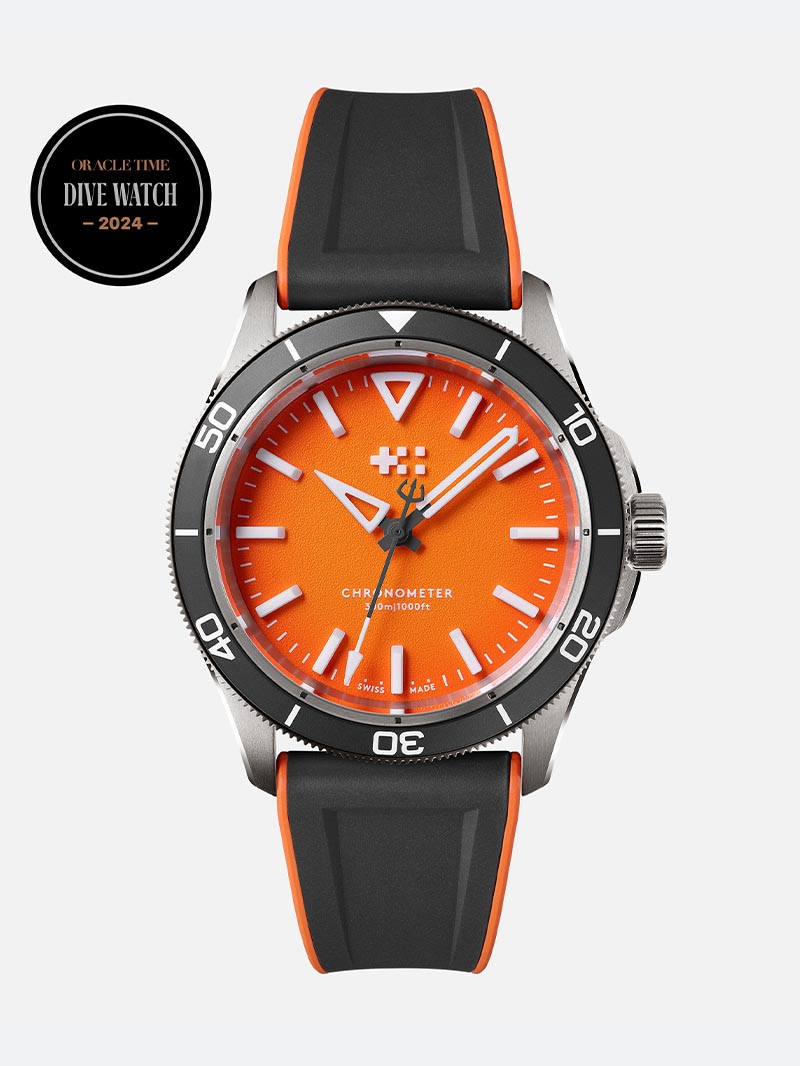
The C60 Trident Reef takes a less severe approach.
With 200m water resistance, coral-inspired colourways and colour-matched aluminium case shrouds, it’s the more relaxed and visually playful branch of the collection.
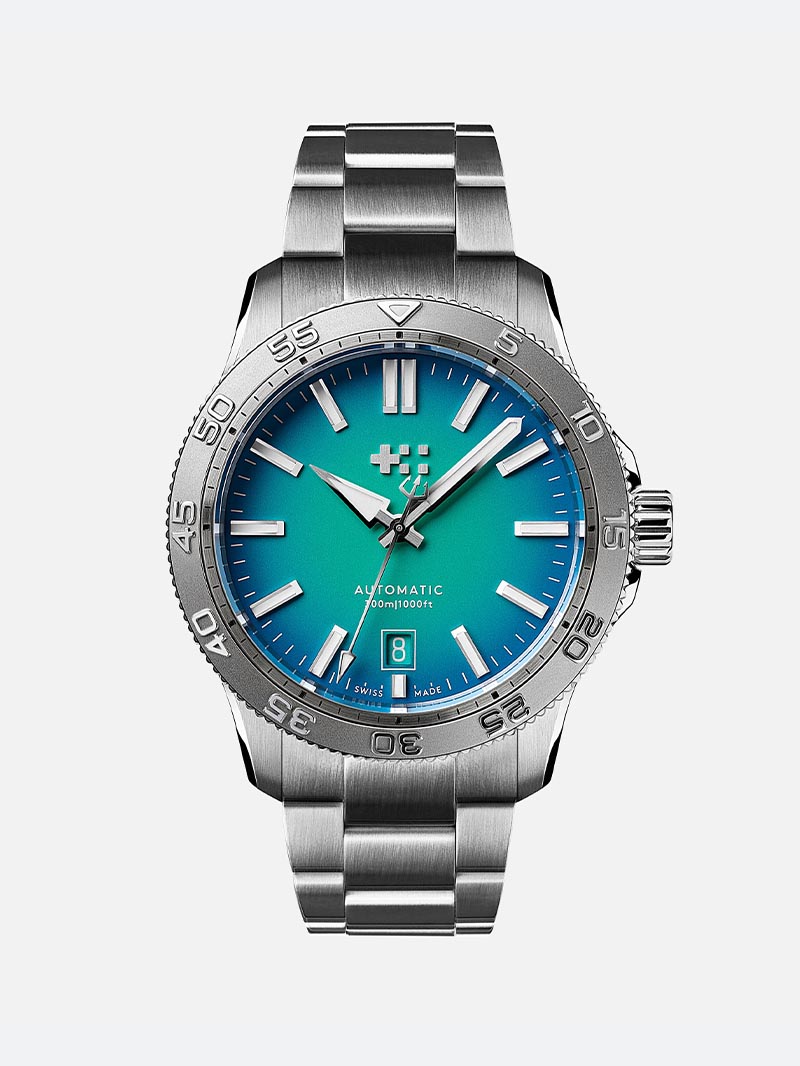
The C60 Atoll 300 sits as a summery interpretation of the Pro 300 idea, using lacquered gradient dials inspired by Indian Ocean seascapes.
Details & Specifications
| Collection | Christopher Ward C60 Trident |
|---|---|
| C60 Trident Pro 300 | 38mm, 40mm, 42mm or 44mm stainless steel case, Sellita SW200-1 automatic movement, 300m water resistance, black, white or blue dial, bracelet or rubber strap, from £795 |
| C60 Trident GMT 300 | 40mm stainless steel case, Sellita SW330-2 automatic movement, GMT function, 56-hour power reserve, 300m water resistance, bracelet or rubber strap, from £1,215 |
| C60 Trident Pro 300 Bronze | 42mm CuSn6 bronze case, brown ombré dial, Sellita SW200-1 COSC automatic movement, 300m water resistance, leather or rubber strap, from £1,135 |
| C60 Sapphire Edge | 42mm stainless steel case, 10.7mm thickness, sapphire dial in blue or white, Sellita SW200-1 automatic movement, 300m water resistance, Aquaflex rubber strap or bracelet, from £1,050 |
| C60 Trident Lumière | 41mm Grade 2 titanium case, orange, blue or grey dial, Sellita SW200-1 automatic movement, 300m water resistance, titanium bracelet or Aquaflex rubber strap, from £1,725 |
| C60 Trident Reef | 41mm stainless steel case, coral-inspired colourways, Sellita SW200-1 automatic movement, 200m water resistance, rubber strap or bracelet, from £725 |
| C60 Atoll 300 | Trident Pro 300-inspired model with lacquered gradient dials influenced by Indian Ocean seascapes |
For a first Christopher Ward, the C60 Trident line makes the brand’s appeal easy to understand.
It offers proper mechanical dive-watch substance, enough variety to suit different tastes and a price structure that still feels central to why the brand matters.