Zenith’s revived Calibre 135 was already one of the more meaningful anniversary launches in recent watchmaking, not because it chased novelty, but because it brought a serious chronometer movement back into contemporary form.
Now the G.F.J. takes a more intimate turn through a 10-piece collaboration with Naoya Hida & Co., the Tokyo independent known for quiet proportions, exacting typography and a very particular view of mid-century watch design.
The result is a platinum dress chronometer that feels less like a logo exercise and more like two watchmaking languages meeting on a silver dial.
At a glance
- Zenith has introduced the G.F.J. Calibre 135 Double Signed with Naoya Hida & Co. as the first watch in its new Double Signed Program.
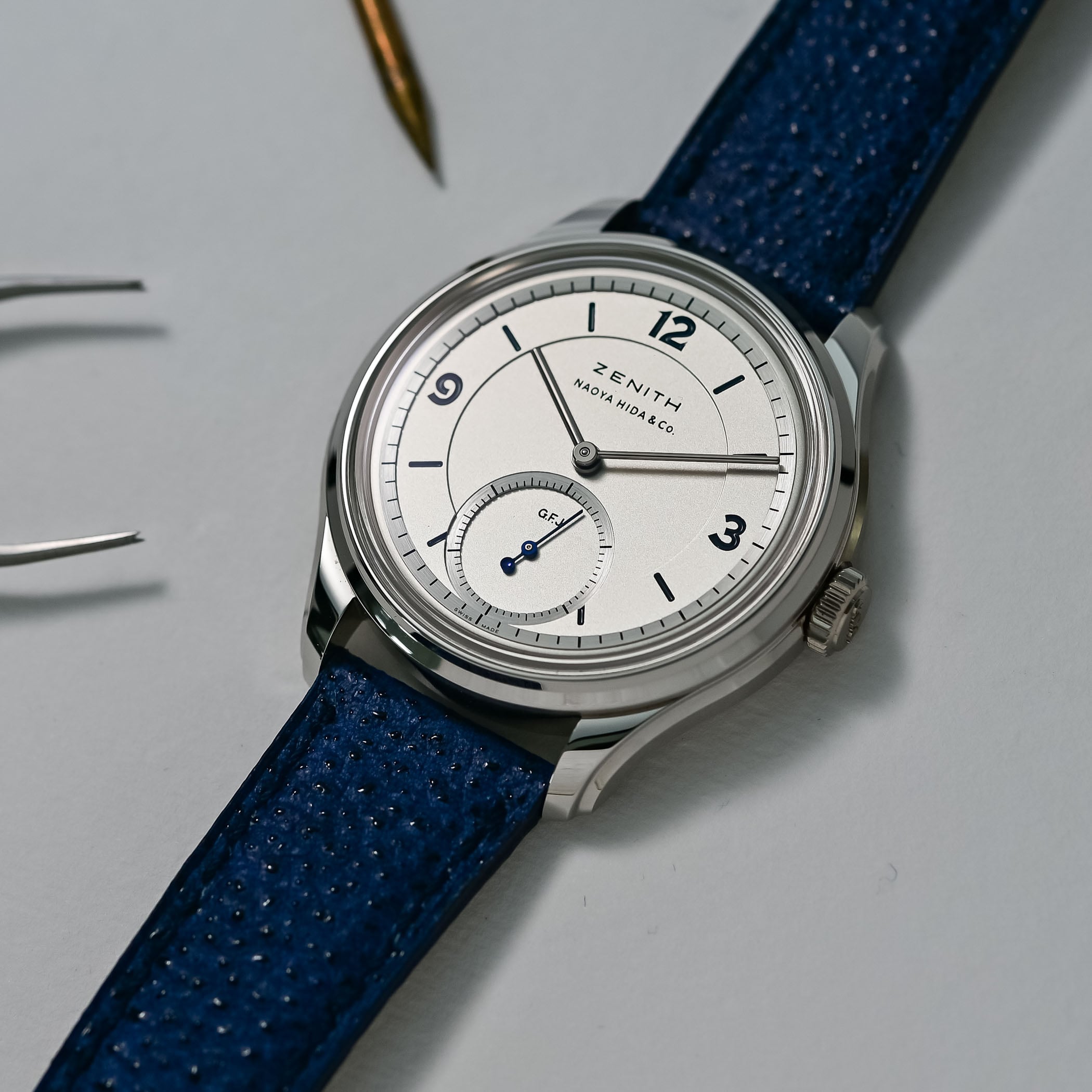
- The 39.15mm platinum watch uses a solid silver dial with hand-engraved signatures, numerals and markers filled with deep blue Japanese urushi lacquer.
- The edition is limited to 10 pieces and is priced at CHF 58,900.
A double-signed chapter for the G.F.J.
Double-signed watches have long held a special place in collecting because they usually mark a relationship beyond a standard production model.
Zenith’s approach is not a retailer signature in the old sense, but a series of collaborations with independent watchmakers who can reinterpret the brand’s key references without erasing their identity.
For the first watch in the program, Naoya Hida & Co. is a particularly natural fit.
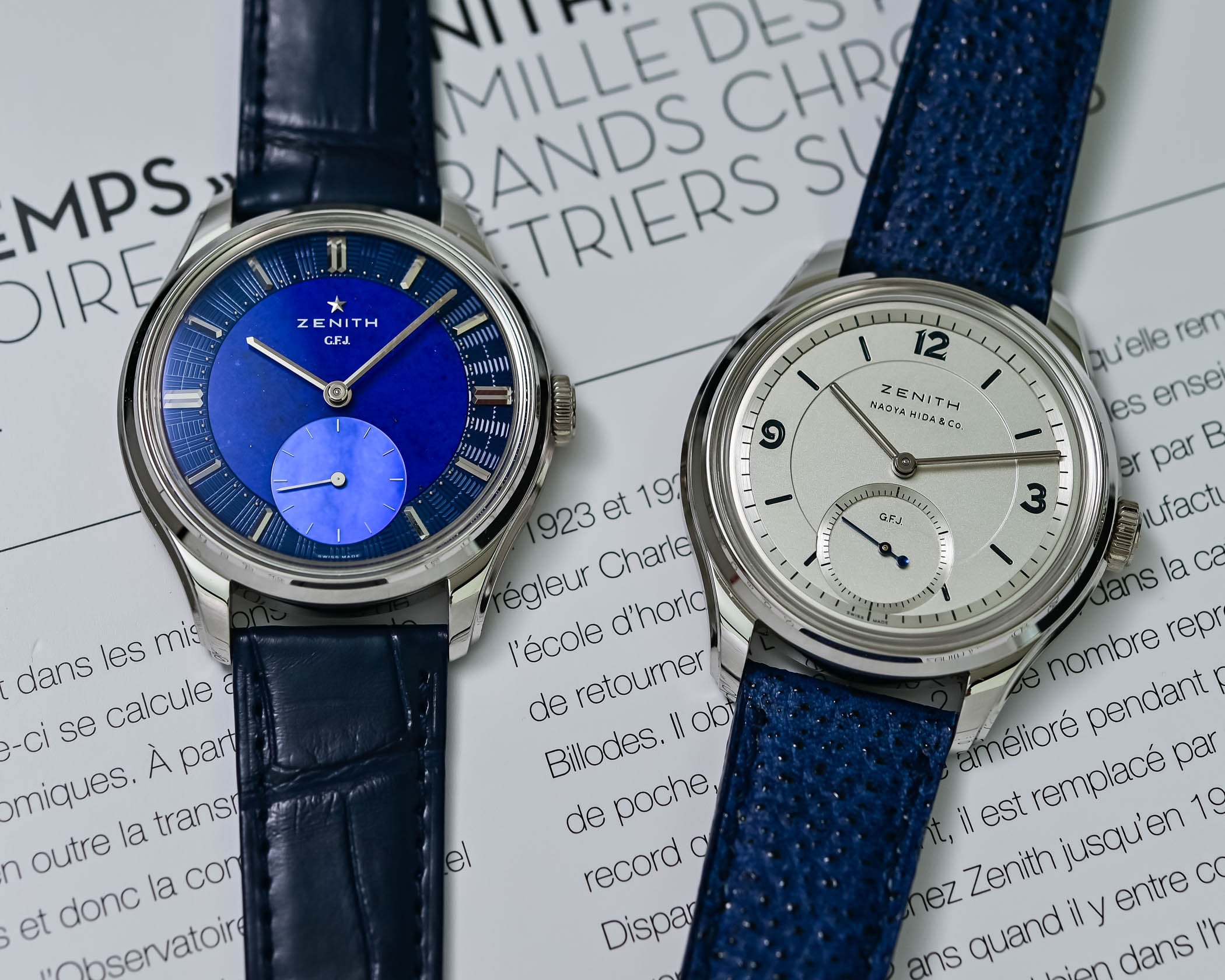
Founded in 2018, the Japanese independent has built a strong following with watches that prize balance, legibility and hand-finished detail over visual noise.
That sensibility sits comfortably with the G.F.J., a time-only watch built around a calibre with deep chronometry credentials rather than complication theatre.
Naoya Hida’s restraint meets a platinum Zenith case
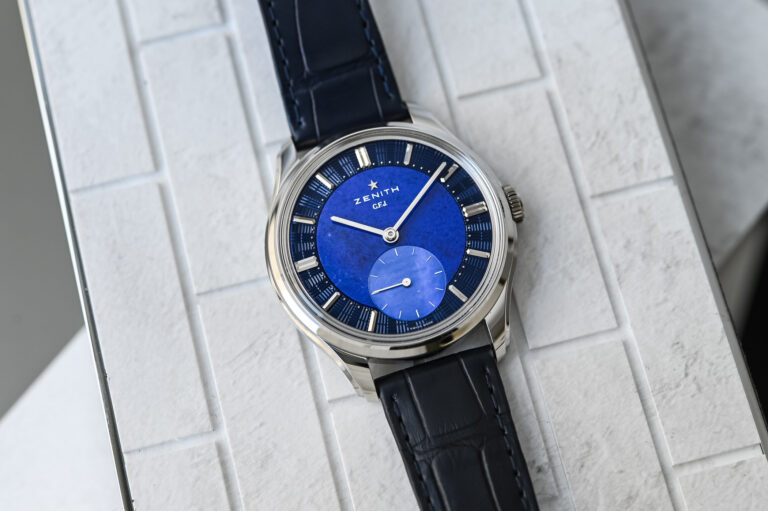
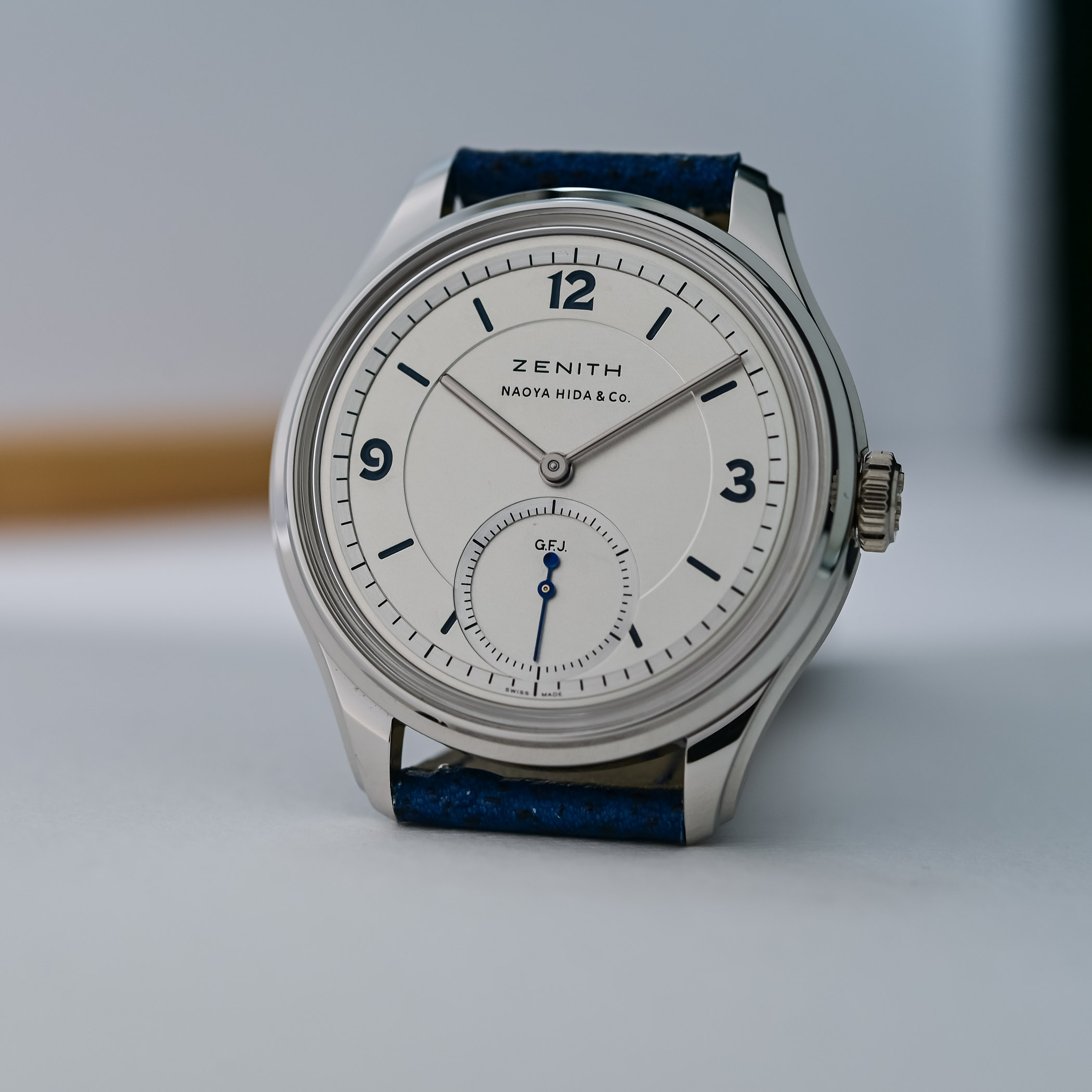
The G.F.J. Calibre 135 Double Signed is housed in a 950 platinum case measuring 39.15mm across and 10.5mm thick.
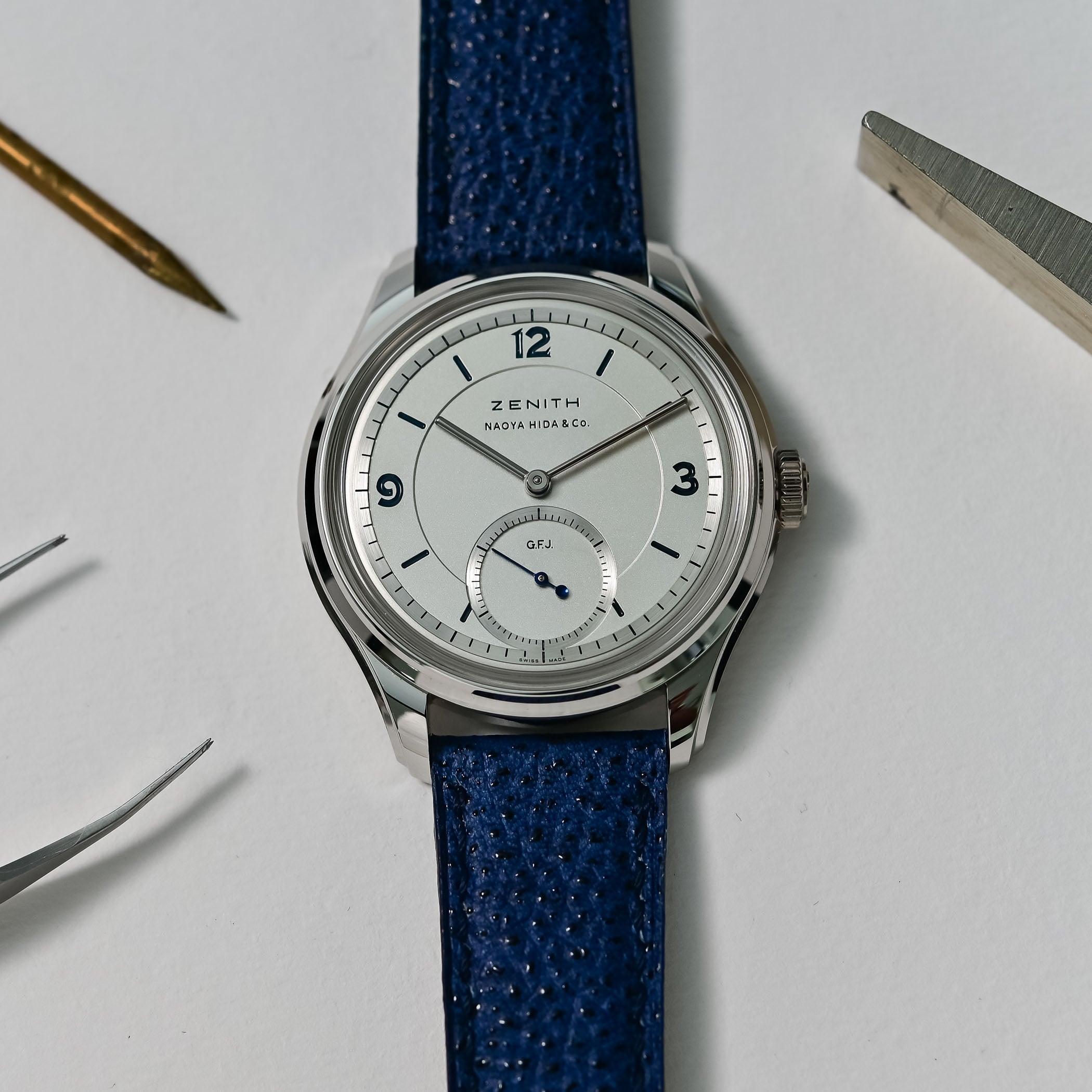
Those dimensions give it enough wrist presence to feel contemporary, while the stepped lugs, slim polished bezel and compact profile keep the watch close to the language of a classic chronometer dress watch.
Water resistance is rated to 50 metres, which adds a practical note without changing the character of the piece.
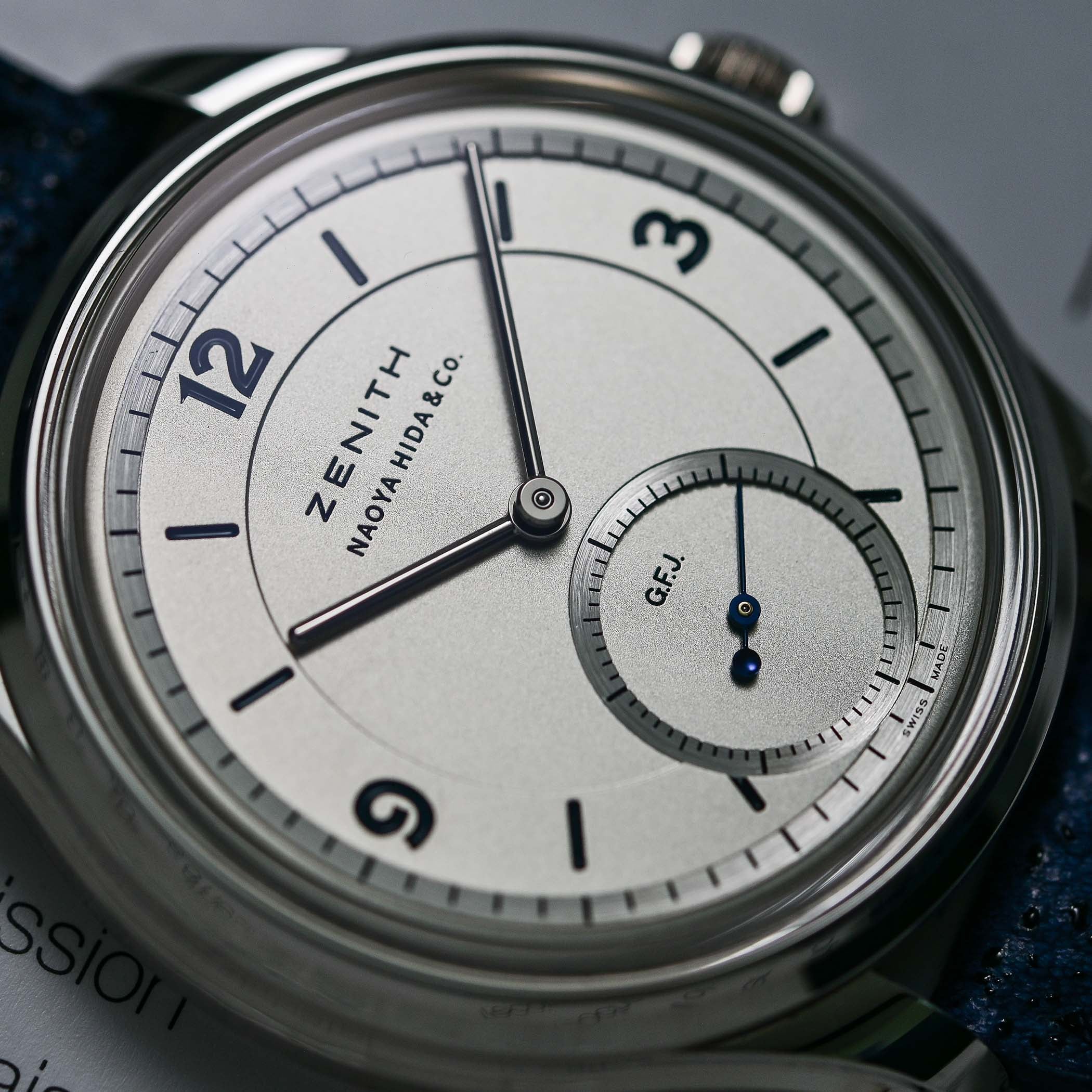
The dial is where Hida’s hand is most visible.
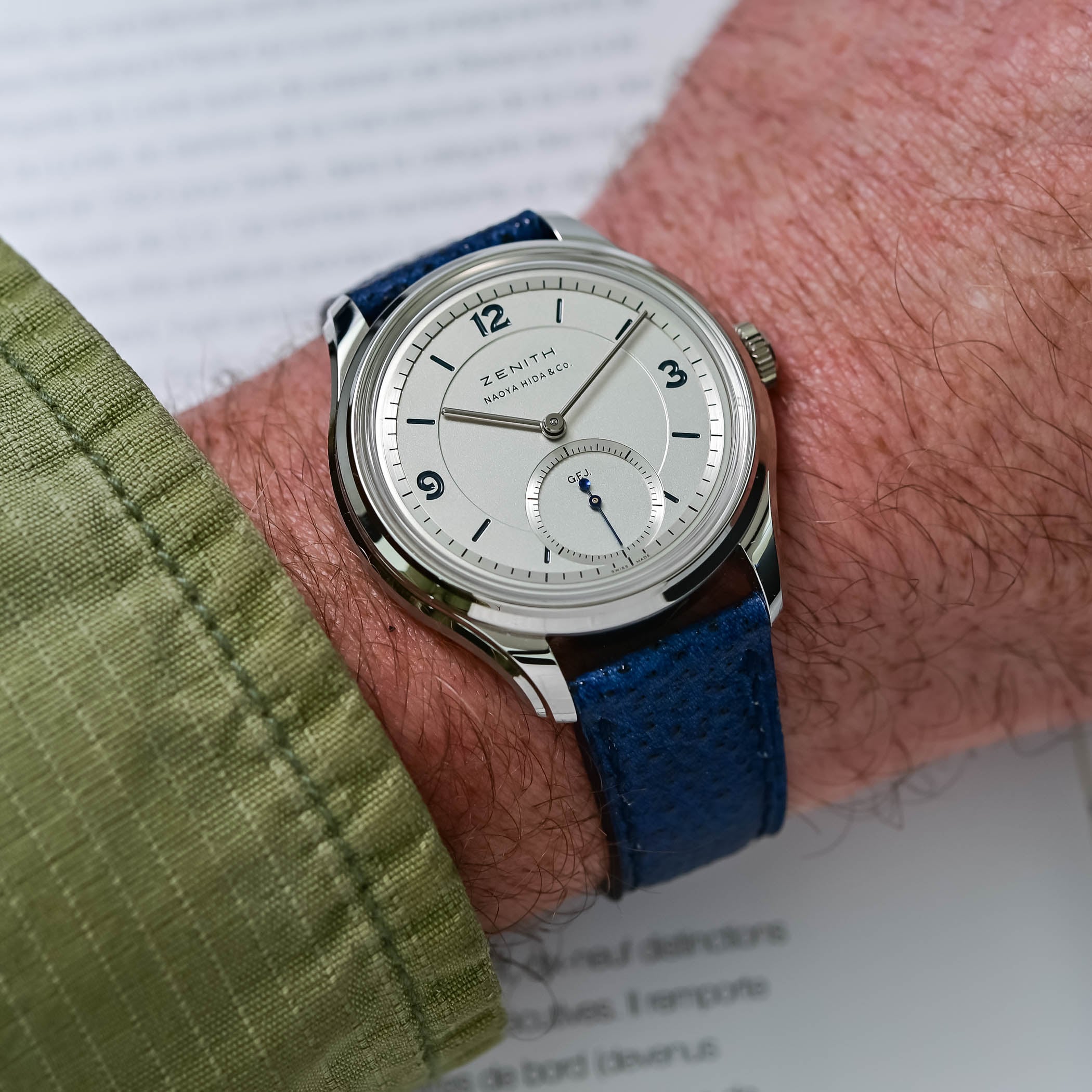
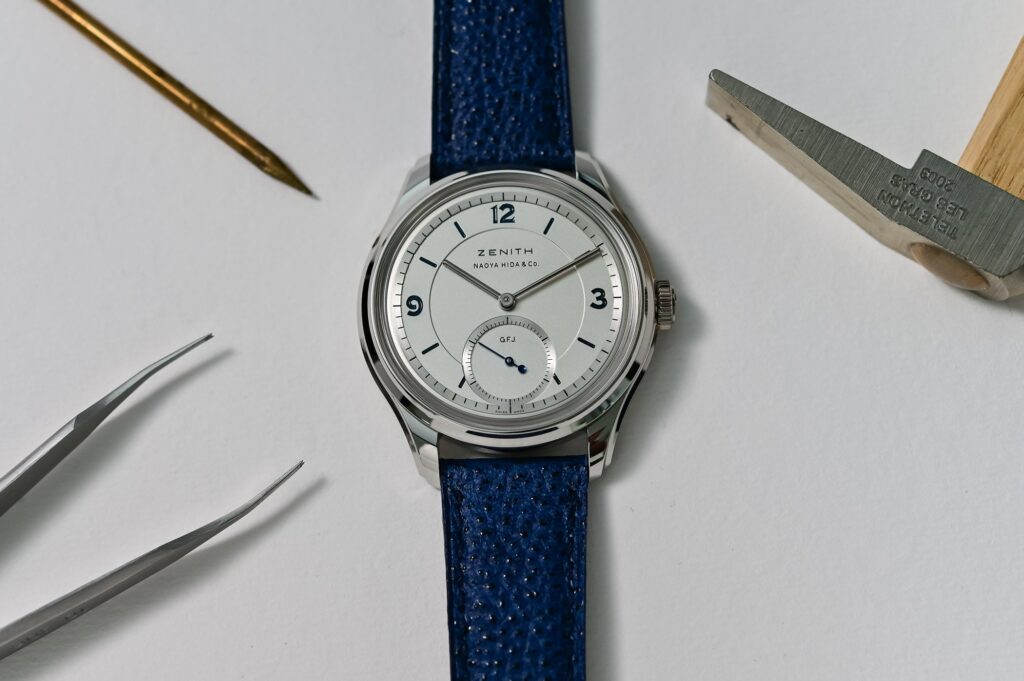
It’s made from solid silver, with the Zenith and Naoya Hida & Co. signatures, the indices and the markers all hand-engraved by master engraver Keisuke Kano.
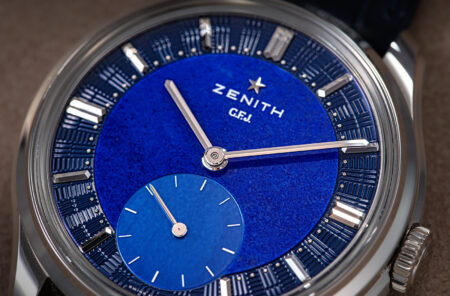
The engravings are filled with deep blue Japanese urushi lacquer, a tone that can read almost black depending on the light.
That choice gives the dial a controlled graphic sharpness, but also a softness that printed text rarely achieves.
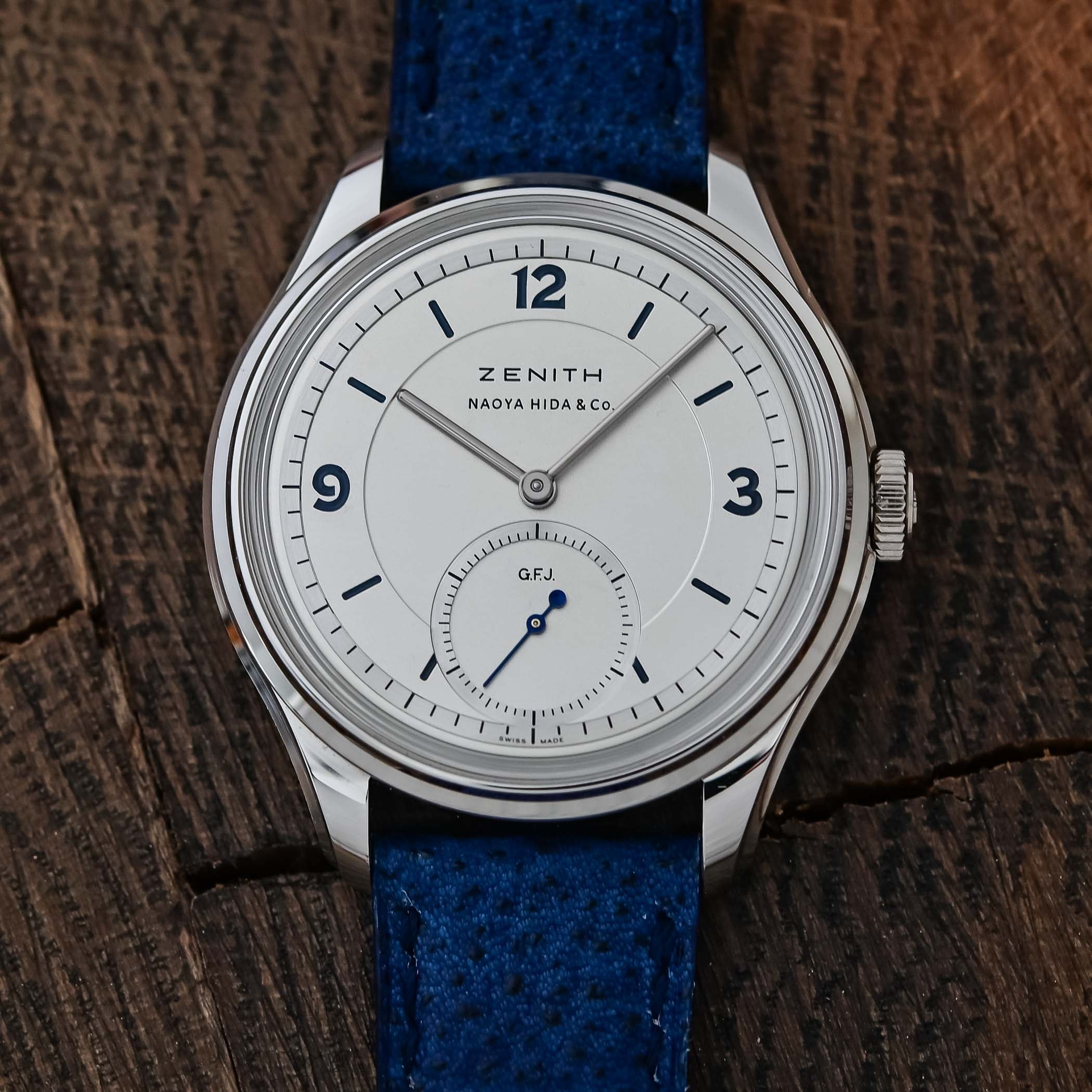
The hour and minute hands are machined from solid gold and hand-polished, while the small seconds hand at 6 o’clock is heat-blued steel.
It’s a restrained palette, but the combination of silver, lacquer and polished metal makes the watch feel tactile rather than sparse.
The Calibre 135 remains the centre of gravity
The movement is still the reason this watch carries weight.
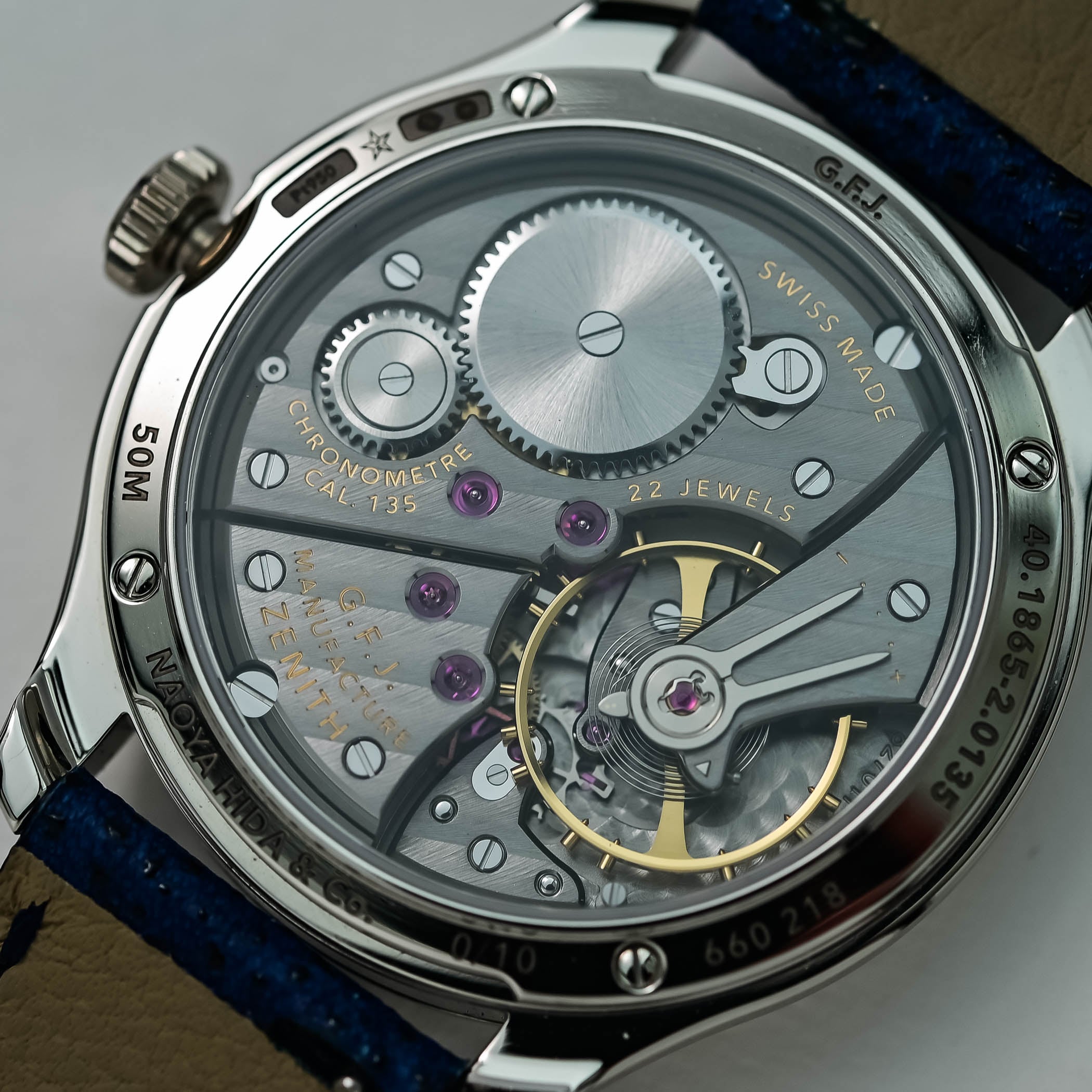
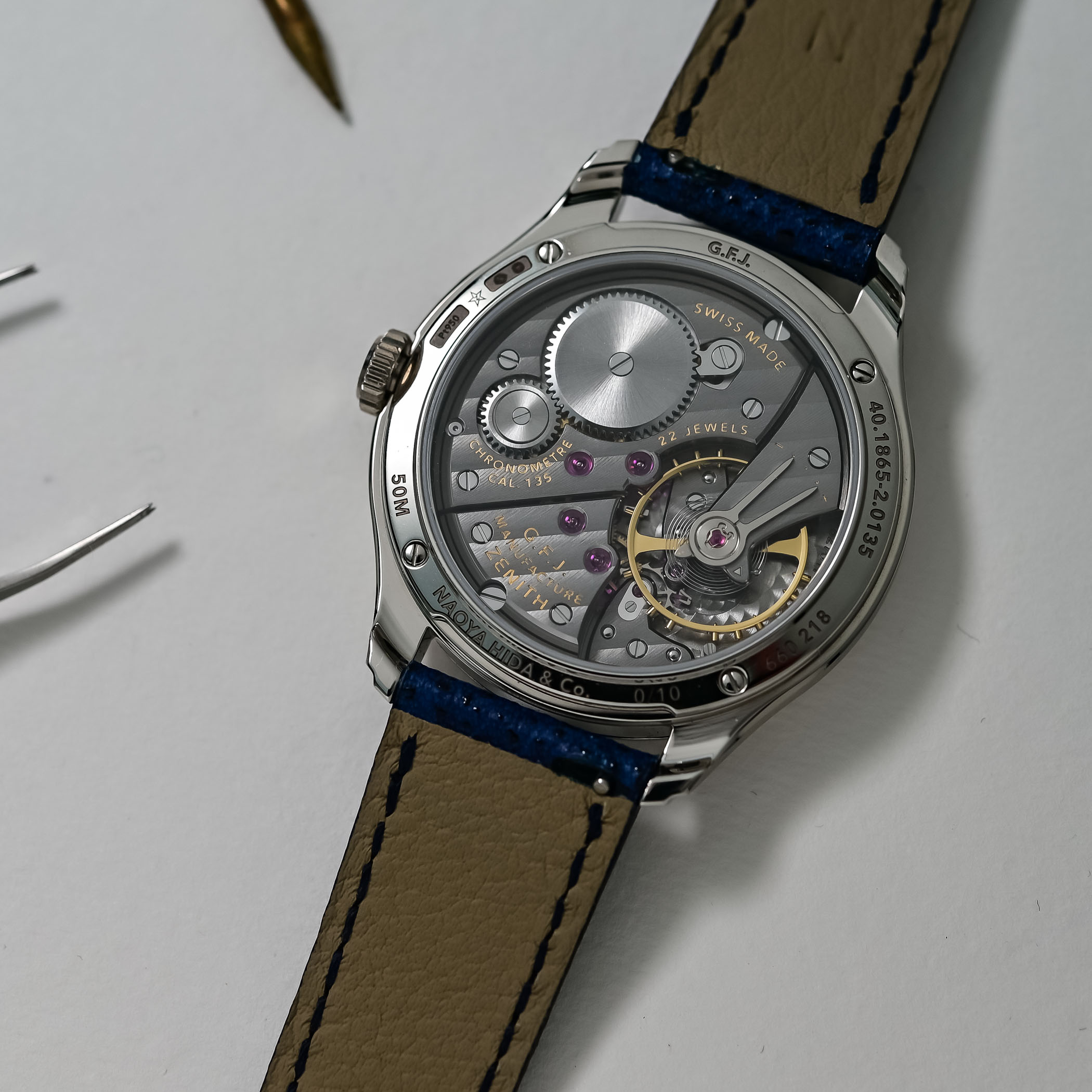
Developed by Ephrem Jobin in 1948 for observatory chronometry competitions, the Calibre 135 was designed with performance as its organising principle, using an oversized balance and a large barrel.
Its 135-O competition version won more than 230 observatory prizes, including five consecutive victories at the Neuchâtel Observatory from 1950 to 1954.
The modern Calibre 135 keeps the architecture recognisable while bringing the movement into present-day use.
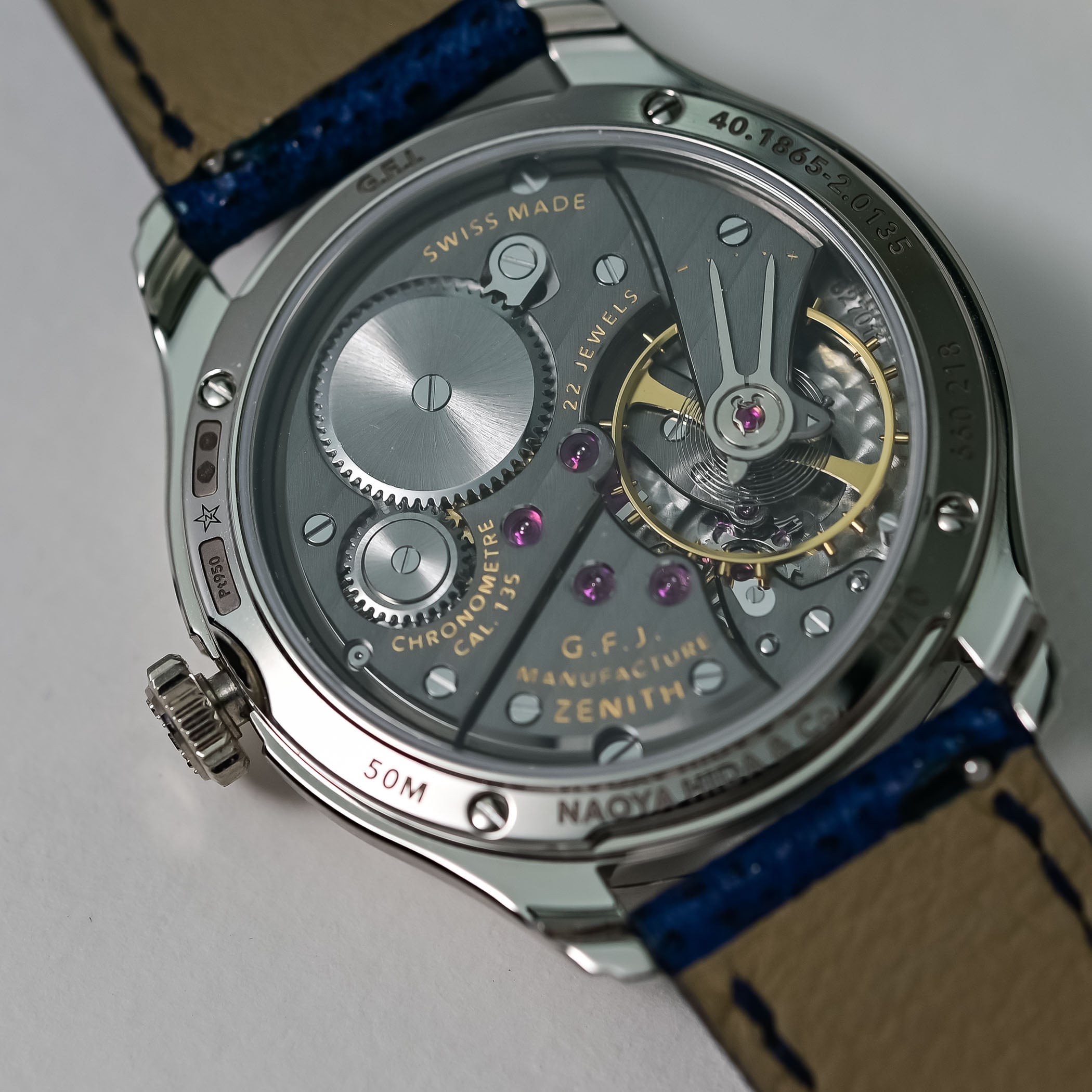
It beats at 18,000 vibrations per hour and retains a Breguet overcoil hairspring and Charles Fleck’s double-arrow regulator.
Zenith has increased the power reserve to 72 hours, added stop seconds, improved shock protection and regulates each movement to plus or minus 2 seconds per day before COSC certification.
Visible through the sapphire caseback, the calibre is finished with broad Geneva stripes, hand-chamfering, a dark ruthenium treatment and gold-coloured engravings.
Three Japanese straps for a 10-piece edition
Zenith and Naoya Hida & Co. have extended the Japanese character of the watch beyond the dial.
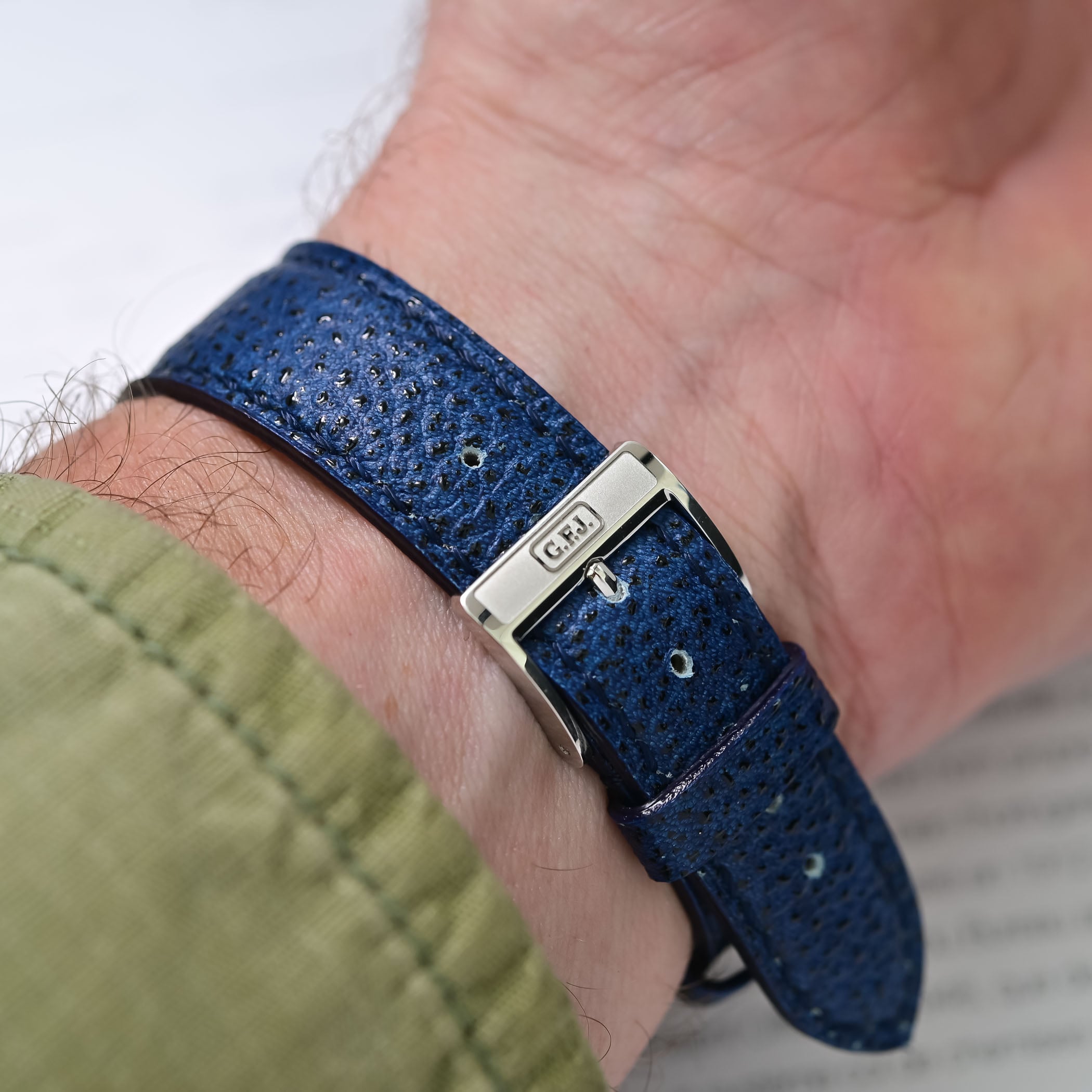
Each piece is delivered with three straps, including Himeji Kurozan leather finished with traditional urushi lacquer, a handcrafted Wagyu leather strap made in Kyoto and a deep indigo strap made from Japanese Kaihara denim.
All three are fitted with a platinum pin buckle engraved with the G.F.J. initials.
The variety matters because it slightly changes the tone of the watch, taking it from formal platinum chronometer to something more relaxed without losing its discipline.
Details & Specifications
| Brand | Zenith |
|---|---|
| Model | G.F.J. Calibre 135 Double Signed with Naoya Hida & Co. |
| Reference | 40.1865-2.0135/01.C220 |
| Case size | 39.15mm diameter, 10.5mm thick |
| Case material | 950 platinum |
| Crystal | Sapphire crystal front and back |
| Water resistance | 50 metres |
| Dial | Solid silver with hand-engraved signatures, indications and markers filled with blue Japanese urushi lacquer |
| Hands | Solid gold hour and minute hands, heat-blued steel small seconds hand |
| Movement | Manual-winding Zenith Calibre 135 |
| Certification | COSC-certified chronometer |
| Frequency | 18,000 vibrations per hour |
| Power reserve | 72 hours |
| Key features | Breguet overcoil hairspring, double-arrow regulator, stop-seconds mechanism, small seconds |
| Straps | Himeji Kurozan leather, Kyoto-crafted Wagyu leather and Japanese Kaihara denim |
| Buckle | Platinum pin buckle engraved with G.F.J. initials |
| Edition | Limited to 10 pieces |
| Price | CHF 58,900 |
For collectors drawn to precision history, independent watchmaking and the small details that separate a considered object from a merely expensive one, this G.F.J. is an unusually coherent collaboration.
It doesn’t try to make the Calibre 135 louder, which is precisely why it works.