The Yangwang Altior has moved from spectacle to sales conversation, with pre-bookings now open in China for the ultra-luxury limousine.
Priced at 2,080,000 yuan for the Shanhe Dingyun Limited Edition, or roughly $311,540, the Altior is BYD’s Yangwang brand stepping into territory usually associated with the Rolls-Royce Ghost and Mercedes-Maybach S-Class.
It’s a bold play, and not a subtle one.
At a glance
- Yangwang has opened China pre-bookings for the Altior Shanhe Dingyun Limited Edition at 2,080,000 yuan, about $311,540.
- The limousine features rear-hinged doors, a 24K pure gold front emblem, a four-seat cabin and a 39-speaker Dynaudio system.
- Customers in China are required to place a 300,000 yuan deposit, around $45,000.
A Chinese limousine aimed at the ultra-luxury establishment
The Altior was recently shown at an event in Abu Dhabi, giving Yangwang an international stage for a car clearly designed to be seen as much as chauffeured in.
Its positioning is direct, with the car created to compete with high-end luxury saloons such as the Rolls-Royce Ghost and Mercedes-Maybach S-Class.
That matters because Yangwang isn’t simply adding another premium EV-adjacent nameplate to the market.
It’s attempting to enter one of the most image-sensitive corners of the car business, where craftsmanship, cabin theatre and brand confidence count as much as engineering.
Gold, coachlines and a deliberately formal stance
The Altior leans heavily into ceremony.
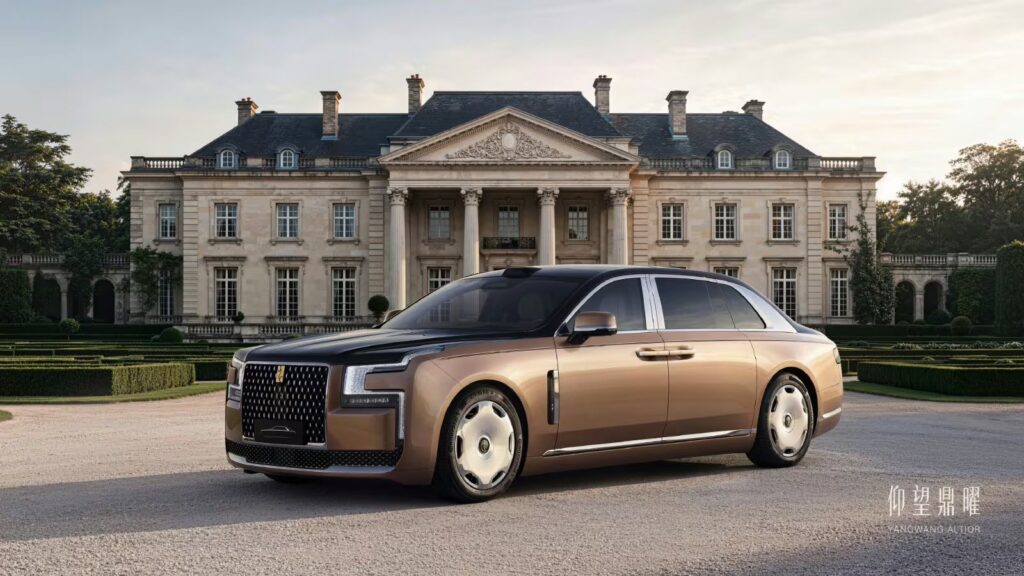
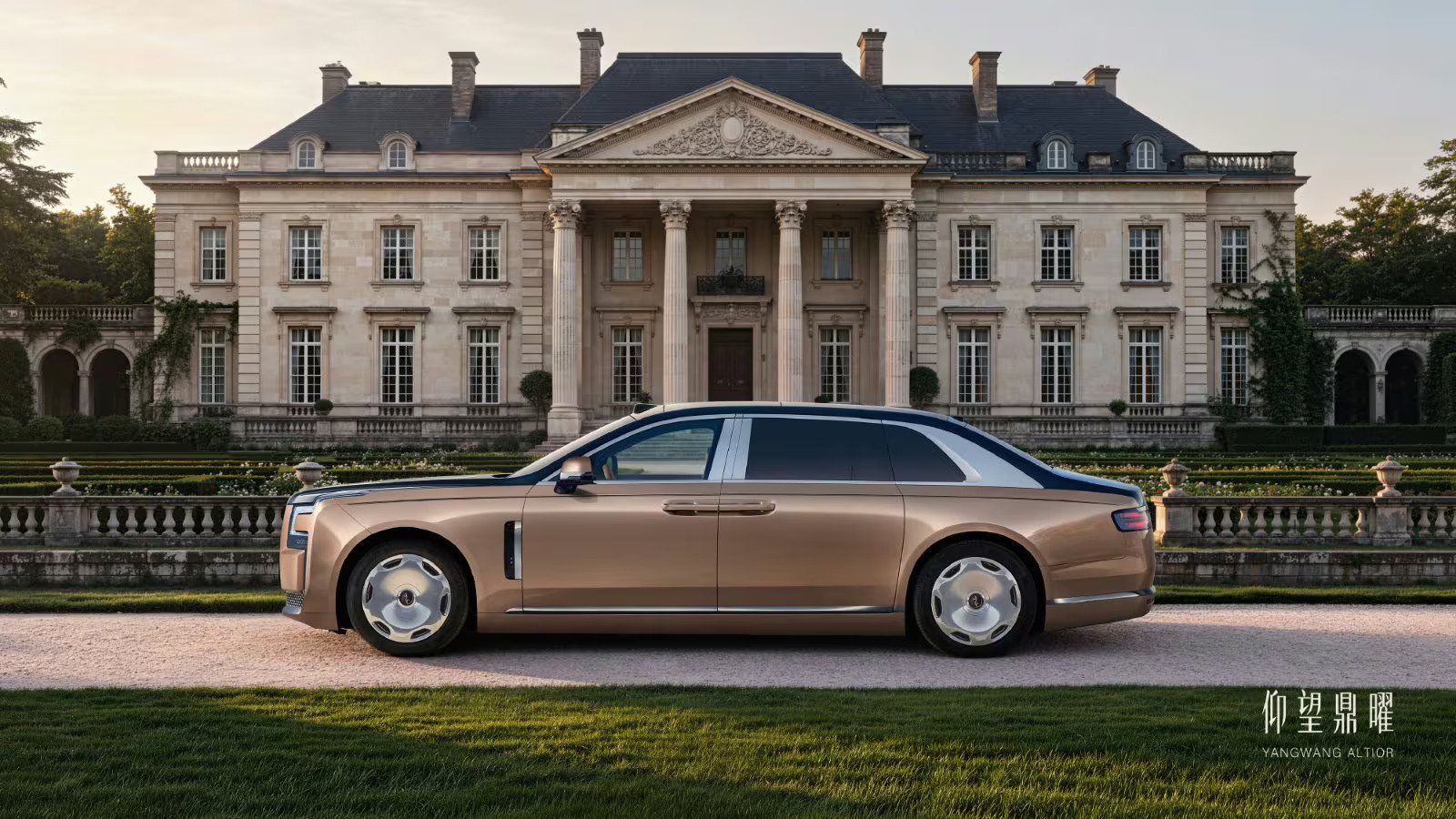
Its front end is defined by a large grille made up of 137 gemstone-cut elements, while the front emblem is made from 24K pure gold.
Along the shoulder line, Yangwang has applied a 4.8-metre hand-painted dual coachline, a detail more commonly associated with traditional coachbuilt luxury than mainstream production cars.
Polished monoblock dish wheels add to the formal look, and the rear-hinged doors reinforce the limousine brief.
The Shanhe Dingyun Limited Edition receives an exclusive brown and gold exterior, paired with a brown and white interior.
A rear cabin built around passengers
Inside, the Altior uses a four-seat layout, which tells you where the priorities sit.
The cabin is finished with abundant soft-touch leather, and rear passengers get a 21.4-inch folding ceiling-mounted screen.
Yangwang has also fitted two 5.5-litre built-in refrigerators, each with independent temperature control.
Audio comes from 39 speakers from Dynaudio’s Platinum Evidence range, a specification that suggests the rear compartment is intended to function as a private lounge rather than simply a back seat.
It’s an interior designed around the rituals of being driven, from entertainment and refreshments to space and separation.
Details & Specifications
| Brand | Yangwang |
|---|---|
| Model | Altior |
| Variant | Shanhe Dingyun Limited Edition |
| Price | 2,080,000 yuan, approximately $311,540 |
| Pre-booking deposit | 300,000 yuan, approximately $45,000 |
| Availability | Pre-bookings open in China |
| Cabin layout | Four seats |
| Exterior finish | Brown and gold for the Shanhe Dingyun Limited Edition |
| Interior finish | Brown and white for the Shanhe Dingyun Limited Edition |
| Grille | 137 gemstone-cut elements |
| Emblem | 24K pure gold front emblem |
| Coachline | 4.8-metre hand-painted dual coachline |
| Doors | Rear-hinged doors |
| Rear display | 21.4-inch folding ceiling-mounted screen |
| Refrigerators | Two 5.5-litre built-in units with independent temperature control |
| Audio | 39 speakers from Dynaudio’s Platinum Evidence range |
Price and pre-booking context
At 2,080,000 yuan, the Altior Shanhe Dingyun Limited Edition sits deep in ultra-luxury territory by any measure.
The required 300,000 yuan deposit also signals that Yangwang is treating this as a serious flagship proposition rather than a halo concept dressed for an auto show.
For buyers drawn to established European luxury saloons, the Altior’s appeal will likely rest on whether its theatrical design, rear-cabin equipment and Chinese luxury positioning feel distinctive enough to challenge familiar badges.
For Yangwang, the car is a statement of intent, and its most interesting quality may be how openly it tries to redefine what a Chinese ultra-luxury limousine can look and feel like.