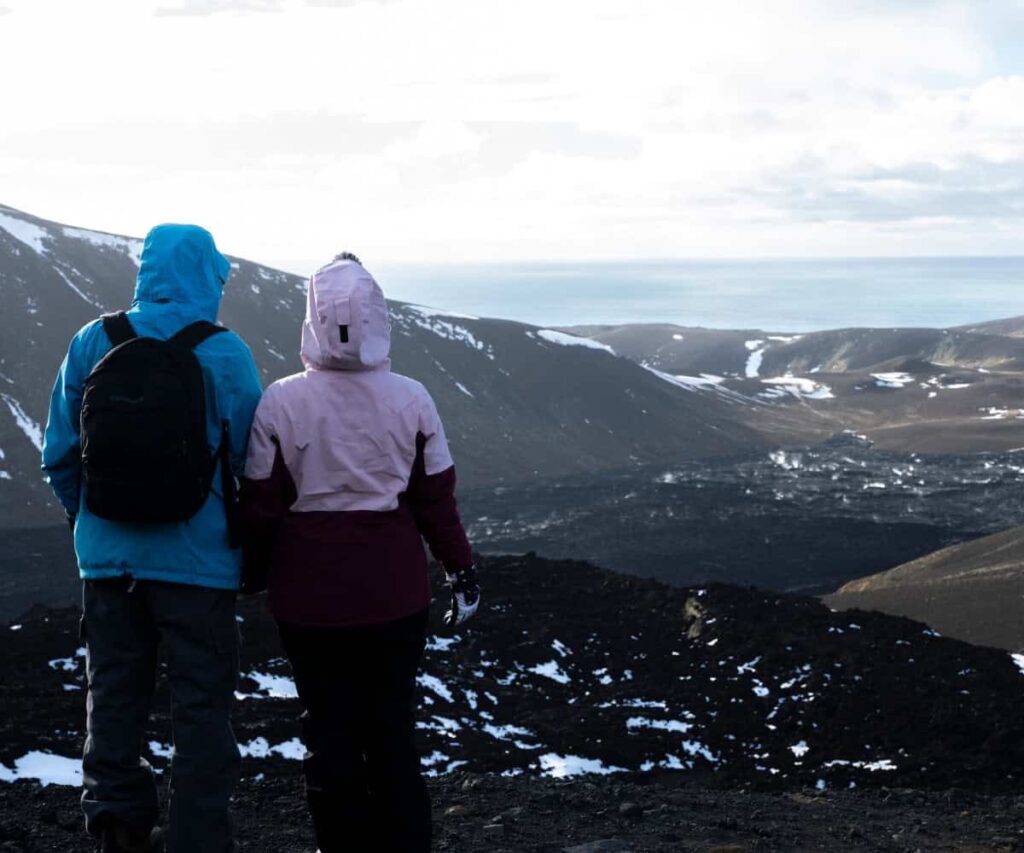
Iceland sells itself easily from a distance, with rainbow mountains, black sand, glacier tongues, steaming valleys and trails that seem to run straight through another planet.
What’s harder to grasp before you arrive is how quickly those trails can change, and why the country’s best hikes often reward the company of someone who knows the land in real time.
The trail conditions change faster than the map
A route description in Iceland is only a starting point, not a promise.
The same trail can feel completely different from one week to the next because snowmelt, wind, fog, rain and river levels all shift with little warning.
Fimmvörðuháls, the famous crossing between Skógar and Þórsmörk, is a perfect example.
It may be straightforward in settled summer weather, soft and tiring across lingering snowfields after warm days, or brutally exposed when the wind builds over the pass.
A good local guide isn’t just reading yesterday’s forecast, they’re checking road access, trail reports, ranger updates and the practical knowledge of people who have just come off the route.
Glacial rivers are not normal stream crossings
Many visitors underestimate Icelandic river crossings because they look simple in photographs.
On the ground, an unbridged glacial river can be cold, opaque, fast moving and completely different in the afternoon than it was in the morning.
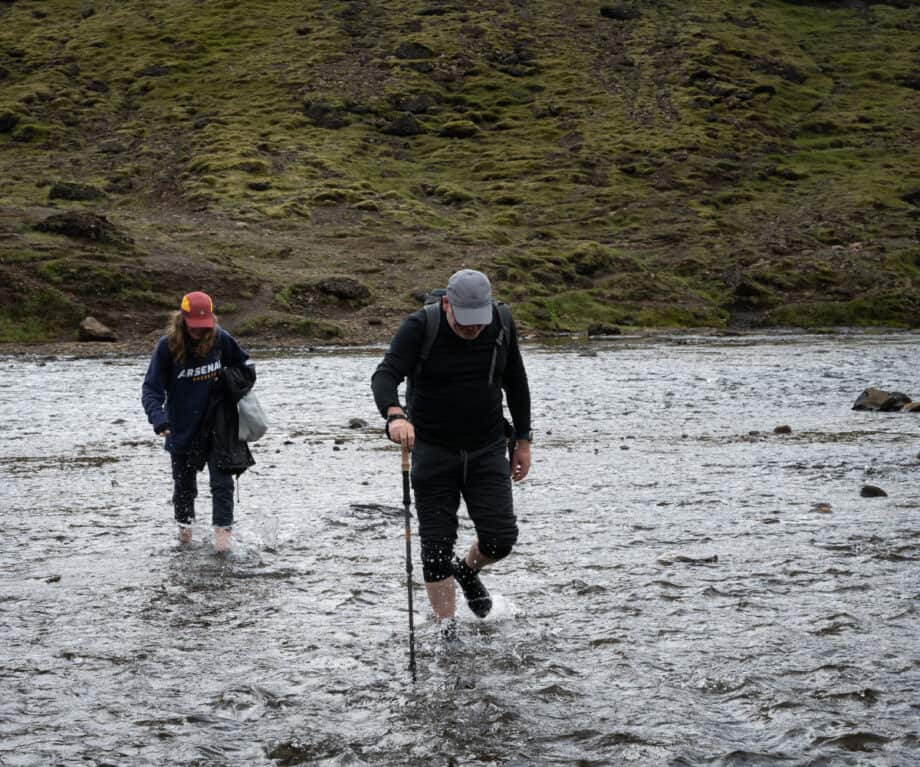
The depth and force of the water may depend on melting ice far upstream, which means a crossing can become more difficult without any obvious warning where you’re standing.
Experience matters here because the decision is rarely dramatic at first glance.
A guide knows how to read the flow, where to cross, when to wait, when to link arms and when turning back is the correct call.
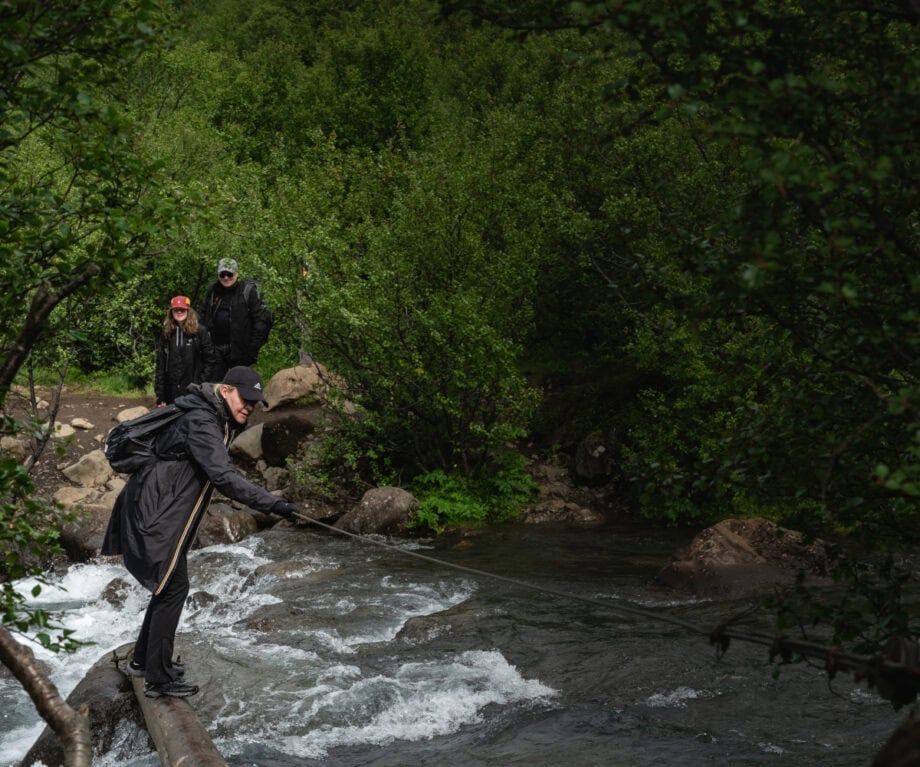
Landmannalaugar and Þórsmörk become more than scenery
Safety is the obvious argument for hiring a guide, but it isn’t the only one.
Iceland’s landscapes are visually loud and quietly complicated, and much of the good stuff is easy to miss if you don’t know what you’re looking at.
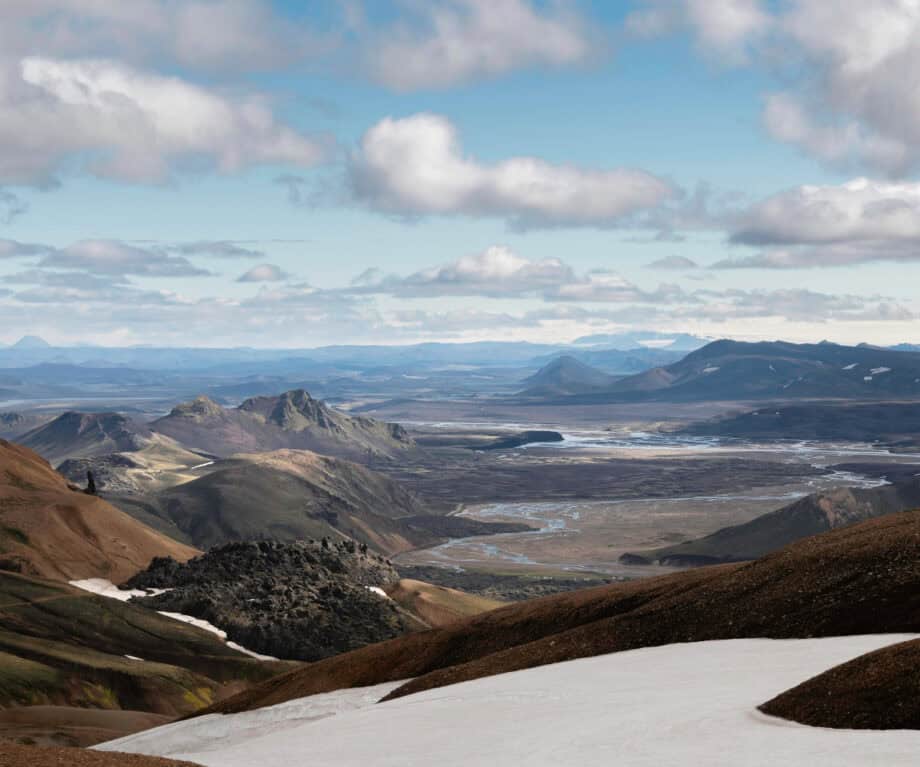
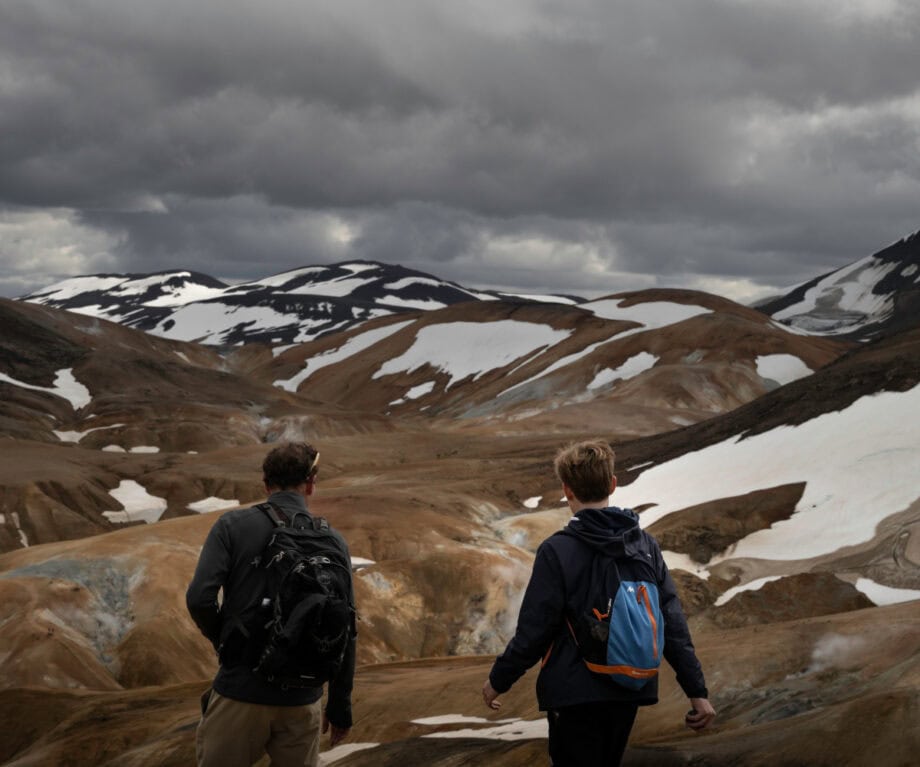
Above Landmannalaugar, those bands of colour across the rhyolite hills are not just pretty geology, they tell a story of eruptions, mineral alteration and volcanic time layered across the highlands.
In the moss fields, what looks like soft green carpet is a fragile living surface that may have taken centuries to form.
A guide turns the walk from a sequence of viewpoints into a moving explanation of how Iceland was built.
Private guiding buys pace, flexibility and access
On Icelandic hikes, private guiding is less about luxury and more about making the day work properly.
Pace is the first advantage, especially on longer walks where knees, energy levels, weather windows and photography stops all matter.
If the light over Glymur is spectacular, a private day can slow down and let it happen.
If a descent is slick, a cloud bank is building or someone is tiring, the plan can change without dragging a group schedule behind it.
Access is the other major benefit, because some of Iceland’s best trailheads sit beyond rough highland roads that require the right vehicle and local confidence.
Places around Þakgil, Kjölur, Þórsmörk and the interior often begin with the drive before the hike, and that drive can be as condition-dependent as the trail itself.
The hikes where a guide makes the biggest difference
Not every Iceland walk needs professional help.
Reykjadalur is manageable for most prepared hikers in fair conditions, Glymur can be a fine independent day when the weather is kind, and many shorter walks near towns are easy to plan on your own.
The case for a guide gets stronger when a route includes one or more of the following.
- Unbridged river crossings
- Exposed high passes above roughly 800 metres
- Navigation that becomes difficult in fog or heavy rain
- Remote trailheads reached by highland roads
- Landscapes where geology, folklore or ecology add real depth to the walk
By that measure, Laugavegur, Fimmvörðuháls, Þórsmörk, Askja, Kverkfjöll and many routes around Fagradalsfjall are all stronger with local guidance.
These are not walks to fear, but they are walks to respect.
Iceland’s best hikes don’t become less adventurous with a guide, they often become more rewarding because you can spend less energy second-guessing the conditions and more time noticing the place itself.
The trail may be the same either way, but the experience changes when someone can read the weather, the water, the rock and the road ahead.