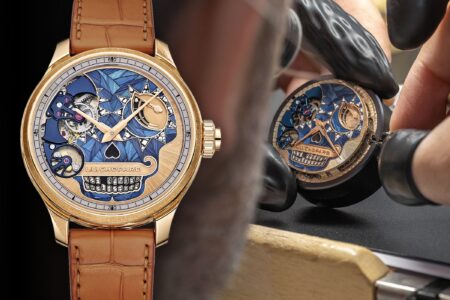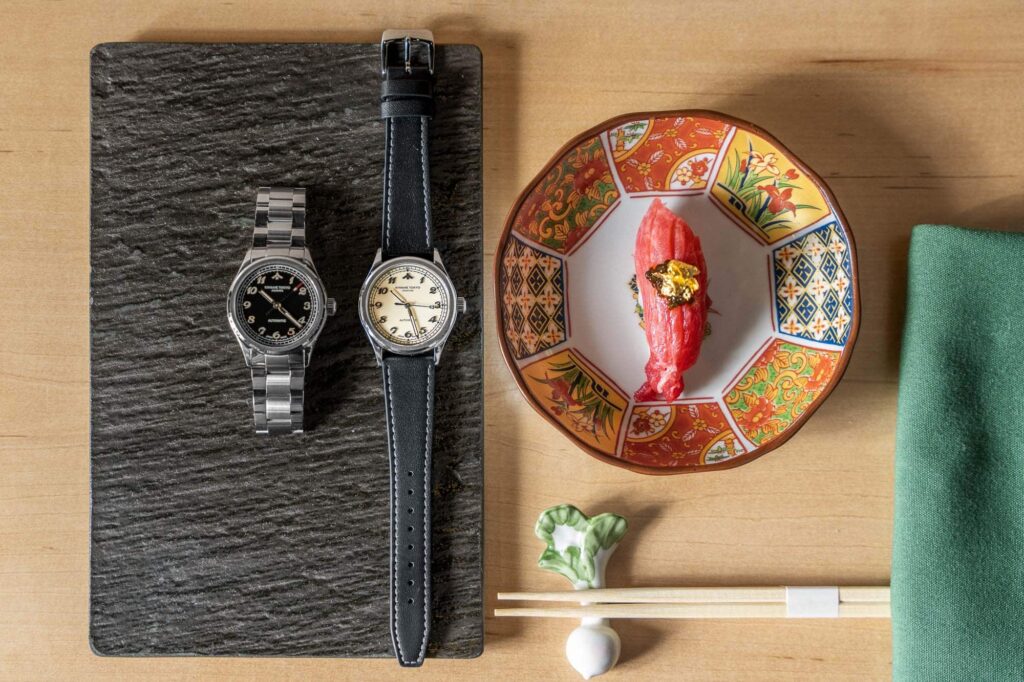
At Kiwame Tokyo and Sushi Teru, omakase becomes a study in time as much as taste, with each course shaped by sequence, tempo and the practiced confidence of the person behind the counter.
For anyone who thinks seriously about watches, that rhythm feels familiar.
The counter as a lesson in timing
Omakase is often described as trust, but it is also choreography.
The chef decides not only what to serve, but when to serve it, how warm the rice should be, how long the fish should rest and how the meal should build from one piece to the next.
That makes places like Kiwame Tokyo and Sushi Teru interesting beyond the plate, because the experience depends on small decisions that are almost invisible when they are done well.
Japanese craft without excess
The strongest expression of Japanese craft is rarely loud.
It tends to show itself through proportion, repetition and the removal of anything unnecessary, which is also why it resonates so clearly with watch enthusiasts drawn to Grand Seiko finishing, traditional enamel dials or the quiet precision of a well-made three-hander.
At an omakase counter, the details carry the same kind of weight.
A cut, a brush of sauce, the pressure used to form rice and the pause before a piece is handed over all matter, even if none of them announces itself as a grand gesture.
Where patience becomes the point
Modern collecting often rewards speed, from launch-day queues to instant reactions and short-lived availability windows.
Omakase pushes in the opposite direction, asking the guest to accept a pace set by craft rather than appetite or urgency.
That patience is central to Japanese making, whether the object is a piece of sushi, a lacquered surface, a sharpened blade or a hand-finished watch component.
The result is not simply refinement, but a sense that time has been deliberately spent rather than merely consumed.
Why watch people should pay attention
There is a reason this kind of dining experience lands so strongly with people who care about mechanical objects.
Both worlds reward close looking, both depend on skilled hands and both become more meaningful when you understand the restraint behind the finished result.
Kiwame Tokyo and Sushi Teru do not need to be viewed through a watch lens to be appreciated, but they make a useful point for collectors all the same.
The best craft is not always the most complicated or the most visibly expensive.
Sometimes it is the thing that arrives at exactly the right moment, made by someone who has spent years learning how little needs to be said.