Quick summary
- Queenstown is the higher-energy base, with the airport, adventure operators, ski fields, Milford Sound connections and a broader food scene.
- Wānaka sits about 45 minutes away and offers a quieter lake town feel, with access to Mount Aspiring National Park, Roys Peak, Treble Cone and Cardrona.
- If time allows, a split stay works beautifully; if not, choose Queenstown for convenience and variety, or Wānaka for slower days outdoors.
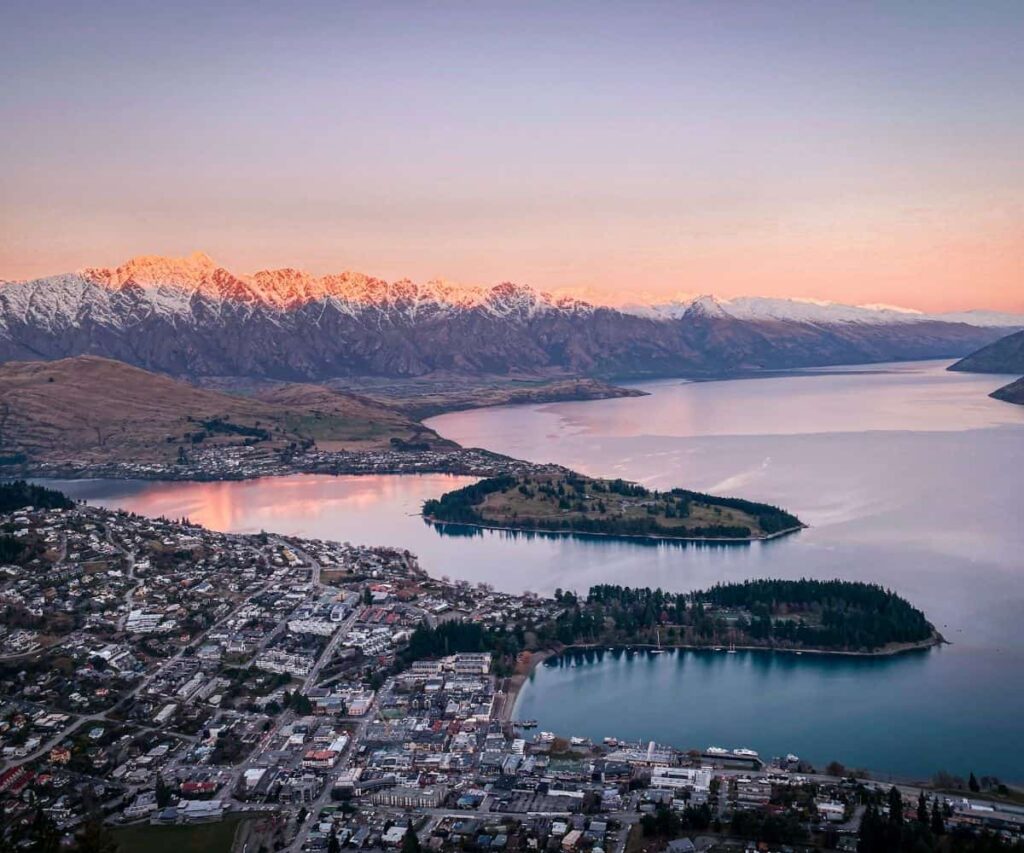
Queenstown and Wānaka are close enough on the map to look interchangeable, but they deliver very different versions of New Zealand’s Southern Lakes.
Queenstown is the obvious first-timer’s base for travellers who want momentum, big-ticket activities and easy logistics, while Wānaka suits visitors who’d rather wake beside a wide lake and build the day around weather, trails and mountain light.
Choose Queenstown for action and easy logistics
Queenstown is popular for good reason.
It has the airport, the lakefront drama, the restaurant choice and the kind of activity menu that can fill a week without much planning.
This is where commercial bungy jumping became a global idea, and AJ Hackett’s Kawarau Bridge site still gives the town one of its defining experiences.
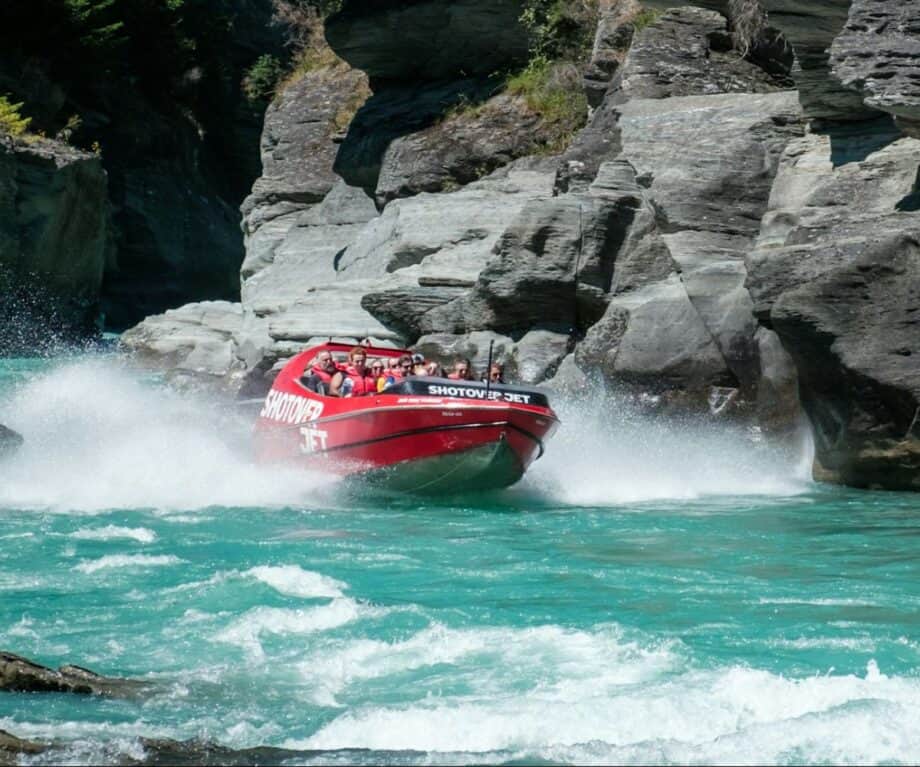
The Nevis bungy is the more serious proposition, dropping 134 metres above a remote gorge, while the Shotover Jet remains the classic fast-and-close introduction to the region’s schist canyons.
Queenstown also works if your idea of a memorable day is less about adrenaline and more about scenery with a glass in hand.
The TSS Earnslaw, a coal-fired steamship dating to 1912, crosses Lake Wakatipu to Walter Peak, and Gibbston Valley puts Central Otago pinot noir within an easy drive.
In winter, The Remarkables and Coronet Peak sit within roughly 30 minutes of town, which makes Queenstown one of the simplest ski bases in the country.
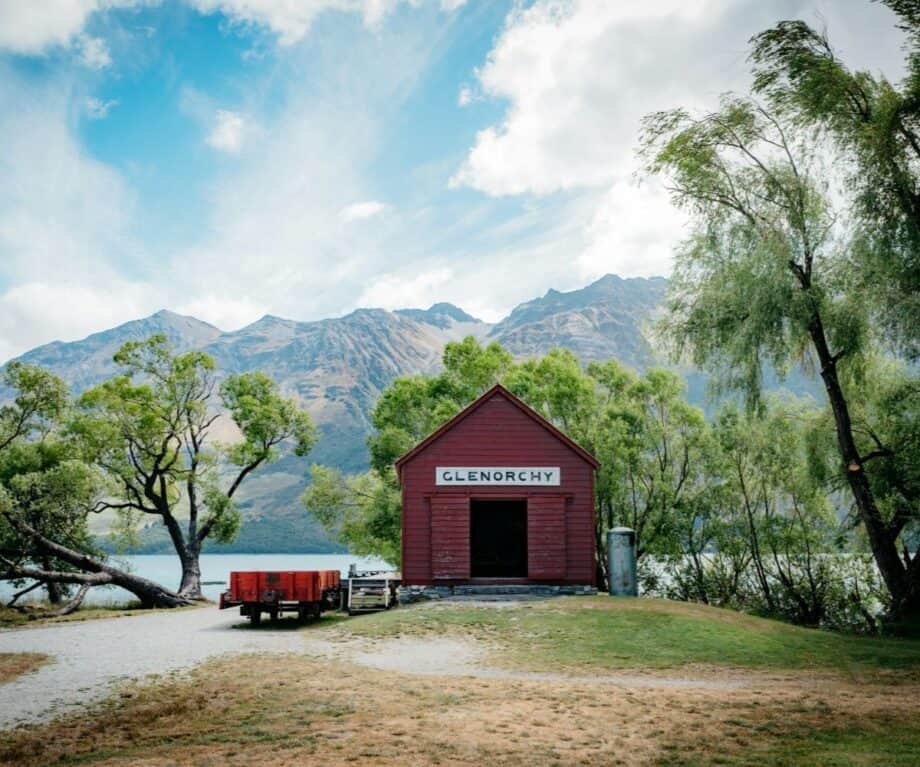
In summer, those same hills shift toward biking, hiking and lake days, with Glenorchy adding one of New Zealand’s most cinematic road trips just up the shore.
Choose Wānaka for lake life and bigger breathing space
Wānaka feels calmer from the first walk along the lakefront.
The town is smaller, the lake feels broader, and the daily rhythm is more about being outside than racing from one booking to the next.
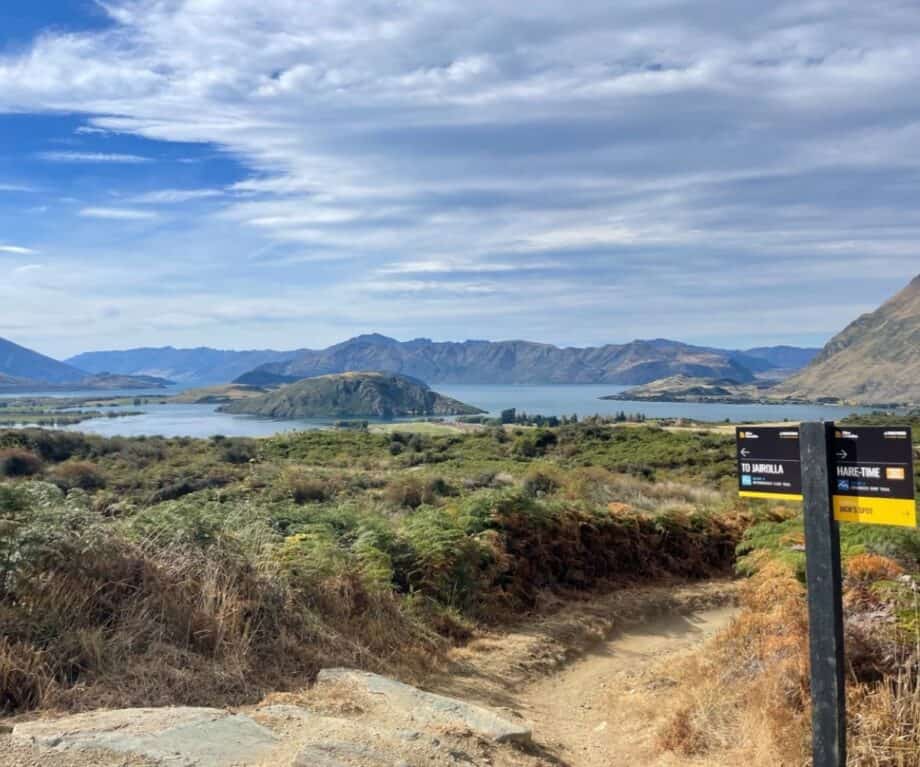
Its greatest advantage is access to the Matukituki Valley, where the road edges toward Mount Aspiring National Park through beech forest, open valley floors and mountain views that don’t need much effort to impress.
You can make it a picnic drive, a short walk or the start of something more ambitious.
Roys Peak is Wānaka’s headline hike, especially for travellers chasing sunrise views over the lake, though its fame means an early start is wise.
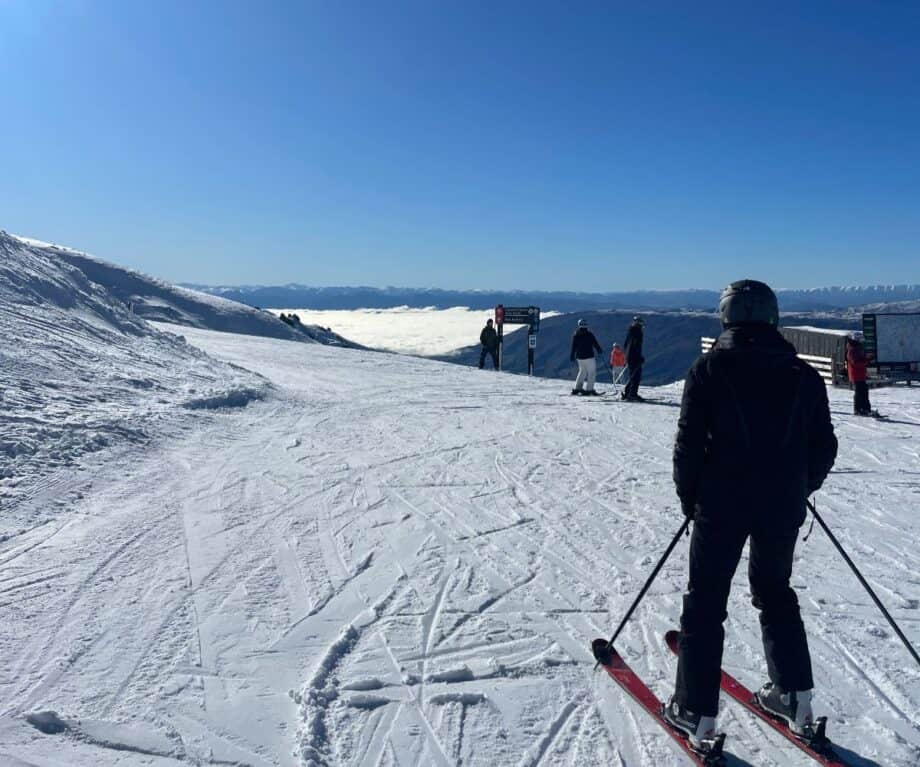
For snow, Treble Cone and Cardrona are both straightforward drives from town, with Treble Cone especially prized by confident skiers for its terrain and sweeping alpine views.
Wānaka also has a softer side that’s easy to underrate until you’re there.
You can swim from the shoreline, rent a kayak or paddleboard, wander without battling crowds, or watch the famous Wānaka Tree catch first light in still water.
Where Arrowtown fits into the trip
Arrowtown shouldn’t be treated as an afterthought, even if you don’t sleep there.
It sits about 20 minutes from Queenstown and roughly 45 minutes from Wānaka, which makes it a natural stop between the two or a polished day out from either base.
Buckingham Street still carries the shape of its gold-rush past, while the old Chinese settlement beside town offers a more reflective look at the region’s 19th-century mining history.
Autumn is Arrowtown’s show season, when the hills and streets shift through gold and copper tones and the annual autumn festival brings the town into its most photogenic weeks.
It’s also one of the best small dining stops in the region, with restaurants and wine lists that feel more sophisticated than the town’s compact size suggests.
How to decide where to stay
| Choose | Best for | What to expect |
|---|---|---|
| Queenstown | First-time visitors, short stays, adventure activities and easy connections | A busier lake town with more tours, nightlife, restaurants and transport options |
| Wānaka | Hikers, skiers, repeat visitors and travellers wanting a slower pace | A quieter base with strong access to lake days, mountain valleys and national park scenery |
| Split stay | Trips of four nights or more | The best contrast, with Queenstown for variety and Wānaka for atmosphere |
| Arrowtown stop | Food, heritage and autumn colour | An easy detour that adds character without complicating the route |
If you have only two or three nights and it’s your first visit, Queenstown is the safer choice because it concentrates more of the region’s famous experiences in one place.
If you have four nights or more, splitting the trip is the more rewarding move.
Stay in Queenstown first if you’re flying in, tick off the lake, wine, adventure or Milford Sound plans, then shift to Wānaka for quieter mornings and mountain-led days.
For travellers who dislike crowds, don’t care about nightlife and want easy access to trails, Wānaka may be the better base from the beginning.
The real answer isn’t which town is better, because both are exceptional in different ways.
Queenstown gives you the Southern Lakes at full volume, while Wānaka lets you hear the place breathe.