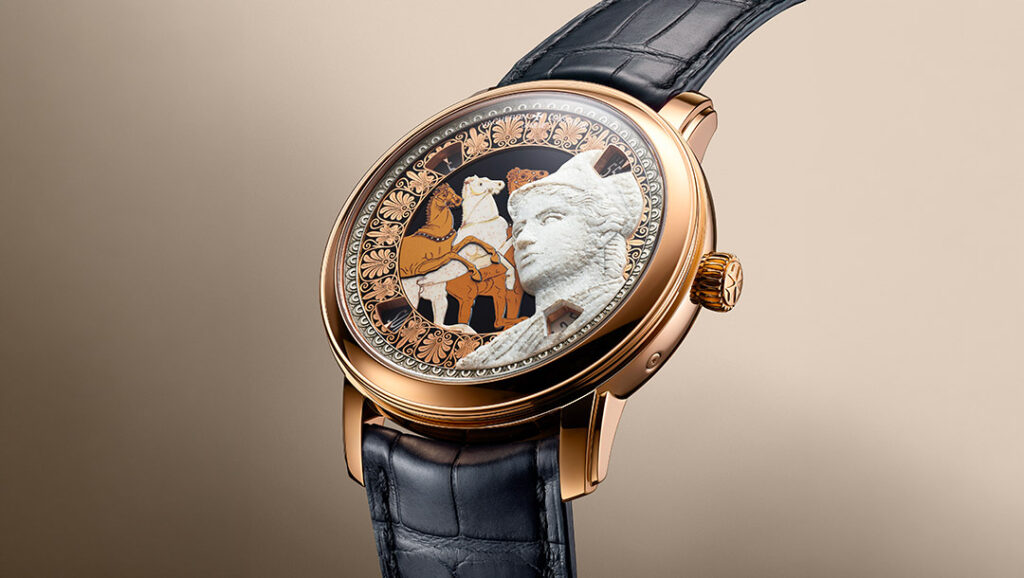
Vacheron Constantin’s artistic partnership with the Louvre has produced one of the maison’s most elaborate recent expressions of dial craft.
The Métiers d’Art Tribute to Great Civilisations collection is a quartet of limited-edition watches inspired by monumental antiquities housed in the Paris museum, translating museum-scale works into miniature compositions for the wrist.
It’s the kind of project that sits squarely in Vacheron Constantin’s comfort zone, where mechanical watchmaking becomes a frame for historical material, handwork and cultural storytelling.
At a glance
- Vacheron Constantin has created four Métiers d’Art watches paying tribute to antiquities exhibited at the Louvre in Paris.
- Each dial uses a demanding mix of craft techniques, with individual dials requiring between 120 and 220 hours of work.
- Each version is limited to 12 pieces and is powered by the self-winding calibre 2460 G4/2.
Four Louvre antiquities, four watch dials
The collection draws from the Louvre’s Antiquity galleries, with each model dedicated to a different work.
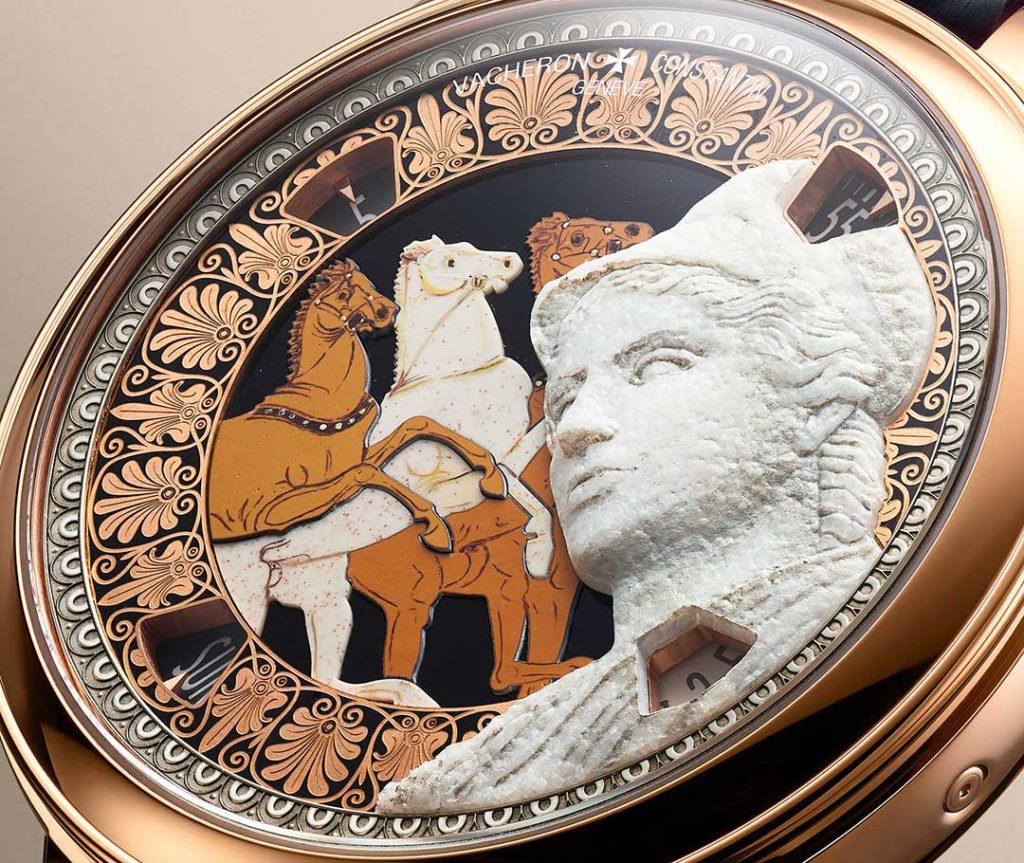
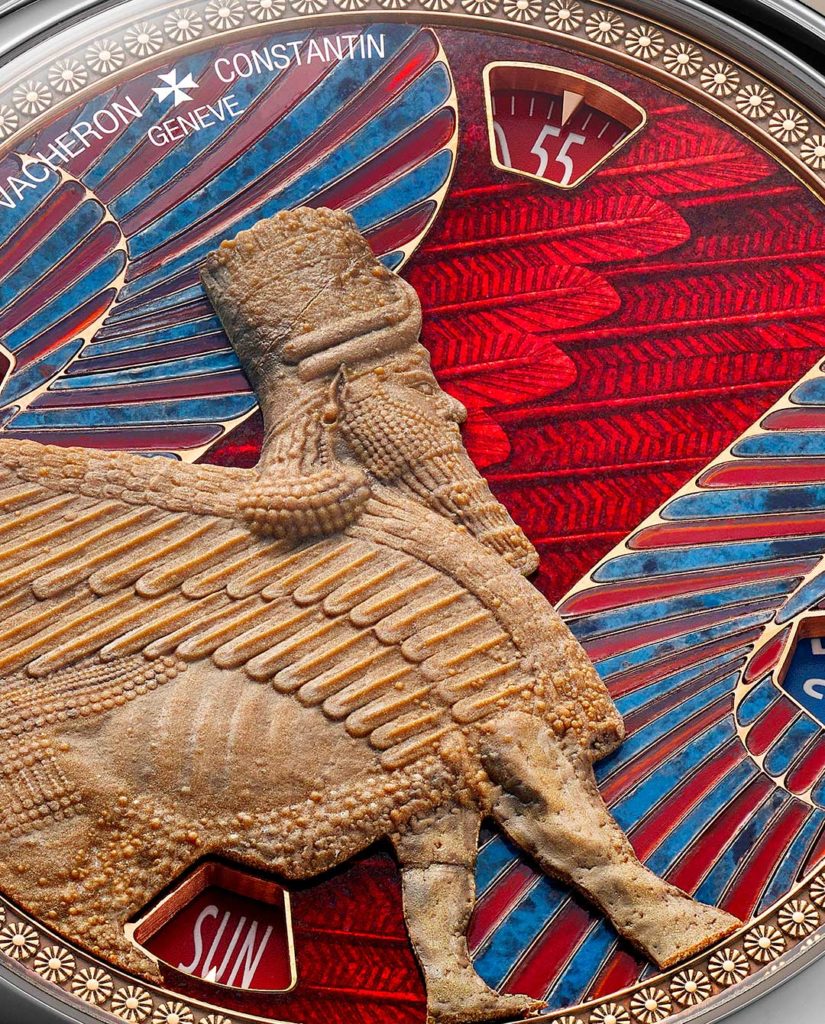
The chosen subjects are the Buste d’Akhénaton, the Lamassu de Sargon II, the Athéna de Velletri and the Tibre de L’Iseum Campense.
Rather than simply placing a motif on the dial, Vacheron Constantin has treated each watch as a miniature stage for one of these historic objects.
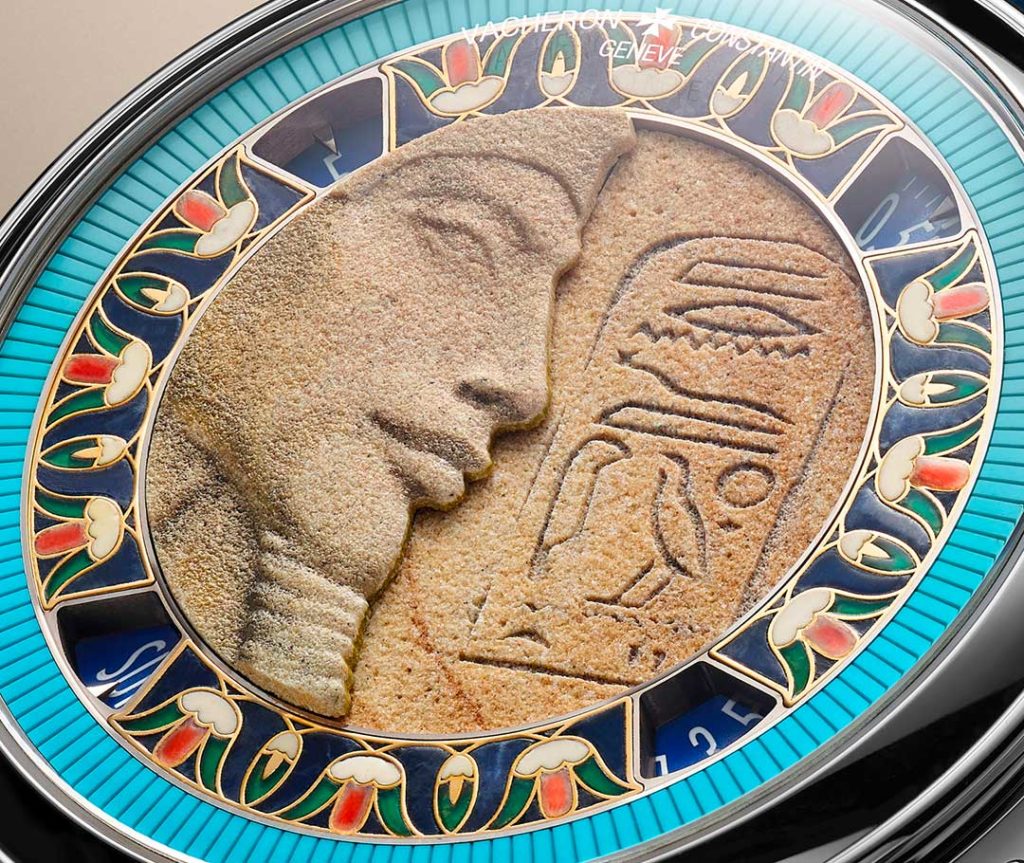
The result is a collector-focused quartet that connects the scale and permanence of ancient art with the precision and intimacy of a wristwatch.
Nine crafts concentrated on a single dial
The technical appeal of the Tribute to Great Civilisations collection lies less in conventional watch specifications and more in the density of handwork on each dial.
Vacheron Constantin’s artisans used nine métiers d’art across the series, including engraving, sculpture, gilding, enamelling, painting, marquetry, micro-mosaic and glyptics.
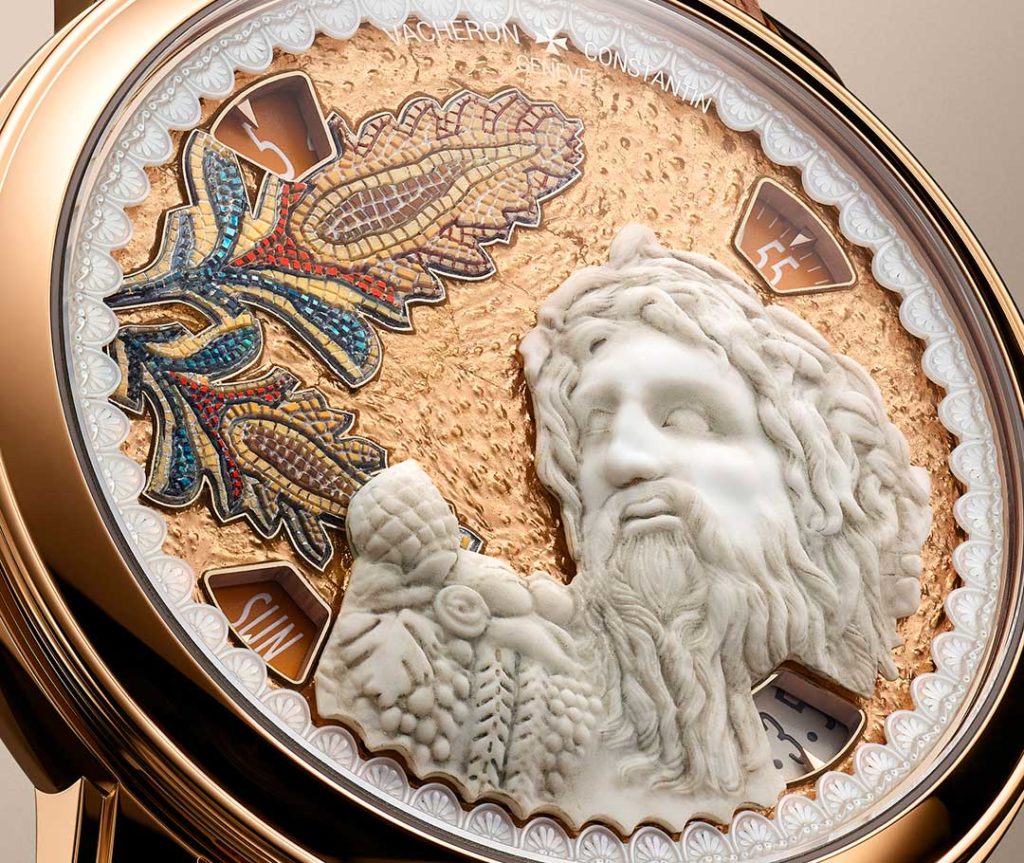
Those techniques are rarely quick, and they become even more demanding when reduced to the dimensions of a watch dial.
Depending on its complexity, each dial required between 120 and 220 hours of work, a figure that underlines how far this collection sits from industrial decoration.
For collectors, that level of labour matters because it makes every watch feel closer to a cabinet object than a conventional limited edition.
A discreet calibre lets the artwork lead
All four watches are fitted with the same movement, Vacheron Constantin’s self-winding calibre 2460 G4/2.
The movement is assembled from 237 components and offers a 40-hour power reserve.
Its display is especially useful in this context, with hours, minutes, date and day shown through four separate apertures rather than by central hands.
That layout leaves the dial composition largely unobstructed, allowing the ancient-inspired miniature to remain the visual centre of the watch.
Through the sapphire crystal back, the oscillating weight carries an engraving inspired by an 18th-century lithograph depicting the Louvre’s East facade.
It’s a fitting detail, because the museum connection continues on both sides of the case rather than stopping at the dial.
Details & Specifications
| Brand | Vacheron Constantin |
|---|---|
| Collection | Métiers d’Art Tribute to Great Civilisations |
| Models | Buste d’Akhénaton, Lamassu de Sargon II, Athéna de Velletri, Tibre de L’Iseum Campense |
| Edition size | 12 pieces per model |
| Movement | Calibre 2460 G4/2, self-winding |
| Components | 237 |
| Power reserve | 40 hours |
| Functions | Hours, minutes, date and day in four apertures |
| Dial crafts | Nine métiers d’art, including engraving, sculpture, gilding, enamelling, painting, marquetry, micro-mosaic and glyptics |
| Dial work | Approximately 120 to 220 hours per dial, depending on complexity |
| Caseback | Sapphire crystal back with engraved oscillating weight inspired by an 18th-century lithograph of the Louvre’s East facade |
With just 48 watches across the entire quartet, the Métiers d’Art Tribute to Great Civilisations collection is aimed at collectors who value rarity, museum culture and handcraft as much as horological mechanics.
It’s a reminder that Vacheron Constantin’s most interesting artistic watches are often not about spectacle, but about the patience required to make history legible at wrist scale.