Vacheron Constantin’s zodiac watches work best when the mechanics step aside and let craft take the dial.
For the 2027 Year of the Goat, the maison has done exactly that, using its aperture-based calibre 2460 G4 to clear the stage for enamel, micro-painting and relief engraving.
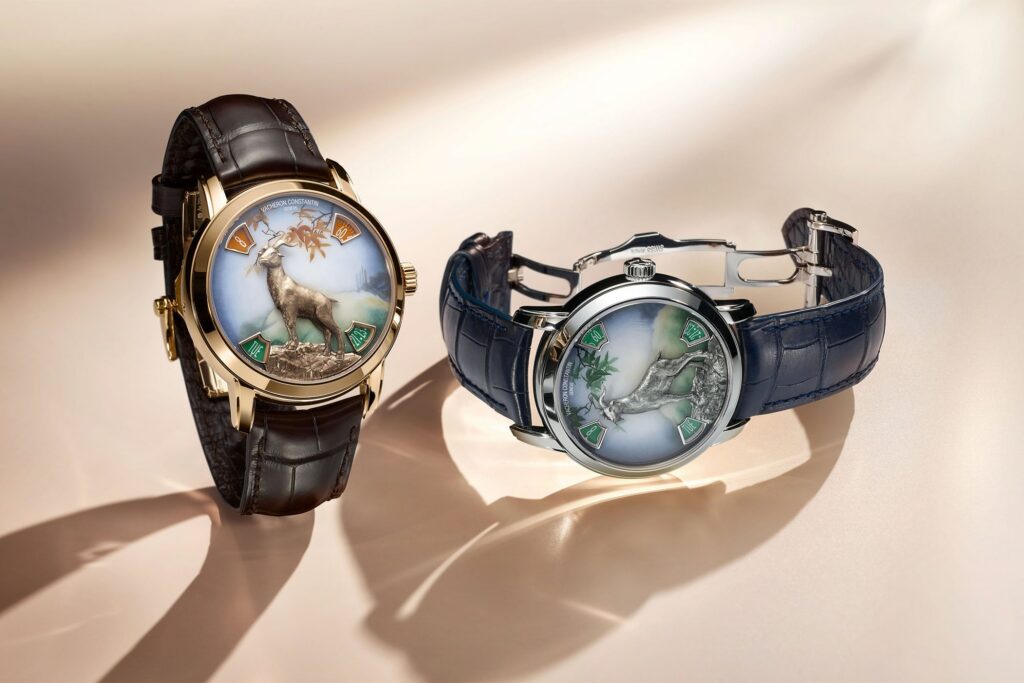
The result is a pair of 40mm Métiers d’Art limited editions in pink gold and platinum, each made in 25 pieces.
At a glance
- Vacheron Constantin has introduced two Métiers d’Art The Legend of the Chinese Zodiac Year of the Goat watches for the Lunar New Year in February 2027.
- The dial combines a sculpted goat motif with Grand Feu enamel, miniature-painted foliage and a hands-free four-aperture display.
- Each case material is limited to 25 pieces, with pricing available upon request.
A zodiac line with roots in China
The Year of the Goat is the eighth animal in the Chinese zodiac cycle, and Vacheron Constantin has chosen a subject loaded with cultural meaning.
In Chinese tradition, the goat is associated with strength, quiet resilience, gentleness, loyalty and good fortune.
The release also sits within a longer relationship between Vacheron Constantin and China that dates to 1846, when the brand sent 33 pairs of watches to Canton.
That connection later included commissioned pieces for Chinese dignitaries, with some bespoke watches sold in pairs and decorated with engraving, enamel and precious stones.
Since 2012, the manufacture has marked the Chinese zodiac through its Métiers d’Art watches, making this latest pair part of a now-established annual language of craft and symbolism.
The goat rendered in enamel and relief engraving
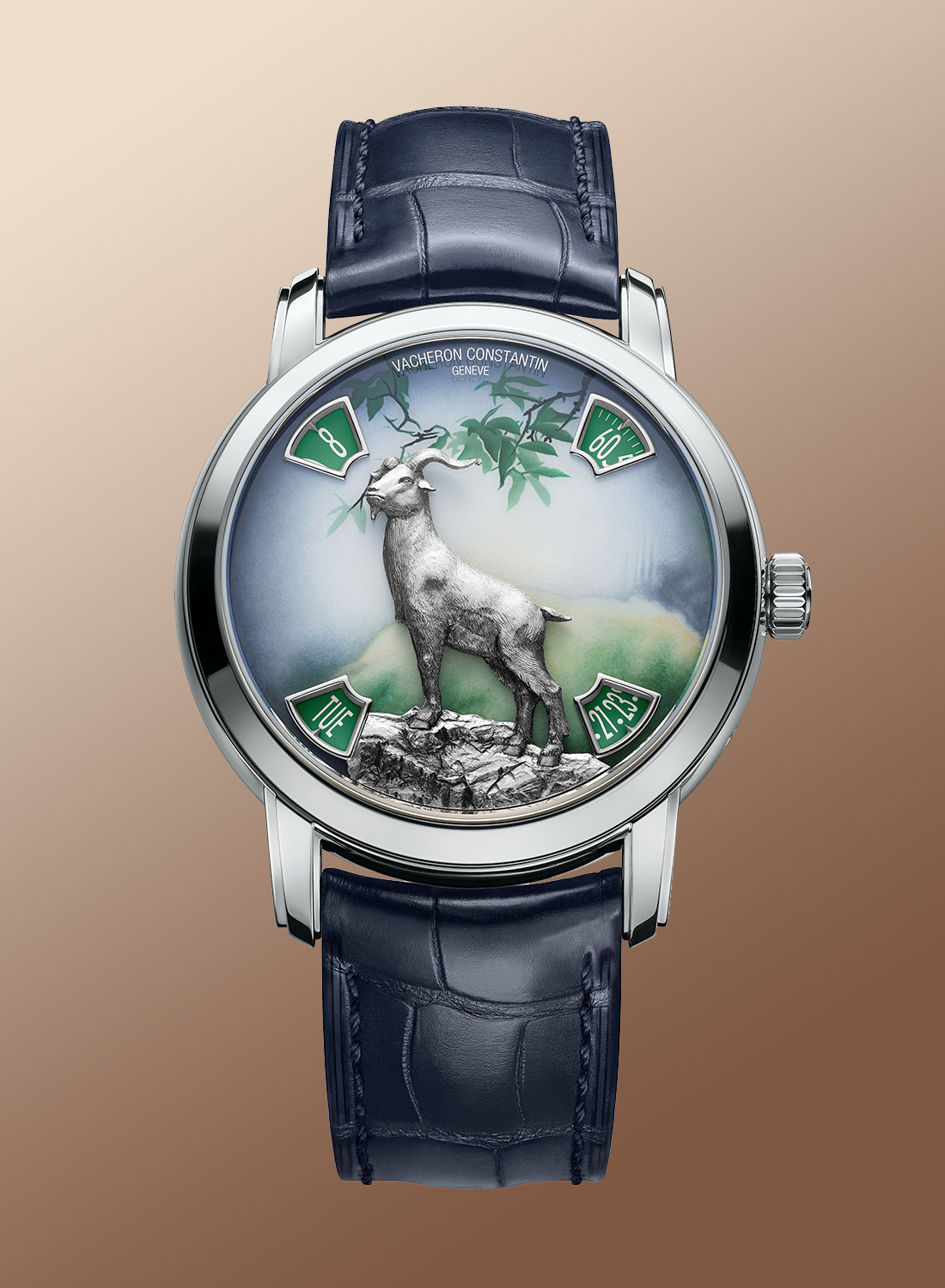
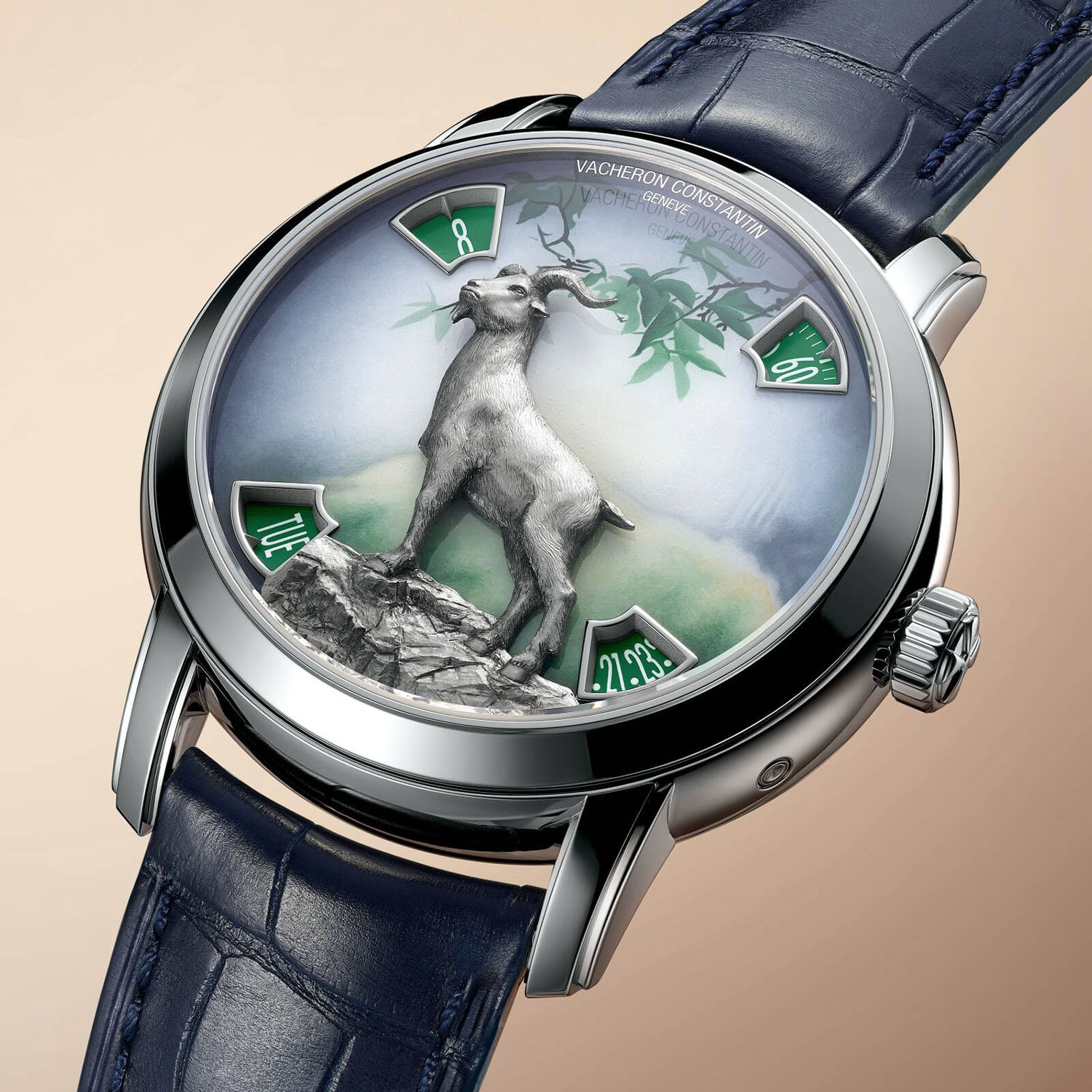
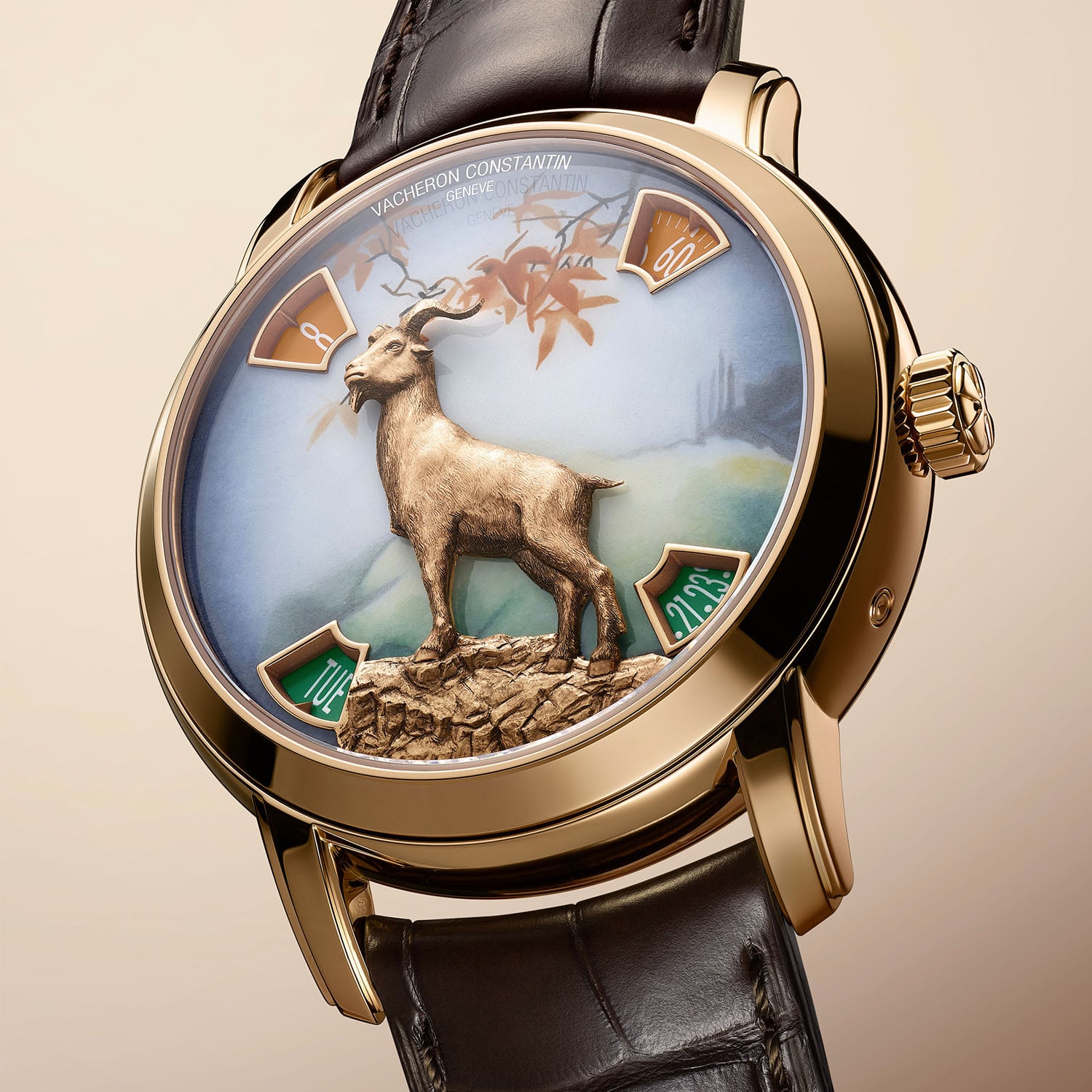
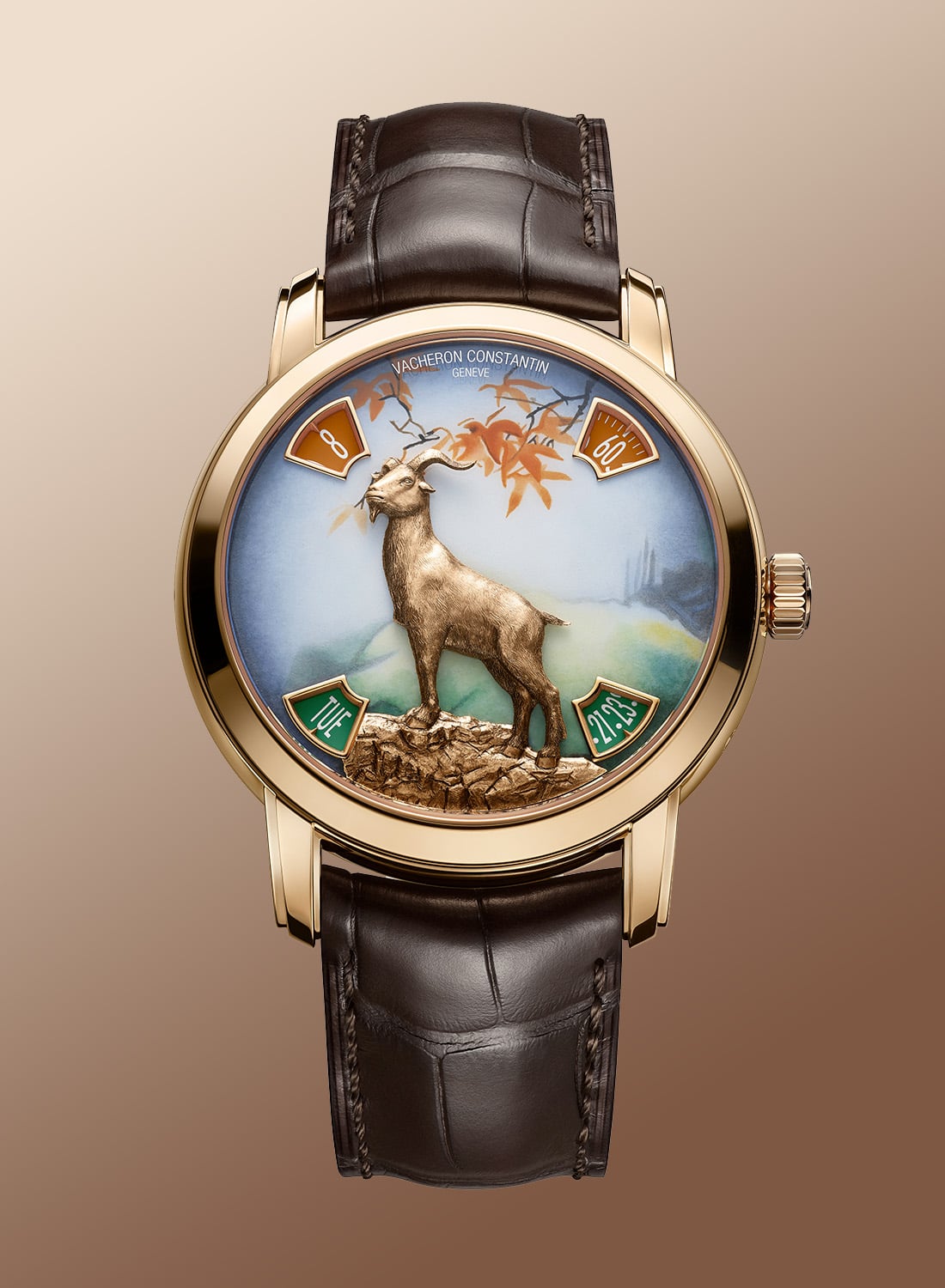
The dial is built around a realistic three-dimensional goat standing on a rock and looking across a misty landscape.
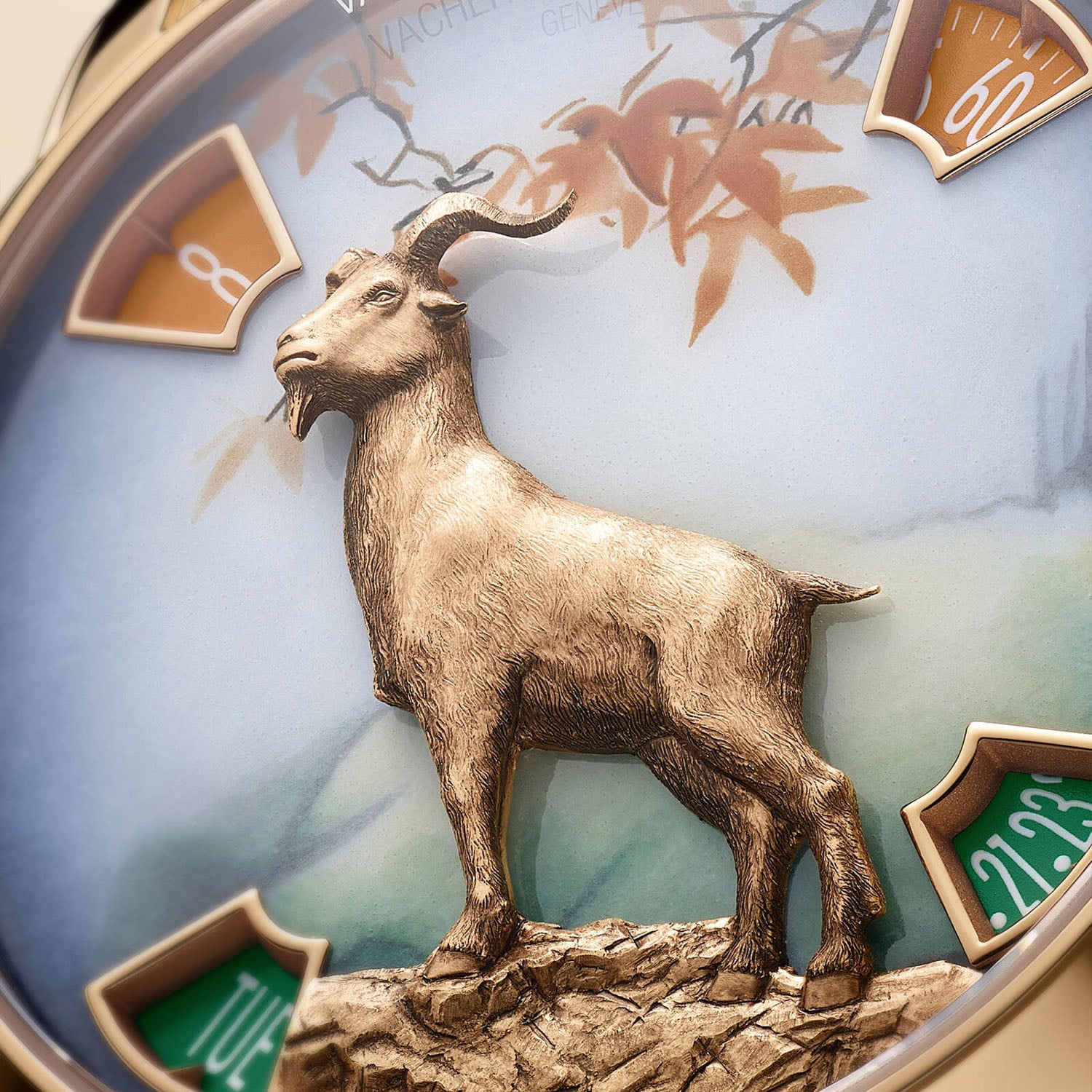
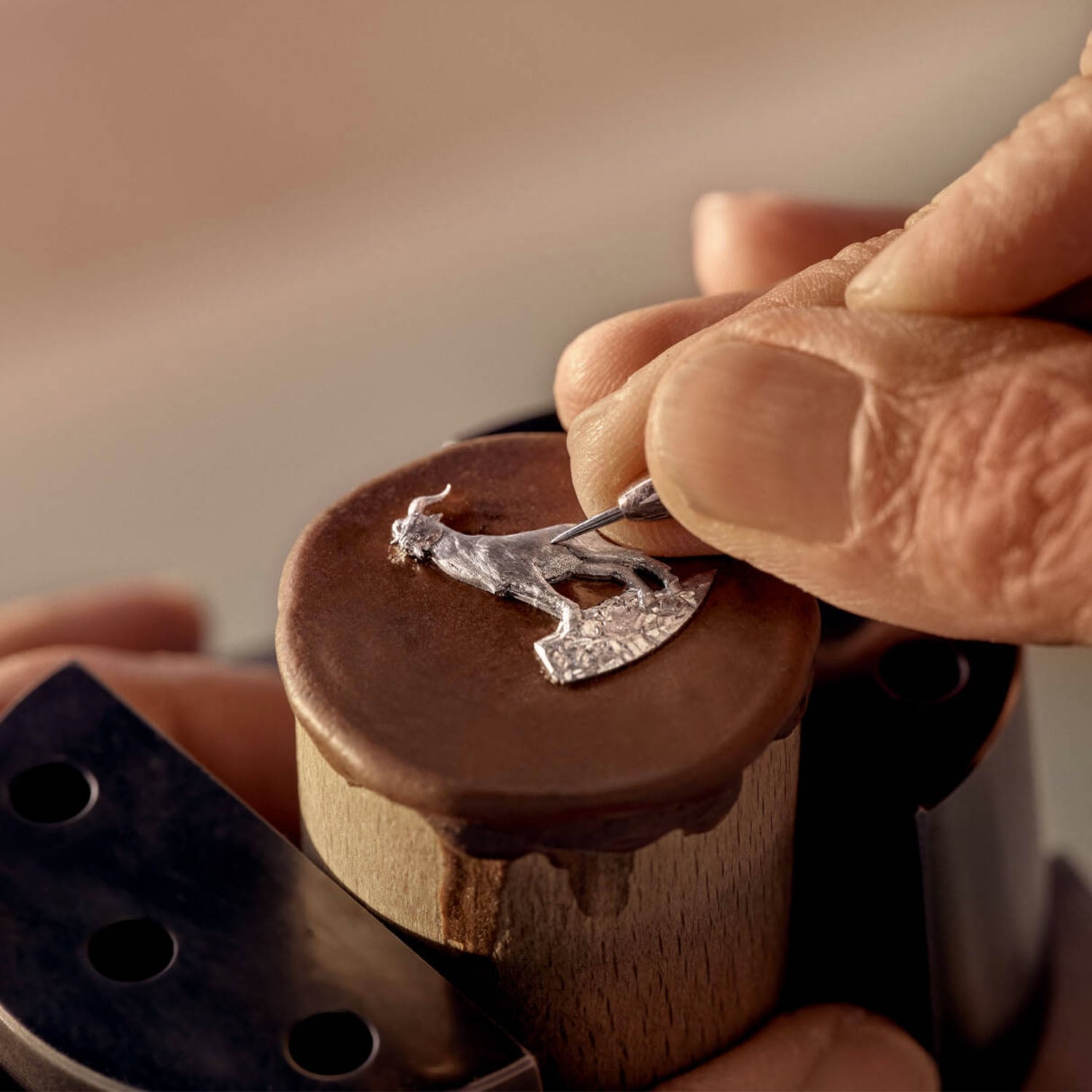
A master engraver hand-sculpts the goat and rock in white or pink gold, then works the surface in relief to bring out the horns, fur and terrain.
The background is made with multi-coloured Grand Feu enamel, with a soft gradient and miniature-painted enamel used for the foliage.
The dial plate is painted in successive layers with a fine brush and fired in a kiln, with the process repeated over two weeks until the colour and tonal depth are achieved.
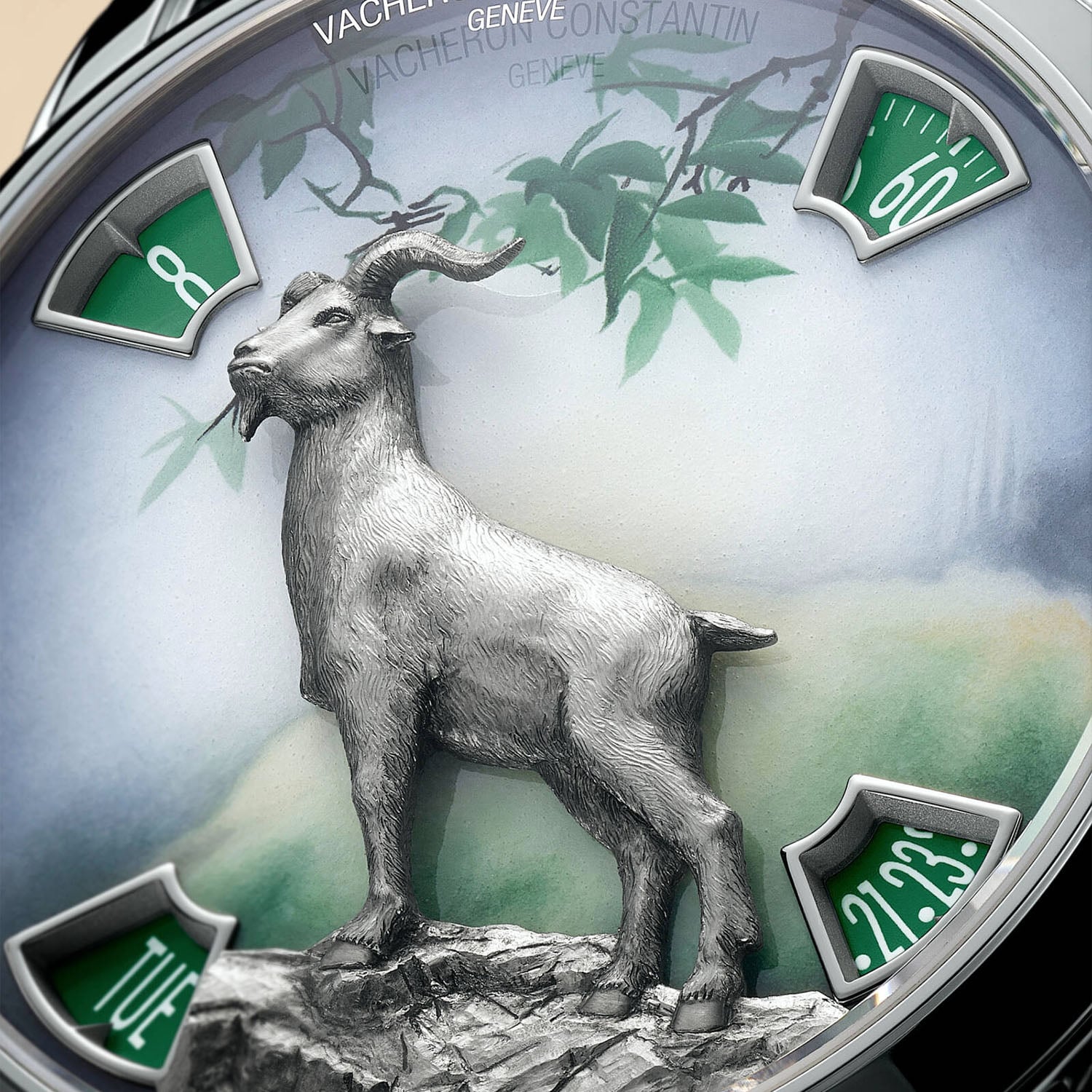
Even the four apertures are painted to match the details of the dial, a small but telling decision on a watch where the display is part of the composition rather than an interruption.
Calibre 2460 G4 keeps the dial open
The in-house automatic calibre 2460 G4 is central to the design because it removes conventional hands from the dial.
Hours and minutes are shown through the two upper apertures at 11 and 2 o’clock, while the day of the week and date appear in the two lower apertures.
The upper indications use a trailing display, while the day and date are jumping indications.
Visible through the caseback, the movement is fitted with an openworked 22k yellow gold rotor carrying the polished Maltese Cross.
It runs at 4Hz, delivers a 40-hour power reserve and carries the Hallmark of Geneva on one of its bridges.
Details & Specifications
| Brand | Vacheron Constantin |
|---|---|
| Collection | Métiers d’Art The Legend of the Chinese Zodiac |
| Model | Year of the Goat |
| Case size | 40mm |
| Case thickness | 12.72mm |
| Case material | 18k pink gold or platinum |
| Dial | Grand Feu enamel landscape with miniature-painted foliage and a hand-sculpted goat and rock in white or pink gold |
| Movement | In-house automatic calibre 2460 G4 |
| Display | Trailing hours and minutes in upper apertures, jumping day and date in lower apertures |
| Power reserve | 40 hours |
| Frequency | 4Hz |
| Rotor | Openworked 22k yellow gold rotor with polished Maltese Cross |
| Certification | Hallmark of Geneva |
| Strap | Alligator leather with pink gold or platinum folding clasp |
| Limitation | 25 pieces in each case material |
| Price | Upon request |
As a zodiac watch, the Year of the Goat is highly specific; as an object lesson in using mechanics to serve craft, it has broader appeal.
It will speak most clearly to collectors who value Vacheron Constantin’s Métiers d’Art work, cultural continuity and the rare patience of hand-executed decoration.