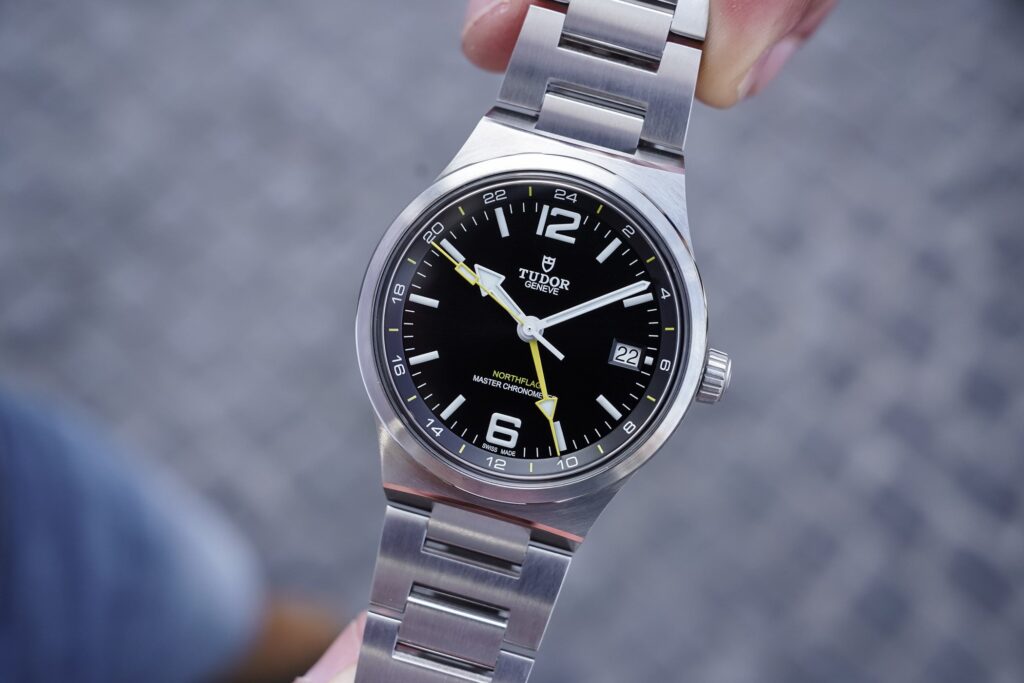
The Tudor Northflag is back, and the small change in name signals a larger shift in personality.
What was once one of Tudor’s more idiosyncratic modern tool watches has returned with a true GMT function, cleaner proportions and a case that feels more considered without losing its angular edge.
For collectors who remember the 2015 North Flag as the first Tudor to show off an in-house movement through a sapphire back, this new version feels less like a nostalgic rerun and more like the idea finally settling into itself.
At a glance
- Tudor has revived the North Flag concept as the Northflag GMT, now with a true travel-time function.
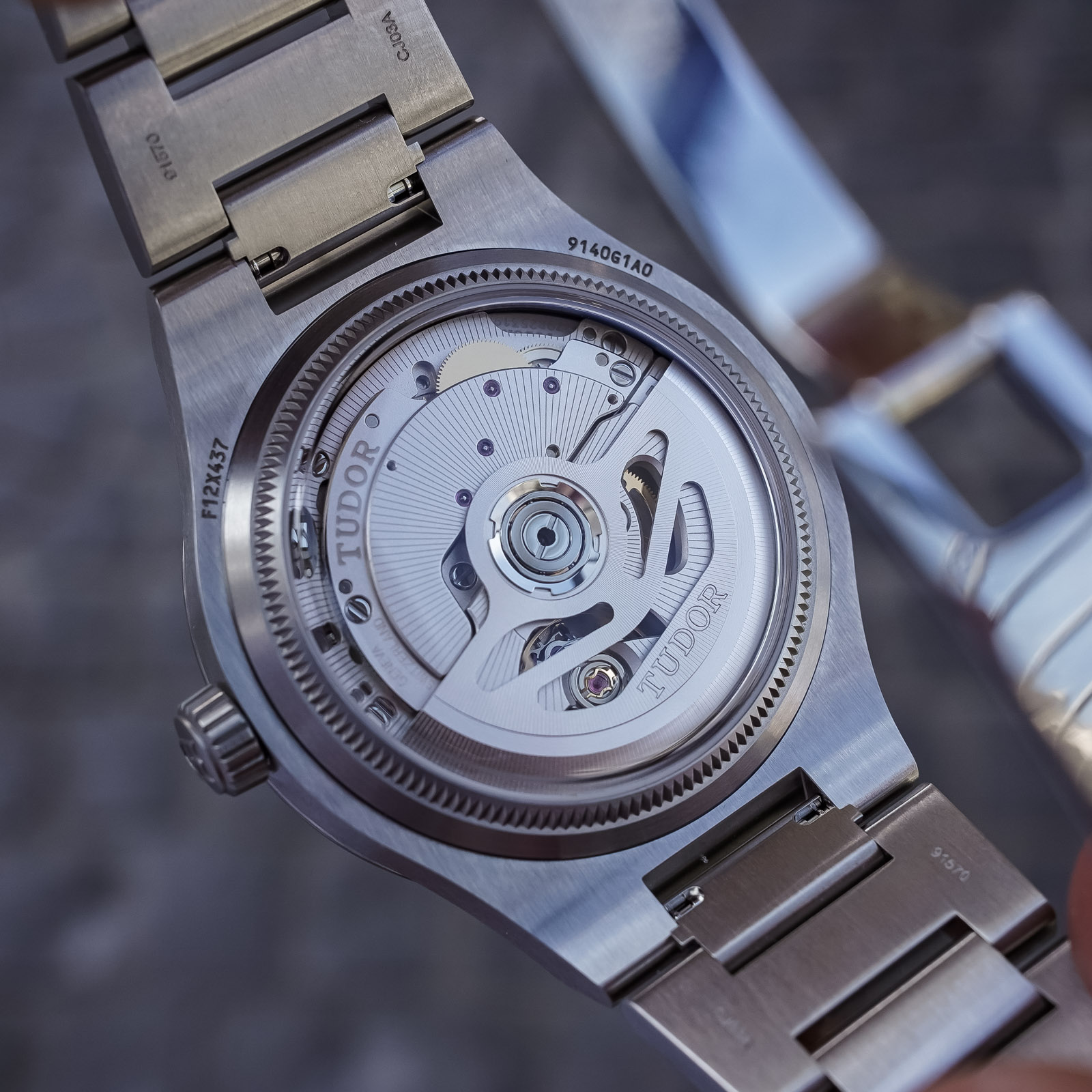
- The 40mm stainless-steel case is thinner and shorter lug-to-lug than the 2015 model, with a fixed brushed bezel and sapphire display back.
- It runs on the COSC and METAS-certified calibre MT5652-U and joins Tudor’s regular collection.
Ranger II DNA, tightened for a modern wrist
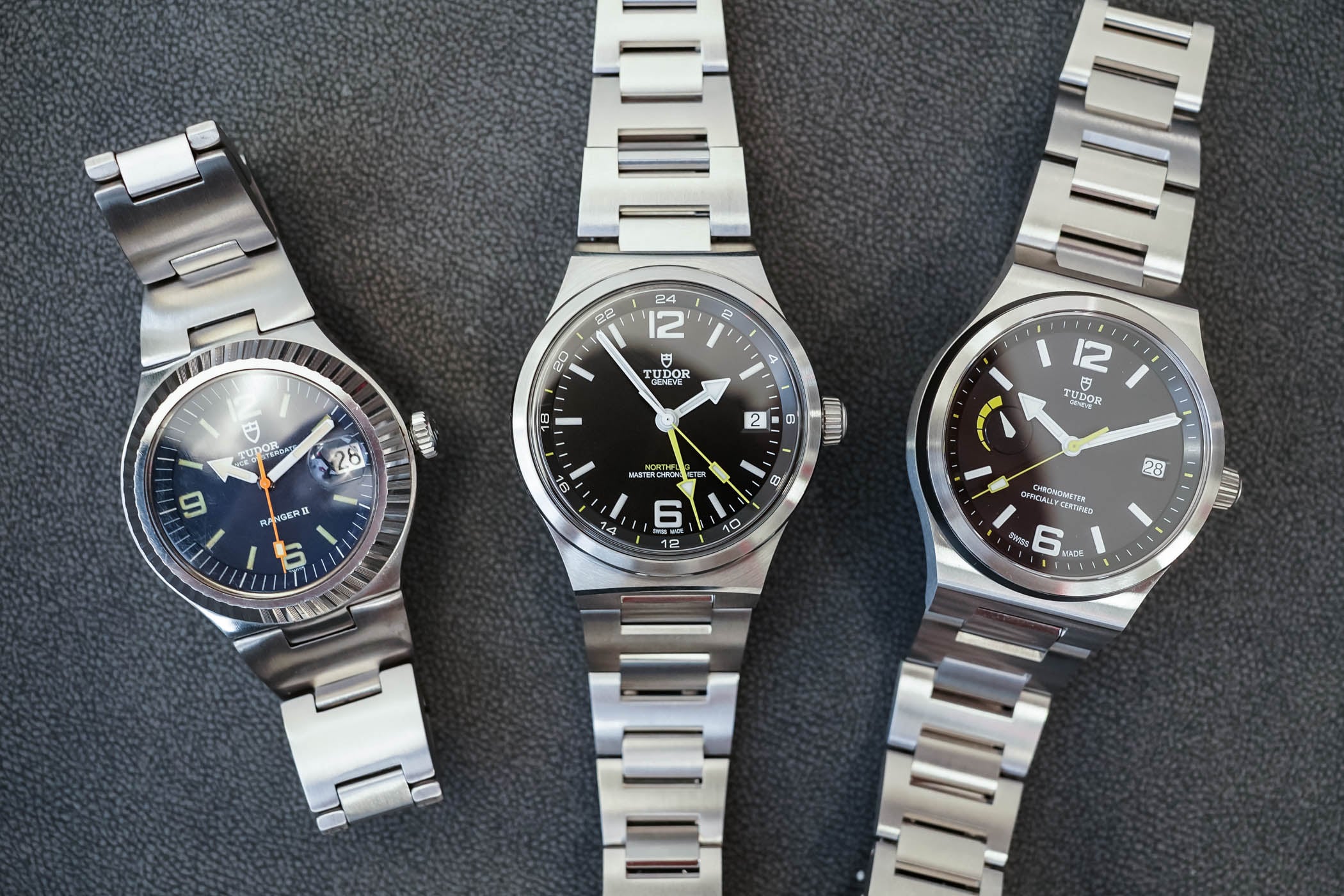
The Northflag’s design lineage still runs back to the Tudor Ranger II of the 1970s, a watch defined by its tonneau-style case, integrated bracelet and expedition-minded presence.
The 2015 North Flag translated that vocabulary into a modern sports watch, complete with a black-and-yellow dial, 40mm case and integrated-style bracelet.
The new Northflag keeps the same diameter, but the proportions have been meaningfully adjusted.
Thickness drops from 13.4mm to 12.7mm, while the lug-to-lug measurement is reduced from 50mm to 48.8mm.
Those numbers don’t turn it into a small watch, but they do make the Northflag feel less block-like and more wearable than its predecessor.
A cleaner case with less visual weight
The stainless-steel case remains water-resistant to 100 metres and still leans into brushed, angular surfaces rather than soft dress-watch polish.
The most obvious visual change is the removal of the black ceramic ring that sat beneath the steel bezel on the earlier North Flag.
That detail gave the first model much of its recognisable character, so some enthusiasts will miss it.
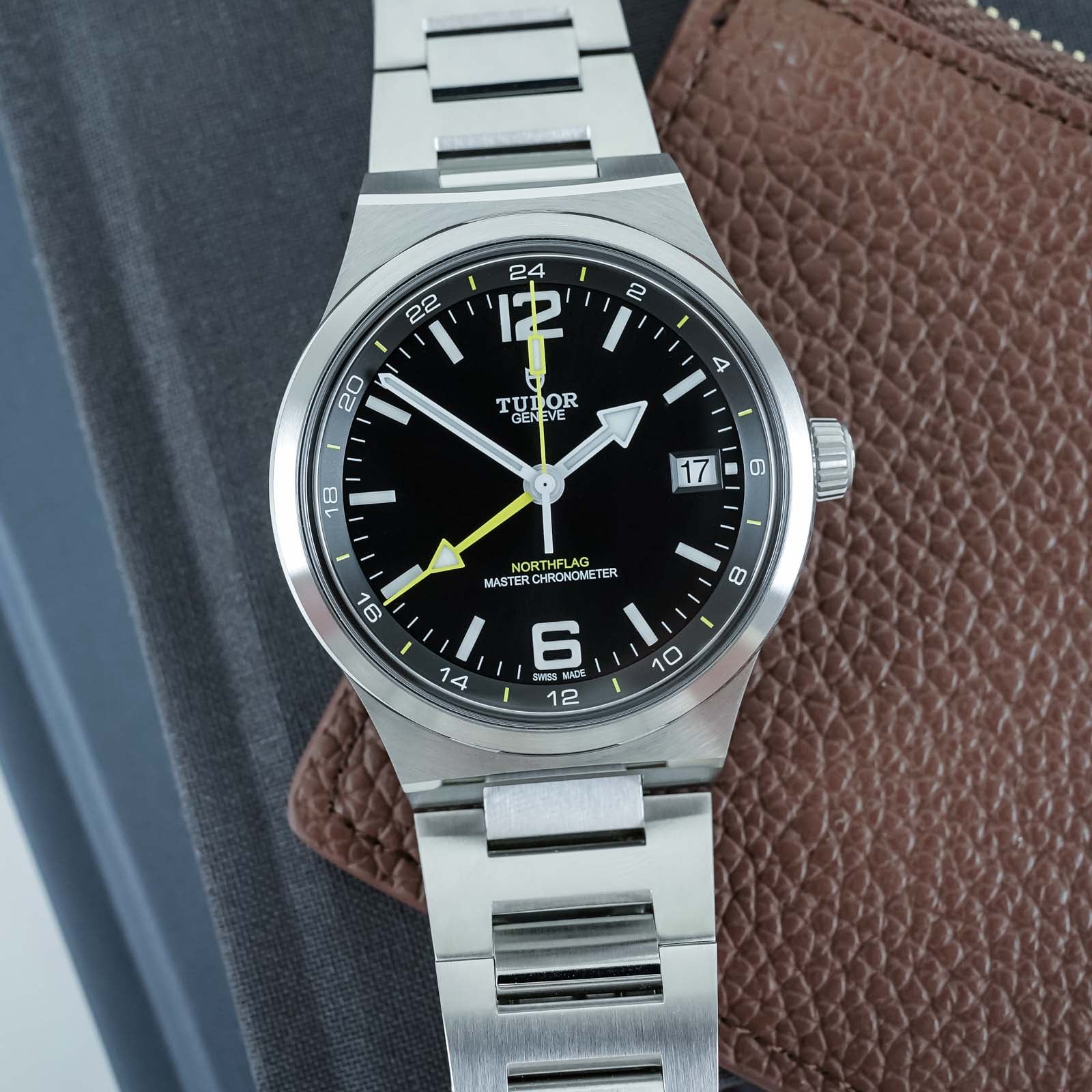
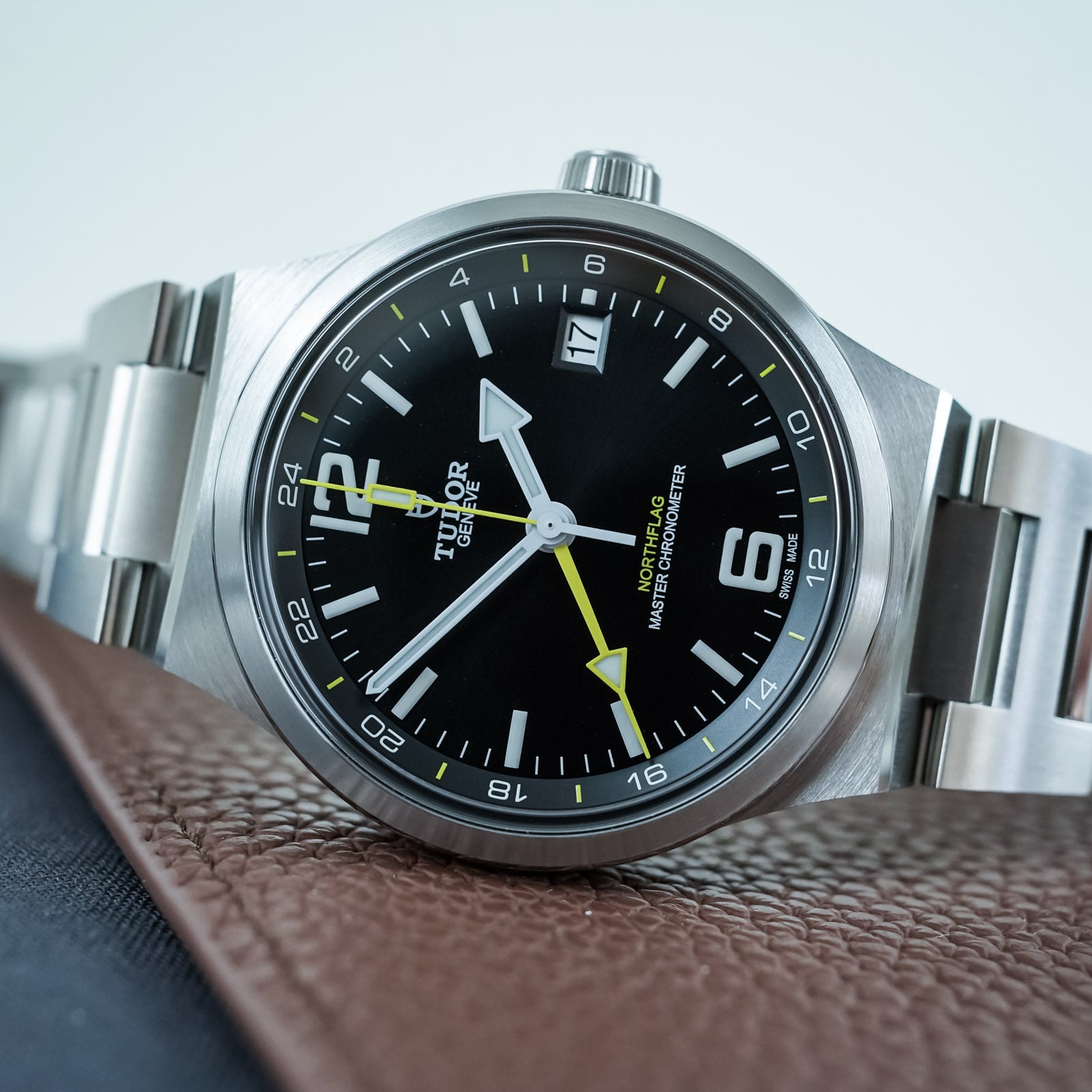
In its place is a fixed, brushed, angled bezel that simplifies the silhouette and helps the watch look slimmer beneath its box-shaped sapphire crystal.
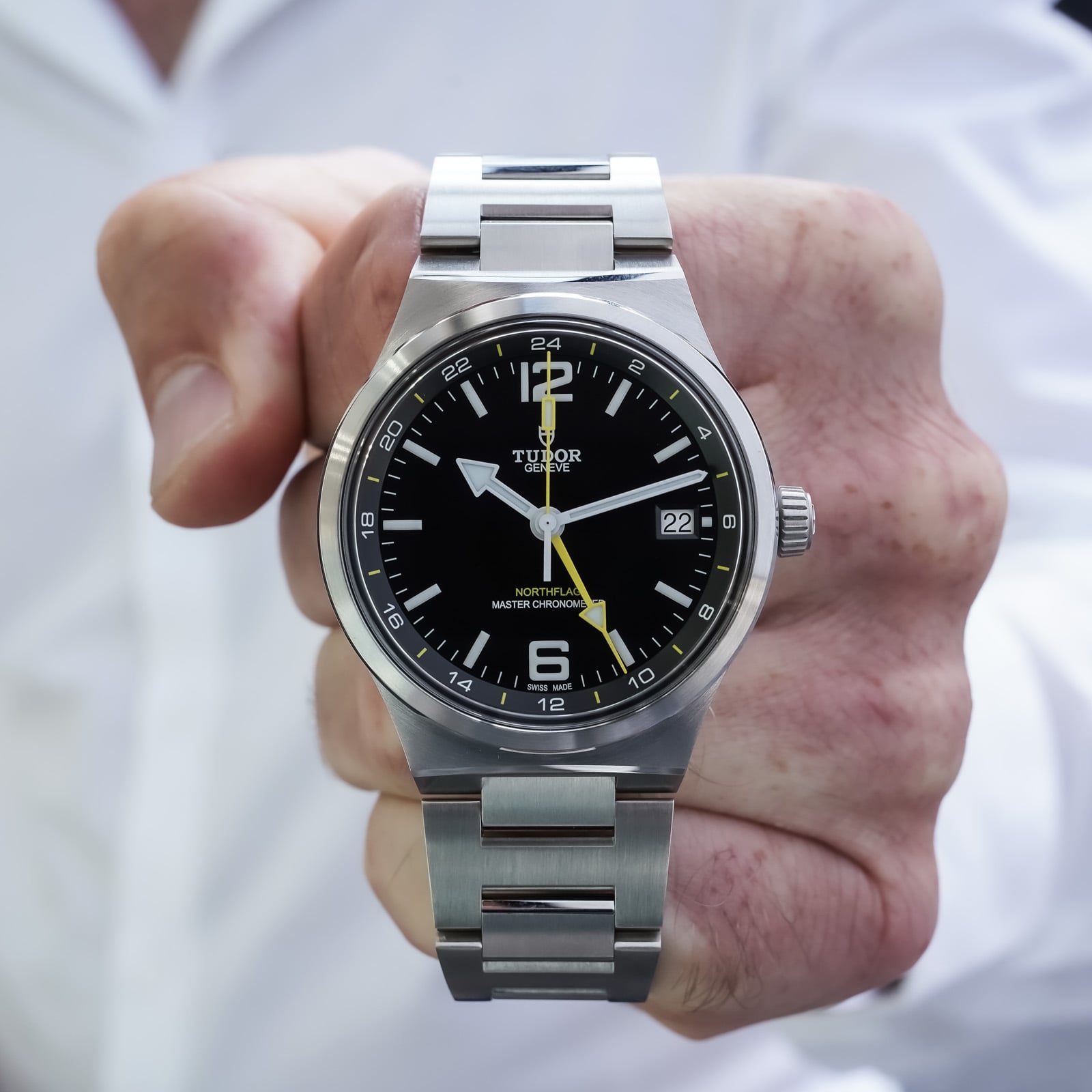
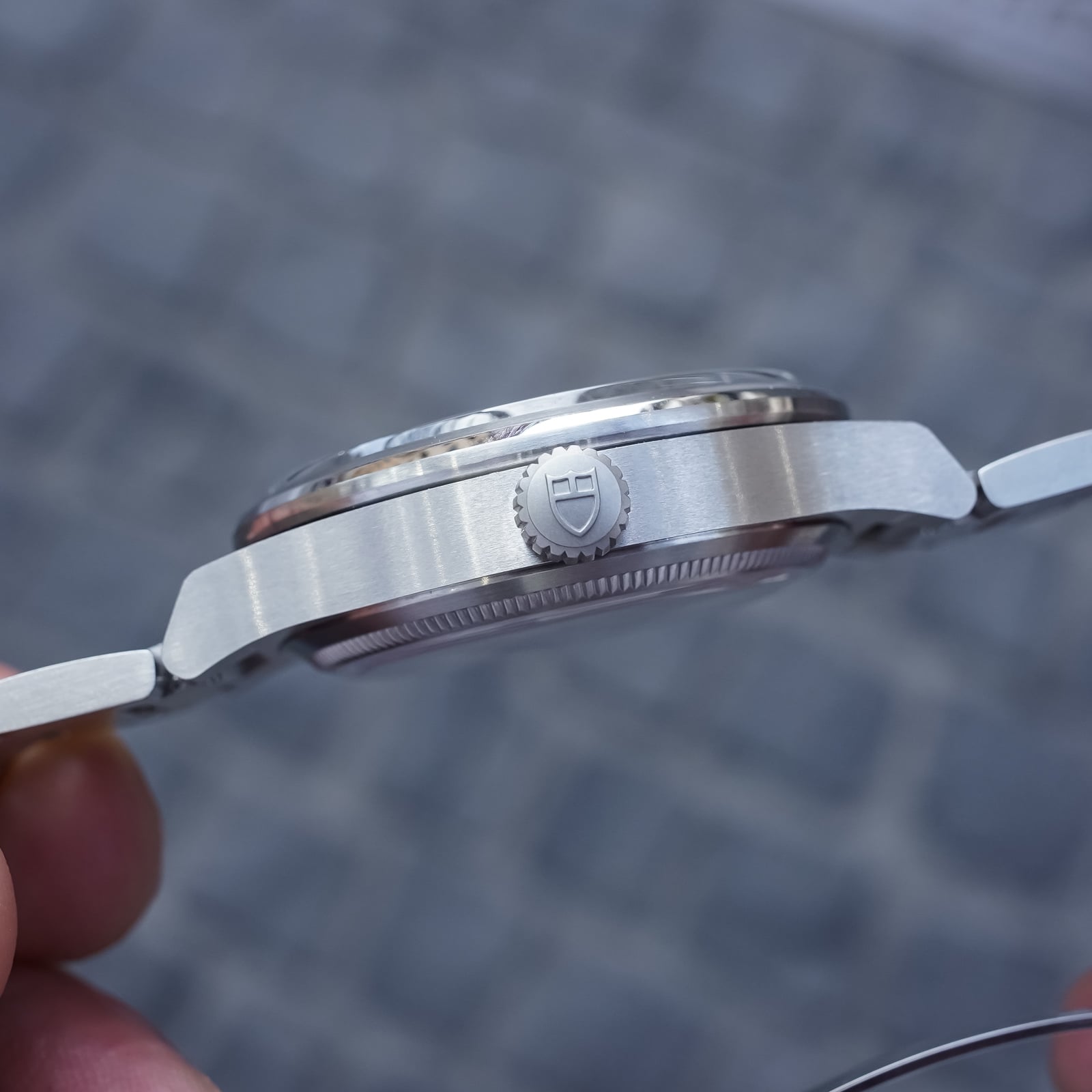
Tudor has also refined the finishing, adding polished bevels to the bezel edge and at the case corners near 6 and 12 o’clock.
It’s still a robust sports watch, but the execution now feels more deliberate than blunt.
A sapphire caseback remains part of the formula, keeping a link to the 2015 model’s role as the first Tudor with a manufacture movement visible from the back.
The GMT dial makes the concept more useful
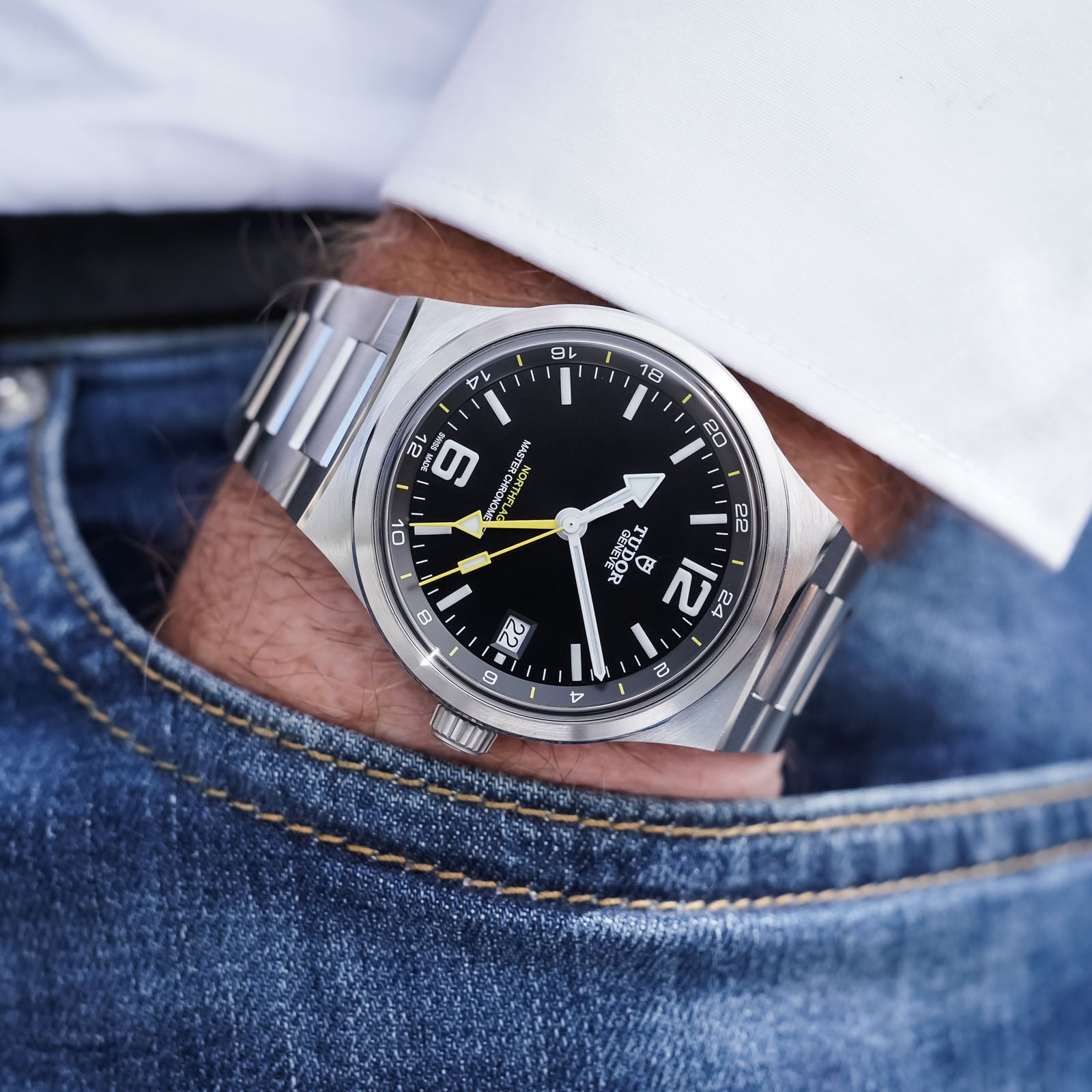
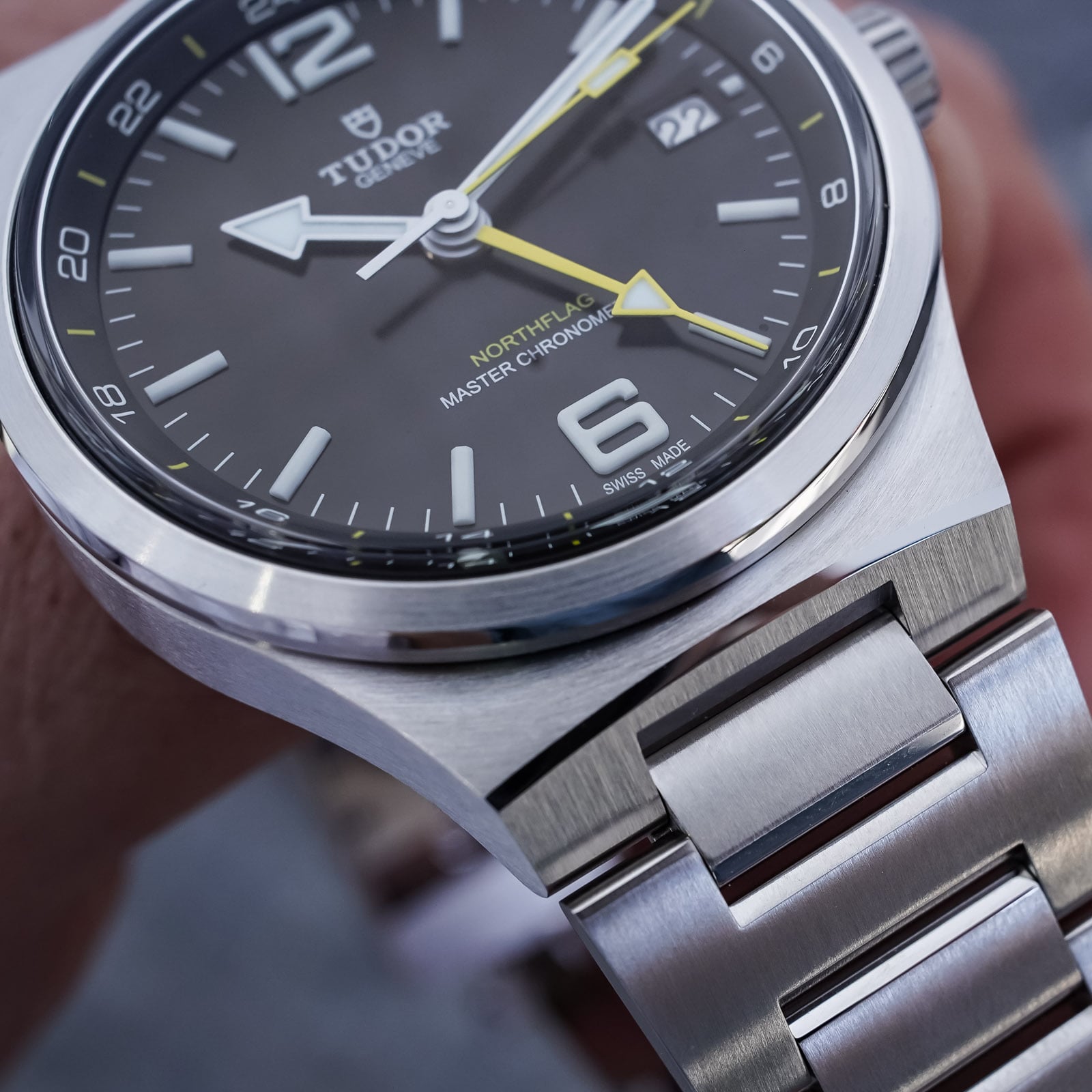
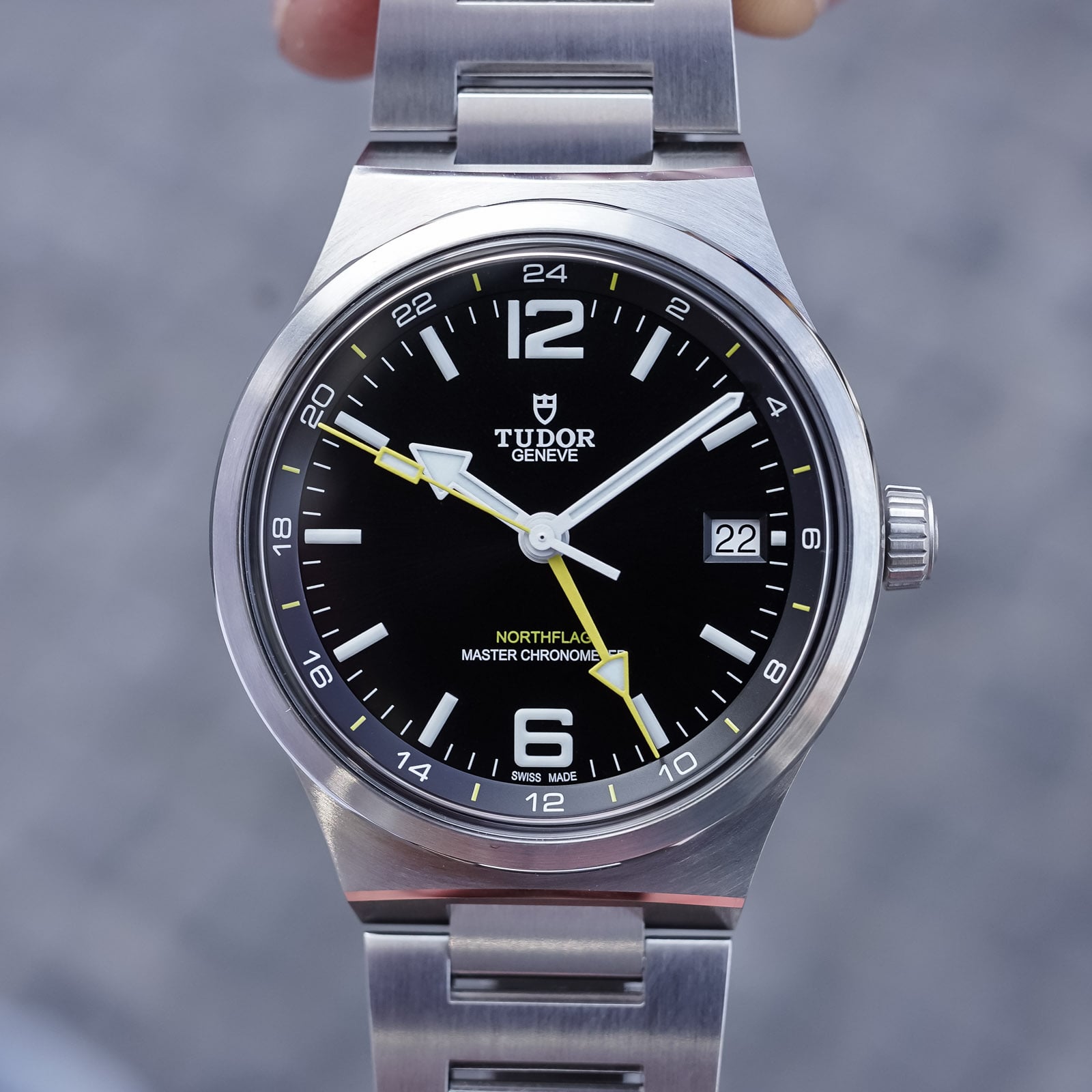
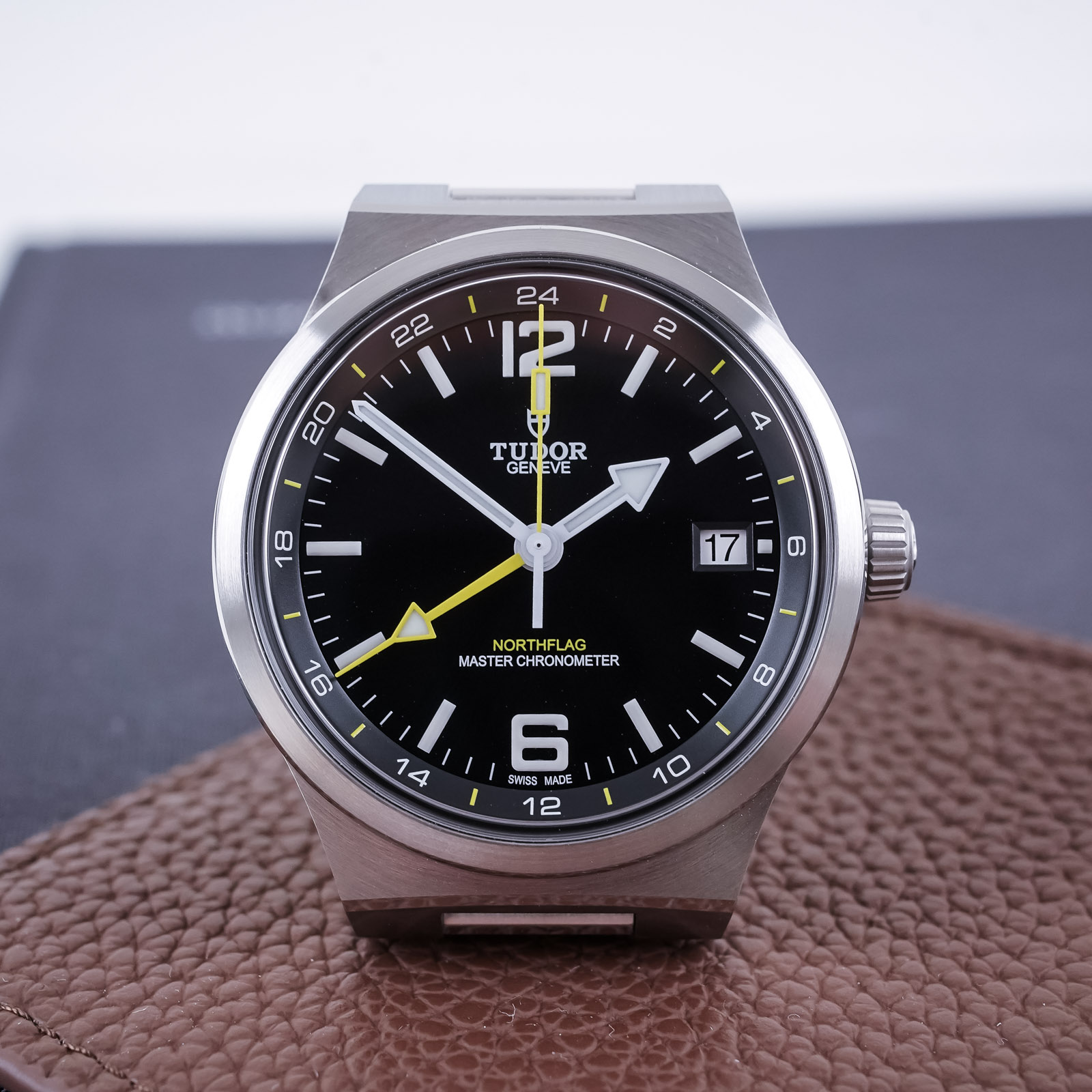
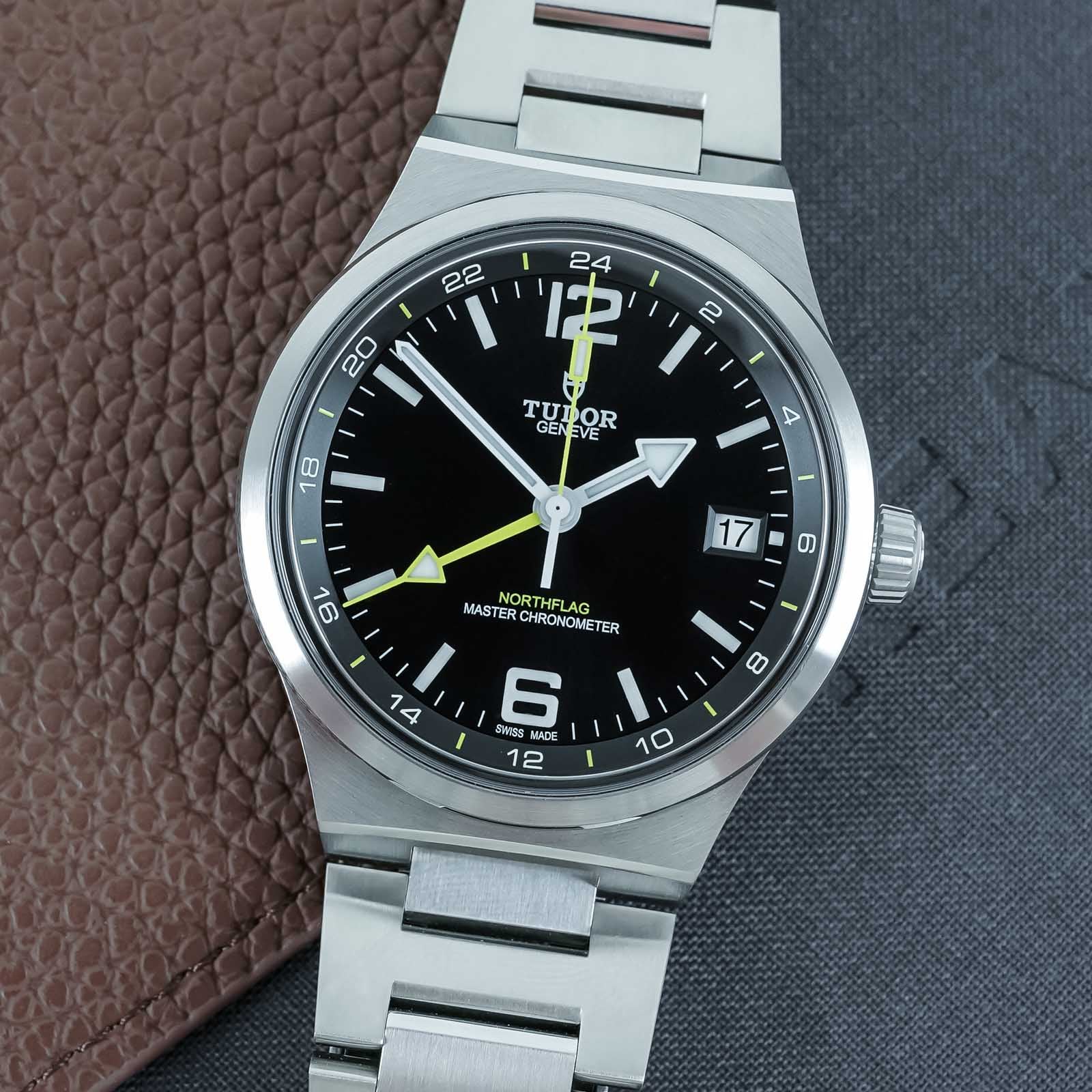
The black dial keeps the North Flag’s strong white-and-yellow contrast, but the functional layout has changed substantially.
The old power-reserve indicator at 9 o’clock is gone, replaced by a yellow arrow-tipped GMT hand for tracking home time on a fixed 24-hour scale.
That’s a smarter fit for the watch’s exploratory character.
A power-reserve display made sense in 2015, when Tudor was drawing attention to its 70-hour manufacture calibre, but a true GMT is the more practical complication for regular wear.
The dial also gains a more layered structure, with the minute and seconds track stepping down from the inner flange and sitting closer to the centre.
The central seconds hand now uses a rectangular luminous tip rather than the earlier trapezoidal shape, a small detail that brings it closer to the Ranger II design language.
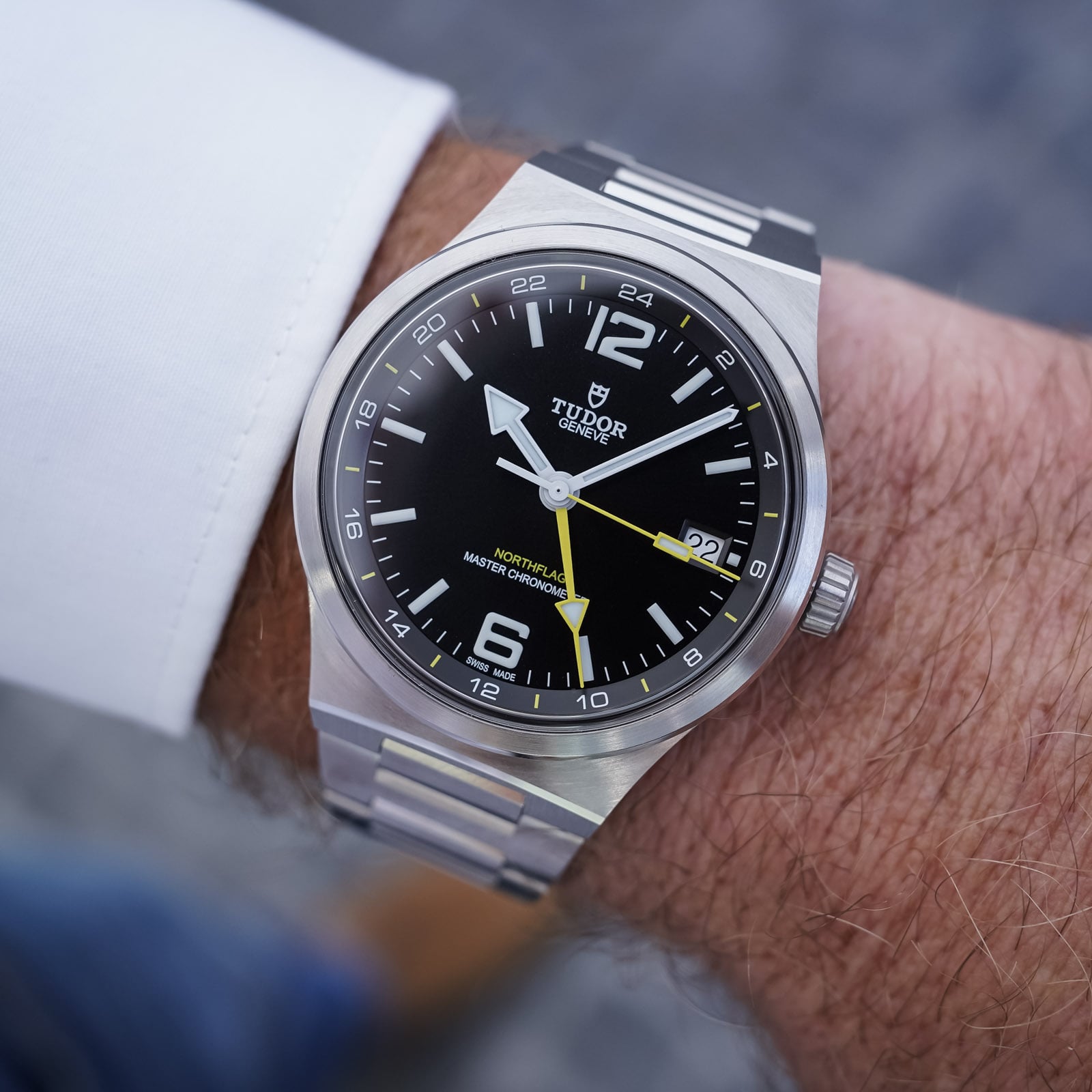
The matte dial surface has been replaced by a discreet sunray-brushed finish that appears mostly restrained until the light catches it.
The luminous hour markers and numerals are now formed from monobloc ceramic, giving the dial more depth while preserving the familiar, Explorer-like typeface.
The date remains at 3 o’clock, while the hour and minute hands keep their established shape and Super-LumiNova treatment.
A proven Tudor GMT calibre and a better bracelet clasp
Inside the Northflag is Tudor’s calibre MT5652-U, an automatic true GMT movement also used elsewhere in the brand’s modern catalogue.
The local hour hand can be adjusted independently in one-hour jumps, while the 24-hour hand continues to indicate home time.
That’s the difference between a proper traveller’s GMT and a watch that merely adds a second time-zone display.
The movement is produced with Kenissi and runs at 28,800 vibrations per hour, with a 65-hour power reserve, 32 jewels, a variable-inertia balance and a silicon balance spring.
It is certified by both COSC and METAS as a Master Chronometer, which gives the Northflag a strong technical footing within Tudor’s current range.
The integrated-style steel bracelet continues with broad H-shaped links and a largely brushed finish, keeping the watch visually anchored to its case.
The practical upgrade is the T-Fit clasp, allowing quick micro-adjustment on the wrist without tools.
On a watch intended to handle travel, changing temperatures and daily wear, that’s not a minor convenience.
Details & Specifications
| Brand | Tudor |
|---|---|
| Model | Northflag GMT |
| Case size | 40mm |
| Thickness | 12.7mm |
| Lug-to-lug | 48.8mm |
| Case material | Stainless steel |
| Bezel | Fixed brushed angled bezel |
| Crystal | Box-shaped sapphire crystal |
| Caseback | Sapphire display back with fluted edge |
| Water resistance | 100 metres |
| Dial | Black sunray-brushed dial with white and yellow accents |
| Hour markers | Monobloc ceramic with luminous material |
| Movement | Tudor calibre MT5652-U automatic |
| Functions | Hours, minutes, seconds, date and true GMT |
| Frequency | 28,800 vibrations per hour |
| Power reserve | 65 hours |
| Jewels | 32 |
| Certification | COSC and METAS Master Chronometer |
| Balance | Variable-inertia balance with silicon balance spring |
| Bracelet | Integrated-style stainless-steel bracelet with broad H-shaped links |
| Clasp | Tudor T-Fit rapid adjustment clasp |
| Availability | Regular collection |
The new Northflag loses some of the eccentric charm that made the first North Flag so distinctive, particularly the ceramic bezel insert and the unusual power-reserve display.
What it gains is arguably more important for the way people actually wear watches now: better proportions, a more useful complication, a stronger movement specification and a bracelet that’s easier to live with every day.
For Tudor, it brings back an adventurous design that never quite received its full moment the first time around.