Timex has been steadily testing how far its familiar accessibility can stretch into more premium watchmaking, and the Atelier collection is where that experiment is taking shape.
The latest chapter is a pair of chronographs that put the brand’s sport-watch instincts into a sharper, more refined package. The headline piece is the Atelier Chronograph Automatic M1a Ti, backed by the more attainable and slimmer Atelier Chronograph Quartz M1q.
At a glance
- Timex has added its first chronographs to the Atelier collection with the Automatic M1a Ti and Quartz M1q.
- The M1a Ti uses a titanium case and Swiss Landeron automatic chronograph movement, while the M1q pairs a steel case with a Ronda quartz calibre.
- Prices run from £600 for the quartz model on rubber to £1,850 for the titanium automatic on bracelet.
A bolder Atelier chronograph in titanium
The Atelier Chronograph Automatic M1a Ti is not trying to disappear under a cuff.
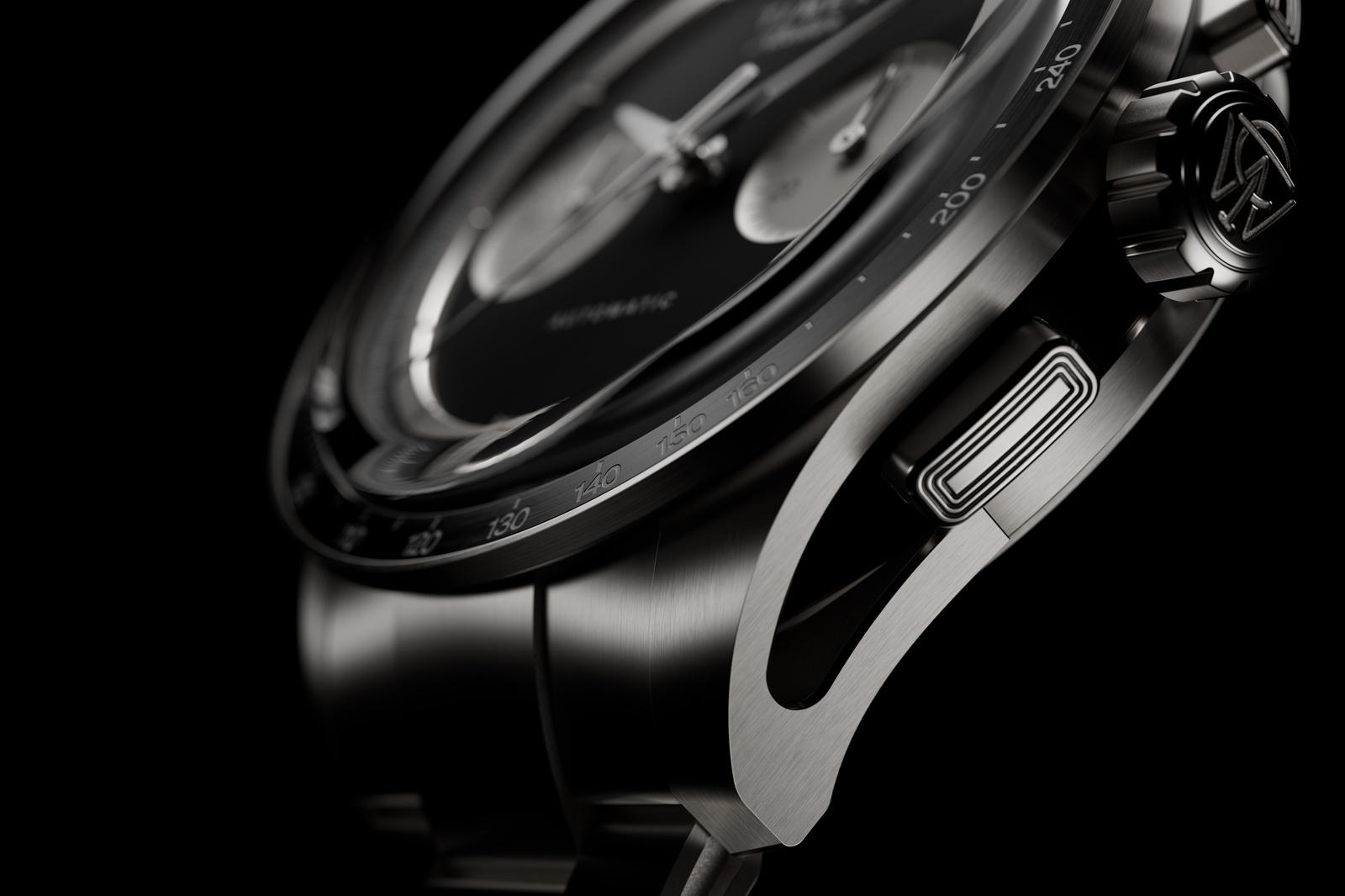
At 42mm across and 15.75mm thick, it has the presence of a substantial tool chronograph, though the titanium case should help keep the weight in check.
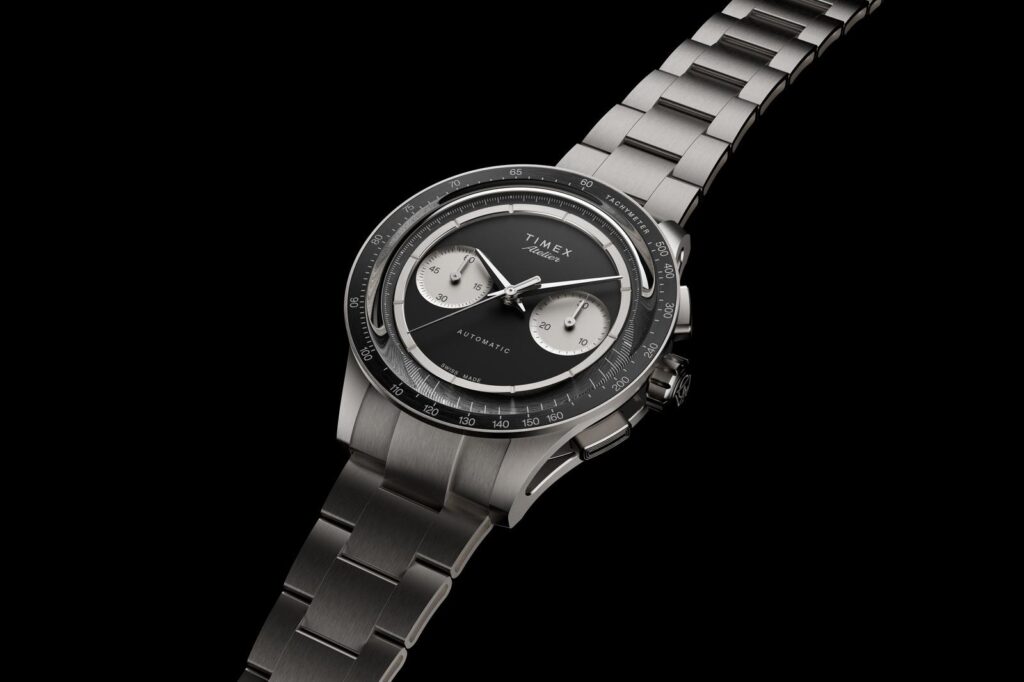
The material also gives the watch a darker grey tone than conventional stainless steel, which suits the reverse-panda dial and the more technical character of the design.
Brushed lugs and recessed case flanks frame rectangular chronograph pushers and a crown at 3 o’clock, keeping the profile clean despite the case size.
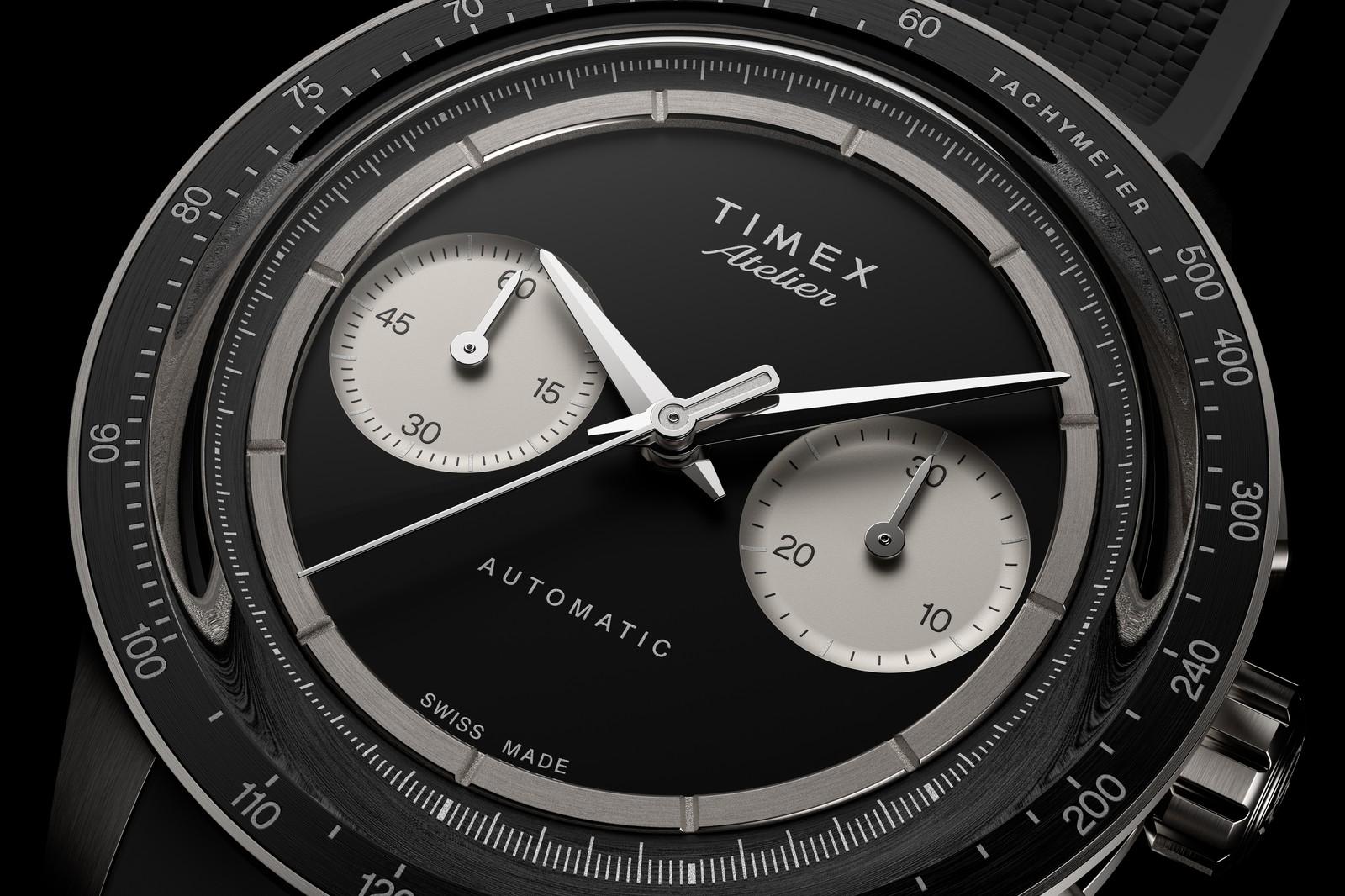
Up front, a double-domed sapphire crystal sits inside a flat tachymeter bezel, giving the watch the familiar timing vocabulary of a motorsport chronograph without overloading the dial.
The dial keeps the chronograph layout restrained
The automatic model uses a bicompax reverse-panda layout, with white subdials set against a matte black base.
Timex has kept the hour markers unusually pared back, using a silver ring with 12 grooves rather than large applied indices.
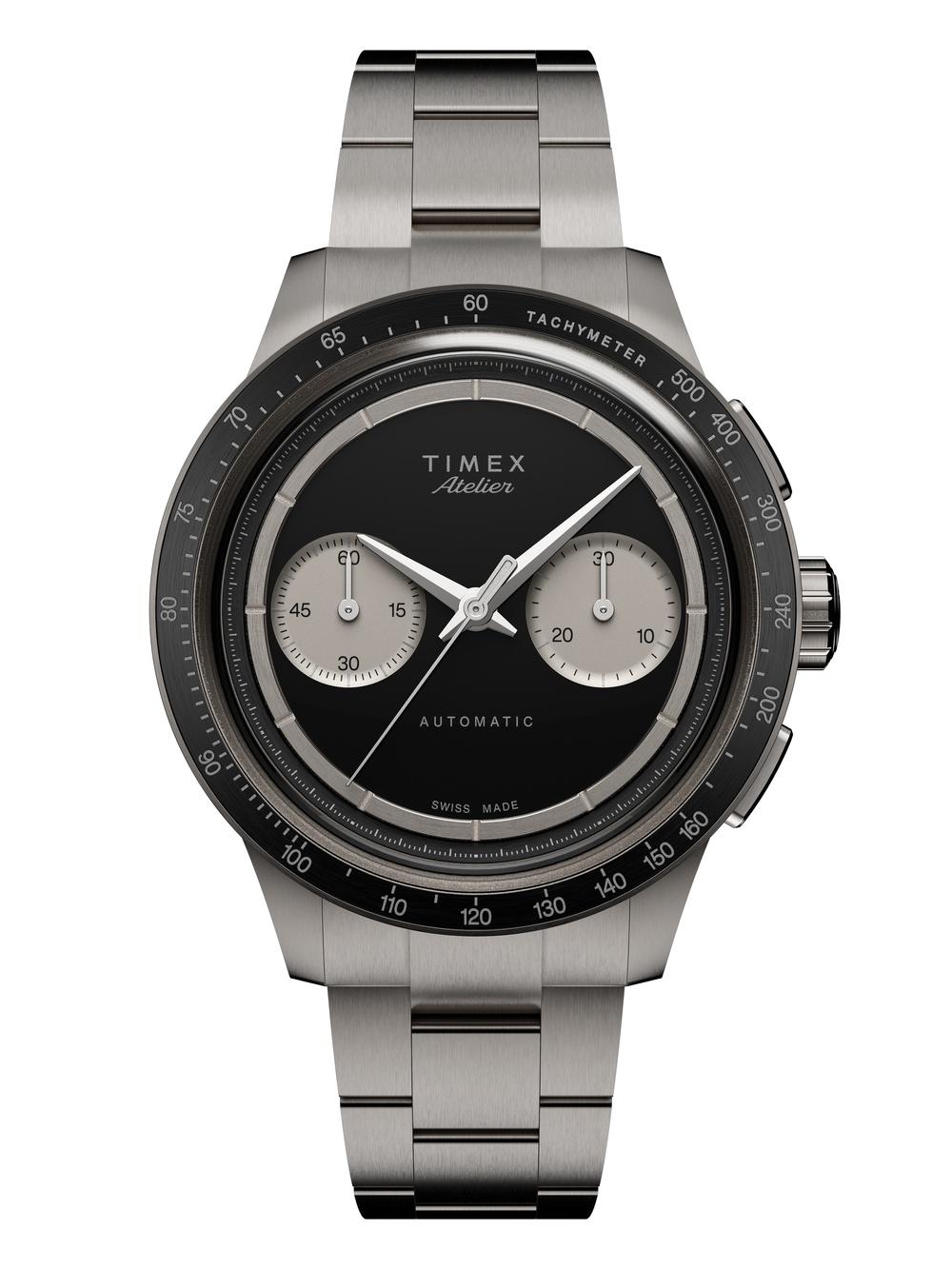
Beyond that ring, the minute and chronograph seconds track is printed in white against black, which keeps the display legible while preserving the minimalist look.
Dauphine-style hour and minute hands add a more dressed-up note, while the central chronograph seconds hand and subdial hands stay slim and functional.
The result is less nostalgic than many accessible chronographs and more architectural in feel, which is exactly where the Atelier line seems to be positioning itself.
Automatic M1a Ti versus Quartz M1q
The mechanical M1a Ti is powered by the Swiss Landeron calibre L72, an automatic chronograph movement running at 4 Hz with a 43-hour power reserve.
Timex lists its daily accuracy at +10/-18 seconds, a reasonable figure for a non-chronometer automatic movement.
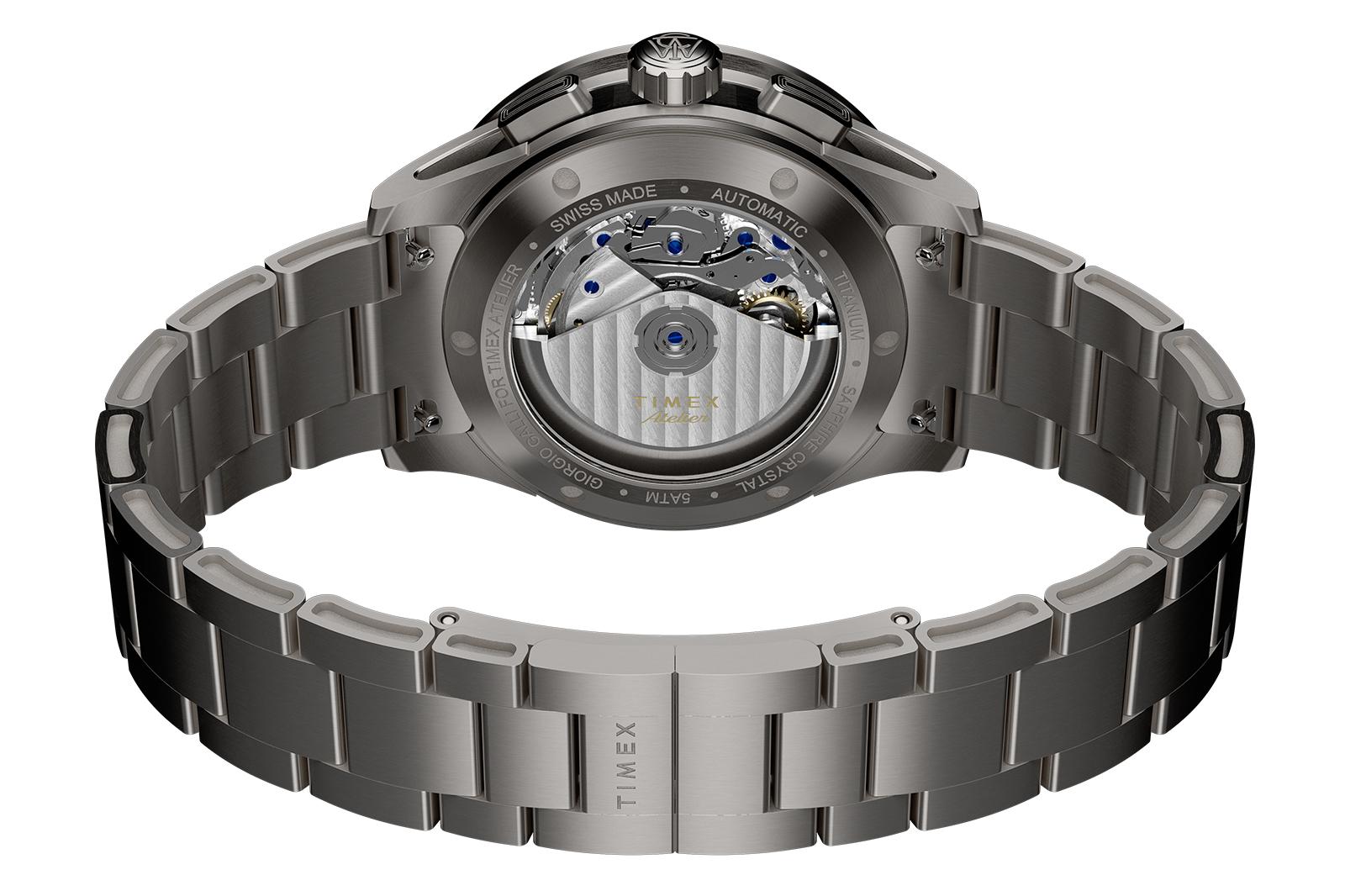
An exhibition caseback shows the movement and its wedge-shaped rotor, giving the automatic model the mechanical theatre many buyers will expect at this price.
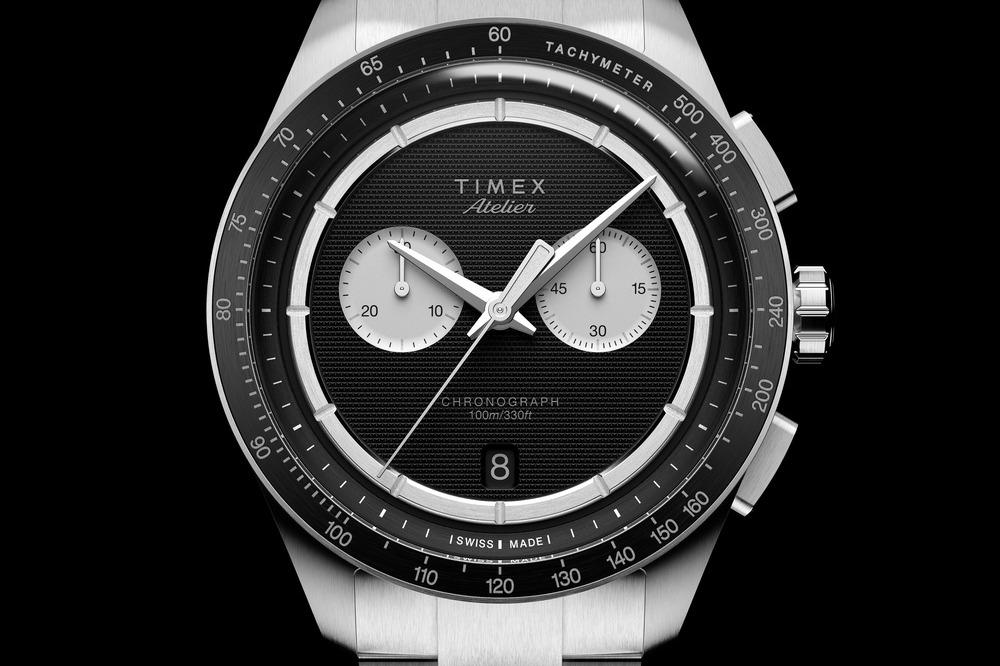
The Quartz M1q takes a more practical route with a Ronda calibre 5021D and a smaller stainless steel case measuring 40mm by 12.7mm.
That reduction in size is not a minor detail, as the M1q should be the easier watch to wear for anyone who likes the Atelier chronograph look but not the bulk of the automatic.
The quartz model also changes the dial treatment, adding a hobnail-style guilloché pattern and a date display.

It’s busier than the automatic model, but the trade-off is a lower price, thinner case and improved 100m water resistance compared with 50m on the M1a Ti.
Pricing puts Timex in unfamiliar territory
The price spread between the two models is significant.
The Atelier Chronograph Quartz M1q starts at £600 on rubber and rises to £650 on a stainless steel bracelet.
The Atelier Chronograph Automatic M1a Ti is £1,750 on rubber and £1,850 on a titanium bracelet.
That places the automatic model in a much more competitive field, where buyers will weigh Timex’s design, titanium case and Swiss automatic chronograph movement against long-established enthusiast brands.
It’s a bold move, but it also makes sense for Atelier as a collection designed to show what Timex can do beyond its most familiar price points.
Details & Specifications
| Brand | Timex |
|---|---|
| Collection | Atelier |
| Models | Atelier Chronograph Automatic M1a Ti and Atelier Chronograph Quartz M1q |
| References | TW6A02700 and TW6A06900 |
| Case size | 42mm x 15.75mm for M1a Ti; 40mm x 12.7mm for M1q |
| Case material | Titanium for M1a Ti; stainless steel for M1q |
| Dial | Reverse panda for M1a Ti; reverse panda guilloché for M1q |
| Crystal | Double-domed sapphire crystal on M1a Ti |
| Water resistance | 50m for M1a Ti; 100m for M1q |
| Movement | Landeron calibre L72 automatic for M1a Ti; Ronda calibre 5021D quartz for M1q |
| Frequency | 28,800 vph or 4 Hz for M1a Ti |
| Power reserve | 43 hours for M1a Ti |
| Functions | Hours, minutes, seconds and chronograph for M1a Ti; date added on M1q |
| Strap and bracelet | Titanium bracelet or rubber strap for M1a Ti; stainless steel bracelet or rubber strap for M1q |
| Price | £1,750 on rubber or £1,850 on bracelet for M1a Ti; £600 on rubber or £650 on bracelet for M1q |
The M1q will likely be the more approachable daily choice, especially for buyers who value slimmer proportions and straightforward quartz ownership.
The M1a Ti is the more interesting statement, because it asks enthusiasts to see Timex not just as the maker of affordable icons, but as a brand capable of building a credible premium chronograph with a distinct point of view.