Mallorca’s northwest coast asks for a different rhythm once you leave the beach behind.
In the Serra de Tramuntana, the island tightens into mountain roads, terraced hillsides and villages that have drawn writers, walkers, musicians and serious travellers for generations.
Deià, Valldemossa and Fornalutx are close enough to combine, but each has its own pace, texture and reason to linger.
At a glance
- Deià, Valldemossa and Fornalutx form one of Mallorca’s most rewarding inland circuits.
- The appeal lies in historic houses, mountain walks, artist-run shops, local food and village life beyond the coast.
- Staying in the Tramuntana countryside makes the experience easier, especially for early starts, dinner reservations and unhurried days.
Deià rewards an early arrival
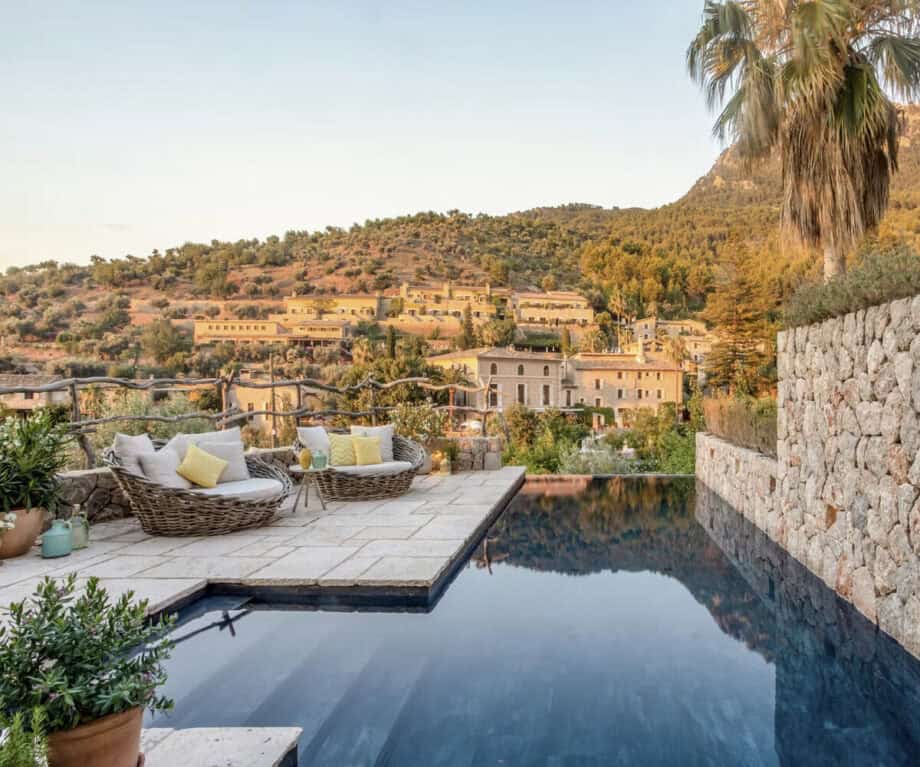
Deià is the village most people think they already know, usually through its reputation rather than its details.
It sits on a steep slope, with limited parking and a morning rush that can make the place feel busier than it really is.
Arrive early or after four in the afternoon and the village becomes easier to read.
Robert Graves remains central to Deià’s identity, not as a tourist footnote but as a real part of its cultural gravity.
The poet arrived in 1929, lived much of his life here, and is buried in the hilltop cemetery beside Sant Joan church.
His former working house on the edge of the village is open to visitors on weekdays, and it’s worth making time for both the house and the cemetery.
The main road also deserves more patience than a quick glance suggests.
Several boutiques and galleries are run by working artists who live in the village year-round, giving Deià a sharper creative edge than the usual Mediterranean craft circuit.
Food is a large part of the draw.
Es Racó d’Es Teix holds a Michelin star and needs planning, while Ca’s Patro March at Cala Deià is the seafood address with the water almost at the table.
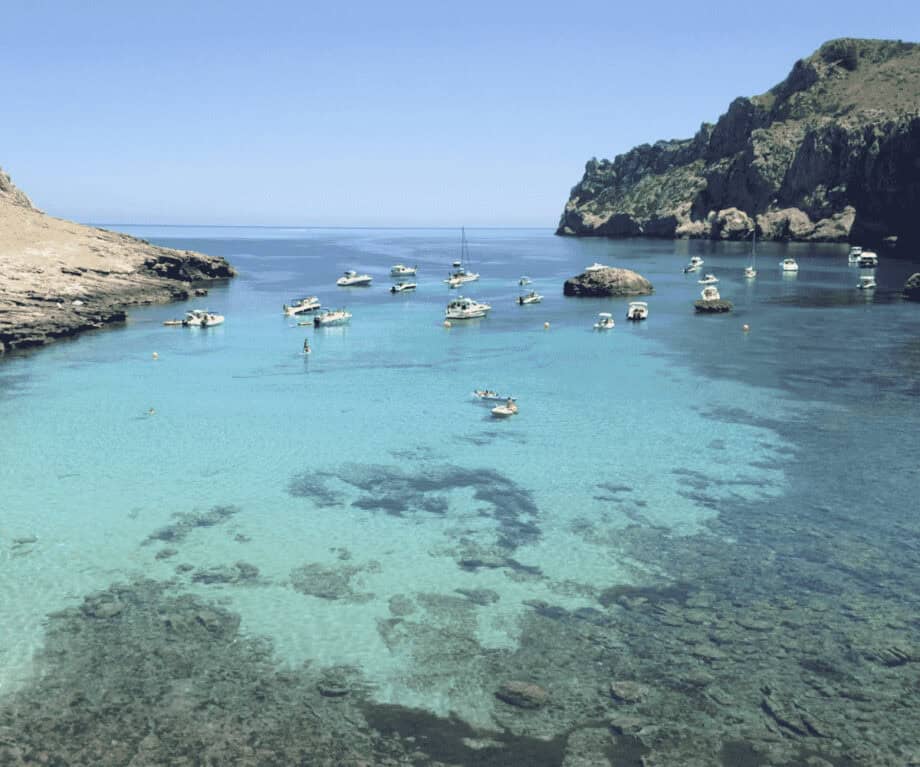
The cove is about 10 minutes by car or roughly 30 minutes on foot from the village, and the restaurant became even harder to book after its appearance in The Night Manager.
For a looser evening, Sa Fonda on the main street is the place where music, residents and visitors tend to meet naturally.
In summer, the Deià International Music Festival adds another reason to check dates before fixing an itinerary.
Valldemossa has more than one story
Valldemossa is beautiful enough to attract the day-trip crowd, which is precisely why timing matters.
The village is at its busiest between late morning and mid-afternoon, when groups arrive from Palma.
Come around 9am or return after 4pm and the streets feel closer to their own character.
The Royal Carthusian Monastery is the obvious anchor, and it earns the attention.
Frédéric Chopin and George Sand spent the winter of 1838 in a rented cell here, a stay that produced music, tension and a famously unsentimental account in Sand’s A Winter in Majorca.
Chopin composed several of the Preludes during that period, while his tuberculosis worsened in the cold and damp.
The cell is open to visitors and the piano remains there, but the building’s interest goes beyond that one difficult winter.
Its layers of royal, monastic and municipal life give the monastery a deeper architectural and historical charge than a quick stop allows.
Valldemossa is also the best of the three villages for shopping.
Ceramics, olive wood pieces and decorative tiles of Santa Catalina Thomàs appear throughout the village, and this is the place to look for something substantial enough to need proper packing.
Before leaving, sit outside at Ca’n Molinas for coffee and a coca de patata.
The bakery has been making the local sweet potato bun since 1888, and the pleasure is best experienced before the main rush begins.
For dinner, Es Taller gives the village a more contemporary note in a former car repair garage, with a conversion that suits the room and cooking that justifies a reservation.
Fornalutx belongs to walkers and slow afternoons
Fornalutx sits in the valley above Sóller, about 45 minutes north of Valldemossa by car.
It has appeared so often among Spain’s most beautiful villages that the accolade now feels almost beside the point.
The village is compact enough to cross in 20 minutes, but that’s not really how to use it.
The stone here is golden-brown rather than whitewashed, and the surrounding citrus groves give the valley a soft, fragrant lift in spring.
At the centre is a Gothic church dating to the 13th century, with the square in front still carrying the everyday rhythm of village life.
Es Turó is the restaurant to know, particularly for its terrace views over the valley and a seasonal menu where roasted lamb is the dish to order.
Bookings are sensible from June through September.
Fornalutx is also the strongest base of the three for serious walkers.
The Tramuntana trail network is dense around the village, with several of the better mountain routes starting nearby.
A committed walker could spend three days here without repeating the same ground.
Where to stay in the Tramuntana
The difference between visiting these villages and properly experiencing them usually comes down to where you sleep.
Travelling in from Palma or a coastal hotel can mean losing the best hours of the day to the road, especially if the plan includes lunch, walking or an evening reservation.
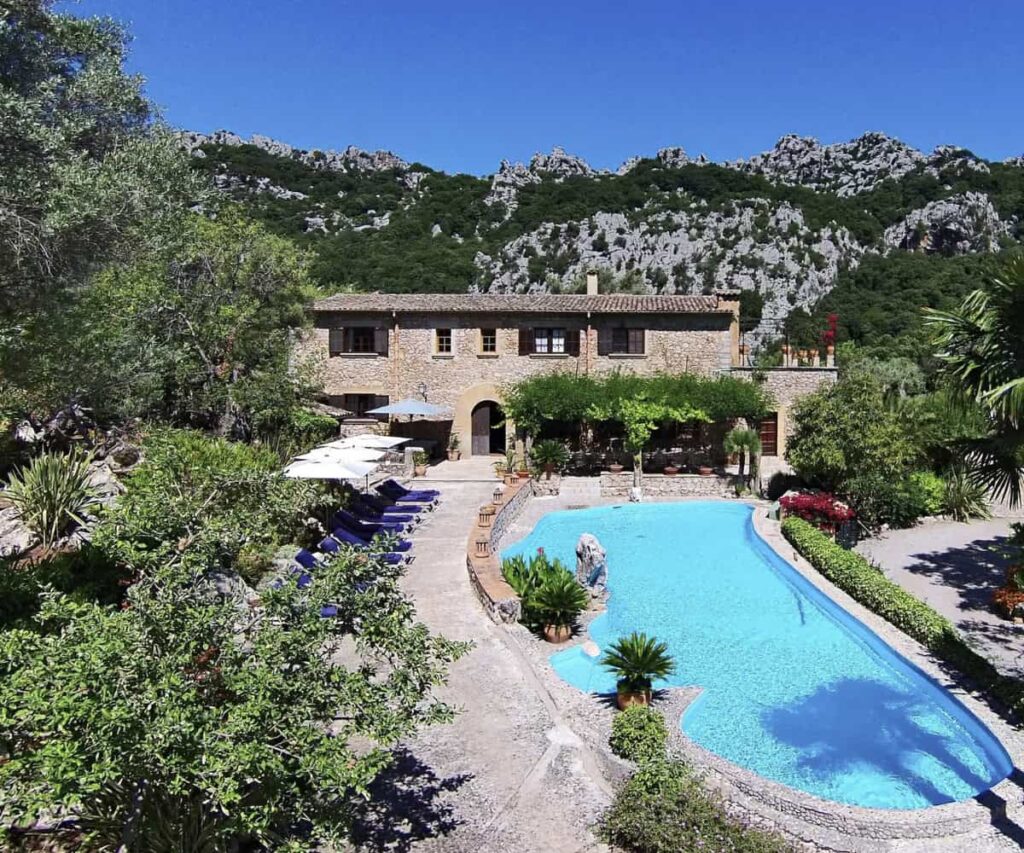
A rural finca or villa in the Tramuntana countryside changes the shape of the trip.
Instead of treating the villages as day excursions, you can move between them in shorter drives, return for a swim or rest, and head back out when the light improves and the crowds thin.
Privadia has luxury villas, traditional fincas and countryside properties in the Tramuntana area, which suits groups who want privacy without being cut off from the villages.
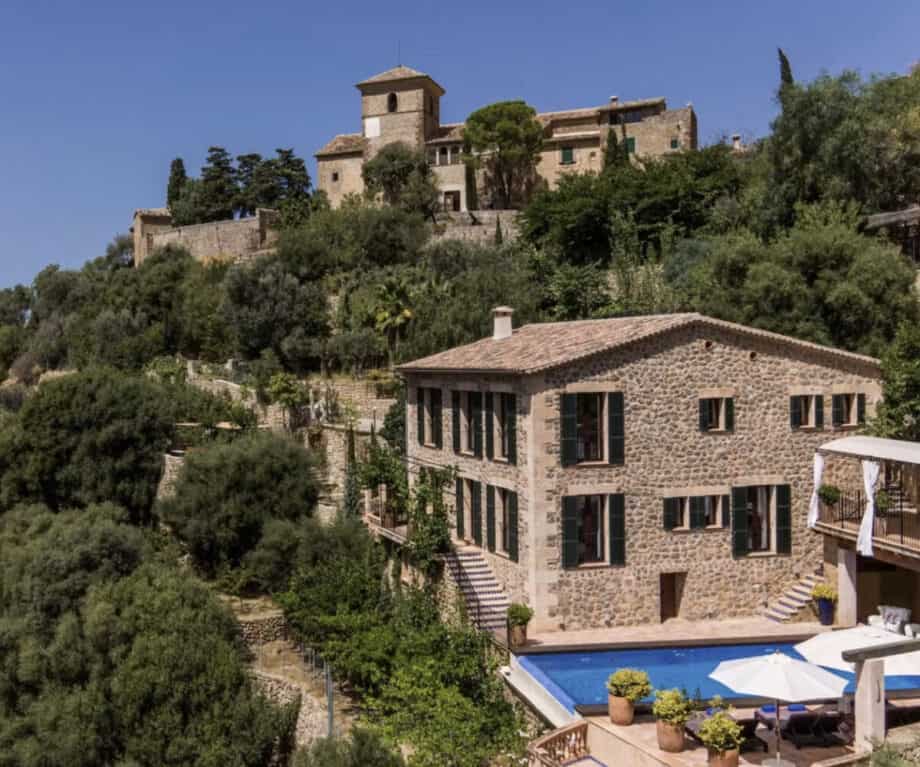
The classic local houses are often stone-built and centuries old, with heavy-walled interiors, shaded terraces and outdoor spaces designed for long meals.
For travellers who would rather not handle mountain roads after dinner, private driver arrangements are a practical luxury rather than an indulgence.
Concierge help also matters here, particularly for reservations at Es Racó d’Es Teix, Ca’s Patro March and Es Taller.
Taken together, Deià, Valldemossa and Fornalutx show why the Tramuntana has always attracted travellers who want more from Mallorca than sand and sea.
They’re close on the map, but different enough in mood that a few days among them can change the whole impression of the island.