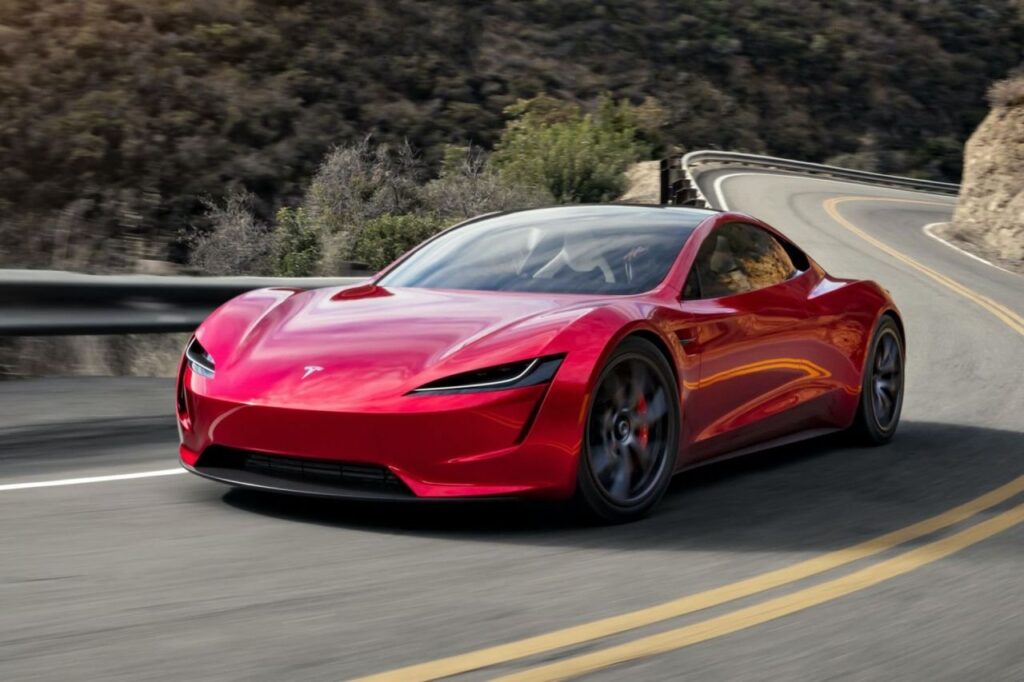
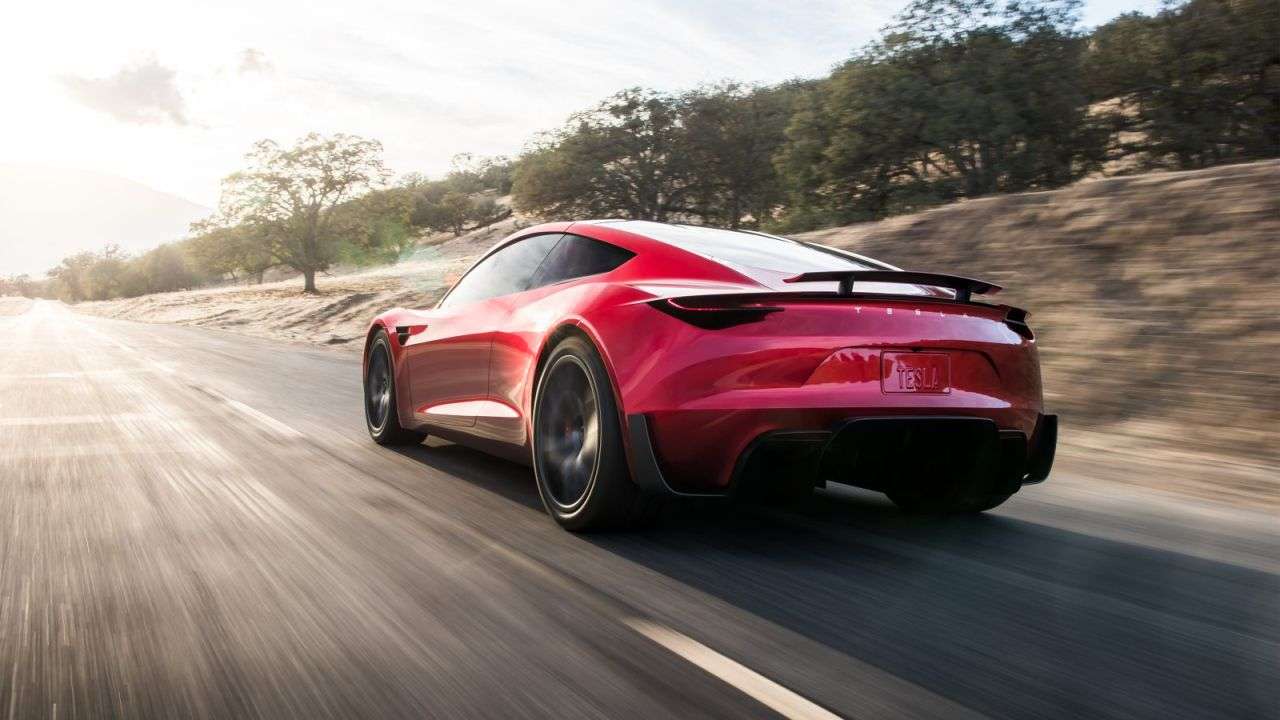
The next-generation Tesla Roadster has spent years living somewhere between product promise and performance folklore.
First shown in 2017, it arrived with numbers that sounded improbable at the time and look more plausible now that electric hypercars have moved the goalposts.
With a new unveiling expected imminently, the question is less whether Tesla can create a very fast EV and more whether it can deliver the Roadster it originally promised.
At a glance
- Tesla’s next-generation Roadster is expected to return to the spotlight after first being showcased in 2017.
- The original claims included a tri-motor setup, 0-60 mph in 1.9 seconds, a top speed above 250 mph and around 620 miles of range.
- Rumours point to Standard and SpaceX variants, possible four-motor hardware and advanced active-aero systems, while the earlier circa $250,000 price target now looks uncertain.
The 2017 promise still sets the benchmark
When Tesla first revealed the new Roadster, the headline figures were deliberately dramatic.
The company said the car would use a tri-motor setup producing more than 7,300 lb-ft of torque, with an estimated 0-60 mph time of 1.9 seconds and a top speed of more than 250 mph.
The original version was also said to use a 200 kWh battery pack, with a claimed range of around 620 miles.
Those numbers no longer sit in isolation.
Cars such as the Rimac Nevera, Lotus Evija, Pininfarina Battista and Yangwang U9 have helped establish a new electric hypercar vocabulary, where immense acceleration and four-figure power outputs are part of the conversation.
That shift makes the Roadster’s early targets feel less like science fiction, though turning them into a finished production car remains the real test.
Variants, motors and the SpaceX question
Current speculation suggests the new Roadster may be offered in two versions, described as Standard and SpaceX.
Tesla has not confirmed those variants in the supplied information, so they remain firmly in rumour territory.
There is also chatter around a possible four-motor layout using Tesla’s carbon-wrapped rotor technology, a setup said to allow higher rotational speeds and reduced energy losses.
If accurate, that would mark a move beyond the original tri-motor promise and position the Roadster closer to the most technically ambitious EV performance cars now on the market.
The SpaceX name is the more intriguing part, because it hints at the kind of unconventional performance hardware Tesla has teased around this car for years.
For now, though, it’s still an expectation rather than a confirmed specification.
Active aero could be central to the car
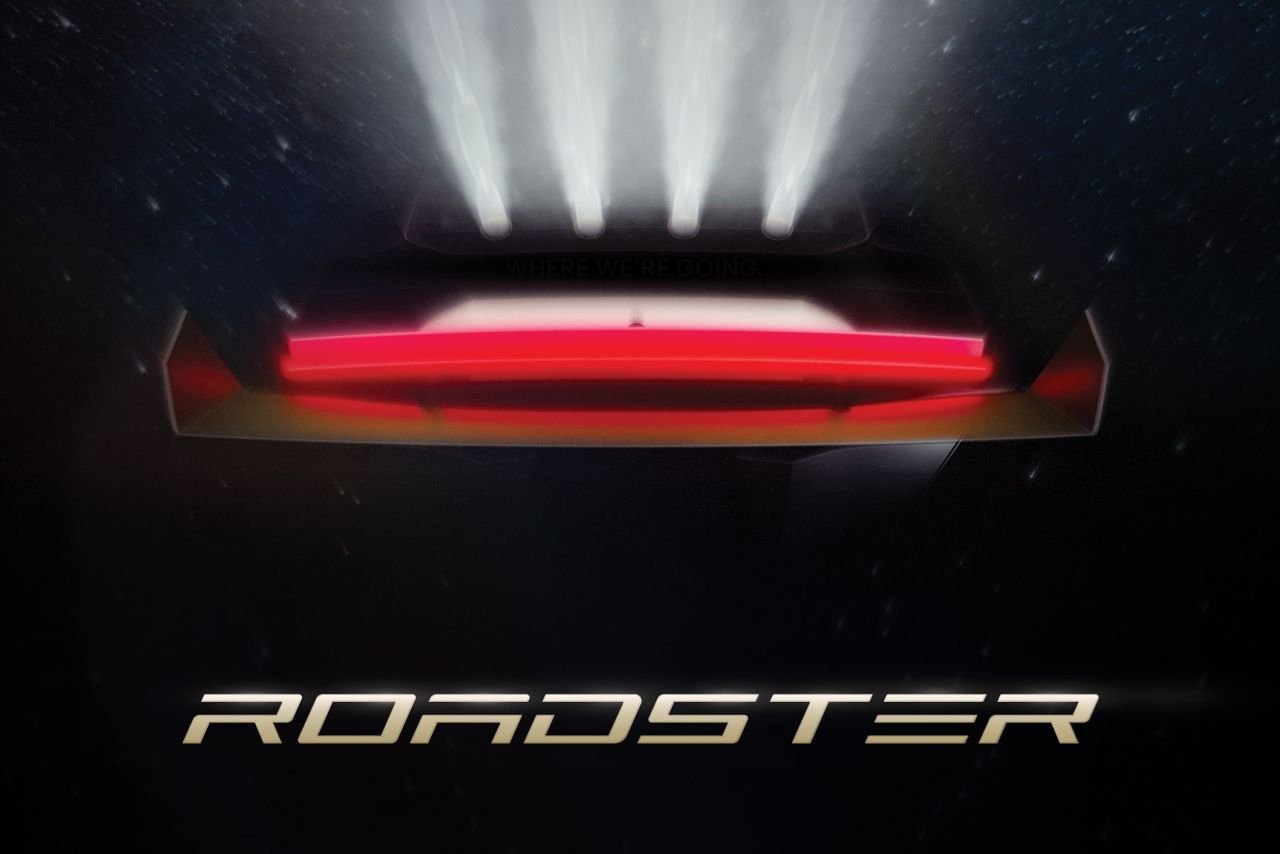
Recent patent filings suggest the Roadster could use a retractable rear wing, drawing an obvious conceptual parallel with active-aero systems used by high-performance cars such as the McLaren W1.
That detail matters because acceleration alone won’t define the Roadster if it reaches production.
At the claimed level of performance, stability, braking balance and cornering ability become just as important as straight-line theatre.
One of the more striking rumours is that Tesla has developed a system similar in principle to the McMurtry Spéirling’s ground-effect fan concept, effectively pulling the car toward the road surface to increase grip.
That would be a radical feature for a road car, and it should be treated as unconfirmed until Tesla shows the finished technology.
Details & Specifications
| Brand | Tesla |
|---|---|
| Model | Next-generation Roadster |
| First showcased | 2017 |
| Original motor claim | Tri-motor setup |
| Original torque claim | More than 7,300 lb-ft |
| Original 0-60 mph estimate | 1.9 seconds |
| Original top speed claim | More than 250 mph |
| Original battery claim | 200 kWh battery pack |
| Original range claim | Around 620 miles |
| Rumoured variants | Standard and SpaceX |
| Rumoured motor layout | Four electric motors with carbon-wrapped rotor technology |
| Potential aero feature | Retractable rear wing suggested by patent filings |
| Initial price target | Around $250,000 |
The Roadster’s challenge is unusually clear.
Tesla doesn’t need to prove that electric cars can be brutally quick anymore, because the wider hypercar market has already done that.
What it needs to show is that the long-promised Roadster can combine its original numbers, newer performance ideas and a credible production path without losing the sharpness that made the concept so compelling in the first place.