Remote travel is often treated like a race between hard-to-reach places, but the finest wild landscapes rarely work on a tight schedule.
They ask for patience, flexible plans and enough time to notice how light, weather, wildlife and local rhythms change the experience.
For travellers who prefer depth over speed, these six places make a strong case for slowing down.

At a glance
- Six remote landscapes stand out for journeys that feel richer when approached slowly.
- Wildlife, weather, walking routes, waterways and local communities shape the experience as much as the destination itself.
- These places suit travellers who value flexible pacing, expert guidance and time for plans to evolve naturally.
Patagonia rewards travellers who let the weather lead
Patagonia is not a place that likes to be hurried.
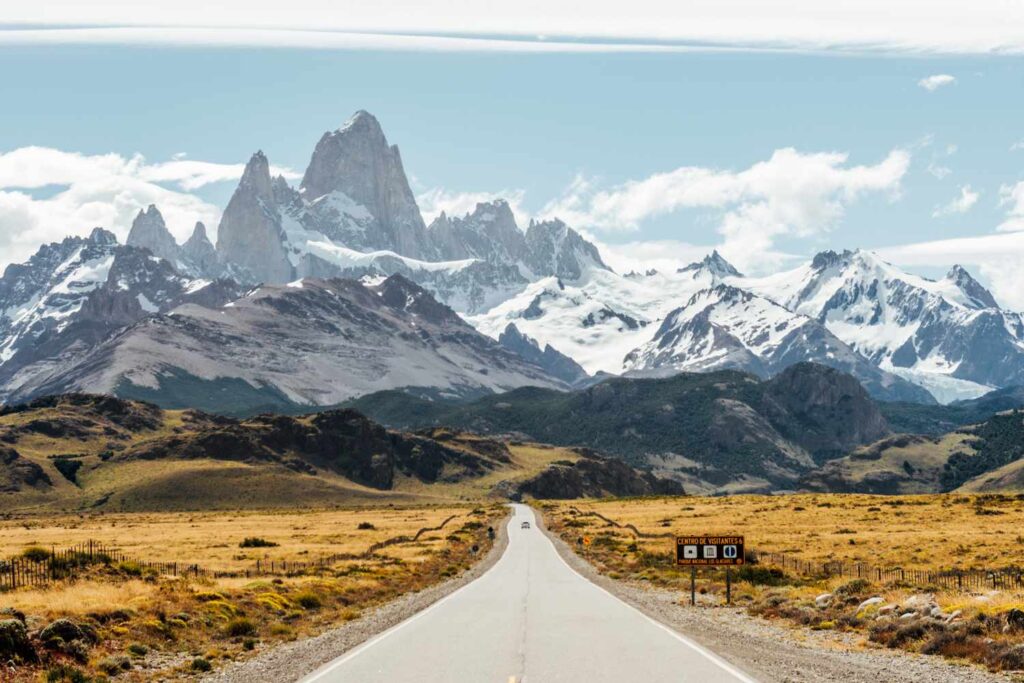
Across Chile and Argentina, the region shifts between granite towers, glacial lakes, open steppe and wind-bent horizons, with each day offering a different way to read the landscape.
Hiking gives the mountains their scale, while horse riding and boat journeys reveal how much of Patagonia is shaped by distance, weather and water.

A longer stay matters because the conditions can decide the rhythm as much as any itinerary.
One day might open with clear views across jagged peaks, while the next is better suited to a slower ride, a lake crossing or simply watching clouds move across the ridgelines.
In the Okavango and Svalbard, wildlife sets the pace
The Okavango Delta in Botswana is a landscape in motion, transformed by water into channels, islands and floodplains.

Exploring it slowly means seeing the ecosystem from several angles rather than reducing it to a single game drive.
A mokoro gliding through narrow waterways offers a quiet, close-to-the-surface perspective, while boats and vehicles open up broader views of elephants crossing channels and predators moving through the grasslands.
Several nights make a meaningful difference here, because wildlife encounters develop with patience rather than precision.

Far to the north, Svalbard demands a similar acceptance of uncertainty.
In this Arctic archipelago above the Arctic Circle, days are shaped by ice, weather and opportunity.
An expedition vessel gives travellers the flexibility to investigate remote fjords, watch walruses and search responsibly for polar bears when conditions allow.

Nothing about Svalbard feels guaranteed, which is exactly why time becomes the most valuable luxury.
Namibia and Raja Ampat are built for flexible routes
Namibia’s desert wilderness is defined by scale.
The drama is not confined to one landmark, but revealed gradually as towering dunes give way to gravel plains, rugged mountains and the stark edges of the Skeleton Coast.
This is a country where distance is part of the experience, and the journey between remote camps can be as memorable as the destination itself.
Specialist guides and well-planned logistics are particularly useful in Namibia, especially when connecting isolated places without turning the trip into something too rigid.
In Indonesia, Raja Ampat offers a different kind of remoteness.
Its limestone islands sit within one of the world’s richest marine environments, where days can revolve around diving, snorkelling, kayaking and visiting island communities.
A private yacht adds freedom to follow conditions and curiosity, changing course when the weather, water or marine life suggests a better plan.
That flexibility is central to the appeal, because the best moments at sea are often the ones that weren’t fixed too tightly in advance.
The Dolomites prove remote travel can feel gentle
Remote travel doesn’t always need to mean crossing oceans or entering extreme environments.
In Italy’s Dolomites, dramatic mountain scenery is balanced by excellent food, characterful villages and a softer style of adventure.
Walking between valleys and pausing at mountain refuges creates a slower relationship with the landscape, one measured in paths, lunches and changing views rather than long transfers.
The region also works well for luxury group holidays because it can accommodate different energy levels within the same journey.
Strong hikers can take on more demanding routes, while others explore villages or settle into a leisurely mountain lunch before the group comes together again in the evening.
That ability to share a destination without forcing everyone into the same pace is one of the Dolomites’ quiet strengths.
How to plan a slower remote journey
The point of slow travel is not simply to add more days to an itinerary.
It is to leave enough space for a destination to shape the experience, whether through a sudden wildlife sighting, a conversation with a local guide or a change of plan prompted by weather.
In remote regions, trying to see everything can flatten the journey into a sequence of arrivals and departures.
A slower approach allows travellers to understand a place more fully, noticing the details that disappear when the next stop is always waiting.
For the right traveller, the reward is not just a more relaxed trip, but a more intelligent one.
These are landscapes that become more compelling when given time, and that patience is often what turns a remote journey into a lasting memory.