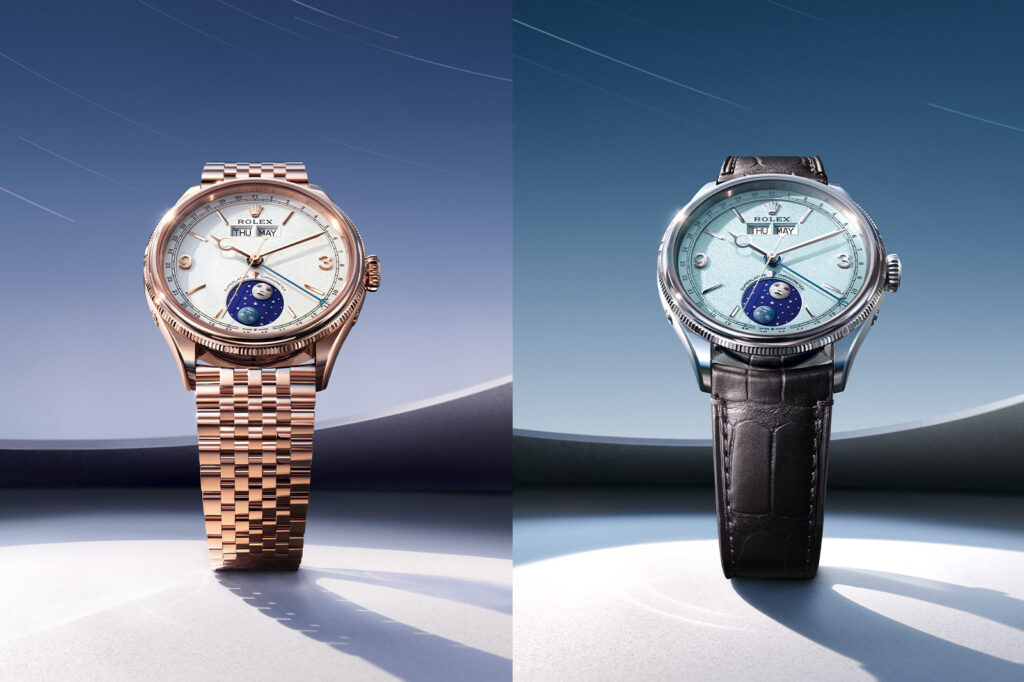
Rolex doesn’t often let collector language into its official catalogue, which makes the new Perpetual Padellone feel unusually self-aware.
Unveiled in Milan on 15 September 2026, it brings a full calendar and moonphase back to Rolex dress watchmaking in a 39mm case, while carefully avoiding the complexity trap of a traditional perpetual calendar.
It’s the second model in the Perpetual collection after the 1908, and it lands as the Crown’s most complicated release since the Sky-Dweller.
At a glance
- Rolex has introduced the Perpetual Padellone, a 39mm complete calendar with moonphase in the dress-led Perpetual collection.
- The watch uses the new 5Hz calibre 7190 with the patented Haplos annual calendar system and 30 patent applications.
- Prices start at £49,150 in Everose gold on alligator, rising to £60,700 on the Settimo bracelet, with a platinum version at £55,300.
The Padellone name and the Rolex calendar that inspired it
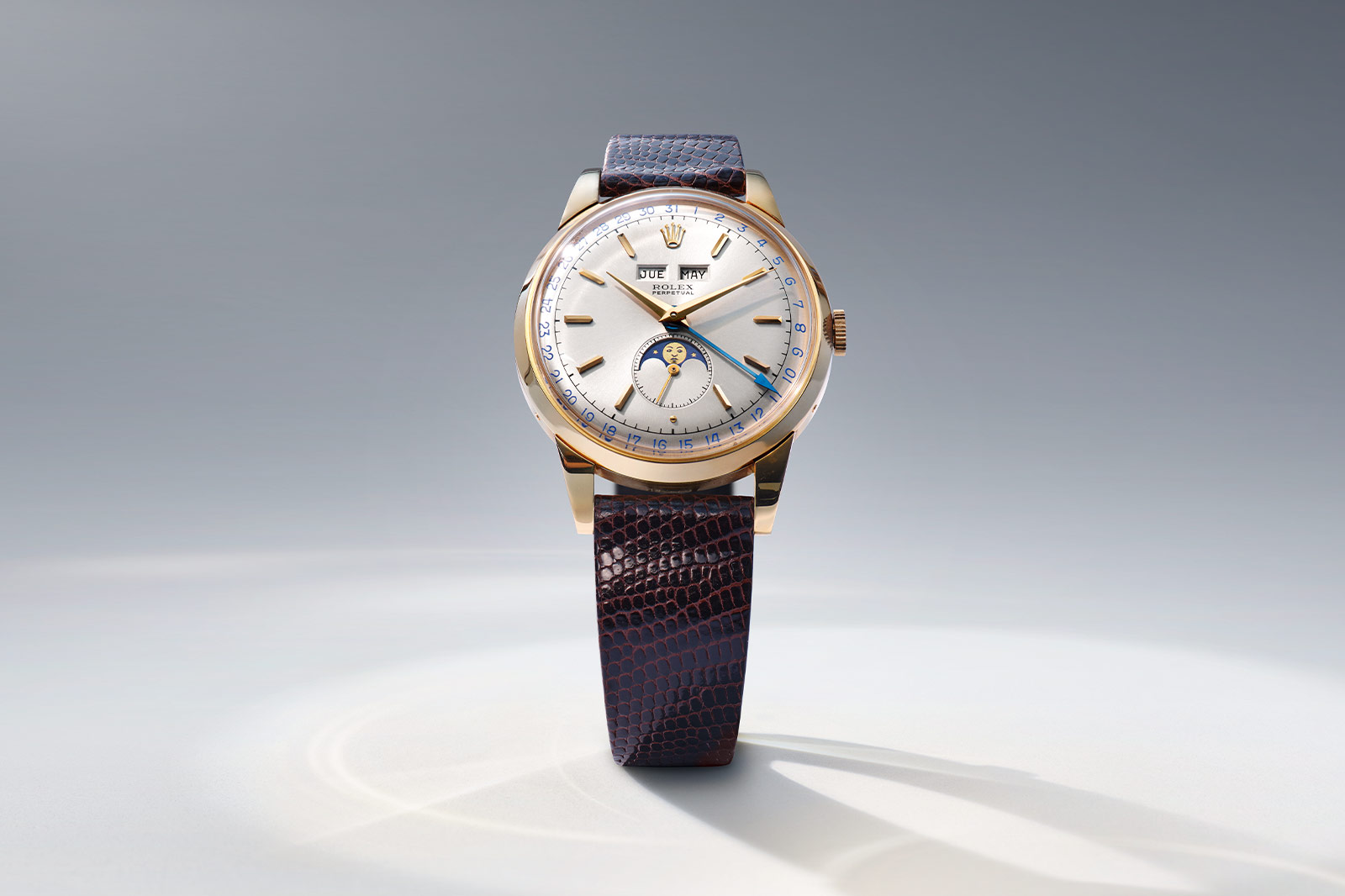
Padellone is Italian for “big frying pan”, a nickname given by Italian dealers to the vintage Rolex reference 8171.
That watch, produced from 1949 to around 1953, was a 38mm triple calendar with moonphase whose broad, flat case and slim bezel earned it the memorable kitchenware comparison.
Only around 1,200 to 1,400 examples were made across all metals, and well-documented pieces now sit deep in six-figure collector territory.
The original 8171 was not an Oyster model, unlike the smaller reference 6062 that followed, but it occupies a special place in Rolex history as the last full-calendar moonphase wristwatch the brand sold until now.
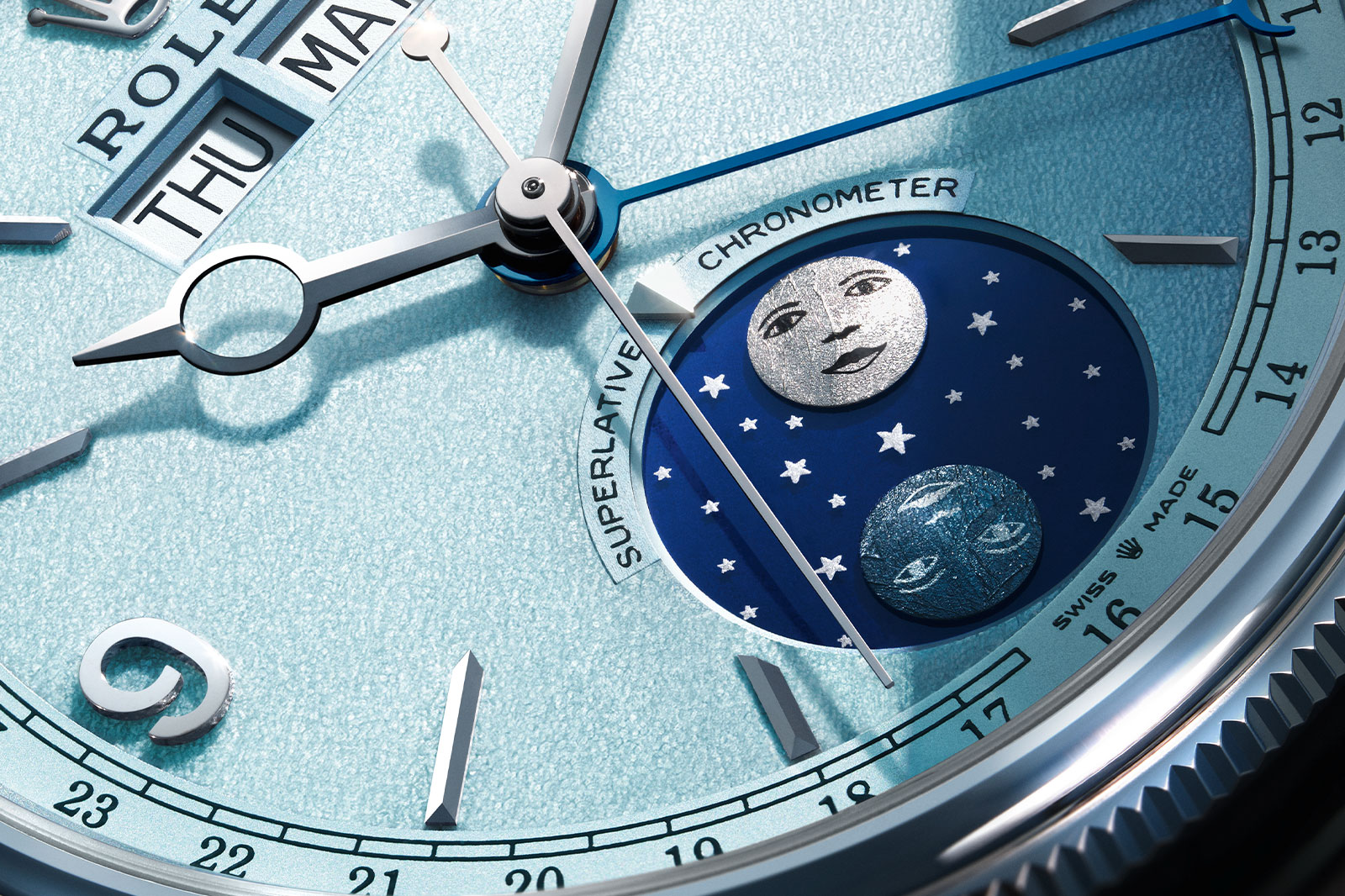
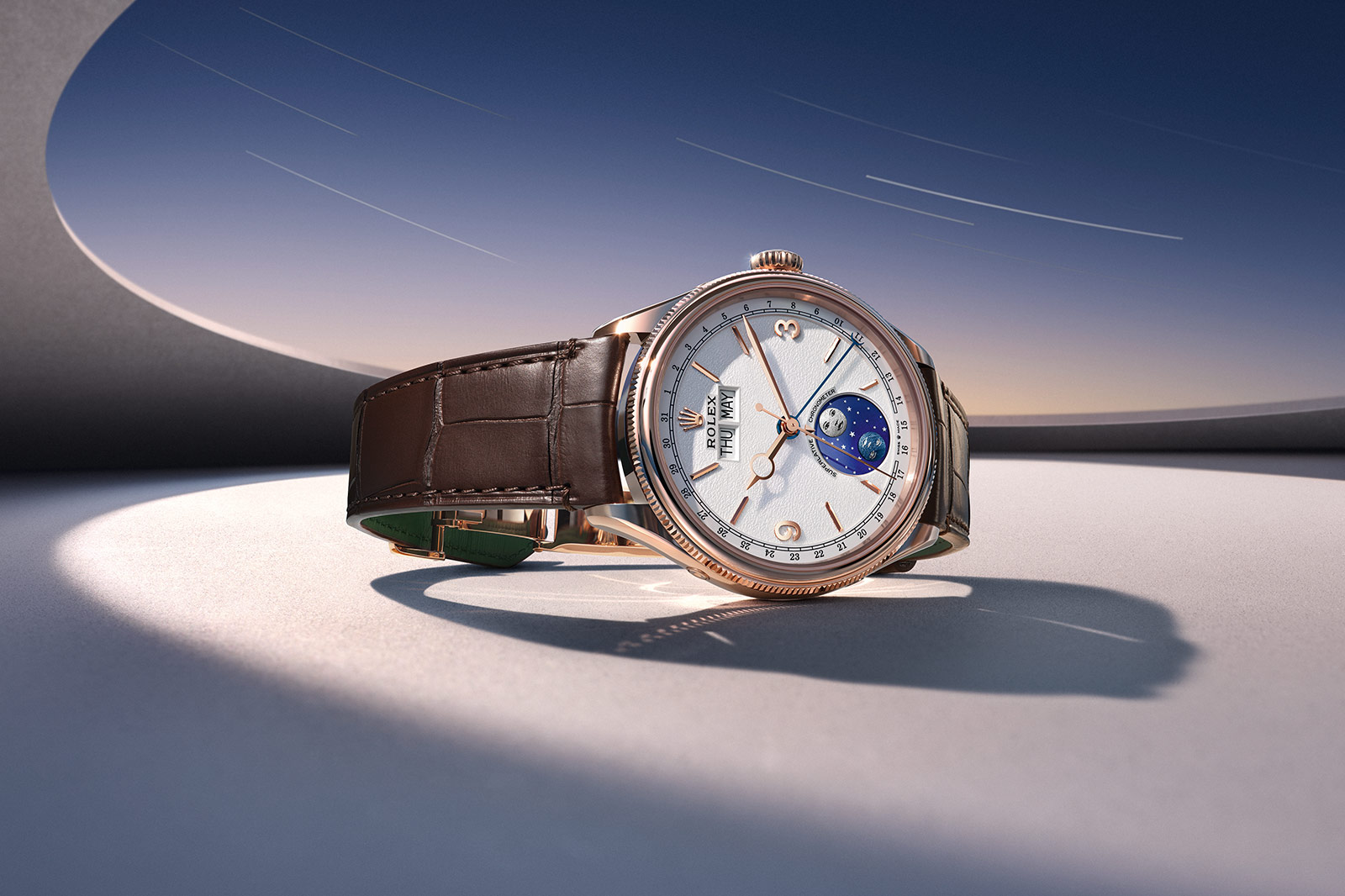
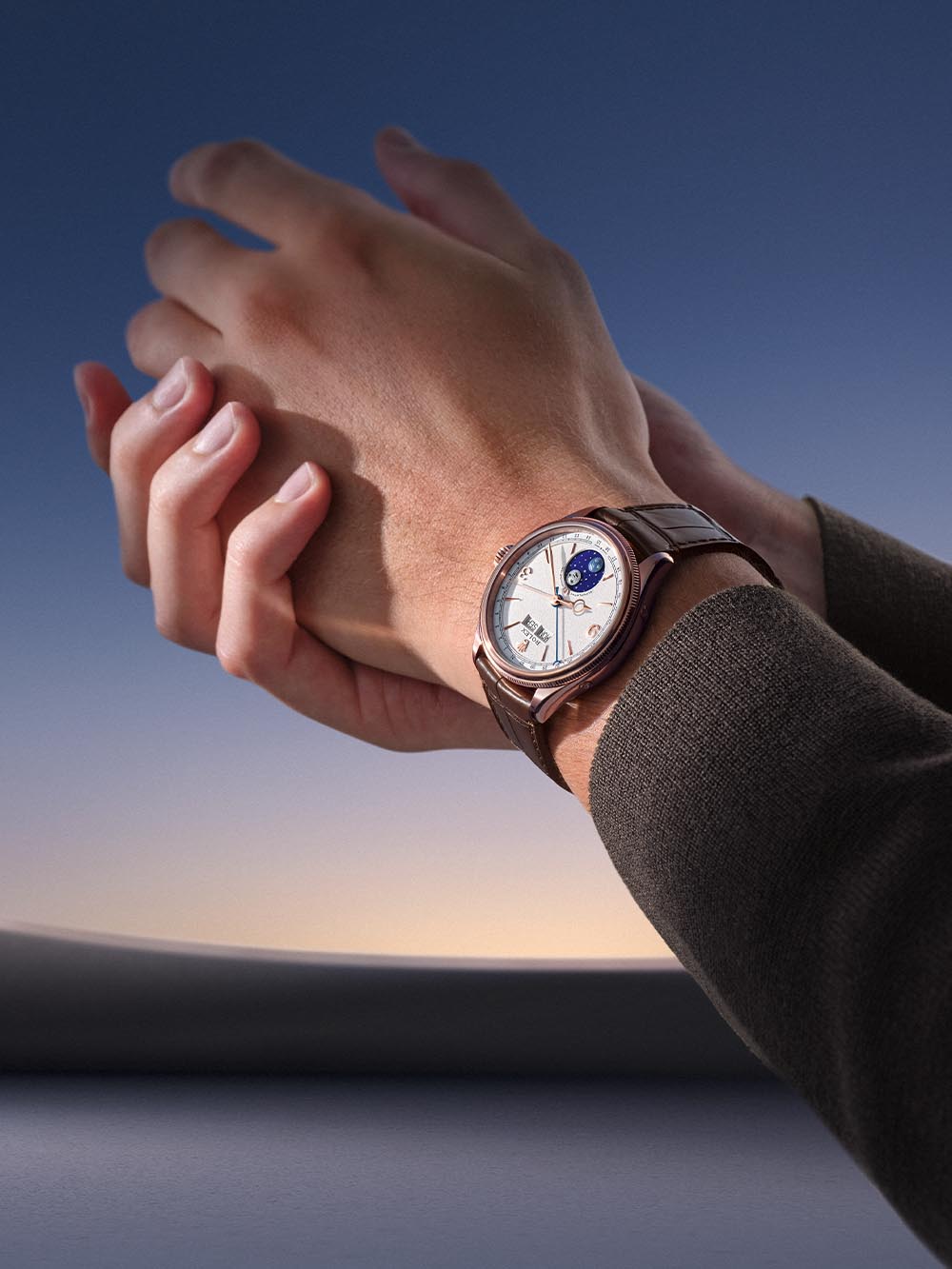
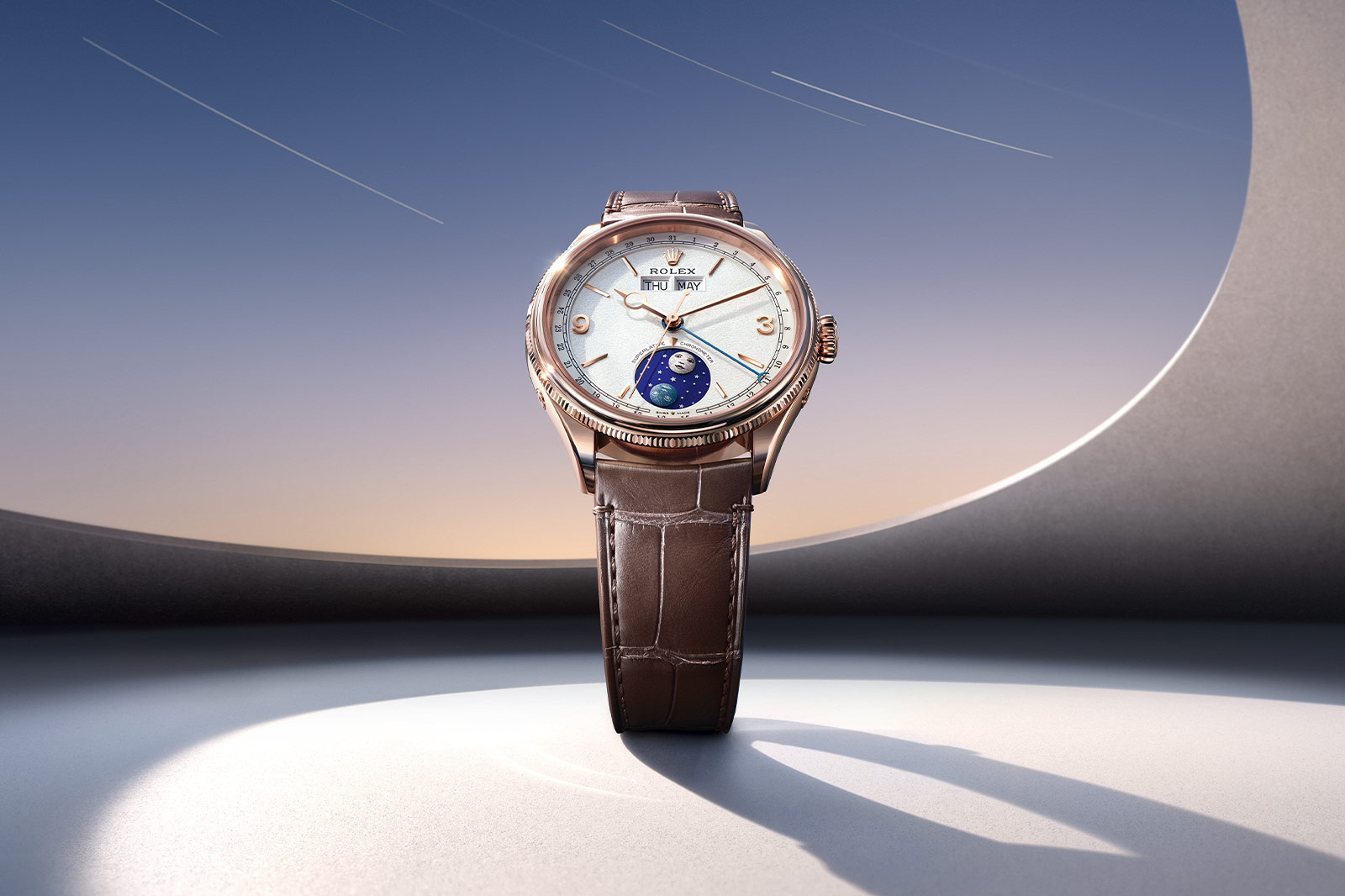
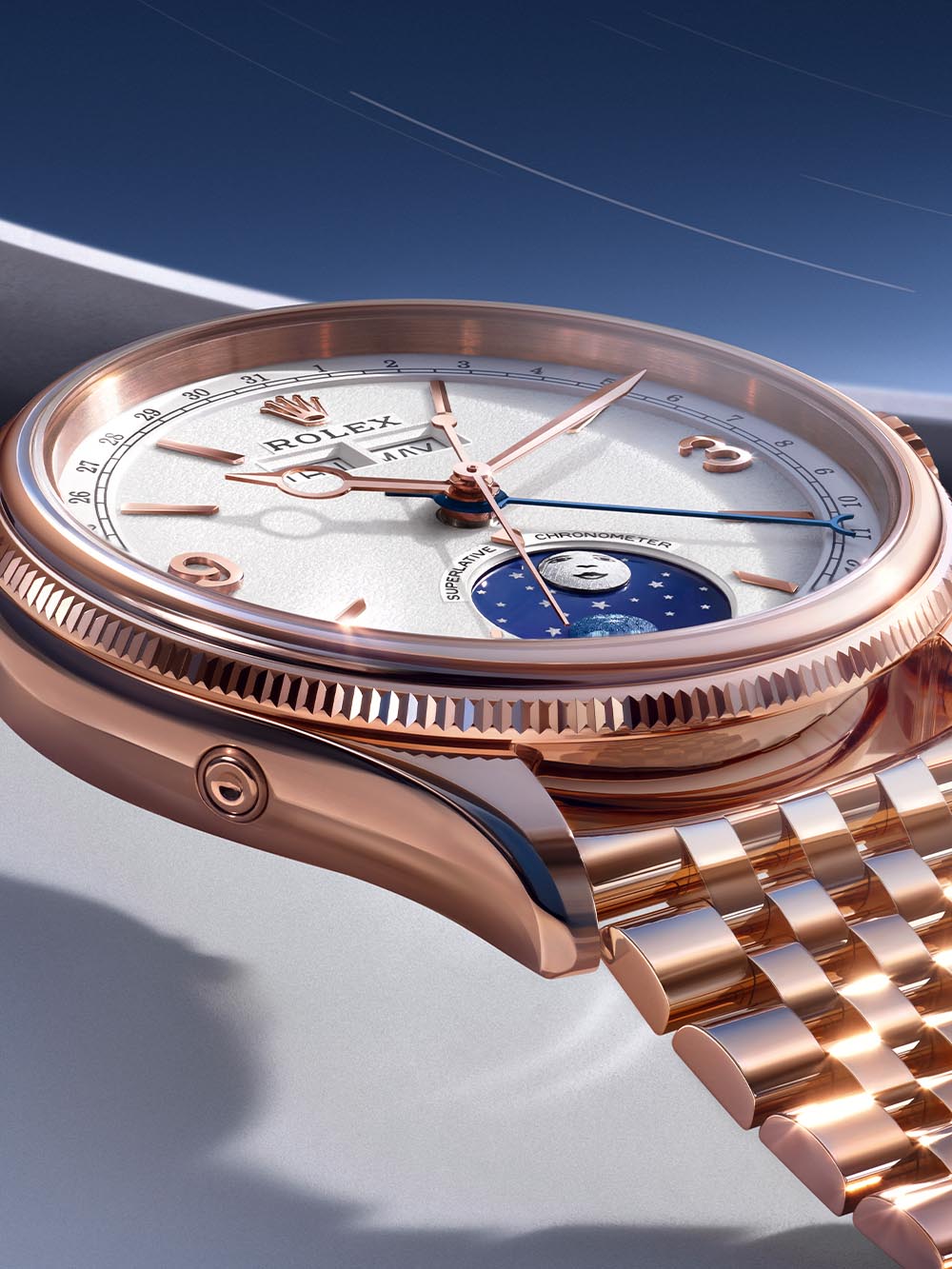
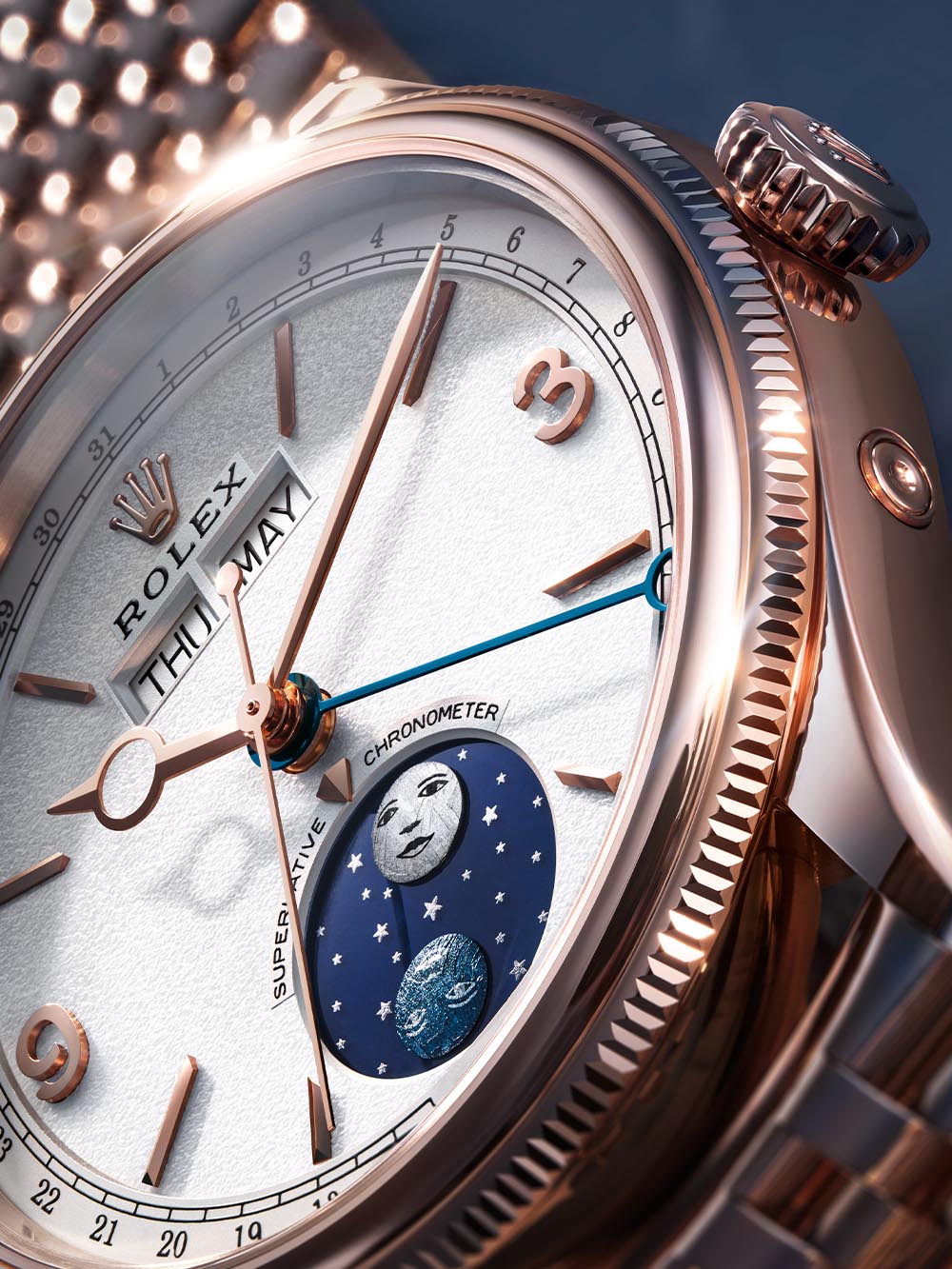
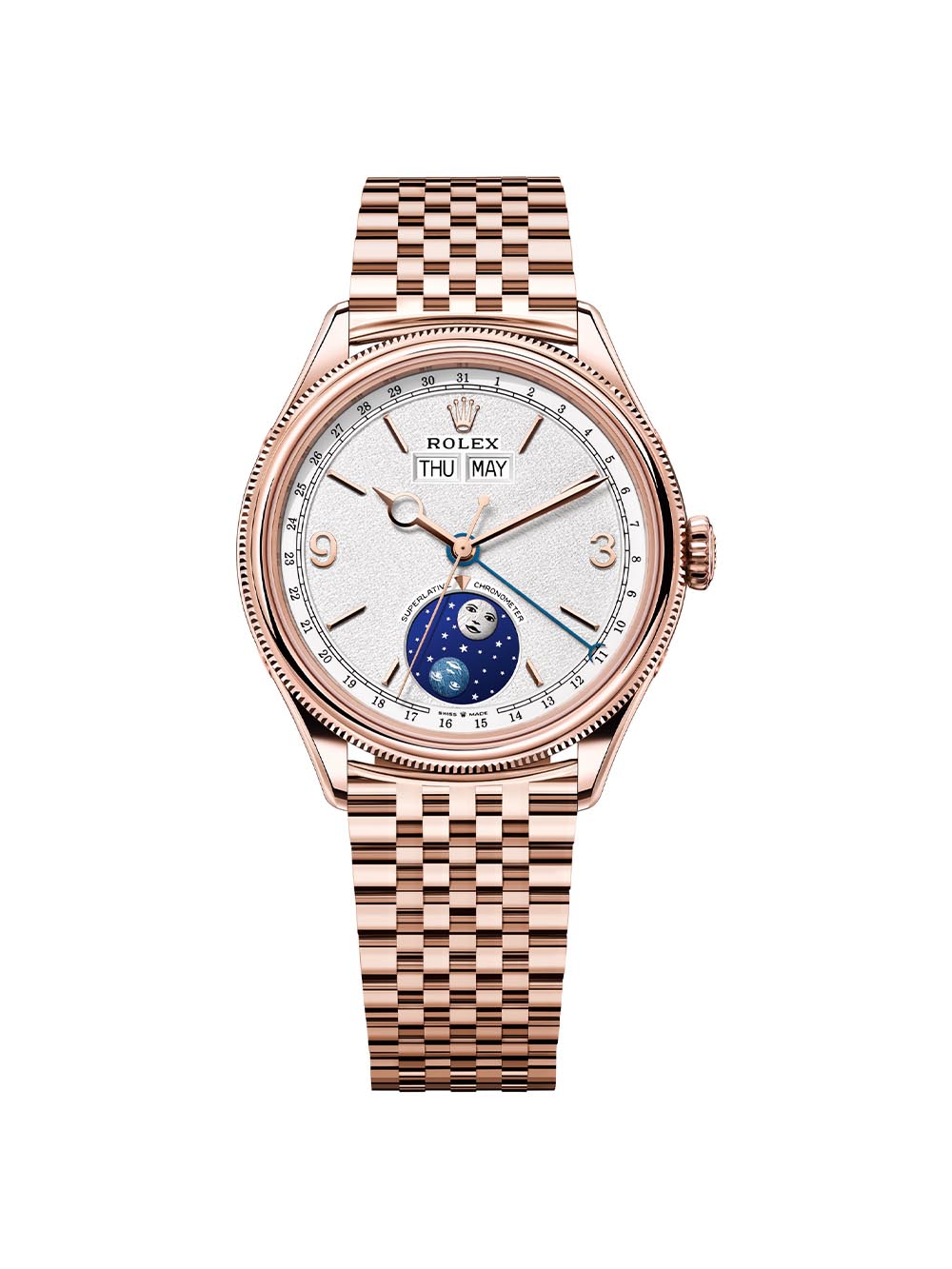
The new Perpetual Padellone nods directly to that layout, with day and month apertures at 12 o’clock, a blue crescent-tipped date hand reading around the dial edge, and a moonphase with a visible lunar face.
The most obvious modern change is the pair of applied numerals at 3 and 9, which give the dial a more contemporary Rolex dress-watch rhythm.
A complete calendar, not a perpetual calendar
The name needs a little unpacking, because “Perpetual” in Rolex language doesn’t mean perpetual calendar.
Here, it refers to the Perpetual collection and, historically, to Rolex’s self-winding rotor system introduced in 1931.
The Perpetual Padellone is a complete calendar with day, date, month and moonphase, supported by an annual calendar mechanism.
That distinction matters because a perpetual calendar accounts for month lengths and leap years, but it also brings more fragility, more parts and more setting anxiety when the watch has stopped.
Rolex has taken a more practical path with the Padellone, building a calendar that needs correction once a year as February becomes March.
For a watch likely to be worn in rotation rather than every day without interruption, that’s a very Rolex kind of decision.
How the Haplos annual calendar works
The key technical feature is Rolex’s patented Haplos system, which allows the watch to distinguish between 30-day and 31-day months.
Instead of building a dense perpetual calendar stack, Rolex uses just two additional components linked to the date mechanism, an extra carrier finger and an annual lever.
The programming for the month lengths is built into the back of the month disc itself.
It’s a typically restrained solution, reducing user effort without turning the watch into a technical maze.
At midnight, the day, date and month change together in a fraction of a second, rather than drifting through the transition at different speeds.
That instantaneous calendar change is another area where Rolex has filed a patent application.
Setting, moonphase and daily ownership
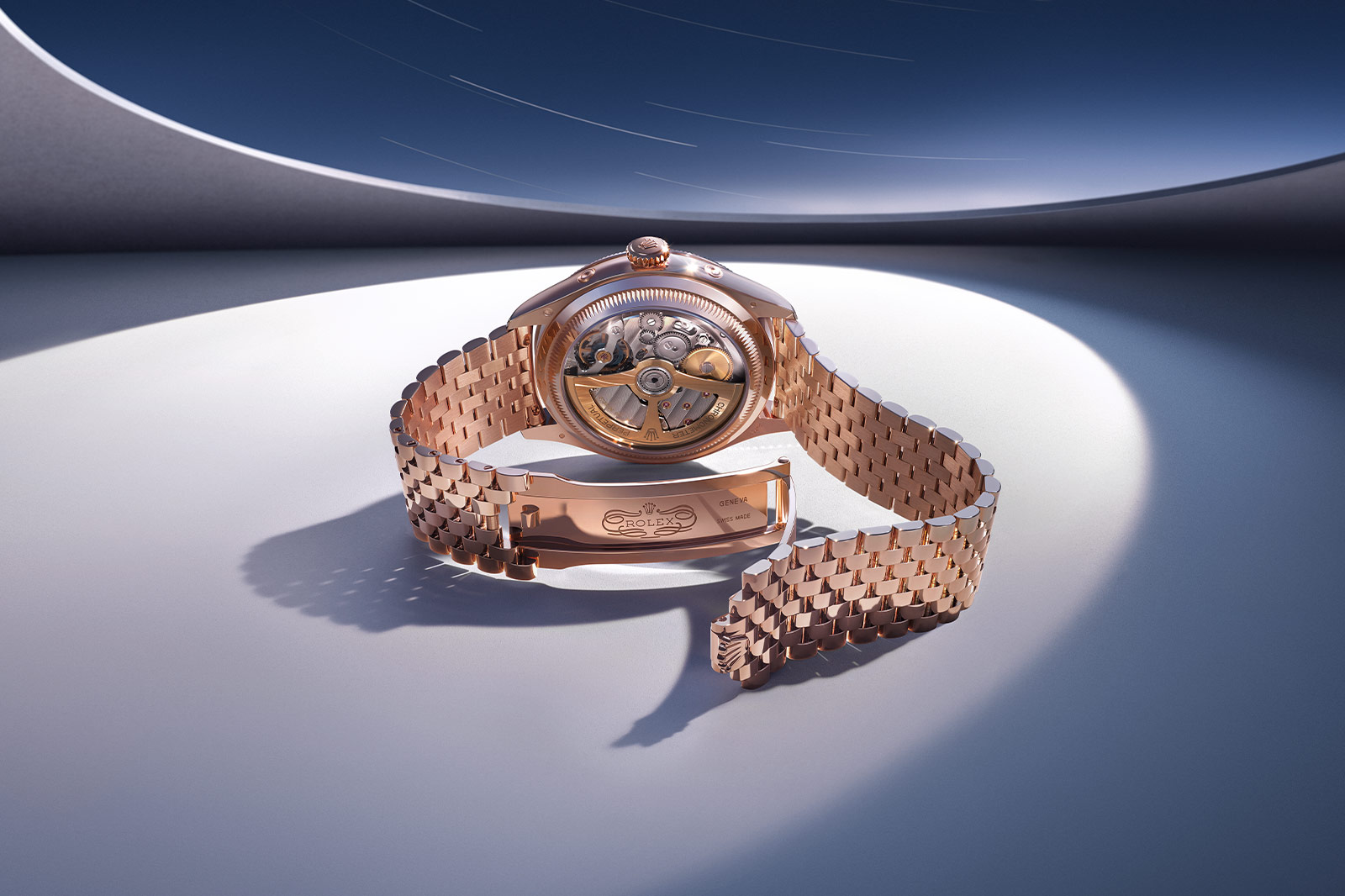
The Perpetual Padellone is adjusted through four correctors set into the case flanks and operated with a stylus.
Every display, including the moonphase, can be corrected at any time of day without risking damage to the movement.
That’s a significant usability point, especially for anyone accustomed to calendar watches with forbidden setting windows.
Rolex has also built a Moon Calendar function on its website that shows the current phase and tells owners how many presses are needed to adjust the moonphase.
The moonphase itself avoids the usual partially hidden aperture design.
Instead, a fully visible blue enamel disc rotates once every lunar month of 29.53 days, carrying full and new moons cut from meteorite, with the new moon darkened by a dark blue PVD coating.
The movement is the new calibre 7190, a 5Hz engine carrying 30 patent applications, which makes this far more than a nostalgic dial exercise.
In the modern Rolex catalogue, the Padellone sits at the top of the Perpetual line, sharing the 39mm size and dress-watch language of the 1908 while moving the collection into more complicated territory.
Details & Specifications
| Brand | Rolex |
|---|---|
| Model | Perpetual Padellone |
| Collection | Perpetual |
| Case size | 39mm |
| Case material | Everose gold or platinum |
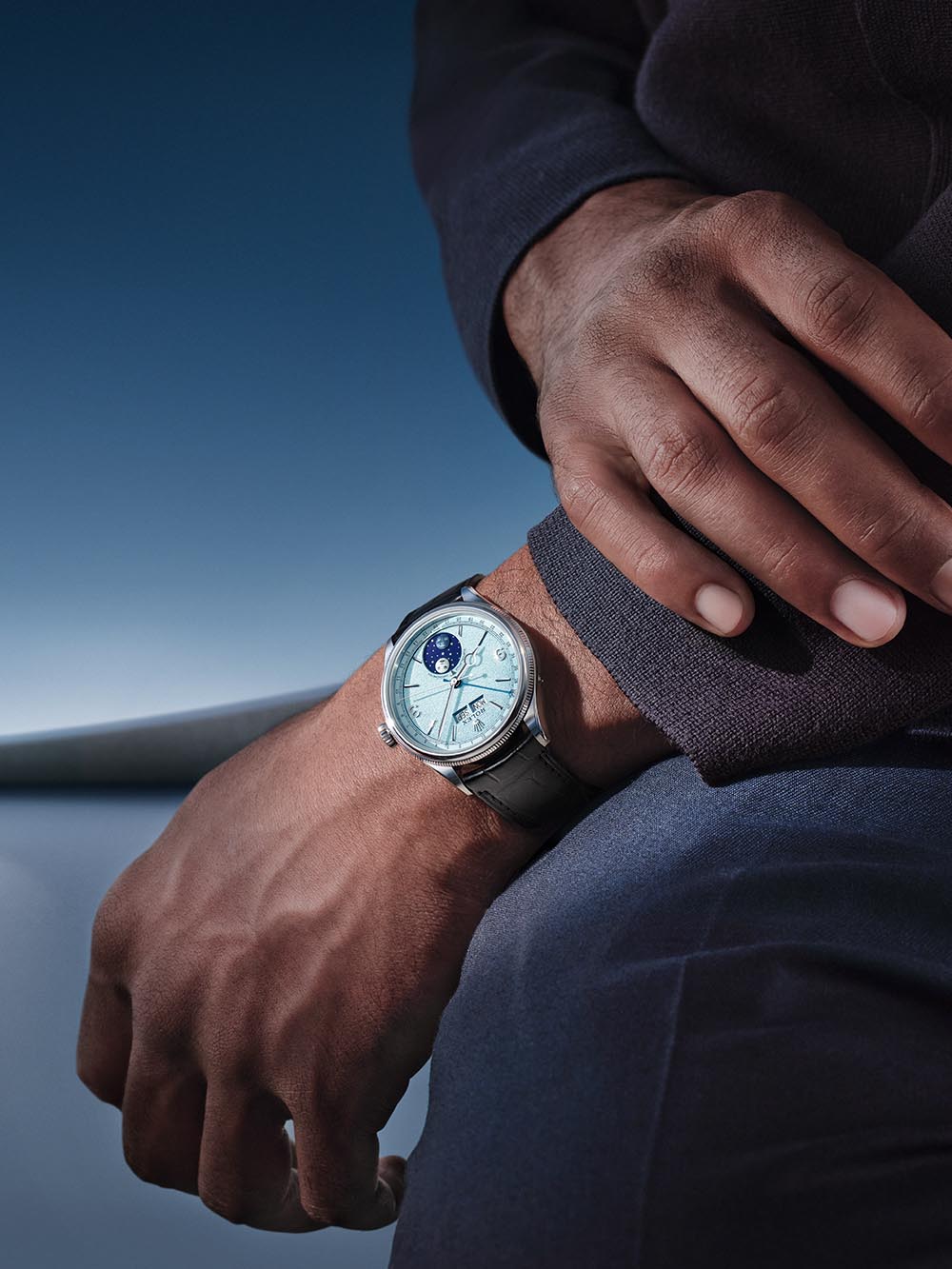
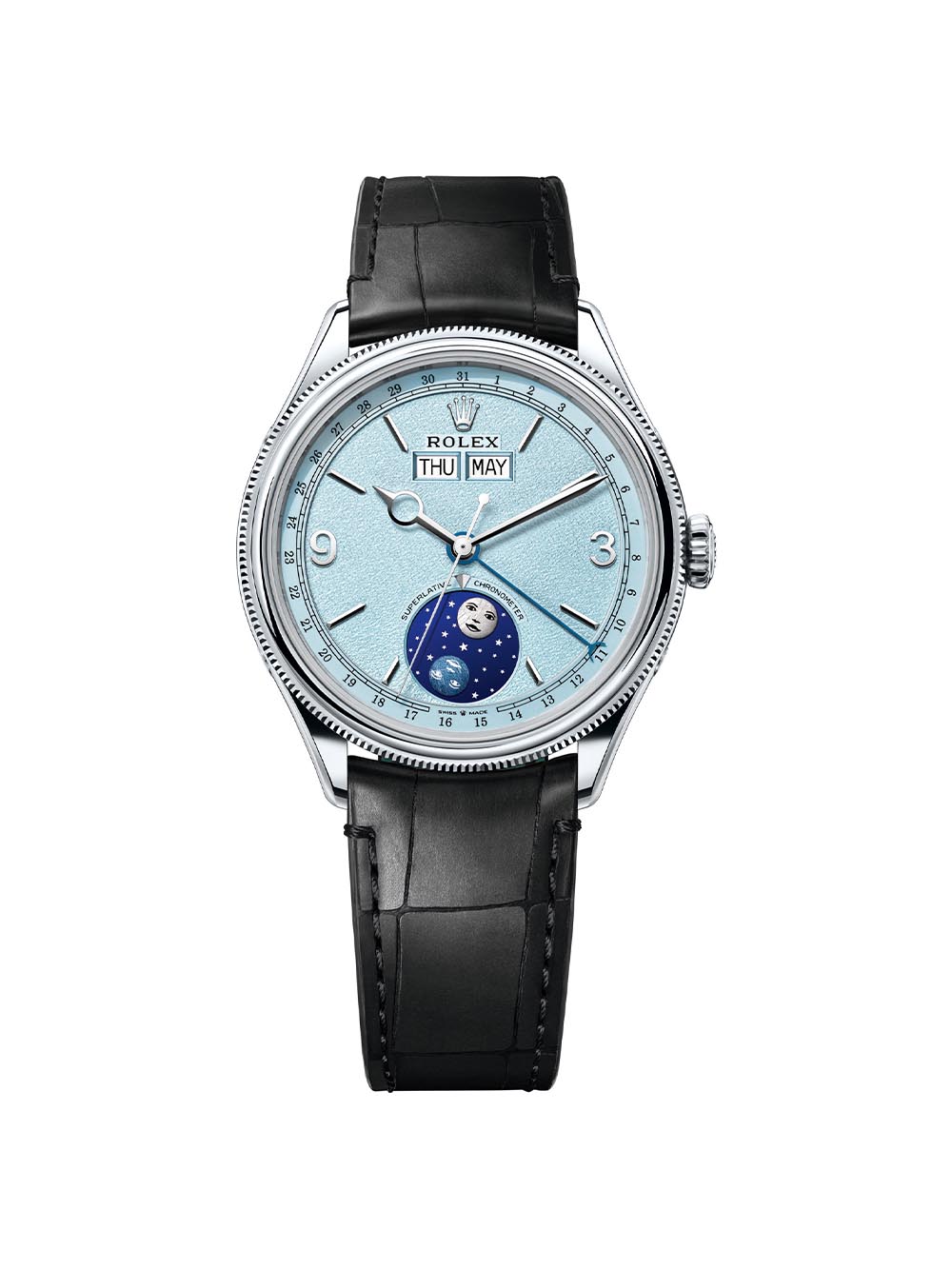
| Dial | Ice blue dial on the platinum model; calendar layout with day and month apertures at 12 o’clock |
| Movement | Rolex calibre 7190 |
| Frequency | 5Hz |
| Complications | Complete calendar, annual calendar function, moonphase |
| Calendar system | Haplos annual calendar mechanism |
| Moonphase | Blue enamel disc with meteorite full and new moons |
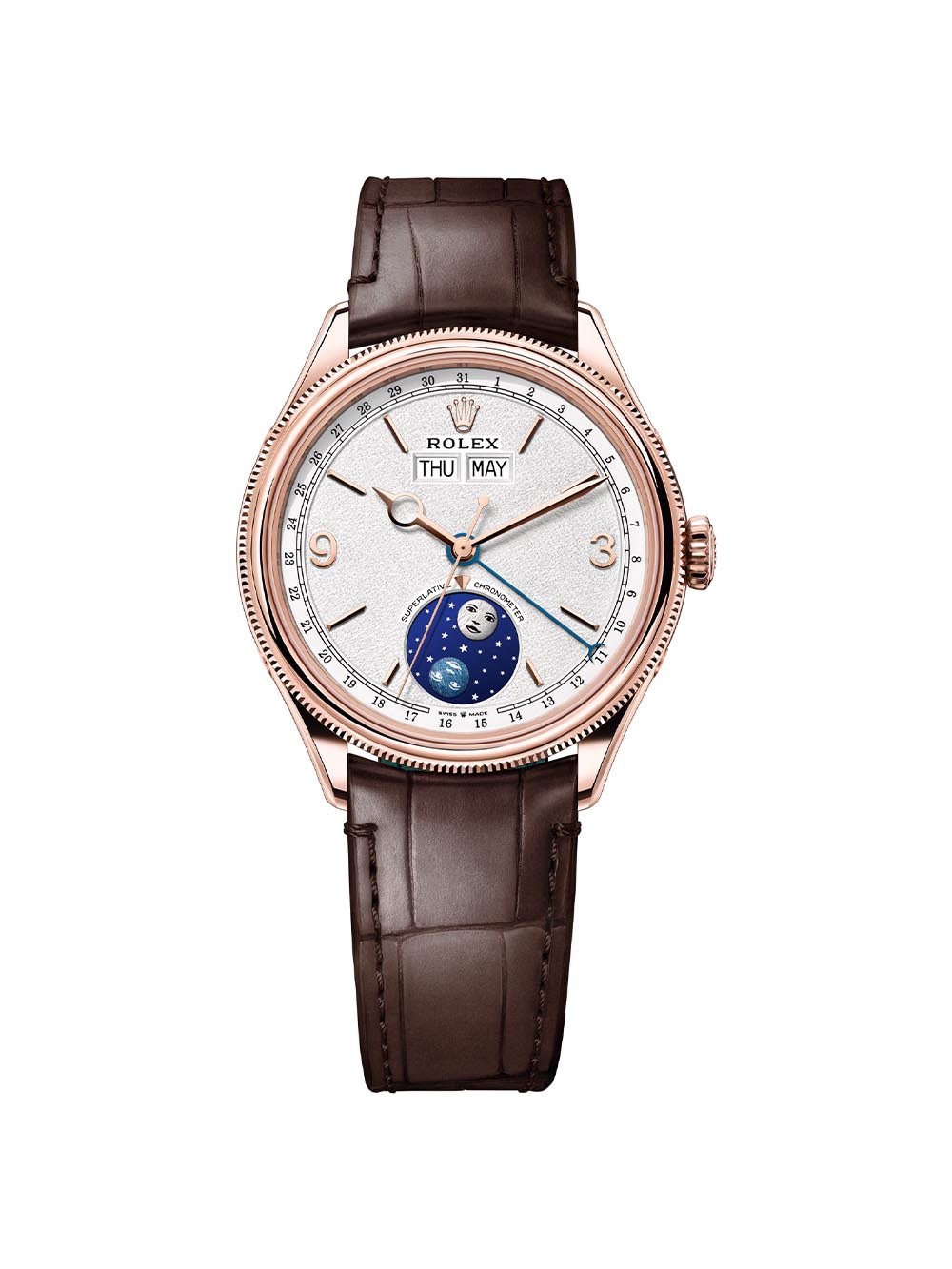
| Strap or bracelet | Settimo bracelet, brown alligator strap or black alligator strap depending on version |
| Price | £49,150 in Everose gold on brown alligator; £60,700 in Everose gold on Settimo bracelet; £55,300 in platinum on black alligator |
| Debut | Milan, 15 September 2026 |
The Perpetual Padellone is interesting because it isn’t chasing the most complicated answer.
It revives one of Rolex’s most charismatic calendar designs, gives it a genuinely useful annual mechanism, and places it in a dress collection that suddenly looks much more important than it did with the 1908 alone.