Ressence has never been interested in making a conventional watch with a slightly different dial.
Since Benoît Mintiens founded the Belgian independent in 2010, the brand has built its identity around a more radical question, which is how mechanical time can be read without hands at all.
The new Type 11 looks familiar at first, but it marks a major step for Ressence because its movement was conceived from the beginning to work with the brand’s rotating orbital display.
At a glance
- Ressence has introduced the Type 11 with the new RW-01 movement, its first calibre designed specifically for the ROCS display.
- The watch uses a 41mm polished Grade 5 titanium case, a rotating convex dial and a patented ceramic micro-ball power reserve indicator.
- Pricing is CHF 23,000 excluding taxes or EUR 30,500 including taxes, positioning it as one of the brand’s most important technical releases to date.
A smoother pebble case with proper lugs
The Type 11 sits visually between the Type 1 and Type 8, keeping the soft pebble-like form that has become central to Ressence’s design language.
The change is in the stance.
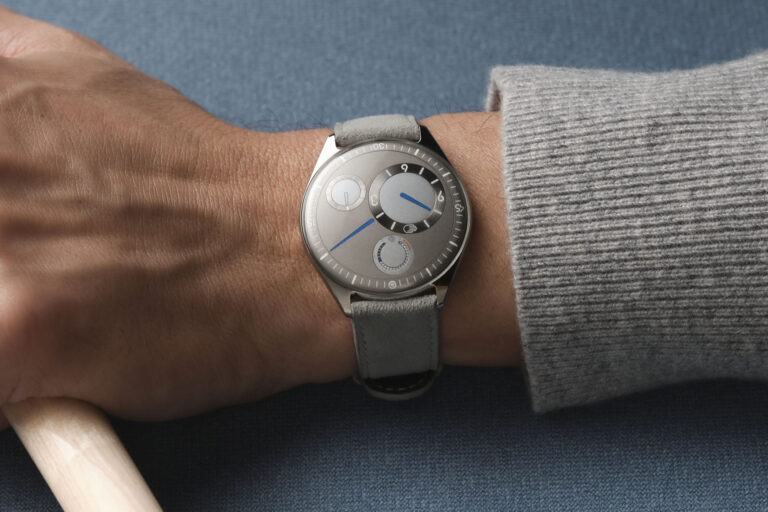
For the first time in this format, Ressence adds conventional lugs to the polished Grade 5 titanium case, giving the watch a more familiar attachment point without making it look ordinary.
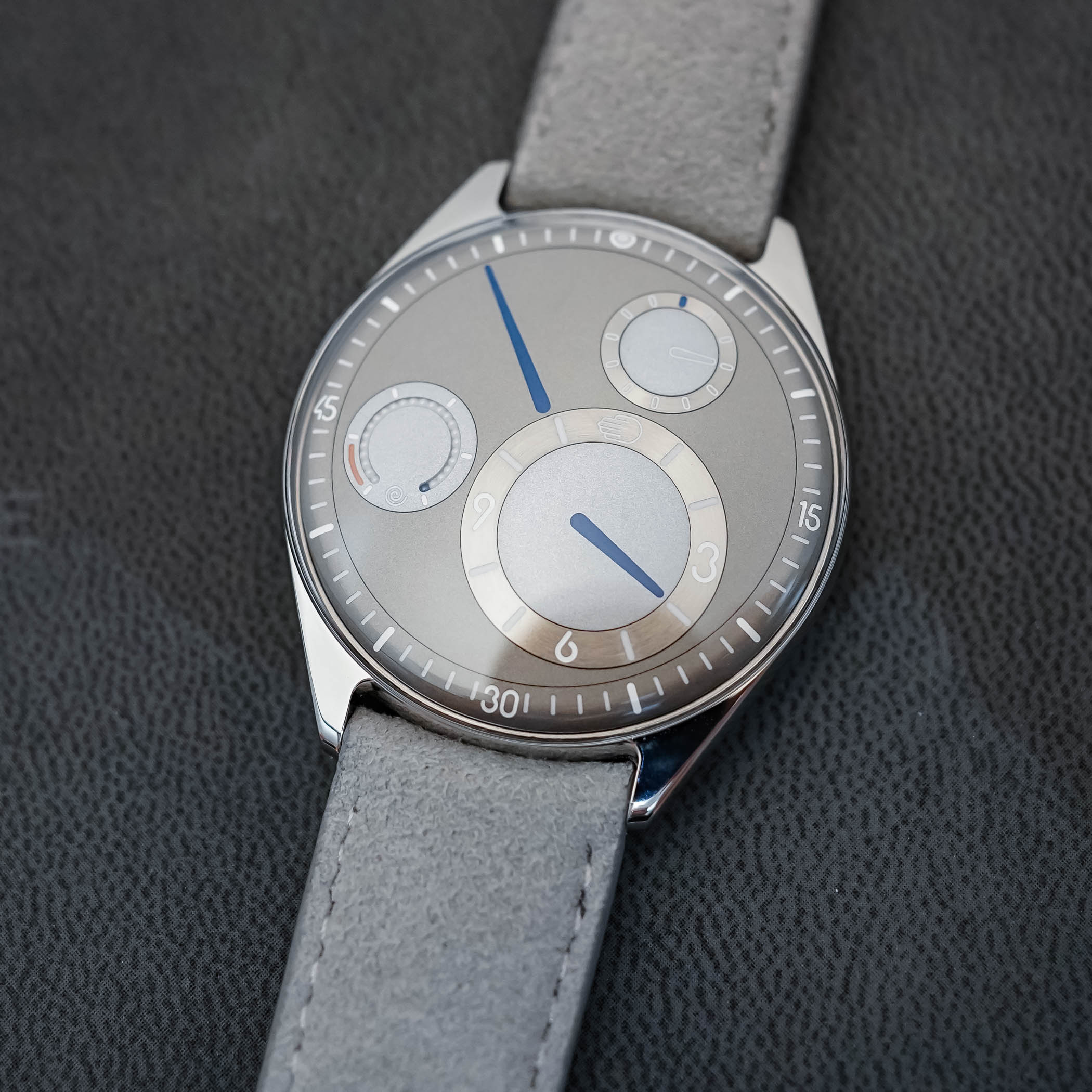
At 41mm across, 11mm thick and 45mm lug-to-lug, the proportions are compact enough to make the unusual architecture feel wearable rather than conceptual.
Titanium helps here, not just for weight, but because it lets the fully polished case retain a sculptural quality without becoming overbearing on the wrist.
There’s still no crown, which remains one of the defining Ressence signatures.
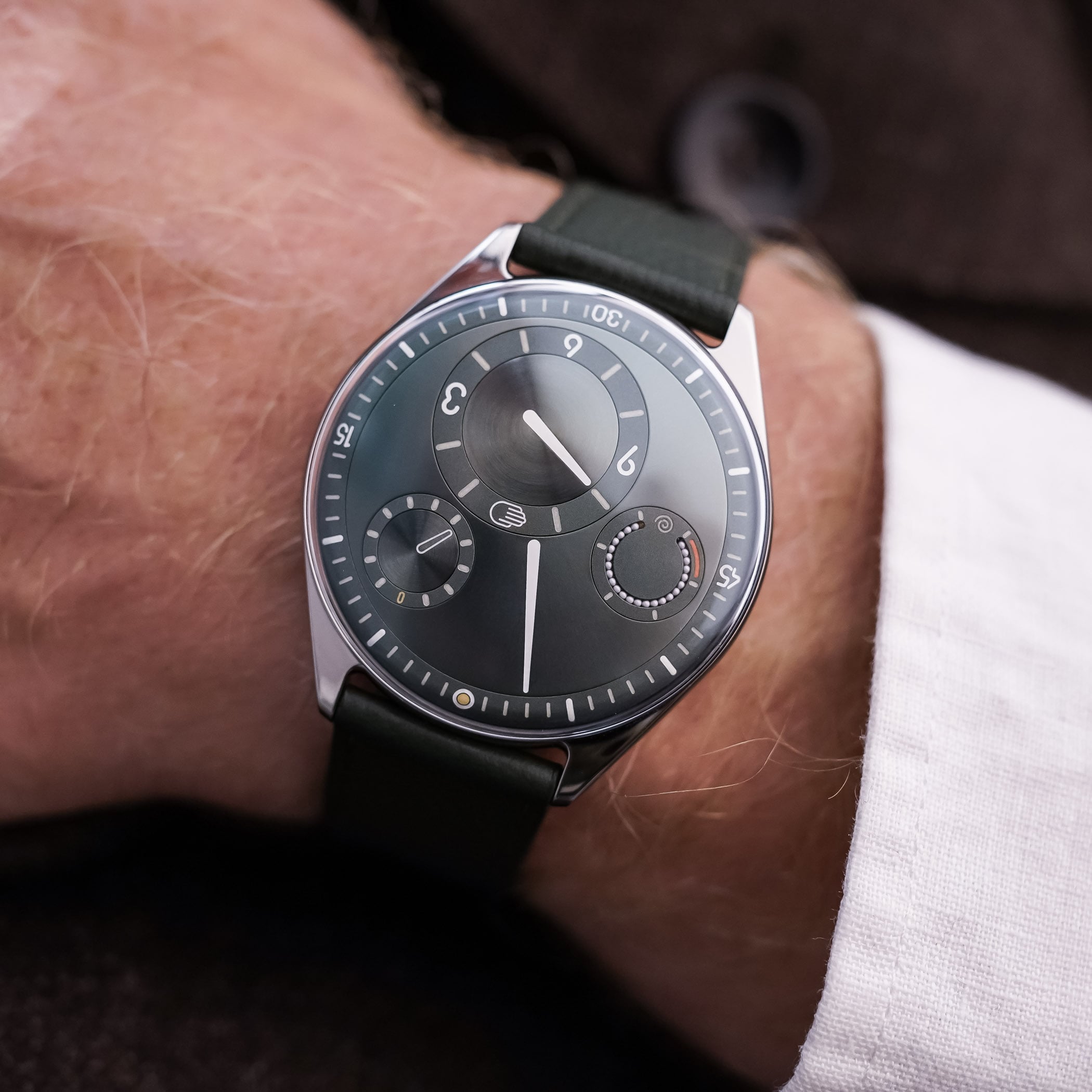
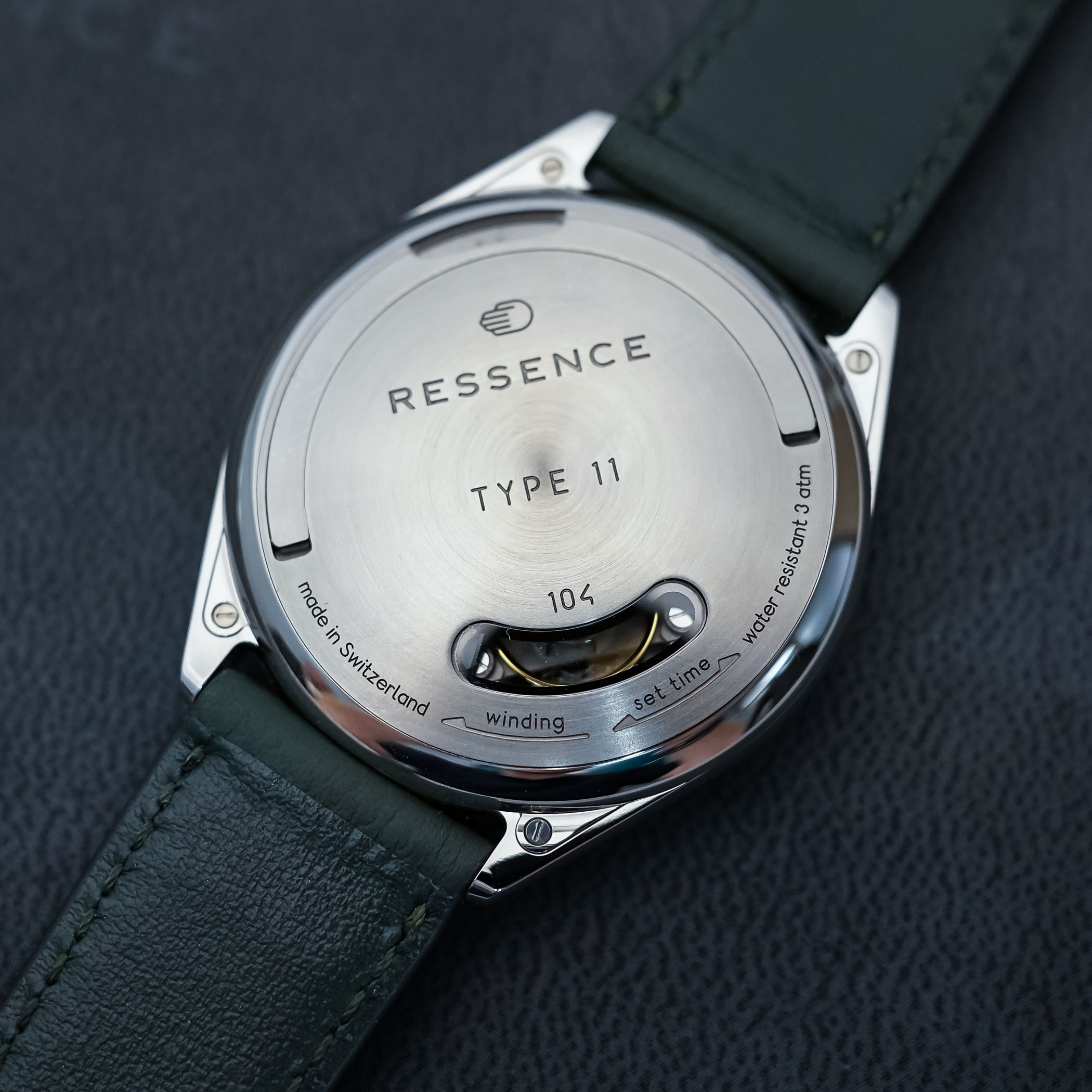
Winding and time-setting are handled through the caseback, but the Type 11 replaces the less intuitive interaction of earlier models with a hinged lever integrated into the back.
That lever allows continuous manual winding, making the daily ritual cleaner and more natural.
A small sapphire aperture on the caseback reveals part of the movement and rotor, while water resistance rises to 30 metres.
The ROCS display adds a playful power reserve
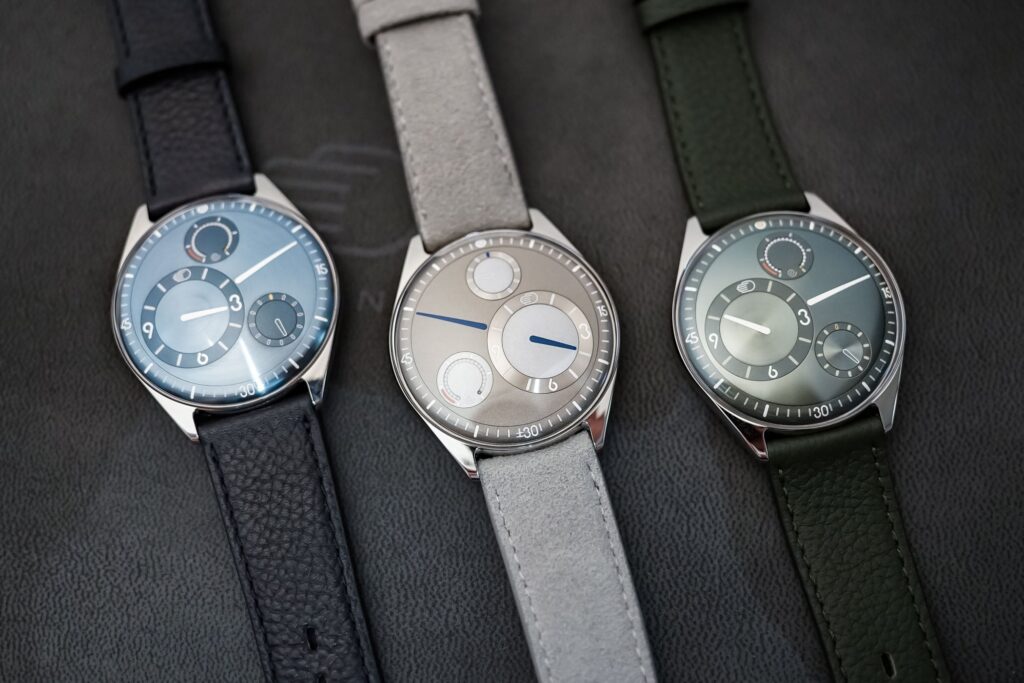
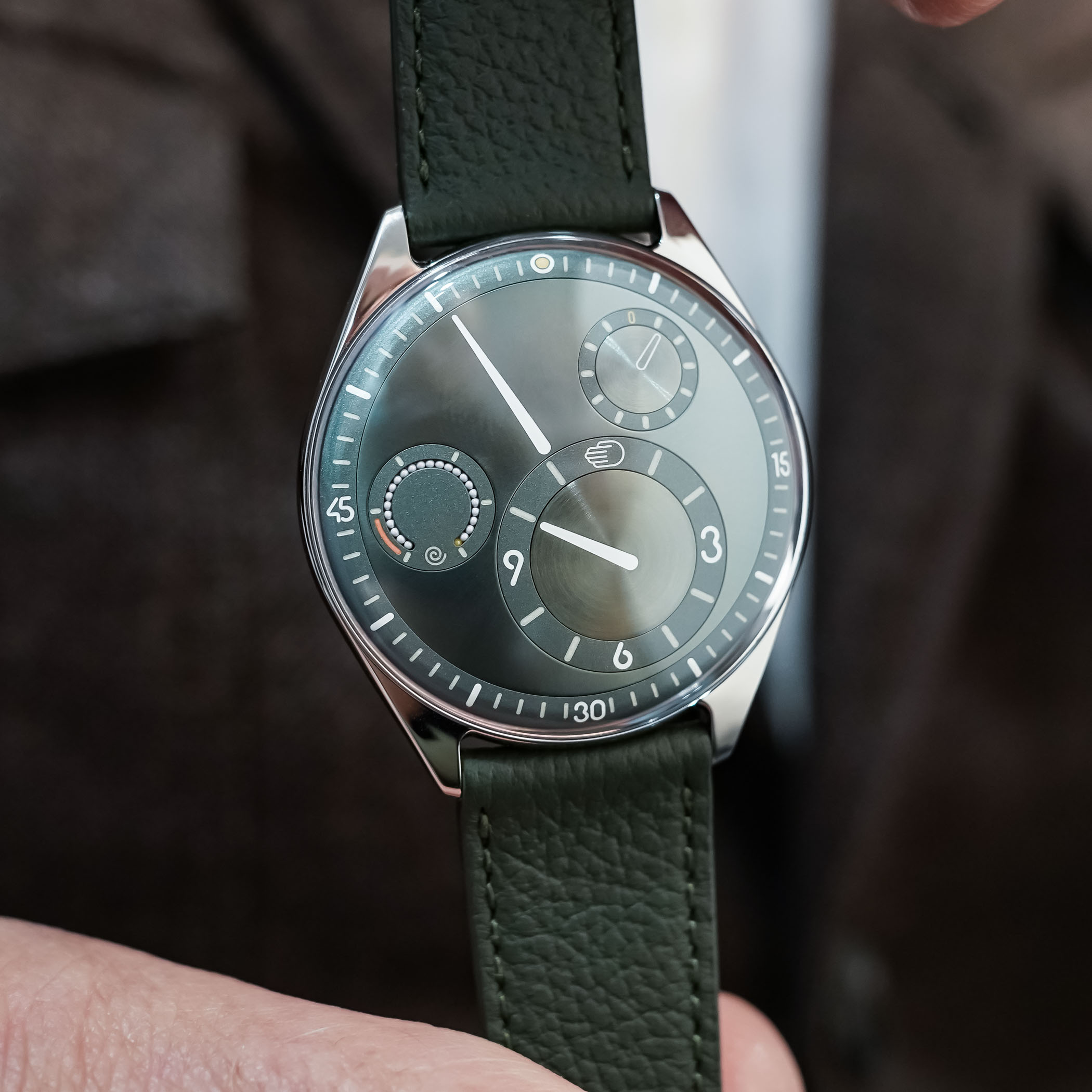
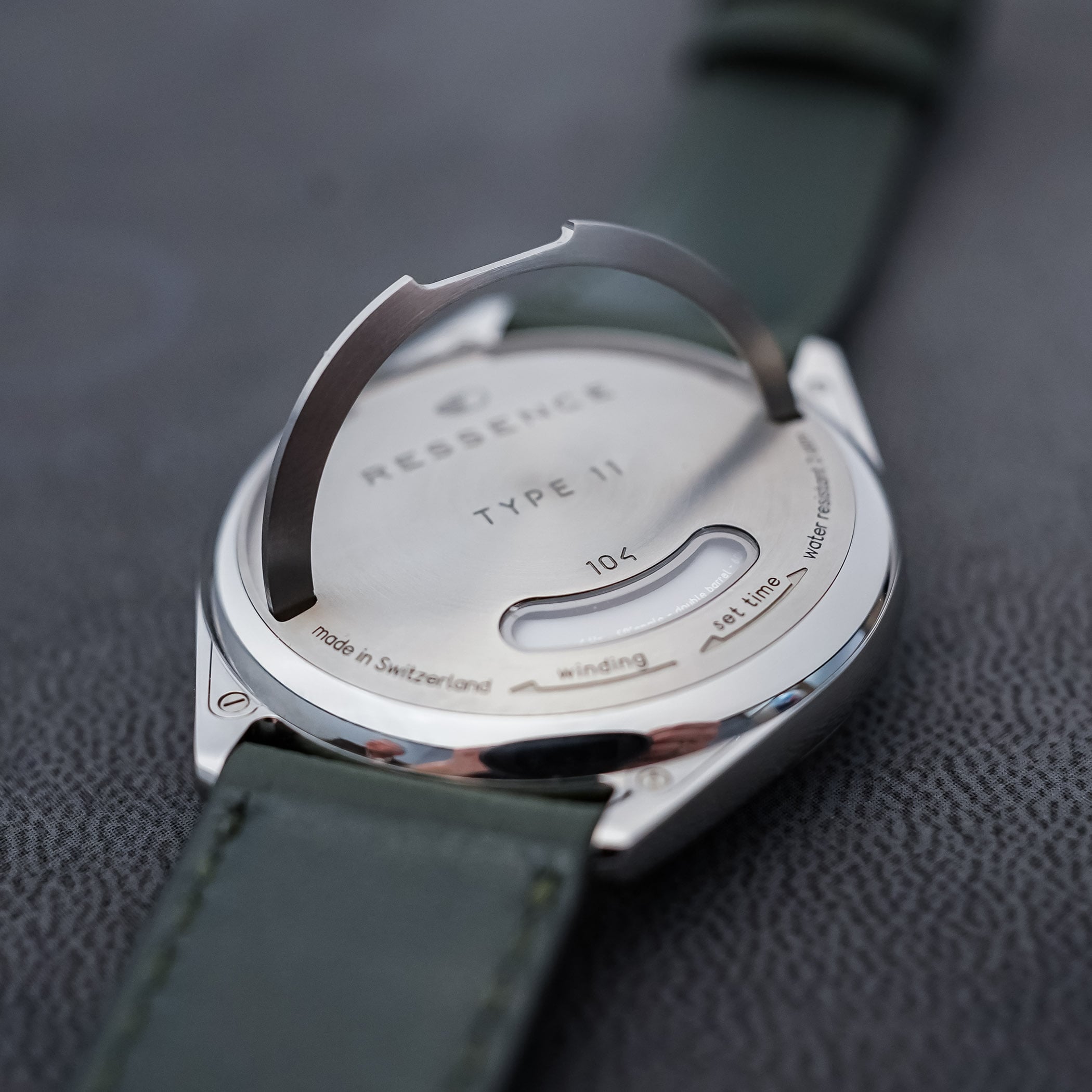
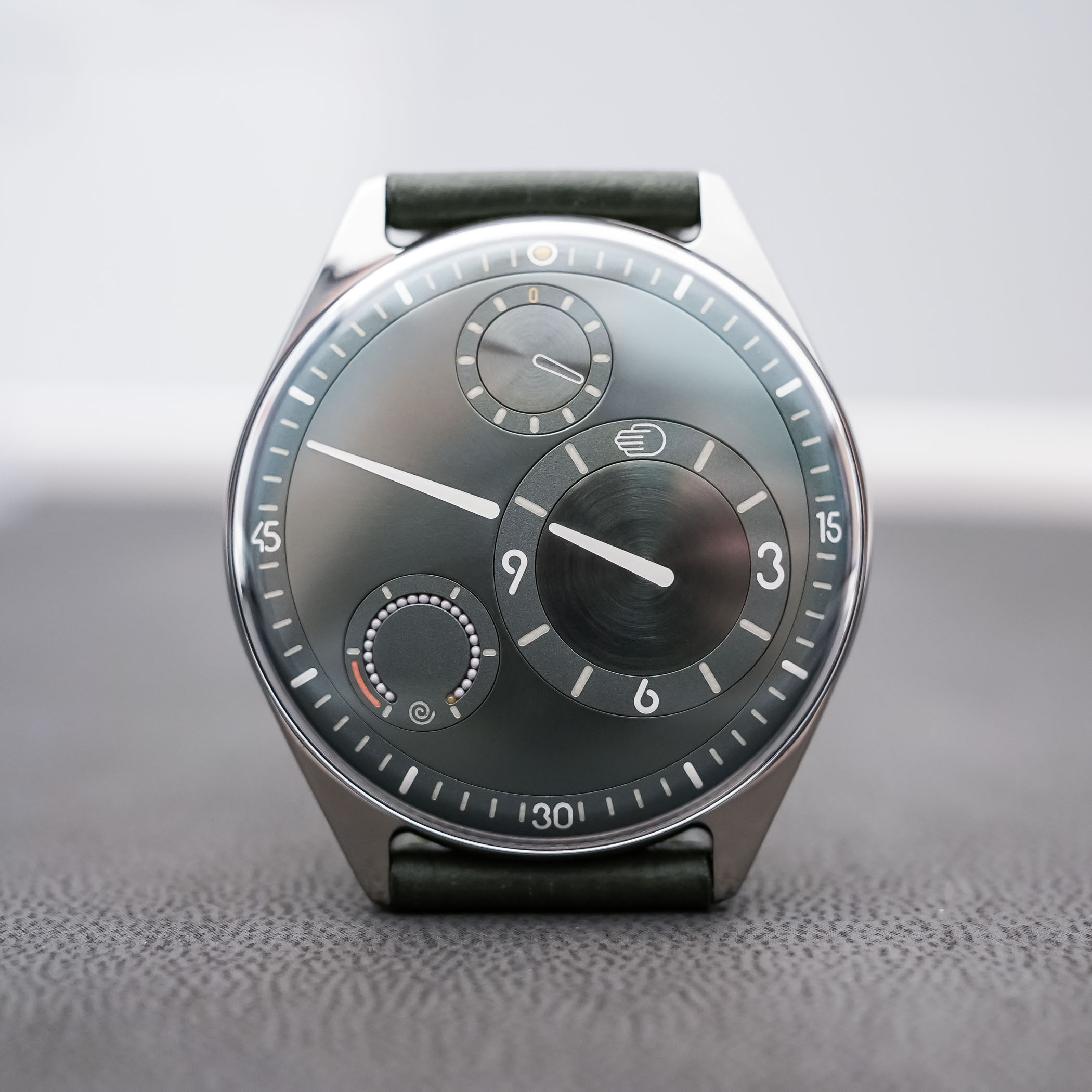
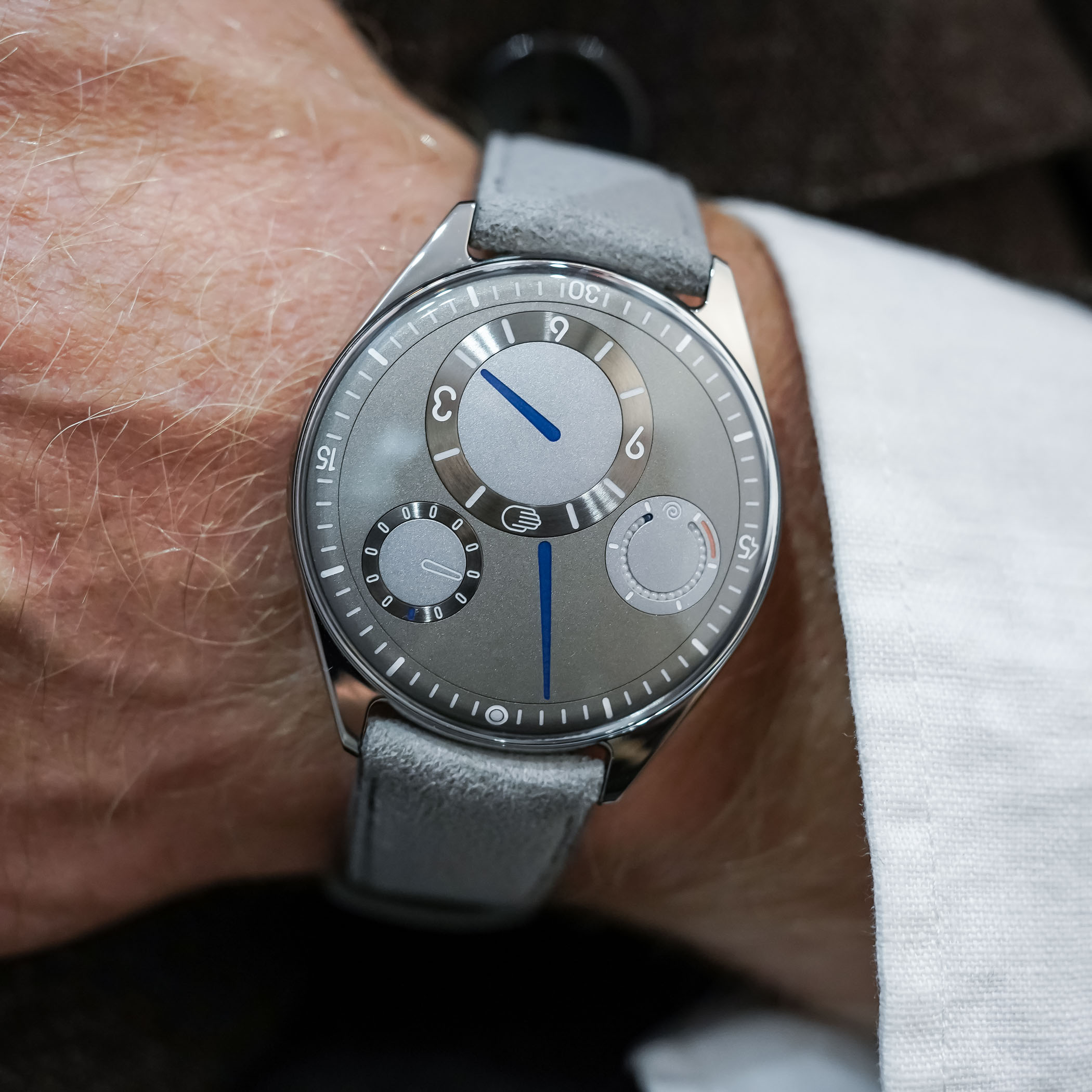
The Type 11 keeps the Ressence Orbital Convex System, better known as ROCS, which replaces hands with a series of rotating discs.
The entire dial turns once per hour to indicate the minutes against a fixed outer scale, while three satellites show the hours, running seconds and power reserve.
It sounds complicated until you spend a little time with it.
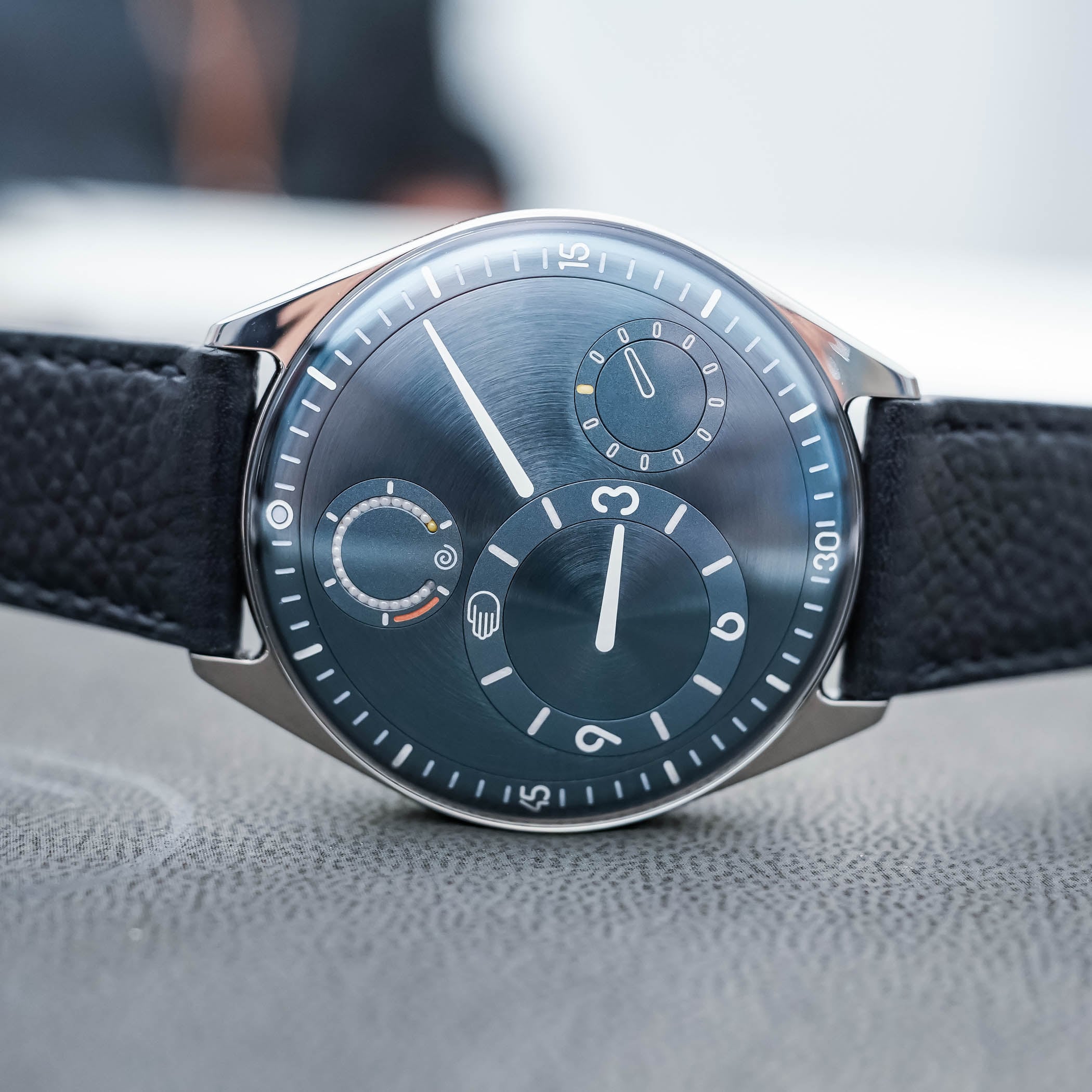
As with the best Ressence watches, the display asks the wearer to reset their habits, then becomes surprisingly direct.
The dial is made from convex Grade 5 titanium and is offered in Pine, Sky and Latte finishes.
A sunburst finish sits at the centre, while grained and circular finishes give the minute scale, power reserve area and sub-dials added definition.
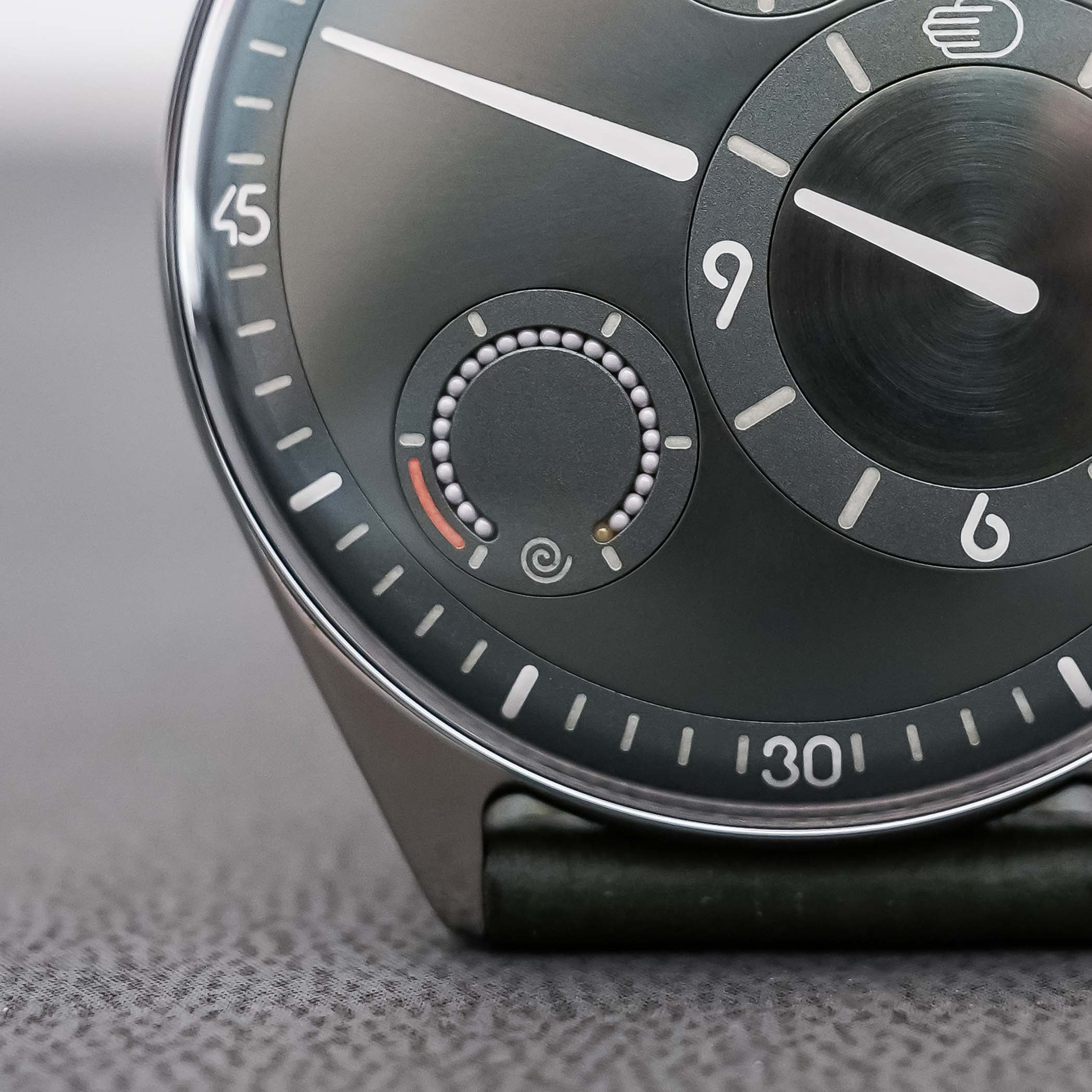
The most charming addition is the patented power reserve display.
Rather than a conventional hand or arc, Ressence uses a string of ceramic micro-balls in contrasting colours.
As the watch is wound, lighter balls appear and darker ones recede, giving a tactile visual sense of the remaining 60-hour autonomy.
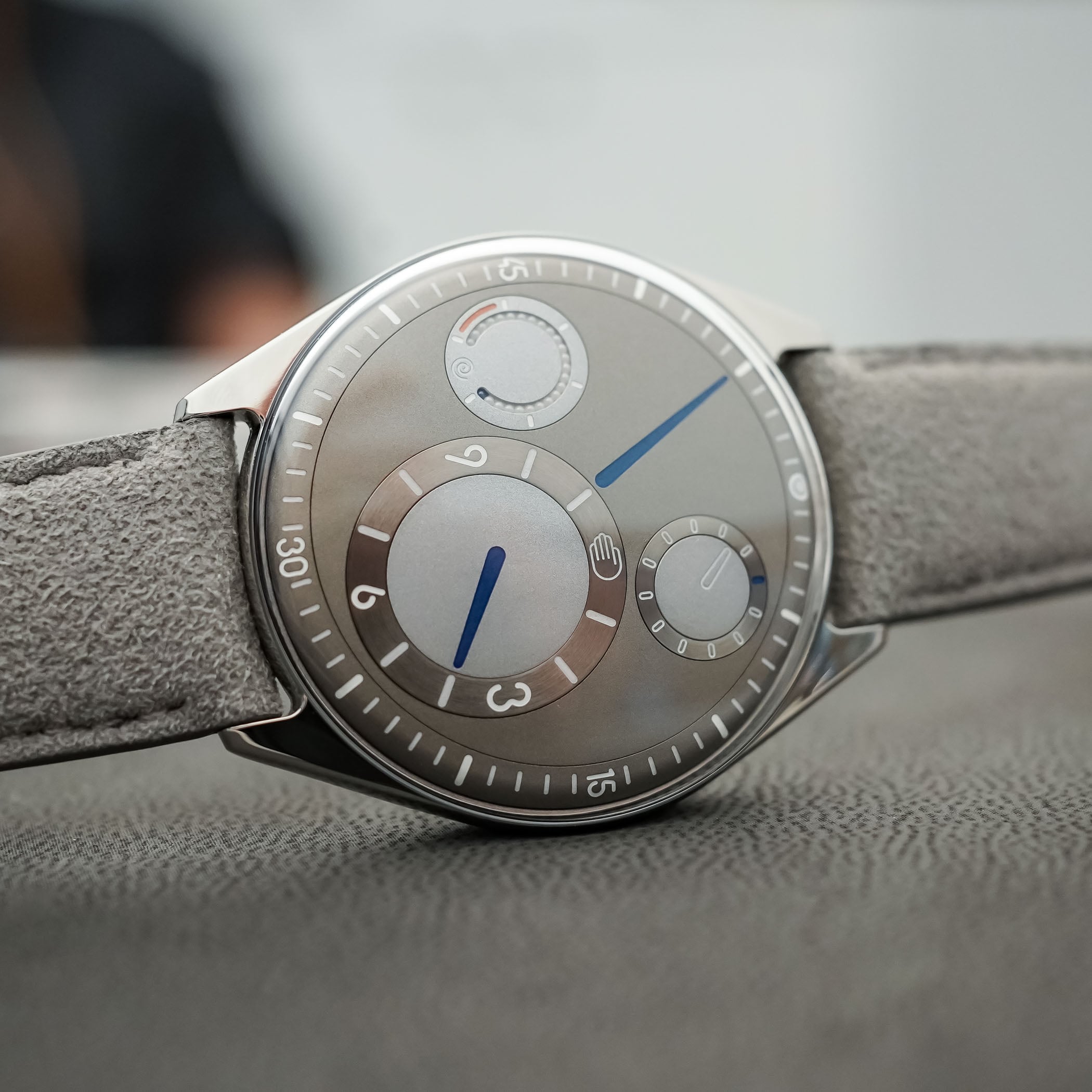
It’s exactly the kind of detail Ressence does well, turning mechanical information into something legible, kinetic and slightly mischievous.
RW-01 is the real milestone
The headline technical change is the Ressence Werk RW-01.
It is the first movement designed entirely by Ressence in Belgium and produced by Swiss movement specialist Concepto.
That matters because earlier Ressence watches used heavily modified ETA movements to drive the brand’s orbital display.
Those calibres were never conceived to move an entire convex dial and multiple sub-displays, which meant energy demand was a constant challenge.
In the Type 11, the movement and display have been developed as a more unified mechanical architecture.
The RW-01 uses a distinctive triangular layout with twin barrels and a centrally positioned balance wheel.
It runs at 28,800 vibrations per hour and delivers a more substantial 60-hour power reserve.
The ROCS module now operates on titanium ball bearings, a detail that speaks to the broader aim of improving efficiency and mechanical cohesion.
For collectors, the significance is clear.
This isn’t merely a new Ressence case or dial colour, but a structural step toward making the brand’s unusual display feel less like an adaptation and more like a complete horological system.
Straps, bracelet and everyday appeal
The Type 11 can be worn on leather, rubber, hybrid leather-rubber straps or a titanium Milanese bracelet.
The bracelet is arguably the most natural pairing, as it extends the lightness and metallic fluidity of the case without distracting from the dial.
Ressence watches have always appealed to people who like mechanical watchmaking but don’t necessarily want it packaged through traditional codes.
The Type 11 sharpens that proposition by addressing practical points that matter in daily use, including winding feel, autonomy and water resistance.
Details & Specifications
| Brand | Ressence |
|---|---|
| Model | Type 11 |
| Case size | 41mm diameter, 11mm thickness, 45mm lug-to-lug |
| Case material | Polished Grade 5 titanium |
| Crystal | Double-domed sapphire crystal with internal anti-reflective coating |
| Dial | Convex Grade 5 titanium, available in Pine, Sky and Latte |
| Display | Ressence Orbital Convex System with rotating discs for minutes, hours, seconds and power reserve |
| Movement | Ressence Werk RW-01, designed by Ressence in Belgium and produced by Concepto in Switzerland |
| Frequency | 28,800 vibrations per hour |
| Power reserve | 60 hours |
| Winding and setting | Manual operation through a hinged lever integrated into the caseback |
| Water resistance | 30 metres |
| Straps and bracelet | Leather, rubber, hybrid leather-rubber straps or titanium Milanese bracelet |
| Price | CHF 23,000 excluding taxes or EUR 30,500 including taxes |
The Type 11 is a meaningful watch because it doesn’t abandon what made Ressence distinctive.
It refines the experience from within, giving the brand’s orbital display the dedicated mechanical foundation it always seemed to deserve.