A wartime diver’s watch with a remarkable Royal Navy backstory is coming to auction in London.
Bonhams will offer HS C13, a handmade sterling silver watch built for specialist naval use around 1943, in its London Fine Watches sale at New Bond Street on 10 December 2026.
The estimate is £30,000–£50,000, but the draw here is not simply rarity. This is one of the earliest British attempts to make a purpose-built underwater military watch.
At a glance
- Bonhams will offer the Royal Navy Longines HS C13 as Lot 7 in London on 10 December 2026.
- The watch has a 51mm handmade sterling silver case, a Longines calibre 12.68N movement and an original radium dial.
- Bonhams estimates the watch at £30,000–£50,000, with public viewings scheduled from 6 to 9 December.
A Royal Navy answer to Panerai
The HS C is often called the “British Panerai”, and the nickname is more than collector shorthand.
Its origin sits in the aftermath of the December 1941 attack on Alexandria harbour, when Italian frogmen using human-manned torpedoes crippled HMS Valiant and HMS Queen Elizabeth.
The Italian attackers are believed to have used Panerai watches to coordinate their operation, exposing a capability gap the Royal Navy could not ignore.
Britain’s response included the Chariot, its own manned torpedo, which was ready for testing by September 1942.
Its crews needed a waterproof watch robust enough for underwater attack timing, and the Admiralty’s Hydrographic department had to find a solution at a time when very few such watches existed.
The movements came from Longines, while the case work went to A.T. Oliver of Clerkenwell, a firm that had cased explorers’ pocket watches for the Royal Geographical Society.
Built with a wrench rather than romance
HS C13 is a bluntly functional object, and that is exactly what makes it compelling.
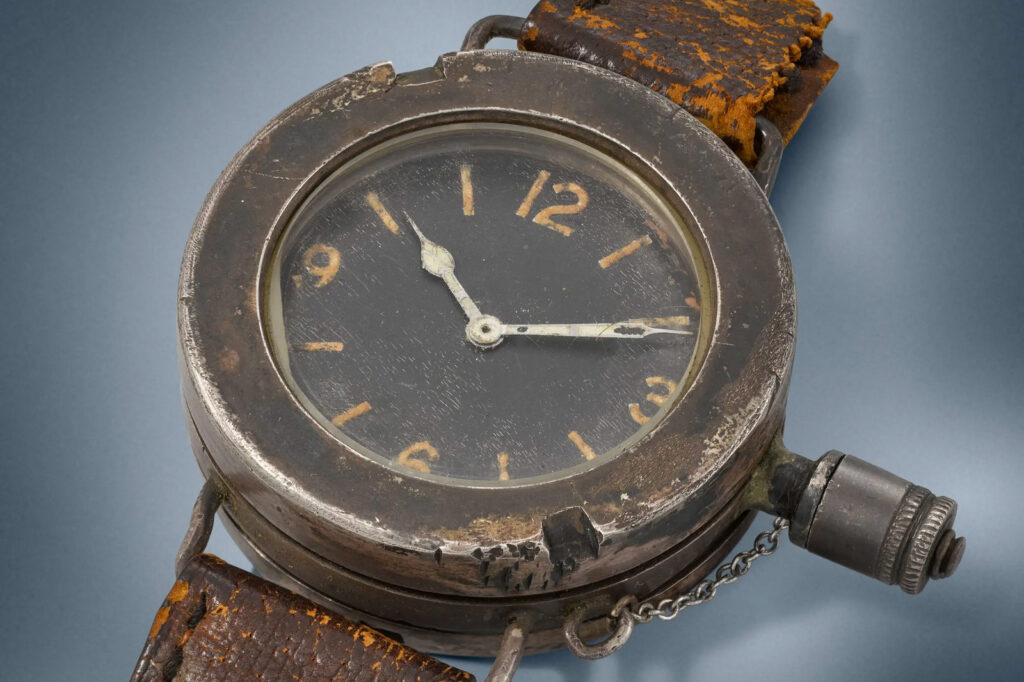
The sterling silver case measures 51mm across and 17mm tall, giving it a presence larger than many wartime watches and substantial even by Panerai standards.
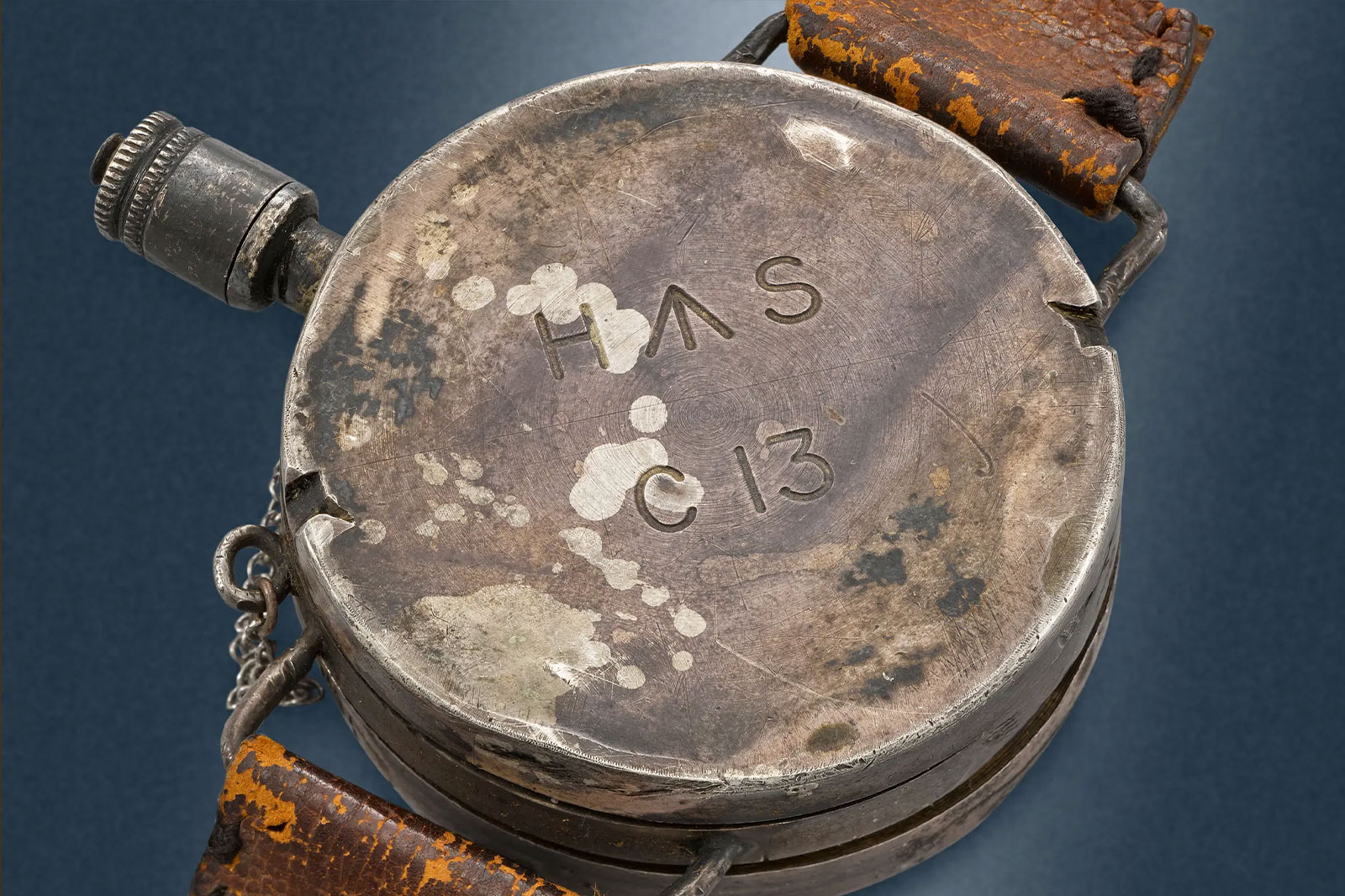
Both the bezel and caseback are notched so they could be tightened with a wrench, a detail that speaks to sealing, serviceability and necessity rather than display.
The crown sits beneath a screw-down canteen cap attached to the case by a chain, so it could not be misplaced during use.
The dial is matt black with thick radium numerals at 12, 3, 6 and 9, a layout intended for clarity rather than decoration.
Inside is the 16-jewel Longines calibre 12.68N, a proven movement that gave the Admiralty a dependable mechanical base for an improvised military requirement.
Like several other known HS C watches, HS C13’s movement lacks a centre-seconds sweep bridge, meaning the watch has no seconds hand.
For a diving watch intended for mission synchronisation, that omission appears to have been considered acceptable.
Why HS C13 is such a scarce survivor
The HS C first appears in Admiralty Fleet Orders on 8 February 1945, where it was kept off the standard list because it was “only supplied for certain special services”.
Its production was likely tiny, with fewer than 100 thought to have been made.
Many examples may have been lost in service or later scrapped for their silver cases, which helps explain why so few have been documented.
Before the emergence of HS C13, only eight examples were known.
Bonhams notes that this example retains its original silver case, matching-numbered components and original radium dial.
Its caseback is engraved “H ↑ S C13”, identifying it within the known series.
It is also described as the second earliest recorded example, which gives it additional weight for collectors focused on sequence and military provenance.
The auction context is equally significant.
Bonhams states that this is the first complete, entirely original HS C to be offered at auction since 2007, when HS C15 sold at Antiquorum for CHF 37,760, approximately £34,350.
Details & Specifications
| Brand | Longines movement, Admiralty Hydrographic department commission |
|---|---|
| Model | HS C13 Royal Navy diver’s watch |
| Approximate year | Around 1943 |
| Case size | 51mm across, 17mm tall |
| Case material | Sterling silver |
| Case maker | A.T. Oliver of Clerkenwell |
| Dial | Matt black dial with radium numerals at 12, 3, 6 and 9 |
| Movement | Longines calibre 12.68N |
| Jewels | 16 |
| Crown | Screw-down canteen cap chained to the case |
| Seconds hand | None, movement lacks a centre-seconds sweep bridge |
| Sale | Bonhams London Fine Watches |
| Lot | Lot 7 |
| Estimate | £30,000–£50,000 |
| Auction date | 10 December 2026 at 14:00 GMT |
| Location | Bonhams, 101 New Bond Street, London W1S 1SR |
| Viewings | 6 December, 12:00–16:00; 7–9 December, 10:00–17:00 |
The beginning of Britain’s military dive watch line
The HS C sits well before the better-known Royal Navy dive watches that followed, including the Rolex MilSubs of the 1970s, Omega Seamasters and later CWC-issued pieces.
It is less polished and far less familiar than those watches, but arguably more formative.
This was not a commercial dive watch adapted for military use. It was a handmade wartime answer to a specific operational problem.
For collectors, that combination of naval purpose, Longines mechanics, silver-case construction and extreme scarcity is difficult to replicate.
HS C13 is the kind of watch that makes military collecting feel less like a category and more like a series of surviving clues, each one carrying the marks of urgency, improvisation and use.