Peter Stevens knows what it means to design a car that lives beyond its moment.
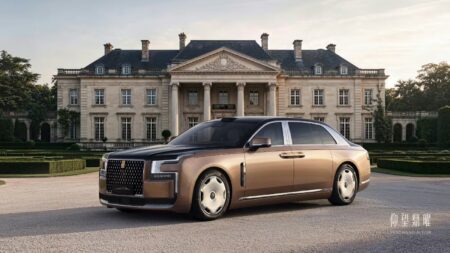
The McLaren F1 designer, whose career also includes work with Lamborghini and BMW, has weighed in on the recent wave of criticism aimed at modern car design, from Ferrari and Jaguar to Porsche and Murray Group.
His message is pointed but measured. Not every new idea deserves instant dismissal, and nostalgia isn’t a design strategy.

At a glance
- Peter Stevens has responded to criticism around recent car designs including the Ferrari Luce, Jaguar Type 01, Porsche Mission S and Murray Group’s F1c.
- He argues that new cars should take inspiration from the philosophy of past models rather than copying their appearance.
- Stevens also raised broader questions about concept design, electric vehicle weight and lightweight engineering.
A designer pushing back on the outrage cycle
Writing on social media, Stevens described a familiar pattern in the way new car designs are received online.
“It almost looks like the attention span of some, but not all, Instagram and Facebook readers/viewers is about three or four weeks,” he wrote.
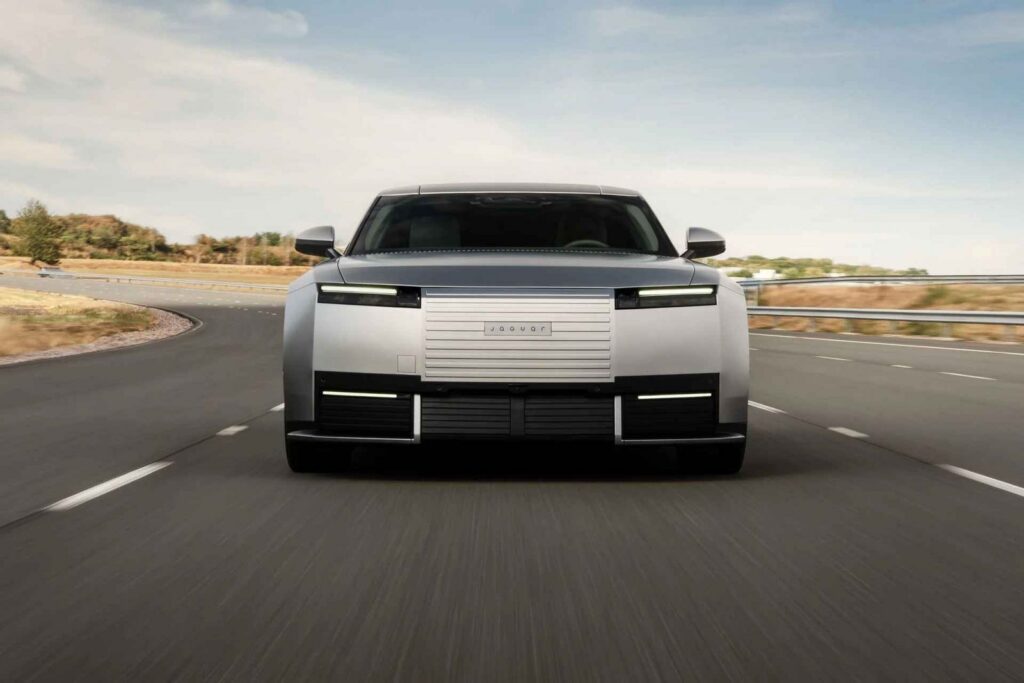
He pointed to the reaction around the Ferrari Luce and Murray Group’s F1c solid fibreglass model, saying that controversy had faded before attention moved to Jaguar’s latest design and Porsche’s Mission S.

“The fuss and misunderstanding of the Ferrari Luce, followed by the fuss and misunderstanding of the Murray Group’s F1c solid fibreglass model, has subsided,” Stevens wrote.
“It has been replaced by the fuss and misunderstanding around the Jaguar Type 01, and now the new Porsche Mission S which may be petrol, hybrid or electric.”
The point isn’t that every new design should be accepted without criticism.
Stevens also questioned some choices on recent concepts and production cars, making clear that his objection is to the speed and tone of the reaction as much as the criticism itself.
Modern car design and the nostalgia trap
Stevens’ most relevant argument is about how carmakers should handle their own past.
For brands with deep design history, the temptation to revive familiar shapes is obvious, especially when online audiences often reward instant recognition.
Stevens suggests that this is the wrong lesson to take from older cars.
“New cars should not be about feeding off the looks of past models but more about learning from their philosophy,” he wrote.
That distinction matters because it separates homage from design thinking.
A historic car can influence proportion, purpose, efficiency or restraint without being reduced to a set of visual callbacks.
It’s a position that carries weight coming from someone associated with the McLaren F1, a car whose reputation rests as much on clarity of purpose as on appearance.
Weight, lightness and the EV question
Stevens also broadened the discussion beyond styling.
He highlighted work from Fiat and Renault, praising some ideas while questioning others, particularly the growing weight of electric vehicles.
His comments also singled out Renault’s apparent move away from lightweight engineering, a theme that sits neatly with his wider view of design as a matter of philosophy rather than surface treatment.
In that sense, the debate around modern car design isn’t only about grilles, lighting signatures or proportions.
It’s also about whether a new car expresses a coherent idea in its construction, efficiency and purpose.
Why Stevens’ view lands now
Recent concept and production car launches have become immediate public referendums, with design reactions often forming before the intent has had time to be understood.
Stevens isn’t asking enthusiasts to stop caring about design.
He’s arguing for a more serious reading of it, one that looks beyond whether a new model resembles something already loved.
For collectors, designers and enthusiasts, that’s the more durable conversation.
Cars that matter rarely succeed by replaying the past exactly. The better ones understand what made it meaningful in the first place.