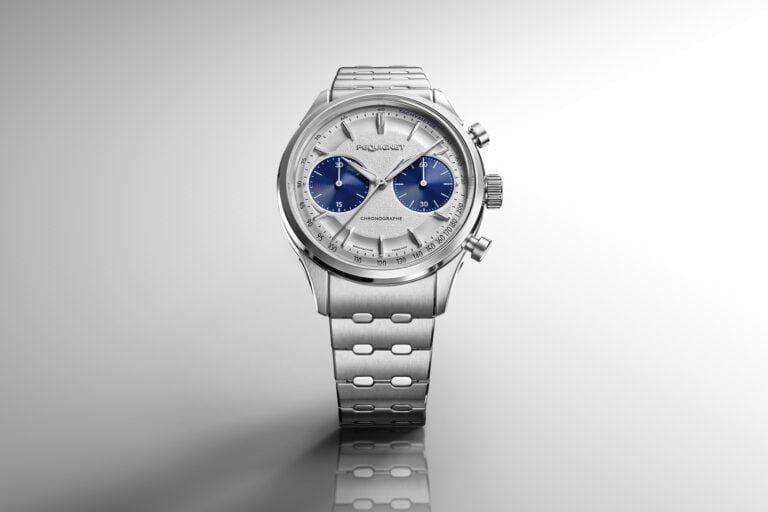
Pequignet’s newest Royale Paris Chronograph takes a niche timing scale and gives it a distinctly French cultural spin.
Instead of a tachymeter or pulsometer aimed at speed or pulse, this chronograph is calibrated for beats per minute, turning the dial into a tempo tool for music lovers.
It’s a playful idea, but the execution stays within Pequignet’s familiar territory of compact proportions, crisp case finishing and a serious mechanical movement.
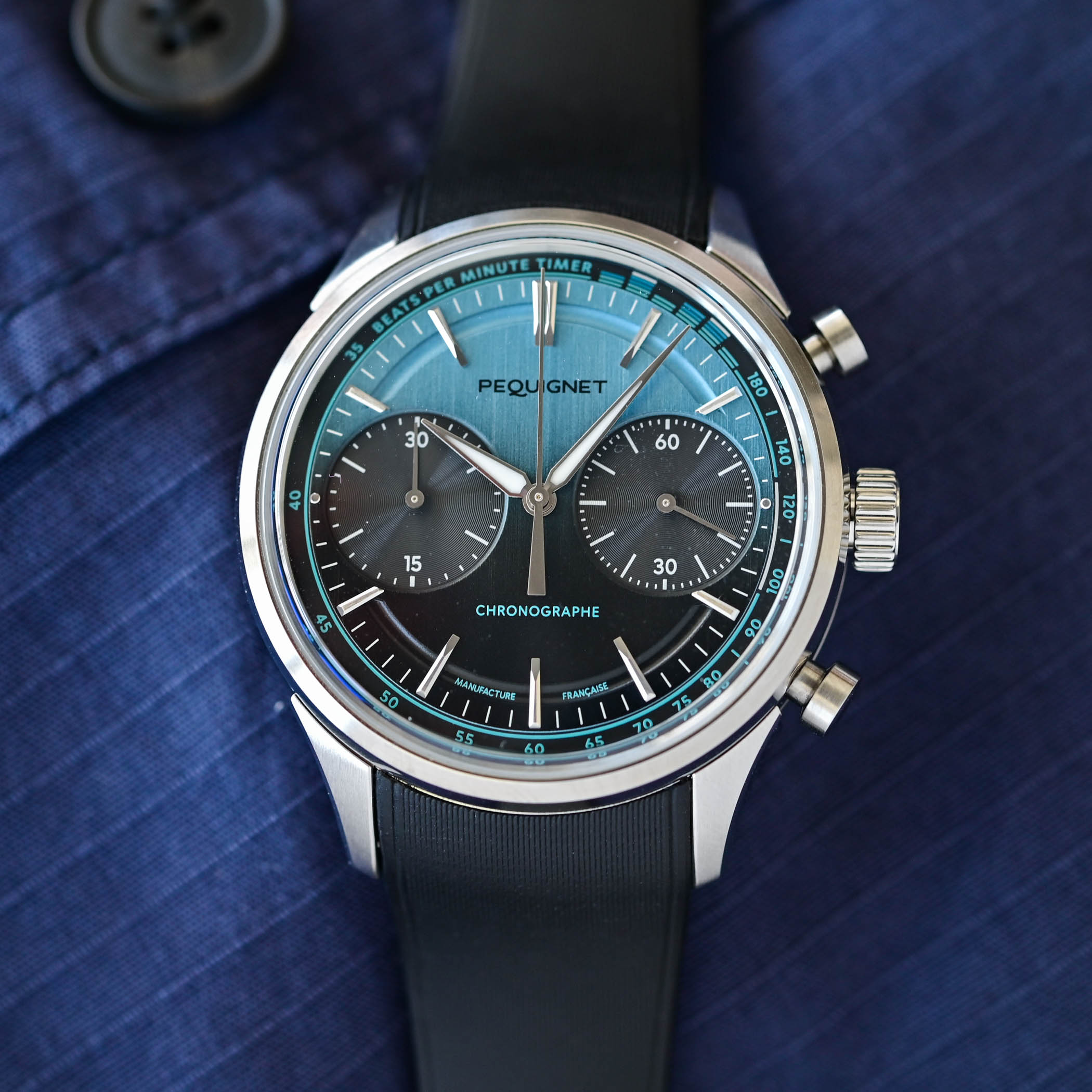
At a glance
- Pequignet has added a Royale Paris Chrono BPM to its permanent collection.
- The watch features a 35 to 180 BPM scale inspired by French Touch electronic music.
- It is priced at EUR 6,950 or USD 7,950 and is available from 15 October 2026.
A chronograph tuned to French Touch
Pequignet was founded in 1973 in Morteau, in the Jura mountains, a region deeply tied to French watchmaking.
The brand later moved toward full manufacture status, introducing its in-house Calibre Royal in 2011, before entering a new chapter in 2021 under Enowe Excellence, a family-owned French investment firm focused on reviving artisanal houses.
The Royale Paris Chronograph arrived earlier this year as Pequignet’s first chronograph, though its name can be a little misleading.
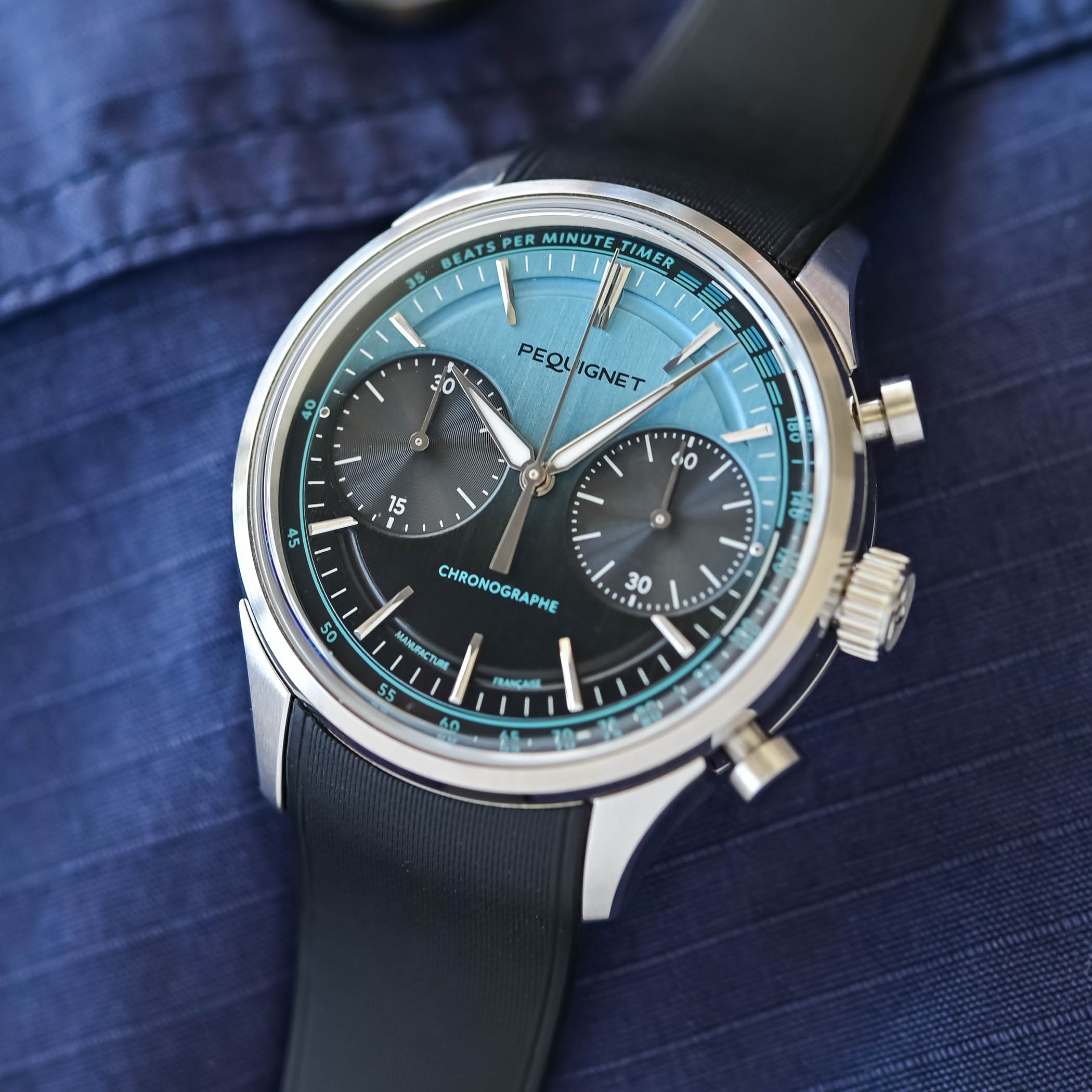
Despite belonging to the Royale line, it uses the Calibre Initial rather than the Calibre Royal, allowing for a slimmer automatic chronograph architecture.
This new BPM edition gives that platform a more expressive personality by connecting it to French Touch, the 1990s electronic movement associated with acts such as Daft Punk.
The scale works in the spirit of a medical pulsometer, but swaps heartbeats for drum kicks.
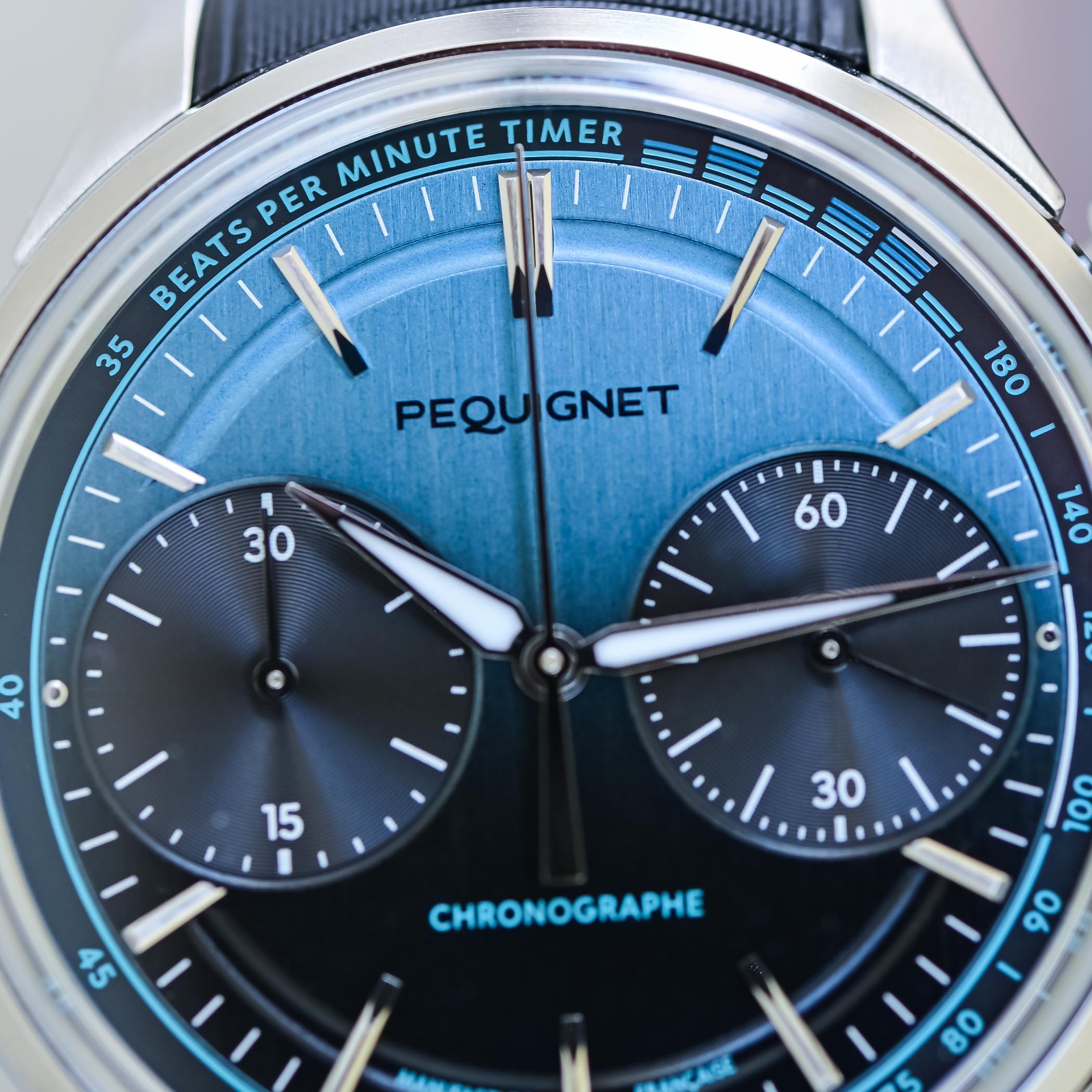
Start the chronograph, count 30 bass drum beats, stop it, and the central seconds hand indicates the track’s tempo on the outer scale.
The range runs from 35 to 180 BPM, broad enough to take in slower grooves, French Touch house rhythms around 110 to 140 BPM, and faster electronic music beyond that.
Electric blue, black vinyl cues and a tempo scale
The dial is the part that makes the concept land.
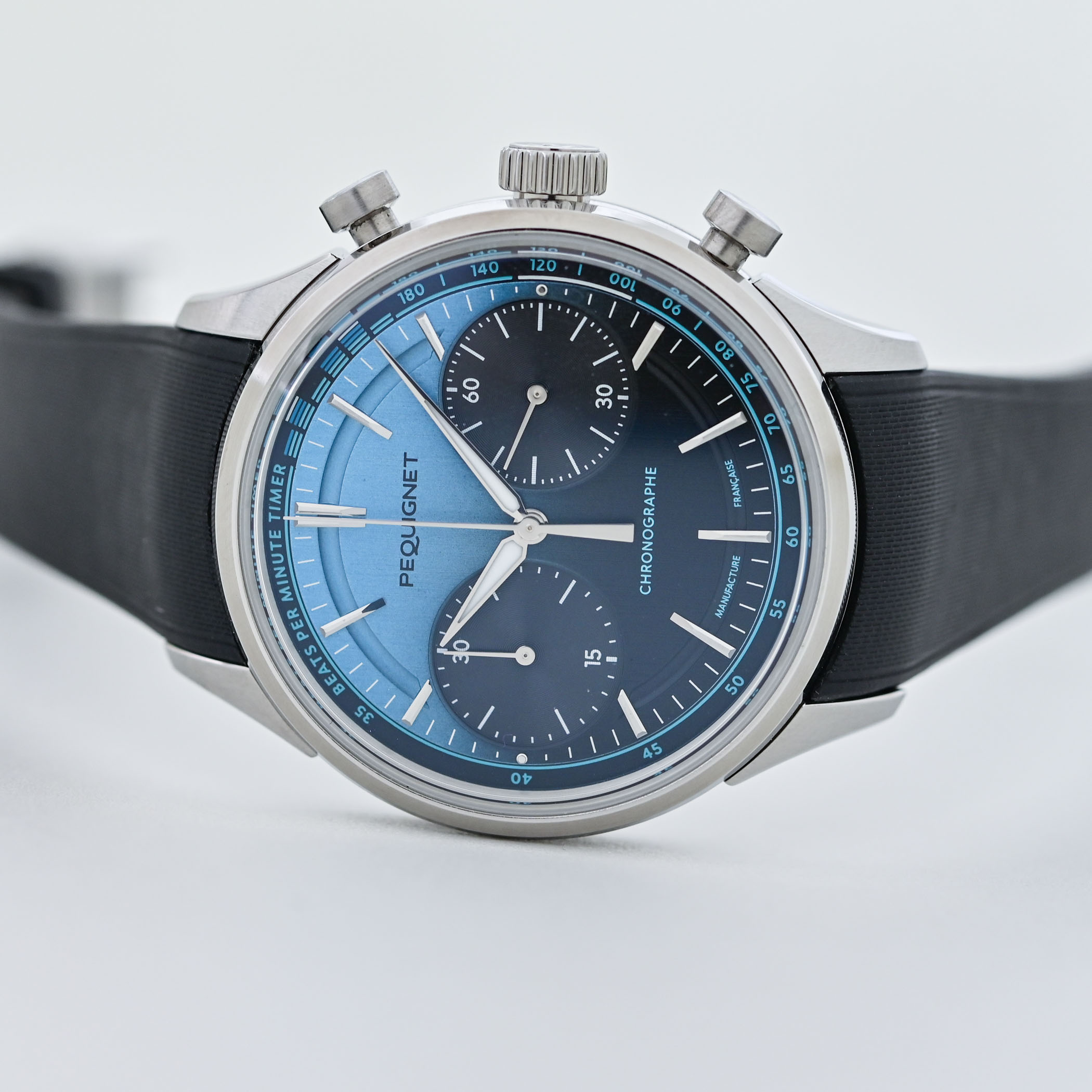
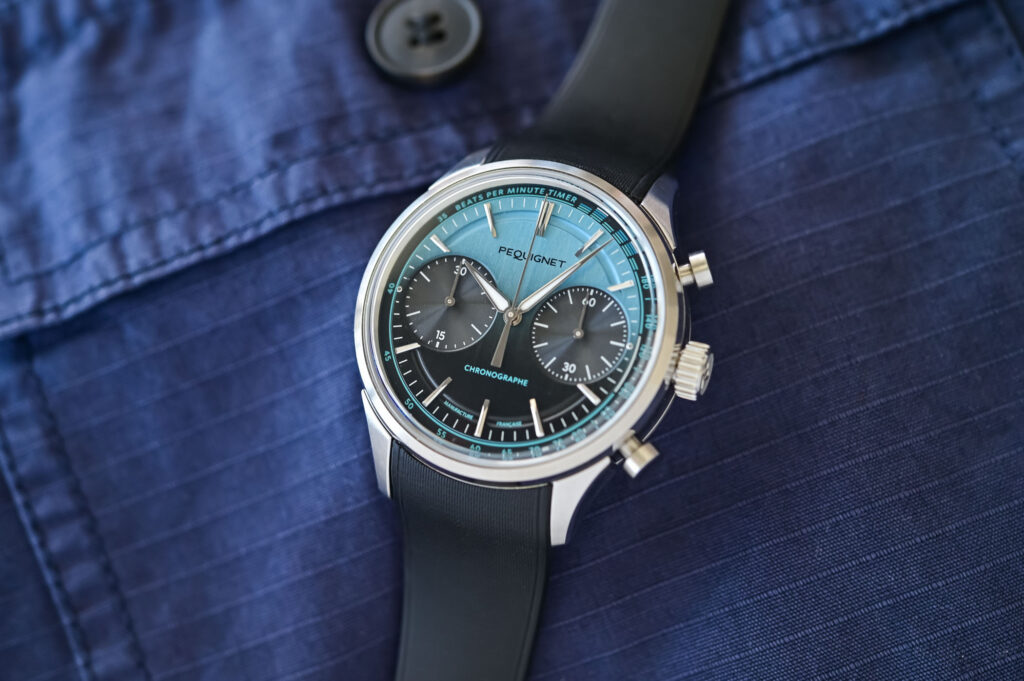
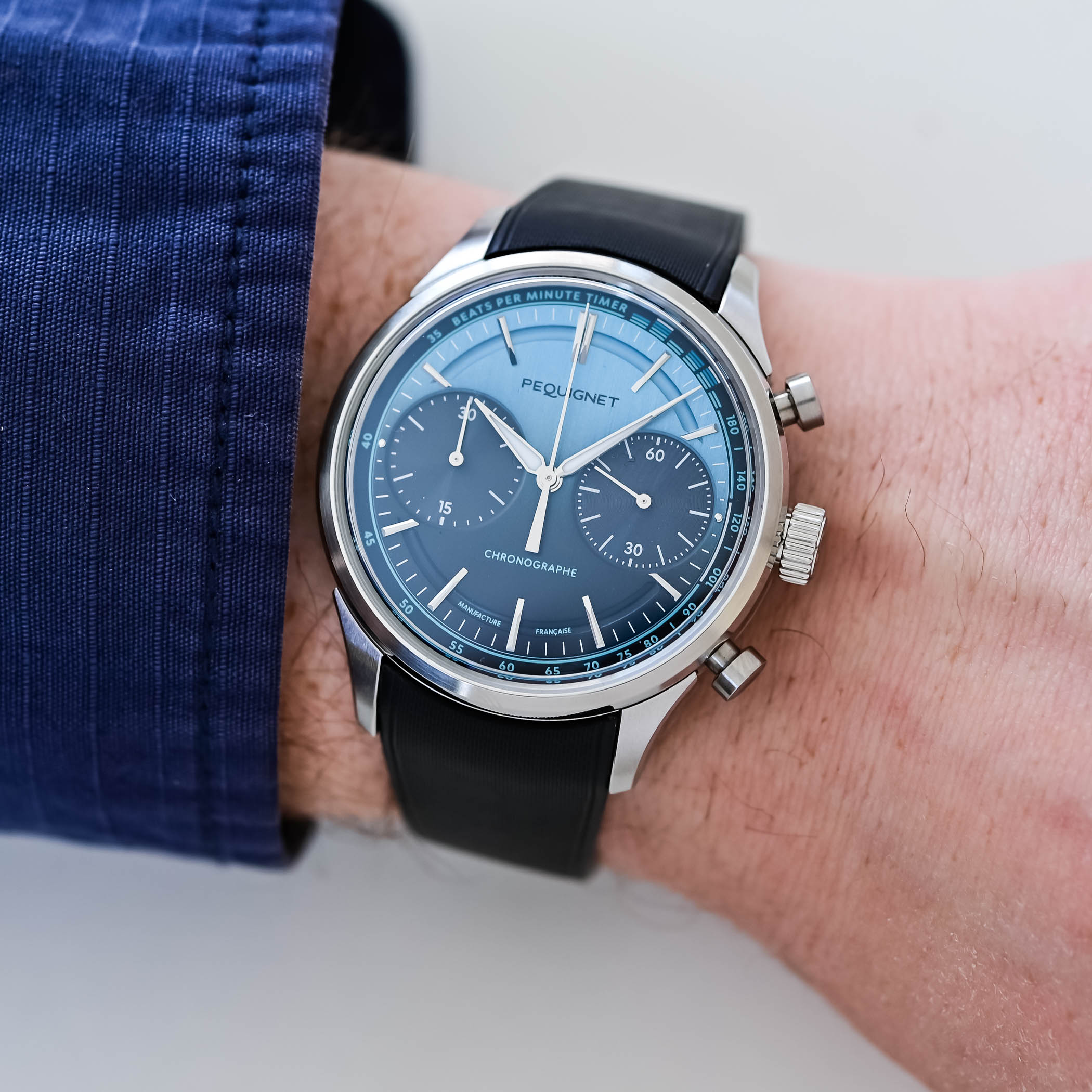
A horizontal gradient moves from electric blue across the upper half to black at the lower half, giving the watch a nightclub glow without turning it into a costume piece.
The BPM scale sits at the periphery on a black track with turquoise markings, while graphic sound bars between noon and 2 o’clock recall an audio equaliser.
Pequignet keeps the central dial architecture from the earlier chronograph, including the smooth circular channel between the timing scale and the centre.
Faceted hour markers bridge that recessed section, adding depth and keeping the watch legible despite the more experimental layout.
The two snailed black sub-dials also serve the theme neatly, with textures that nod to vinyl records.
Running seconds are placed at 3 o’clock, while the 30-minute chronograph counter sits at 9 o’clock.
The polished hour and minute hands include Super-LumiNova inserts, and the whole dial is covered by a domed glassbox-style sapphire crystal.
A compact steel case with sharp French finishing
The stainless steel case measures 39.5mm across and 12.7mm thick, which places it in a practical zone for a mechanical chronograph.
Water resistance is rated to 50 metres, enough for daily wear rather than dedicated aquatic use.

Pequignet gives the case a sportier edge through recessed flanks and piston-style pushers.
The finishing alternates satin brushing with polished bevels, making the case architecture feel more deliberate than the playful dial might first suggest.
One detail worth noting is the construction of the lugs, which are individually produced and then attached to the case.

The watch is delivered on a black Cordura strap with a steel ardillon buckle, reinforcing the more casual, music-minded tone of this edition.
Calibre Initial with a Dubois-Depraz chronograph module
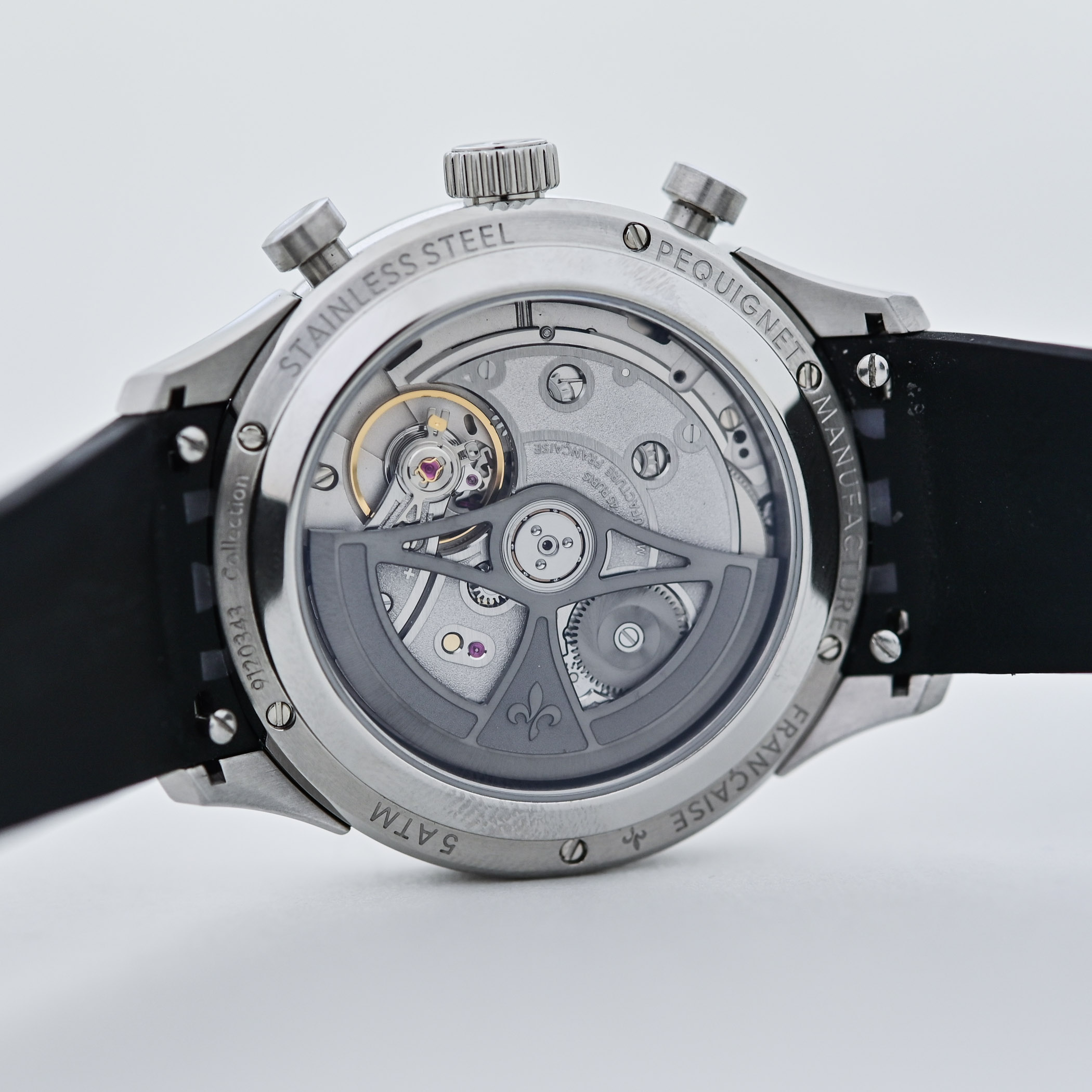
Inside is Pequignet’s Calibre Initial, a slim automatic base movement measuring 4.2mm thick.
For chronograph duty, it is fitted with a cam-actuated module developed by Dubois-Depraz.
The movement runs at 28,800 vibrations per hour and offers a 65-hour power reserve, a useful figure for anyone rotating watches across a weekend.
It displays hours, minutes, small seconds and chronograph functions, keeping the specification focused around the central musical idea rather than adding unnecessary complications.
Details & Specifications
| Brand | Pequignet |
|---|---|
| Model | Royale Paris Chrono BPM |
| Reference | 9120343 |
| Case size | 39.5mm diameter, 12.7mm thickness |
| Case material | 316L stainless steel, brushed with polished bevels |
| Crystal | Domed anti-reflective sapphire crystal |
| Caseback | Screwed caseback with sapphire opening |
| Water resistance | 50 metres |
| Dial | Electric blue to black gradient with black snailed sub-dials |
| Scale | 35 to 180 BPM peripheral tempo scale |
| Movement | Pequignet Calibre Initial automatic with Dubois-Depraz cam-actuated chronograph module |
| Frequency | 28,800 vibrations per hour |
| Power reserve | 65 hours |
| Functions | Hours, minutes, small seconds, 30-minute chronograph |
| Strap | Black Cordura with steel ardillon buckle |
| Availability | Permanent collection, available from 15 October 2026 |
| Price | EUR 6,950 or USD 7,950 |
The Royale Paris Chrono BPM won’t be for every chronograph buyer, and that’s part of its charm.
For collectors who enjoy unusual scales, French watchmaking and the overlap between mechanical timing and music culture, it gives Pequignet’s young chronograph family a distinctive rhythm of its own.