Otsuka Lotec sits in that rare corner of independent watchmaking where scarcity is only part of the story.
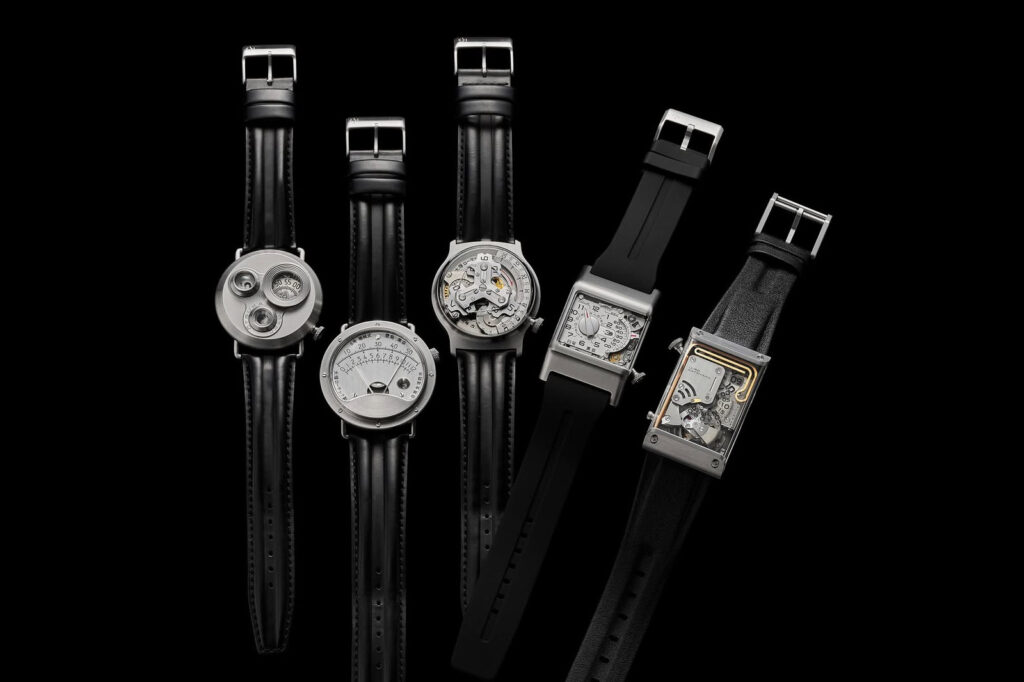
The Tokyo microbrand, founded by industrial designer Jiro Katayama, has built its following on watches that look less like conventional timepieces and more like compact mechanical instruments pulled from a dashboard or workshop bench.
For collectors tired of familiar dress-watch codes and vintage cues, its appeal is immediate.
At a glance
- Otsuka Lotec is a Tokyo independent watch brand founded by Jiro Katayama, producing fewer than 200 watches a year.
- The No. 8 combines a machined 316L stainless steel case with jumping hours, retrograde minutes and a Miyota automatic movement fitted with an in-house module.
- The No. 8 is priced at ¥990,000, approximately £4,650, and remains difficult to obtain due to limited annual production.
Jiro Katayama’s industrial route into watchmaking
Katayama didn’t arrive at watches through the usual collector-to-founder path.
After design school, he worked in the automotive world before moving into freelance industrial design across cars, helmets and household products.
That background explains why Otsuka Lotec pieces feel closer to engineered objects than jewellery.
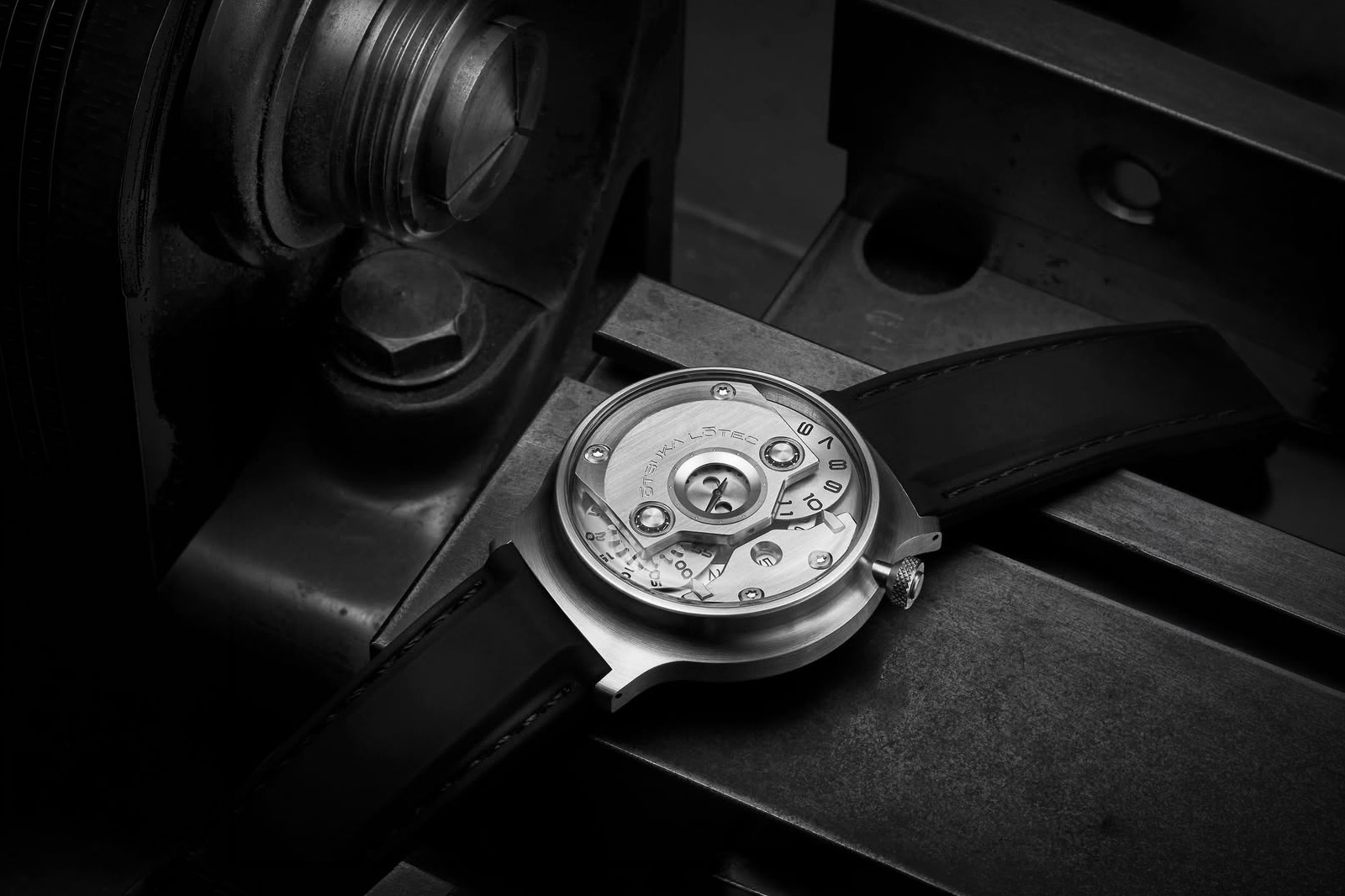
The brand’s story began when Katayama bought a small lathe through an online auction in the early 2000s.
It wasn’t suited to making car parts, but it opened the door to something smaller and more personal.
By 2008, the idea of building a watch case had taken hold, and in 2012 the brand was established in Tokyo’s Otsuka neighbourhood.
The name combines Otsuka with “Lotec”, a nod to low-tech thinking that still defines the watches.
From the No. 5 to a cult Japanese microbrand
The early No. 5 set the tone for Otsuka Lotec’s visual language.
Its regulator-style display used discs for the hours and minutes, a central seconds hand, a date window at three o’clock and a crown placed at two o’clock.
The watch had visible screws, brushed metal surfaces and a deliberately machined character that made it feel handmade in the most literal sense.
That honesty became part of the attraction.
Katayama was reportedly making around 15 watches a year in the early days, which means those pieces now occupy a near-mythic space among collectors of Japanese independents.
The brand entered a more structured phase in 2022 when it came under the Precision Watch Tokyo umbrella, the company founded by Hajime Asaoka of Kurono Tokyo.
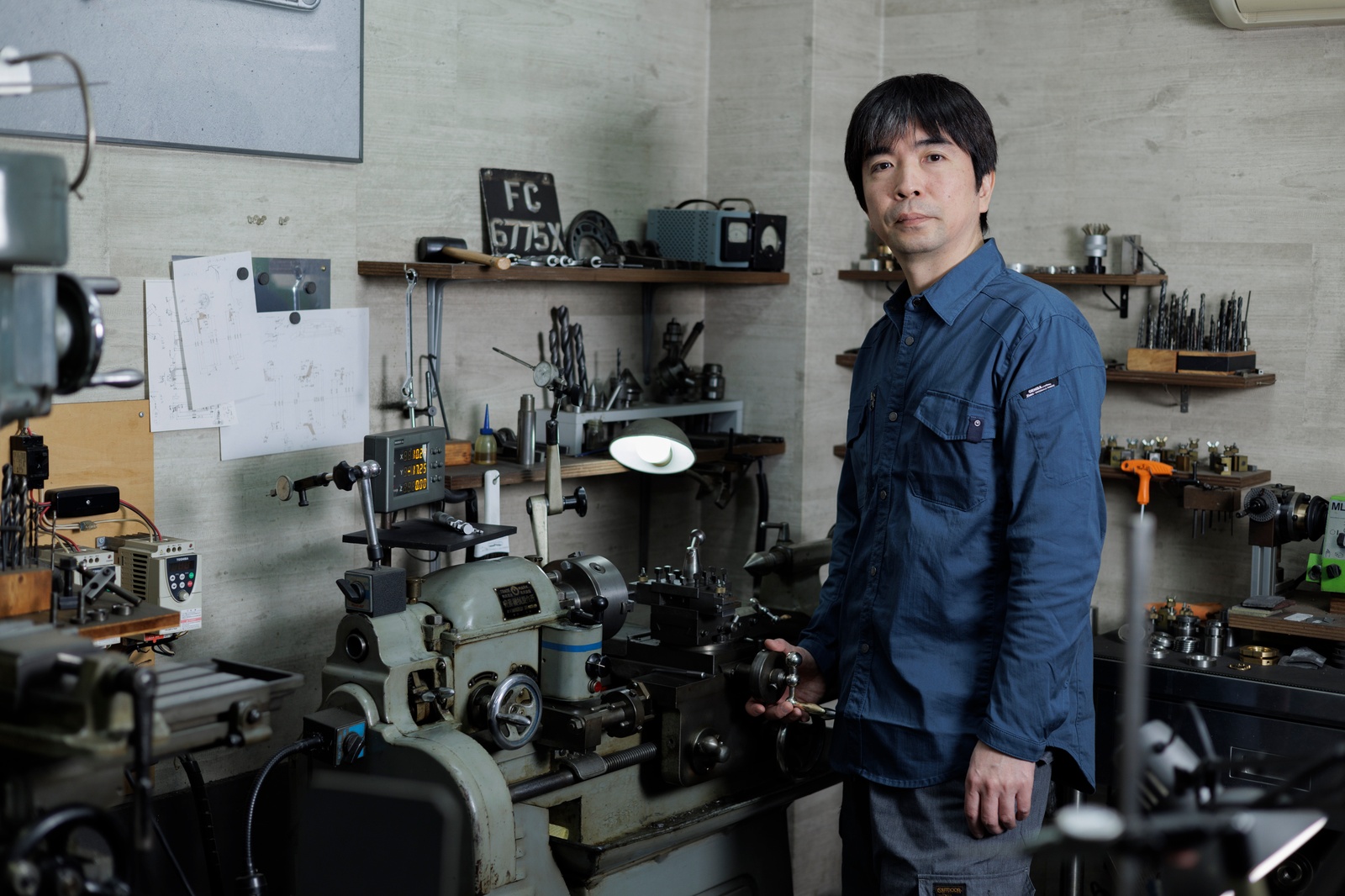
Katayama still develops prototypes in his home workshop, while production now takes place in Bunkyo-ku, close to the brand’s Tokyo roots.
The shift has allowed Otsuka Lotec to expand production, though not in any mass-market sense.

With fewer than 200 watches made annually, demand still comfortably exceeds availability.
The No. 8 puts the dashboard on the wrist
The No. 8 is the clearest expression of Katayama’s automotive instincts.
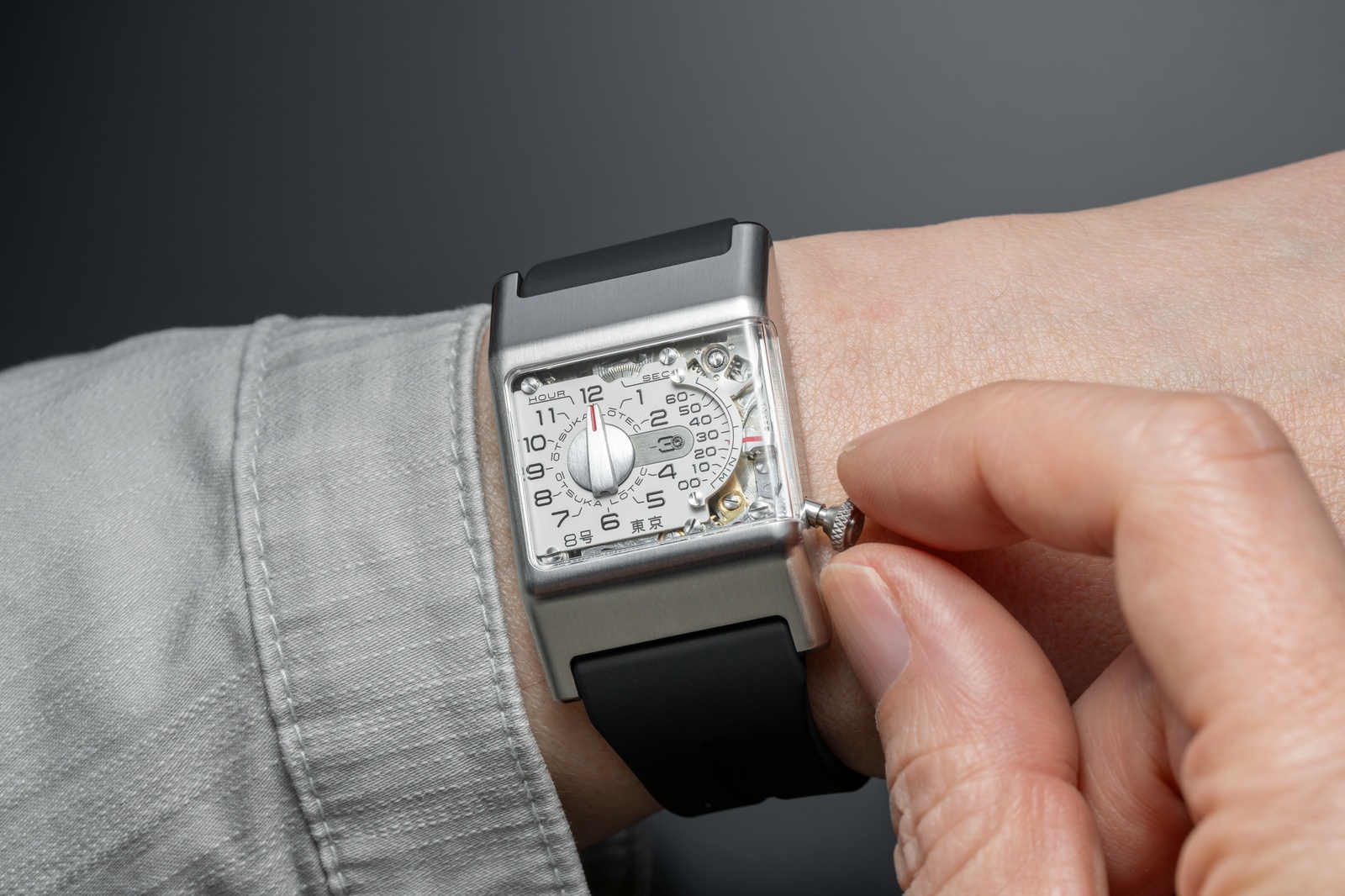
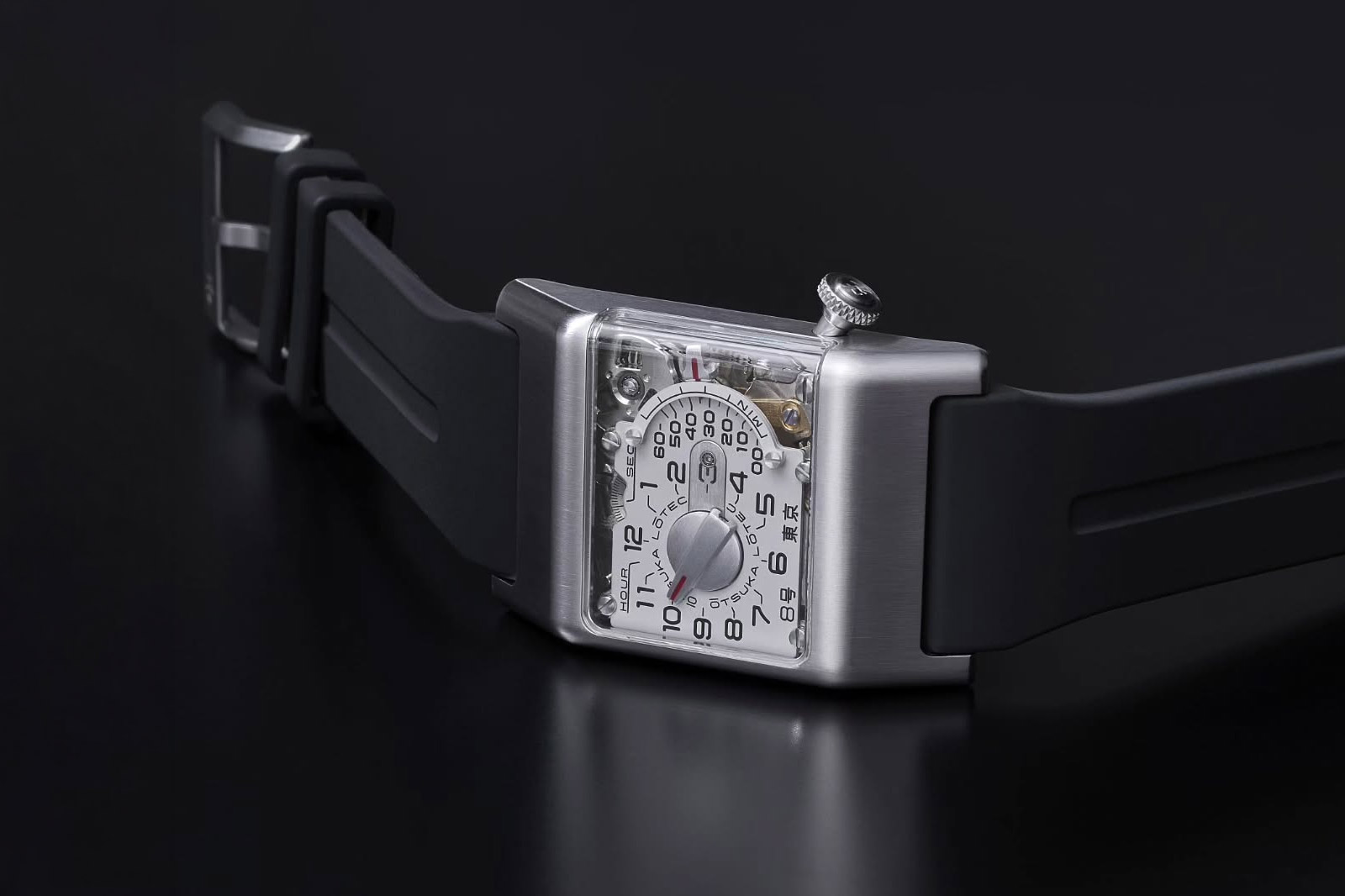
Its stainless steel case measures 31mm across and 48mm in length, with a thickness of about 11mm, giving it a stretched, instrument-like presence rather than the footprint of a typical round watch.

The asymmetrical crystal curves around the right-hand side, reinforcing the impression that the display has been built around function rather than tradition.
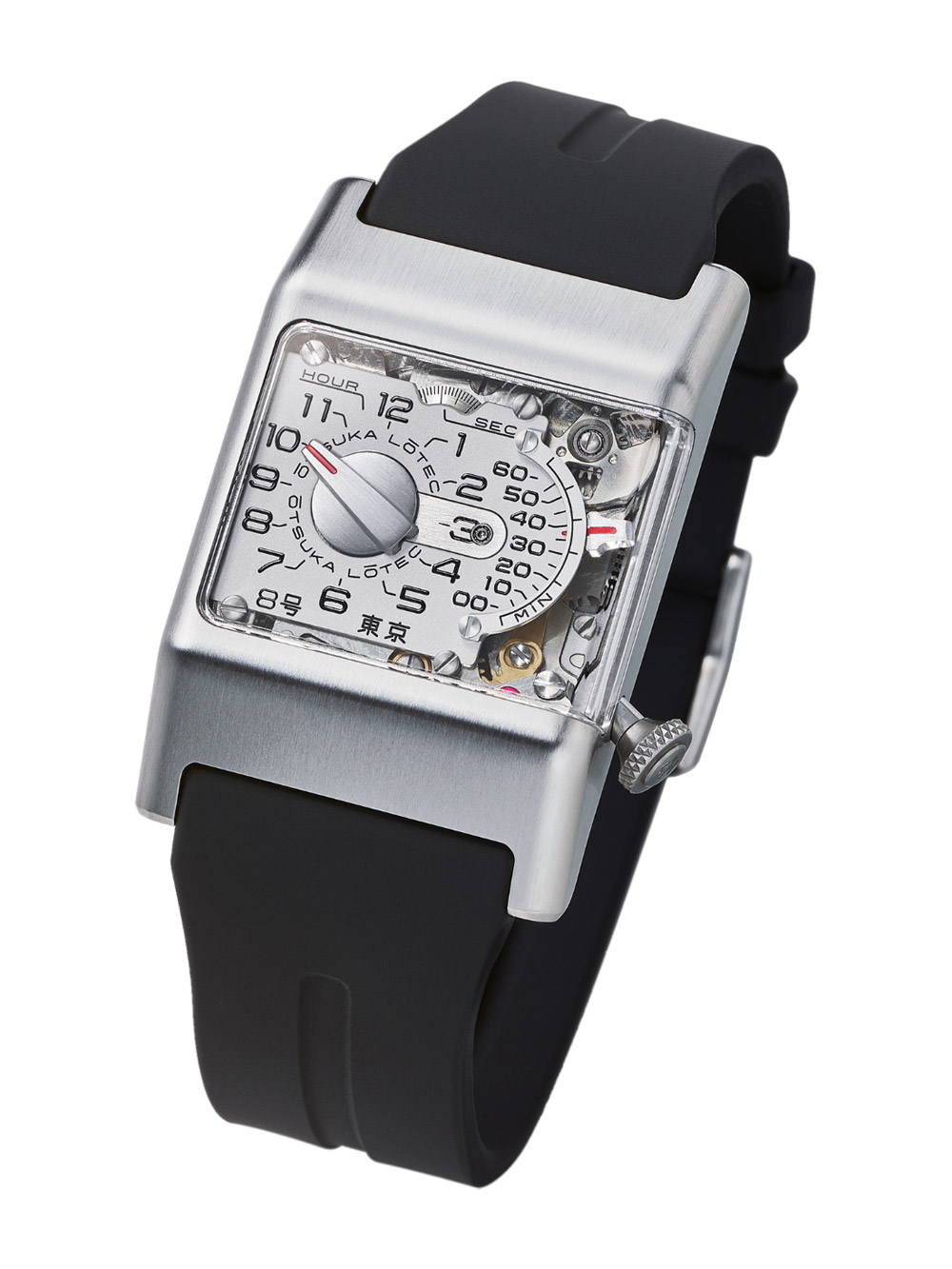
The dial is arranged like a control panel.
Retrograde minutes are shown on a rev counter-style scale at three o’clock, while the hours are indicated by a switch-like hand.
Seconds are displayed more discreetly on a wheel at 12 o’clock.
An aluminium dial plate sits above an exposed mechanism, creating the sense of a device whose workings are intentionally left visible.
It’s not minimalist, but it is highly disciplined.
Every visual choice appears tied to Katayama’s fascination with gauges, switches and mechanical interfaces.
A Miyota movement with Otsuka Lotec’s own module
Inside the No. 8 is a Miyota calibre 90S5 automatic movement paired with an in-house developed module.
That module controls the watch’s more unusual time display, including the retrograde minutes and jumping hours.
The 32-hour power reserve is modest by current standards, a consequence of the additional energy demanded by the display.
Yet Otsuka Lotec isn’t selling itself as a chronometric arms race.
The appeal is in the architecture of the idea, the tactile industrial finish and the feeling that the watch could only have come from one designer’s point of view.
Details & Specifications
| Brand | Otsuka Lotec |
|---|---|
| Model | No. 8 |
| Case size | 31mm width x 48mm length x approximately 11mm thickness |
| Case material | 316L stainless steel |
| Dial | Aluminium dial with open mechanical display elements |
| Movement | Miyota calibre 90S5 automatic with in-house module |
| Frequency | 28,800 vph, 4 Hz |
| Functions | Jumping hours, retrograde minutes, seconds |
| Power reserve | 32 hours |
| Water resistance | 30 metres, 3 bar |
| Strap | Rubber strap |
| Price | ¥990,000, approximately £4,650 |
| Annual production | Fewer than 200 watches across the brand |
Otsuka Lotec’s strength is that it doesn’t try to polish away its eccentricity.
The No. 8 is not an all-purpose daily watch for someone who wants their wristwear to disappear quietly under a cuff.
It’s for the collector who sees beauty in a gauge cluster, a machined edge and a mechanical solution that feels slightly improbable until it starts to make perfect sense.