Omega’s strongest move at the 2026 Met Gala was not simply putting new watches on famous wrists, but using the Constellation’s past to sharpen the meaning of its present.
Against a “Fashion is Art” theme, the brand leaned into the idea that an archive can carry as much cultural force as a new release.
The Constellation Manhattan Returns to the Carpet
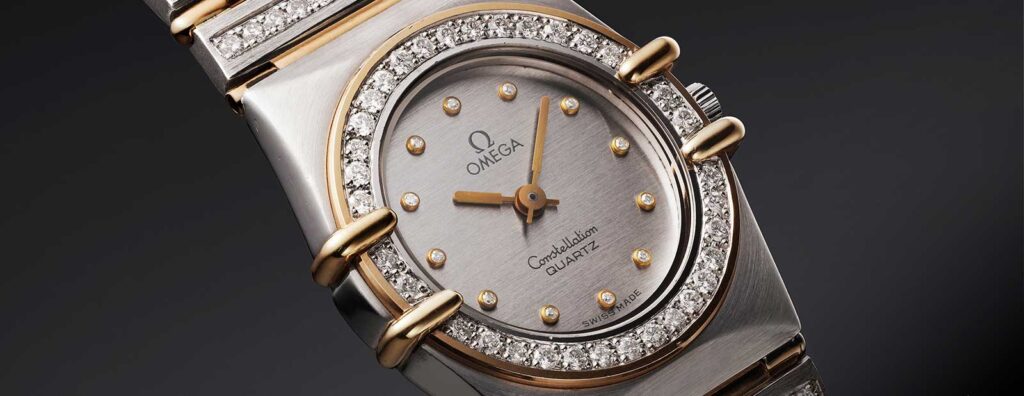
The key reference point was 1982, when the Constellation took on the Manhattan form with an integrated bracelet, distinctive case architecture and the now-familiar claws designed by Carol Didisheim.
That era can still divide collectors, partly because it sits close to the quartz-crisis years, but the Met Gala gave the design a useful new frame: not as a period curiosity, but as a foundation for Omega’s current Constellation language.
Nicole Kidman wore a 1982 Constellation Manhattan jewelry model in white and yellow gold, set with white diamonds across the bezel and bracelet.
Colman Domingo chose a different expression of the same line, wearing a Manhattan Grand in steel and yellow gold with a black dial that emphasized the flat, sculptural quality of the integrated case and bracelet.
Mondo Duplantis kept the idea tonal, with a vintage Constellation from the same family featuring a gold-hued dial that visually linked the face of the watch to the bracelet.
Modern Constellations With the Archive in View
Once the vintage pieces had set the tone, the modern watches made more sense on the carpet.
Desiré Inglander wore a contemporary downsized Constellation in steel with a mother-of-pearl dial and diamond bezel, carrying the 1982 claw motif into a cleaner modern format.
Tom Francis and Dónal Finn brought the new Constellation Observatory into the evening, with Francis wearing the 39.4mm Canopus Gold model on alligator and Finn choosing the O-MEGASTEEL version with a deep green dial.
Connor Storrie went warmer and more assertive with the Constellation Observatory in Moonshine Gold on a matching Moonshine Gold bracelet.
Why the Observatory Models Matter
The Constellation Observatory collection is still fresh, and Omega had every reason to focus only on the launch pieces.
The watches revive the pie-pan dial, keep the display deliberately clean with two hands, and meet Master Chronometer standards, giving the collection a technical seriousness beneath its dress-watch restraint.
That restraint was important on a red carpet where many watches compete through size, gemstones and color.
Omega’s choices were smaller in tone: steel, gold, integrated lines, refined dials and enough historical context to make the watches read as part of a longer design conversation.
A Red-Carpet Strategy Built on Continuity
The Met Gala is not a boutique showcase, and watches can disappear quickly if they are treated as accessories dropped onto an outfit at the last moment.
Omega’s strongest placements worked because the watches appeared connected to the clothes, the wearer and the broader theme of fashion as a living archive.
For collectors, the night also made a useful argument for the Constellation beyond its better-known Speedmaster and Seamaster siblings.
The Manhattan models showed the confidence of Omega’s 1980s design language, while the Observatory pieces showed how that architecture can be translated into a more contemporary, technically disciplined watch.
Rather than letting novelty do all the work, Omega allowed 44 years of Constellation evolution to sit in plain sight.