Old Pulteney is entering its third century with the kind of release that only time can make possible.
For its 200th anniversary, the Wick distillery has unveiled two rare single malt Scotch whiskies, including the oldest expression it has ever bottled.
The pair puts the focus squarely on long maturation, coastal influence and the maritime identity that has defined Old Pulteney since 1826.
At a glance
- Old Pulteney has released 50 Years Old and 30 Years Old single malts for its 200th anniversary.
- The 50 Years Old is the distillery’s oldest whisky to date, drawn from four hogsheads and limited to 200 bottles globally.
- The 30 Years Old is limited to 1,000 bottles worldwide and reflects three decades of maturation on Scotland’s far northern coast.
A half-century expression from Wick
Old Pulteney 50 Years Old is the headline release, and its rarity is not just a matter of age.
The whisky brings together four hogsheads, each matured for five decades in the climate of Wick, where the North Sea and Highland weather have long shaped the distillery’s house style.
It has been predominantly matured in American oak, with a smaller influence of European oak adding depth and richness.
Master of Whisky Creation Sarah Burgess hand-selected the casks, which together have yielded just 200 bottles worldwide.
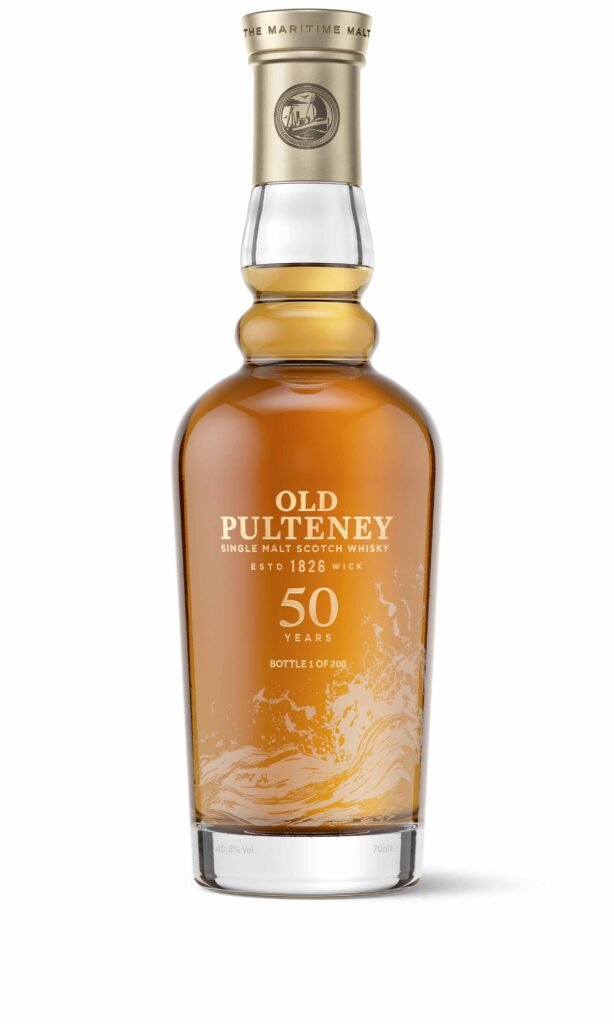
At 40.8% ABV, the 50 Years Old is presented as a 70cl bottling and stands as a singular milestone for a distillery closely associated with coastal single malt.
The tasting profile leans into maturity without losing its maritime thread, opening with chocolate, dried fruits, spiced cedar, creamy vanilla and floral notes, followed by candied orange peel, citrus oil, oak and a long finish touched by tropical fruit and sea-breeze finesse.
The 30 Years Old brings a sharper coastal character
The second anniversary release, Old Pulteney 30 Years Old, offers a different view of the same place.
It spent three decades developing in cask, with maturation in American oak and further refinement in European oak.
Distillery Manager Malcolm Waring personally hand-filled the casks used for this whisky, adding a direct human link to its long development.
Bottled at 50.4% ABV and limited to 1,000 bottles globally, the 30 Years Old carries a burnished copper colour and a flavour profile built around sugared almonds, sweet oak, pear, green apple, toffee and citrus.
On the palate, it moves through bright citrus, crisp pear, salted caramel, baked apple and warming spice, finishing with a measured balance of sweetness, salt and polished oak.
Decanters that lean into the maritime story
Both anniversary whiskies are packaged with Old Pulteney’s coastal identity at the centre of the design.
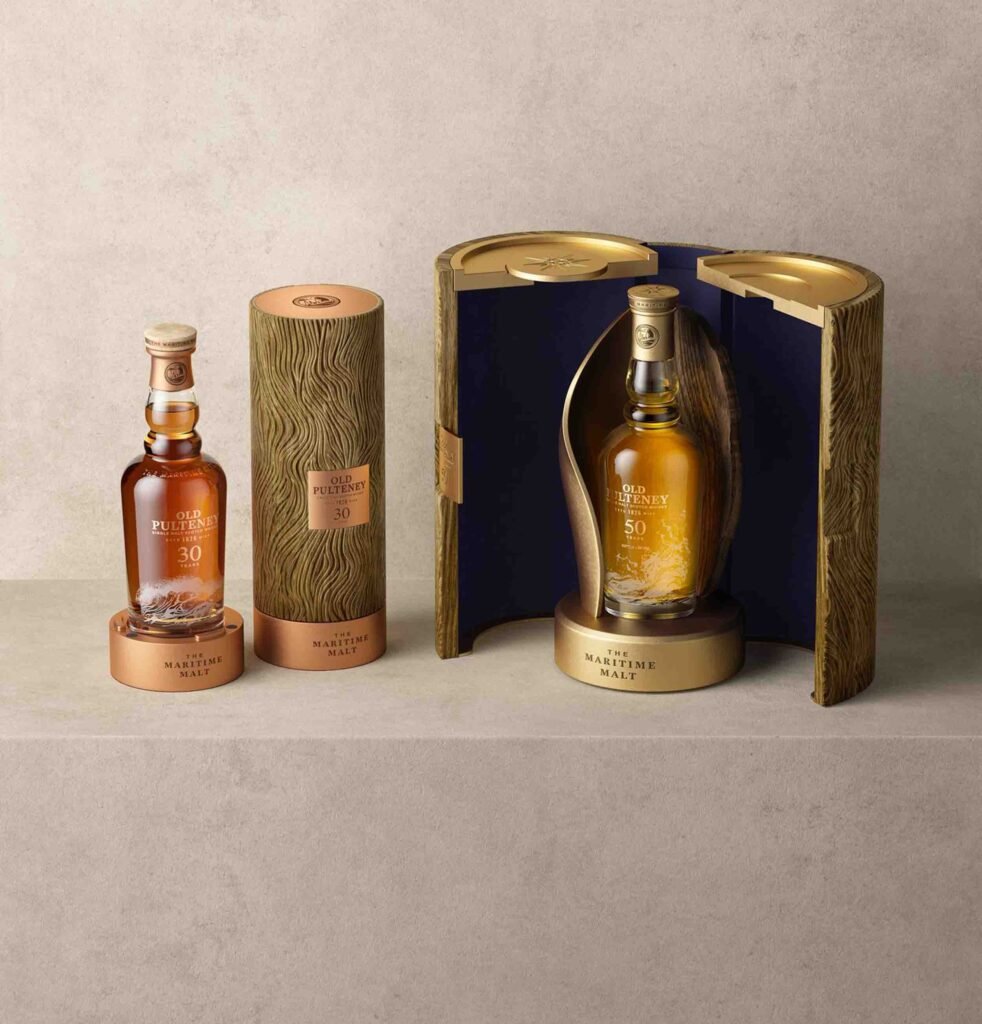
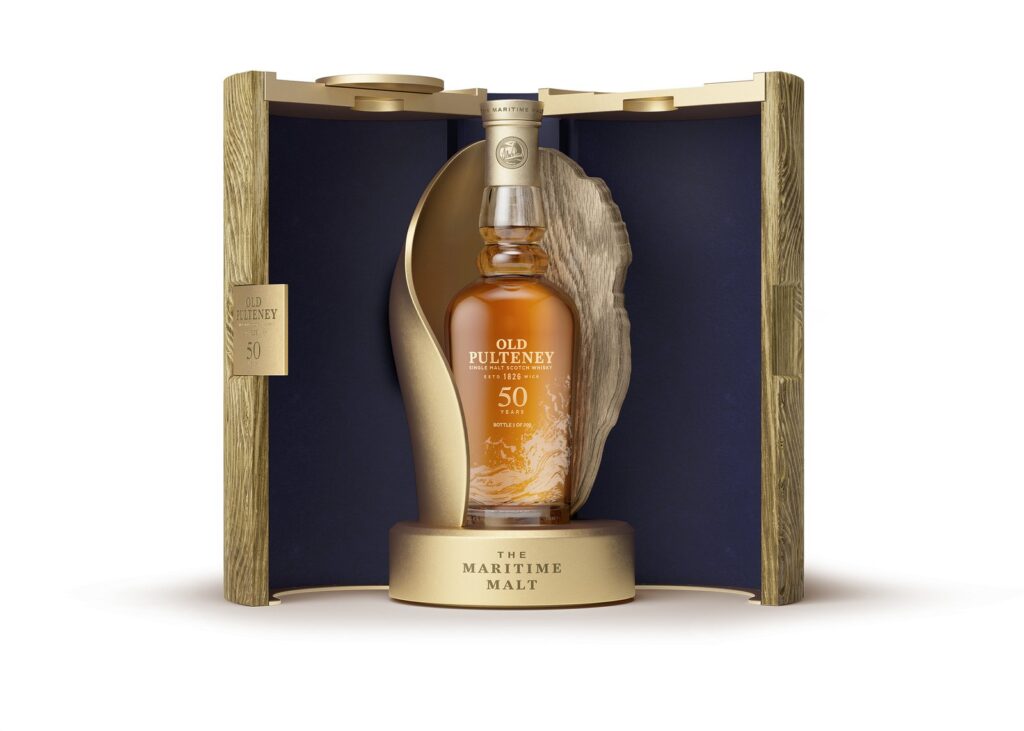
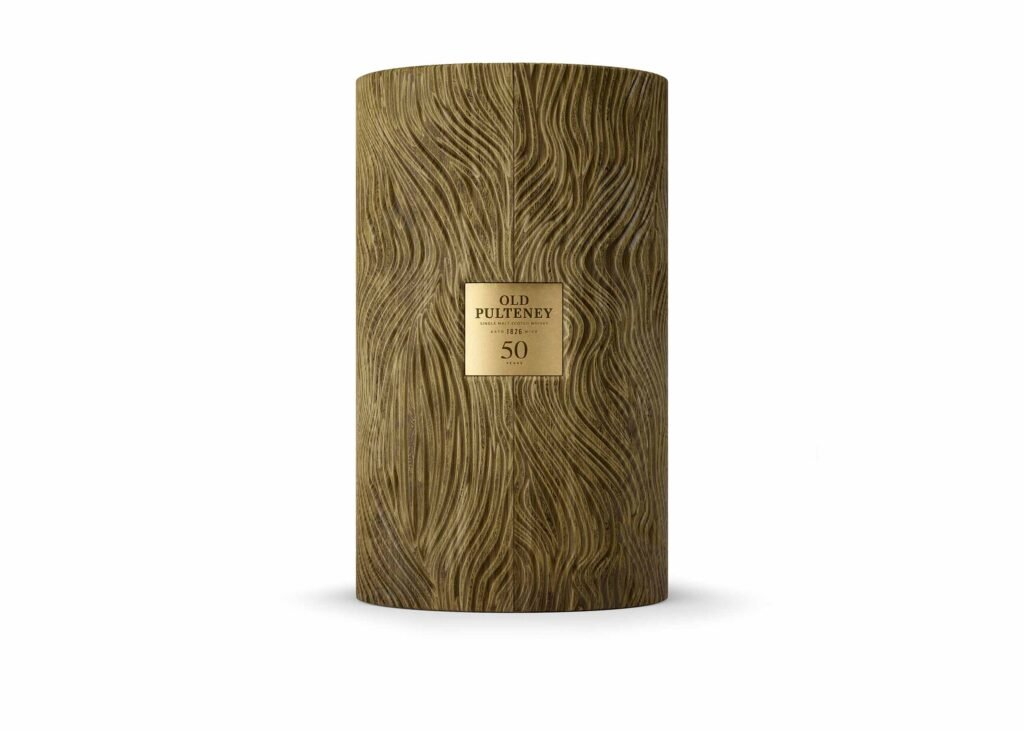
The 50 Years Old sits in a hand-blown lead crystal decanter, with sand-etched waves around the base and a handcrafted oak outer case designed to evoke driftwood.
A curved display cradles the decanter on a gold base, giving the presentation the feel of a collector’s object rather than a conventional bottle release.
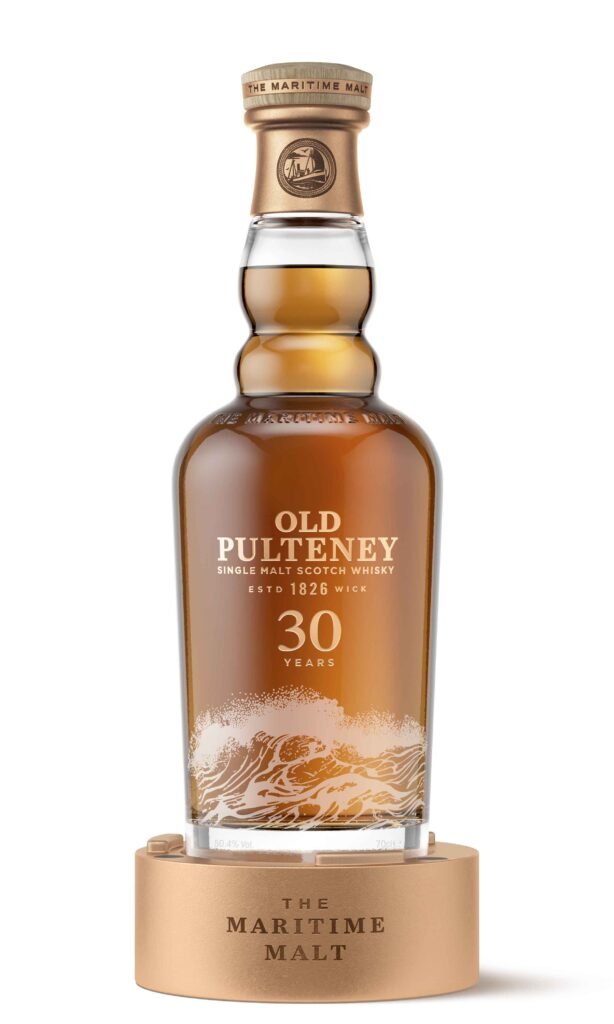
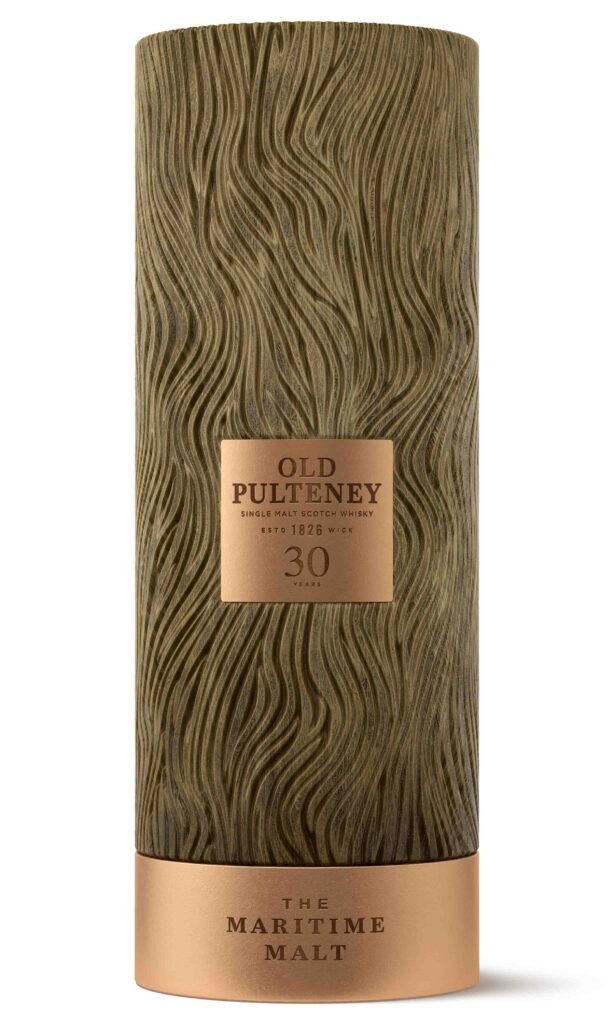
The 30 Years Old is housed in a clear crystal decanter with rose-gold detailing and a bottle neck that nods to Old Pulteney’s distinctive flat-top still.
Its outer casing also draws from weathered driftwood, lifting away to reveal the whisky inside.
Details & Specifications
| Brand | Old Pulteney |
|---|---|
| Anniversary | 200th anniversary of the Wick distillery |
| Release | Old Pulteney 50 Years Old and Old Pulteney 30 Years Old |
| Whisky type | Single malt Scotch whisky |
| Old Pulteney 50 Years Old ABV | 40.8% |
| Old Pulteney 50 Years Old maturation | Predominantly American oak with a subtle European oak influence |
| Old Pulteney 50 Years Old production | 200 bottles worldwide |
| Old Pulteney 30 Years Old ABV | 50.4% |
| Old Pulteney 30 Years Old maturation | Matured in American oak and refined in European oak |
| Old Pulteney 30 Years Old production | 1,000 bottles worldwide |
| Bottle size | 70cl |
For collectors, the appeal is clear, especially with the 50 Years Old joining Old Pulteney’s history as its oldest release.
For drinkers, the more interesting story may be how both whiskies frame age not as a number alone, but as a record of wood, weather and a distillery that has spent two centuries looking out to sea.