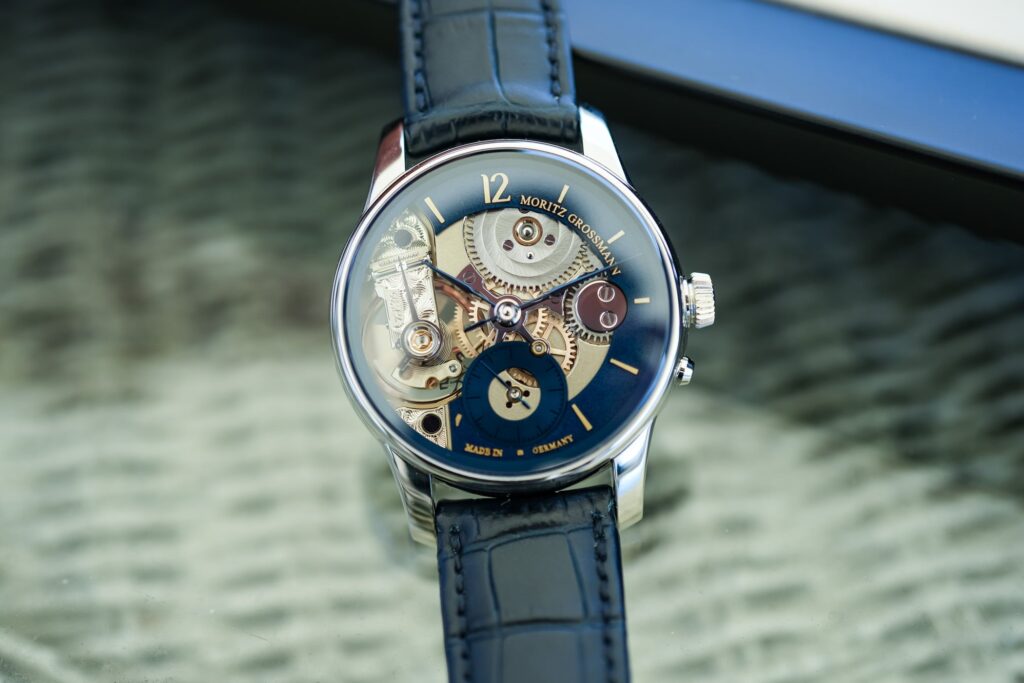
Moritz Grossmann has introduced two platinum Backpage Tremblage editions in blue and violet, created for the 200th anniversary of the Glashütte manufacture’s namesake founder.
Each version is limited to 12 pieces and puts the brand’s inverted manual-winding calibre 107.0 on open display, framed by tremblage-engraved German silver dial elements.
A Backpage That Brings the Movement Forward
The Backpage has always been one of Moritz Grossmann’s clearest statements of intent, because it places the kind of movement architecture normally seen through a caseback directly on the dial side.
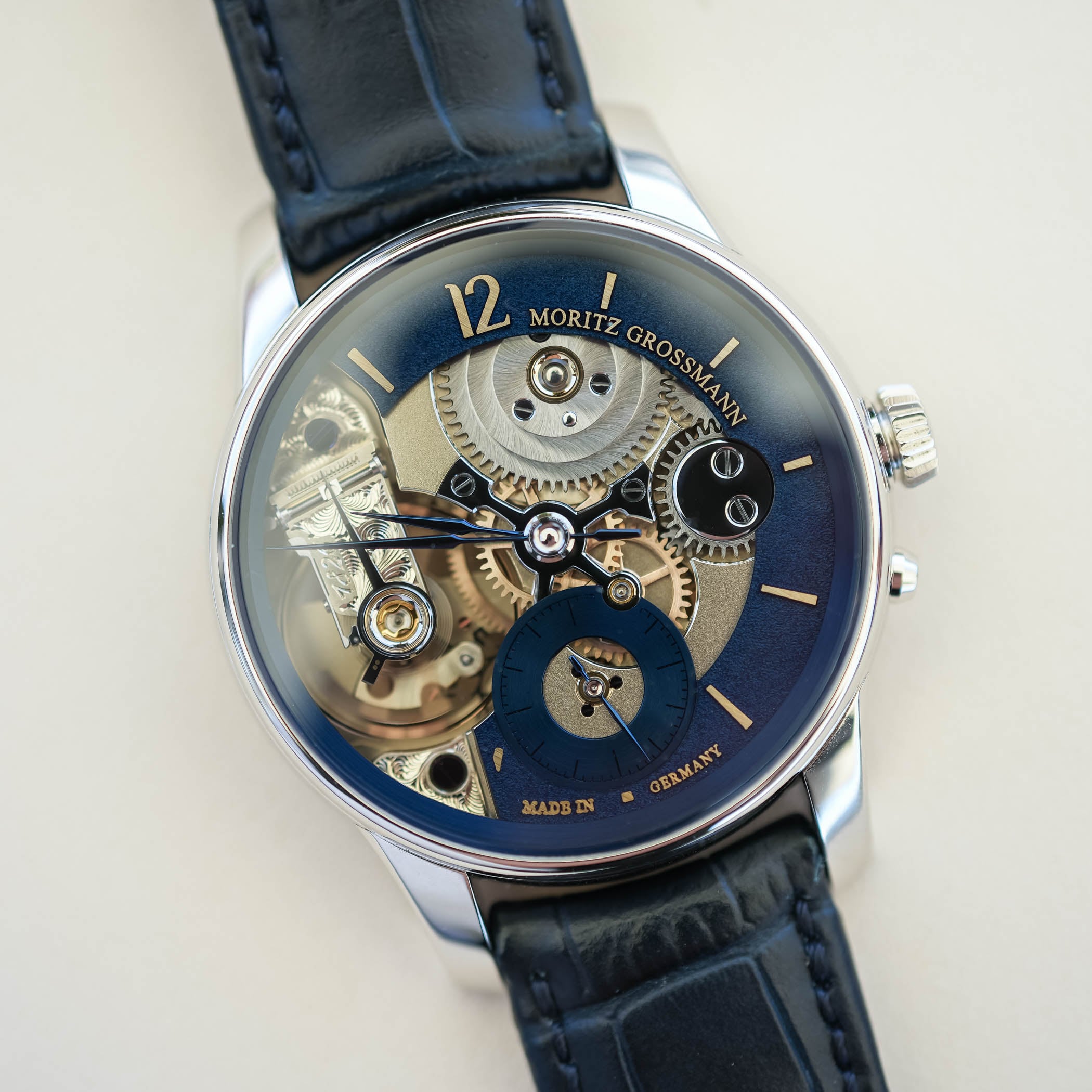
Rather than using a conventional skeletonized construction, the watch relies on a reverse-engineered calibre that lets the gear train, escapement, balance cock, chatons and finishing details become the visual center of the watch.
That approach suits a manufacture known for restrained Saxon watchmaking, where the drama comes less from excess and more from how carefully every visible surface has been considered.
Blue Restraint or Violet Presence
The two new editions share the same layout but offer very different personalities.
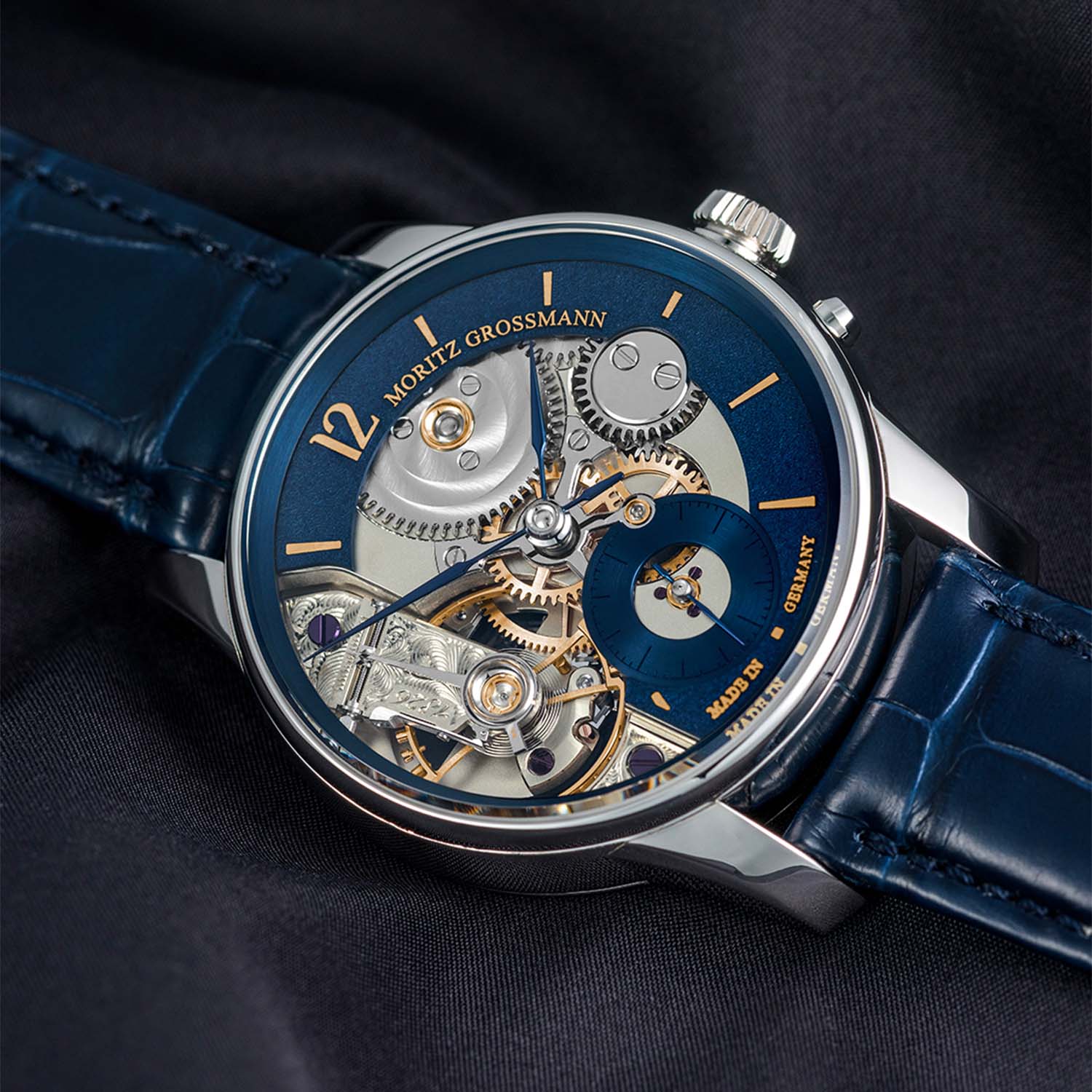
The blue model uses a refined navy tone for the chapter ring and small seconds display, giving the openworked composition a more traditional character.
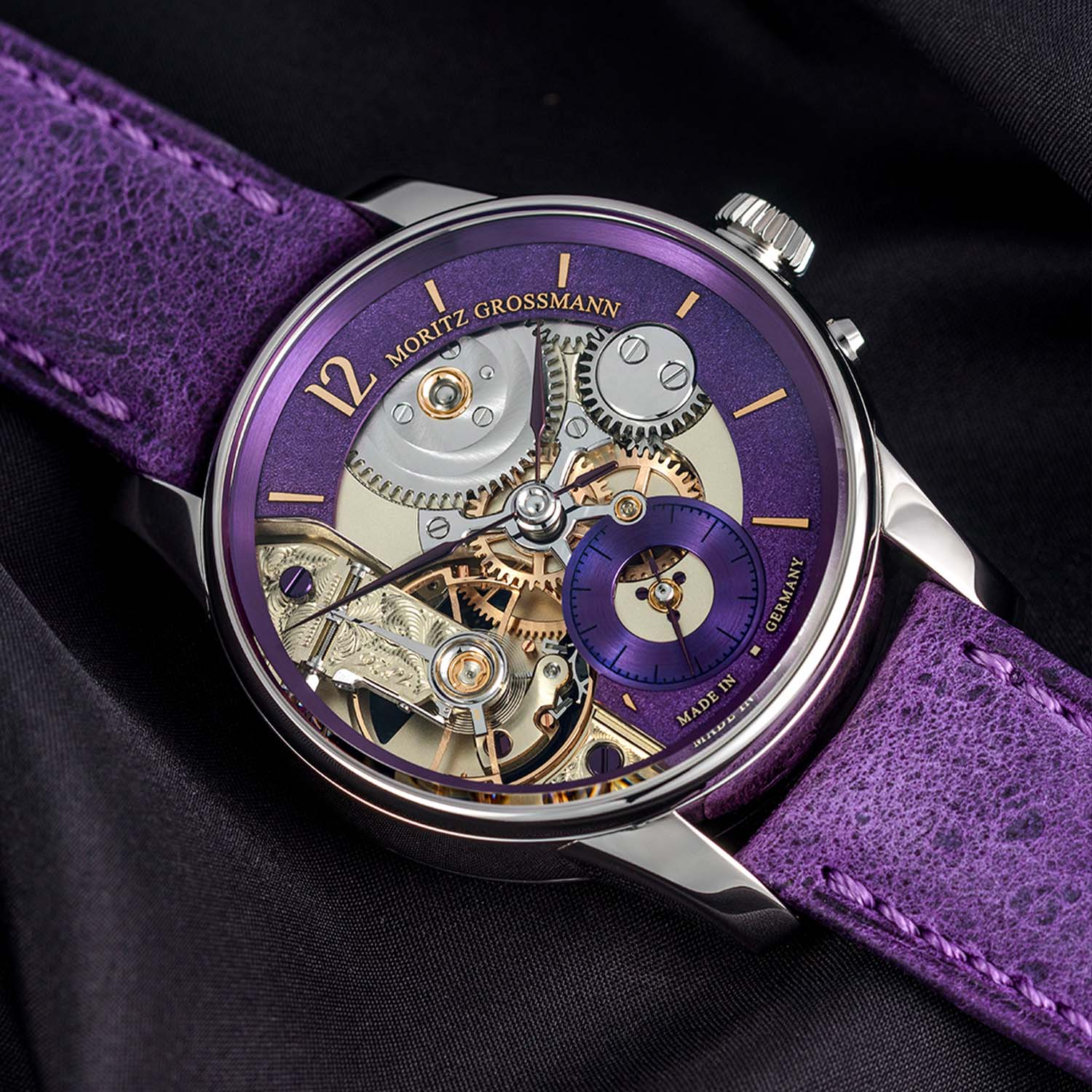
The violet version is the bolder of the pair, especially with its matching kudu leather strap and violet-brown handmade annealed hands.
On both watches, the chapter ring runs from 11 to 5 o’clock and carries applied gold markers with an Arabic numeral at 12, while the recessed small seconds display sits at 6 o’clock.
Tremblage Engraving Gives the Dial Its Texture
The defining decorative feature is the tremblage engraving applied to the German silver dial components.
This traditional technique requires the engraver to create a finely grained surface through countless controlled incisions, with consistent pressure needed across the entire area.
The result is a matte, textured finish that catches light differently from brushing, frosting or guilloché, and it gives the colored dial sections a handmade depth that fits the anniversary brief.
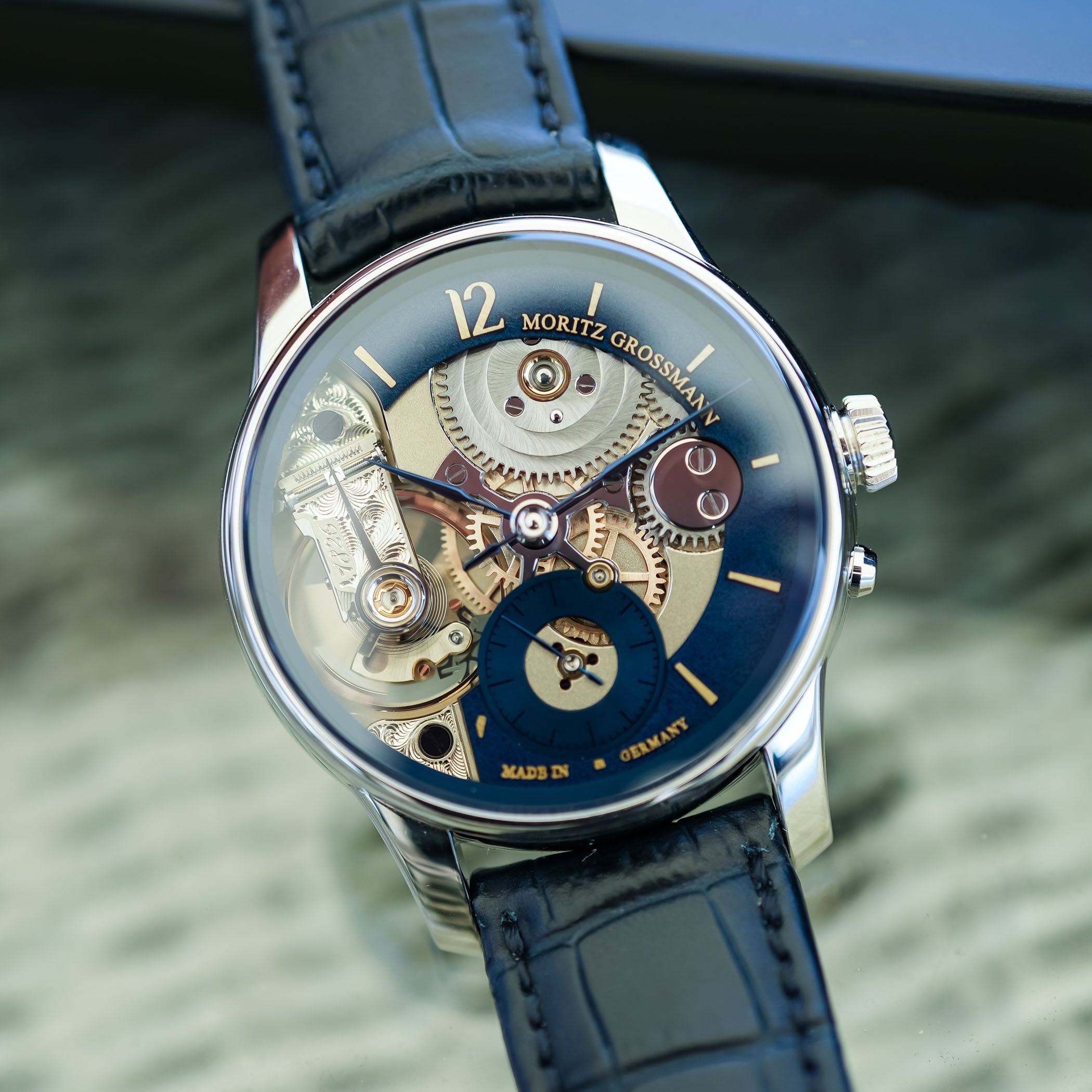
Other details reinforce the hand-finished character of the watch, including the engraved balance cock with an 1826 anniversary marking, raised gold chatons with white sapphire jewels, gold-plated wheels, polished bevels and three-band snailing on the ratchet wheel.
The Calibre 107.0 and Platinum Case
Inside is the in-house calibre 107.0, a manual-winding movement derived from the calibre 100.1 and reversed so its key architecture can be viewed from the front while the hands still rotate correctly.
The movement has 230 parts, 24 jewels, 11 gold chatons, a Grossmann balance with inertia and poising screws, a stop-seconds mechanism and a 42-hour power reserve.
It runs at a measured 18,000 vibrations per hour, a cadence that feels appropriate for a watch more concerned with classical construction and finishing than modern frequency bragging rights.
The fully polished platinum case measures 41mm wide and 11.35mm thick, with sapphire crystals front and back and 30 meters of water resistance.
The caseback view is more restrained but still important, showing the German silver plate with Glashütte ribbing and the brand’s distinctive crown-and-pusher system for winding and setting.
The Moritz Grossmann Backpage Tremblage in blue is delivered on a hand-stitched blue alligator strap, while the violet edition comes on a violet kudu leather strap; both are fitted with platinum prong buckles.
Pricing is set at EUR 71,000 before tax, positioning these anniversary pieces squarely for collectors who value German finishing, visible mechanics and genuinely scarce independent watchmaking.