Miyota’s Calibre 9075 sits in a curious place in modern watchmaking.
It’s an industrial automatic movement from one of the world’s biggest suppliers, yet it brings a genuinely useful travel complication into watches that don’t require Swiss luxury pricing.
Take it apart and the appeal becomes clearer.
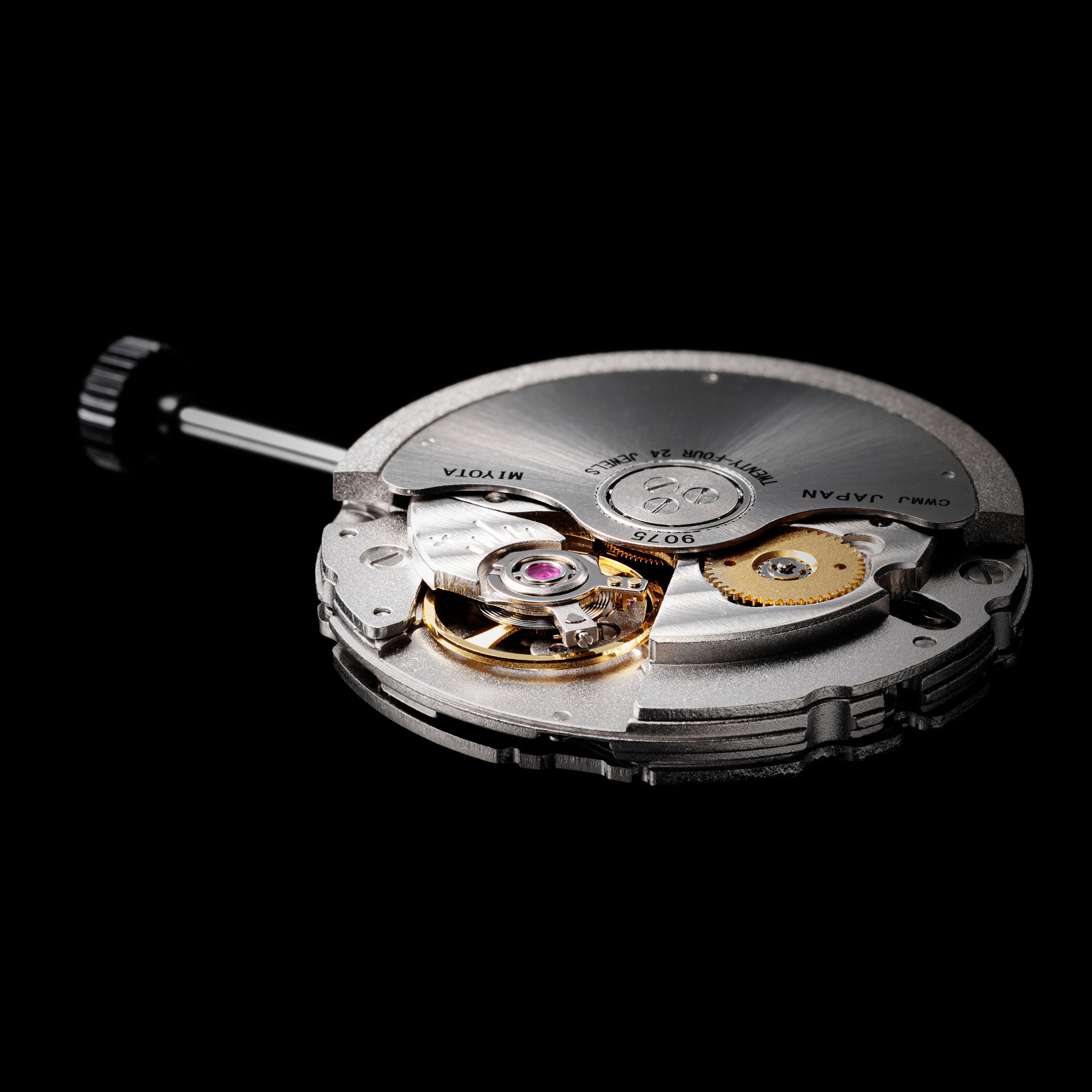
At a glance
- Miyota’s Calibre 9075 is an automatic true GMT movement designed around local-hour travel adjustment.
- The winding side is familiar Miyota territory, while the dial side reveals the added mechanics for GMT and date operation.
- Its importance lies in making traveller GMT functionality more accessible across watches below many Swiss alternatives.
The accessible true GMT gap
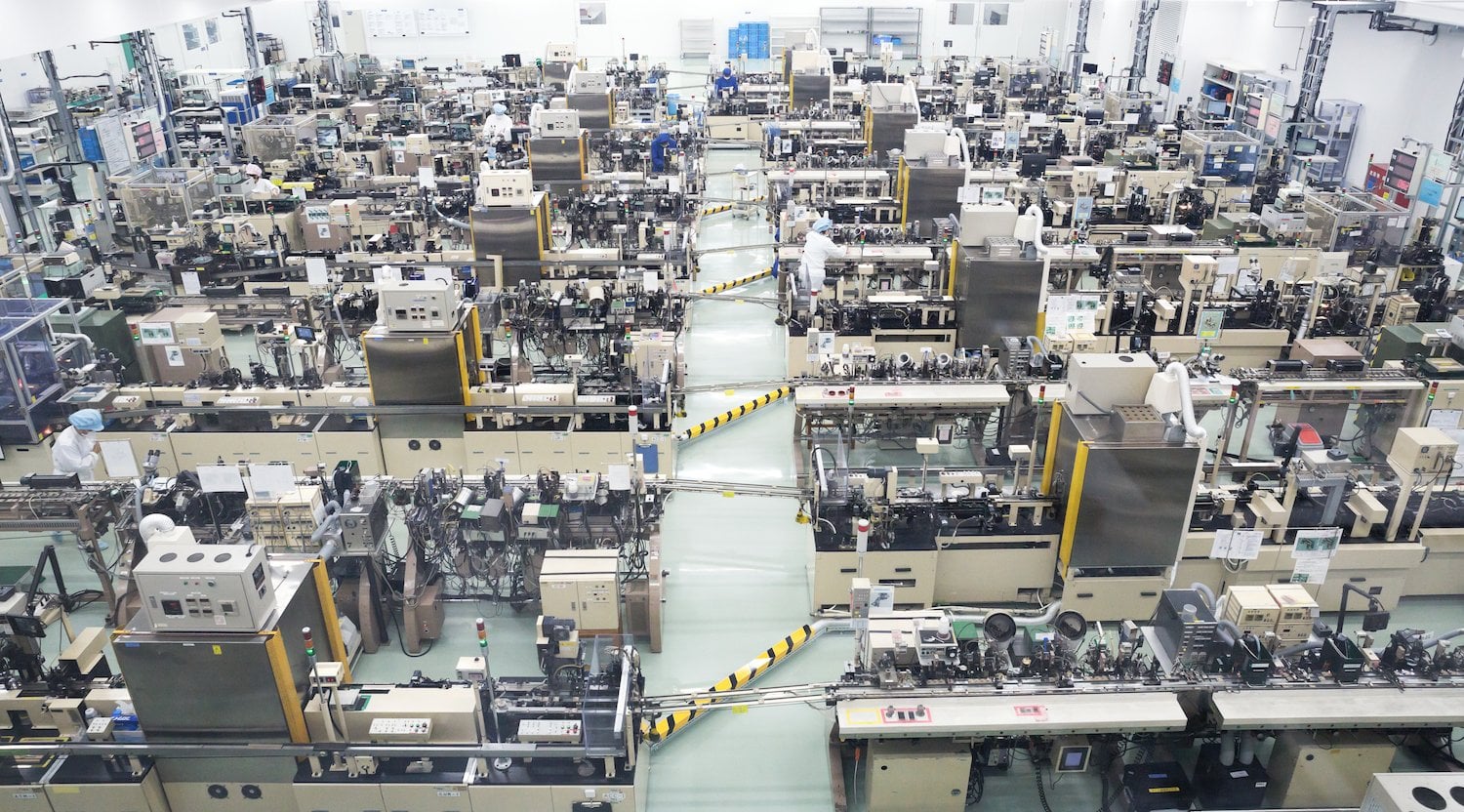
Miyota’s scale is difficult to overstate.
The Japanese manufacturer, part of the Citizen Group, has produced more than 5 billion movements across more than four decades, with its quartz Calibre 2035 alone reaching 1.7 billion units by the late 1990s.
That industrial background matters because the Calibre 9075 isn’t a boutique complication made in tiny numbers.
It’s a practical, supplier-grade automatic GMT movement from a company known for reliability and volume.
For many collectors, Miyota movements belong to the entry point of mechanical watch enthusiasm, much like Seiko and Citizen watches have done for generations.
The 9075 shifts that conversation because it gives smaller and more accessible brands a movement with the type of GMT functionality usually associated with more expensive watches.
What the 9075 changes when you travel
The distinction between a true GMT and an office GMT sounds minor until you’re standing in an airport after a long flight.
With an office, or caller-style, GMT, the extra GMT hand is the one adjusted when tracking another time zone.
With a true, or traveller-style, GMT movement, the central hour hand is adjusted to local time while the GMT hand remains tied to home time.
That’s the more natural arrangement for frequent travel because the main hands always show the time where you are.
If you want to check the time back home, the GMT hand handles that job, often against a 24-hour scale so you can distinguish day from night.
This is why the Calibre 9075 has become such an important option for watches in the more attainable end of the market.
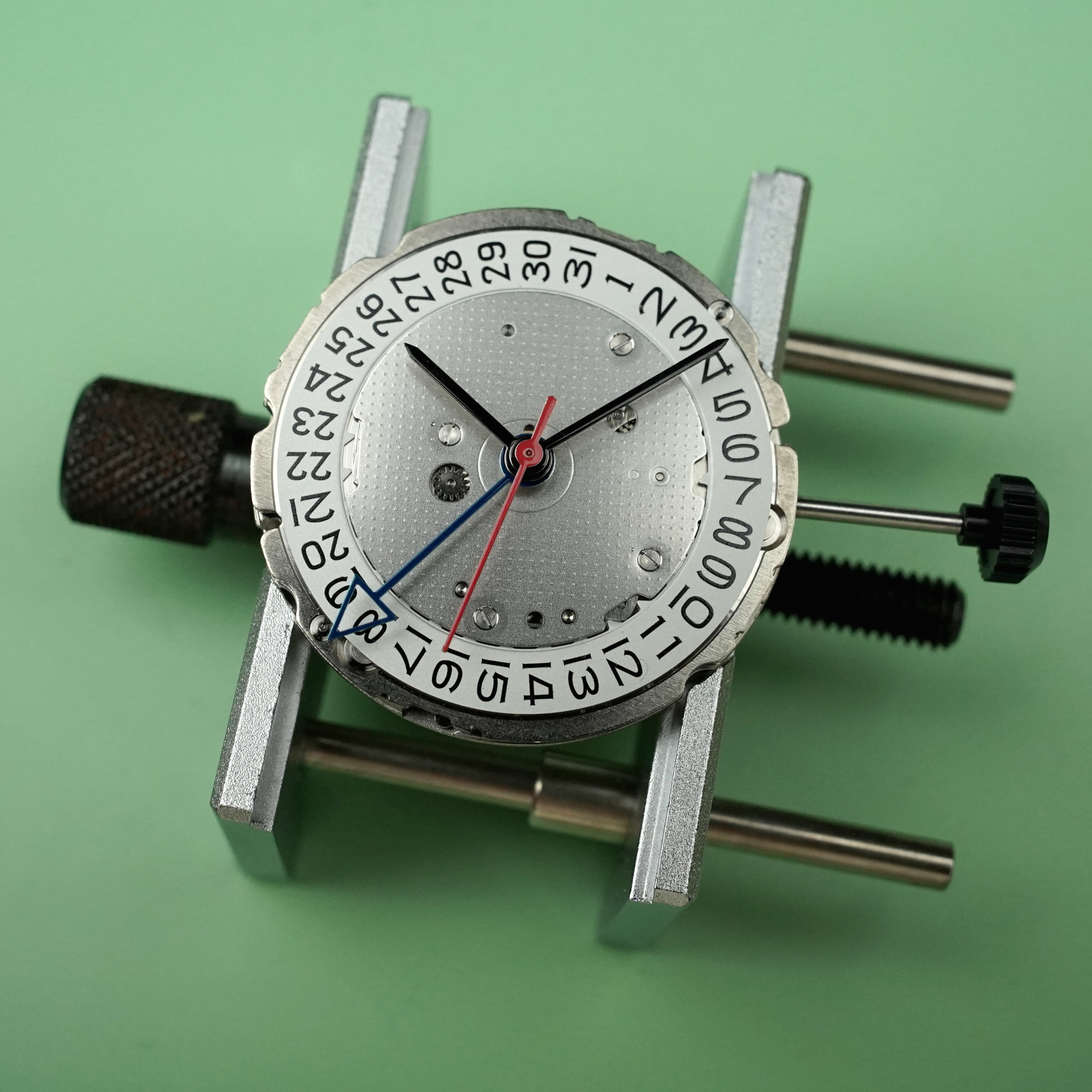
Comparable true GMT functionality exists in Swiss watches such as the Tudor Black Bay 58 GMT, Longines Spirit Zulu, Certina DS Action GMT Powermatic 80 and Hamilton Khaki Navy Scuba Auto GMT, but pricing and brand positioning can move quickly upward, especially outside large-group catalogues.
The movement side is familiar Miyota engineering
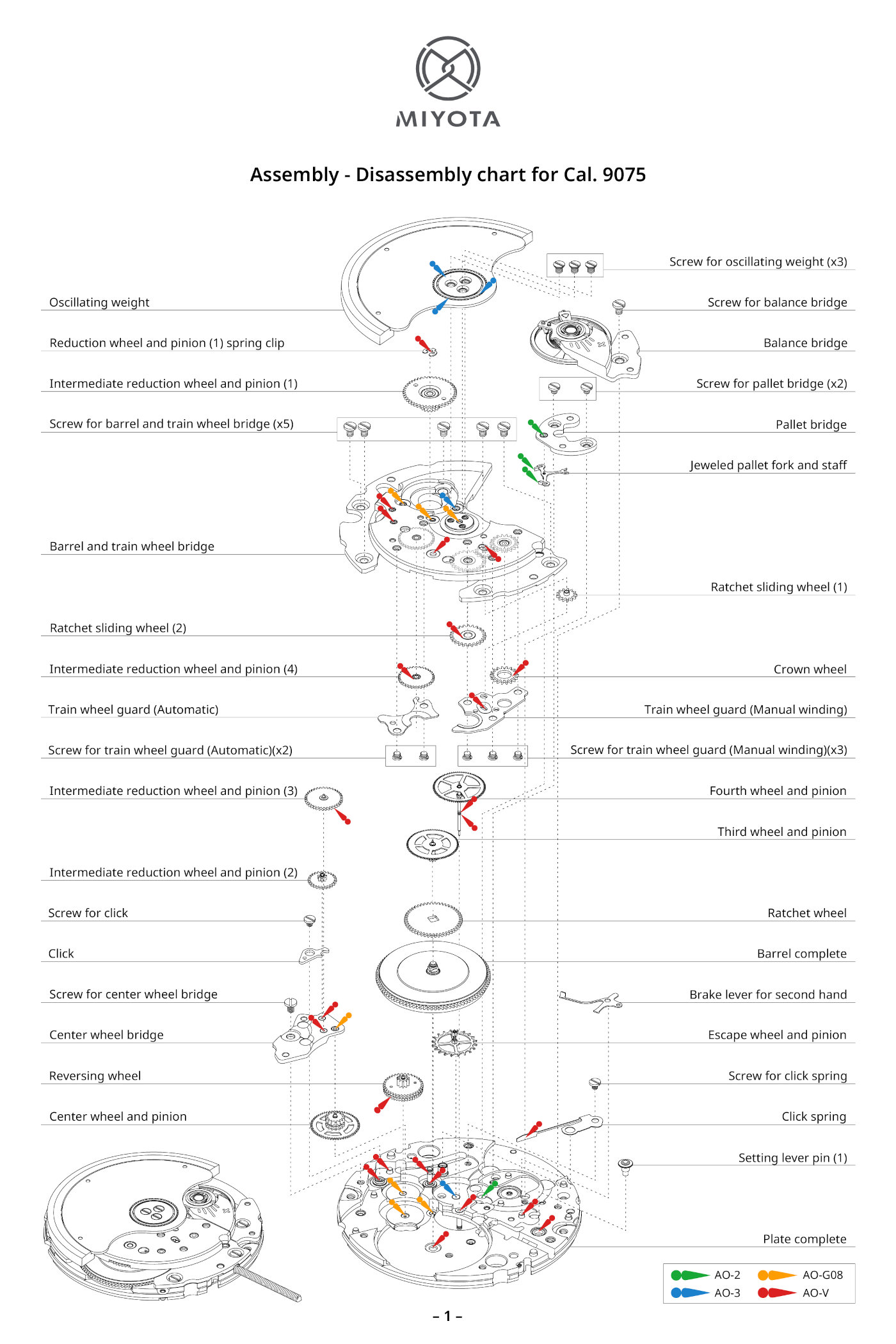
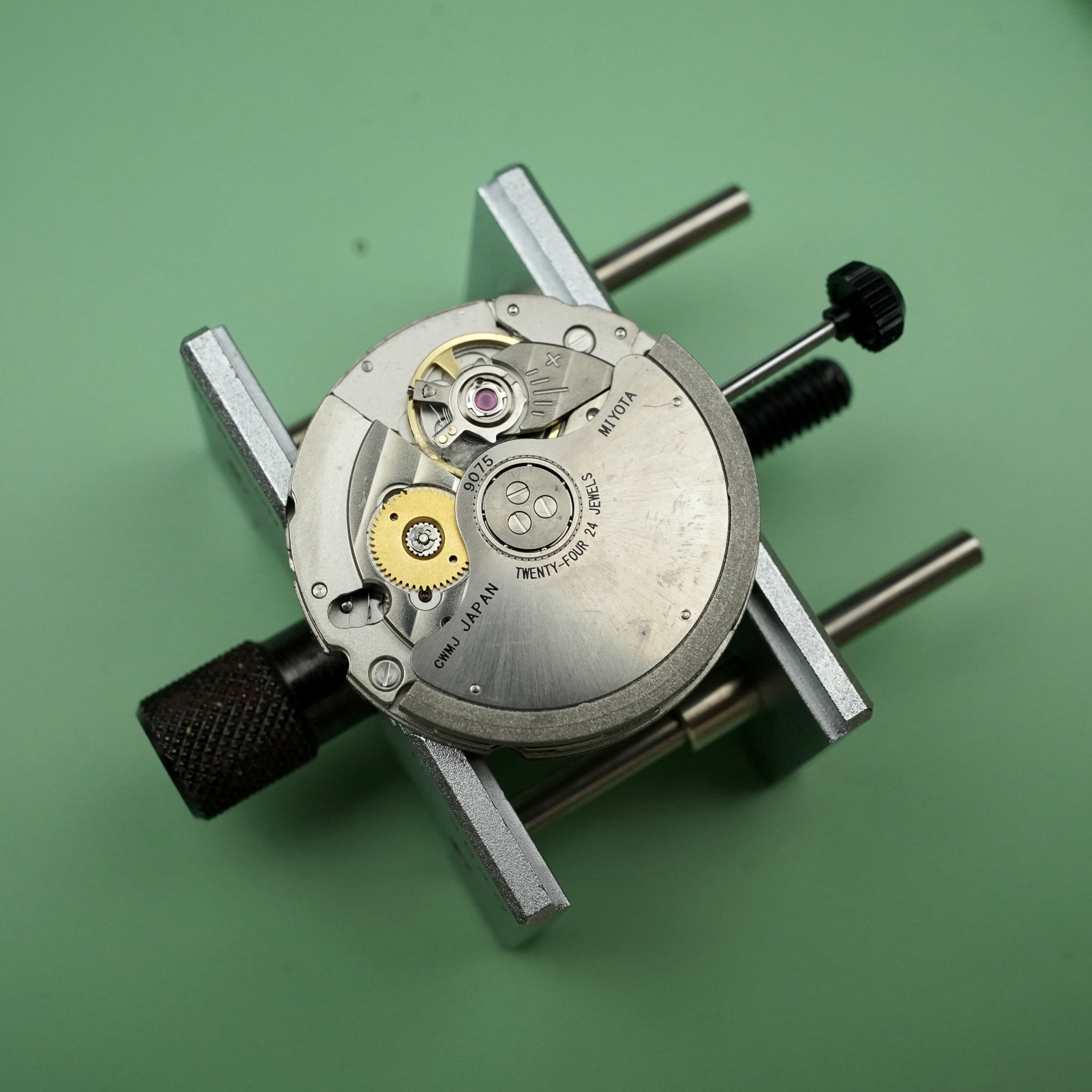
Viewed from the movement side, the 9075 begins in familiar fashion for anyone who has spent time with Miyota’s 9000-series architecture.
The rotor comes off first, followed by the single directional wheel that transfers rotor motion toward the barrel.
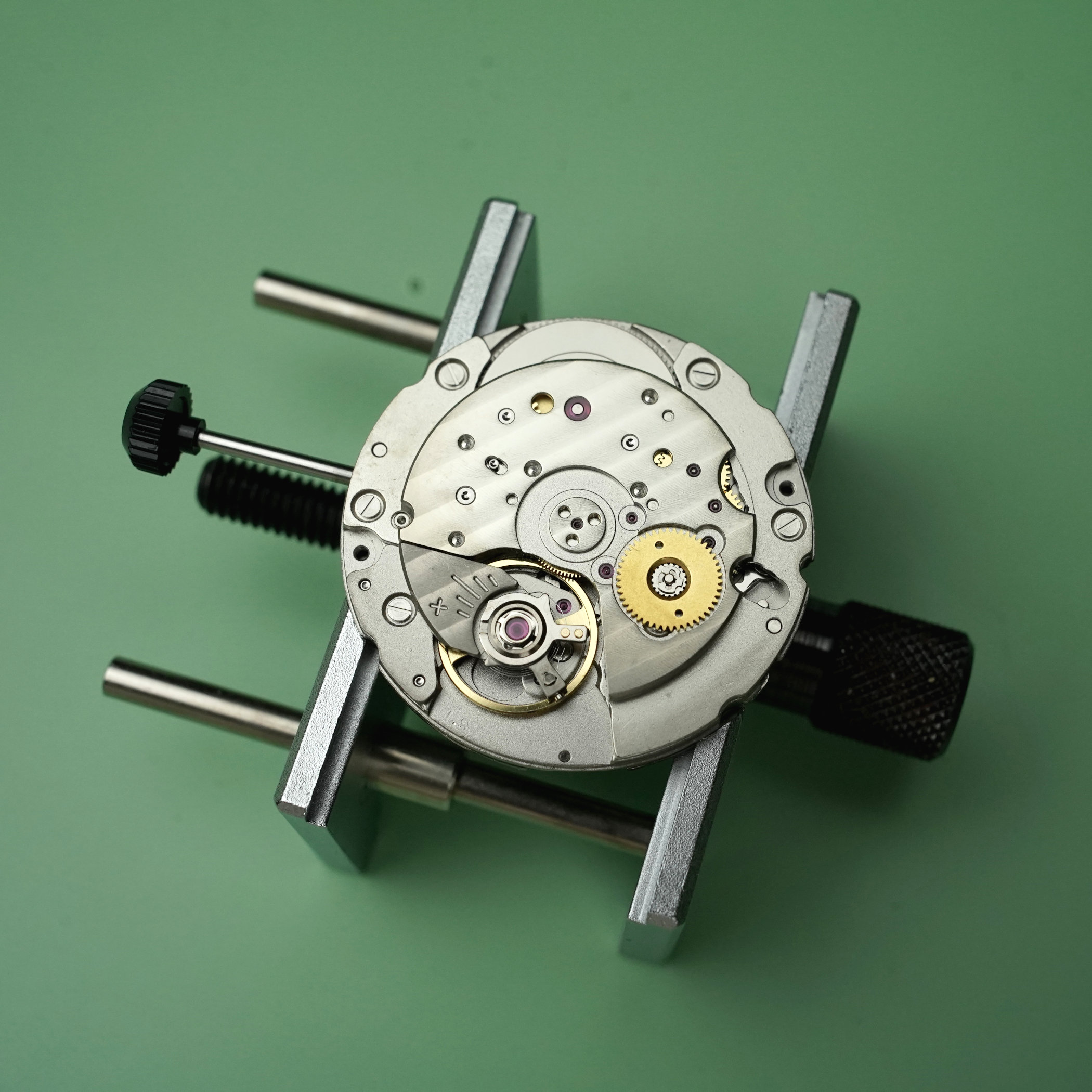
Removing the large three-quarter bridge opens up the running gear, exposing the train from the barrel toward the hand display.
The layout is purposeful rather than decorative, which is exactly what you’d expect from a high-volume movement maker.
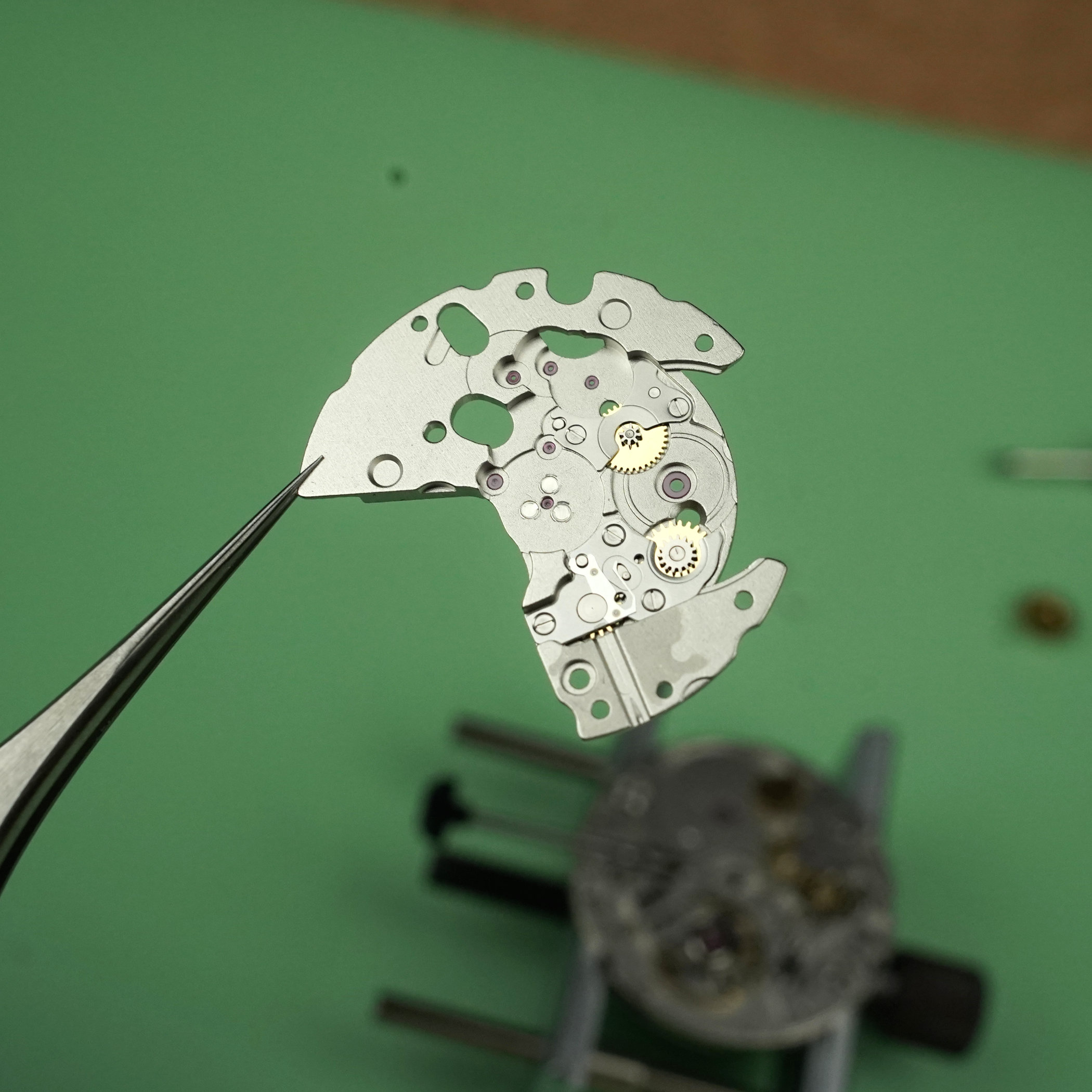
The underside of the three-quarter bridge is worth a closer look.
There you find the train wheels and the guards for both manual and automatic winding, with those components meshing through the intermediate wheel.
It’s a reminder that industrial watchmaking doesn’t necessarily mean crude watchmaking.
The 9075 is built for efficient assembly and repeatable function, but there’s still a clear internal logic to the way the winding and motion works are arranged.
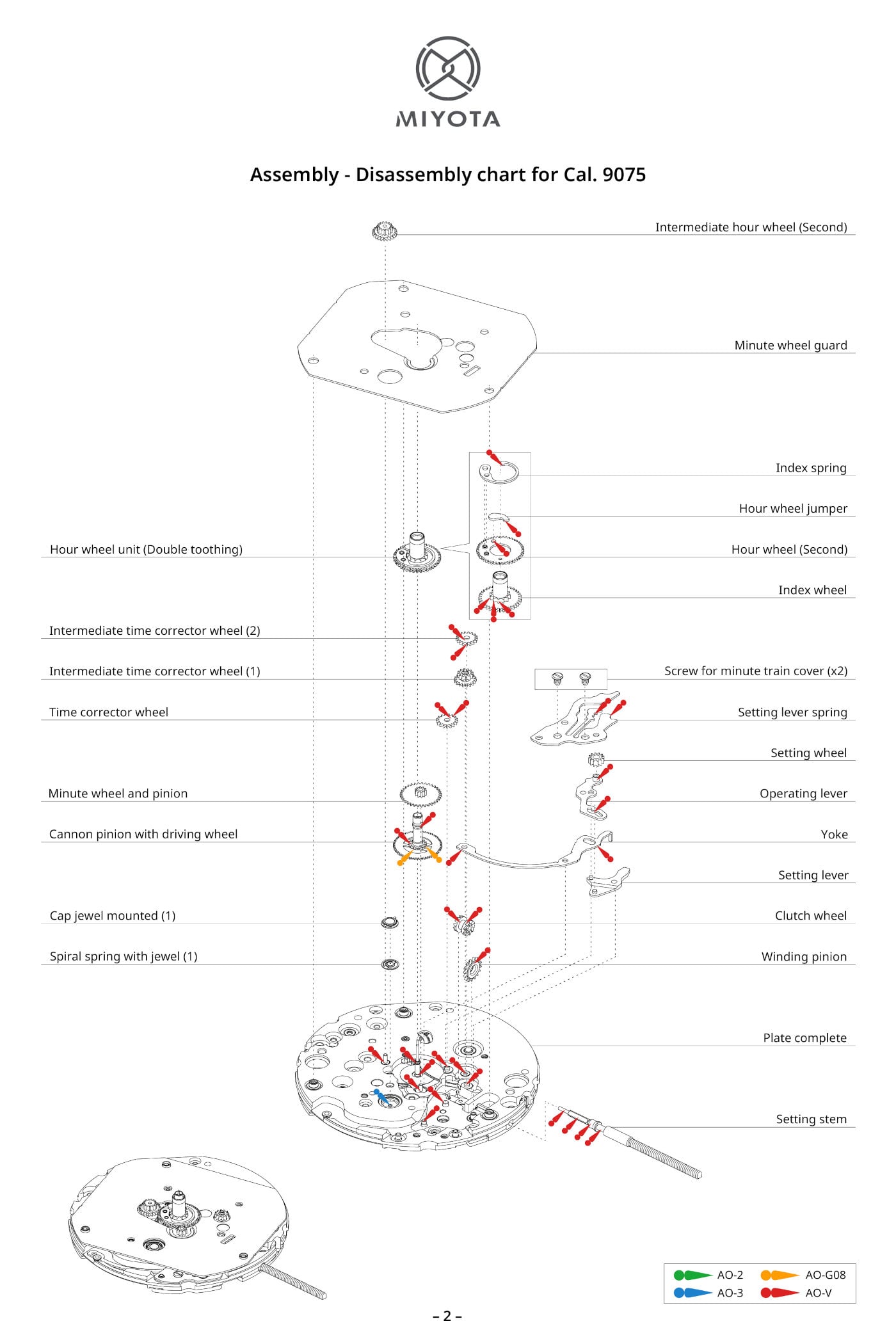
The dial side carries the GMT story
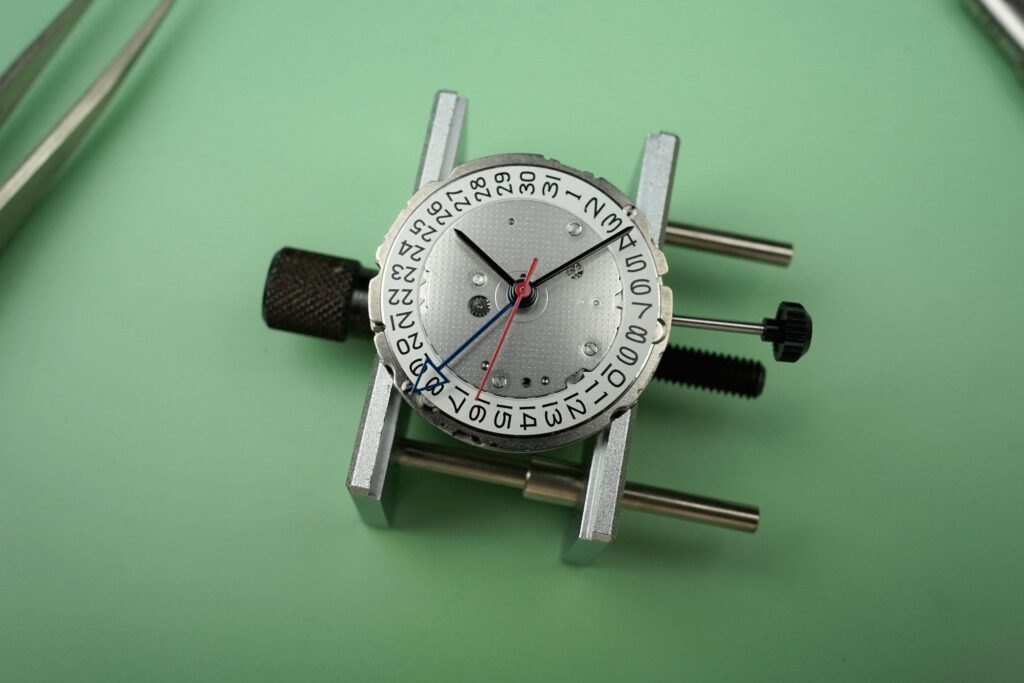
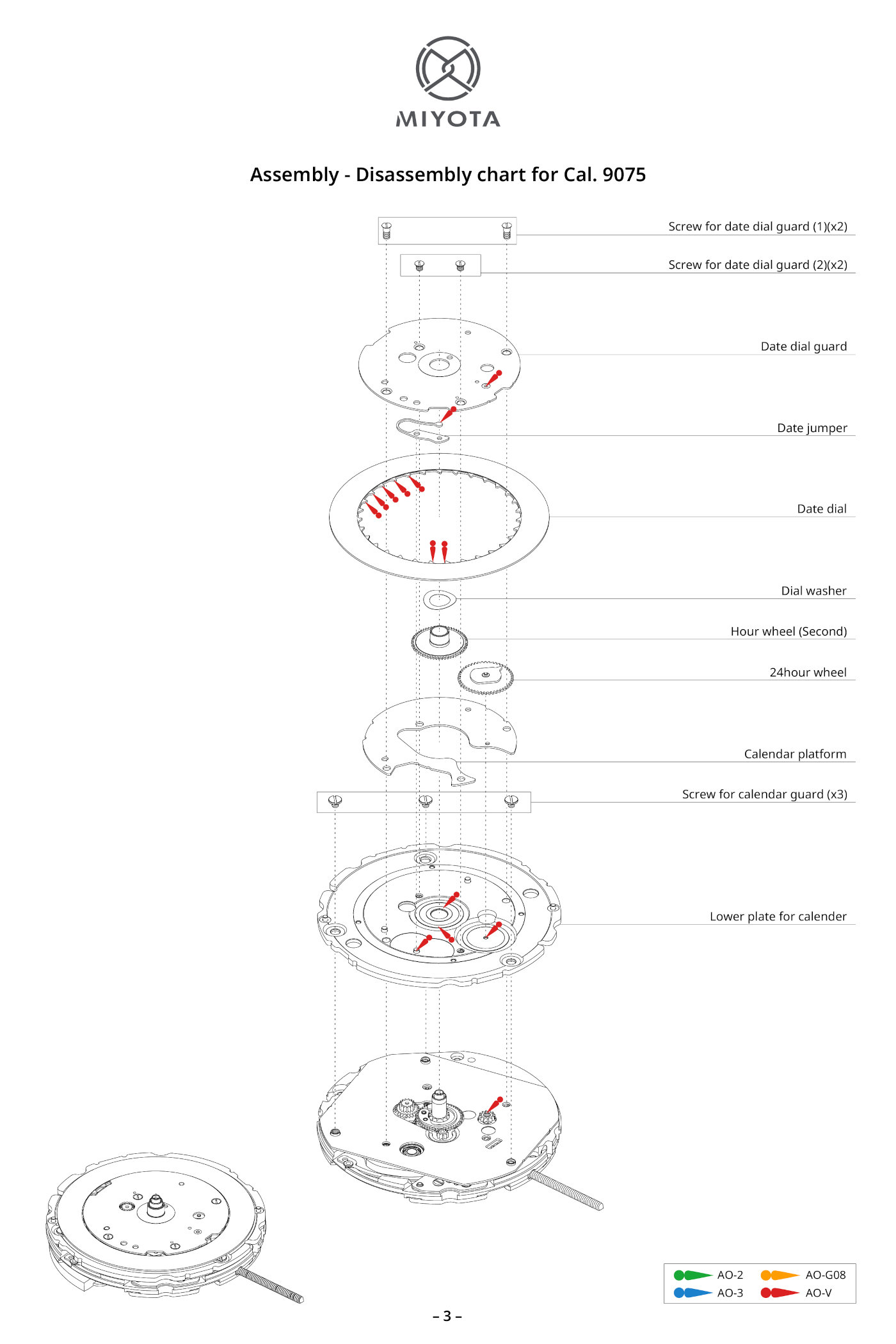
The dial side is where the 9075 begins to separate itself more visibly from a simpler three-hand automatic.
After the hands and date dial guard are removed, the date jumper comes into view with a slightly rounded tail profile compared with earlier Miyota details.
The functional purpose remains the same, but small geometry changes like this are interesting in a movement family produced at serious scale.
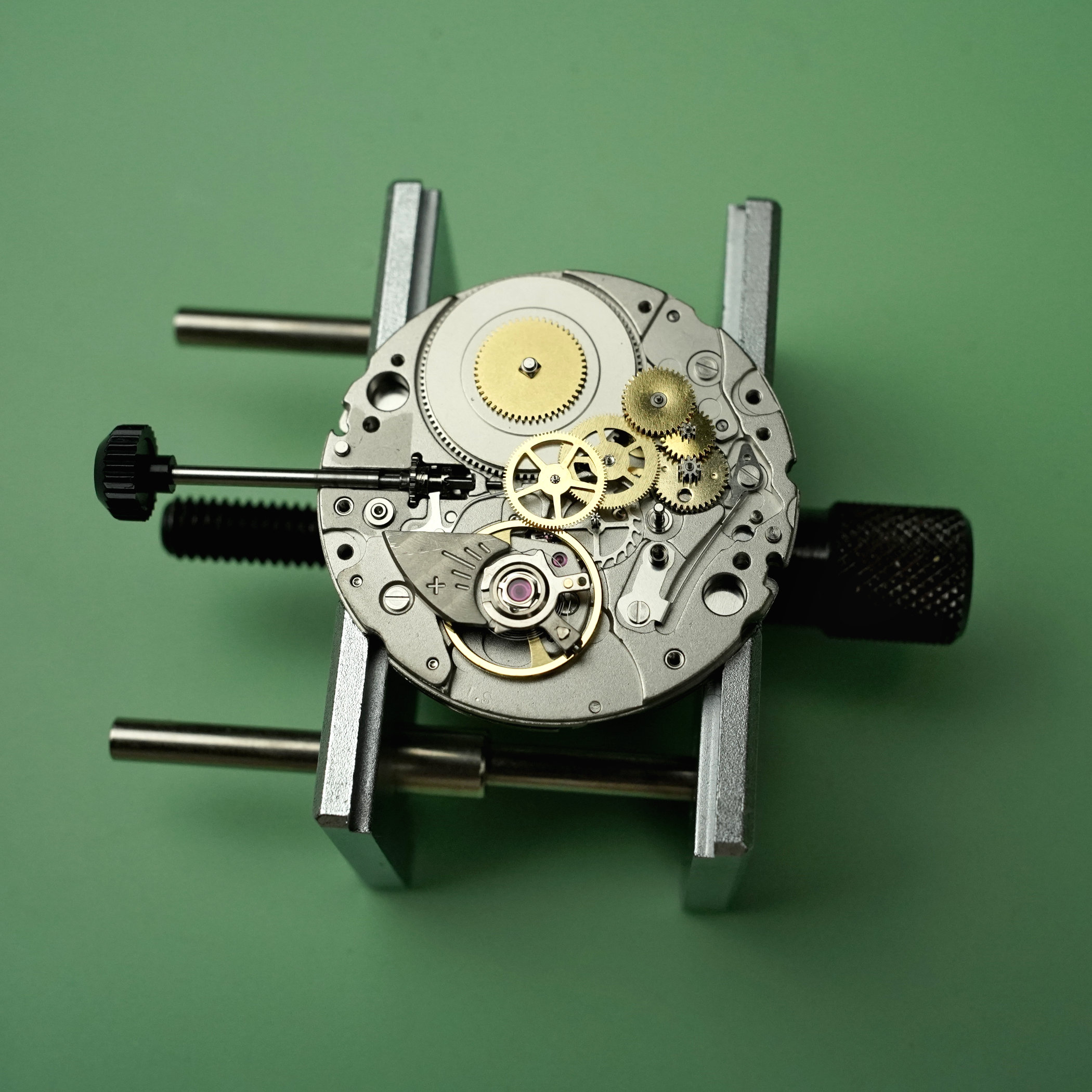
Go a layer deeper and the hour wheel appears alongside the 24-hour wheel.
That relationship is central to the way the GMT indication and local time adjustment are managed.
The date mechanism is also tied into the travel function.

A simple oval-shaped plate with a finger sits above a gear to manipulate the date wheel, helping reduce the chance of landing in another time zone with the wrong date showing.
It’s not a theatrical complication, and that’s part of its charm.
The 9075 is a practical mechanism built around the way people actually use a GMT watch when crossing time zones.

Details & Specifications
| Manufacturer | Miyota |
|---|---|
| Parent group | Citizen Group |
| Calibre | 9075 |
| Movement type | Automatic mechanical |
| GMT type | True, or traveller-style, GMT |
| Primary travel function | Central hour hand adjustment for local time |
| Home-time indication | GMT hand working with 24-hour mechanics |
| Movement-side architecture | Rotor, single directional wheel and three-quarter bridge |
| Notable dial-side components | Hour wheel, 24-hour wheel, date dial guard and date jumper |
| Production context | Miyota has produced more than 5 billion movements across more than 40 years |
The Calibre 9075 matters because it makes a proper travel watch feel less like a luxury indulgence and more like a usable mechanical tool.
For collectors who care about function as much as branding, that makes Miyota’s true GMT one of the most consequential modern movements in the accessible watch space.