Mercedes-Benz has already proved it can be first in the autonomy race.
The harder lesson is that first doesn’t always mean most useful, especially when the technology works only in a narrow slice of real-world driving.
After launching Drive Pilot as the first Level 3 autonomous driving system approved in the US, Mercedes is now reassessing where its effort should go next.

At a glance
- Mercedes-Benz is shifting its autonomous driving focus after learning from the limited everyday usefulness of its first US-approved Level 3 system.
- Drive Pilot was offered on the S-Class and EQS and could let drivers take their eyes off the road, but only under specific conditions and at around 40 mph.
- Mercedes now plans to improve Level 2 driver assistance while looking toward Level 4 technology, which CTO Jörg Burzer said may reach production cars only after 2030.
Drive Pilot arrived early but with narrow use
Mercedes made a significant statement in 2023 when Drive Pilot became the first Level 3 autonomous driving technology approved in the United States.
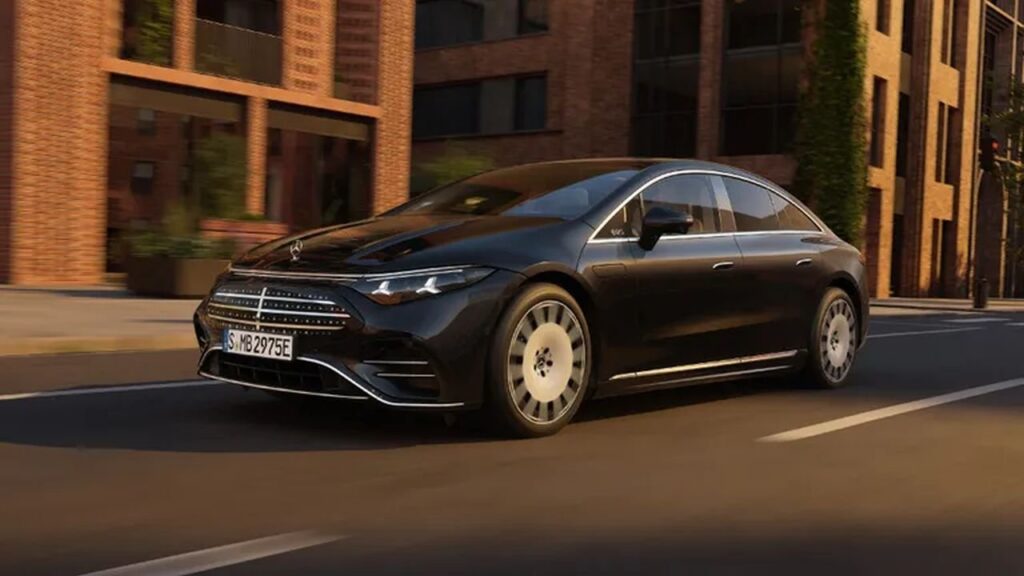
Offered on the S-Class and EQS, the system allowed drivers to take their eyes off the road when operating within its permitted conditions.
That was a genuine milestone for a production luxury car, particularly from a brand whose flagship sedans often serve as rolling previews of where mainstream automotive technology may eventually head.
The limitation was the operating window.
Drive Pilot worked at about 40 mph and only on certain roads, making it most relevant in slow-moving traffic rather than on the wider range of journeys where owners might expect premium driver assistance to matter.
Mercedes is prioritising usefulness over the next label
Speaking to Road & Track, Mercedes-Benz CTO Jörg Burzer said the company’s early move into Level 3 autonomy came before the technology was especially useful in everyday driving.
That admission is more interesting than a simple product update.
It suggests Mercedes is moving away from the idea that autonomy should be judged mainly by the highest level a car can claim, and toward a more practical view of how often a customer can actually use the system.
For now, that means improving the company’s Level 2 driver assistance systems rather than rushing another generation of Level 3 technology.
In a luxury car, a broader and more polished assistance suite may prove more valuable than a more advanced system that only functions in carefully defined circumstances.
Level 4 remains a longer-term target
Mercedes is still looking toward Level 4 autonomy, but the timeline is deliberately conservative.
Burzer told Road & Track that Level 4 could arrive in production Mercedes cars only after 2030, with the rollout expected to be gradual.
That timing matters because it tempers the industry’s familiar habit of presenting autonomous driving as just around the corner.
Mercedes has already shown it can bring advanced autonomy into a showroom car, but the next challenge is making that technology feel relevant across more of the driving owners actually do.
A quieter but smarter reset
The shift doesn’t diminish the importance of Drive Pilot.
If anything, it makes the system look like an early proof point that helped Mercedes understand the gap between technical approval and everyday value.
For S-Class and EQS buyers, the lesson is clear enough.
The future of Mercedes autonomy may not be defined by the fastest jump to the next level, but by the point at which the technology becomes genuinely helpful more often.
That’s a less dramatic story than a headline-grabbing first, but it may be the more important one for anyone who expects driver assistance to feel natural, available and worth using.