
Kris Singh has never been shy about commissioning cars with a story, but his latest Pagani moves into unusually theatrical territory.
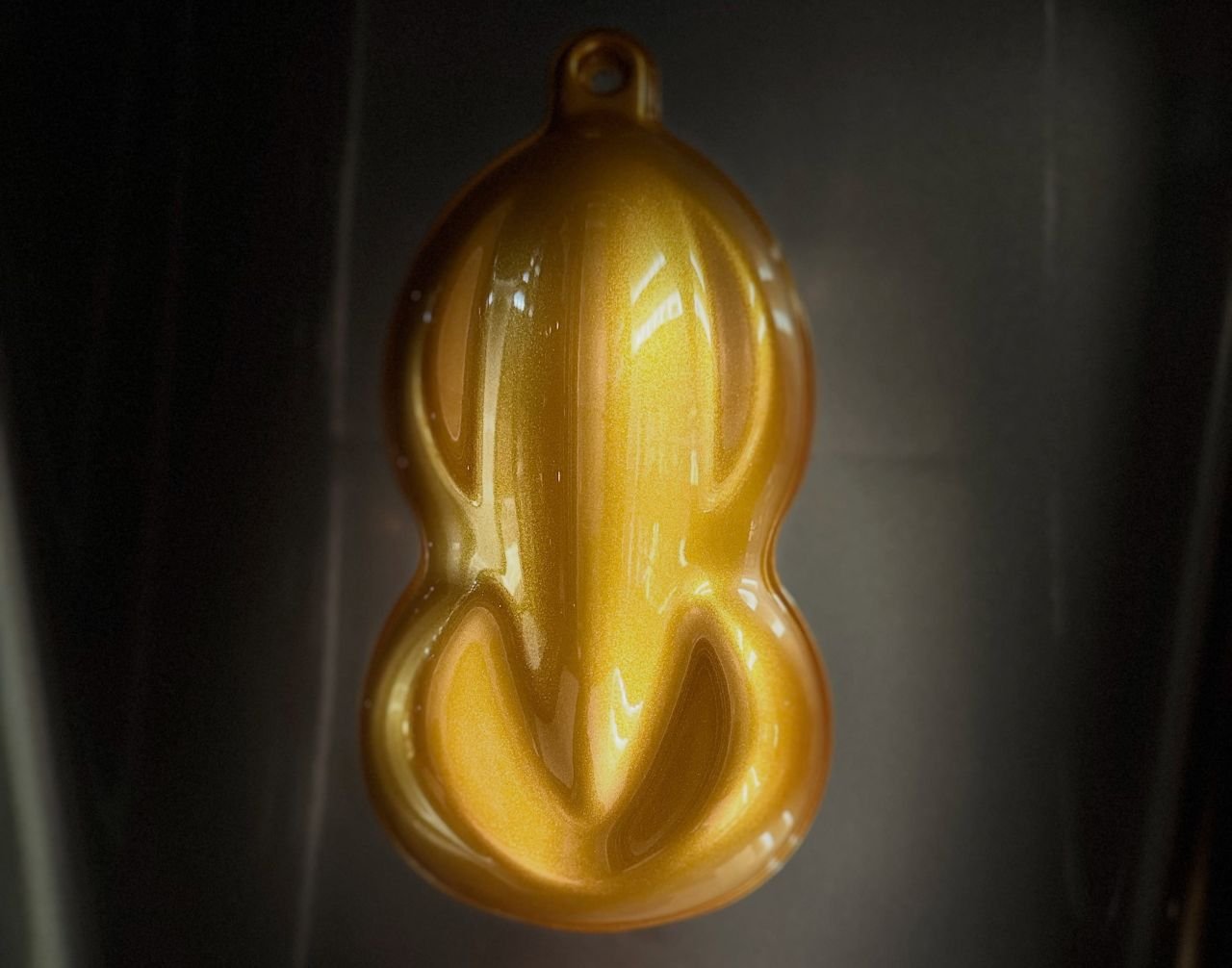
The American collector’s upcoming Utopia has been given a bespoke finish made with real gold bar shavings and crushed moon rock, creating a material-led paint concept that’s closer to art object than conventional supercar specification.
Named Madonna of the Car Nation, the car takes inspiration from Leonardo da Vinci’s Madonna of the Carnation and is set for a full reveal in October.
At a glance
- Kris Singh’s bespoke Pagani Utopia features custom paint containing real gold and crushed moon rock.
- The finish was developed over three years with Karosserie and is difficult to apply to carbon fibre and aluminium.
- The car is named Madonna of the Car Nation and is scheduled to be revealed in October.
A Pagani commission with an art-world reference
Pagani has long attracted clients who treat specification as a form of personal authorship, and Singh’s Utopia fits that tradition with an especially literal sense of precious material.
The project is tied to Leonardo da Vinci’s Madonna of the Carnation, a Renaissance painting that gives the car both its visual cue and its wordplay-heavy name.
For a collector already associated with the Zonda Arriverderci, one of the more memorable modern Pagani commissions, the Utopia needed a concept that could stand apart without relying only on exposed carbon, bright contrast accents or familiar special-order finishes.

The result is a gold-toned exterior whose ingredients are part of the narrative rather than just the colour recipe.
Gold, moon rock and a three-year paint challenge
Singh worked with Karosserie on the custom paint, a development process that reportedly took three years.
The formula uses shavings from gold bars along with actual moon rock, with the lunar material acquired by Singh at auction.

That sounds simple in headline form, but it creates a real technical problem once the paint has to live on a Pagani body.
Carbon fibre and aluminium don’t behave like canvas, and adding unconventional particles to a finish can affect how the paint lays, cures, reflects light and bonds to the surface beneath it.
Singh has indicated that the use of real gold and crushed moon rock makes the finish difficult to apply, which gives the project a practical complication beyond the headline value of its ingredients.

On a car like the Utopia, where surface tension and detailing are central to the design language, paint quality matters enormously.
A heavy-handed finish would work against the car’s sculptural forms, so the challenge is not merely making the material unusual, but making it behave with the precision expected from a modern Pagani.
An interior shaped around Italian style
The cabin is being designed to match what Singh describes as Italian style and fashion, with the interior trimmed in fine leather.

That direction makes sense for a car whose exterior leans into old-master inspiration rather than a motorsport-only identity.
Pagani interiors are already known for their mechanical theatre, visible craftsmanship and analogue tactility, and this commission appears positioned to amplify that sense of couture rather than strip it back.
The most interesting question will be how closely the interior echoes the gold exterior without becoming too literal.
For collectors at this level, restraint can be just as important as extravagance, particularly when the exterior material story is already so distinctive.
Details & Specifications
| Brand | Pagani |
|---|---|
| Model | Utopia |
| Commissioned by | Kris Singh |
| Name | Madonna of the Car Nation |
| Bespoke paint | Gold-toned finish developed with Karosserie |
| Paint ingredients | Gold bar shavings and crushed moon rock |
| Paint development | Three years |
| Inspiration | Leonardo da Vinci’s Madonna of the Carnation |
| Interior | Fine leather, styled around Italian fashion cues |
| Reveal timing | October |
What this says about modern hypercar collectability
The Madonna of the Car Nation sits at the extreme end of personalisation, where provenance, material and patronage become as important as performance figures.
For some collectors, a bespoke car is no longer just a rare allocation with a special colour, but a permanent, rolling expression of taste and access.
Using gold in paint is dramatic enough, yet the addition of lunar material changes the conversation from luxury specification to object-making.
It’s the sort of detail that will divide opinion, which is often the point with highly personal commissions.
Whether seen as inspired, excessive or deliberately theatrical, Singh’s Utopia shows how far the modern hypercar world can stretch when a client, a coachbuilding-minded brand and a specialist paint partner all lean into the same idea.
The finished car’s October debut should reveal whether the concept translates from ingredient list to a coherent Pagani, but the premise already gives it a place among the more unusual Utopia commissions to date.