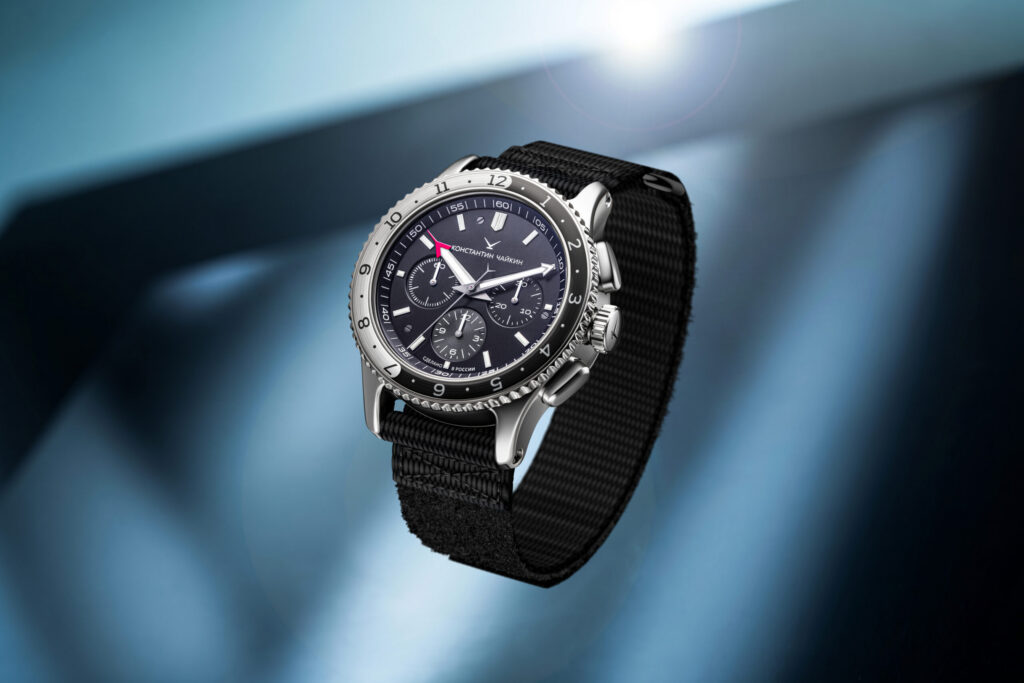
Konstantin Chaykin’s SC02C looks, at first glance, like a serious black-dial chronograph with familiar space-watch cues.
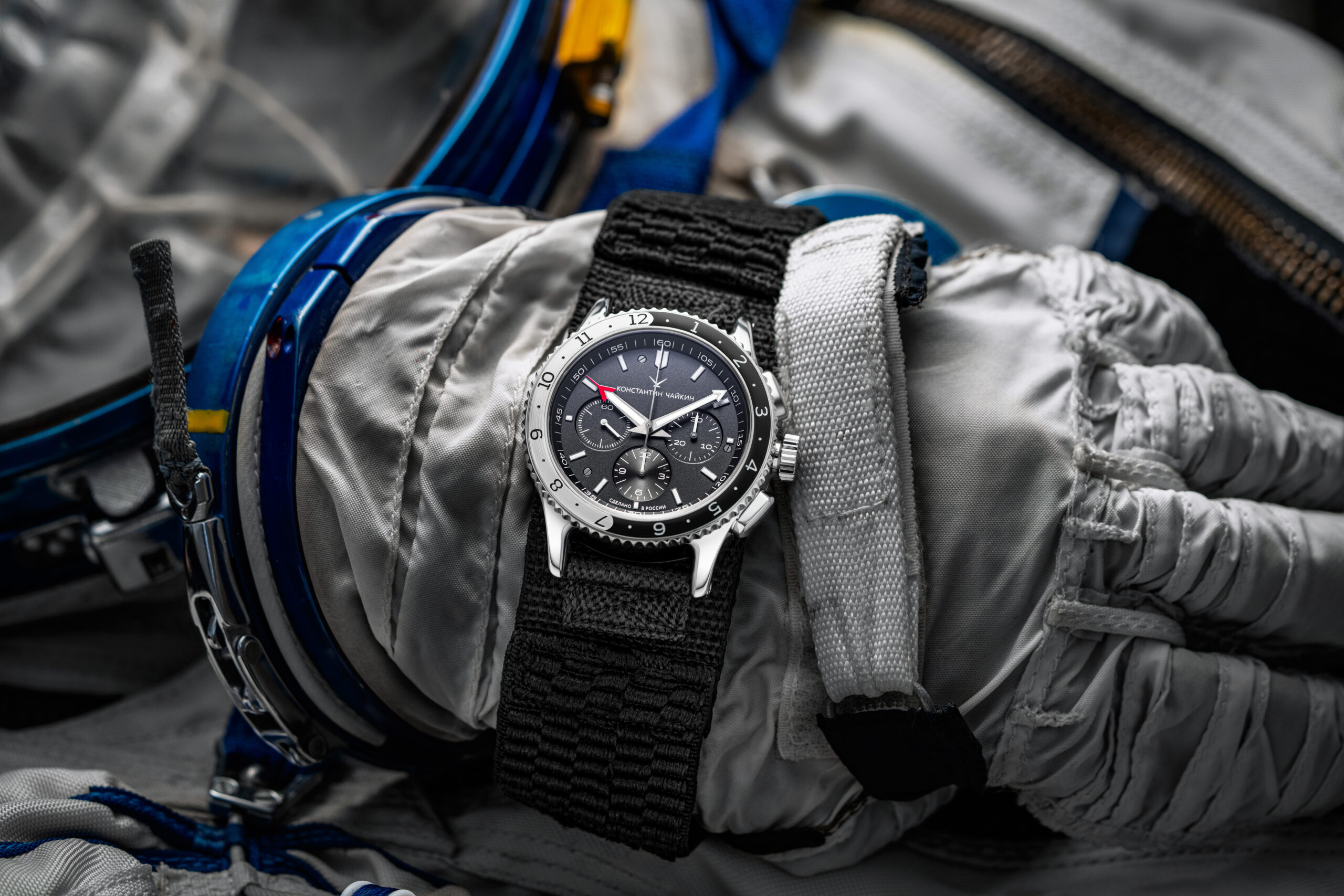
Look closer and the unusual second strap tells the real story, because it’s long enough to secure the watch over the thick cuff of a spacesuit.
This is not simply a romantic nod to orbital history, but the collector-facing result of a Roscosmos research programme that put experimental Chaykin watches outside the International Space Station.

At a glance
- Konstantin Chaykin’s SC02C is a limited-edition chronograph derived from watches tested during Roscosmos spacewalks.
- The watch uses a hand-wound K.20-5 calibre, a simplified black dial and a case engineered for high vacuum conditions.
- Production is limited to 28 pieces, with each watch set to undergo the full laboratory test programme.
From Roscosmos brief to wrist instrument
The programme began in 2018, when Chaykin was asked whether he could develop a Russian watch for Roscosmos cosmonauts.
Chaykin says discussions with cosmonauts shaped the original brief, which called for a date display, a UTC second time zone and a chronograph with seconds, minutes and hours.
The earliest Space Conqueror concept also considered an extended counter capable of recording several days, with a four-day counter chosen as the starting point.
The SC02C takes a more focused route.
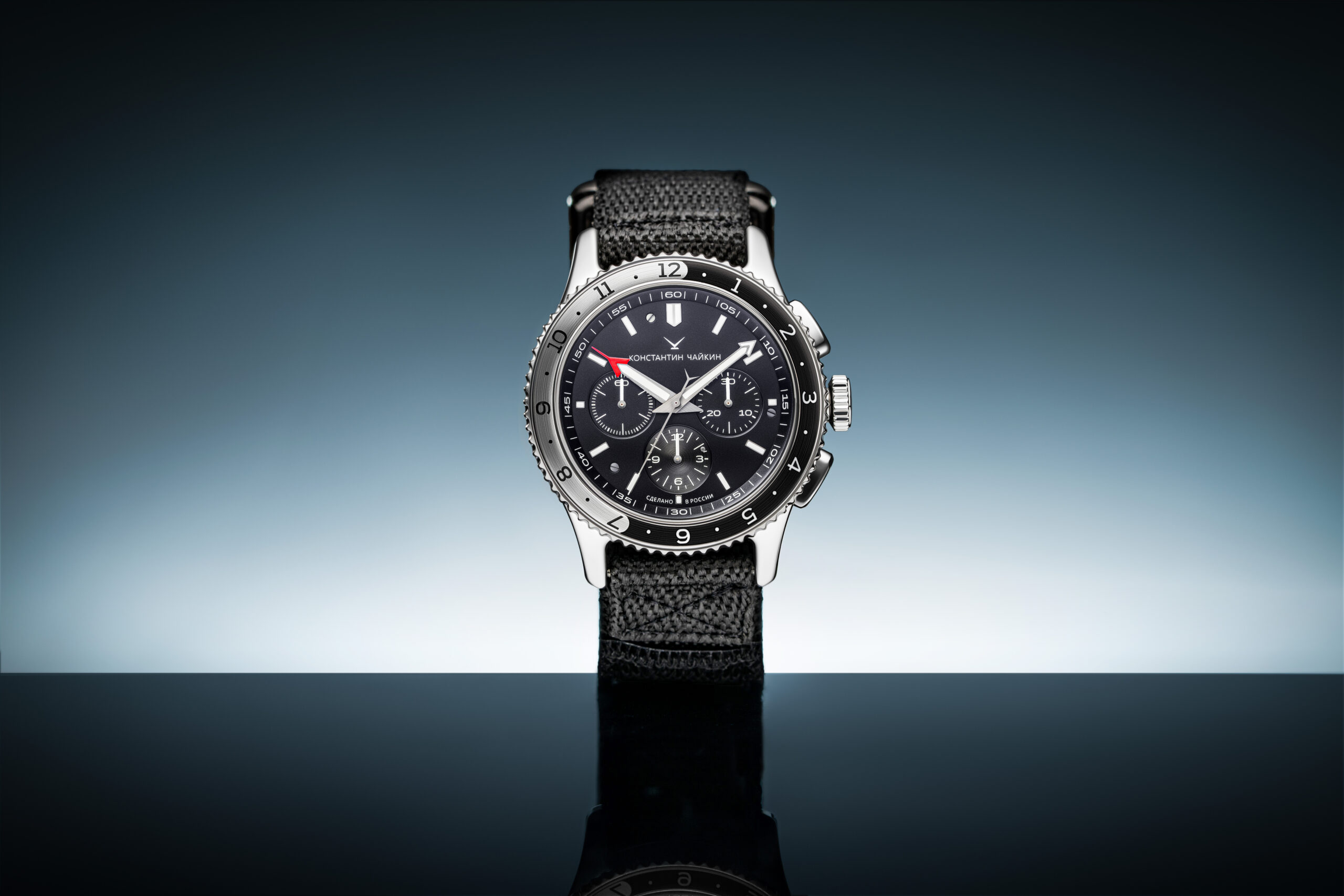
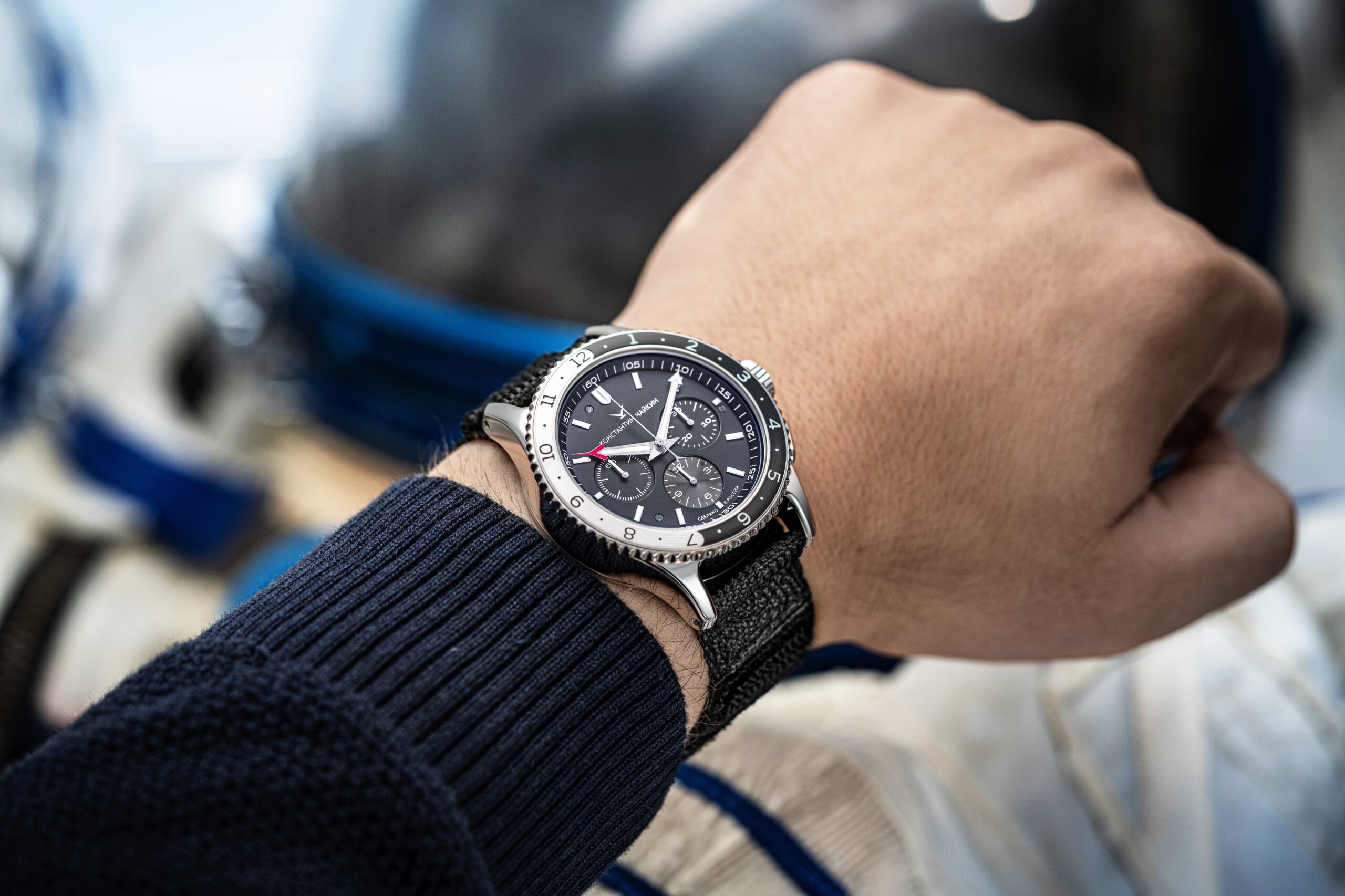
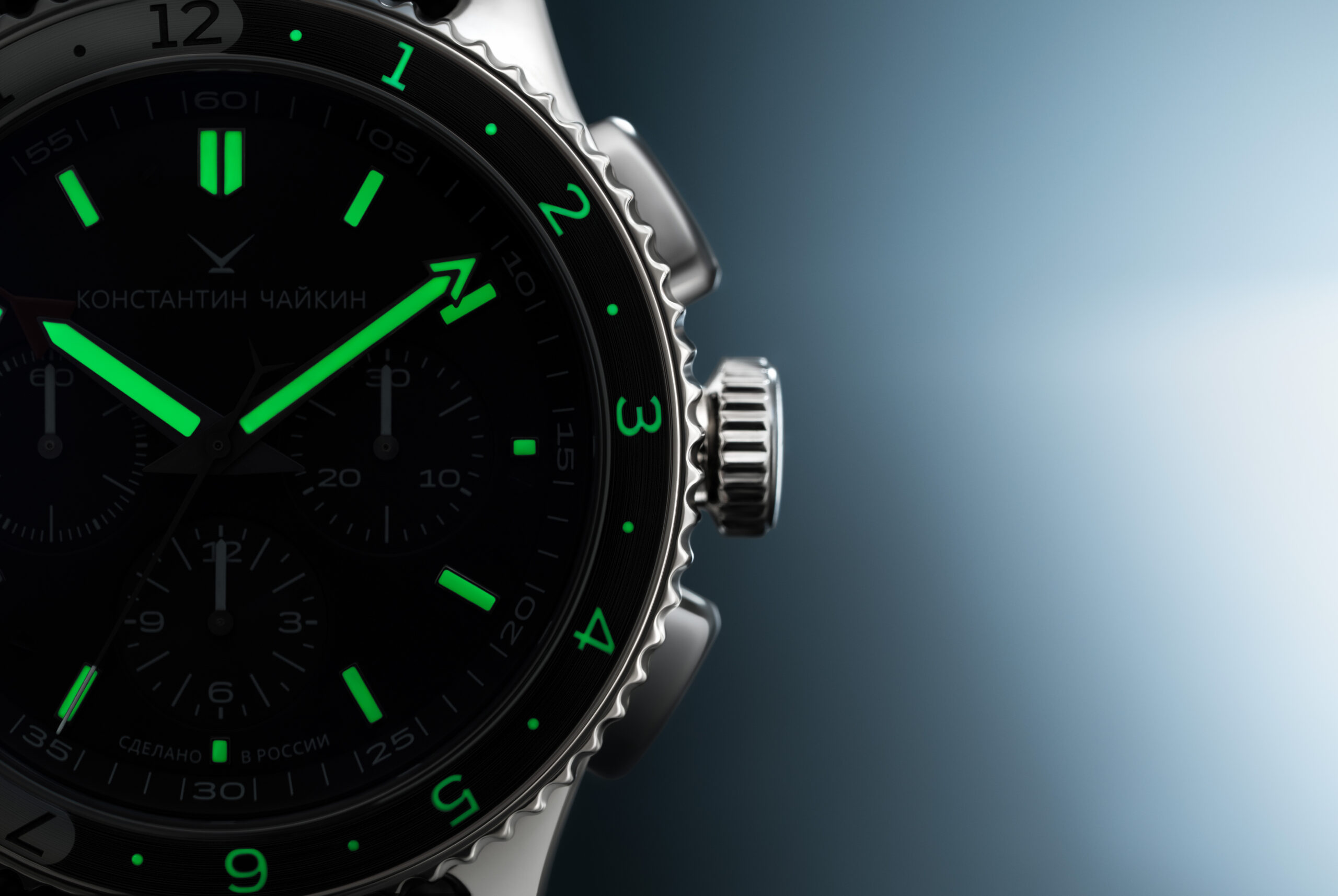
Instead of carrying over the date, UTC indication and multi-day counter, it uses a clearer black dial with large markers, three registers and a red-tipped hour hand.
Its chronograph measures up to 12 hours, while the rotating 12-hour bezel gives the wearer a second way to track elapsed time by aligning the bezel’s “12” marker with the hour hand.
That redundancy matters in the environment it was designed around.
Chaykin explains that a cosmonaut outside the station works to a strict schedule and receives timing information by radio from Mission Control, but a mechanical watch worn over the suit offers a fallback if communication is interrupted.
With oxygen supply finite during extravehicular activity, elapsed time is not an abstract detail.
What the spacewalks changed
The research watches have accompanied four spacewalks since the programme began.
In May 2026, cosmonauts Sergey Kud-Sverchkov and Sergey Mikaev wore the new-generation Chaykin chronographs over their Orlan-MKS suits for more than six hours.
Those outings were not only symbolic, because the watches were used as experimental instruments as well as timekeepers.
Chaykin says the team assessed how easily cosmonauts could operate them during extravehicular activity and recorded temperature at the watch strap on the surface of the spacesuit.
The SC02C reflects those lessons in several visible ways.
A domed crystal was replaced by a flat sapphire crystal with additional anti-reflective coating, the dial was simplified, and glare from the bezel was reduced.
The reasoning is practical rather than aesthetic.
Outside the station, a cosmonaut has little time to study a watch face, so legibility and instant orientation matter more than visual complexity.
A case built for vacuum, not just the display tray
The SC02C’s steel case is designed to withstand high true vacuum, with rounded surfaces intended to avoid damaging a spacesuit.
When a sealed watch moves from atmospheric pressure into a vacuum, internal gas pressure pushes outward against the crystal.
To address that, the SC02C uses what Chaykin calls a reverse dovetail mounting to secure its flat sapphire crystal and help prevent it from being forced out of the case.
The watch also includes an anti-magnetic cover and strap pins secured against accidental loosening.
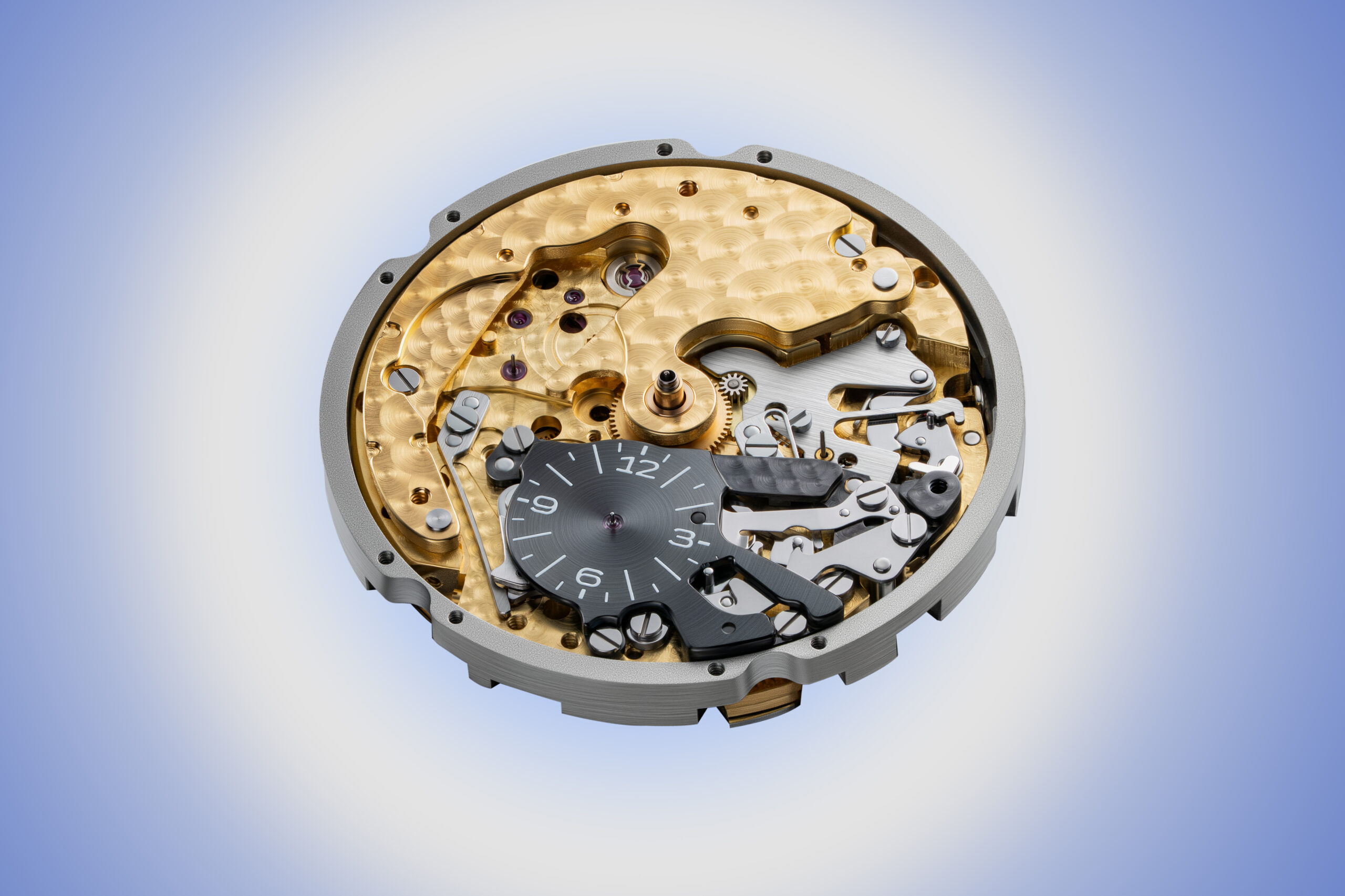
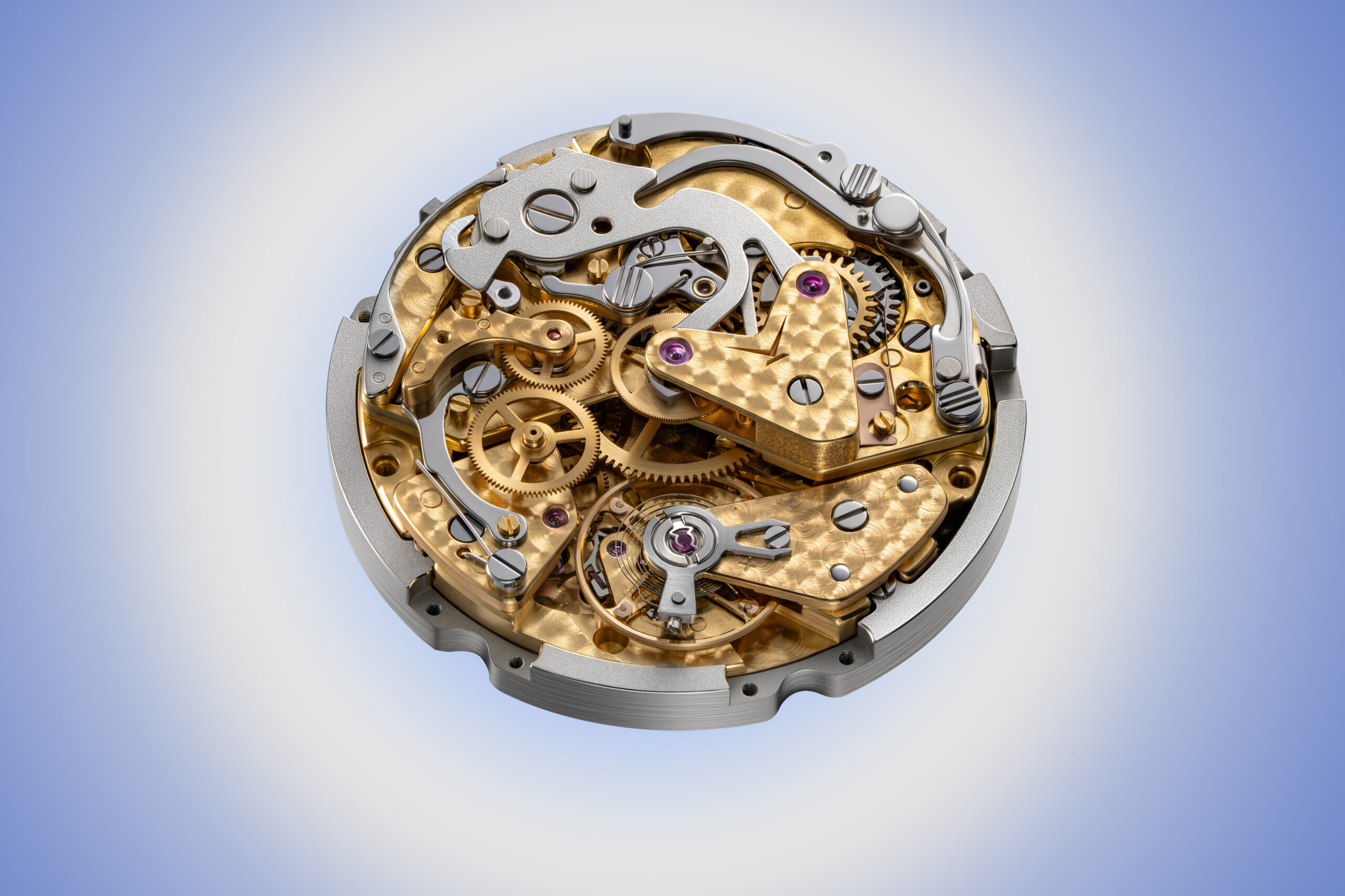
Inside is the hand-wound calibre K.20-5, based on the Russian Poljot 3133.
Chaykin’s manufacture makes 60 components for the modified movement, including parts for the 12-hour chronograph counter.
The calibre has stop seconds for precise setting, a balance adjusted by weights and a damping ring intended to help protect the movement from external loads.
The choice of manual winding followed tests of automatic winding in weightlessness.
Chaykin says the team confirmed automatic winding works in weightlessness, but preferred the certainty of a fully wound manual movement before a spacewalk, with the crown wound by hand to a firm stop.
The collector edition keeps the working character
The SC02C offered to collectors is closely related to the watches worn outside the ISS, according to Chaykin.
He says the production case has been reduced by half a millimetre and the movement finishing has been improved, while the specifications are otherwise broadly the same as those of the spacewalk watches.
Every production watch is slated to undergo the full laboratory test programme.
That programme includes centrifuge and vibration tests, impact testing, thermal cycling, exposure to a solar simulator, and checks for sealing and vacuum resistance.
Chaykin says the team measured both timekeeping and chronograph performance during the May spacewalk, though the numerical results remain confidential.
The watch is limited to 28 pieces, and Chaykin has said he wants feedback from owners as they wear the SC02C, particularly on shock resistance and the durability of the chronograph pushers and other components.
Details & Specifications
| Brand | Konstantin Chaykin |
|---|---|
| Model | SC02C |
| Case size | 44mm diameter, 14.5mm thick |
| Case material | Steel |
| Crystal | Flat sapphire crystal with anti-reflective coating |
| Dial | Black dial with large markers, three registers and red-tipped hour hand |
| Movement | Hand-wound calibre K.20-5, based on the Russian Poljot 3133 |
| Chronograph | Measures up to 12 hours |
| Power reserve | 45 hours |
| Water resistance | 10 ATM |
| Vacuum resistance | Specified to withstand high vacuum down to one-millionth of normal atmospheric pressure |
| Straps | Two straps, including one sized for everyday wear and one long enough for a spacesuit cuff |
| Production | Limited edition of 28 pieces |
Chaykin’s interest in space predates the Roscosmos project, and he has linked it to childhood reading of Soviet science fiction as well as earlier watches such as the Lunokhod and Mars Conqueror.
That background gives the SC02C its emotional charge, but the watch is strongest where the romance is kept in check by function.
For collectors drawn to working instruments rather than decorative space-age theatre, this is a rare case of the story being built into the engineering rather than engraved onto the back.