Watch lugs are easy to overlook until you notice how much they decide.
They control how a watch sits, how a strap moves, how a case looks from the side and, in a very real sense, whether the wristwatch could exist at all.
The story of the lug is also the story of the wristwatch leaving the pocket, becoming useful in the field, and eventually becoming one of the most expressive pieces of case design.
At a glance
- Watch lugs transformed pocket watches into practical wristwatches by allowing straps and bracelets to be securely attached.
- Early wire lugs gave way to spring-bar systems, integrated case construction and more refined lug architecture.
- Lugs remain a defining detail for collectors because they affect comfort, strap choice, durability and visual character.
From pocket watch cases to the first wristlets
The pocket watch and the wristwatch perform the same basic task, but moving time from a waistcoat to the wrist demanded a redesign of almost everything around the movement.
Pocket watches were often around 50mm in diameter, with many examples sitting between roughly 43mm and 55mm.
That scale was manageable in a pocket but awkward on the wrist, so early wristwatch cases became much smaller as the format gained popularity in the 1920s, often around 30mm or less.
The crown also had to move.
A pocket watch crown at 12 o’clock made sense when the watch was suspended upright, but the wrist favoured easier access at 3 o’clock, which became the standard layout.
Lugs solved the most important physical problem.
Without them, there was no practical way to attach a strap or bracelet to a production wristwatch.
Before wristwatches became purpose-built objects, many were essentially converted pocket watches with loops or lugs soldered to the case.
Those conversions could be crude, but they answered a real need.
Some early examples used smaller pocket watches, often under 45mm, with wire lugs attached in a way that shifted the crown toward 1 o’clock.
The dial sat at an angle, but the arrangement improved strap clearance and made the crown easier to use.
War, utility and the end of the pocket watch’s dominance
At the start of the 20th century, wristwatches were still widely associated with women’s fashion rather than men’s daily equipment.
Military use changed that perception quickly.
Soldiers needed hands-free timekeeping, and a pocket watch was simply less practical in the field.
Early trench watches, often called wristlets, emerged from this need, with jewellers and sometimes soldiers themselves adding lugs to small cases so they could be strapped to the wrist.
British soldiers had used such watches during the Boer Wars, but the First World War made the format far more widespread.
By 1914, wristwatches were being adopted as military equipment by British officers, with the US Army following by 1916.
There had been earlier purpose-built military wristwatches too, including examples made by Girard-Perregaux for German naval officers in the 1880s.
After the war, soldiers continued wearing wristwatches in civilian life.
That visibility recast the wristwatch as modern, practical and masculine, helping it overtake the pocket watch during the 1920s.
The timing also coincided with a period of strong design experimentation.
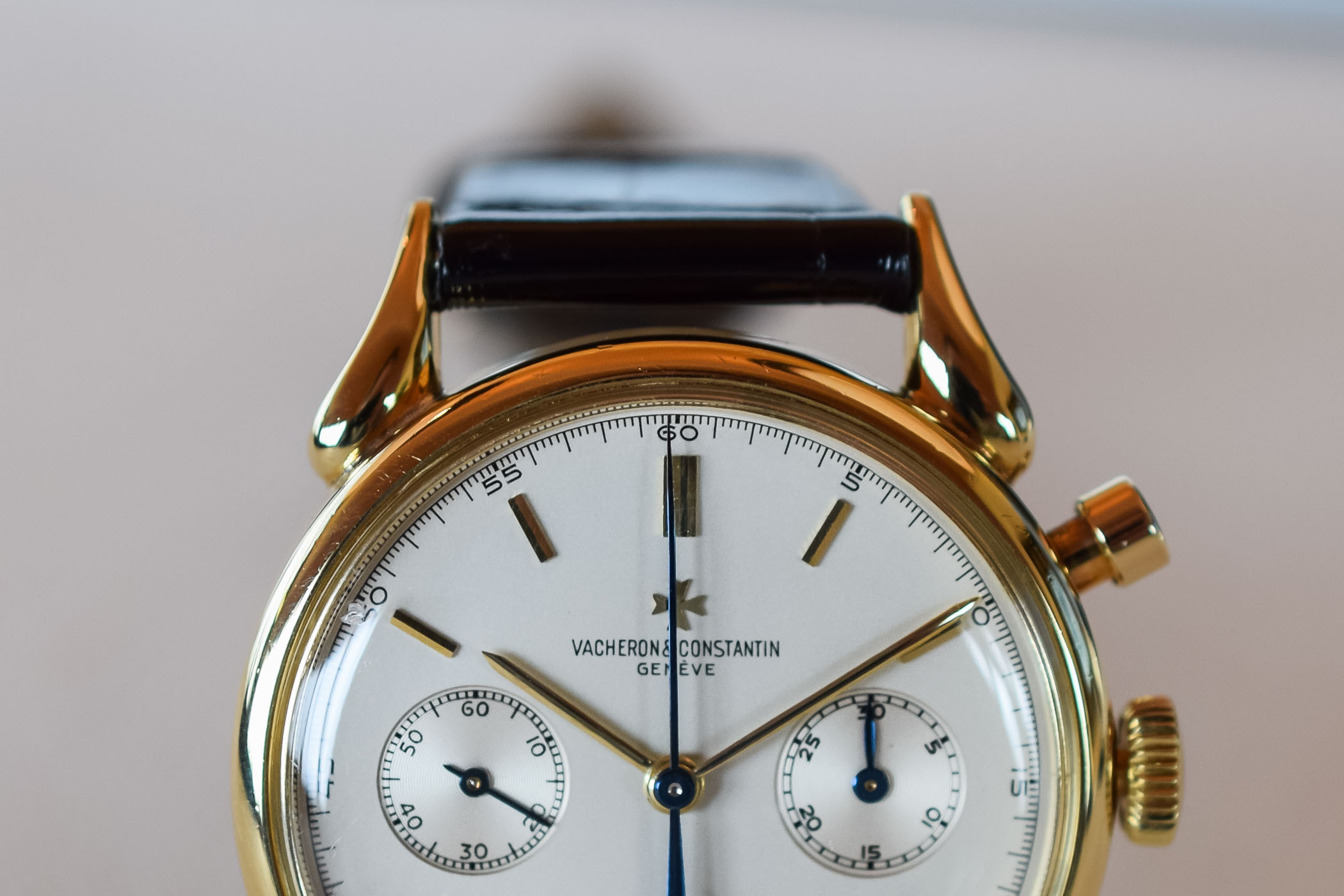
Rectangular, shaped and angled cases arrived with the broader Art Deco mood, seen in watches such as the Cartier Tank, Vacheron Constantin’s American 1921 design language and, shortly after, the Jaeger-LeCoultre Reverso.
As cases became more intentional, lugs stopped being mere attachments.
They became part of the watch’s architecture.
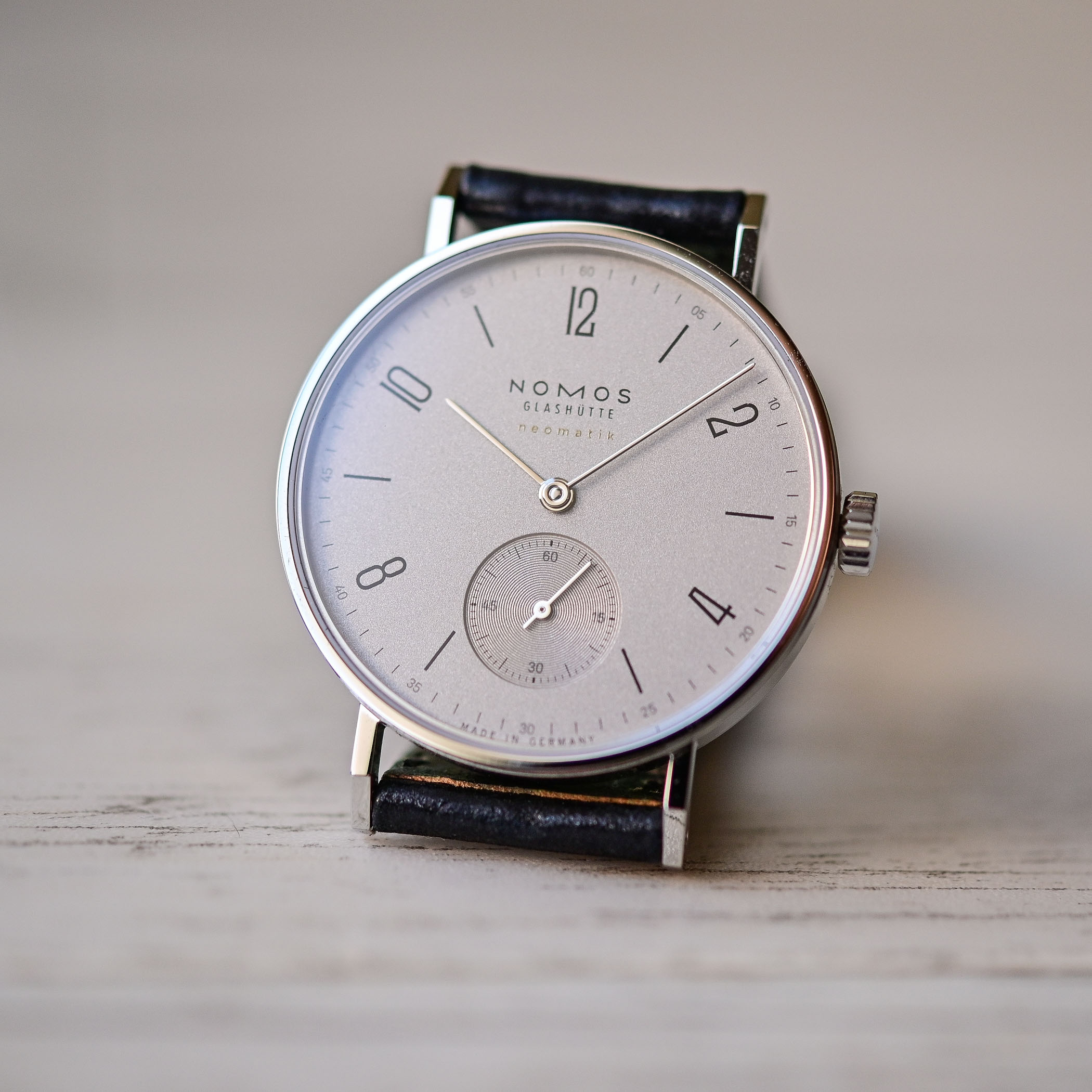
Wire lugs and the charm of the simplest solution
The earliest lugs were usually fixed wire loops.
They were made for one-piece straps, much like the idea behind modern NATO or Zulu straps, and they didn’t rely on removable spring bars.
At first, these wire loops were mostly functional additions rather than carefully styled features.
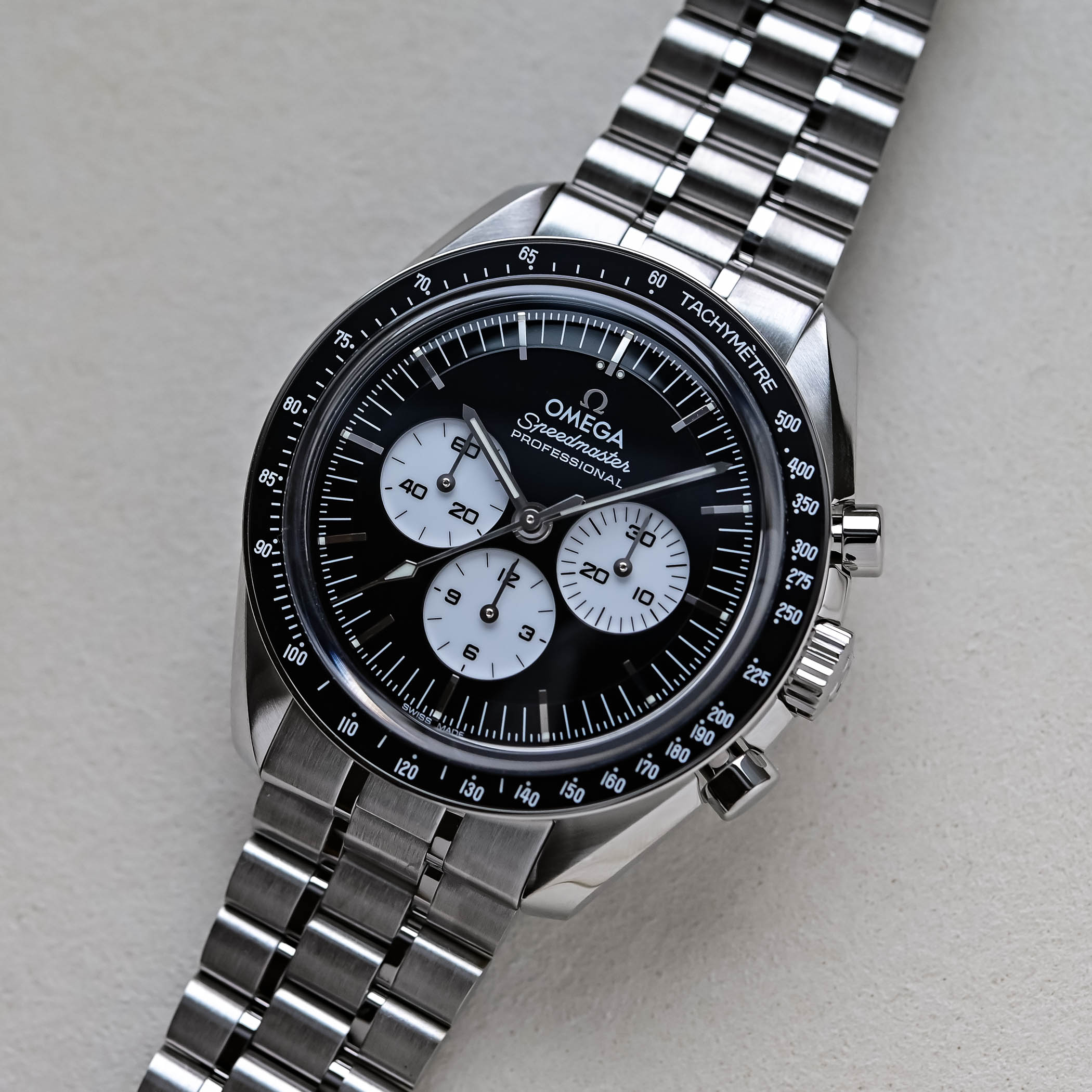
Yet their military directness has given them lasting appeal.
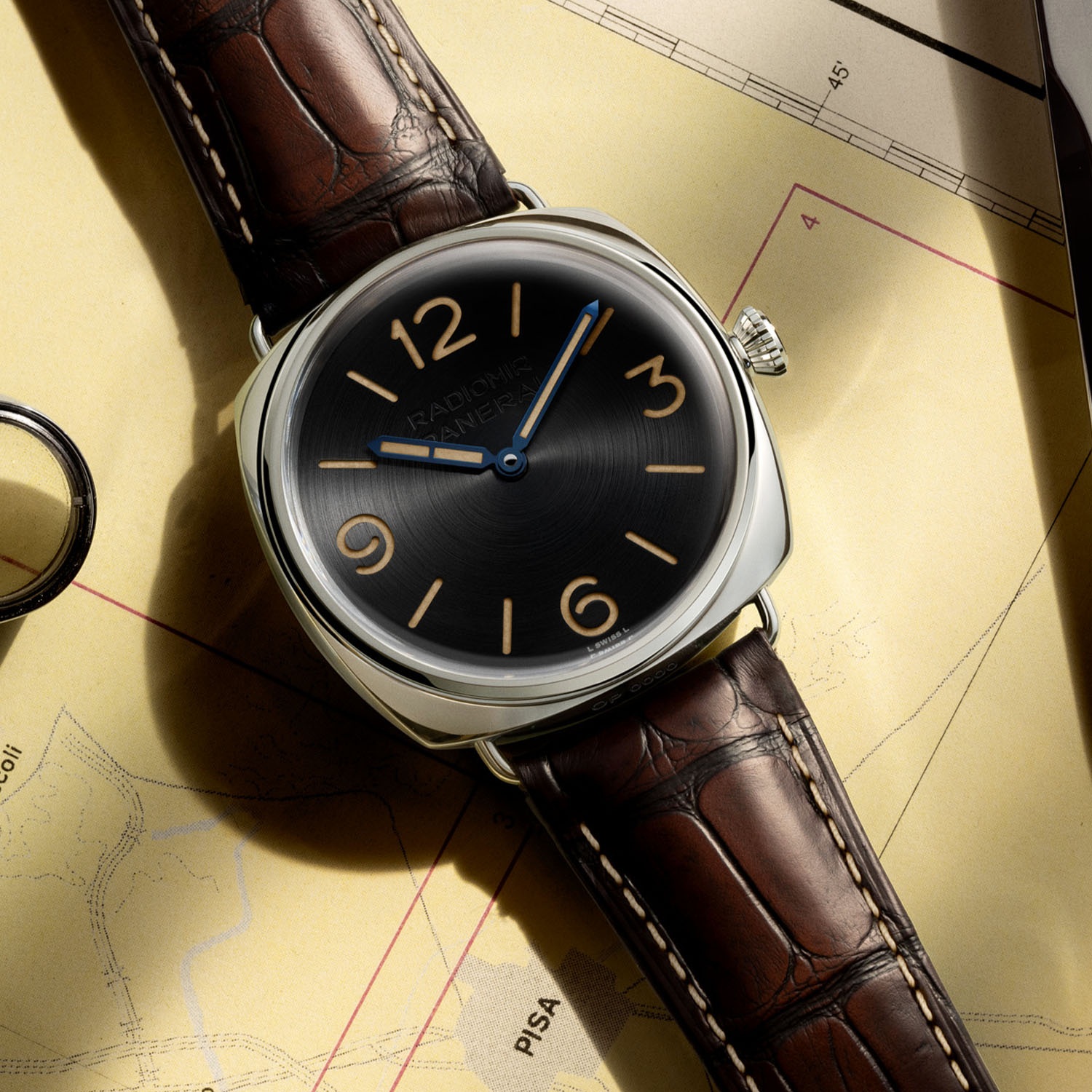
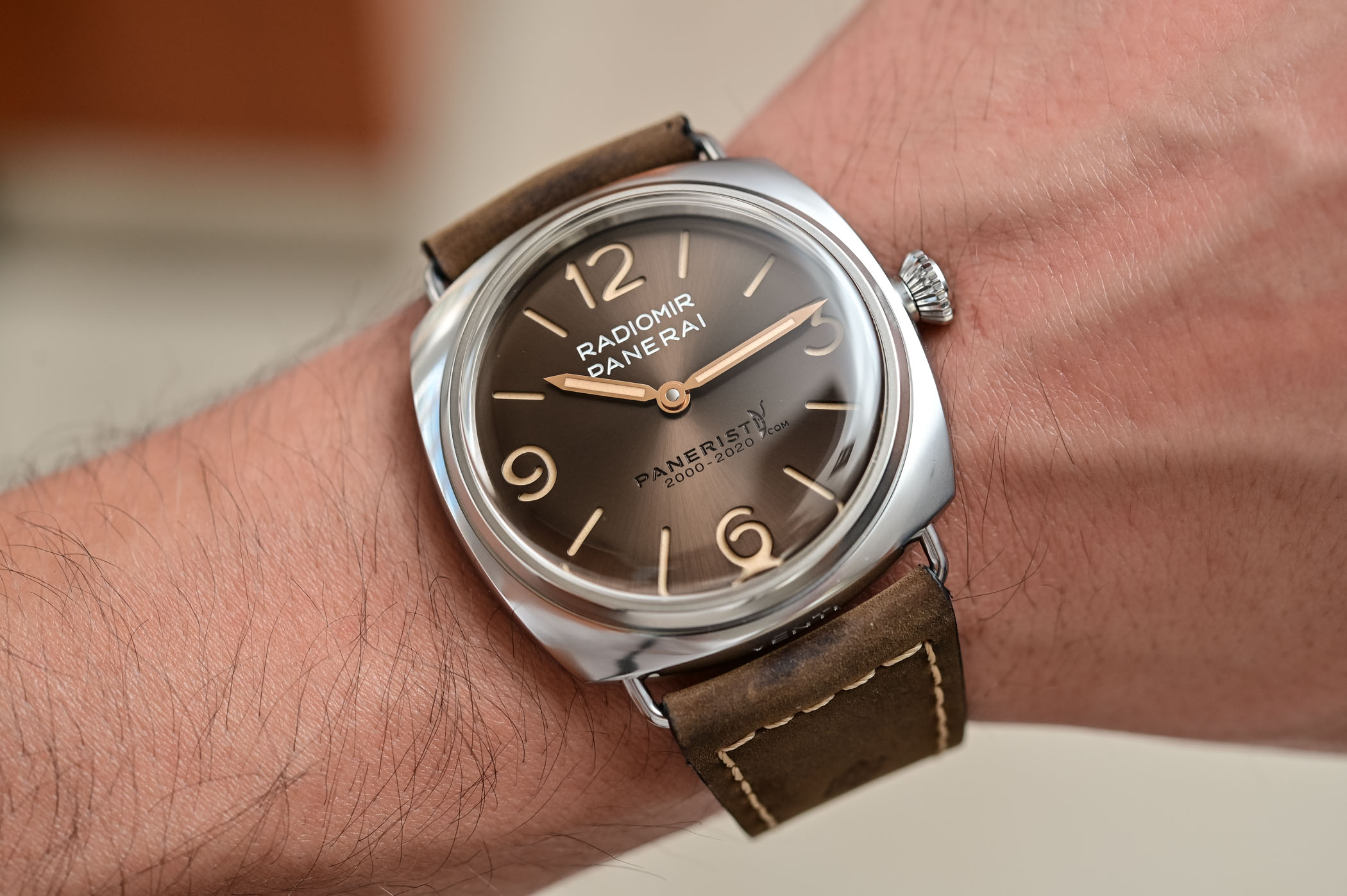
Panerai’s Radiomir is the most recognisable modern example, where wire lugs are central to the watch’s identity.
The detail connects the collection to the 1935 Radiomir prototypes created for the Royal Italian Navy, even though some later Radiomir 1940 models use more conventional lugs and spring bars.
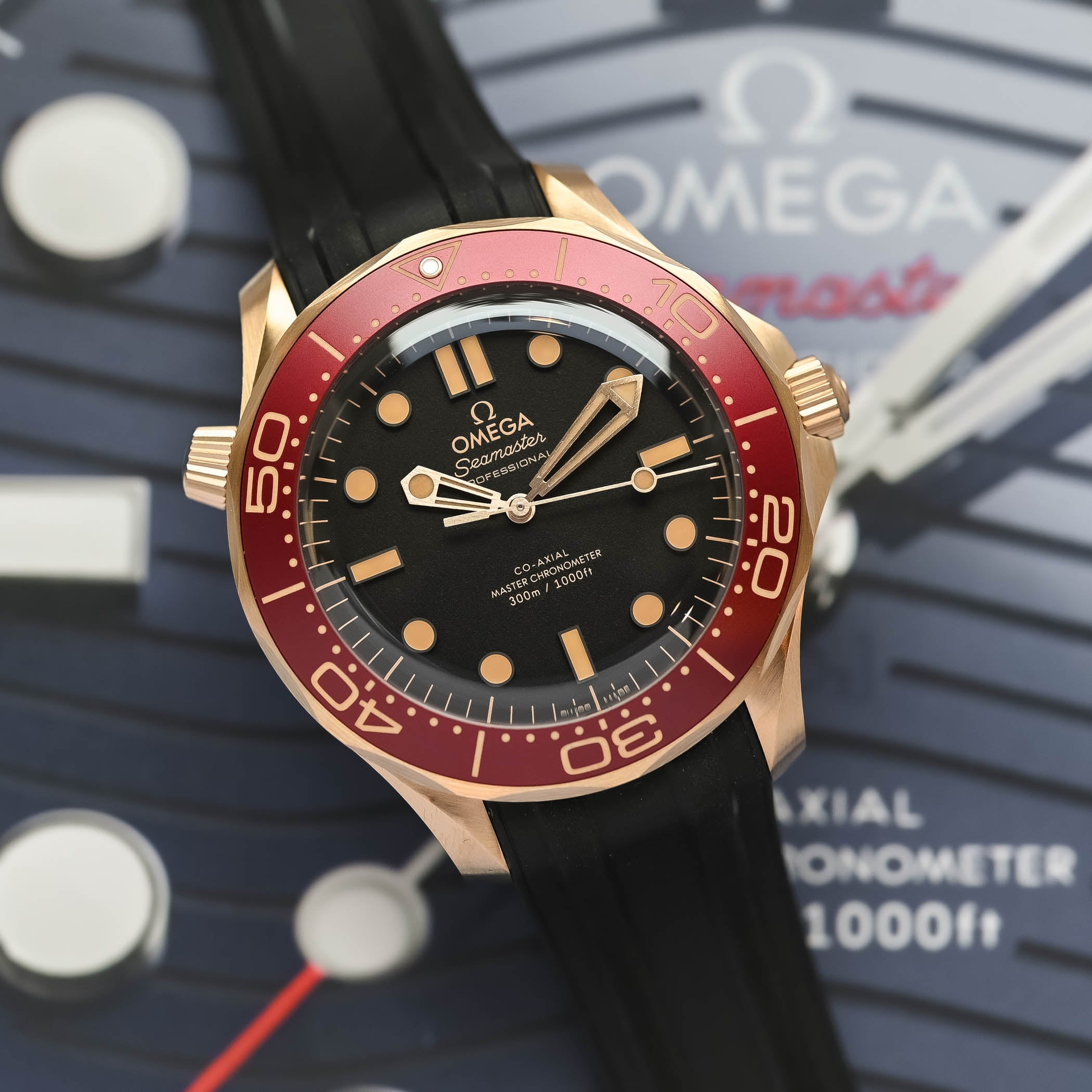
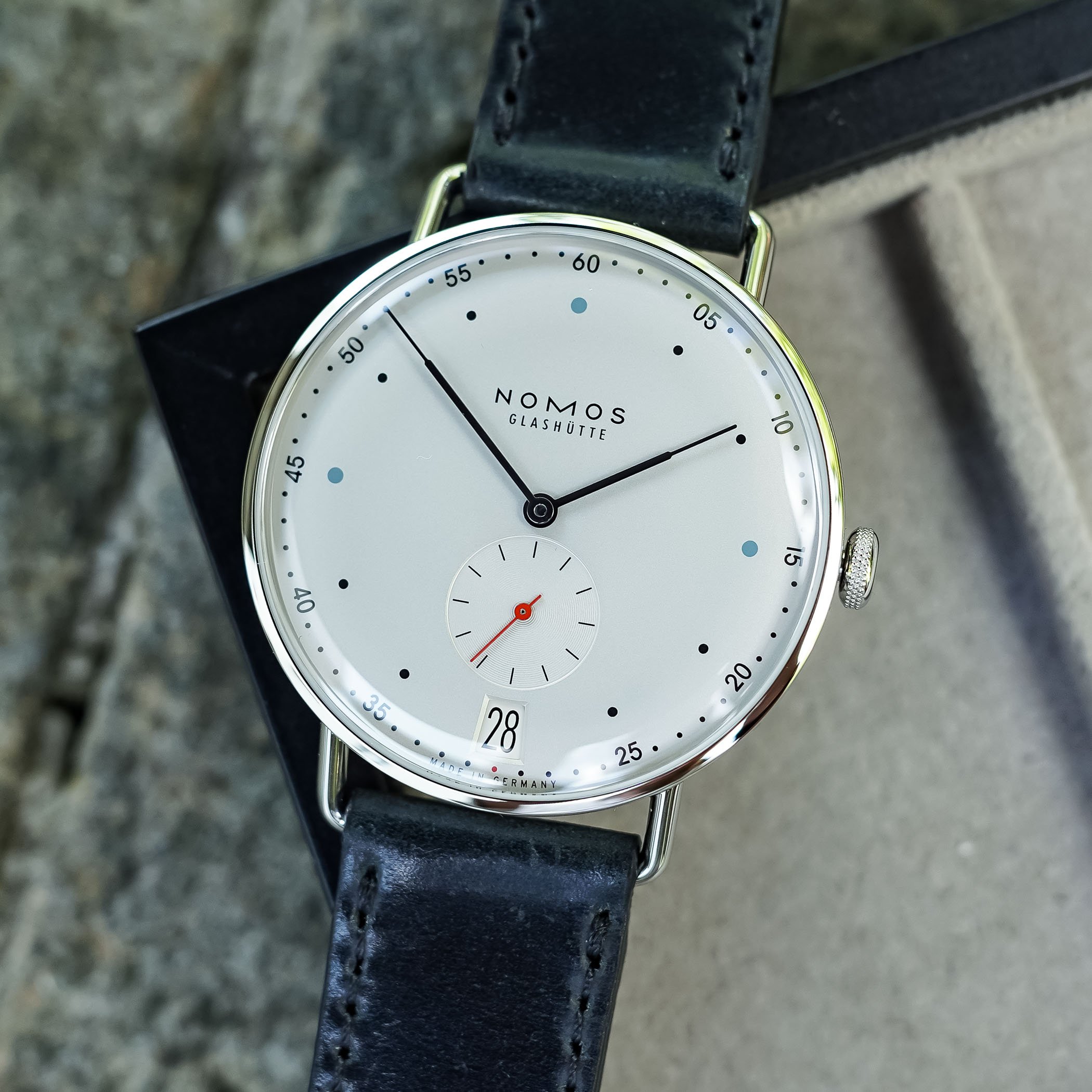
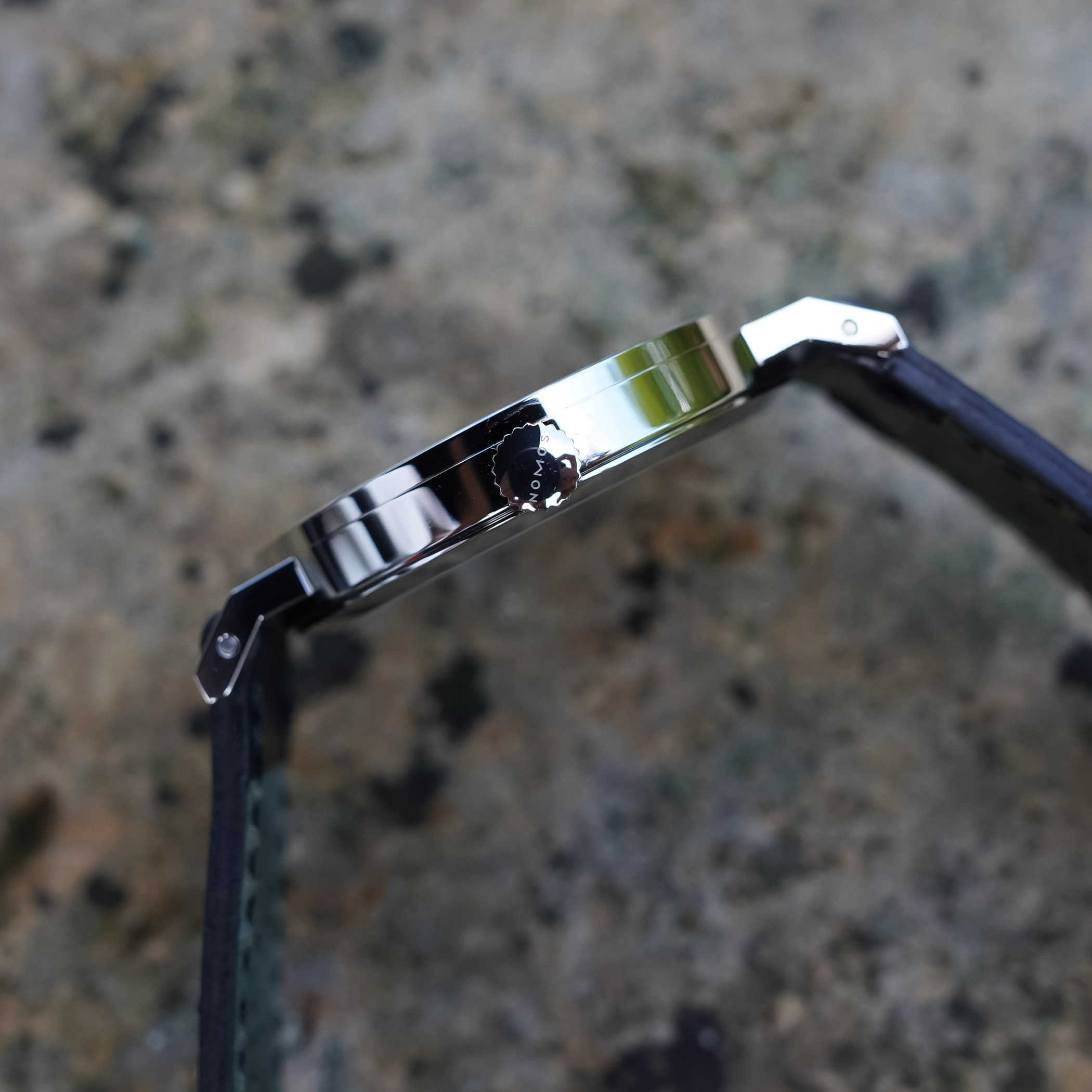
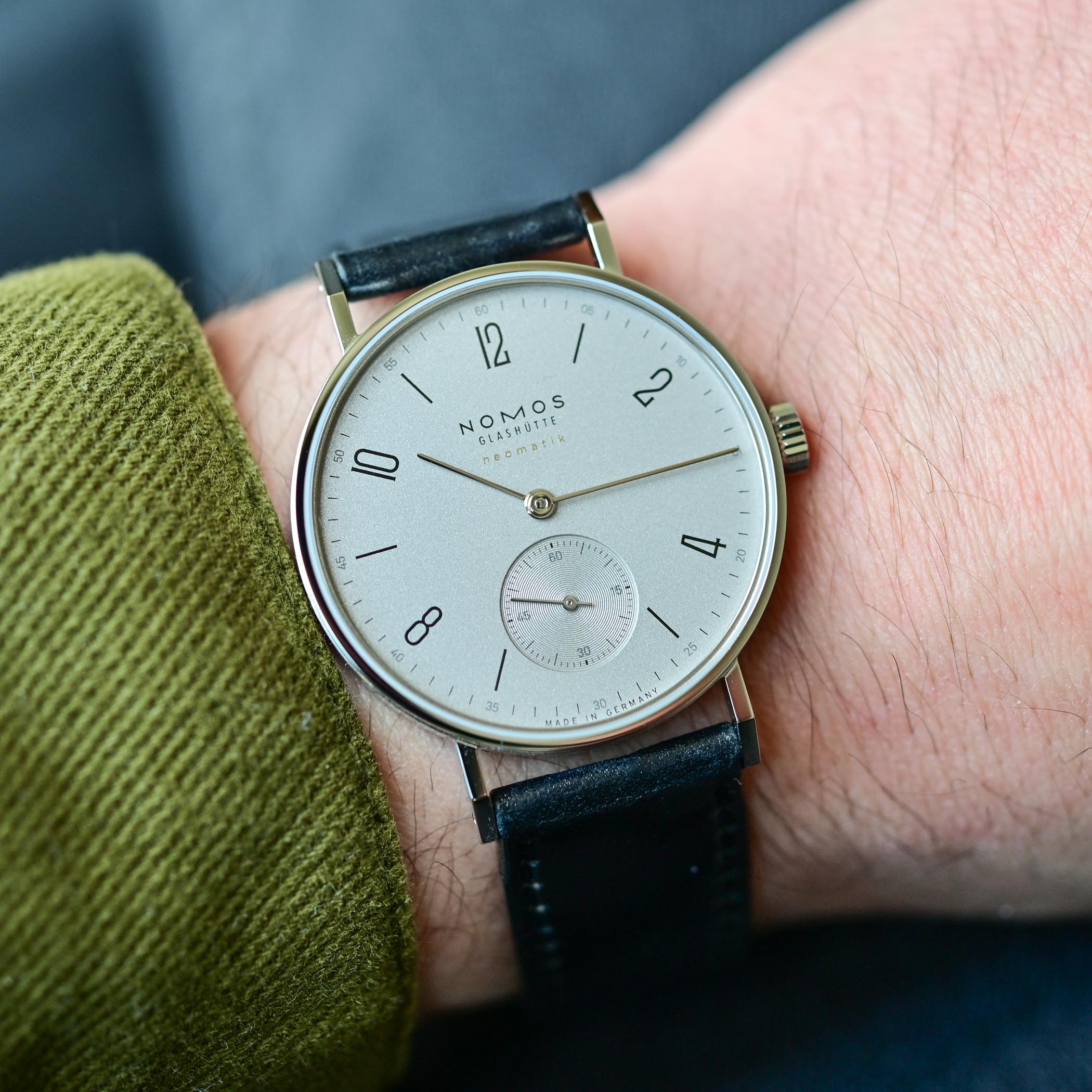
The NOMOS Metro, designed by Mark Braun, shows the idea in a very different language.
Its wire lugs give the watch a light, graphic quality and separate it from more conventional round-case designs.
The drawback is practical.
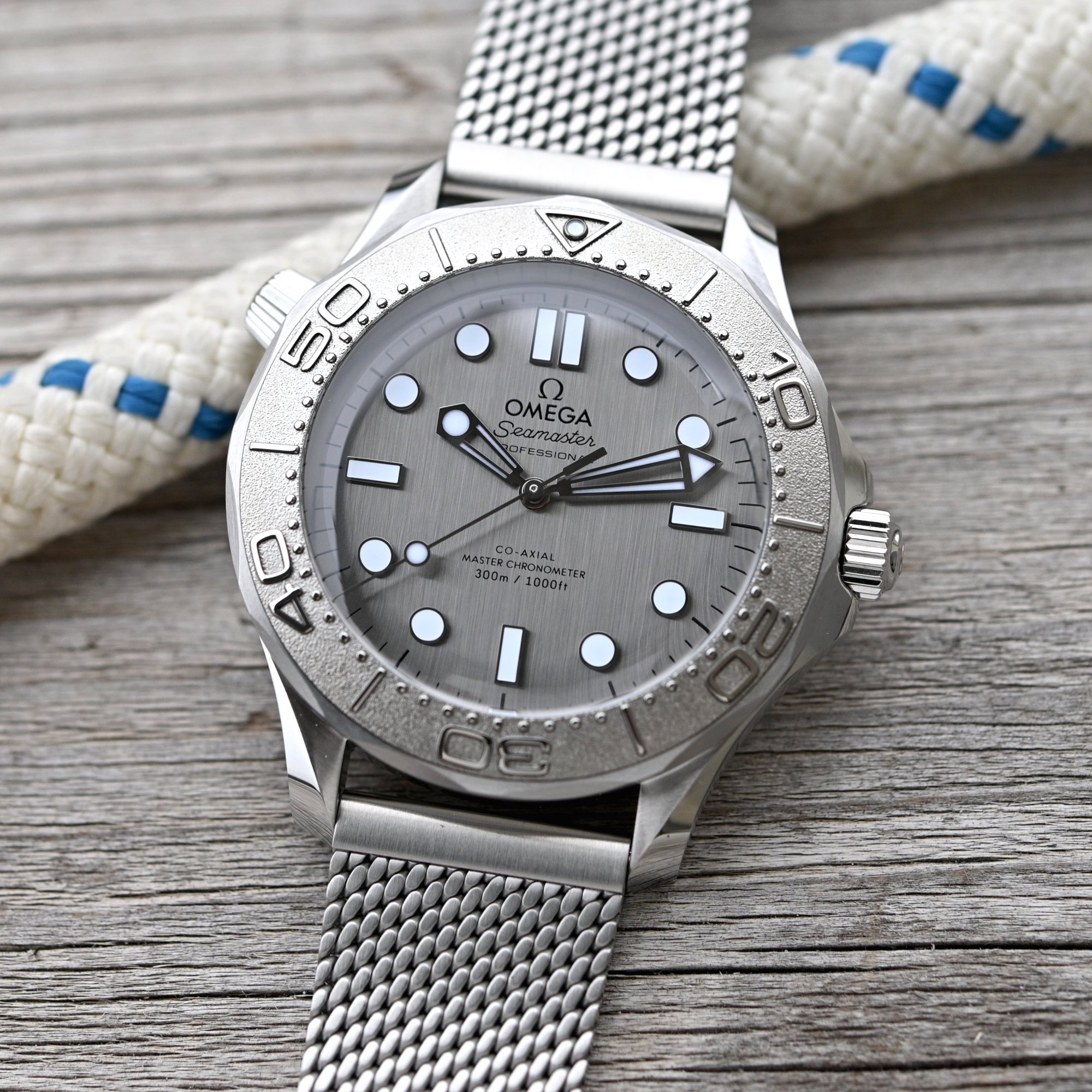
Fixed wire lugs mostly favour one-piece straps, though two-piece straps that fold around the bars do exist.
Open-ended metal bracelets can also hook onto the lugs, and adapters can add a spring-bar attachment, but that tends to be less elegant than a purpose-built solution.
Spring bars changed straps forever
The move from fixed wire lugs to twin lugs with spring bars was one of the decisive steps in wristwatch design.
It allowed two-piece straps to be fitted more cleanly and gave watchmakers far more freedom in shaping the case.
Comparable fastening ideas had appeared in patents by the mid-1910s, but the spring bar in the familiar modern sense was patented in 1929 by Isidor Dinstmann.
The mechanism remains beautifully simple.
A small hollow tube contains a coiled spring and compressible pivot pins, which lock into holes inside the lugs.
Early pins could be made of brass, while stainless steel later became the common standard.
Nearly a century later, the basic principle has barely changed.
Spring bars are not only used between the lugs.
They also secure buckles and clasps to straps and bracelets, and they appear in clasp micro-adjustment systems.
The most useful recent development is the quick-release spring bar.
Its small external lever allows a strap to be removed by hand, without a tool, and the format became increasingly common from around 2015.
Drilled lugs served a similar practical purpose in an earlier way.
With holes running through the outer side of each lug, a spring bar can be compressed from the outside using a fine tool.
That makes strap changes easier and can help avoid scratches on the inner lug surfaces.
Today, drilled lugs are less common on many new watches, partly because brands favour cleaner case flanks and partly because quick-release systems have made tool-free strap changes more accessible.
Integrated case lugs and the rise of refined case architecture
In watchmaking, integrated lugs can mean two different things, so it’s worth being precise.
Here, the term refers to lugs formed as part of the case itself, not to the integrated bracelet style associated with some sports watches.
Separate lugs can be soldered or welded onto a case, which reflects the older method used on early conversions and some traditional high-end work.
Integrated case lugs are milled as part of the same case middle, creating a stronger and more precise structure.
This approach began to take hold in the late 1920s and is now the dominant form in modern watchmaking.
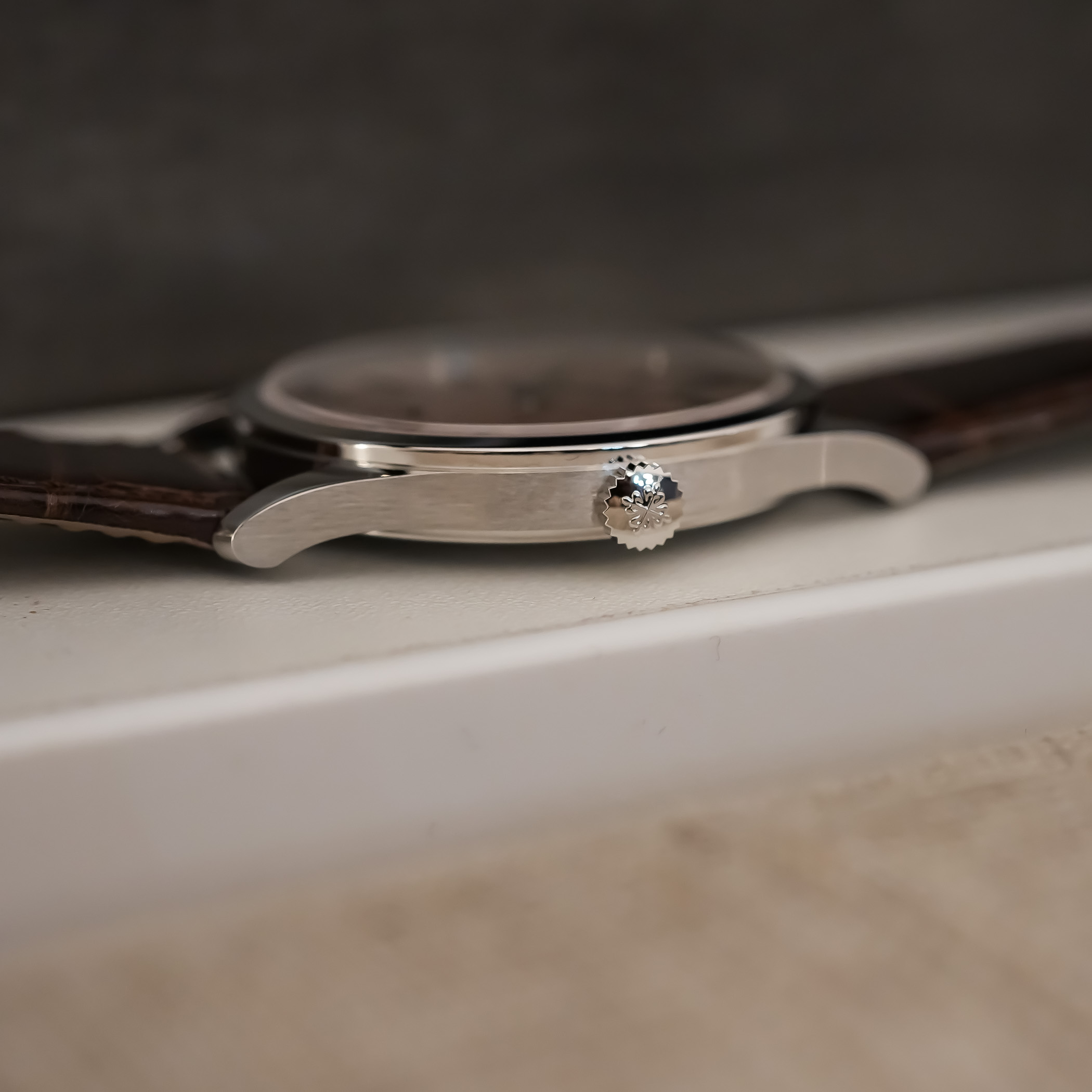
Patek Philippe’s 1932 Calatrava is often associated with bringing this cleaner style into the mainstream, though earlier examples may have existed.
The shift mattered aesthetically as much as structurally.
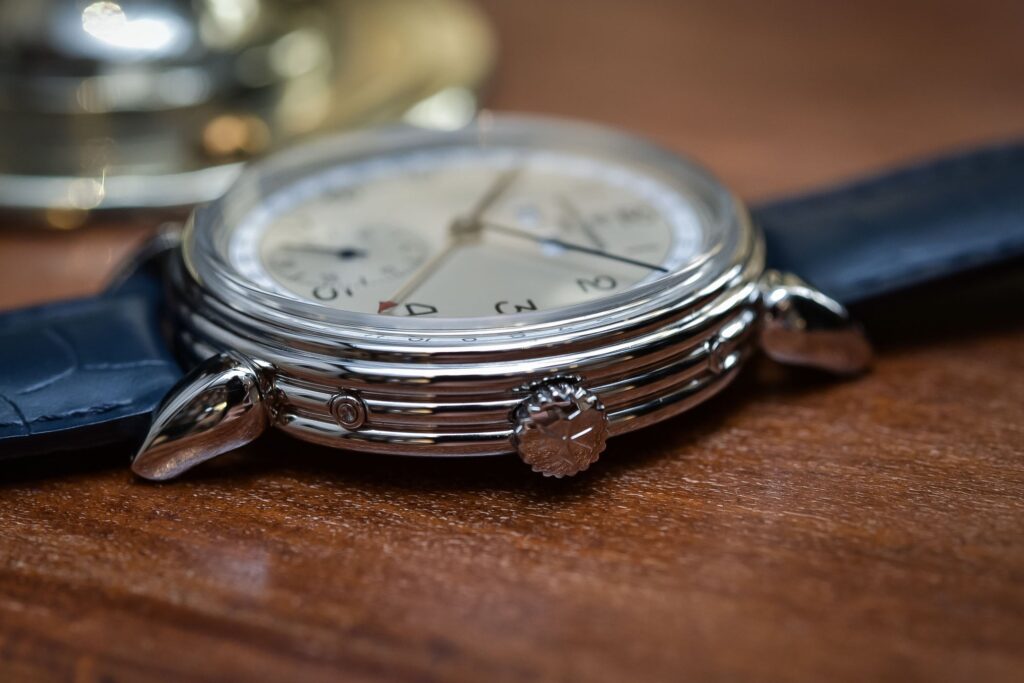
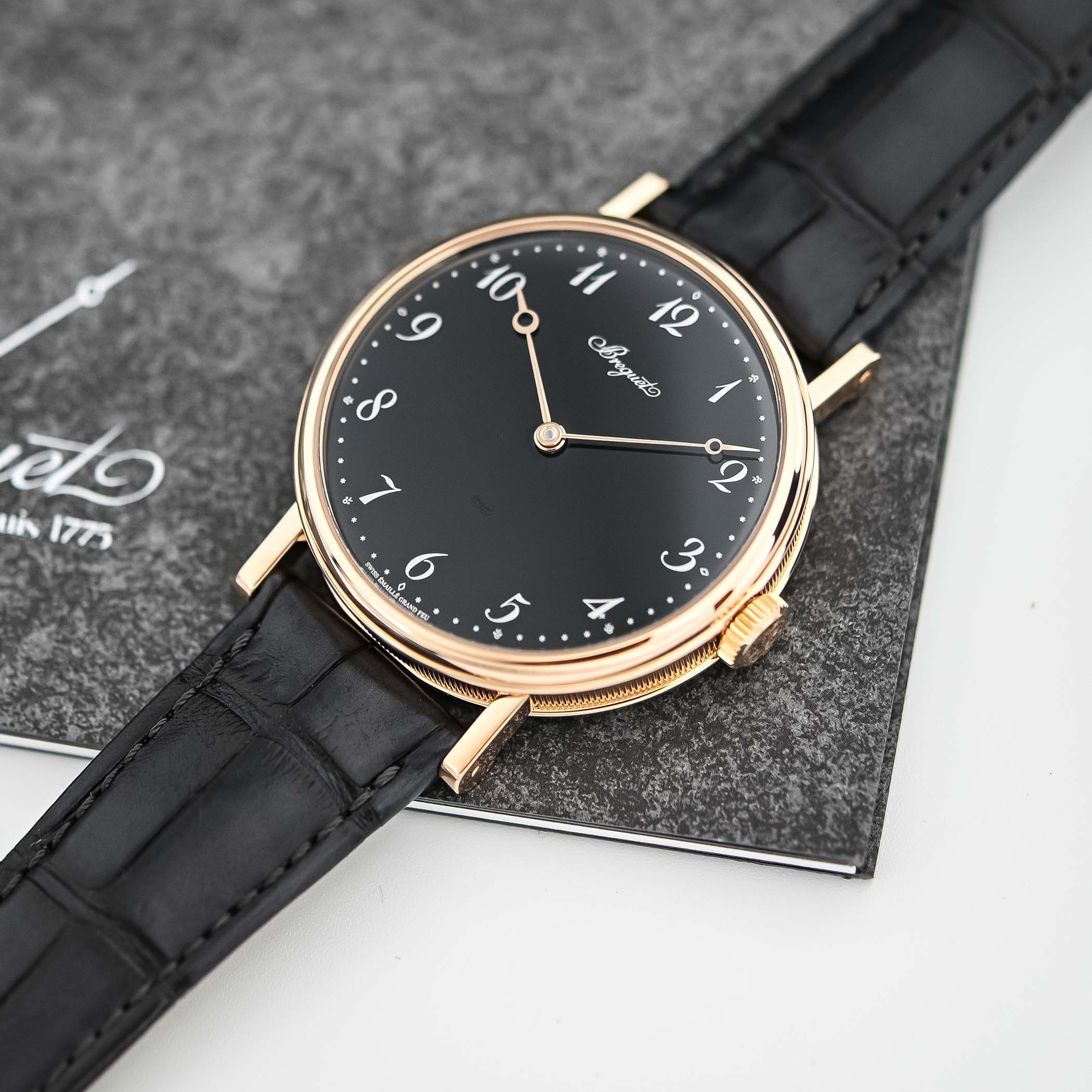
Once lugs became part of the case geometry, designers could treat them as shoulders, horns, bevelled extensions or sculptural transitions from case to strap.
A slim dress watch can use fine tapered lugs to create elegance and apparent thinness.
A military-inspired piece may use straight, drilled lugs for utility.
A cushion case, rectangular case or asymmetric case can turn the lugs into part of the watch’s whole silhouette rather than an attachment point at the edge.
That is why collectors pay close attention to lug shape, length and curvature.
Long lugs can make a modest case wear larger, while sharply downturned lugs can help a broad watch sit closer to the wrist.
The distance between lugs also determines strap compatibility, which can be crucial for anyone who enjoys changing the personality of a watch with leather, rubber, textile or bracelet options.
For such a small component, the lug carries a remarkable amount of responsibility.
It is engineering, ergonomics and design language compressed into a few millimetres of metal.
The wristwatch may have replaced the pocket watch because it was more practical, but the lug is what made that practicality possible.
More than a century later, it remains one of the clearest ways to understand how a watch was designed, how it will wear, and how much attention its maker paid to the transition from case to wrist.