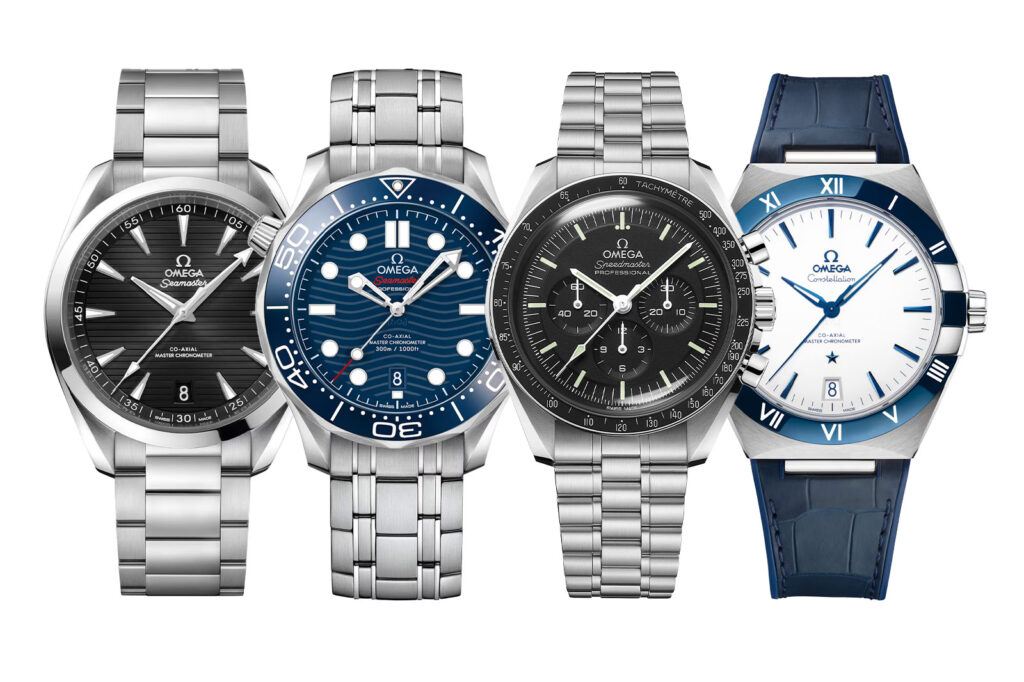
Omega is one of the few watchmakers whose identity stretches from Olympic timing to lunar exploration without feeling like a marketing stretch.
For newcomers, that history can make the catalogue feel larger than it really is. The easiest way in is to understand Omega through its core families, then look at the key models that define each one.
In 2026, the big pillars remain Speedmaster, Seamaster, De Ville and Constellation, with the Speedmaster still serving as the brand’s most culturally loaded collection.

At a glance
- Omega’s modern range is organised around four major families, led by the Speedmaster and its Moonwatch lineage.
- The Speedmaster line spans faithful space-era chronographs, smaller 38mm pieces, ceramic Dark Side of the Moon models and specialist chronograph complications.
- Prices confirmed here range from £5,300 for the Speedmaster 38 to £86,100 for the Canopus Gold Speedmaster Calibre 321.
The four Omega families to know first
The Speedmaster is Omega’s chronograph family and the one most closely tied to space exploration, motorsport design and enthusiast culture.
It’s also the collection that gave Omega its most recognisable watch, the Moonwatch Professional, whose basic layout has remained remarkably close to the Apollo-era original.
The Seamaster sits on the aquatic side of the catalogue, representing Omega’s dive-watch and ocean-going identity.

The De Ville is the dressier, more refined branch of the range, while the Constellation occupies a more distinctive design position within Omega’s wider catalogue.
Those four names are the best starting point for anyone trying to make sense of the brand.
Speedmaster is where Omega’s mythology lives
The Moonwatch Professional is still the centre of gravity.

Its reputation comes from the Speedmaster ST 105.012 worn during Apollo 11, and the contemporary version keeps that spirit intact while using Omega’s Calibre 3861.
That movement is Master Chronometer certified, manually wound and offers a 50-hour power reserve, with magnetic resistance and accuracy forming part of the appeal.
Omega offers the modern Moonwatch in stainless steel with either hesalite glass or sapphire crystal, alongside gold versions.

For many buyers, the choice between hesalite and sapphire is less about specifications and more about mood. Hesalite feels closer to the historical idea of the watch, while sapphire adds everyday scratch resistance.
The key Speedmaster variations in 2026
The Speedmaster 38 takes the chronograph into a smaller and more polished format.
At 38mm, it wears more compactly than the Moonwatch, while oval subdials give it a softer character influenced by Omega’s De Ville language.

The blue-dial steel version is one of the more approachable takes, though the line has also been expanded with yellow gold and Sedna Gold variants.
The Dark Side of the Moon Apollo 8 moves the Speedmaster away from pure nostalgia and into modern materials.
Its black ceramic case, semi-skeletonised dial and lunar-textured display make it one of the more dramatic watches in the family, while the Saturn V-shaped small seconds hand gives the design a playful but specific space-race reference.
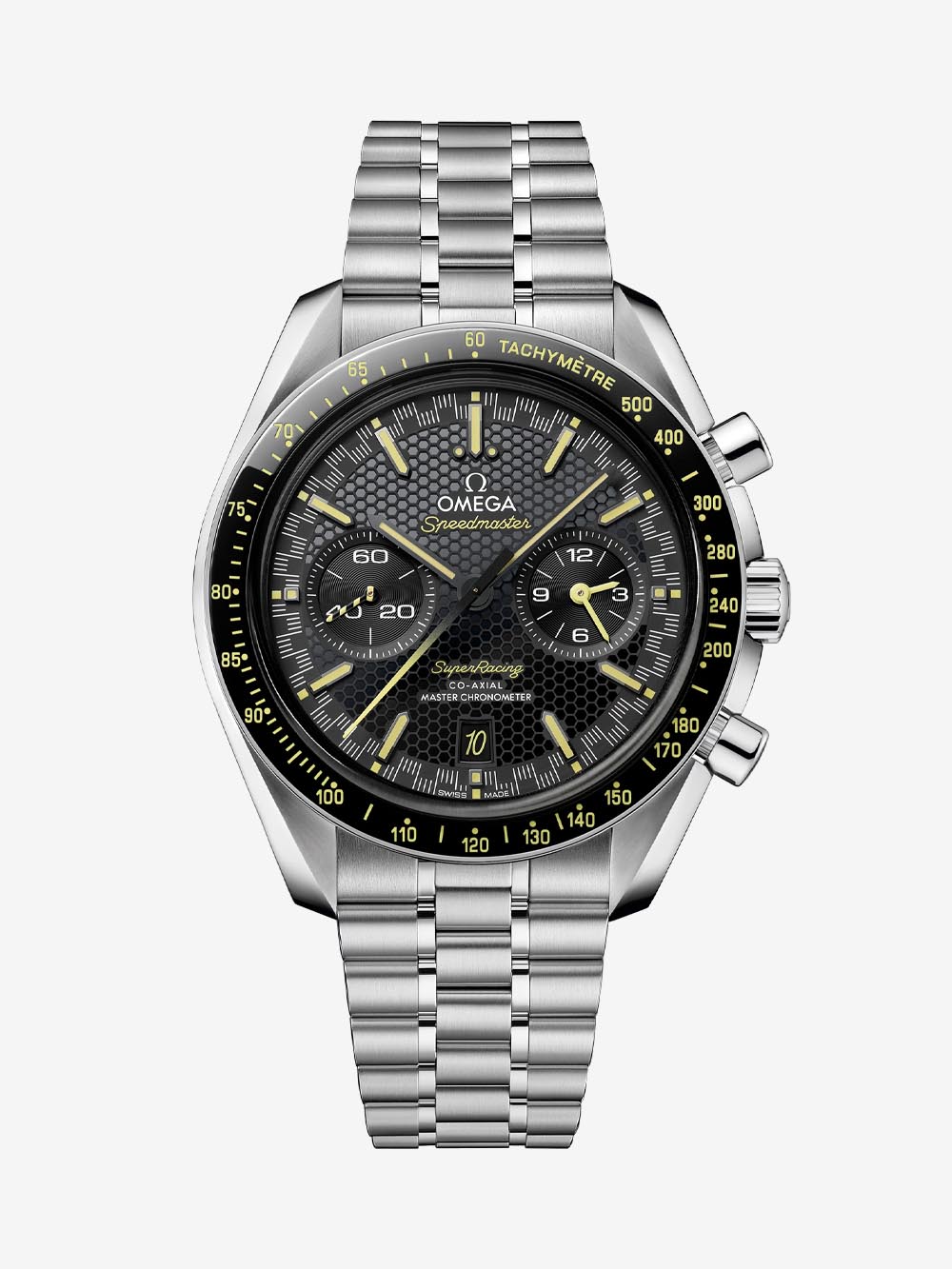
The Speedmaster Calibre 321 is aimed at a more specialised collector.
Its movement revives the legendary calibre approved for manned space missions, with a manual-wind architecture and 55-hour power reserve.
The Canopus Gold version is priced accordingly, putting it in a very different category from the standard Moonwatch.
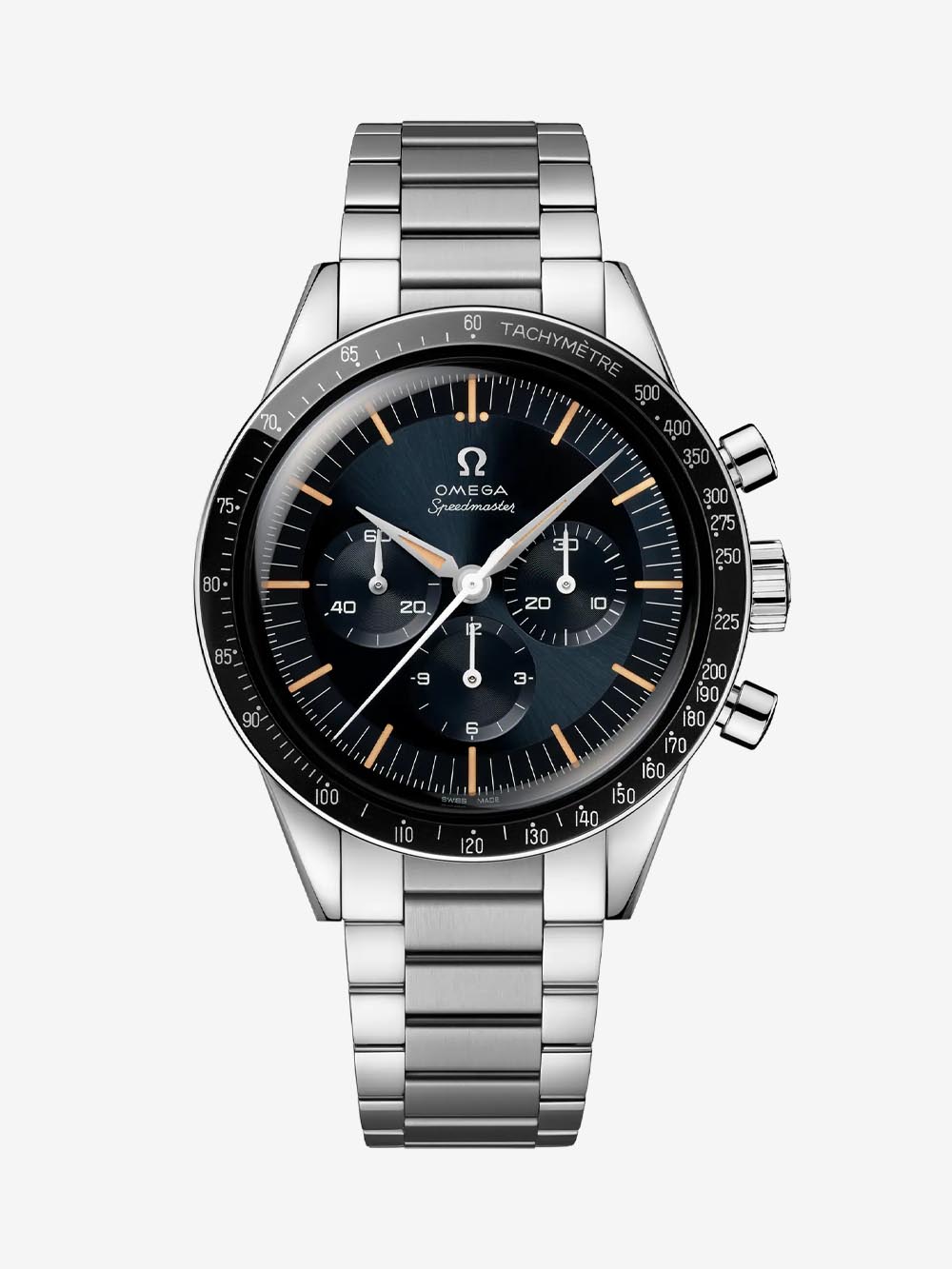
The Chronoscope Paris 2024 brings a more instrument-like personality to the line.
Its chronograph scales allow calculations for speed, distance and heart rate, making it one of the more unusual Speedmaster variants in the current family.
Then there’s the Skywalker X-33, Omega’s analogue-digital Speedmaster created in collaboration with the European Space Agency.
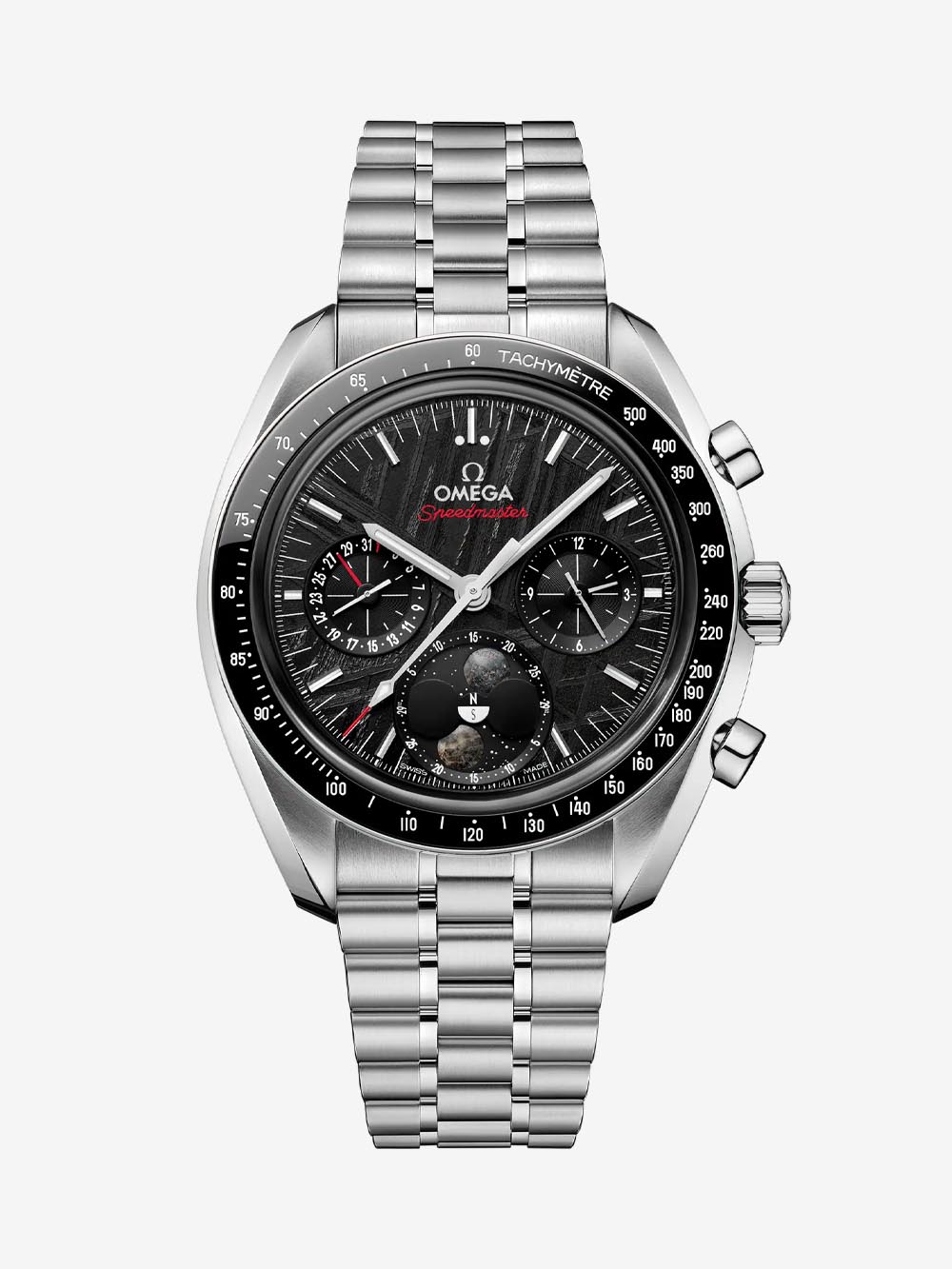
Its anadigi layout connects it more directly to professional timing tools than to vintage chronograph romance.
What kind of Omega buyer fits each collection
If you want the most recognisable Omega, start with the Speedmaster Moonwatch Professional.
It’s the cleanest expression of the brand’s space heritage and still feels like a serious mechanical chronograph rather than a commemorative object.
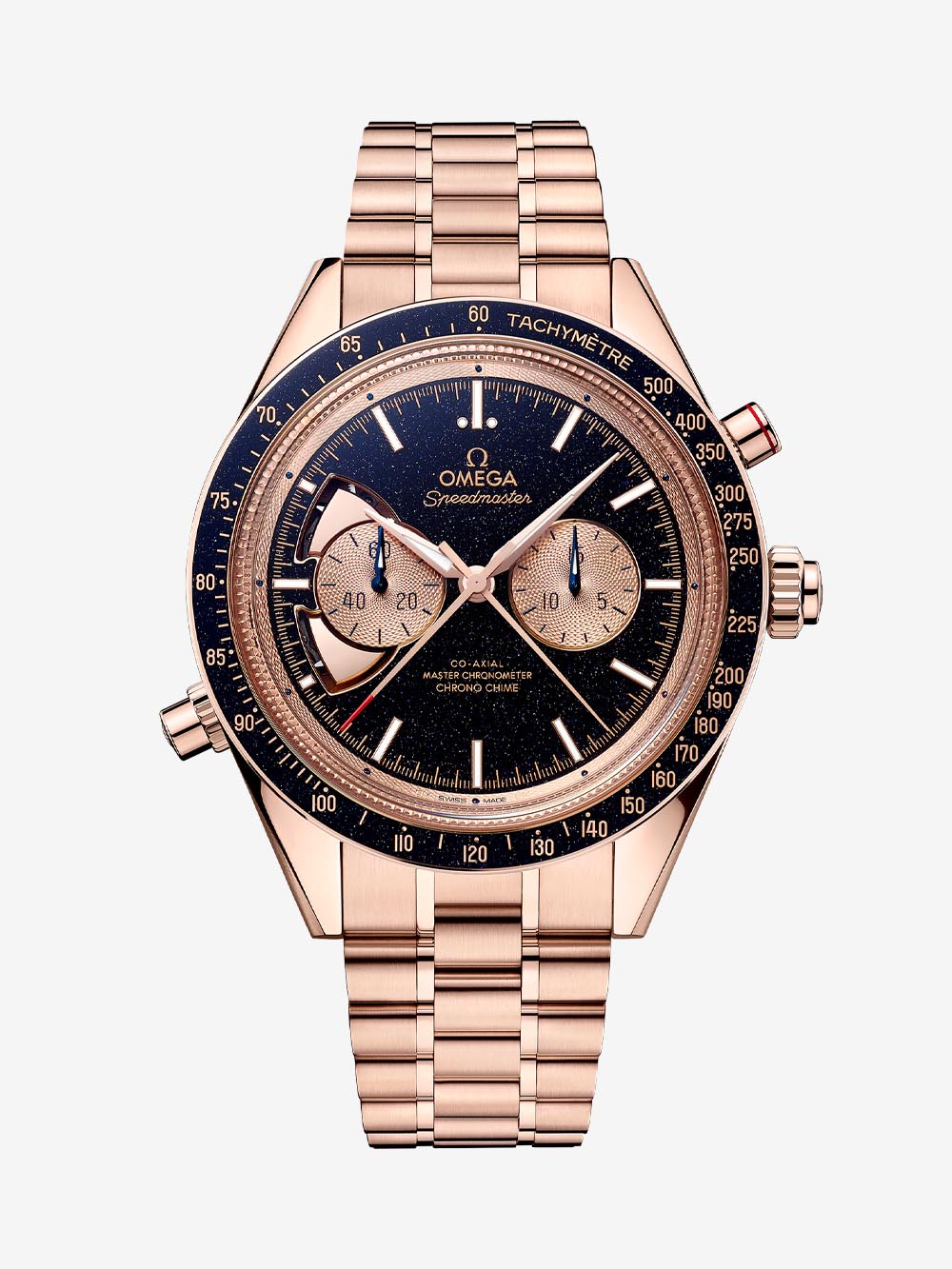
If you like the Speedmaster idea but prefer a smaller case and a more elegant wrist presence, the Speedmaster 38 is the friendlier route.
The Dark Side of the Moon Apollo 8 suits someone who wants the Speedmaster story filtered through ceramic, skeletonisation and a much more contemporary visual language.
The Calibre 321 is for the buyer who cares about movement history and is prepared to pay for a very specific kind of mechanical authenticity.
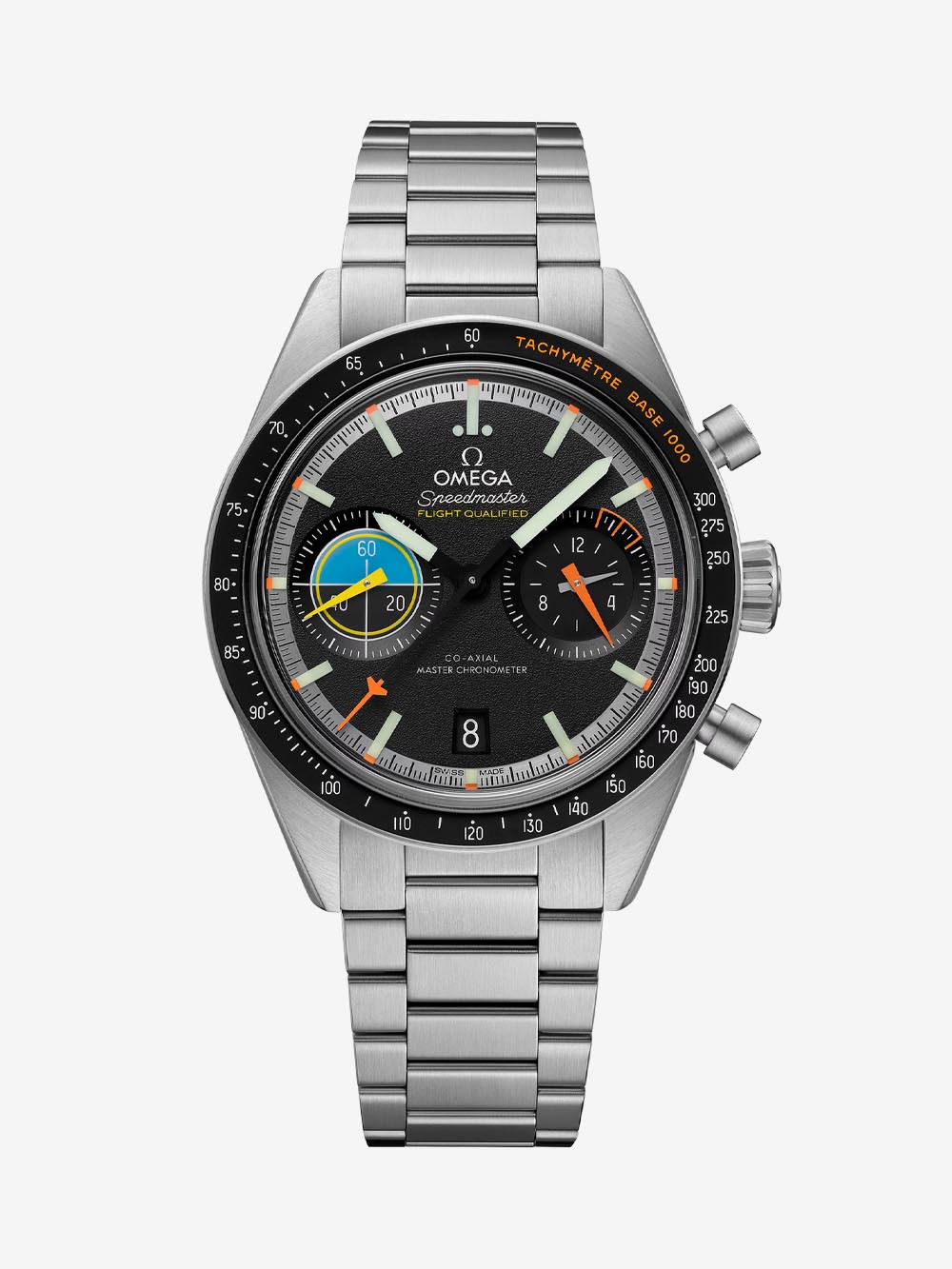
The Chronoscope is the choice for someone drawn to scale-heavy chronographs and Olympic-adjacent timing culture, while the Skywalker X-33 is the specialist’s pick.
Beyond the Speedmaster, the Seamaster, De Ville and Constellation give Omega its range. One points toward water, one toward dress, and one toward a more recognisable everyday design signature.
Details & Specifications
| Speedmaster Moonwatch Professional | 42mm stainless steel case, black dial, 50m water resistance, manual-winding Calibre 3861, 50-hour power reserve, stainless steel bracelet, £6,600 |
|---|---|
| Speedmaster 38 | 38mm stainless steel case, sun-brushed blue dial, 100m water resistance, automatic Calibre 3330, 52-hour power reserve, stainless steel bracelet, £5,300 |
| Speedmaster Dark Side of the Moon Apollo 8 | 44.25mm black ceramic case, semi-skeletonised black dial, 50m water resistance, Calibre 3869, 50-hour power reserve, rubber strap, £13,500 |
| Speedmaster Calibre 321 | 38.6mm Canopus Gold case, black dial, 60m water resistance, manual-winding Calibre 321, 55-hour power reserve, Canopus Gold bracelet, £86,100 |
| Speedmaster Chronoscope Paris 2024 | 43mm stainless steel case, silver dial, 50m water resistance, manual-winding Calibre 9908, 60-hour power reserve, stainless steel bracelet, £9,300 |
The useful thing about Omega is that its catalogue becomes much clearer once you stop seeing it as one large wall of watches.

Start with the family, then the purpose, then the case size and movement. Do that, and the right Omega usually starts to separate itself from the crowd pretty quickly.