Skeleton watches can easily become decorative for decoration’s sake, but Audemars Piguet has long treated openworking as a test of judgement.
In the Vallée de Joux, the craft became a way to show what remained when a movement was stripped to its essential architecture.
That approach gave the maison a distinctive place in 20th-century watchmaking, particularly as shaped cases, ultra-thin calibres and the Royal Oak pushed skeletonisation into a more modern register.

At a glance
- Audemars Piguet helped define modern skeleton watchmaking through hand-finished openworked movements across dress, shaped-case and Royal Oak references.
- Key pieces include the Ref. 5036, Ref. 5542, ultra-thin Calibre 2120SQ models, the 1986 Royal Oak 25636 and neo-vintage references such as the 15058BC and 14232BA.
- Selected time-only skeleton references remain comparatively approachable, with known examples often discussed in the low-to-mid five-figure pound range.
Openworking as AP architecture
Audemars Piguet’s skeletonisation story began well before open dials became a familiar luxury-watch language.
By the 1930s, the manufacture was producing openworked pocket watches in very small quantities, using the format to showcase hand craftsmanship rather than visual novelty.
The principle was demanding and simple at once.
Cut away enough metal to let light into the movement, but leave enough structure for the calibre to function with reliability and poise.
That balance is what separates serious skeleton work from surface theatre.
Internal angles, bevelled bridges and hand-finished edges matter because every exposed surface becomes part of the composition.

By the 1950s, wristwatches such as the Audemars Piguet Ref. 5036 Skeleton were being positioned as watches with a view.
At $920 at the time, roughly the equivalent of $11,000 today, the Ref. 5036 sat in a rarefied space where technical transparency and decorative finishing were treated as serious watchmaking values.
Ultra-thin calibres and shaped cases
The 1960s and 1970s gave Audemars Piguet the right canvas for a more modern kind of skeleton watch.

Ultra-thin movements allowed the brand to reduce the mechanics to geometry, making the bridges, wheels and negative space feel almost architectural.
References such as the 5542 showed how restrained cases could hold unusually expressive mechanics.
Movements like the gold-plated Calibre 2120SQ became especially important, with each movement requiring around 150 hours of hand cutting and finishing.
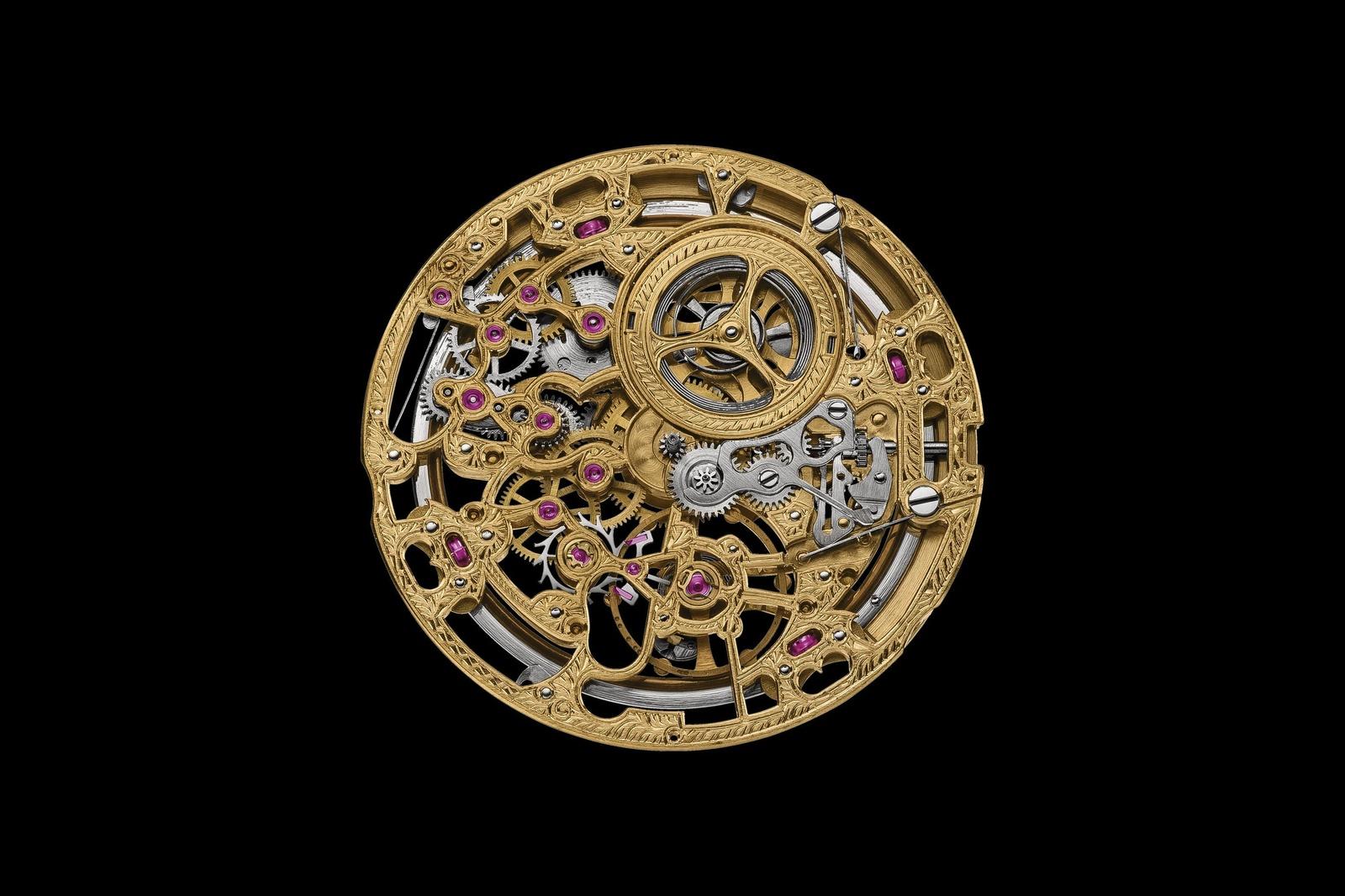
The technique had appeared in the 1970s with the 5442 and continued through shaped pieces such as the octagonal 4122 in 1980.
These watches are important because they don’t rely only on a round dress-watch format to express refinement.
Their cases frame the movement in a way that feels increasingly contemporary, especially when seen beside today’s enthusiasm for shaped vintage and neo-vintage watches.

The skeletonised movement becomes less of a hidden mechanism and more of a designed object, where every bridge has to work structurally and visually.
The Royal Oak changed the frame
The 1986 Royal Oak 25636 marked a decisive moment for Audemars Piguet skeleton watches.
With the Calibre 2120SQ inside the Royal Oak’s angular case and integrated-bracelet silhouette, openworking moved into a setting associated with modern sport-luxury design.
The contrast was part of the appeal.
The Royal Oak’s industrial exterior gave a taut frame to a delicate, hand-finished interior, creating tension between robustness and haute horlogerie craft.
That mattered during an era when quartz technology had challenged the purpose and prestige of mechanical watchmaking.
For AP, skeletonisation wasn’t nostalgia.
It was a way of arguing that traditional mechanics could be intellectually and visually relevant in a changing market.
The same thinking carried into perpetual calendars in the 1980s and 1990s.
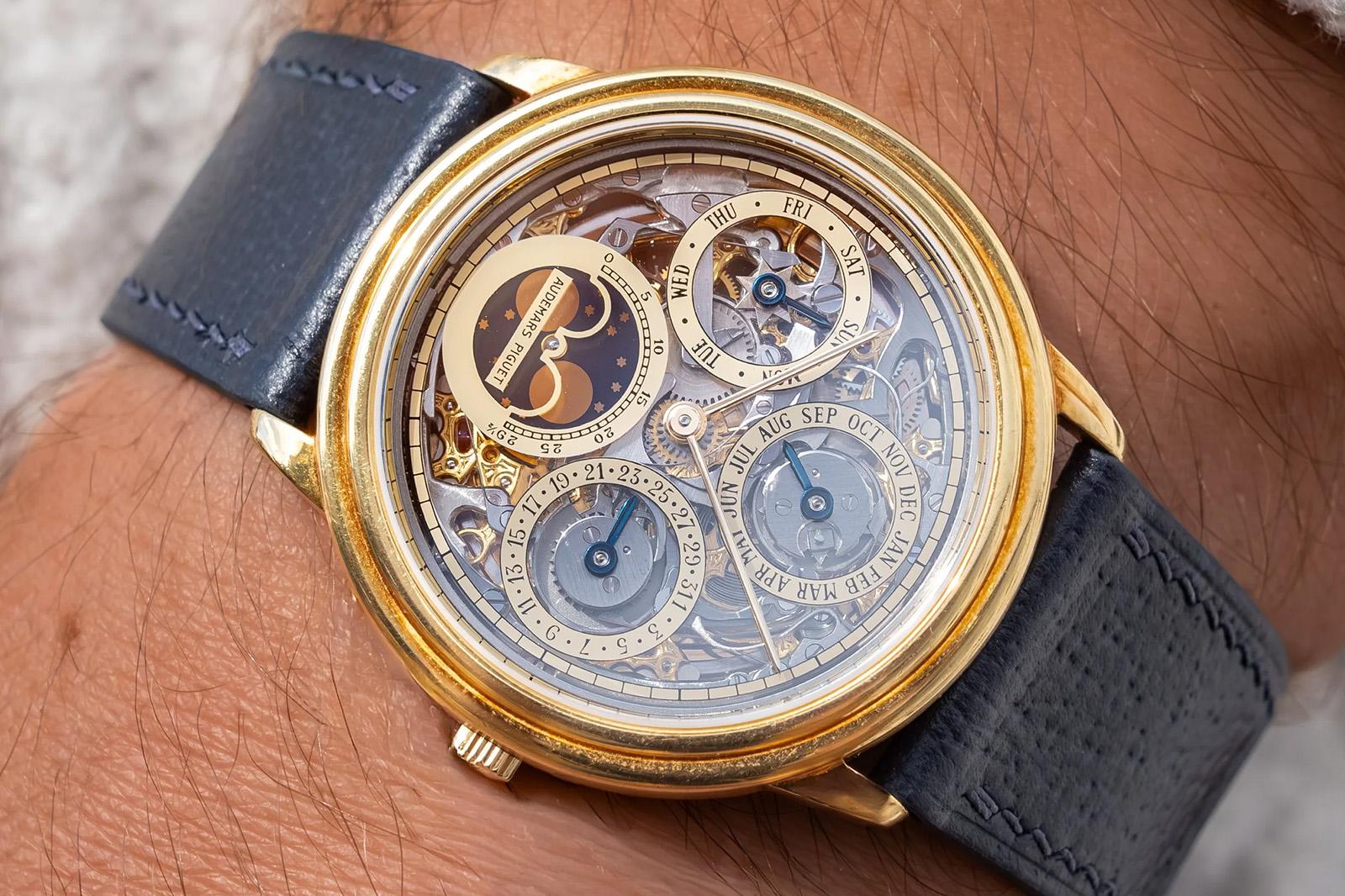
The Ref. 25668BA openworked perpetual calendar, introduced two years after its Royal Oak counterpart, placed a complicated calendar mechanism into a slim, classically proportioned case.
Its appeal is different from an engraved skeleton dress watch.
Here, the visible calendar wheels, levers and bridges create a kind of mechanical legibility, with complication and finishing sharing the same stage.
Neo-vintage AP skeleton references collectors still chase quietly
Some of the most interesting Audemars Piguet skeleton watches aren’t the best-known Royal Oaks or grand complications.
The quieter time-only references from the late 20th century often carry much of the same hand craft, without the same level of market attention.
The Jules Audemars Ref. 15058BC is a strong example.
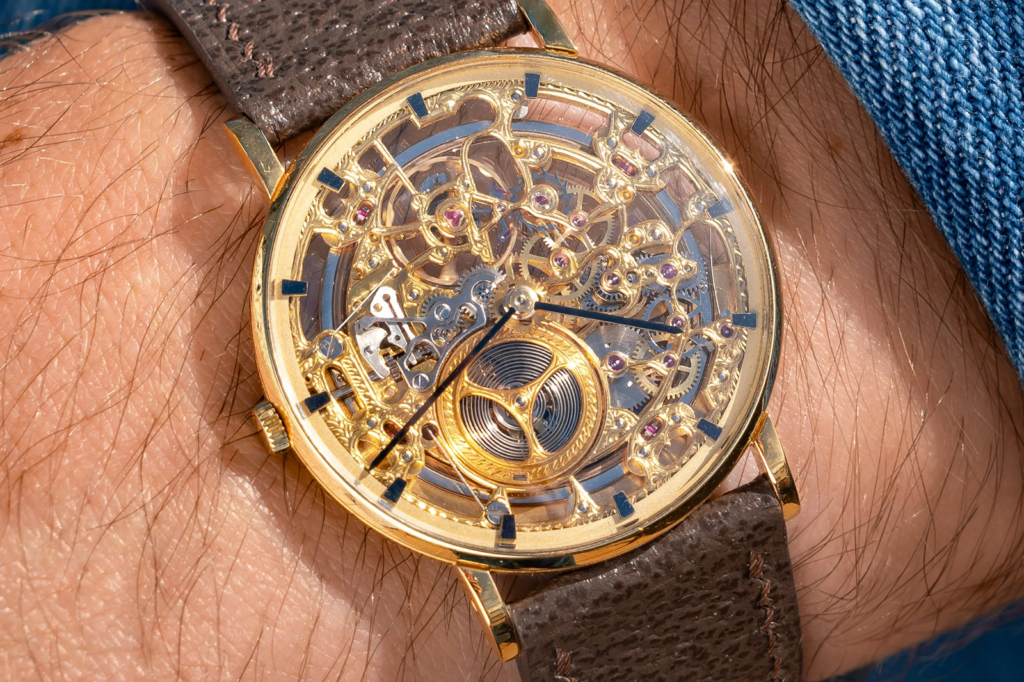
At 36mm in white gold, it pairs a skeletonised movement with a solid guilloché surround for the hour markers, improving legibility while keeping the movement open to view.
White gold examples are uncommon, and known market appearances have placed them around £12,000.
The Ref. 14232BA follows a similar path in 36mm yellow gold.
Its openworked movement is framed by a classical sunburst dial surround, giving the watch a more traditional face without hiding the craft underneath.
These examples are often discussed in the low-teens range, making them notable entry points into Audemars Piguet’s openworking tradition.
The 5442 ultra-thin skeleton models from the 1970s are rarer and more compact at 32.5mm.
They wear with a distinctly classical presence, and examples may require a specialist dealer search, with pricing around £15,000 when they appear.
Details & Specifications
| Brand | Audemars Piguet |
|---|---|
| Category | Skeletonised mechanical wristwatches and pocket watches |
| Early openworked production | Small-number openworked pocket watches from the 1930s |
| Notable 1950s reference | Ref. 5036 Skeleton |
| Ref. 5036 period price | $920 at the time, roughly $11,000 today |
| Important ultra-thin movement | Gold-plated Calibre 2120SQ |
| Calibre 2120SQ finishing time | Around 150 hours of hand cutting and finishing per movement |
| Notable shaped reference | Octagonal Ref. 4122 from 1980 |
| Royal Oak skeleton milestone | Royal Oak Ref. 25636 from 1986 with Calibre 2120SQ |
| Openworked perpetual calendar | Ref. 25668BA |
| Jules Audemars Ref. 15058BC | 36mm white gold, skeletonised movement, guilloché dial surround, around £12,000 when seen on the market |
| Ref. 14232BA | 36mm yellow gold, skeletonised time-only movement, sunburst dial surround, often in the low-teens range |
| Ref. 5442 skeleton | 32.5mm ultra-thin skeleton model from the 1970s, around £15,000 when available |
Audemars Piguet’s best skeleton watches endure because they don’t treat transparency as a shortcut to drama.
They show how much discipline is required to make absence feel intentional, and why the brand’s quieter shaped and time-only openworked pieces may be among the most rewarding watches for collectors willing to look beyond the obvious icons.