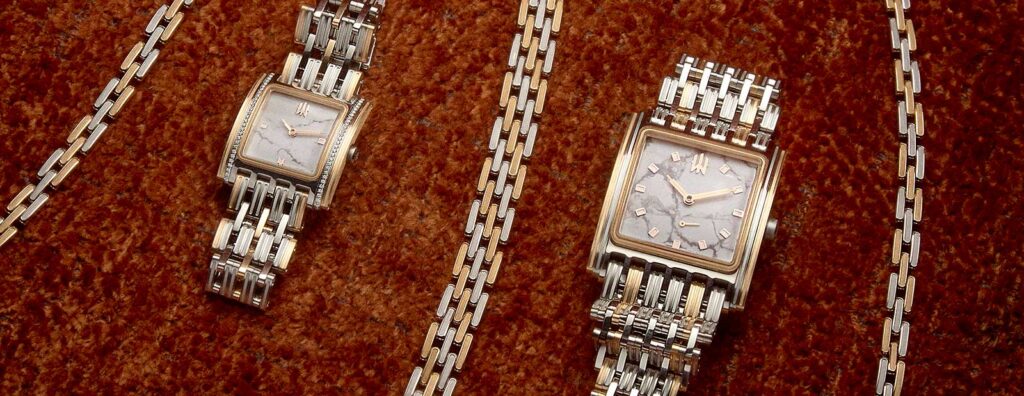
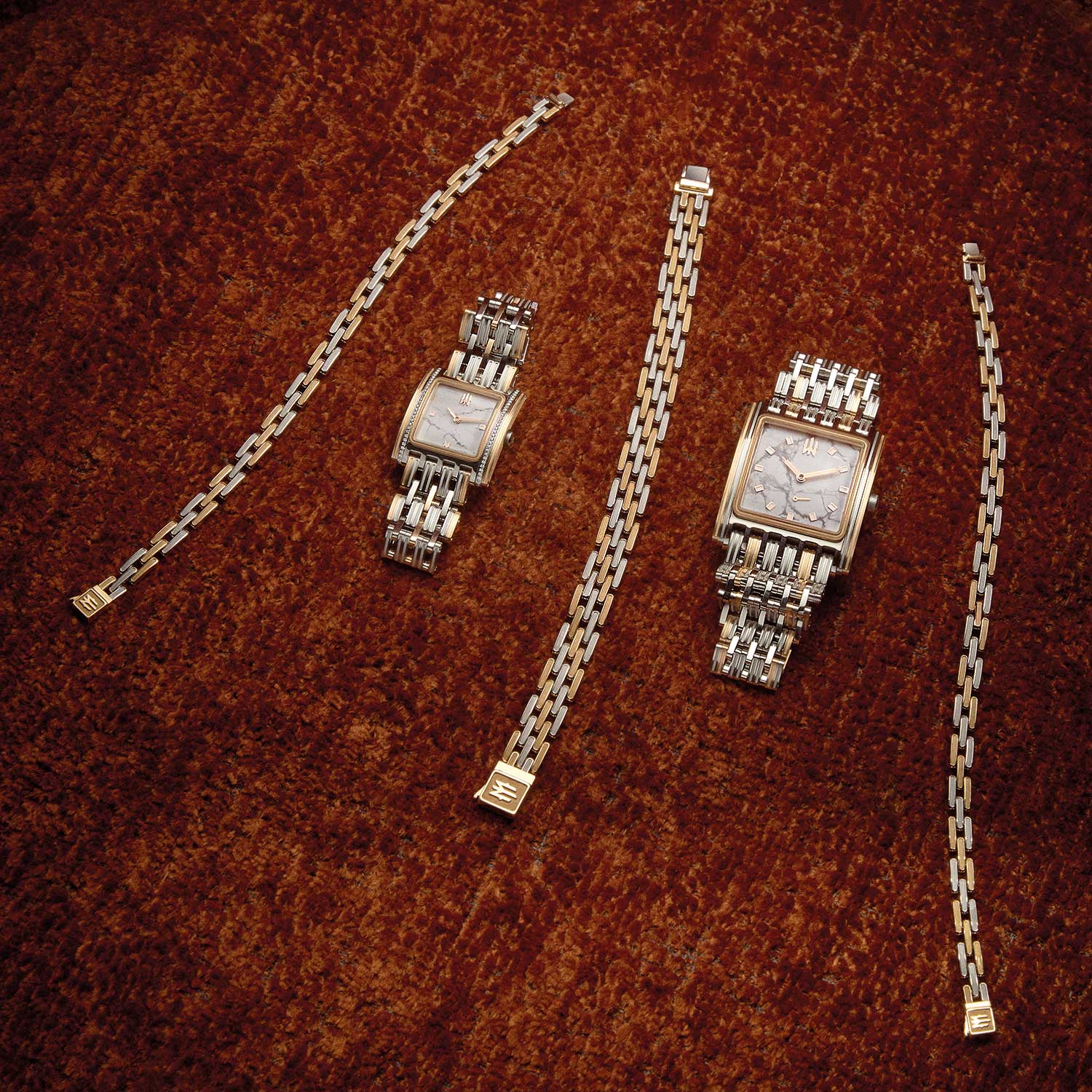
Michael Wunderman wears his watches in pairs, with the Amplifier Midi on one wrist and the Mini stacked with bracelets on the other.
For the founder of House of Wunder, that isn’t a styling trick so much as a statement of intent.
The young brand is built around the idea that watches and jewelry can share one visual language, with the wrist as the starting point rather than an afterthought.
At a glance
- House of Wunder, founded in July by Michael Wunderman, opens with the Amplifier watch collection.
- The Amplifier is offered as the automatic Midi and quartz Mini, with hardstone dials and the brand’s flowing Wunderflow bracelet.
- The watches are designed in Palma, made in Switzerland and checked in Spain, with jewelry already built around the same link language.
A family name returns in a different register
Wunderman arrives with a surname that carries real weight in fashion watches and Swiss watchmaking.
His father, Severin Wunderman, acquired the Gucci watch license in 1972 and built Severin Montres into a major player in the category.
Michael Wunderman entered the family business early, becoming marketing director of Gucci watches at 19 before later heading its UK division.

In 2000, Severin Montres bought Corum, the same year the brand introduced the 45mm Bubble with its domed sapphire crystal.
Michael Wunderman was named president of Montres Corum in 2004, leading the brand through a period of growth in the early 2000s.
The path back to watchmaking wasn’t immediate after his father’s death in 2008 and the financial crisis that followed.

Wunderman moved to Los Angeles and spent time in filmmaking and residential design, though he has said he never really left watches behind.
House of Wunder was five years in the making, and its current base is in Palma, where Wunderman’s atelier and home sit in the city’s historic old town.
The brand is small by design, with a team of 11, and its first collection reflects a very personal point of view rather than a committee-built launch strategy.
“It’s all about a mindset,” Wunderman says of the brand’s phrase “to refine your wild,” which he links to being born in California and later living in Europe.
He describes the brand as one for people who don’t want to treat watches only as investments to be stored away.
The Amplifier starts with the bracelet
The first watch is called the Amplifier, a name tied to Wunderman’s love of music and his belief that a watch should heighten the wearer’s presence.
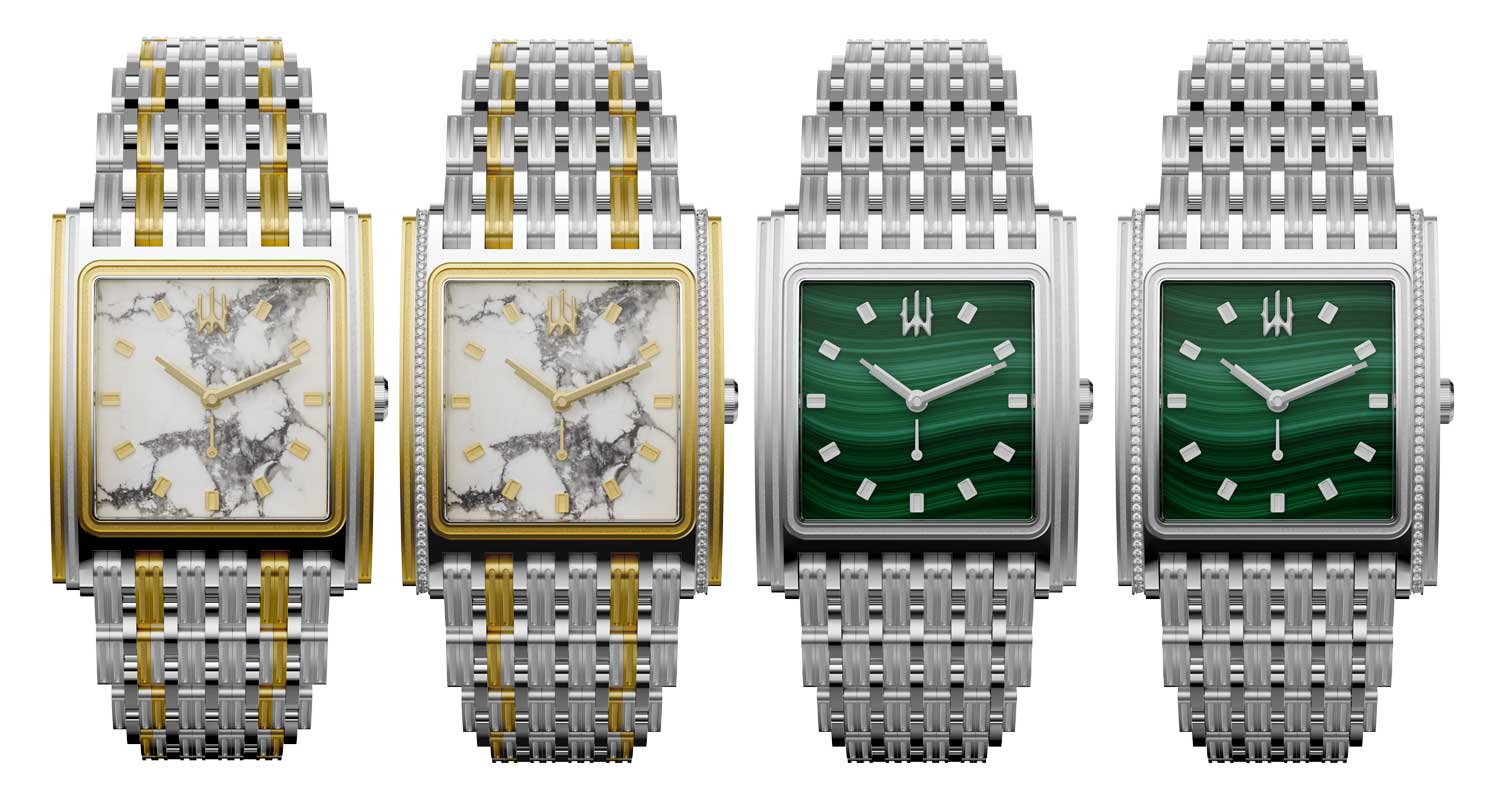
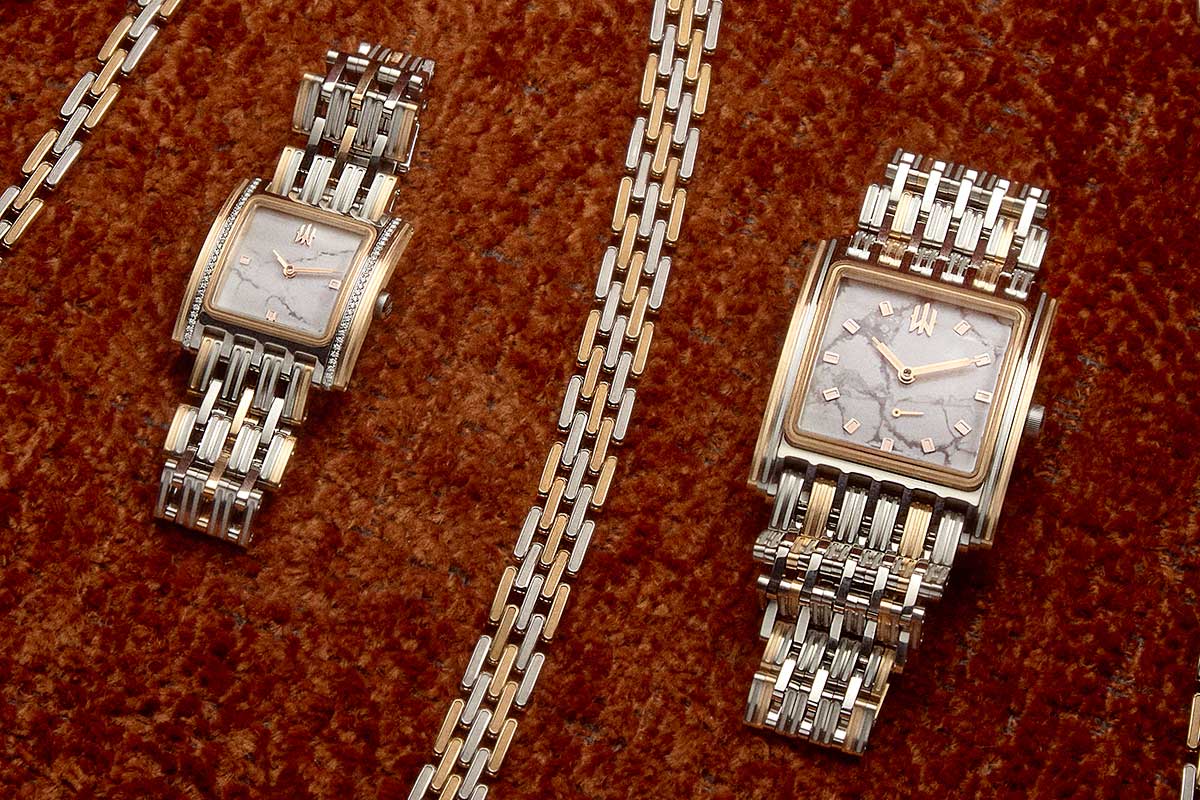
It’s a shaped watch with a square, angular face from the front and a softer, curved profile from the side.
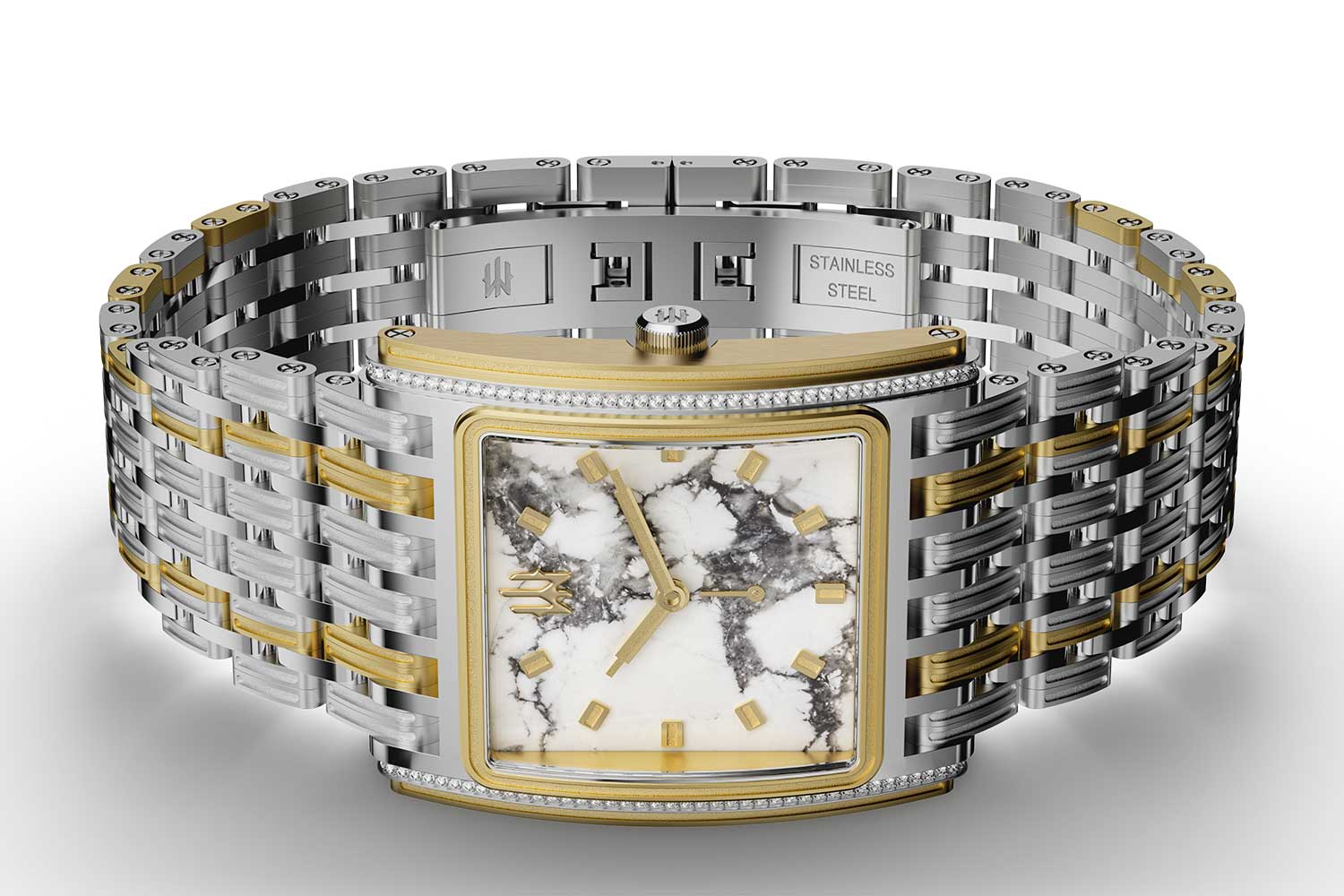
The key gesture is the bracelet, which uses the brand’s Wunderflow links to pull the case and bracelet into one continuous form.
The stepped link construction is intended to give the watch more visual presence on the wrist while preserving enough movement to avoid feeling rigid.
Wunderman says he spent two years perfecting the fit before the Amplifier entered pre-series production.
“Even when we received the pre-series, I made a lot of fine-tune adjustments to the bracelet and case construction,” he says.
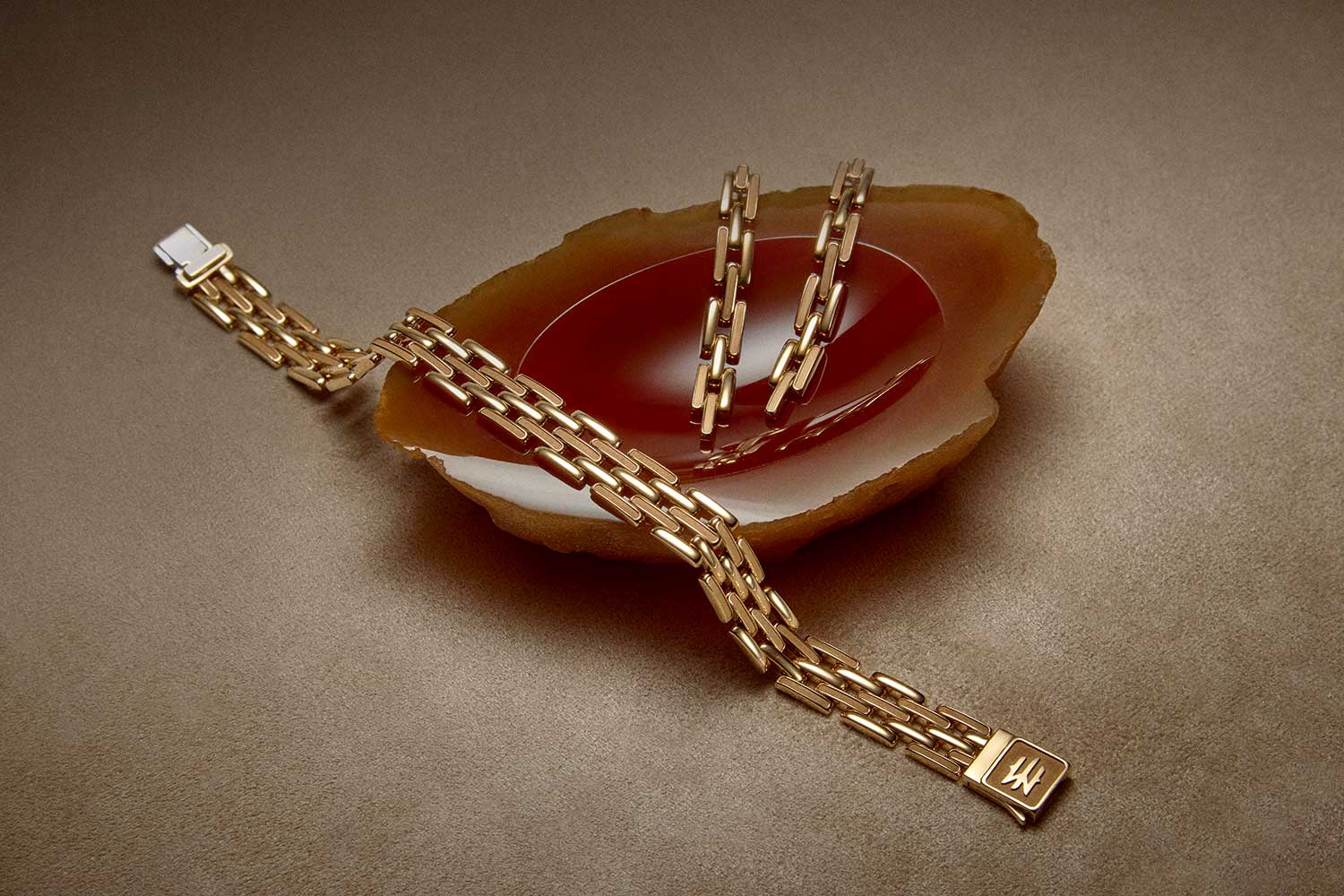
He calls the bracelet “a fabric of metal,” made from more than 350 components.
That choice tells you plenty about House of Wunder’s priorities.
The bracelet isn’t a supporting part here, and it isn’t treated as a commodity.
It’s the architecture of the watch, the element that also connects the Amplifier to the brand’s bracelets, necklaces and earrings.
Hardstone dials set the tone
For the launch collection, Wunderman chose to work exclusively with hardstone dials.
The confirmed stones include malachite, azurmalachite and howlite, each bringing natural patterning that contrasts with the precision of the case and bracelet.
That decision adds difficulty and cost, but it also gives the collection a clear personality from the start.
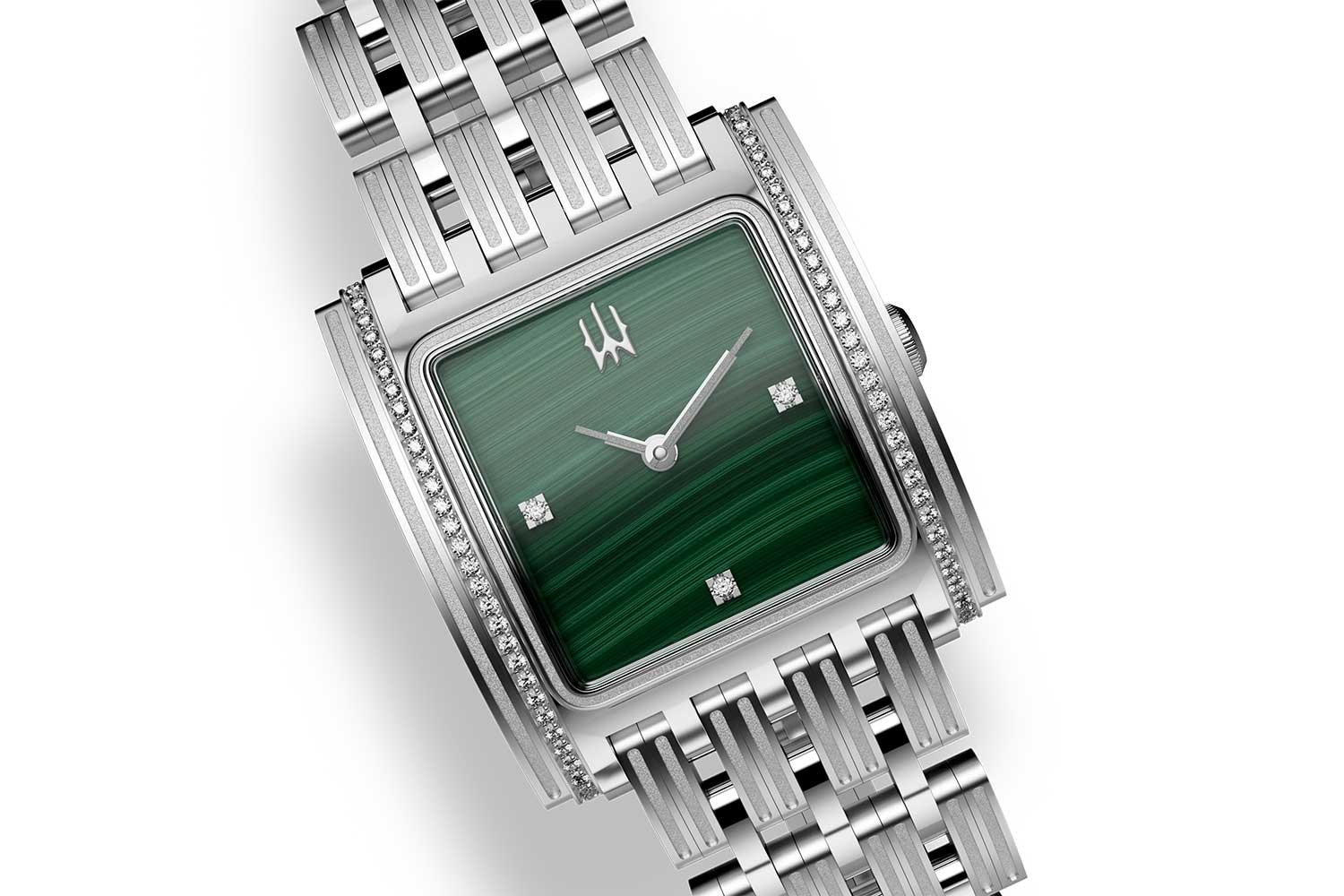
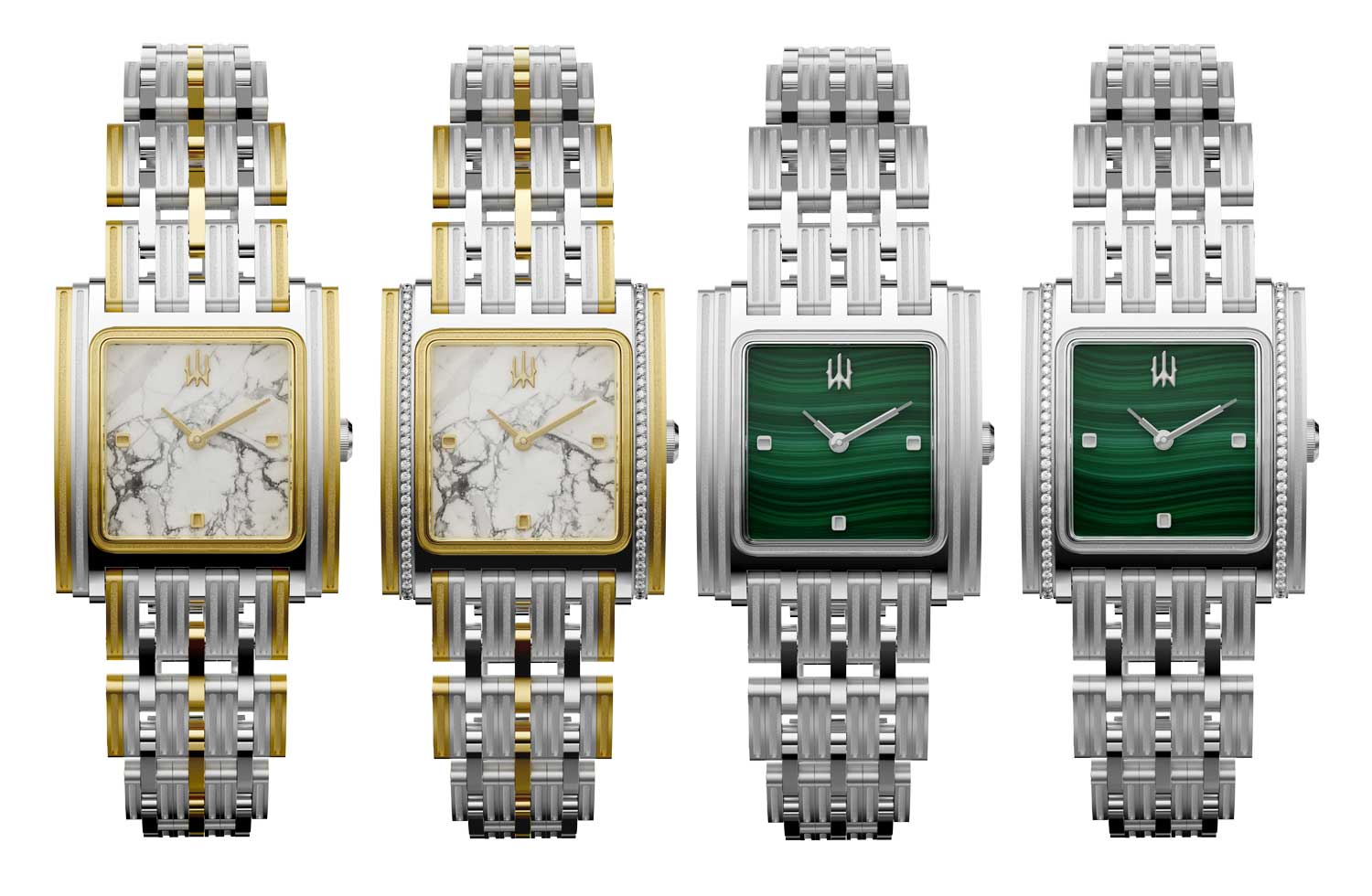
The Amplifier is offered in stainless steel, steel with 18K yellow gold, and 18K yellow gold, with diamond-set options also part of the collection.
The two sizes create distinct roles within the same design family.
The Midi is powered by a Swiss automatic movement, while the smaller Mini uses a Swiss quartz movement.
Wunderman has already indicated that more is planned beyond the Amplifier, including three additional watch families, micro-rotor calibers and other shaped designs.
No timing has been specified, but the direction is clear enough.
House of Wunder isn’t being framed as a single-watch project, but as a design house where watches, jewelry and objects can share the same creative vocabulary.
Details & Specifications
| Brand | House of Wunder |
|---|---|
| Model | Amplifier Midi and Amplifier Mini |
| Case size | Midi measures 34.5mm across, 11.4mm thick and 43mm lug to lug; Mini measures 25.5mm across and 7.9mm thick |
| Case materials | Stainless steel, steel and 18K yellow gold, and 18K yellow gold |
| Dial | Hardstone dials including malachite, azurmalachite and howlite |
| Movement | Swiss automatic movement for the Midi; Swiss quartz movement for the Mini |
| Bracelet | Wunderflow bracelet with more than 350 components |
| Options | Diamond-set versions are offered |
| Design and production | Designed in Palma, made in Switzerland and returned to Spain for quality control |
House of Wunder’s opening move is unusually direct, because the Amplifier doesn’t try to disappear into an established category.
It treats the shaped watch, the jewelry bracelet and the founder’s own family history as parts of the same story, then puts all of that on the wrist with very little interest in restraint for restraint’s sake.