H. Moser & Cie. has found a compelling new stage for one of its most entertaining recent complications.
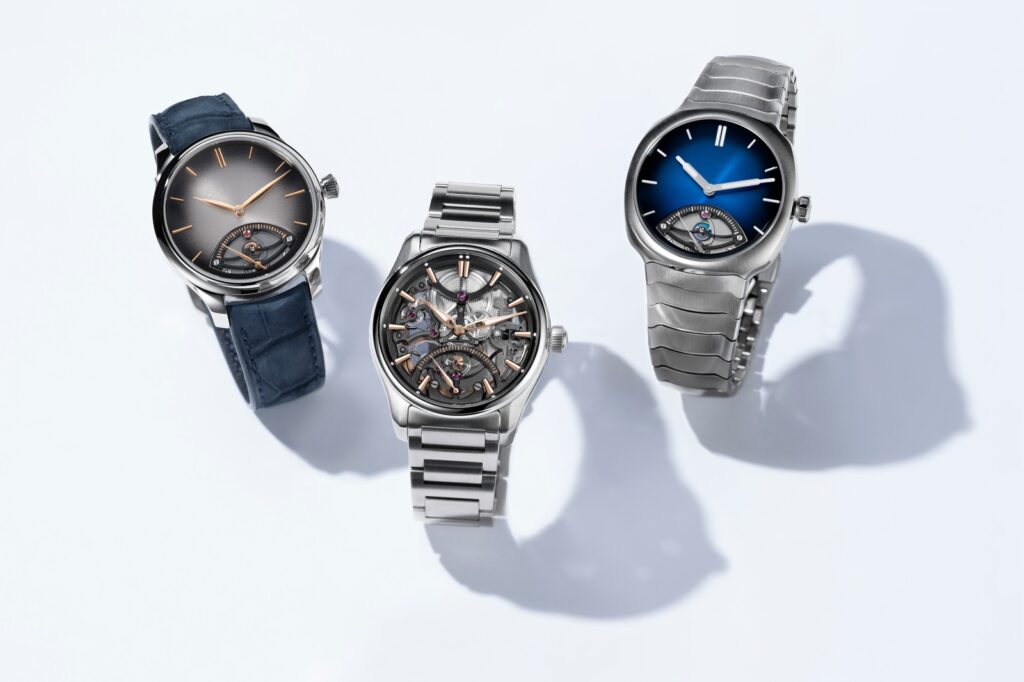
The brand’s 30-second retrograde seconds display now moves beyond its earlier Pioneer execution into three distinct steel watches, each with a different personality and a notably more compact case profile.
It’s a clever expansion because the complication isn’t just technically neat, it’s immediately legible from across a table.
At a glance
- H. Moser & Cie. has introduced three new retrograde seconds watches across the Pioneer Skeleton, Streamliner and Endeavour families.
- Each model uses a 30-second retrograde seconds display that sweeps through its arc before snapping back to begin again.
- Prices start at CHF 30,160 for the Endeavour Retrograde Seconds and rise to CHF 37,726 for the Pioneer Skeleton Retrograde Seconds.
The 30-second retrograde display gets a broader stage
The appeal of this complication is unusually physical for a seconds indication.
Rather than circling the dial in the conventional manner, the hand travels across a 30-second scale and then jumps back with a sharp, mechanical reset.
That repeated motion gives the watch a restless visual rhythm, especially when placed at 6 o’clock where it anchors the dial without overwhelming the time display.
Across the new trio, H. Moser & Cie. keeps the core idea intact while changing the surrounding character of the watch quite dramatically.
Pioneer Skeleton brings the mechanism into view
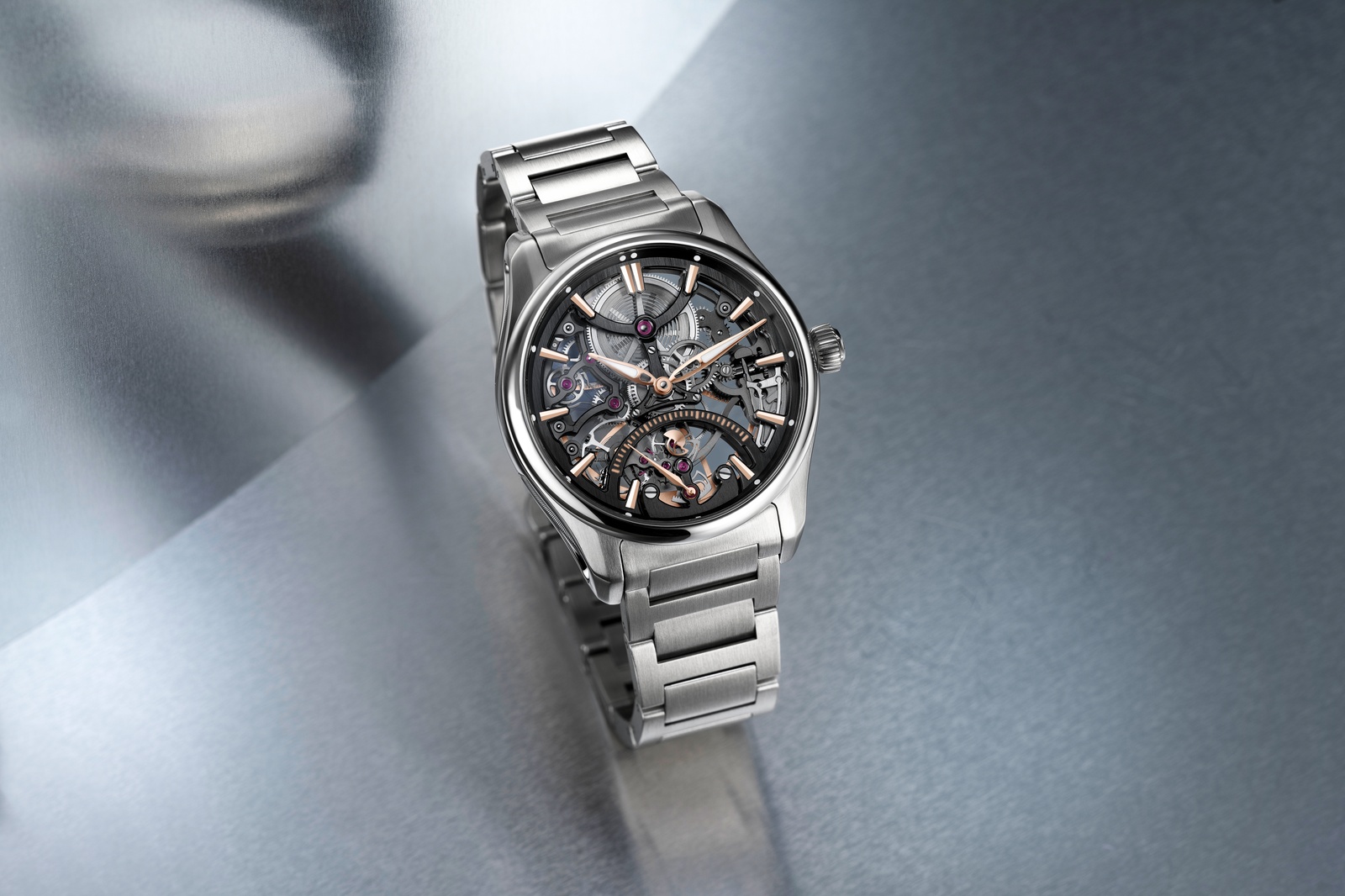
The Pioneer Skeleton Retrograde Seconds is the most mechanically exposed of the three.
Its fully skeletonised dial uses dark grey and anthracite bridges, with rose gold accents on the leaf-shaped hands, faceted appliqué indices and the retrograde seconds display.
The case is stainless steel and measures 40mm across by 12mm thick including the sapphire crystal, making it significantly smaller than the earlier non-skeleton Pioneer Retrograde Seconds.
That reduction is one of the most important changes here.
The automatic HMC 251 calibre is fully skeletonised and measures 5.5mm thick, down from the 6.5mm profile associated with the previous HMC 250 architecture.

The result is still recognisably a Pioneer, with a screw-down crown, 120 metres of water resistance and a choice of stainless steel bracelet or khaki rubber strap.
At CHF 37,726 including taxes, it is the most expensive watch in the new group.
Streamliner adds motion to Moser’s integrated bracelet watch
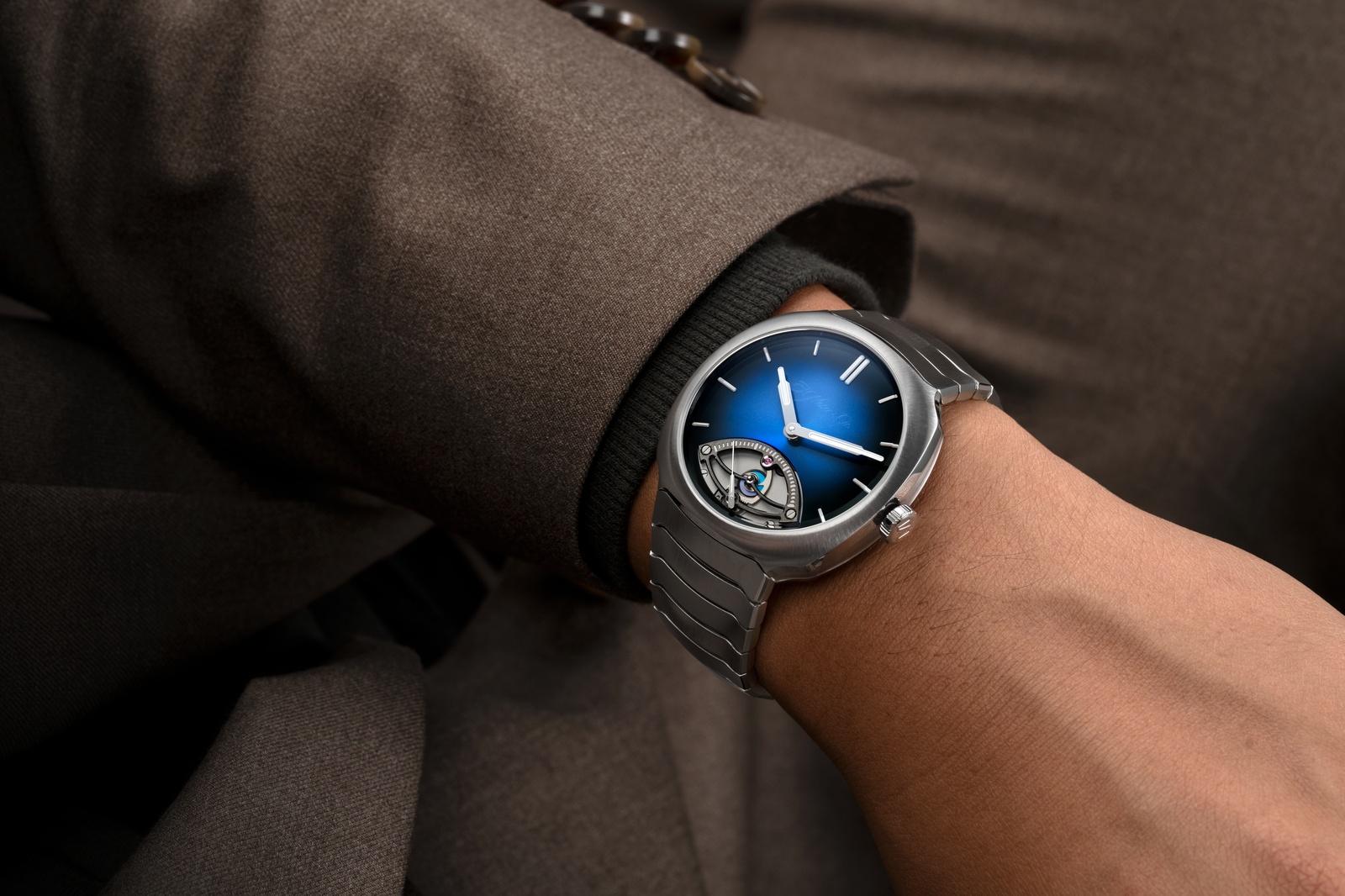
The Streamliner Retrograde Seconds is arguably the most natural fit for the complication from a design standpoint.
The Streamliner’s rounded cushion case and integrated steel bracelet already carry a sense of fluid movement, helped by a design language that looks to early 20th-century streamliner trains rather than the familiar integrated-bracelet playbook of the 1970s.
Here, the retrograde seconds hand adds another moving element to that architecture.
The watch measures 40mm across and 12.1mm thick in stainless steel, with a screw-down crown and 120 metres of water resistance.
Its midnight blue fumé dial has a sunburst finish, giving the jumping seconds display a more polished and less technical backdrop than the skeletonised Pioneer.
Inside is the automatic HMC 252 calibre, fitted with a 30-second retrograde module developed by Agenhor SA.
The Streamliner Retrograde Seconds is priced at CHF 32,300 including taxes.
Endeavour offers the dressiest interpretation
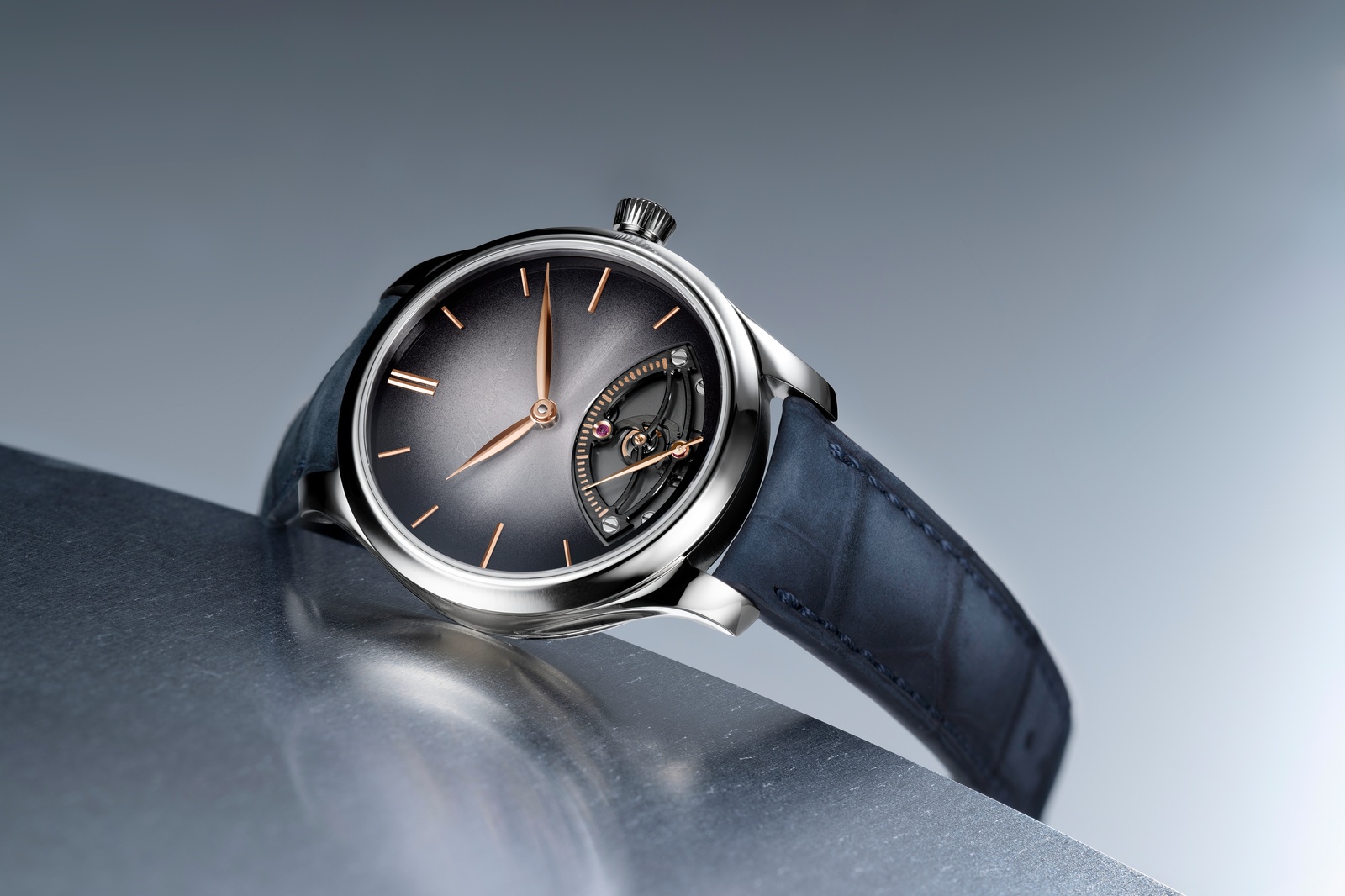
The Endeavour Retrograde Seconds takes the same animated idea and places it in a slimmer, more formal case.
At 40mm by 11.2mm, it is the thinnest of the three watches, with smoother lines and a calmer presence than either the Pioneer or Streamliner.
The blackor fumé dial has a sunburst pattern and a grey-to-black gradient that suits the Endeavour’s more refined brief.
The retrograde seconds scale remains at 6 o’clock, but the overall impression is quieter and more restrained.
Like the Streamliner, the Endeavour uses the automatic HMC 252 calibre with Agenhor’s 30-second retrograde module, running at 21,600 vibrations per hour with a 72-hour power reserve.
It is supplied on a night blue nubuck alligator leather strap with a steel pin buckle.
Water resistance is rated to 30 metres, which places this firmly in the dress-watch lane rather than the sportier territory occupied by the Pioneer and Streamliner.
At CHF 30,160 including taxes, it is the entry point into the new retrograde seconds trio.
Details & Specifications
| Brand | H. Moser & Cie. |
|---|---|
| Models | Pioneer Skeleton Retrograde Seconds, Streamliner Retrograde Seconds, Endeavour Retrograde Seconds |
| References | 3251-1200, 6252-1200, 1252-1200 |
| Case materials | Stainless steel |
| Case sizes | Pioneer Skeleton 40mm x 12.0mm, Streamliner 40mm x 12.1mm, Endeavour 40mm x 11.2mm |
| Dials | Fully skeletonised, midnight blue fumé sunburst, blackor fumé sunburst |
| Movements | HMC 251 automatic for Pioneer Skeleton, HMC 252 automatic for Streamliner and Endeavour |
| Complication | 30-second retrograde seconds |
| Frequency | 21,600 vph, 3 Hz |
| Power reserve | 72 hours |
| Water resistance | 120m for Pioneer Skeleton and Streamliner, 30m for Endeavour |
| Straps and bracelets | Pioneer Skeleton with steel bracelet and khaki rubber strap, Streamliner with steel bracelet, Endeavour with night blue nubuck alligator leather strap |
| Prices | CHF 37,726, CHF 32,300 and CHF 30,160 including taxes |
What makes this launch work is the way the same complication changes character across the three cases.
The Pioneer Skeleton is the collector’s choice for visible mechanics, the Streamliner feels the most integrated as an object, and the Endeavour turns the retrograde display into a sharply dressed flourish rather than a technical spectacle.