Ford’s Mustang archive has just become a little louder again.
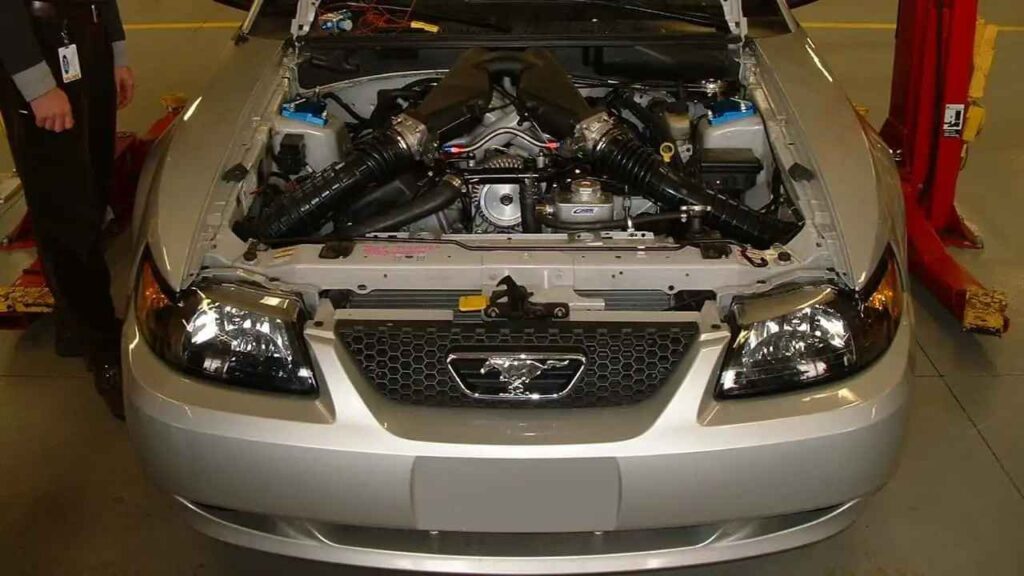
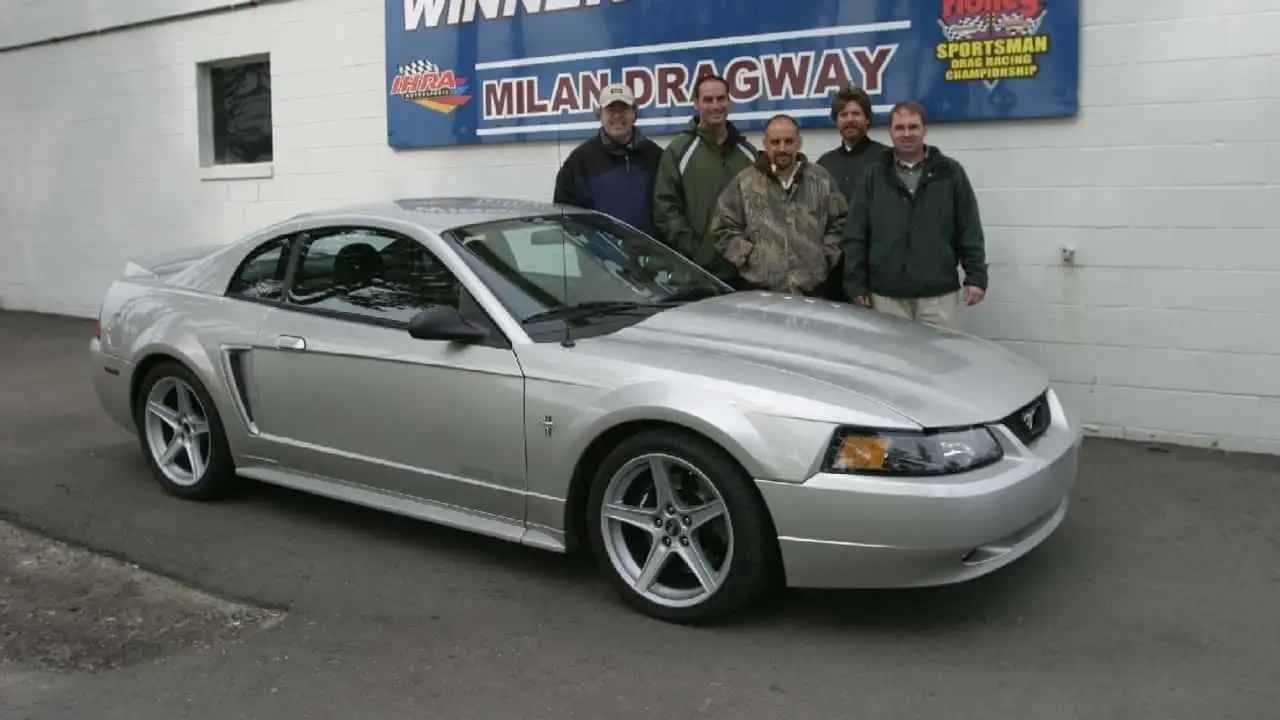
The company has brought its one-off V10 Boss 351 Prototype back to running condition after years of inactivity, giving fresh life to one of the more unusual engineering experiments in Mustang history.
Built around 25 years ago, the car was never a showroom project, but it remains a fascinating glimpse at what happens when Mustang engineers are given permission to think well beyond the familiar V8 playbook.
At a glance
- Ford’s Heritage Fleet team has revived the one-off V10 Boss 351 Mustang prototype after years spent idle.
- The car uses a naturally aspirated 5.8-litre all-aluminium V10 paired with a six-speed manual gearbox.
- On the dyno, the revived prototype produced more than 510 hp and 480 lb ft of torque at the wheels.
A Mustang experiment from a different era
The V10 Boss 351 Prototype comes from a period when Ford’s Modular engine family was central to the brand’s performance development.
Rather than installing a conventional V8 or adapting a heavy-duty truck V10, the engineering team created something more bespoke for the Mustang.
The engine was effectively developed by combining elements of two 4.6-litre Modular V8 architectures, then adding two more cylinders to create a naturally aspirated 5.8-litre V10.
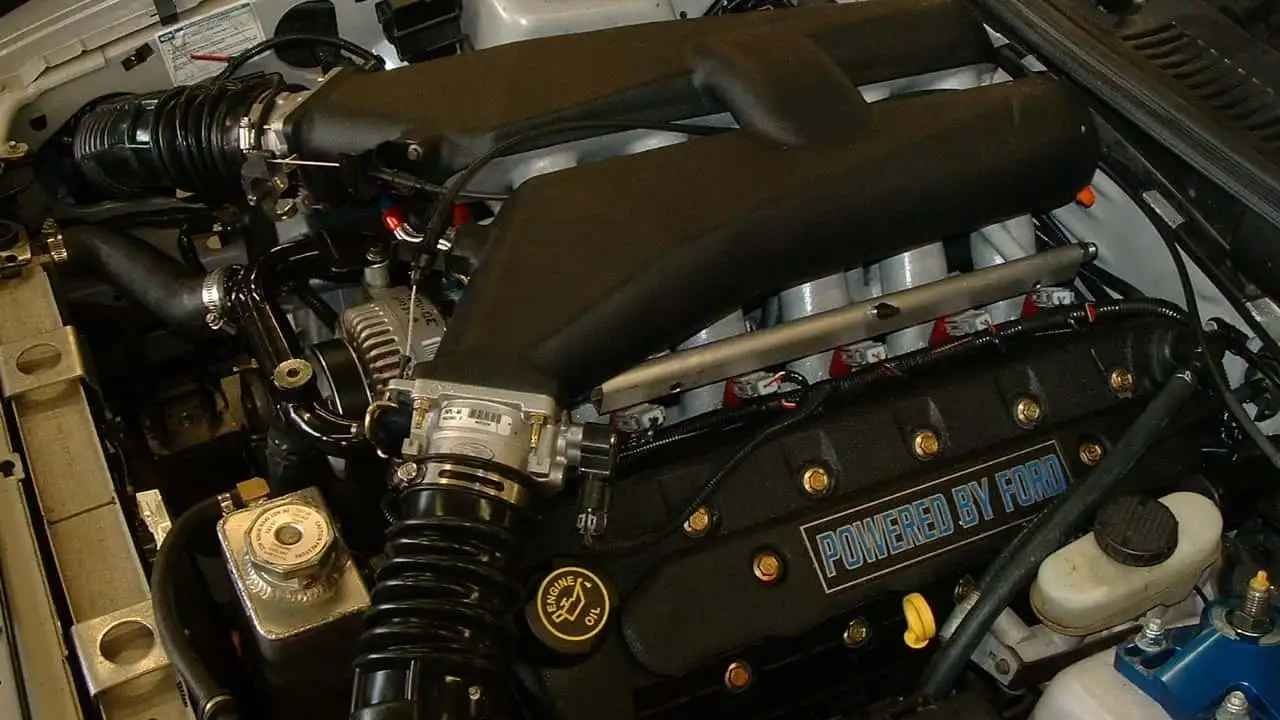
That approach gave the project a more exotic character than a typical factory Mustang of the era, especially with its high-revving brief and aluminium construction.
The result wasn’t just a novelty engine in a mule, but a serious one-off prototype with its own mechanical personality.
The 5.8-litre V10 at the centre of the story
The heart of the car is an all-aluminium V10 fitted with bespoke cylinder heads and camshafts.
Power is sent to the rear wheels through a six-speed manual gearbox, keeping the driving experience firmly in the analogue performance-car tradition.
After sitting unused for years, the prototype needed careful work before anyone could ask the engine to run in anger again.
Ford’s Heritage Fleet team worked with members of the original development crew to inspect the electronics and other key systems before the car was placed on a dyno.
Once restarted and tested, the V10 delivered more than 510 hp and 480 lb ft of torque at the wheels.
Those are especially compelling figures when viewed through the lens of a prototype developed roughly a quarter-century ago, long before today’s factory horsepower numbers became routine.
Why the V10 Boss 351 still matters
Concepts and prototypes often disappear into storage because they were never intended to become production cars.

This Mustang is different because it captures a very specific engineering question that Ford could have asked at the time, which was how far the Mustang formula could stretch without losing its core rear-drive, manual-transmission identity.
The V10 Boss 351 didn’t lead to a production Mustang, but it shows how much experimentation existed behind the scenes.
It also sits in an interesting space between muscle car and exotic engineering exercise, combining familiar Mustang proportions with an engine configuration more commonly associated with supercars and high-end performance machinery.
For Mustang enthusiasts, that makes the prototype more than a curiosity.
It’s a physical reminder that some of the brand’s most interesting chapters were written in development workshops rather than brochures.
Details & Specifications
| Brand | Ford |
|---|---|
| Model | V10 Boss 351 Prototype |
| Engine | Naturally aspirated 5.8-litre V10 |
| Construction | All-aluminium engine |
| Engine details | Bespoke cylinder heads and camshafts |
| Output | More than 510 hp at the wheels |
| Torque | More than 480 lb ft at the wheels |
| Transmission | Six-speed manual gearbox |
| Drive | Rear-wheel drive |
| Status | One-off prototype revived by Ford’s Heritage Fleet team |
Ford may never build another Mustang quite like this, which is part of the appeal.
The V10 Boss 351 is a reminder that heritage isn’t only about race wins and production icons, but also about the strange, ambitious machines that nearly slipped out of memory before someone decided they deserved to run again.