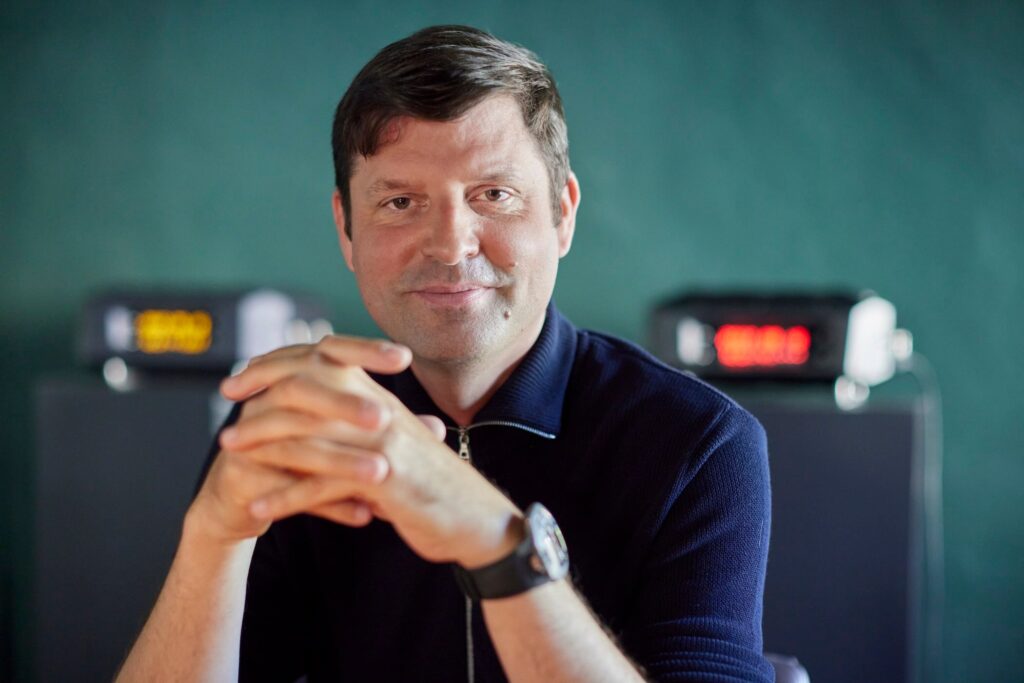
Felix Baumgartner has never treated watchmaking as a closed historical exercise.
As co-founder of Urwerk, he helped push independent horology toward satellite hours, unconventional displays and a more cinematic idea of mechanical time.
In Twelve on Time, his answers reveal a watchmaker shaped by museums, marine navigation, aerospace engineering and a family bench where mechanics had to earn their beauty.
At a glance
- Urwerk co-founder Felix Baumgartner reflects on the watches, people and ideas that shaped his view of contemporary independent watchmaking.
- His perspective centres on emotion, usability, mechanical imagination and the need for horology to keep moving forward.
- Collectors will find a clear message in his thinking: buy for pleasure before strategy, and let knowledge develop with experience.
The museum moment that redirected a career
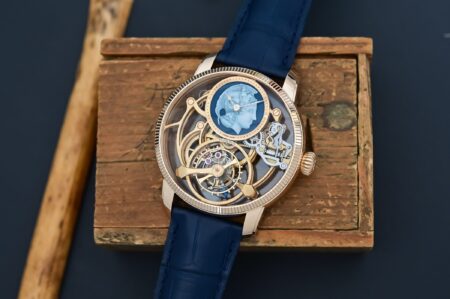
Baumgartner traces one of his defining horological memories to a 19th-century tourbillon at the Patek Philippe Museum.
The fascination wasn’t simply with age or prestige, but with the fact that a mechanism made with the best technology of its period could still feel alive centuries later.
That encounter helped clarify the mission that would become central to Urwerk.

For Baumgartner, the point was never to imitate the past, but to create for the present with the same level of conviction that earlier masters brought to their own era.
It’s a useful lens through which to understand Urwerk’s place in modern watchmaking.
The brand’s appeal has never rested on classical restraint, but on the idea that mechanical time can be reimagined without abandoning craft.
Emotion before convention
Asked what matters most in a watch, Baumgartner’s answer is emotion.
That emotion might come from architecture, complication, narrative or the simple shock of seeing time displayed in a way that feels unfamiliar.
His thinking also pushes against a narrow definition of technical greatness.
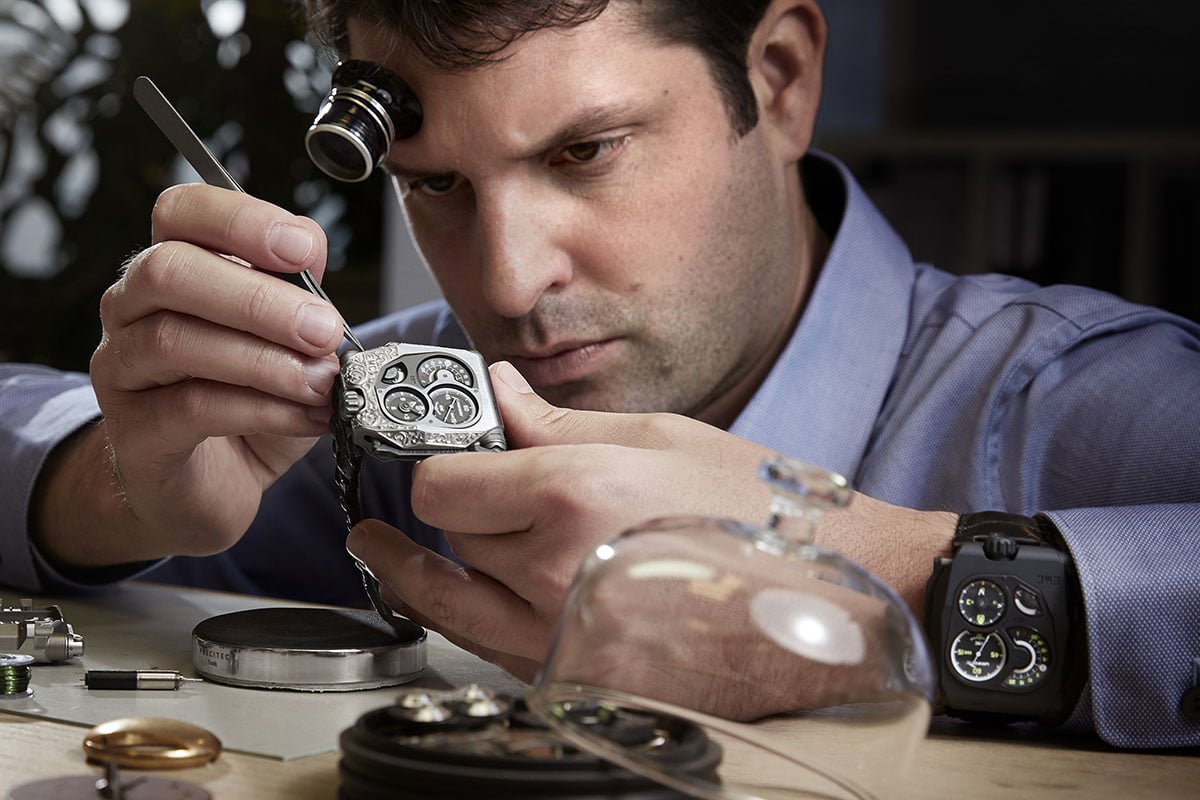
A watch made with care, in his view, isn’t only one that impresses under a loupe, but one that sits well, sets intuitively and can be lived with without frustration.
That focus on daily interaction is easy to overlook in high-end watchmaking, where difficulty is sometimes mistaken for depth.
Baumgartner’s standard is more demanding because it asks the machine to be both ambitious and considerate.
The complications and instruments that shaped his imagination
Among complications, Baumgartner singles out the sympathique watch as a kind of summit.
Its attraction lies in the relationship between two independent mechanisms that communicate, synchronise and operate as a paired system.
That fascination with interaction runs through much of his broader view of horology.
He places immense importance on the history of precision timekeeping for navigation, when marine and later airborne instruments helped determine position in environments where error carried real consequence.
It’s no surprise that he cites the first marine chronometer as a watchmaking object he wishes he had created.
Not because it was decorative, but because it was trusted in moments where failure could mean a ship lost at sea.

His outside inspirations follow the same line of thought.
Aerospace engineering, cockpits, satellites and science fiction all feed into his way of imagining time as something spatial, dynamic and engineered for demanding conditions.
Against nostalgia and safe collecting
Baumgartner is blunt about one of the traps facing modern watchmaking.
For him, nostalgia becomes a problem when it’s presented as progress, especially if it leads the industry toward sameness in case shapes, displays and finishing codes.
That view doesn’t dismiss heritage, but it refuses to let heritage become a ceiling.
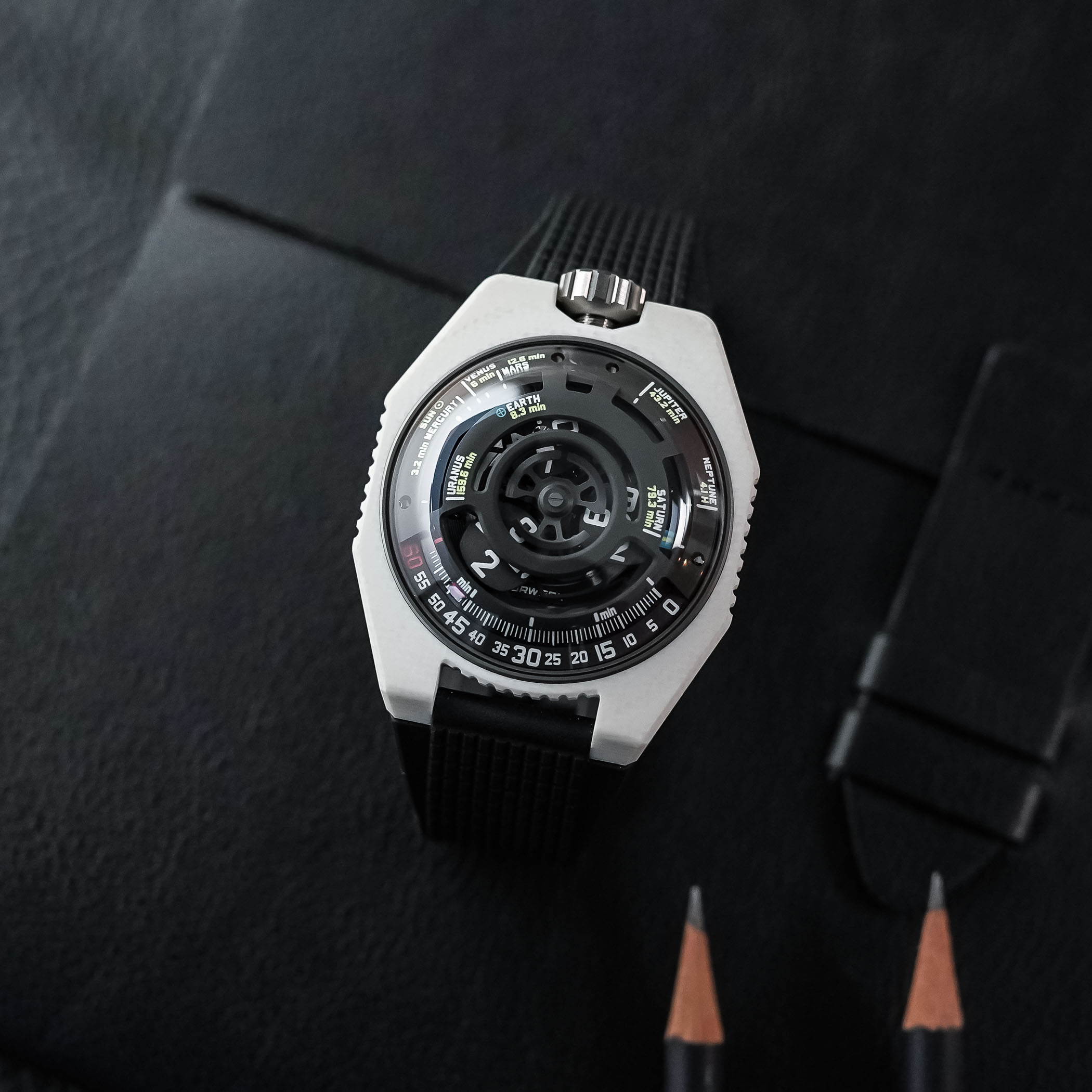
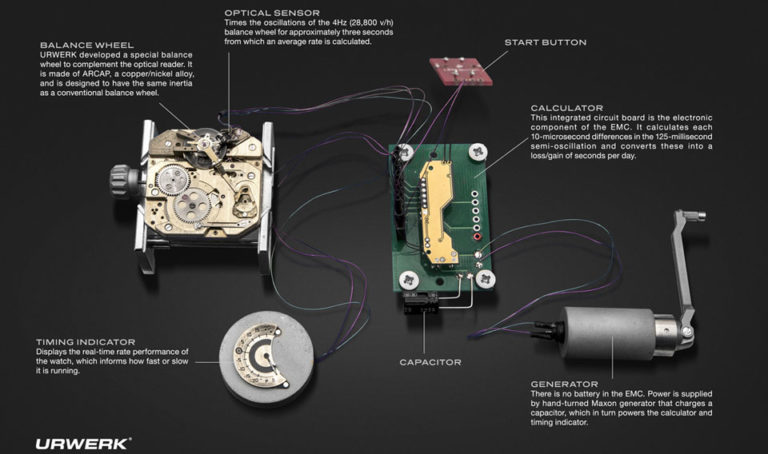
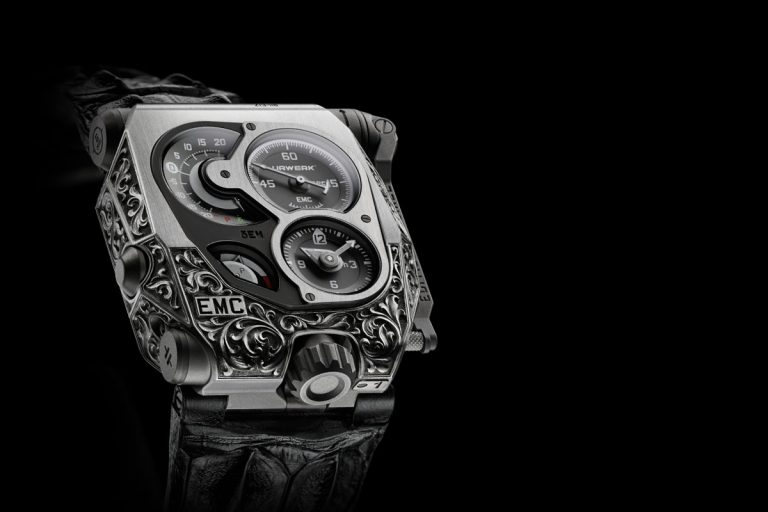
It also explains why the watch he wears most privately is Urwerk’s EMC, a piece he describes as personally demanding and deeply tied to the challenges of its creation.
There is a family dimension to this philosophy as well.
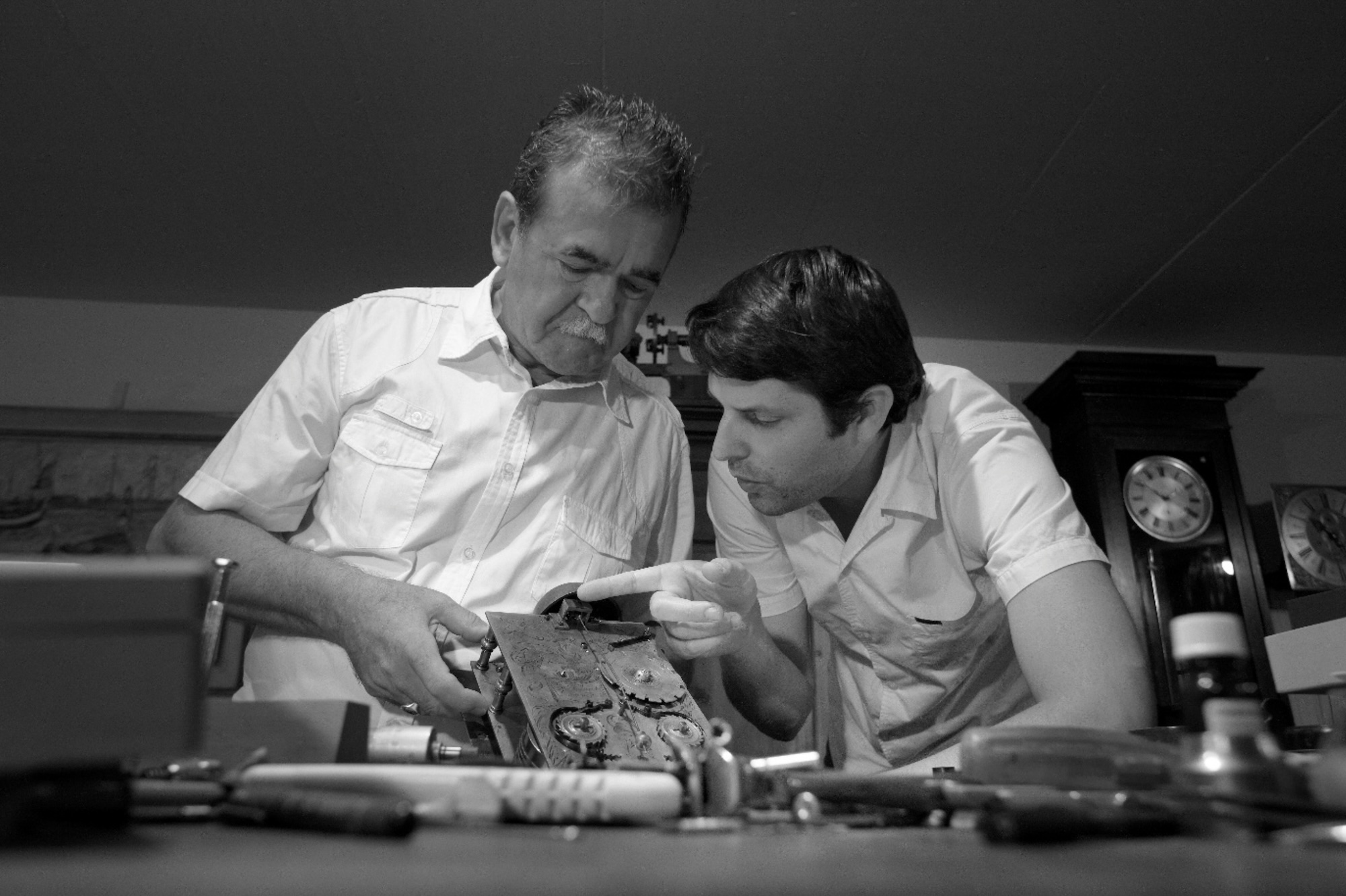
Baumgartner credits his father, a retired watchmaker, with teaching him the discipline of the bench, from the beauty of a wheel to the sound of a properly adjusted pendulum.
In that education, mechanics became art only after they had first become mechanically right.
His advice to younger collectors follows the same refusal to reduce watches to status or calculation.
Buy for pleasure, trust instinct and don’t let investment language take the fun out of collecting before the journey has properly started.
That may be the most revealing thread in Baumgartner’s thinking.
For all the futuristic forms and technical experimentation associated with Urwerk, his view of watchmaking remains rooted in feeling, risk, usefulness and the deeply human impulse to make time visible in a new way.