
Land Rover’s electric Defender program looks to be moving into a more visible phase, with a heavily camouflaged prototype now testing at the Nürburgring.
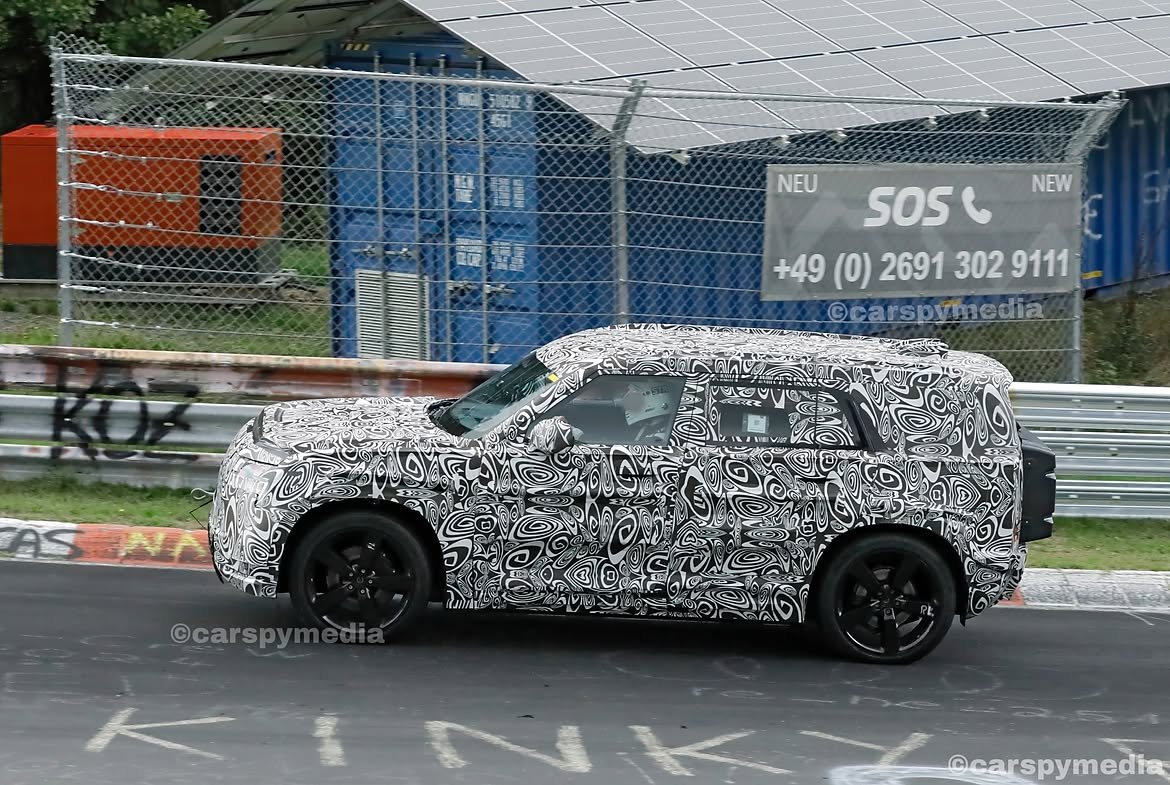
The shape is still hidden under disguise, but the proportions are hard to miss. Tall, upright and unmistakably square-shouldered, the test car keeps close to the Defender’s familiar visual language while adding one intriguing detail at the rear.
At a glance
- A camouflaged electric Land Rover Defender prototype has been seen testing at the Nürburgring.
- The prototype carries a slim rectangular box on the tailgate, where a spare wheel would traditionally sit.
- The feature could be used for charging cables or accessories, echoing a practical idea already seen on the electric Mercedes G-Class.
A Defender silhouette with a new rear detail
Even under heavy camouflage, the prototype’s stance suggests Land Rover isn’t planning to abandon the Defender’s core identity for its electric version.
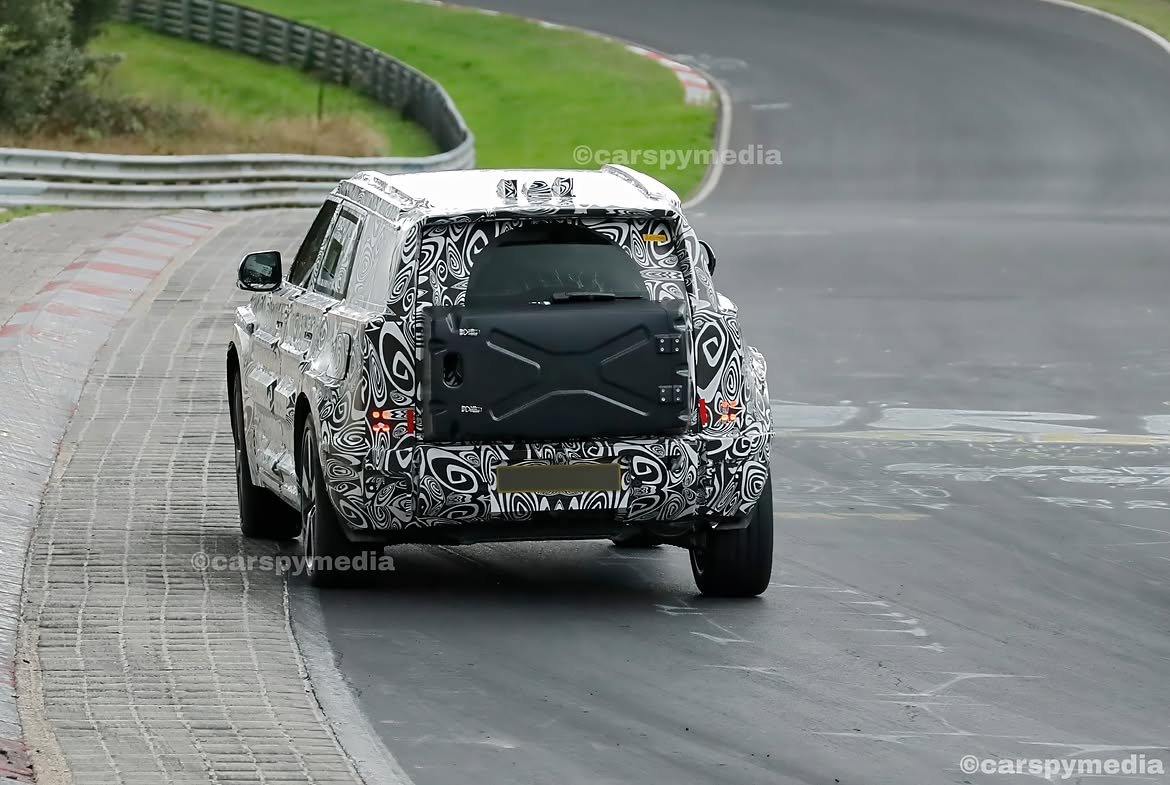
The roofline, upright glasshouse and squared-off rear all lean into the model’s utilitarian character, which remains one of the Defender’s strongest design assets.
What stands out most is the object mounted to the tailgate.
Instead of the rounded profile expected from an external spare wheel, the prototype wears a flat rectangular box that appears too shallow and narrow to house a conventional spare.
A practical cue from the electric G-Class
The most obvious comparison is the Mercedes-Benz electric G-Class, which replaces the classic rear spare-wheel carrier with a so-called Design Box.
On the electric G, that rear-mounted unit is designed to store charging equipment, preserving the familiar off-road silhouette while giving owners a useful place for EV hardware.
Land Rover may be exploring a similar idea for the Defender EV.
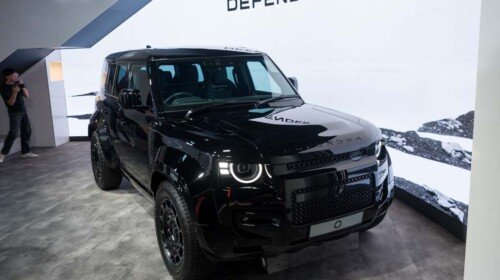
Charging cables are often awkward to stow cleanly in rugged vehicles, especially when owners also expect a usable boot, wet-gear practicality and the ability to keep dirty equipment away from the cabin.
A tailgate-mounted storage box could solve that in a way that feels visually consistent with the Defender’s exterior-mounted spare-wheel tradition.
What the prototype tells us so far
The exact purpose of the rear box hasn’t been confirmed, so it’s best treated as a development clue rather than a finished feature.

Still, its reappearance on more than one prototype suggests Land Rover is testing the idea seriously, not simply using it as camouflage.
The Nürburgring setting is also notable.
For a vehicle like the Defender, the German circuit isn’t about chasing supercar lap times. It’s a punishing environment for chassis tuning, braking, thermal management and high-speed durability.
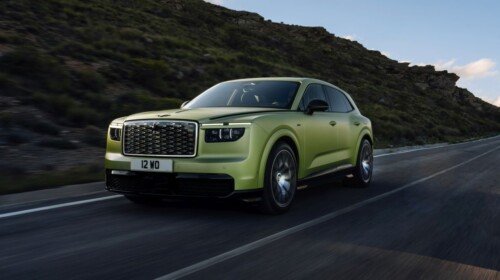
That matters for an electric off-roader, where battery cooling, weight control and torque delivery will shape the driving experience as much as outright power.
Positioning the electric Defender
An electric Defender will have to walk a careful line.
It needs to feel modern enough to justify the switch to battery power, but familiar enough that it doesn’t alienate buyers drawn to the Defender’s honest, functional design.

The tailgate box, if retained, would be a small but telling example of that balance.
Rather than smoothing away the Defender’s rough-edged utility, Land Rover could use electrification to reinterpret some of its most recognisable hardware.
For buyers who want an electric 4×4 without losing the visual drama and practicality of a traditional off-roader, that may be exactly the right move.
With testing now clearly underway in public, the prototype should become more revealing as development continues, and the tailgate box will be one of the details worth watching closely.