Watch winders tend to divide collectors more than almost any other accessory.
For some, they’re essential equipment for keeping automatic watches ready to wear. For others, they’re an unnecessary box with a motor inside.
Barrington founder Sean O’Farrell sits somewhere more useful, arguing that the right answer depends on the watch, the collector and how often a piece is actually worn.
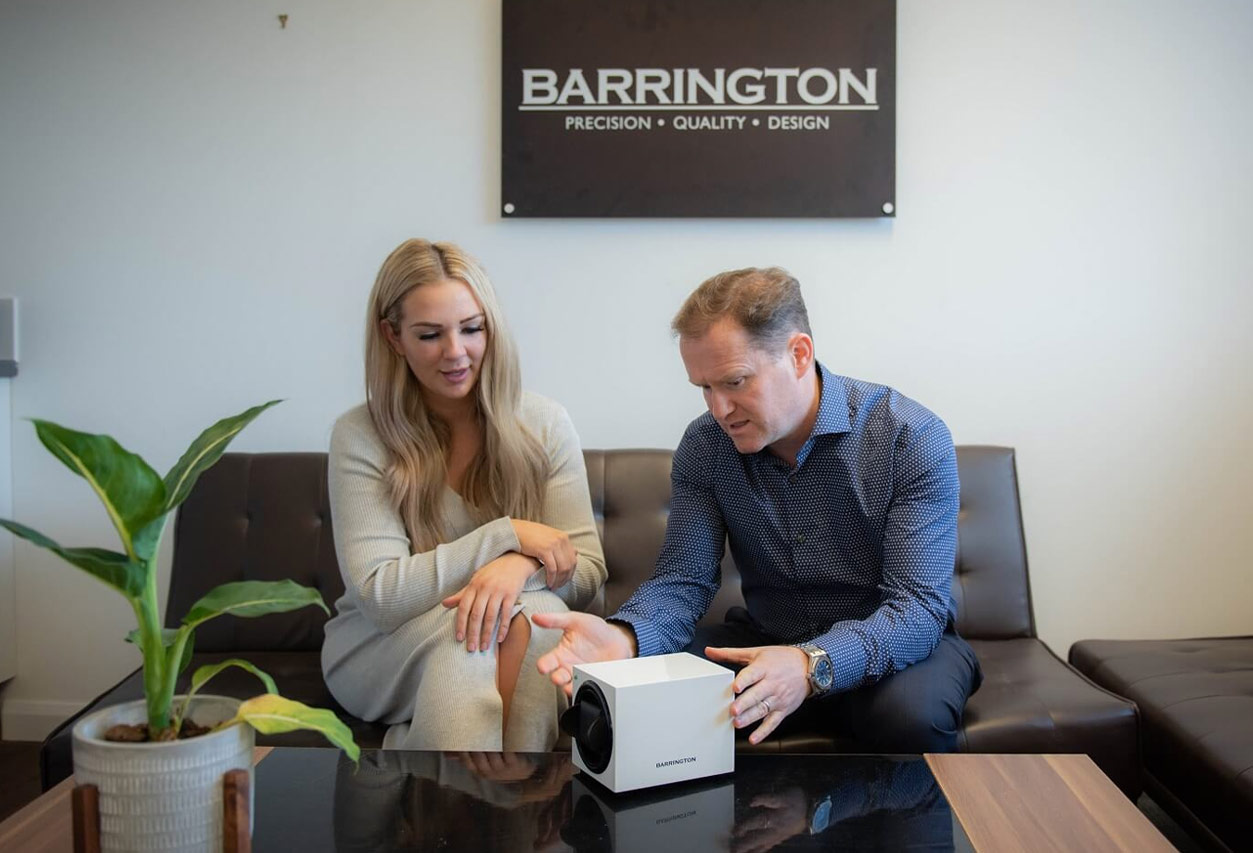
At a glance
- Barrington was founded to occupy the middle ground between cheap, limited winders and very expensive branded storage options.
- O’Farrell says winders are most useful for collectors who rotate automatic watches or own complicated pieces that are tedious to reset.
- The brand focuses on adjustable settings, support, quiet operation, design and guidance around TPD and rotation direction.
Barrington’s place between budget winders and luxury storage
O’Farrell developed Barrington while he was a director at Jura Watches, where he saw customers repeatedly struggling with the same problem.
They wanted a winder, but the market seemed split between inexpensive products with limited functionality and costly branded pieces that didn’t always bring the service or support buyers expected.
That gap became the basis for Barrington’s positioning.
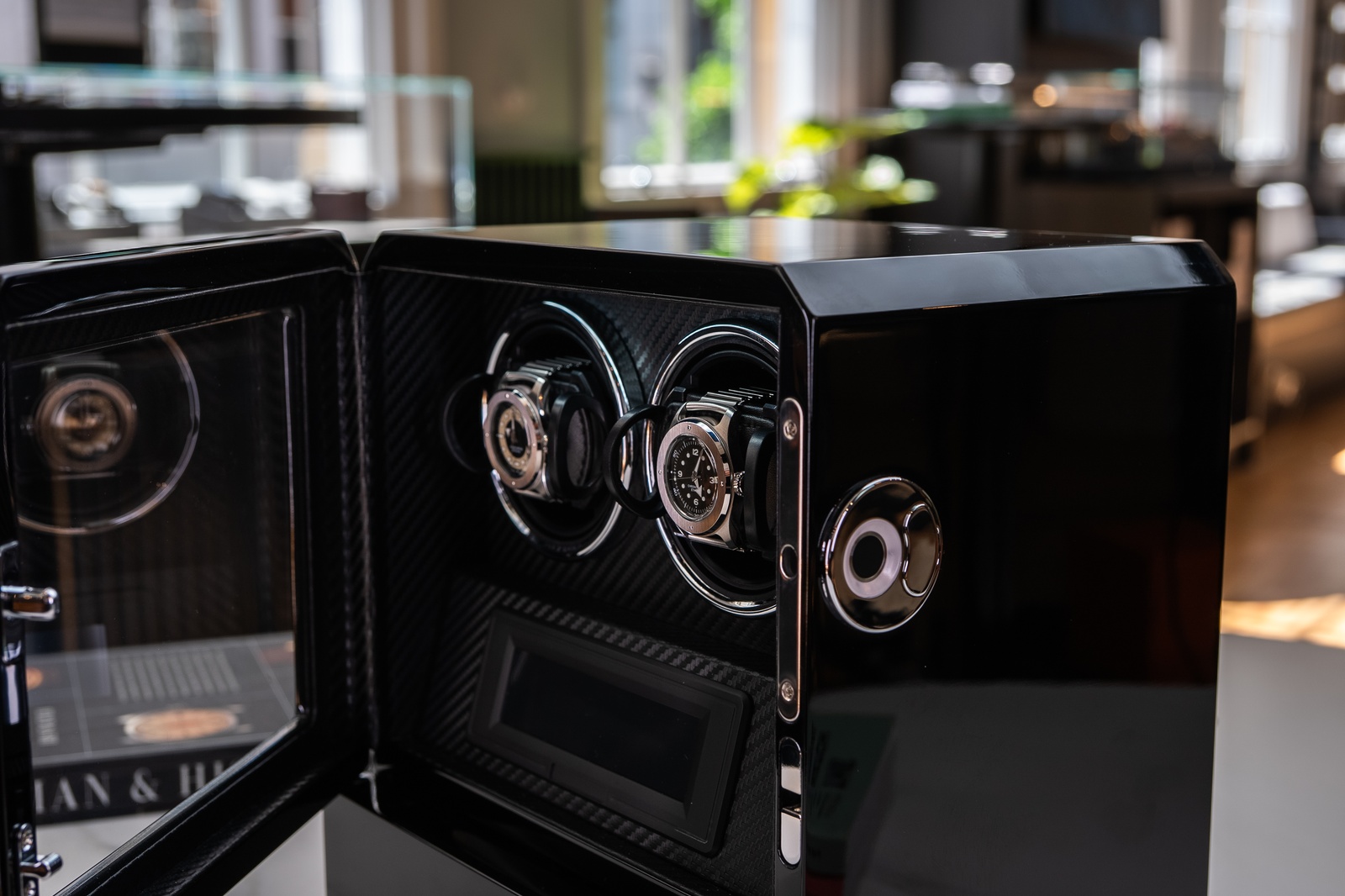
The brand is built around a simple idea: a winder should look good, work reliably and be supported by people who can help owners use it correctly.
O’Farrell frames Barrington as deliberately neither the cheapest option nor part of the ultra-expensive safe-and-storage world.
Instead, the brand aims for collectors who care about their watches and want something considered without moving into extravagant territory.
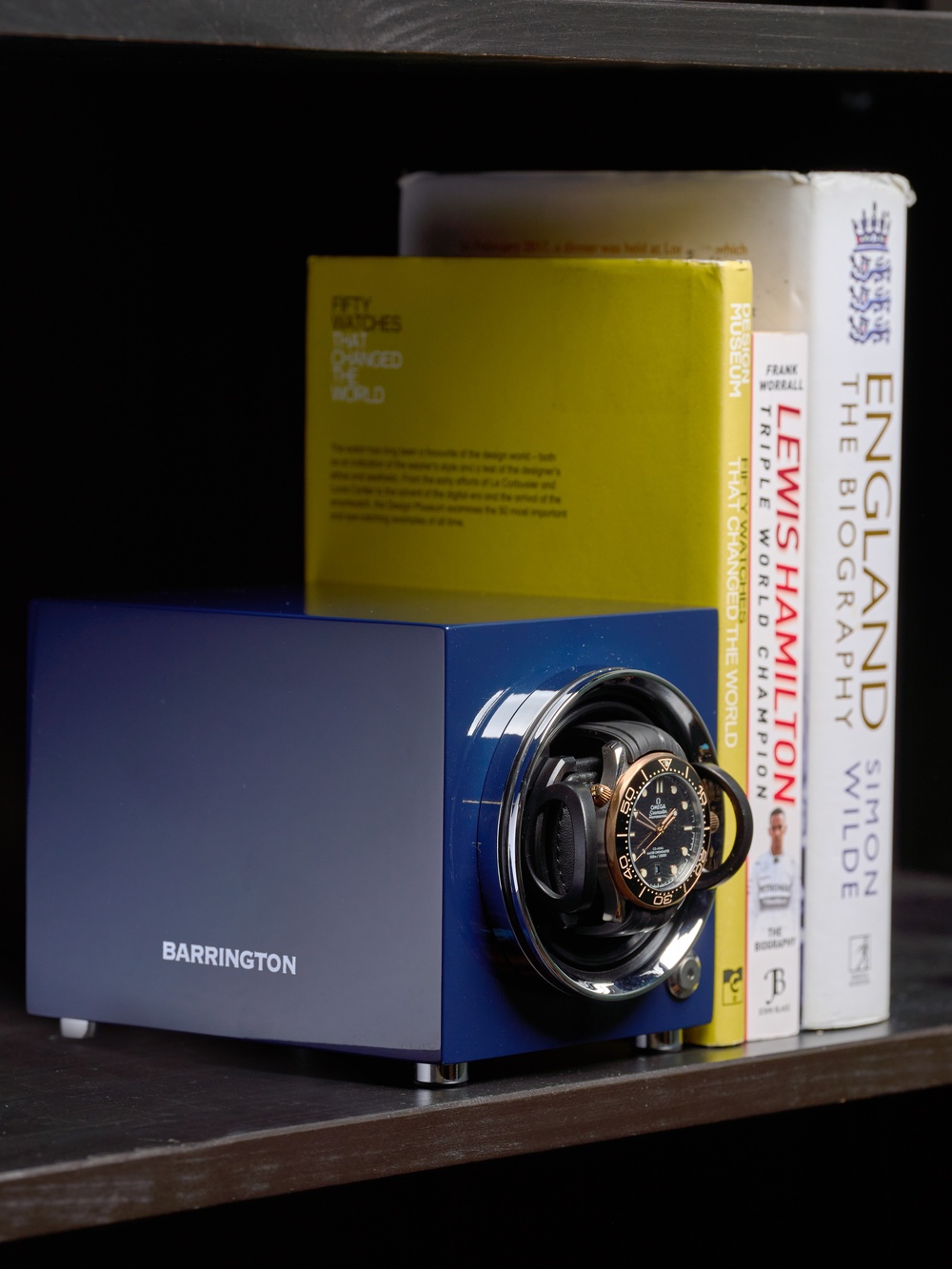
When a watch winder actually makes sense
The most important point is also the most overlooked: not every automatic watch needs to sit on a winder.
O’Farrell is clear that a stopped watch isn’t automatically a problem, and a winder shouldn’t be sold through fear about mechanical care.
Where a winder starts to become practical is in rotation.
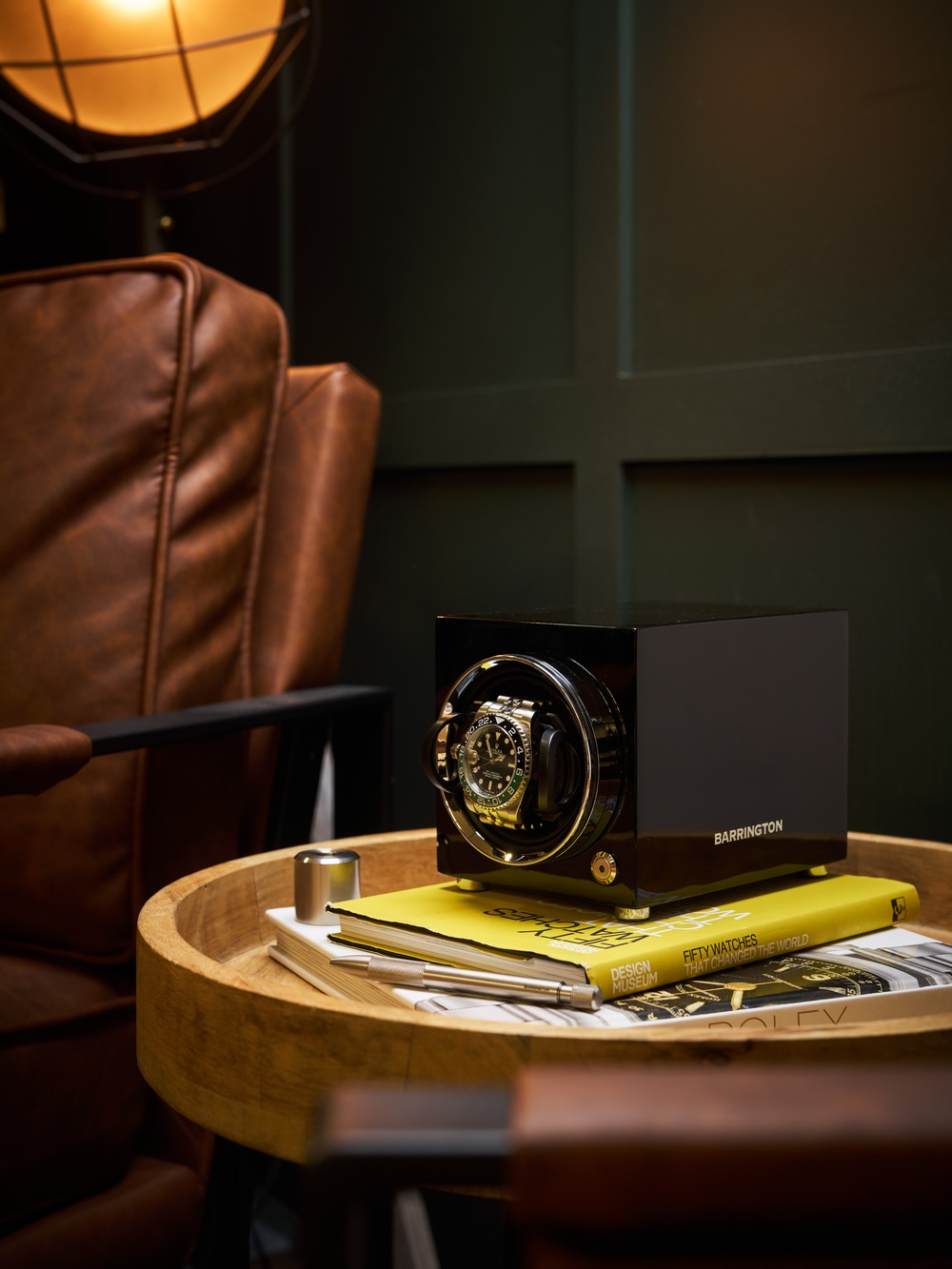
If you regularly move between several automatic watches, having one ready to wear can save the small but repeated chore of winding and setting.
The case becomes stronger with watches that are awkward to reset.
GMTs, annual calendars, perpetual calendars and moonphase watches can all make a winder feel less like an indulgence and more like a convenience tool.
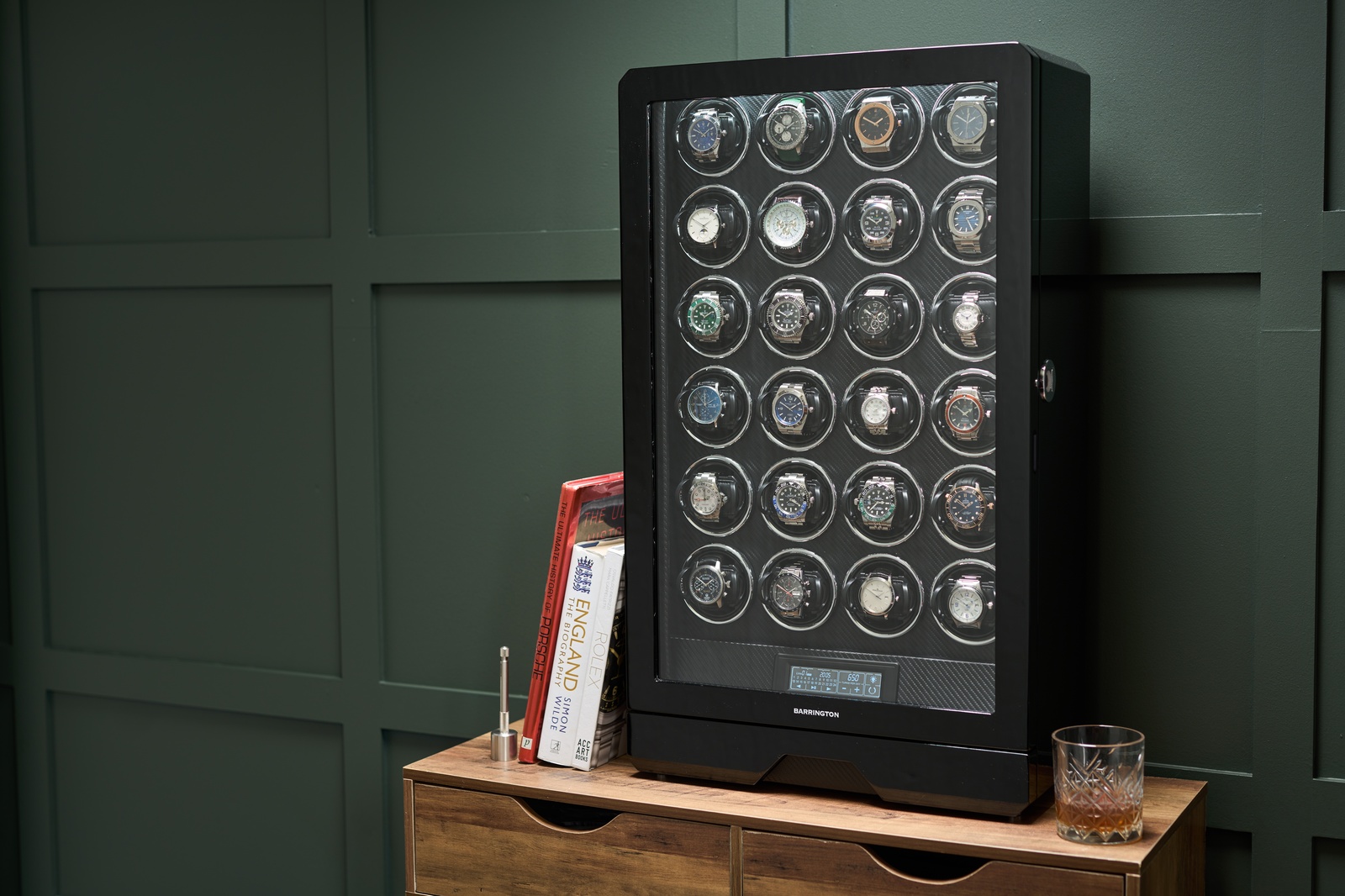
That distinction matters because the category is often presented in absolute terms.
O’Farrell’s position is more measured: the right winder can make ownership easier for the right collector, but it isn’t mandatory equipment for everyone with an automatic watch.
TPD, rotation and the intimidation factor
One reason winders can seem more complicated than they are is the language around setup.
Owners are often faced with terms such as turns per day, clockwise, counterclockwise and alternating rotation before they know what their watch actually requires.
Barrington tries to address that with a TPD guide that lets owners look up a specific watch and find suitable settings.
That guidance is a central part of the brand’s pitch, because the wrong product experience often comes from uncertainty rather than the winder itself.
For newer automatic watch owners, this kind of support can be as important as the hardware.
A good winder should remove friction, not add another technical puzzle to ownership.
What separates a good winder from a disposable one
O’Farrell points to reliability, quietness, adjustability, support, design and confidence as the qualities that separate a well-made winder from a basic marketplace option.
A cheap winder may look convincing in a product image, but the real test is whether it feels stable, runs quietly and can be set appropriately for the watch inside it.
Barrington’s approach is to keep the range focused rather than sprawling.
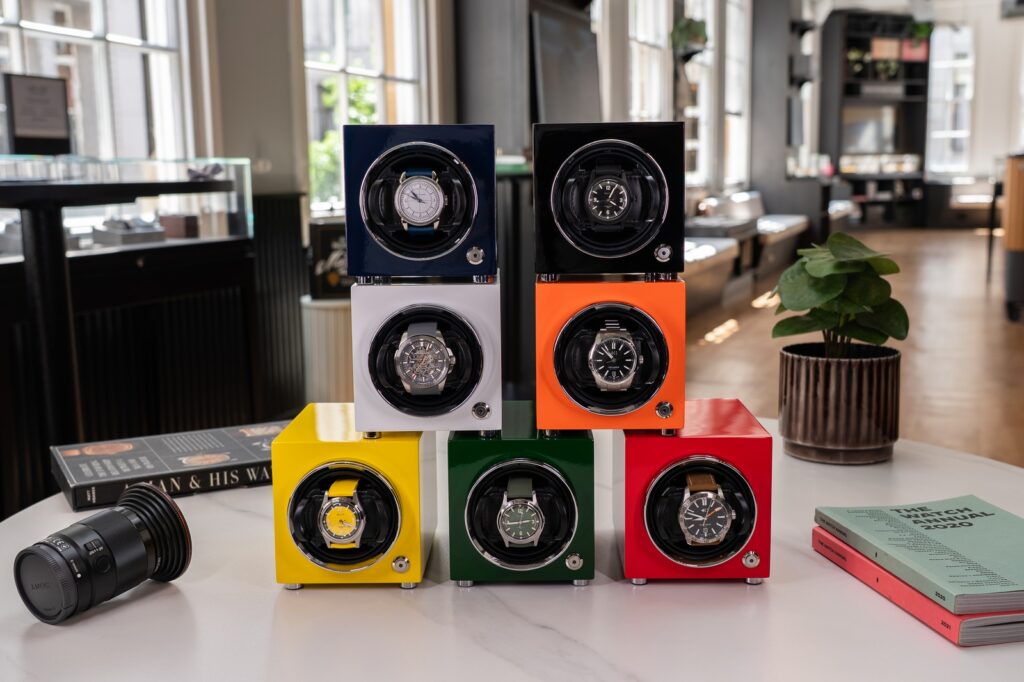
The collection includes single winders, two-watch winders, larger multi-watch winders and safes, which allows the brand to serve different stages of collecting.
A colourful single winder might suit someone with a first automatic or work as a gift, while a larger unit is more relevant to an established collector managing several valuable pieces.
That progression is important to O’Farrell, who sees Barrington as a brand that can grow with a customer as a collection becomes more serious.
There’s also an emotional dimension here that’s easy to dismiss but familiar to anyone who thinks carefully about how watches are stored.
A winder gives a watch a defined place, turning storage into part of the daily ritual of choosing what to wear.
Where Barrington goes next
O’Farrell wants Barrington to be known as much for service and support as for the winders themselves.
The next phase is focused on refining the range through customer feedback, improving the ownership experience and helping more collectors understand when a winder is useful.
The brand also wants to build awareness beyond the UK and US in markets where demand already exists.
O’Farrell also sees a role for Barrington inside the wider watch community, including support for independents, niche watches and collector-focused initiatives.
That broader ambition makes sense for a category that depends heavily on trust.
A watch winder isn’t essential for every automatic, but for collectors who rotate watches or live with complications they’d rather not reset, a well-supported, properly adjustable winder can be a quietly valuable part of ownership.