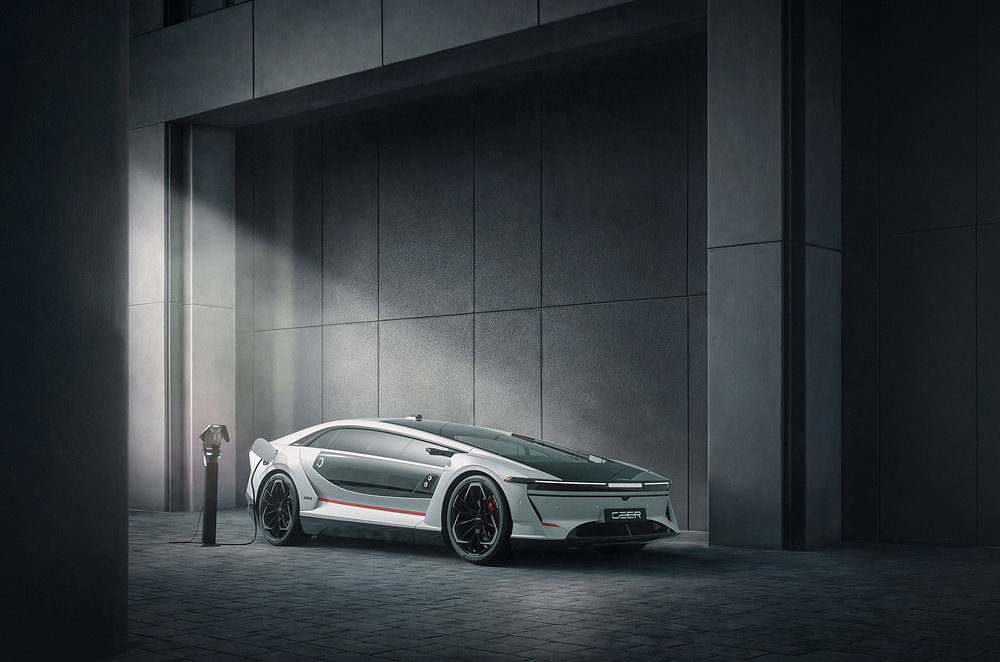
CEER has introduced EXOBOT, a pair of electric flagship vehicles that put Saudi Arabia’s automotive ambitions into sharper focus.
Revealed as a sedan and an SUV, EXOBOT is the first major statement from the Saudi EV brand and the opening move in a planned seven-model portfolio by 2030.
It’s large, technical and unapologetically shaped around the region it comes from, with local design and engineering playing a central role.
At a glance
- CEER has revealed EXOBOT as its first flagship electric sedan and SUV.
- Top specifications bring tri-motor all-wheel drive, up to 1,111 horsepower and region-focused thermal engineering.
- Both models will be built at the CEER Manufacturing Complex in King Abdullah Economic City, Saudi Arabia.
A Saudi flagship with serious scale
EXOBOT arrives as more than a new luxury EV, because it also serves as a public marker for Saudi Arabia’s move into high-end vehicle manufacturing.
The vehicles will be produced at the CEER Manufacturing Complex in King Abdullah Economic City, a facility described as the largest in the Middle East and among the most technologically advanced in the world.
The sedan measures 5.26 metres long, 2.1 metres wide and 1.43 metres high, placing it firmly in the large luxury segment.
The SUV is slightly shorter at 5.02 metres, matching the sedan’s 2.1-metre width while standing taller at 1.69 metres.
Both body styles are fully electric, and both sit at the top of CEER’s launch narrative before the brand expands into mid-size and compact models with different propulsion options.
Hegra, falcon wings and a 2.4-metre windshield
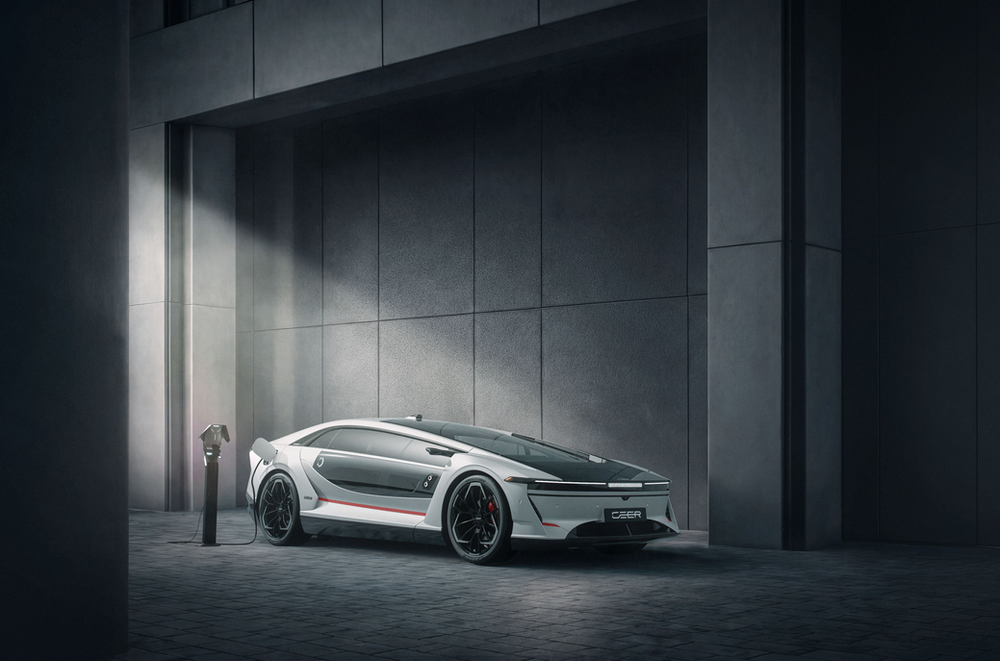
EXOBOT’s design is intentionally theatrical, with a wedge-like stance, sharp machined surfacing at the front and rear, and a smoother central body section around the occupants.
CEER links the form language to the ancient architecture of Hegra, while smaller details bring in references from across the Kingdom.
The signature lighting uses 32 bars, a nod to 1932, the year Saudi Arabia was unified as a kingdom.
The forged aluminium wheels carry a triangular motif influenced by Al-Lahuj-style openings seen in Saudi architecture.
One of the more striking technical design claims is the windshield, which measures 2.4 metres in length and is set at a 15-degree inclination.
The ultra-thin laminated glass uses an advanced reflective coating intended to support visibility, aerodynamics and heat management under strong sun.
The doors are another defining feature.
CEER calls them Shahin Wing Doors, named after the Shahin falcon, and each extends nearly three metres while opening through a 60 cm arc.
They can be operated through the key fob or by using discreet touch controls mounted on the doors.
Electric performance shaped for extreme heat
The performance figures put EXOBOT into the upper tier of electric luxury flagships.
At its highest specification, the tri-motor all-wheel-drive system delivers 1,111 horsepower and 1,500 Nm of torque.
The sedan is quoted at 2.1 seconds from 0 to 100 km/h, with a top speed of 250 km/h.
The SUV is close behind, reaching 100 km/h in 2.4 seconds and topping out at 210 km/h.
CEER has also focused heavily on heat, which matters more here than in many European- or North American-led EV launches.
The Halo Cooling system is designed for extreme regional temperatures, with the ability to bring cabin temperature down from 65°C to 32°C within 10 minutes.
Triple silver-coated glass, special foils, optimised roof airflow and dual front and rear air-conditioning systems all contribute to the thermal package.
The chassis technology follows the same high-control brief.
Steer-by-wire removes the traditional steering column and reduces steering input from 400 degrees to 160 degrees, while rear-wheel steering supports tighter low-speed manoeuvring and greater stability at speed.
A digital cabin built around visibility and privacy
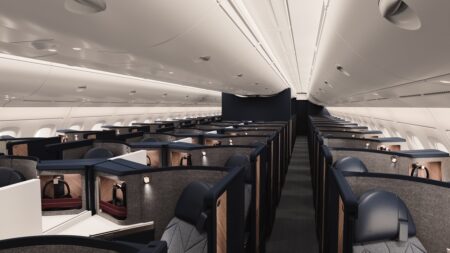
The cabin is shaped around a driver-focused cockpit, with a compact steering yoke and a centre console that blends physical and digital controls.
CEER has fitted a 48-inch pillar-to-pillar curved Digital Horizon Display with 8K resolution, supported by a 10.4-inch central control screen and an 8-inch rear occupant display.
The digital environment takes inspiration from the cinematic character of the Riyadh skyline.
A virtual voice assistant responds in Arabic and English, while the CEER app enables remote access to vehicle functions including charging status, cabin pre-conditioning and remote parking.
The lower door glass can switch between tinted and opaque settings at a touch, giving occupants a choice between a brighter cabin and greater privacy.
Details & Specifications
| Brand | CEER |
|---|---|
| Model | EXOBOT |
| Body styles | Electric sedan and electric SUV |
| Manufacturing | CEER Manufacturing Complex, King Abdullah Economic City, Saudi Arabia |
| Sedan dimensions | 5.26 m length, 2.1 m width, 1.43 m height |
| SUV dimensions | 5.02 m length, 2.1 m width, 1.69 m height |
| Powertrain | Tri-motor all-wheel-drive electric architecture |
| Maximum power | 1,111 hp |
| Maximum torque | 1,500 Nm |
| Sedan acceleration | 0 to 100 km/h in 2.1 seconds |
| Sedan top speed | 250 km/h |
| SUV acceleration | 0 to 100 km/h in 2.4 seconds |
| SUV top speed | 210 km/h |
| Windshield | 2.4 m length, 15-degree inclination |
| Doors | Shahin Wing Doors with nearly 3 m length and 60 cm opening arc |
| Displays | 48-inch 8K Digital Horizon Display, 10.4-inch central screen, 8-inch rear display |
EXOBOT is a confident opening statement for CEER, not least because it avoids presenting itself as a generic global luxury EV.
Its scale, performance and climate engineering are clearly aimed at the region first, and that may be its most compelling advantage as Saudi Arabia begins building a more visible position in the electric vehicle world.