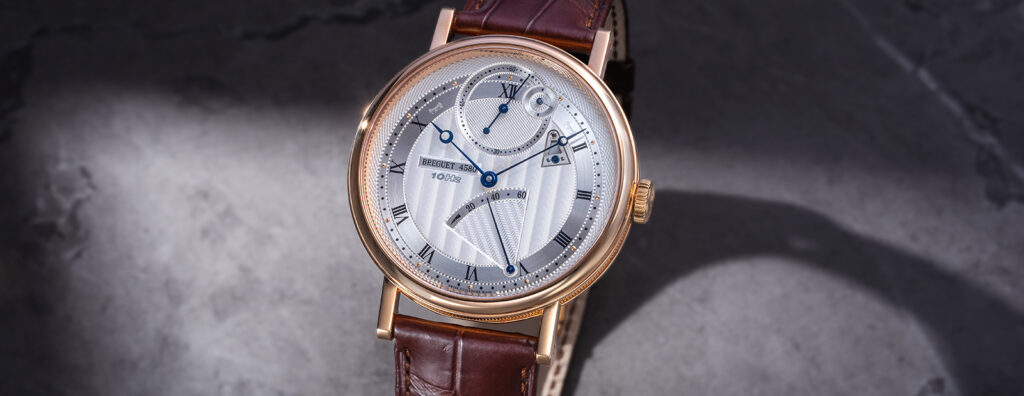
The Breguet Classique Chronométrie Ref. 7727 asks a deceptively simple question of modern watchmaking.
If quartz made accuracy cheap, available and almost effortless, what does it mean when a traditional mechanical watch still chases precision with genuine conviction?
That’s why the 7727 remains such an interesting Breguet. It isn’t merely a classical dress watch with a clever calibre inside, but a statement that chronometry can still be emotionally compelling when the engineering is ambitious enough.
At a glance
- The Breguet Classique Chronométrie Ref. 7727 is a modern high-precision mechanical wristwatch built around serious chronometric intent.
- Its defining technical feature is a 10Hz movement with a magnetic-pivot balance system and silicon escapement components.
- The “world’s most accurate mechanical watch” idea depends on how accuracy is measured, but the 7727 remains a landmark in contemporary precision watchmaking.
Precision after the quartz turning point
Before quartz, accuracy was one of the great public measures of watchmaking excellence.
Marine chronometers were not decorative trophies. They were strategic instruments, precise enough to preserve reference time across long voyages and help sailors determine longitude at sea.
That tradition eventually fed into high-grade pocket watches and, later, wristwatches that treated chronometer performance as a badge of technical seriousness.

The arrival of the Seiko Astron in 1969 changed the conversation.
Quartz technology, beating at 32,768 oscillations per second, made superior daily accuracy available far beyond the small world of elite mechanical chronometers.
Mechanical watchmaking survived by leaning into emotion, craft, design, complication and cultural identity.
Yet the Breguet Classique Chronométrie 7727 shows that precision never stopped being compelling. It simply needed to be pursued in a way that felt meaningful in the post-quartz era.
The Breguet 7727 as a modern chronometer
Breguet is a fitting name for this conversation because the brand’s historical identity is inseparable from technical watchmaking.
The Classique Chronométrie 7727 brings that heritage into a contemporary wristwatch by focusing on stability, frequency and efficiency rather than theatrical complication.
At the centre of the watch is Calibre 574DR, a self-winding movement running at 10Hz, or 72,000 vibrations per hour.
That frequency is far above the 4Hz rate common in many modern Swiss mechanical watches, and the purpose is not spectacle. A faster oscillator can divide time into smaller increments, offering a technical route toward improved rate stability.
The movement also uses silicon for key escapement components, including the balance spring, lever and escape wheel.
Silicon’s appeal in this context is practical. It is light, resistant to magnetism and can be manufactured with extreme precision.
The most distinctive feature, however, is the magnetic-pivot system used for the balance.
Instead of treating magnetism only as an enemy of accuracy, Breguet uses carefully controlled magnets to stabilise the balance staff and help the oscillator recover its ideal position after shocks.
It’s a particularly modern idea dressed in a very traditional watch.
A classical dial with technical intent
The 7727 sits within the Classique family, so it doesn’t announce its engineering with an aggressively futuristic case or exposed architecture.
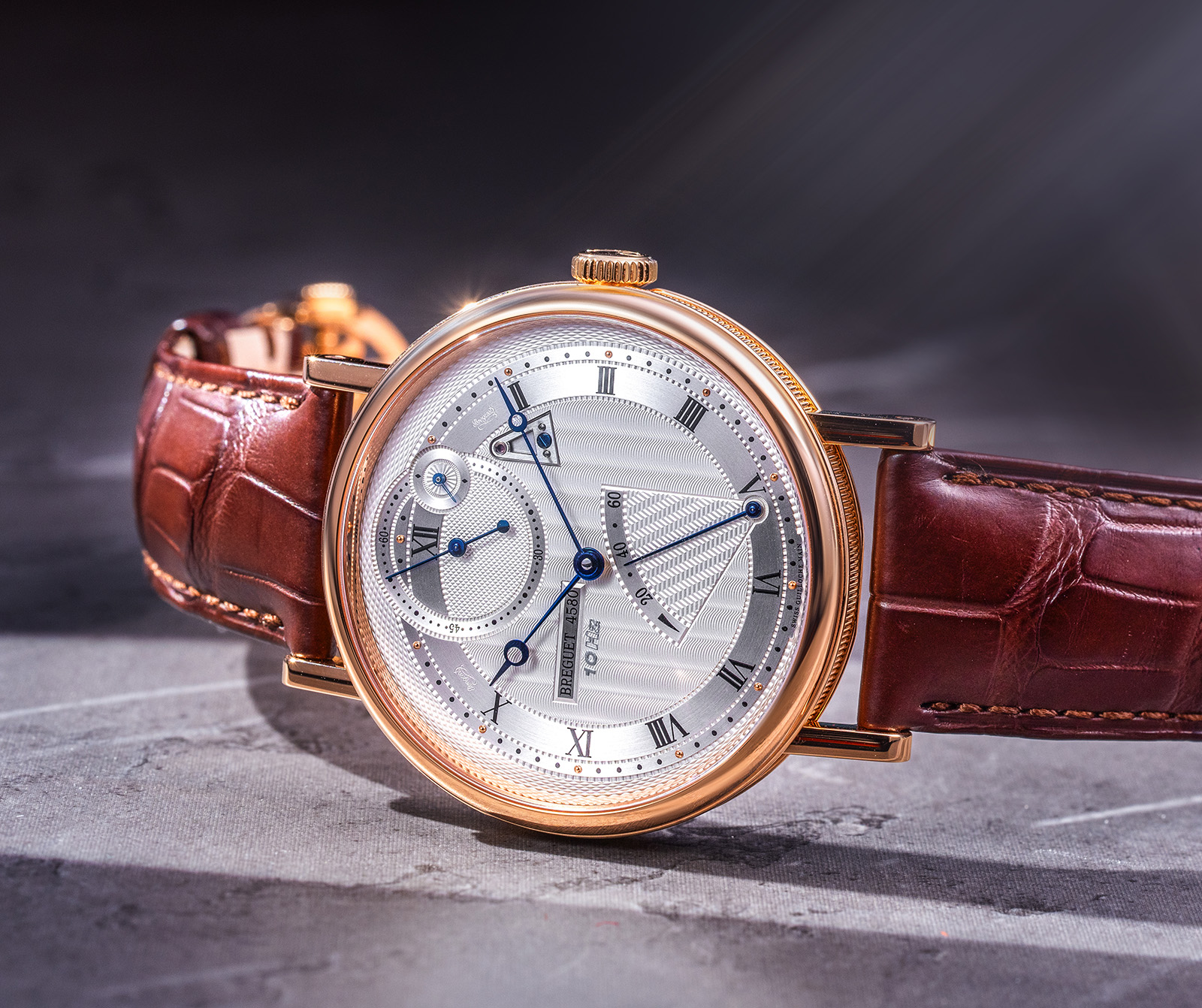
Its dial language is unmistakably Breguet, with a silvered gold dial, hand-guilloché decoration and the brand’s signature open-tipped hands.
The asymmetrical display gives the watch its character.
The main time display is offset, while the dial also incorporates small seconds and a power-reserve indication, creating a layout that feels technical without losing the refinement expected from the Classique line.
This contrast is the point.
The watch looks rooted in the codes of traditional horology, but its mechanical priorities are closer to laboratory watchmaking than nostalgic ornament.
Is it really the world’s most accurate mechanical watch?
The phrase “world’s most accurate mechanical watch” is tempting, but it deserves careful handling.
Mechanical accuracy depends on many variables, including position, temperature, winding state, shock, regulation, testing protocol and the difference between a claimed performance range and long-term use on the wrist.
The 7727’s reputation comes from its unusually ambitious chronometric architecture and a stated daily performance that sits well beyond conventional chronometer expectations.
That makes it one of the most convincing modern answers to the question of how far a serially produced mechanical wristwatch can be pushed in pursuit of accuracy.
It also matters because the watch doesn’t frame precision as a dry technical footnote.
It makes chronometry the emotional centre of the object, which is a rare thing in a market often dominated by finishing, rarity, case material and visual identity.
Details & Specifications
| Brand | Breguet |
|---|---|
| Model | Classique Chronométrie Ref. 7727 |
| Case size | 41mm |
| Case material | 18k gold, including rose gold and white gold versions |
| Dial | Silvered gold dial with hand-guilloché decoration |
| Movement | Breguet Calibre 574DR, self-winding |
| Frequency | 10Hz, or 72,000 vibrations per hour |
| Escapement | Silicon lever and escape wheel |
| Balance spring | Silicon |
| Key technical feature | Magnetic-pivot balance system |
| Power reserve | Approximately 60 hours |
| Indications | Hours, minutes, small seconds and power reserve |
The Breguet Classique Chronométrie 7727 is not compelling because it settles every argument about mechanical accuracy.
It’s compelling because it reopens the argument with intelligence, restraint and a genuinely inventive movement, proving that precision can still be one of the most romantic ideas in watchmaking.