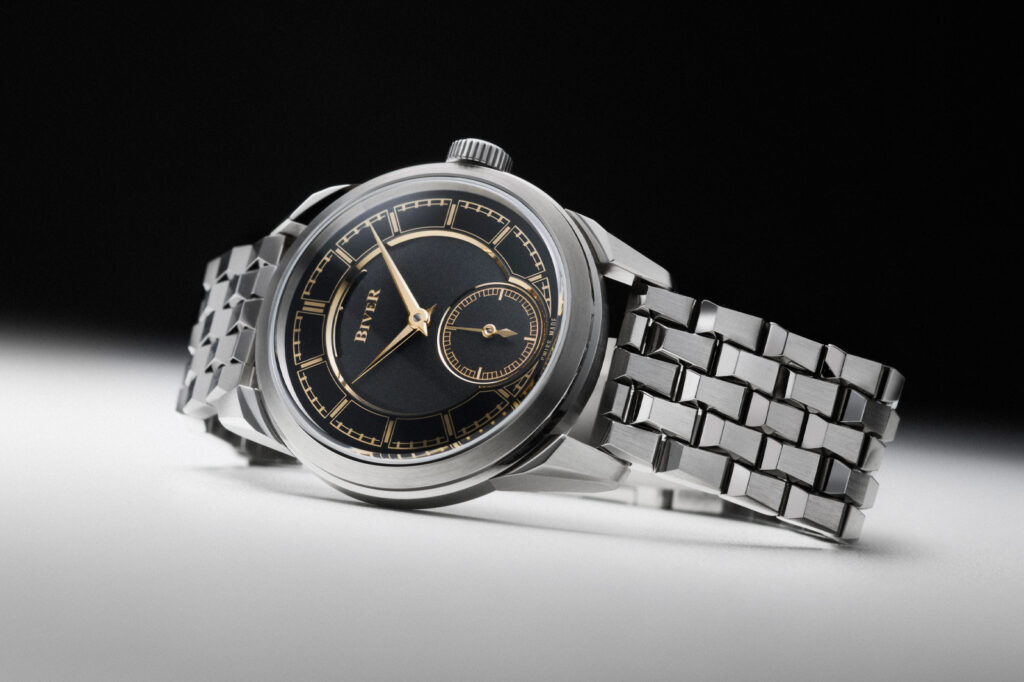
Biver has built its early identity around precious-metal watches with demanding hand-finishing, so a steel case is more than a material swap for the young maison.
The new Biver AB answers collector interest in a steel watch, but it does so with a dedicated design rather than a simple steel version of an existing model.
It also marks several firsts for the brand, including a new manual-winding movement and a 2N gold display on the dial.
At a glance
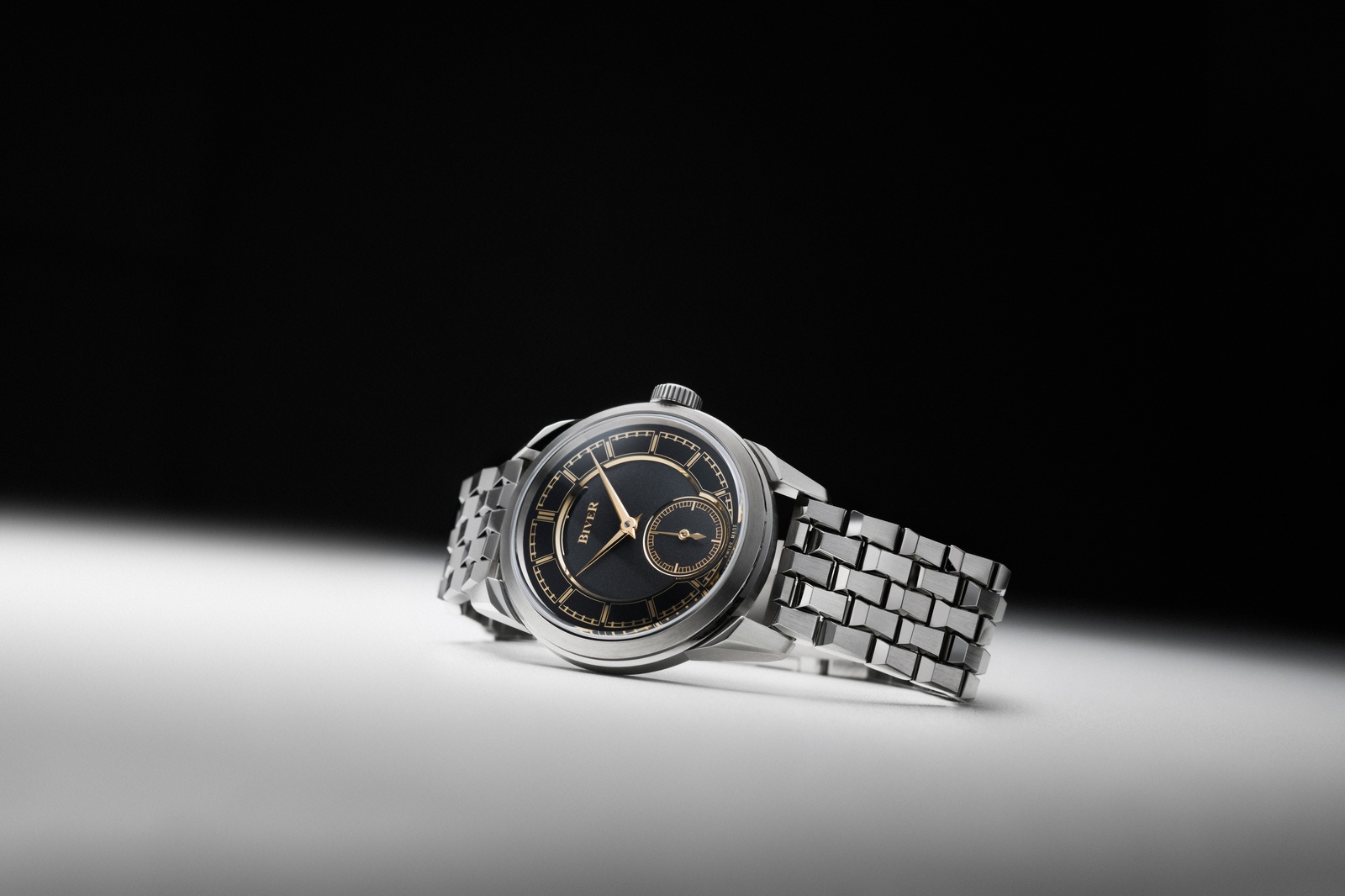
- Biver has introduced the AB, its first watch with a stainless steel case.
- The 38mm watch pairs an onyx dial with a new manually wound JCB-004 calibre offering 120 hours of power reserve.
- Pricing is CHF 65,000 excluding tax, with the watch positioned in Biver’s established high-end territory.
Steel changes the brief for Biver
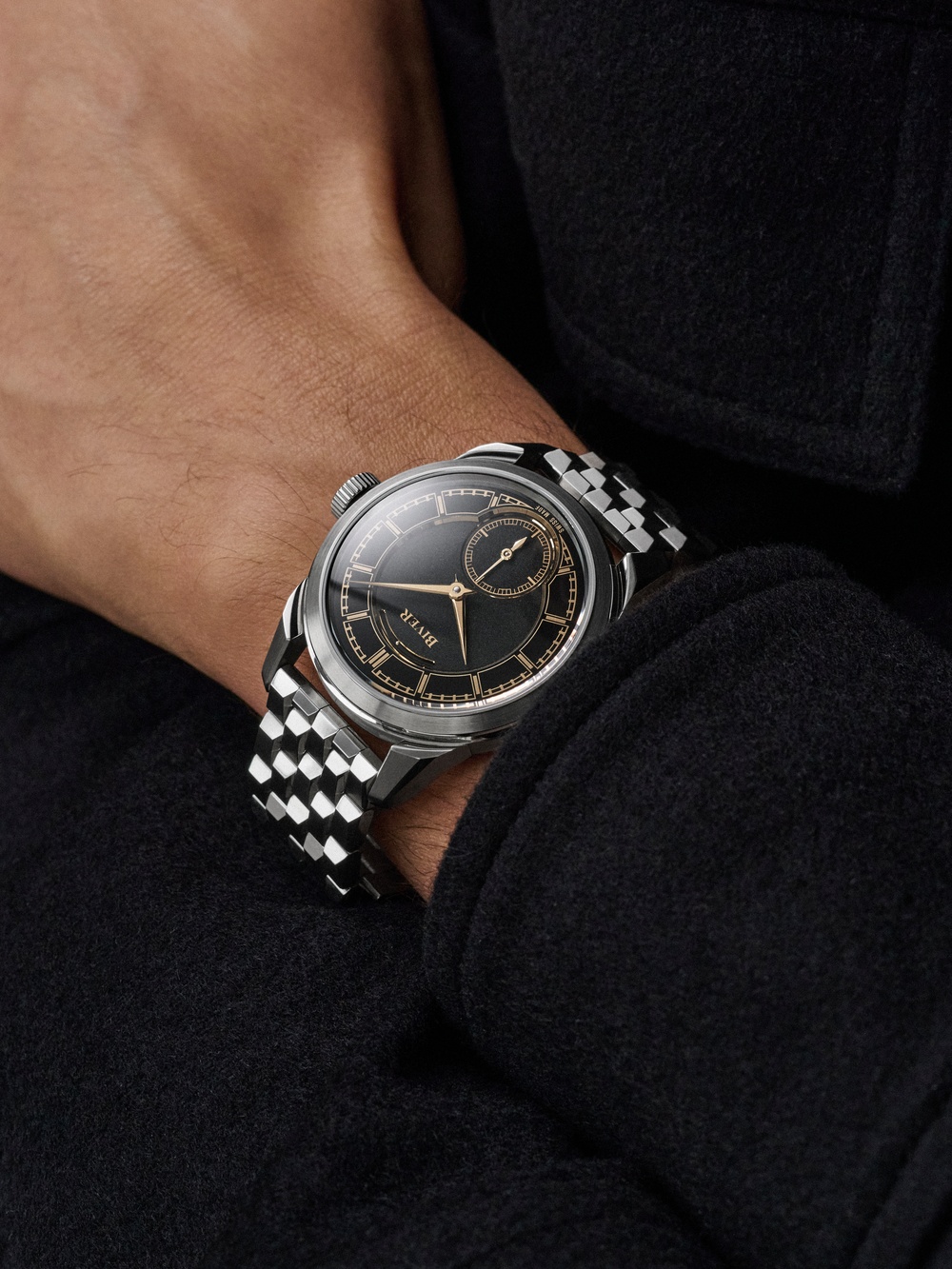
The AB is the smallest Biver watch to date, with a steel case measuring 38mm across and 9.8mm thick.
Those dimensions point to a more everyday-wearable brief, helped by the resilience of steel and a contemporary steel bracelet.
Biver hasn’t treated the material as a canvas for excess decoration.
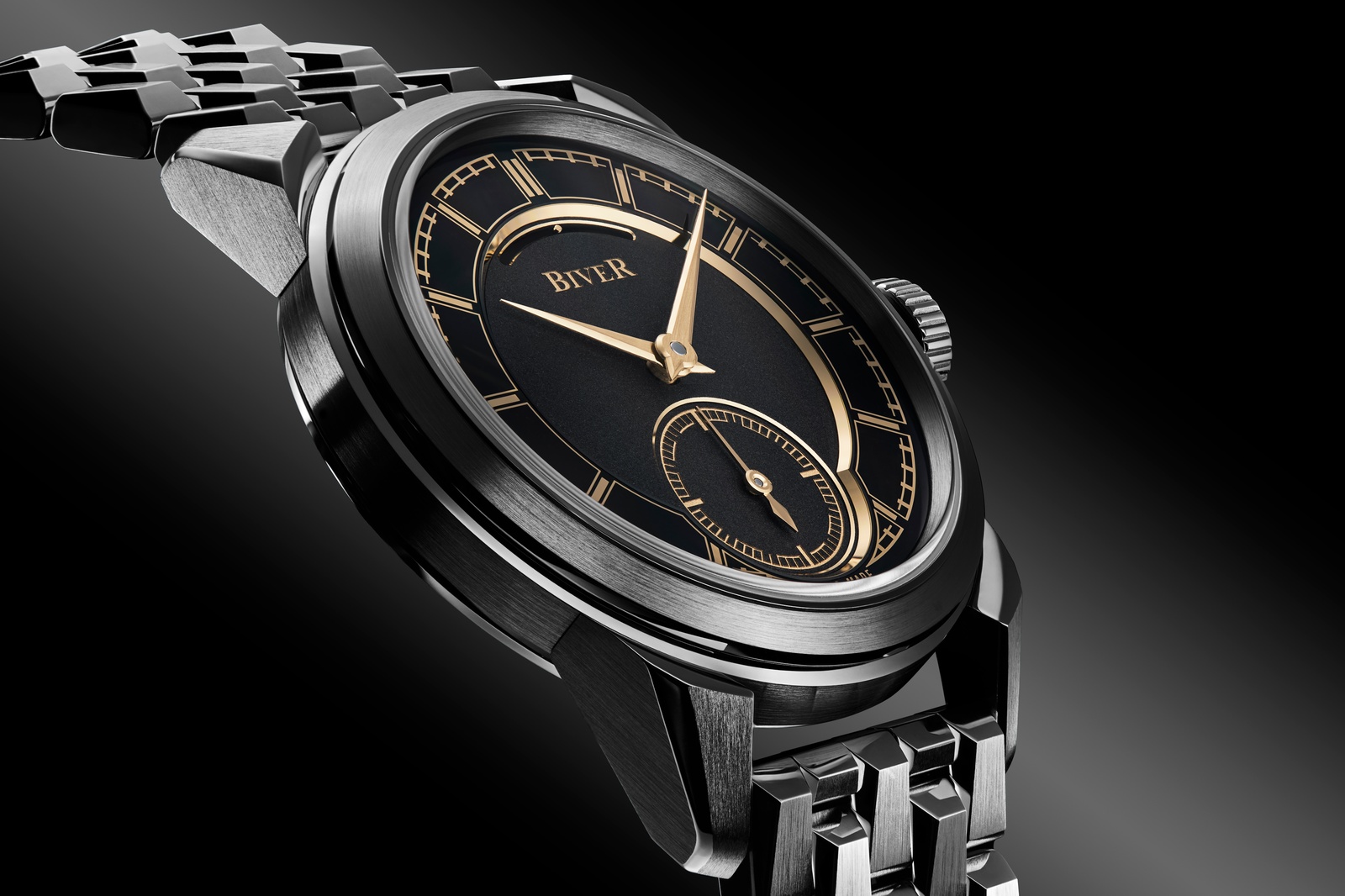
The case finishing is executed by hand, using a restrained mix of brushing and polishing rather than elaborate engraving or overtly artisanal surface work.
That restraint matters because steel can quickly lose its clarity when treated like a precious metal.
Here, the appeal is in proportion, finishing discipline and the decision to let the material feel like steel.
Onyx meets a first 2N gold display
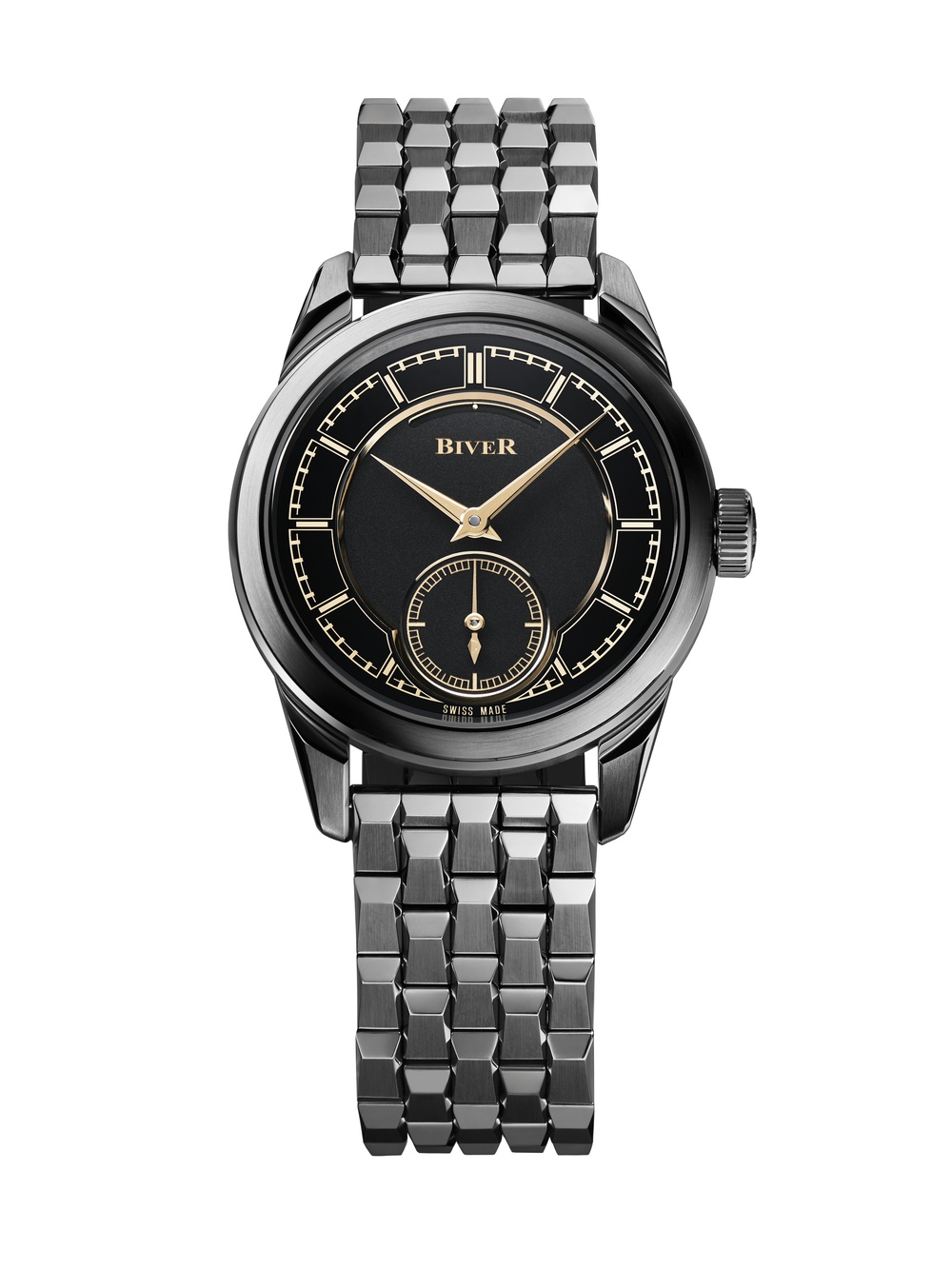
The dial brings the AB closer to familiar Biver territory, using onyx in keeping with the brand’s existing work with stone dials.
The layout is new, with central hours and minutes, a small seconds display at 6 o’clock and a power reserve indicator at 12 o’clock.
Biver has produced the dial display in 2N gold for the first time.
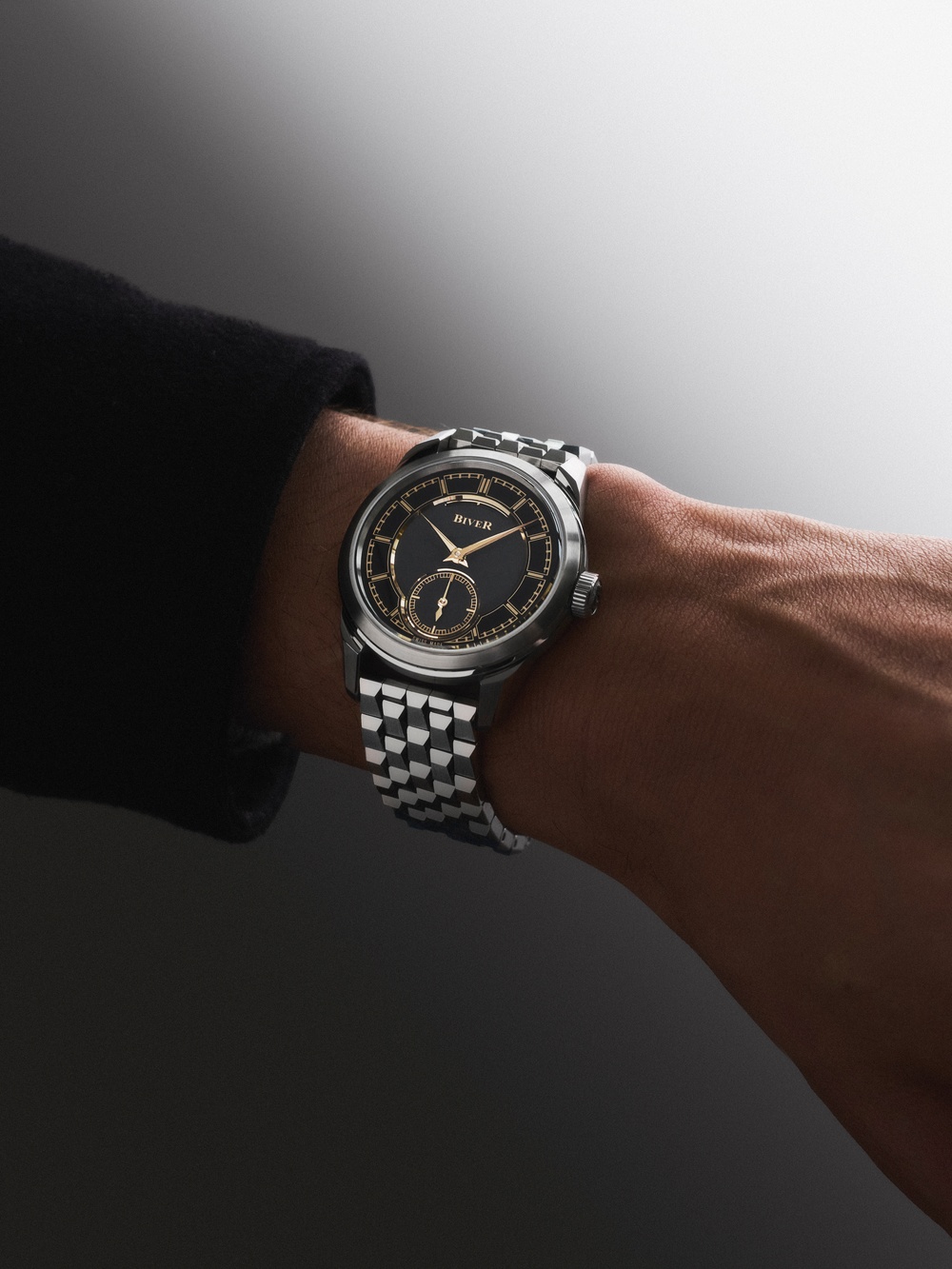
Compared with richer rose-gold alloys such as 5N, 2N gold uses more silver and less copper, giving it a paler champagne tone.
That softer gold colour sets up the most interesting visual contrast in the watch.
The dial has the refinement expected of a Biver piece, while the steel case and bracelet bring the watch into a more practical, less ceremonial register.

The JCB-004 makes the movement part of the experience
Inside the AB is the new calibre JCB-004, a manual-winding movement developed with Le Cercle des Horlogers.
Its twin-barrel architecture delivers a five-day power reserve, equivalent to 120 hours.
That’s a useful figure in a manually wound watch because it reduces the need for constant attention, while the dial-side power reserve indicator keeps the owner aware of when winding is needed.
The movement also incorporates Biver’s zero-reset mechanism.
When the crown is pulled out, the seconds hand jumps to zero, allowing more precise time setting.
A manual movement also changes the stakes for finishing because there’s no automatic rotor to hide the architecture.
Biver uses a PD210 gold alloy for the mainplate and bridges, a material described as resistant to tarnishing and not requiring plating.
Each watch is assembled from start to finish by a single watchmaker, reinforcing the AB’s position as a steel watch defined less by raw material cost than by craft, movement construction and hand execution.
Details & Specifications
| Brand | Biver |
|---|---|
| Model | AB |
| Case size | 38mm diameter, 9.8mm thickness |
| Case material | Steel |
| Dial | Onyx with 2N gold display |
| Functions | Hours, minutes, small seconds, power reserve indicator |
| Movement | JCB-004 manual-winding calibre |
| Movement development | Developed with Le Cercle des Horlogers |
| Power reserve | Five days, or 120 hours |
| Movement architecture | Twin barrel construction |
| Additional mechanism | Zero-reset seconds mechanism |
| Mainplate and bridges | PD210 gold alloy |
| Bracelet | Steel bracelet |
| Price | CHF 65,000 excluding tax, approximately £59,000 |
The AB may be Biver’s first step into steel, but it doesn’t read like a concession to accessibility.
It’s a more wearable expression of the brand’s watchmaking language, aimed at collectors who want the same level of finishing and mechanical intent in a watch that can sit more naturally in daily rotation.