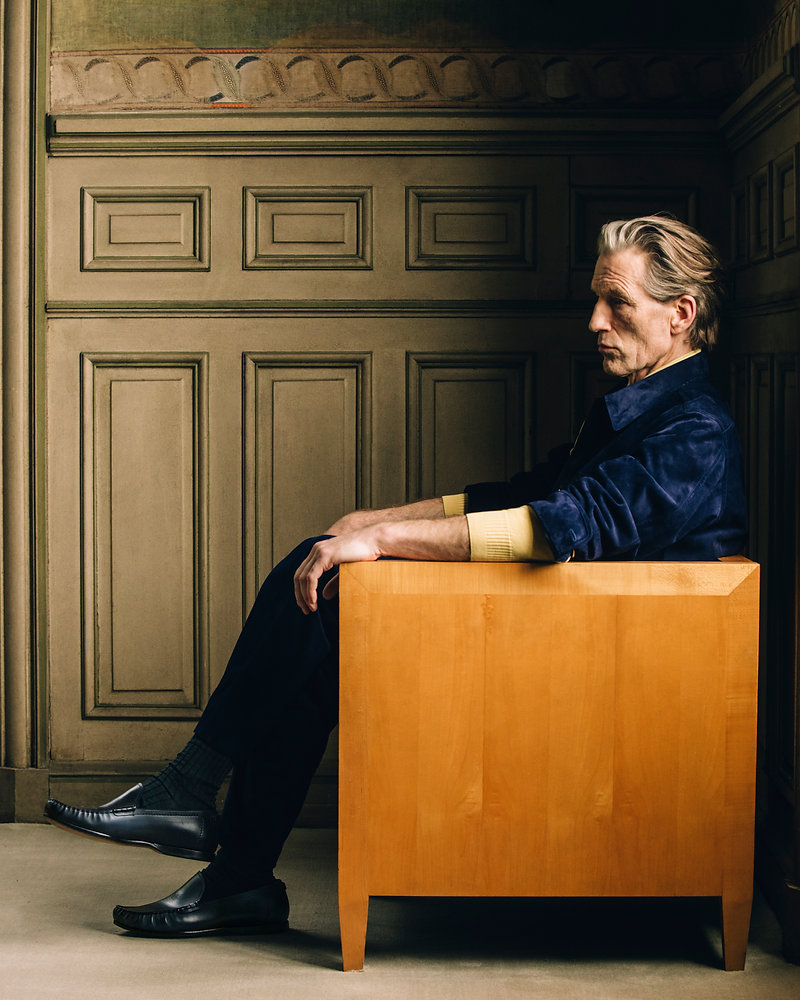
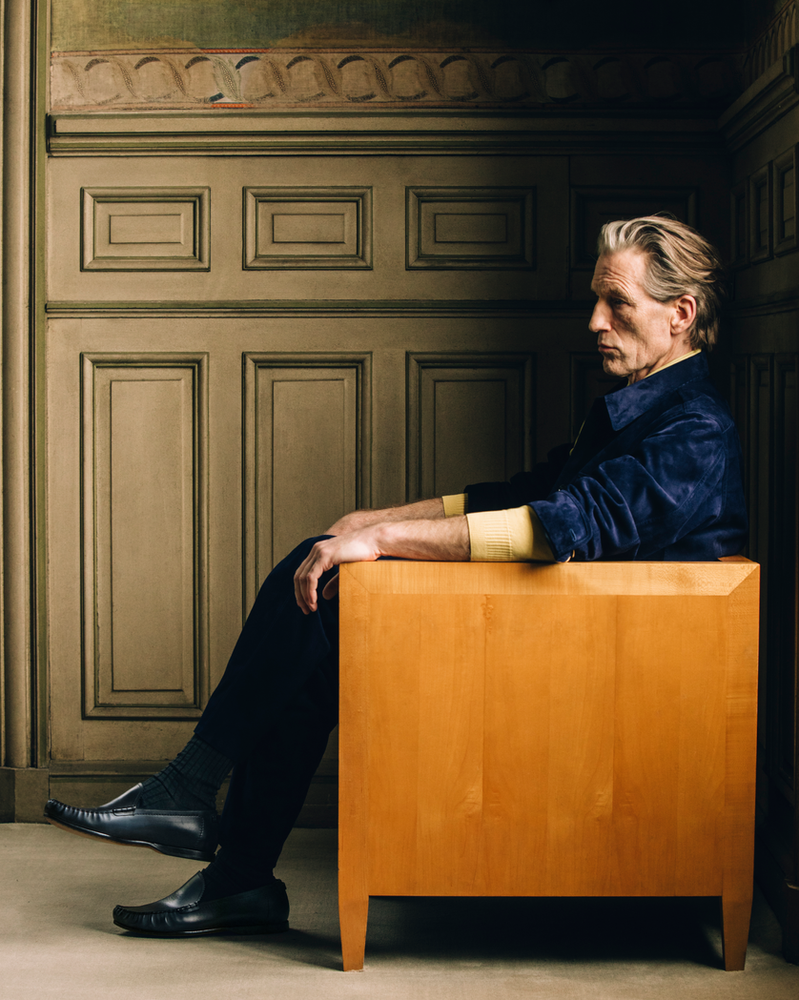
Berluti’s Impressions et Sensations returns to the Simone & Cino Del Duca Foundation in Paris with a presentation that treats craft as something felt before it is explained.
For its third consecutive year in the late 19th-century townhouse overlooking Parc Monceau, the Maison frames its world through a garden theme, bringing together patina, tailoring, leatherwork and a creative dialogue with The Little Prince.
It’s a setting that suits Berluti unusually well, not just because of the architecture, but because of the shared Franco-Italian cultural current running through both the house and the Foundation.
At a glance
- Berluti presents Impressions et Sensations at the Simone & Cino Del Duca Foundation for the third year, with the garden as its guiding theme.
- The installation translates emotion into shoes, garments and leather goods through patina, embroidery, laser cutting and Venezia leather.
- A creative dialogue with The Little Prince runs through the presentation, ahead of a limited edition planned for the end of the year.
A Paris townhouse with Franco-Italian resonance
The Simone & Cino Del Duca Foundation occupies an imposing classical townhouse from the late 19th century, facing the greenery of Parc Monceau.
Created by Simone Del Duca to continue the philanthropic legacy of her husband, Italian entrepreneur Cino Del Duca, the Foundation supports the arts, literature and sciences under the aegis of the Institut de France.
Its annual Prix Mondial Cino Del Duca recognises an author of international distinction, keeping the Foundation closely tied to cultural exchange and intellectual life.
Berluti’s own history moves between Italy and France in a similarly fluid way.
Founded by a family from the Marche region and shaped in Paris, the Maison has long made its identity from that conversation between two cultures, where hand skill, artistic instinct and transmission matter as much as the finished object.
The garden as a language of craft
This year’s presentation uses the garden not as decoration, but as a way to show how an idea becomes material.
One side of the experience is concerned with images, emotions and visual cues that feed the creative process, while the other turns those sensations into objects through the Maison’s technical vocabulary.
The opening moment is deliberately sensory.
Visitors encounter the scent of melted wax, the sound of footsteps and three heels in different sizes, an immediate signal that Berluti’s world begins with the shoe but extends well beyond it.
In the Salon Monceau, the famous line from The Little Prince appears as a quiet provocation.
“It is only with the heart that one can see rightly; what is essential is invisible to the eye.”
For Berluti, that idea connects neatly with a form of elegance that is less about surface display and more about bearing, movement and feeling.
The garden motif appears across pieces that balance subtlety with technical assurance.
The Forestière is animated by a naturalistic daffodil that seems to emerge from its pocket, while an embroidered flower on a jersey jacket appears to grow from the garment itself.
Floral treatments continue across pop-over shirts, regular shirts and Scritto elements, using print, embroidery and optical effects rather than a single graphic treatment.
A jacket combining floral embroidery with laser-cut detail shows Berluti pushing its decorative work into more complex territory.
The entrelacs collar on the Un Jour blouson brings several of the Maison’s craft disciplines together in one concentrated gesture.
Patina meets the mood of Impressionism
In the first-floor Orange salon, Berluti shifts the garden theme toward light, atmosphere and the fleeting qualities associated with Impressionist painting.
The connection feels natural because patina, one of Berluti’s defining skills, is also a matter of layering, transparency and controlled irregularity.
Where a painter might use short strokes to catch a changing sky or a reflection on water, Berluti’s artisans build depth on Venezia leather through tonal shifts and carefully worked surfaces.
For this presentation, the design studio selected four paintings and focused on fragments that could be translated into leather.
The interpretations appear on the Un Jour, Luti, Un Jour de Poche and Toujours models, each evoking a garden at a different hour or mood.
One suggests the freshness of a rose garden at daybreak, another the glint of a rowing boat on a lake under midday sun.
There are also vivid hydrangea blooms and the deeper atmosphere of a garden at dusk.
The result is not a literal painting transferred onto a bag, but an exploration of how colour, memory and touch can sit inside a leather object.
The Little Prince enters Berluti’s vocabulary
The presentation’s other major thread is Berluti’s encounter with the world of The Little Prince.
The story’s sensitivity to nature, attention to small details and reverence for living things align closely with the garden theme running through the rooms.
Certain spaces are dedicated to the book’s universe and writing, while its characters and symbols are more discreetly worked into shoes, leather goods and garments.
That restraint matters.
Rather than turning the collaboration into obvious illustration, Berluti uses its own techniques to fold the story into texture, surface and silhouette.
A limited edition connected to The Little Prince is planned for release at the end of the year, giving this presentation the feeling of a preview without reducing it to a product launch.
New shapes for shoes and leather goods
The garden theme also reaches Berluti’s footwear, where a new series of tightly edited capsules creates space for artistic experimentation inside the broader collections.
The Galet Bloom shoe is the first clear expression of that approach.
Its shape draws from the organic curve of the arum lily, turning the flower’s line into a sculptural shoe with a fresh patina finish.
The Lorenzo and Panache loafers stay closer to Berluti’s established lineage, relying on construction, material quality and familiar elegance rather than overt novelty.
Leather accessories also move into softer, more practical territory.
The Un Jour-nal introduces an unusually supple form that recalls a rolled newspaper tucked under the arm, while the Grand Jour rethinks the men’s tote with an emphasis on comfort, usefulness and polish.
Taken together, these pieces show Berluti at its most persuasive, when craft is allowed to carry emotion without losing discipline.
Impressions et Sensations works because it doesn’t separate the poetic from the practical; it lets a garden, a beloved literary world and the Maison’s hand skills meet in objects meant to be worn, carried and lived with.