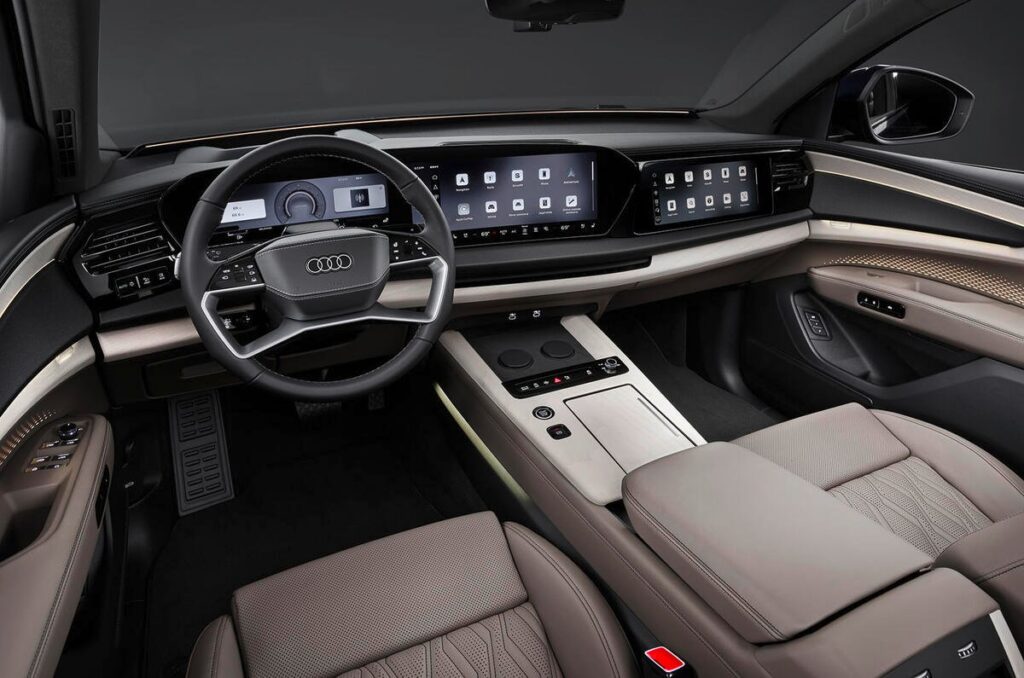
Audi appears ready to move beyond the idea that every cabin function belongs behind glass.
Filip Brabec, Audi of America’s Senior Vice President of Product Management, told The Drive that the brand sees a clear shift back toward mechanical controls, with future interiors expected to put usability ahead of screen-led spectacle.
For drivers tired of digging through menus for basic functions, it’s a notable change in tone from a brand long associated with technology-forward cabin design.

At a glance
- Audi is signalling a return to more physical controls in future vehicle interiors.
- The shift is expected to influence steering wheel controls, climate functions and door-mounted switches.
- Upcoming Radical Next and Interior Next design philosophies will focus on simpler, more intuitive cabin layouts.
A more tactile Audi cabin is coming
Brabec said Audi believes the touchscreen trend may have reached its peak, and that physical controls are likely to become more prominent again in upcoming models.
The rollers already appearing on steering wheels may be only the beginning of that shift.
The broader idea is straightforward enough.
Technology should support the driver rather than compete for attention, especially when the task is as basic as changing the cabin temperature or adjusting a setting while moving.
Climate controls and door switches are in focus
Audi’s rethink won’t be limited to the centre console.
The brand is looking at bringing back more physical climate controls, a move that would address one of the most common frustrations with modern screen-heavy interiors.
Door-mounted switches are also being reconsidered as part of the same push toward clearer, more intuitive operation.
Some of these ideas could appear in existing models in the near future, although Audi hasn’t confirmed specific vehicles or timing.
Radical Next and Interior Next point to a simpler direction
The change fits into Audi’s upcoming Radical Next and Interior Next design philosophies.
Both are expected to place more emphasis on simple layouts, legible controls and a cabin experience that feels easier to use without reducing the role of digital technology entirely.
That distinction matters.
This doesn’t sound like a rejection of screens, but rather a correction after years in which many carmakers treated the touchscreen as the default answer to almost every interface question.
A course correction for premium car interiors
The move is especially relevant because Audi helped define the modern premium cabin as a place where digital displays, crisp graphics and clean surfaces could feel genuinely sophisticated.
If the brand is now talking openly about bringing back more tactile interaction, it reflects a broader recognition that minimalism can go too far when it complicates everyday use.
For Audi buyers, the appeal may be less about nostalgia and more about confidence.
A good physical control doesn’t need to load, doesn’t require a submenu and doesn’t ask the driver to look away for long.
If Audi gets the balance right, its next interiors could feel more modern by being less screen-dependent.