Petermann Bédat has built its young reputation on watches that feel deeply considered rather than merely complicated.
The new 2914 Chronograph Monopusher continues that approach, but it does so with a cleaner brief than the brand’s earlier split-seconds chronograph.
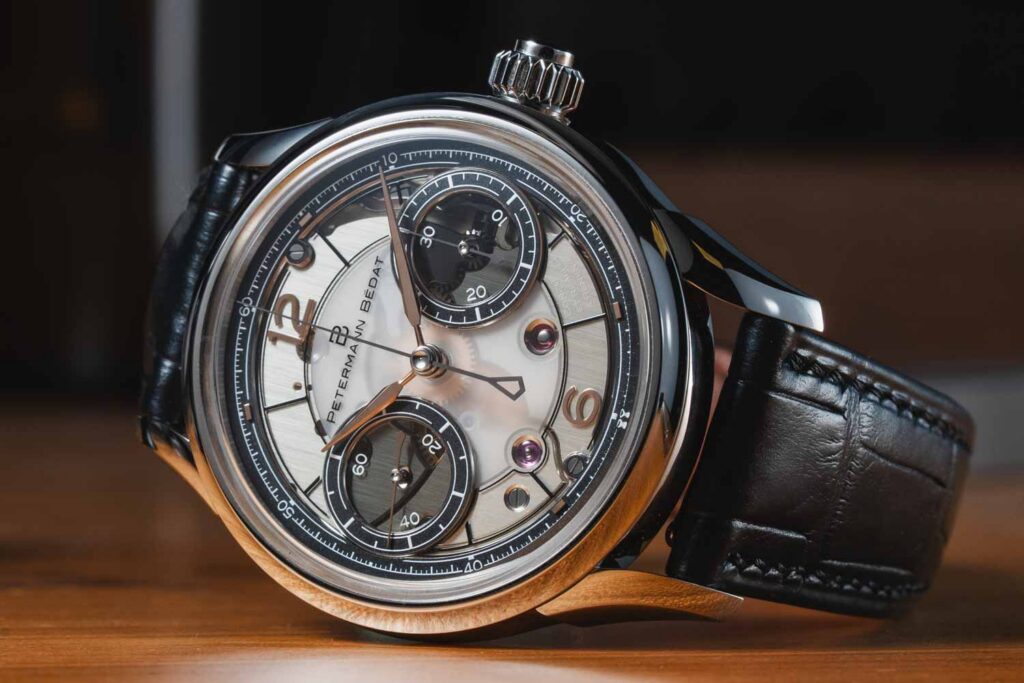
Introduced at IAMWATCH in Singapore, it’s a platinum, manually wound monopusher chronograph limited to 20 pieces, and its 36.5mm case gives the whole project an unusually traditional sense of scale.
At a glance
- Petermann Bédat has introduced the 2914 Chronograph Monopusher, its first pure-play chronograph.
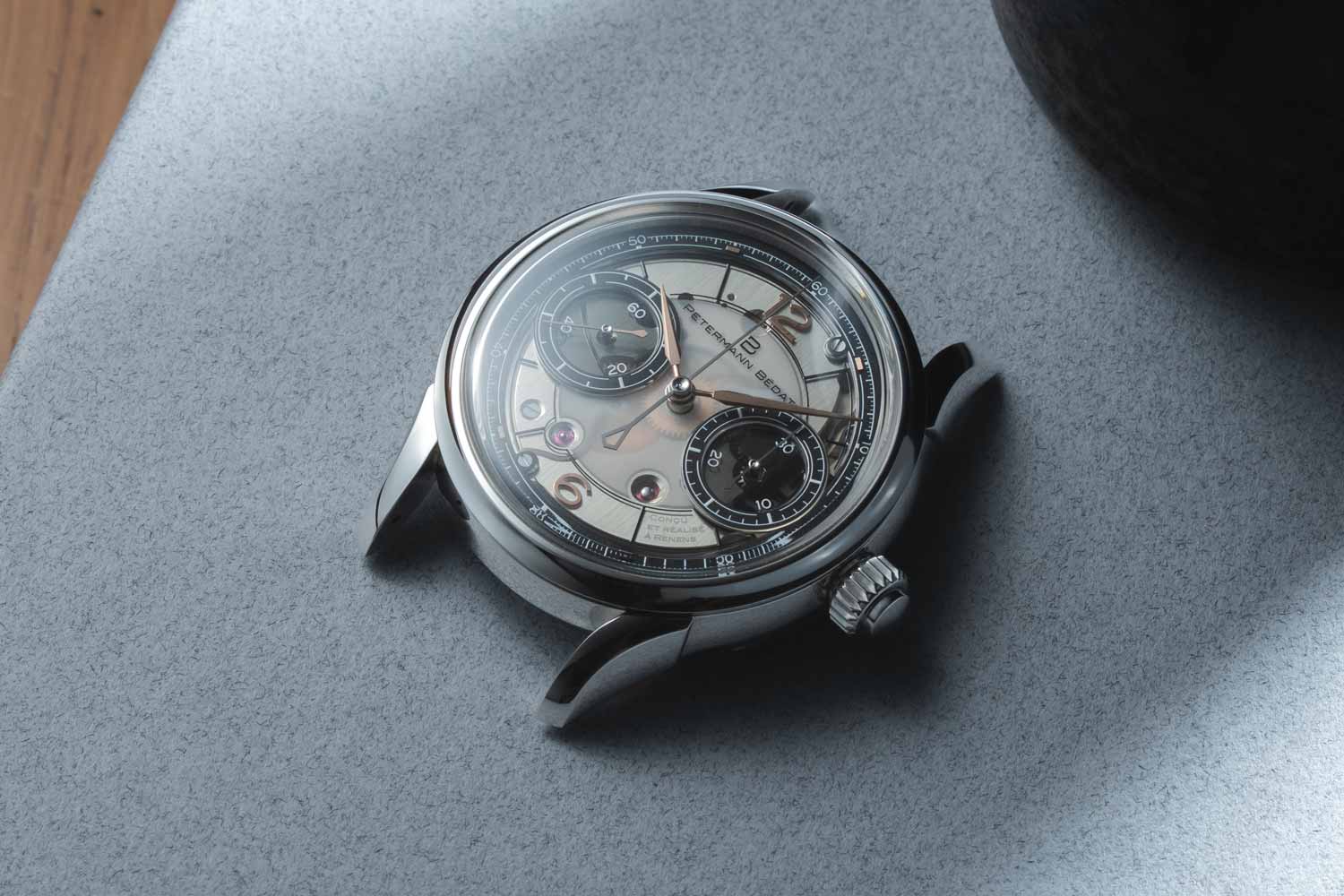
- The watch pairs a 36.5mm platinum case with a brushed steel dial, dark sub-dials and calibre 234.
- Production is limited to 20 pieces in platinum, priced at CHF 180,000 excluding taxes.
A smaller chronograph with serious intent
The most immediate talking point is the case size.
At 36.5mm across and 9.9mm thick, the 2914 Chronograph Monopusher sits well below the dimensions typically associated with modern high-end chronographs.
That smaller footprint isn’t a nostalgic affectation so much as a deliberate return to older chronograph proportions.
The use of platinum should give the watch a physical presence that offsets its restrained diameter, adding density and weight without requiring visual bulk.
Petermann Bédat’s previous 2941 Split-Seconds Chronograph was already conservative by contemporary standards at 38.5mm, but the 2914 pushes further into compact territory.
For collectors who have been asking for a chronograph without the additional split-seconds complication, this is the more focused answer.
The dial keeps the brand’s modern classical balance
The 2914 carries over the brand’s taste for a semi-open dial and sapphire components, but the overall impression remains composed rather than experimental.
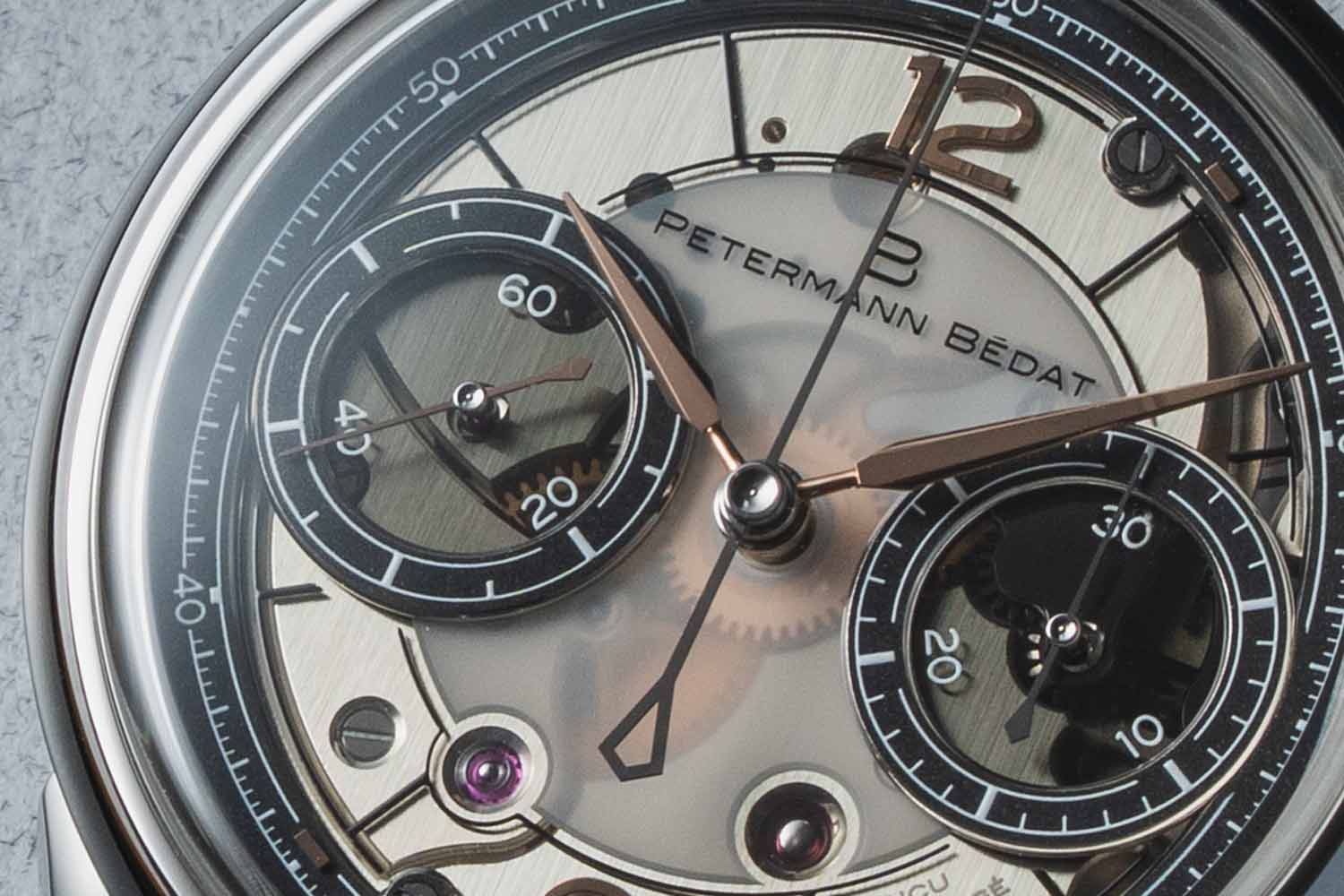
The dial is made of brushed steel and uses smaller sub-dials in solid dark tones, giving the watch a more refined balance than the larger counters of the split-seconds model.
That proportional shift matters because the smaller case leaves less room for error.
Petermann Bédat’s design language works because it doesn’t try to choose between contemporary transparency and traditional chronograph codes.
The result is a watch that feels recognisably classical at a glance, then more idiosyncratic the longer you spend with it.
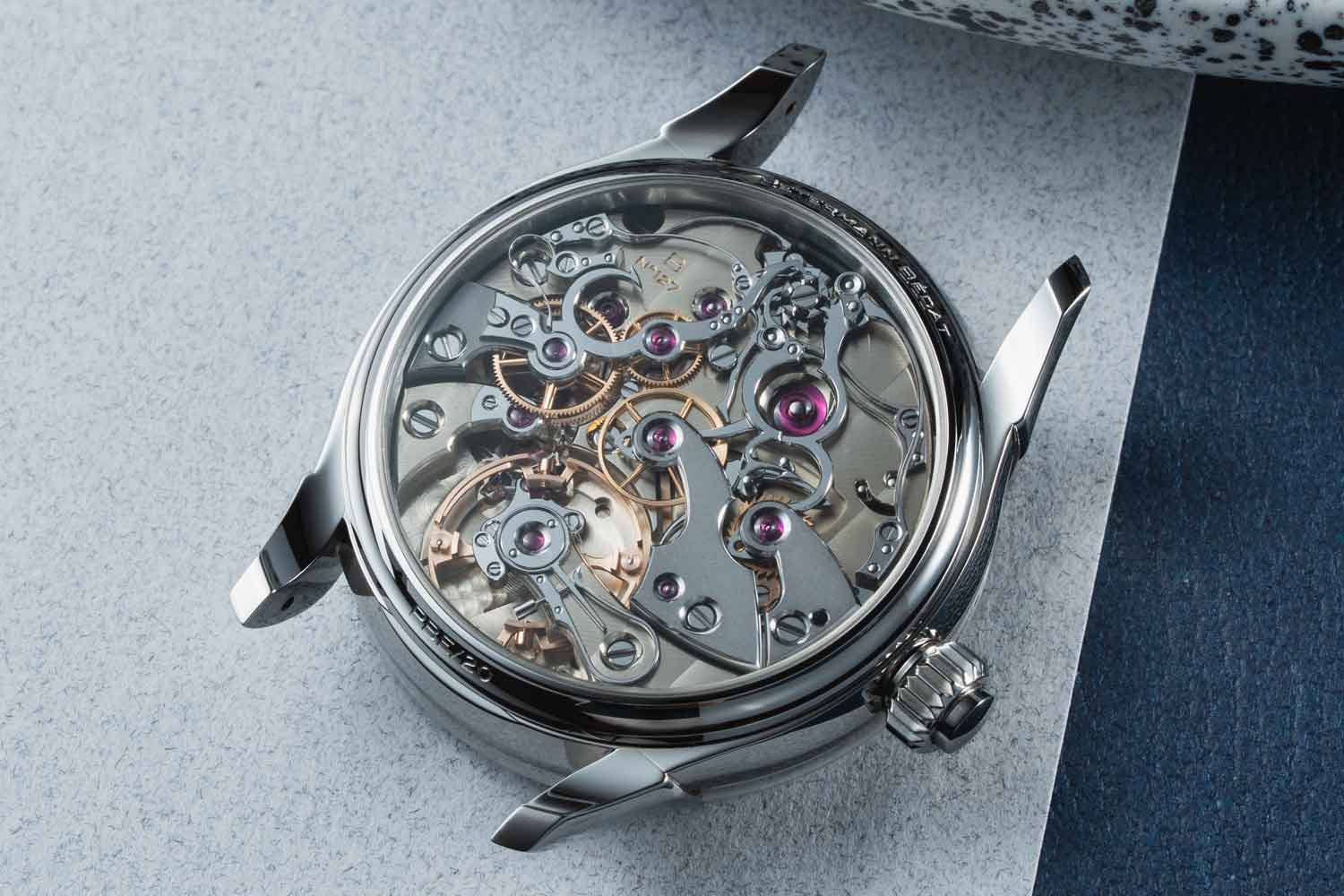
Calibre 234 without the split-seconds layer
Inside is calibre 234, the same base movement family used for the earlier split-seconds chronograph.
Here, the split-seconds mechanism is absent, but the monopusher chronograph layout remains, along with the jumping chronograph minute counter.
That makes the 2914 less complex on paper, though not sparse in execution.
The calibre is hand-wound, runs at 18,000 vibrations per hour and offers a 56-hour power reserve.
Its slower 2.5 Hz frequency suits the character of the watch, giving it an old-school rhythm that aligns with the case size and overall restraint.
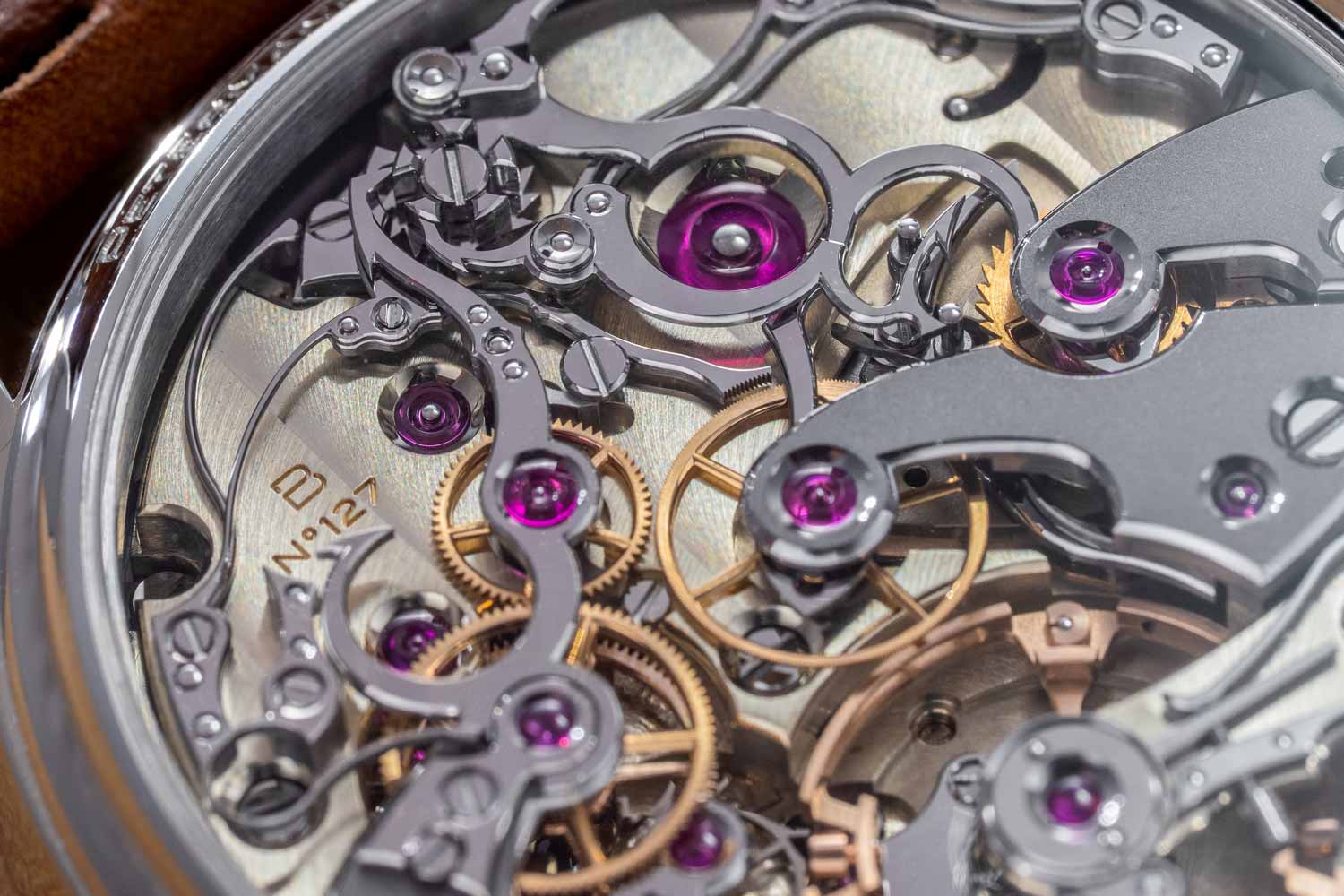
The movement architecture is defined by long, slender steel levers and springs, with arrowhead-shaped lever tails that bring a vintage Minerva reference point into a more contemporary construction.
An oversized jewel on the mainspring barrel also remains a signature Petermann Bédat detail.
Details & Specifications
| Brand | Petermann Bédat |
|---|---|
| Model | 2914 Chronograph Monopusher |
| Reference | 2914 |
| Case size | 36.5mm x 9.9mm |
| Case material | Platinum |
| Dial | Brushed steel with dark sub-dials |
| Movement | Calibre 234, manual winding |
| Functions | Hours, minutes, seconds, monopusher chronograph |
| Power reserve | 56 hours |
| Frequency | 18,000 vibrations per hour, 2.5 Hz |
| Water resistance | 30 metres |
| Limited edition | 20 pieces in platinum |
| Price | CHF 180,000 excluding taxes |
The 2914 Chronograph Monopusher is likely to speak most directly to collectors who value architecture, finishing and proportion over obvious spectacle.
It’s a smaller, more concentrated Petermann Bédat chronograph, and that restraint may be exactly what gives it its force.