A. Lange & Söhne doesn’t often need embellishment to make a point, especially where the Datograph is concerned.
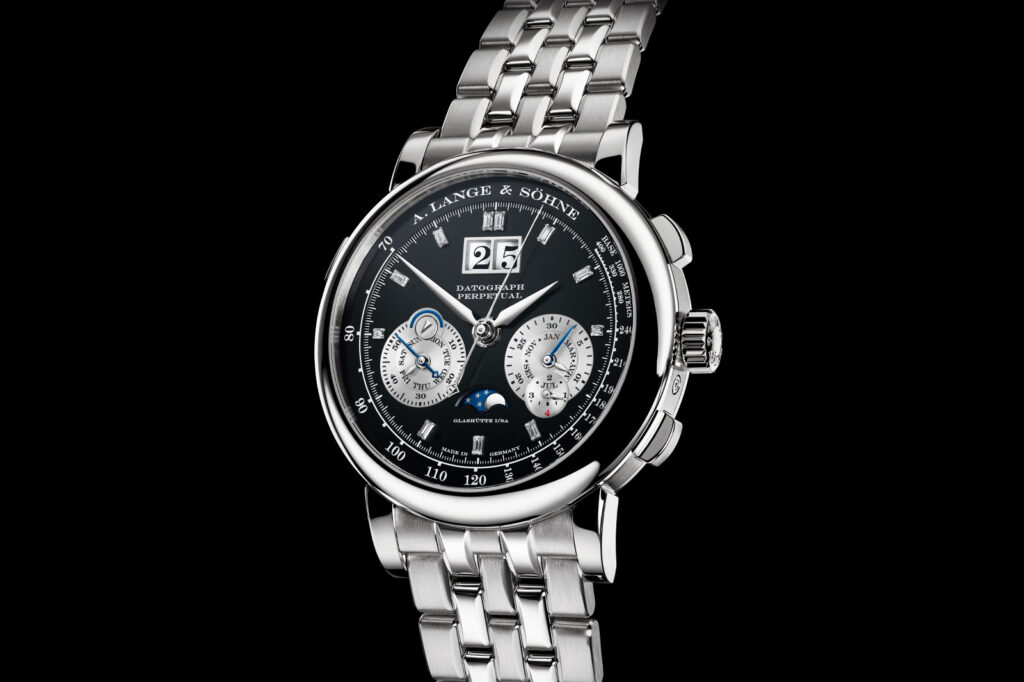
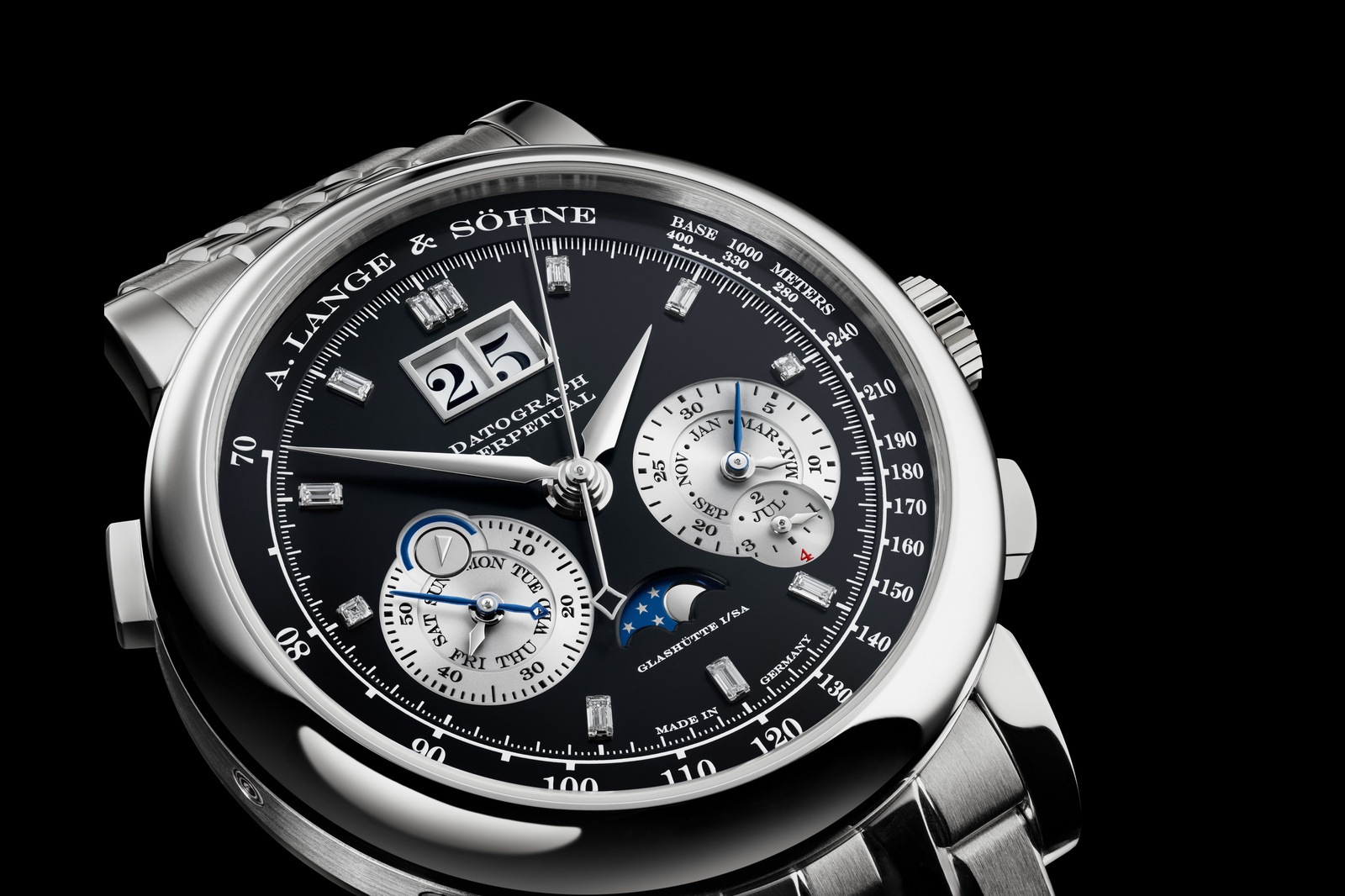
For the 20th anniversary of the Datograph Perpetual, the Glashütte manufacture has returned the watch to platinum and added a first for the reference, replacing the usual hour markers with baguette-cut diamonds.
The result is less theatrical than that description suggests, and more interesting because of it.
At a glance
- A. Lange & Söhne has introduced the Datograph Perpetual ref. 410.136E as a 50-piece platinum anniversary edition.
- The black dial uses 11 hand-applied baguette-cut diamond hour markers, paired with the established flyback chronograph and perpetual calendar layout.
- The watch marks 20 years since the Datograph Perpetual first paired the Datograph chronograph with a full perpetual calendar in 2006.
A platinum anniversary with a quieter diamond dial
The new Datograph Perpetual returns to the metal of the 2006 original, with a 41mm platinum case measuring 13.5mm thick.
That choice matters because the model has since appeared in other metals, including gold and steel, while platinum brings back the cool weight and formality associated with the first version.
This edition also carries the precious-metal theme onto a five-row bracelet, fitted with a quick-release deployant buckle.
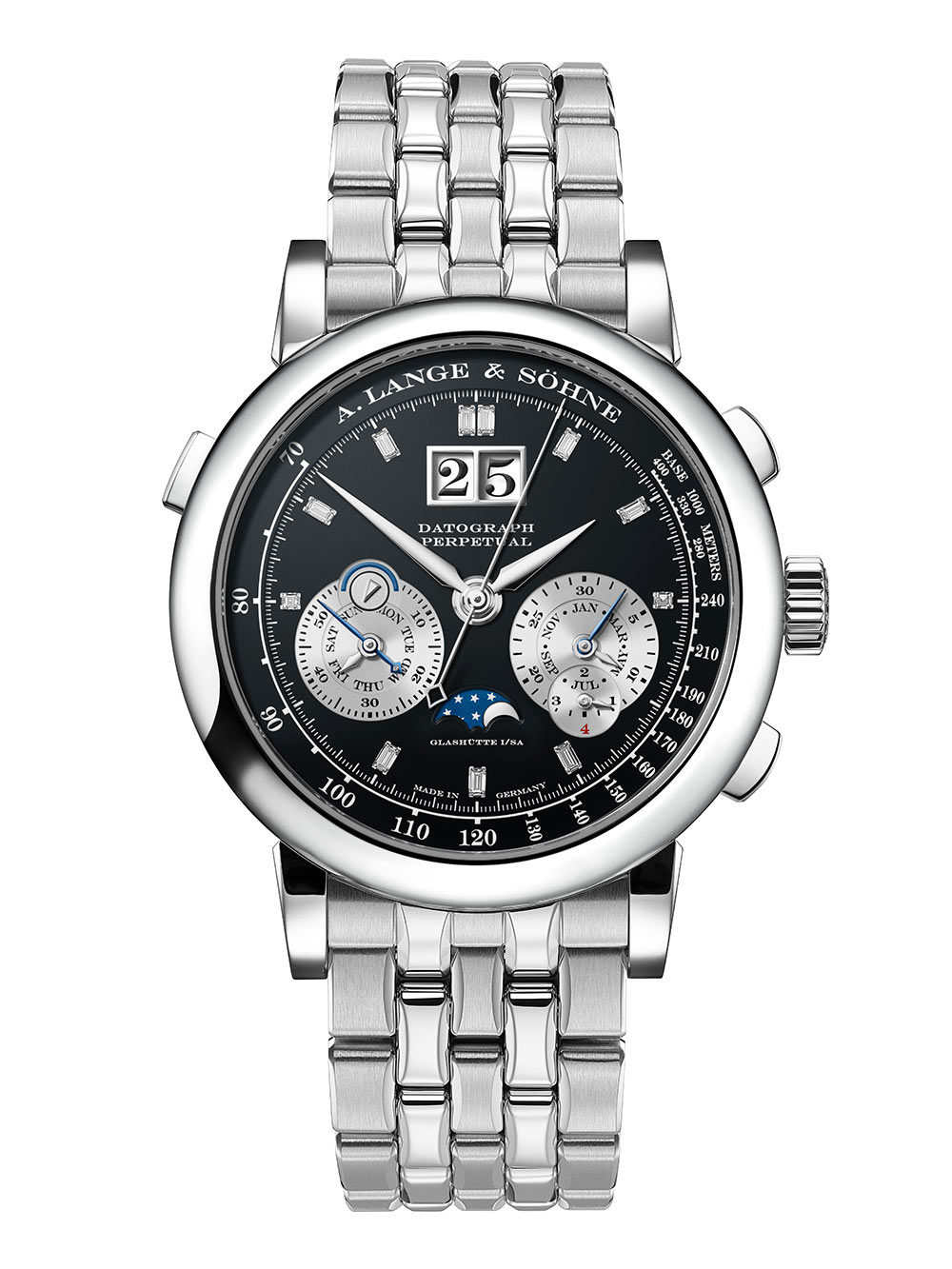
The dial is the notable departure.
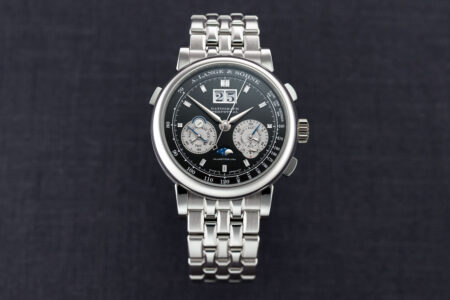
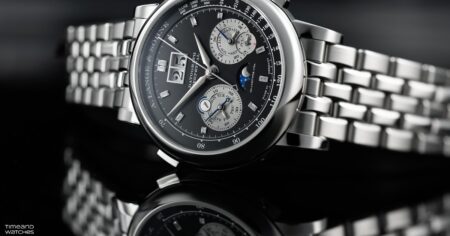
Lange has set 11 baguette-cut diamonds as hour markers, including a pair at 12 o’clock, while omitting the markers at 4 and 8 o’clock to leave room for the subdials.
The stones are described as near-colourless F to G grade and VVS clarity, with a combined weight of around 0.13 carats.
Against the black dial and platinum case, the diamonds don’t overwhelm the watch’s architecture.
The blued and red accents still draw the eye first, keeping the Datograph Perpetual firmly in complication-watch territory rather than turning it into a jewellery-led piece.
The Datograph Perpetual display keeps its geometry
The layout remains recognisably Lange, built around the brand’s balanced triangular arrangement.
The oversized date sits at 12 o’clock, anchoring the dial from the top.
At 9 o’clock, the subdial combines small seconds, day of the week and day/night indication.
At 3 o’clock, the month, leap-year display and chronograph minute counter share space, while the moon phase sits at 6 o’clock.
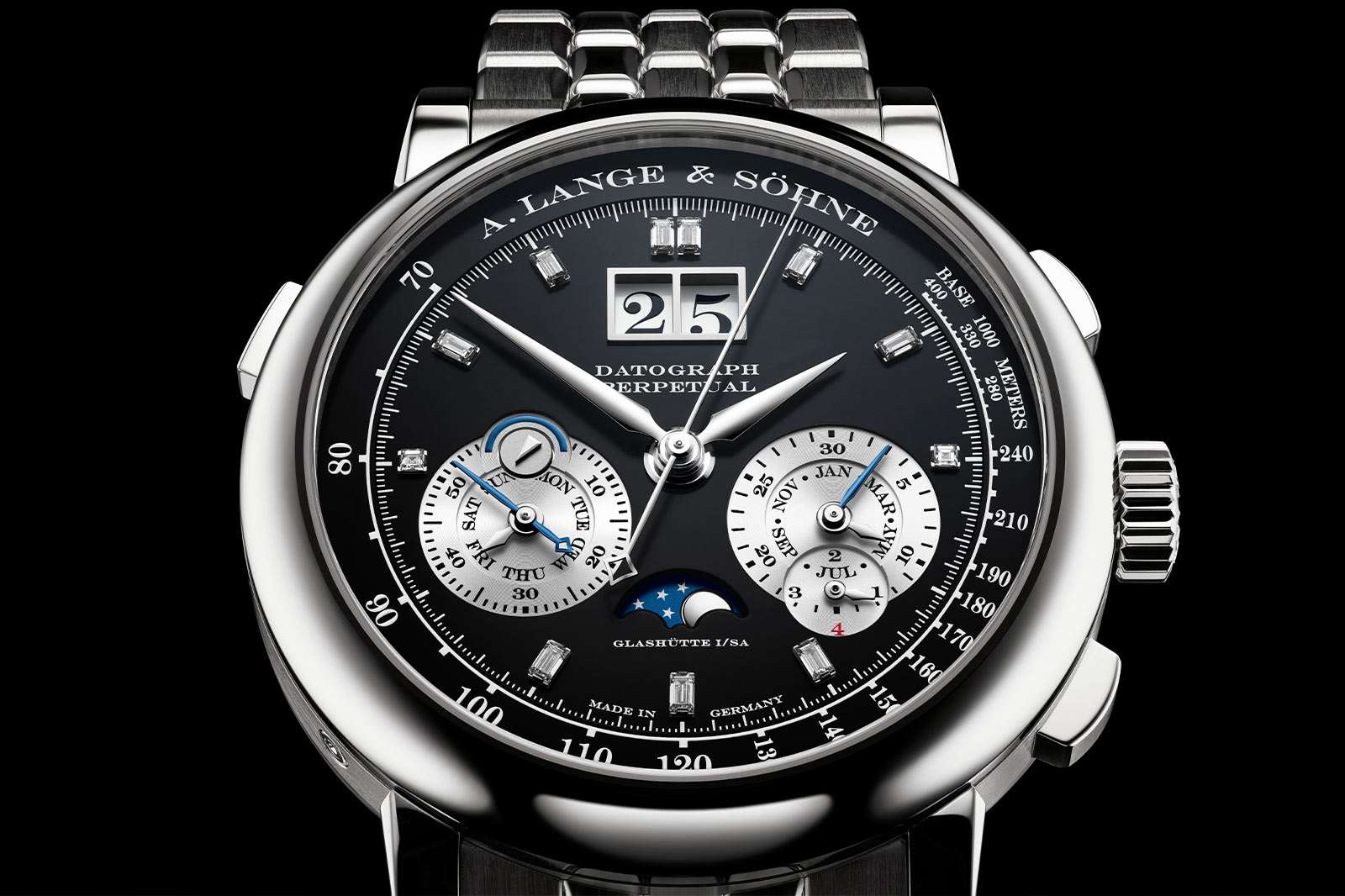
The hour and minute hands, along with the day, month and leap-year hands, are made from 750 gold.
The chronograph minute counter and subsidiary seconds hand are blued steel, while the chronograph seconds hand is rhodiumed steel.
The subdials are rhodié against the black main dial and have been shifted slightly downward, a technical and visual accommodation tied to the revised marker arrangement.
The L952.1 remains the real centrepiece
For many collectors, the Datograph has always been as much about the back of the watch as the front.
The original calibre L951, introduced in 1999, is often credited with raising expectations for chronograph finishing in modern high-end watchmaking.
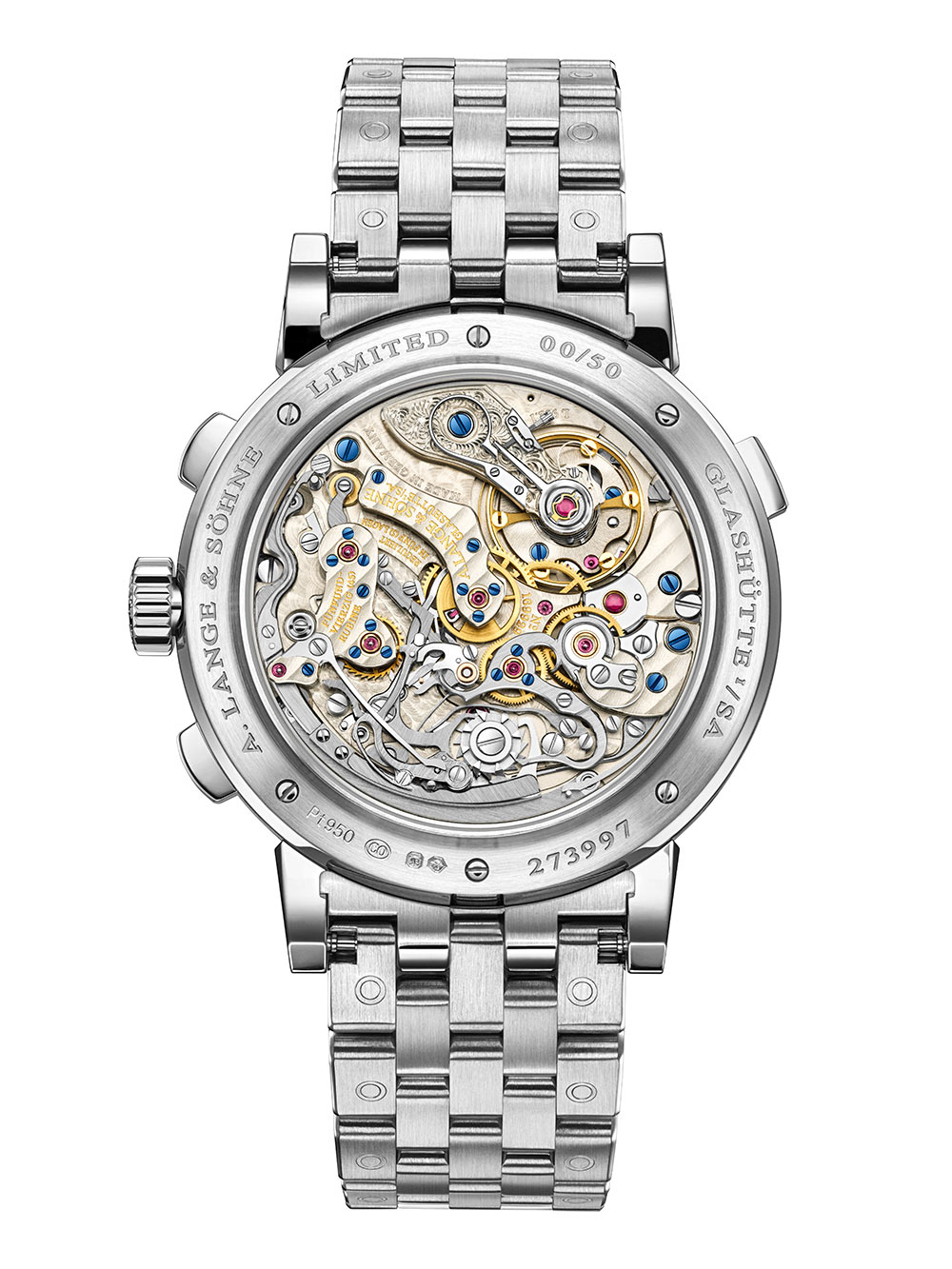
This anniversary edition uses the manual-wind calibre L952.1, the movement that has powered the Datograph Perpetual since 2006.
Made in Glashütte, hand-finished and assembled twice, it comprises 556 components, with 223 parts devoted to the calendar mechanism alone.
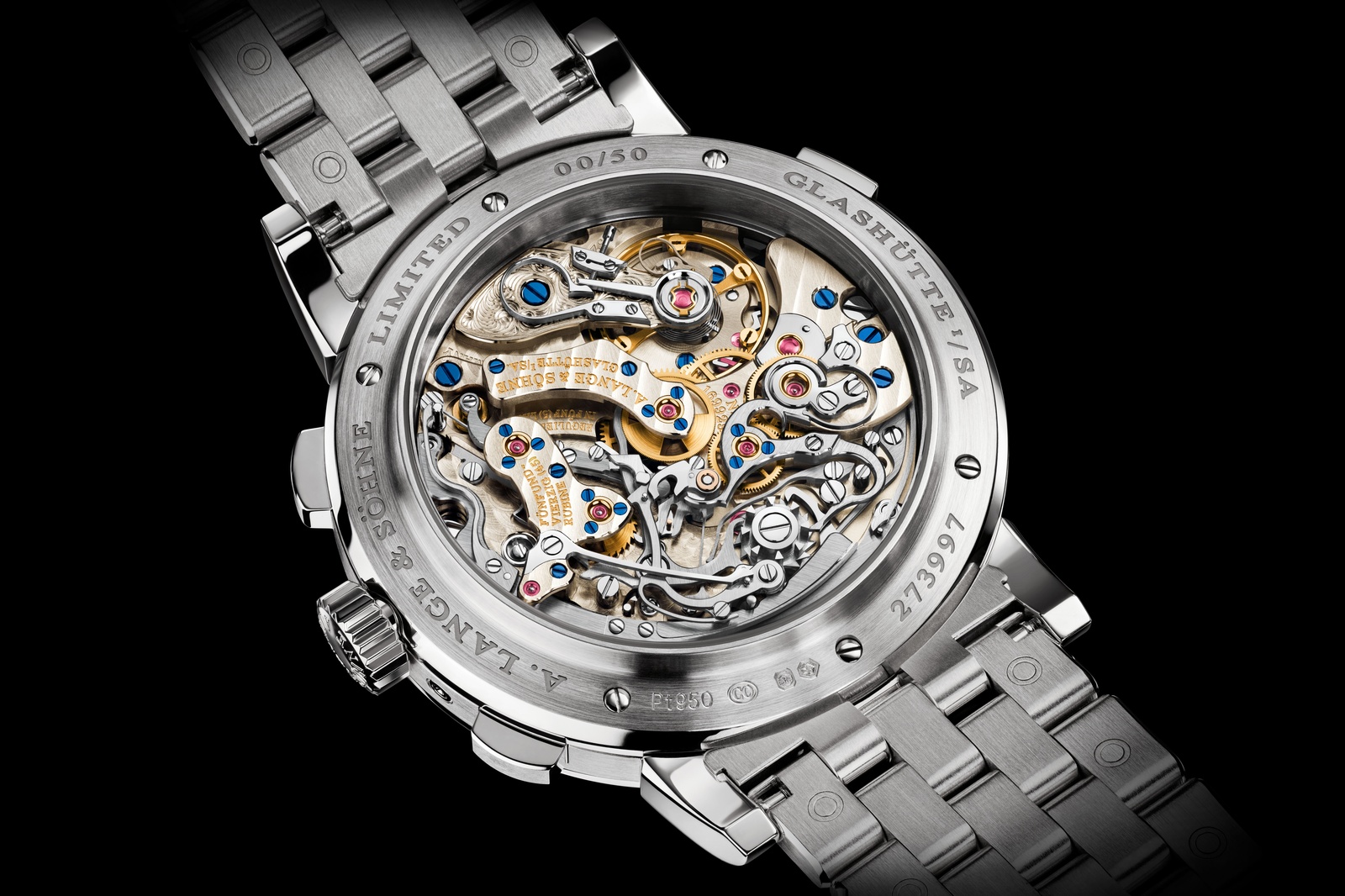
Through the sapphire caseback, the column-wheel chronograph is presented with the kind of mechanical depth that made the Datograph name important in the first place.
The movement shows German silver plates and bridges, four screwed gold chatons and a hand-engraved balance cock.
Its rockers and levers are laid out with unusual clarity, with elongated components reaching the lowered subdials on the dial side.
Functionally, it’s a flyback chronograph with a precisely jumping minute counter and the ability to measure to one-fifth of a second.
The perpetual calendar won’t require correction until 1 March 2100, when it must be advanced by one day.
A. Lange & Söhne says the moon phase will deviate by one day after 122.6 years, assuming the watch is kept running.
The calendar displays and moon phase can be advanced together using a single pusher at 10 o’clock, which includes a safety mechanism intended to prevent accidental operation.
Details & Specifications
| Brand | A. Lange & Söhne |
|---|---|
| Model | Datograph Perpetual |
| Reference | 410.136E |
| Case size | 41mm |
| Case thickness | 13.5mm |
| Case material | Platinum |
| Dial | Black with rhodié subdials |
| Hour markers | 11 baguette-cut diamonds, approximately 0.13 carats total |
| Movement | Manual-wind calibre L952.1 |
| Components | 556 parts |
| Calendar mechanism | 223 parts |
| Complications | Flyback chronograph, perpetual calendar, moon phase, oversized date, day/night indication, leap-year display |
| Chronograph | Column wheel with precisely jumping minute counter, measuring to one-fifth of a second |
| Bracelet | Five-row platinum bracelet with quick-release deployant buckle |
| Production | Limited to 50 pieces |
The Datograph Perpetual was already a serious statement in 2006, and this anniversary edition doesn’t try to reinvent it.
Instead, Lange has made a measured change to the watch’s visual character while leaving the machinery and architecture that define it intact.
Whether the diamond markers feel essential will depend on the collector, but the restraint of the execution gives this platinum edition a clearer purpose than decoration alone.