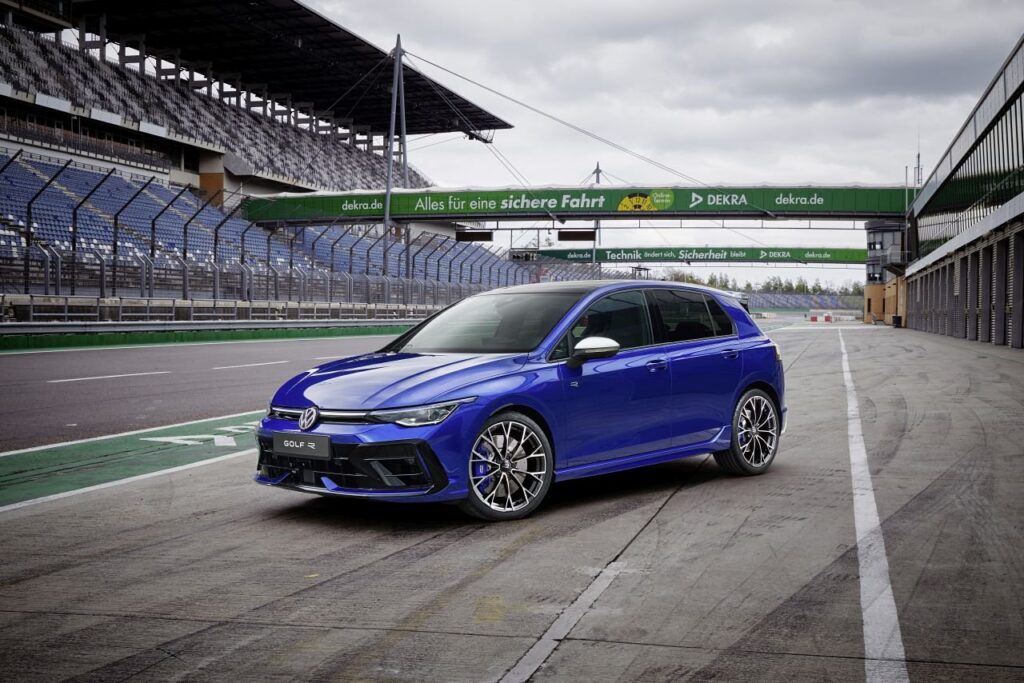
Volkswagen’s hottest Golf is being pulled into the emissions era, but the change doesn’t read like a retreat from performance.
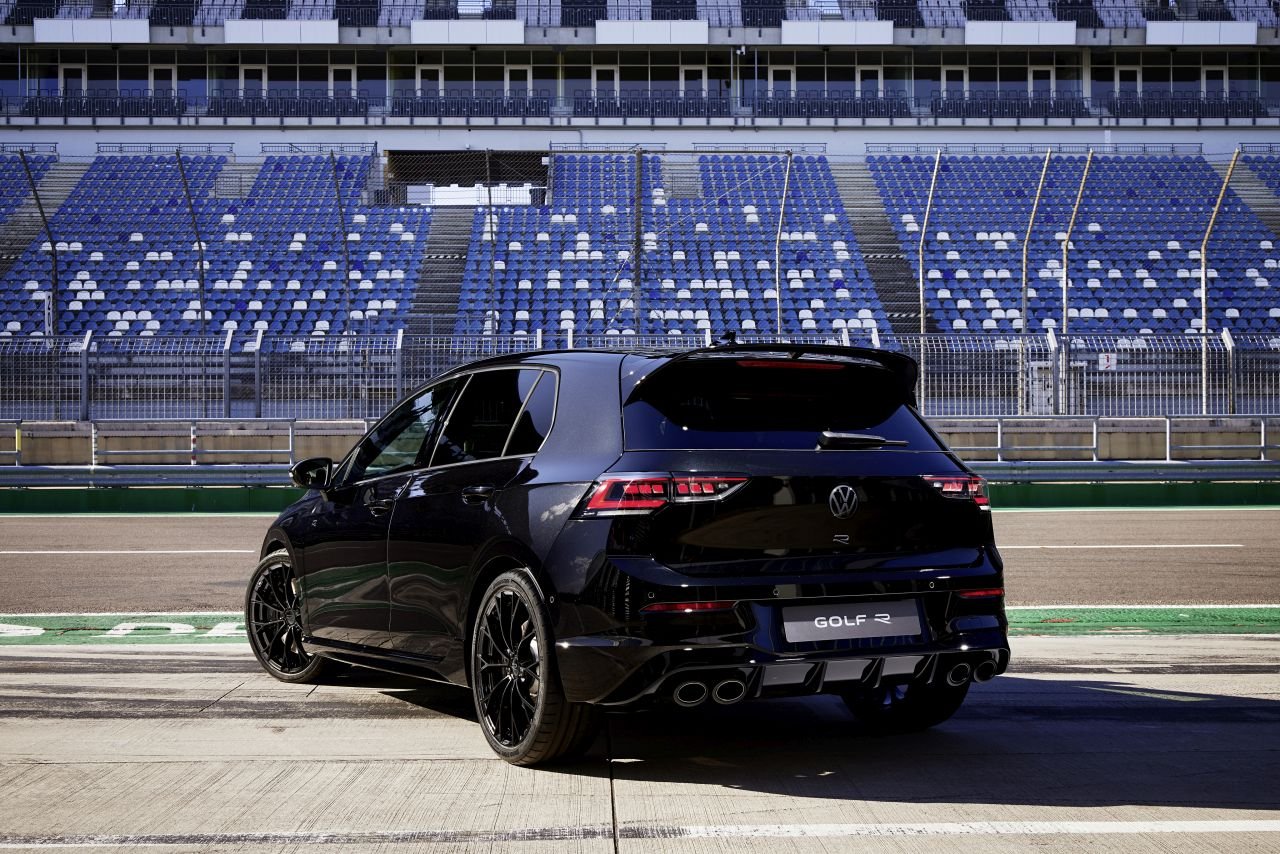
The 2028 Volkswagen Golf R is set to move to mild-hybrid power as Euro 7 regulations arrive, with the brand’s R division framing the update as a way to sharpen response rather than simply reduce emissions.
For a car that has built its reputation on all-weather pace and everyday usability, that matters more than headline numbers alone.
At a glance
- The 2028 Volkswagen Golf R is expected to adopt a 48-volt mild-hybrid engine to meet Euro 7 emissions rules.
- The setup is likely to use the latest EA888 evo5 2.0-litre turbo four-cylinder with an electric supercharger.
- Volkswagen R’s Reinhold Ivenz told Auto Express the updated Golf R will be quicker than the old version thanks to dynamic start.
A Euro 7 update with an R badge
The key change is compliance-driven, but Volkswagen R is presenting it as a performance opportunity.
“So Golf R will also change in the middle of next year with Euro 7 [emissions regulations]. It’s progress because we have more power from zero [rpm], and thanks to dynamic start, it’s [also] quicker than the old version,” Volkswagen R head Reinhold Ivenz told Auto Express.
That points to a Golf R that keeps the familiar hot-hatch formula while adding electrical assistance where it can be felt most, at low engine speeds and during initial launch.
It’s a pragmatic direction for a performance model in Europe, where emissions rules are reshaping even relatively compact enthusiast cars.
The likely EA888 evo5 connection
The next Golf R is likely to use the same new variant of Volkswagen’s EA888 evo5 engine that appears in the recently launched T-Roc R.
That unit is a turbocharged 2.0-litre four-cylinder paired with a 48-volt mild-hybrid system and an electric supercharger.
In the T-Roc R, it produces 329 hp and 310 lb-ft of torque, matching the current Golf R’s peak figures.
The more interesting figure is where that torque arrives.
Peak torque in the T-Roc R is available from 1900 rpm, 100 rpm lower than before, which should help the car feel more immediate in normal driving as well as under hard acceleration.
For a Golf R buyer, that kind of calibration may be more meaningful than a simple power increase.
All-wheel drive remains central to the formula
The engine is expected to be paired with a 7-speed dual-clutch automatic transmission, all-wheel drive and a torque-vectoring rear differential.
Those elements are core to the modern Golf R’s character.
The dual-clutch gearbox supports the car’s fast, low-effort pace, while all-wheel drive gives it traction beyond what most front-driven hot hatches can offer.
The torque-vectoring rear differential remains especially important, because it helps the Golf R feel more agile than its practical shape suggests.
Combined with mild-hybrid assistance, the next car’s appeal may come from response and usability rather than a dramatic change in outright output.
Details & Specifications
| Brand | Volkswagen |
|---|---|
| Model | Golf R |
| Model year | 2028 |
| Engine | Likely EA888 evo5 turbocharged 2.0-litre four-cylinder |
| Hybrid system | 48-volt mild-hybrid system |
| Additional forced induction | Electric supercharger |
| Transmission | 7-speed dual-clutch automatic |
| Drivetrain | All-wheel drive |
| Rear differential | Torque-vectoring rear differential |
| Related T-Roc R output | 329 hp and 310 lb-ft of torque |
| Related T-Roc R peak torque | Available from 1900 rpm |
| Regulatory target | Euro 7 emissions compliance |
The next Golf R looks set to evolve in the way modern performance cars increasingly must, by using electrification not as a headline gimmick but as a tool for cleaner running and sharper response.
If Volkswagen keeps the Golf R’s traction, compact practicality and understated pace intact, the mild-hybrid switch could make the car feel more polished without changing what its buyers already like about it.